Hardcover. Chicago, University of Chicago Press, 1st, 1996, Book: Very Good, Dust Jacket: Very Good, Hardcover in a bright dust jacket. Clean, bright copy, 467 pages. Illustrated with 36 pages of historic Plates, b/w, on coated paper. One of the most famous works of history, Johan Huizinga presents a brilliant portrait of life, thought, and art in 14th and 15th century France and the Netherlands.
Softcover. Los Angeles County Museum of Art, 1st, 1980, Book: Very Good, Dust Jacket: None, Softcover, 288 pages. B&w illustrations, facsimiles, portraits. Published to accompany an exhibition at the Los Angeles County Museum of Art. Groundbreaking exhibition of Russian and Soviet art, with a special focus on Suprematism and Constructivism. Full of great information, excellent biographical entries. Essential art history.
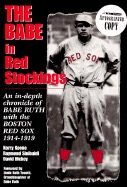
Hardcover. Champaign IL, Sagamore Publishing, 1st, 1997, Book: Very Good, Dust Jacket: Very Good, Hardcover in a bright dust jacket. 307 pages, b&w illustrations. SIGNED by all contributors on the front free endpaper - Kerry Keene, Raymond Sinibaldi, David Hickey, and Babe Ruth's granddaughter Linda Ruth Tosetti. The definitive work on his early years, The Babe in Red Stockings, represents not only a detailed study of his remarkable on-field achievements, but also delves into his happy-go-lucky, playful, and occasionally temperamental nature. Dozens of new pieces of information are added to further complete the portrait of one of America's most fascinating figures, the one and only Babe Ruth.
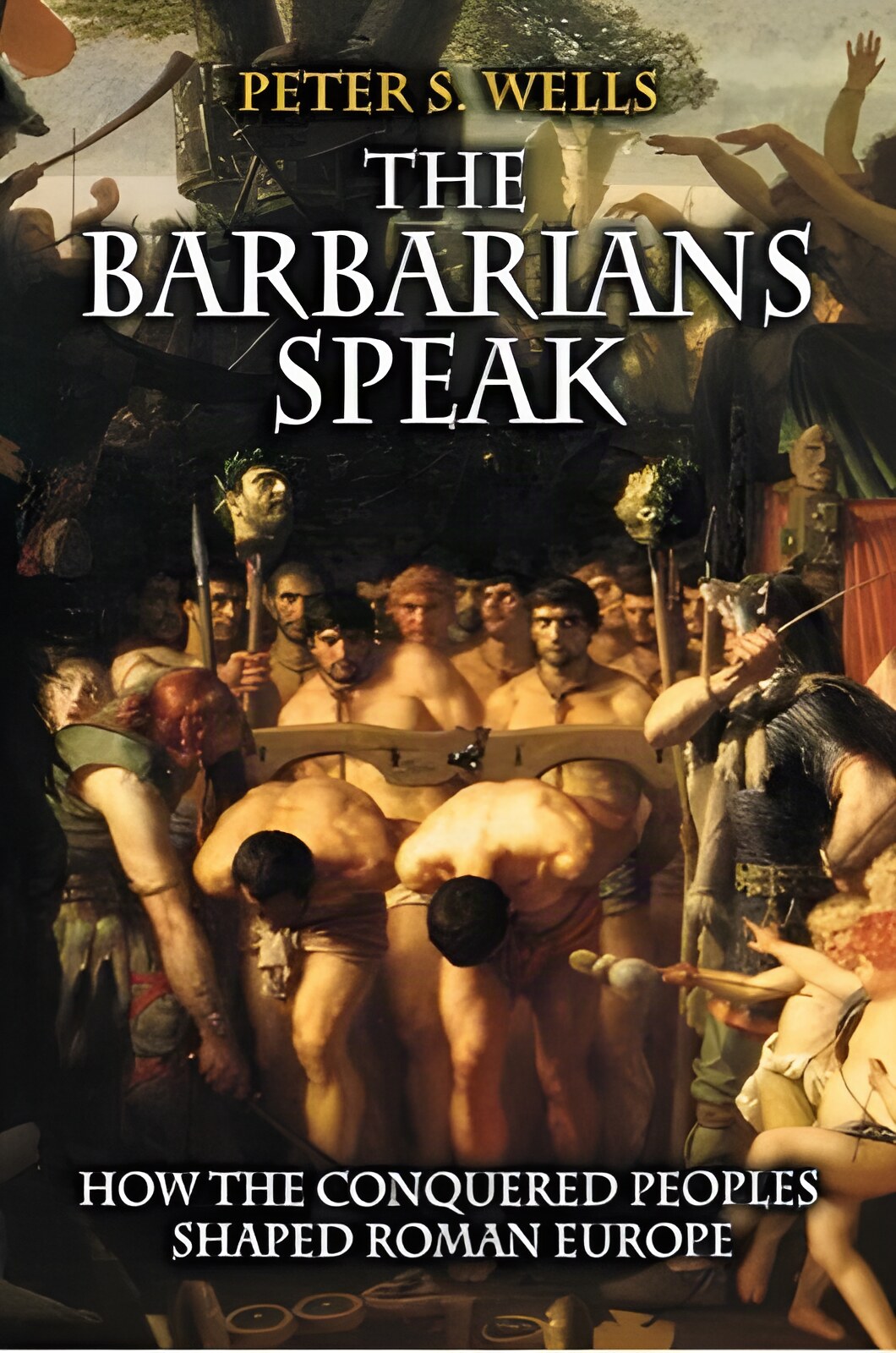
Hardcover. Princeton NJ, Princeton University Press, 1st, 1999, Book: Very Good, Dust Jacket: Very Good, Hardcover in a bright dust jacket, 335 pages. The Barbarians Speak re-creates the story of Europe's indigenous people who were nearly stricken from historical memory even as they adopted and transformed aspects of Roman culture. The Celts and Germans inhabiting temperate Europe before the arrival of the Romans left no written record of their lives and were often dismissed as "barbarians" by the Romans who conquered them. Accounts by Julius Caesar and a handful of other Roman and Greek writers would lead us to think that prior to contact with the Romans, European natives had much simpler political systems, smaller settlements, no evolving social identities, and that they practiced human sacrifice. A more accurate, sophisticated picture of the indigenous people emerges, however, from the archaeological remains of the Iron Age. Here Peter Wells brings together information that has belonged to the realm of specialists and enables the general reader to share in the excitement of rediscovering a "lost people." In so doing, he is the first to marshal material evidence in a broad-scale examination of the response by the Celts and Germans to the Roman presence in their lands.
Hardcover. Princeton NJ, Princeton University Press, 1st, 1999, Book: Very Good, Dust Jacket: Very Good, Hardcover in a bright dust jacket, 335 pages with b&w illustrations. Re-creates the story of Europe's indigenous people who were nearly stricken from historical memory even as they adopted and transformed aspects of Roman culture. The Celts and Germans inhabiting temperate Europe before the arrival of the Romans left no written record of their lives and were often dismissed as "barbarians" by the Romans who conquered them. Accounts by Julius Caesar and a handful of other Roman and Greek writers would lead us to think that prior to contact with the Romans, European natives had much simpler political systems, smaller settlements, no evolving social identities, and that they practiced human sacrifice. A more accurate, sophisticated picture of the indigenous people emerges, however, from the archaeological remains of the Iron Age. Here Peter Wells brings together information that has belonged to the realm of specialists and enables the general reader to share in the excitement of rediscovering a "lost people." Clean copy.
Hardcover. Cambridge MA, Barefoot Books, 1st, 2004, Book: Very Good, Dust Jacket: Very Good, Hardcover in a bright, unclipped dust jacket, 96 pages. SIGNED BY BOTH AUTHORS on a tipped-in bookplate on the front fly leaf. Lovely color illustrations by Rebecca Guay. Let yourself be drawn into the magical world of the dance with this sumptuous anthology. Love, laughter, betrayal, adventure and tragedy intertwine to create stories that will reach deep into the heart and dreams of the reader. The story of "The Sleeping Beauty" will whisk you away to the thorny castle where Princess Aurora awaits her prince; the comedy and confusion of "Coppelia" will delight you, and the magical adventures of Clara in "The Nutcracker" will entrance you. Featuring a brief history of classical ballet, as well as historical details of each dance, composition, choreography and early performances, this book will captivate anyone with a love of this awe-inspiring art.
Hardcover. NY, Avid Reader Press / Simon & Schuster, 1st, 2023, Book: Very Good, Dust Jacket: Very Good, Hardcover in a bright, unclipped dust jacket. A magnum opus from acclaimed baseball writer Joe Posnanski, The Baseball 100 is an audacious, singular, and masterly book that took a lifetime to write. The entire story of baseball rings through a countdown of the 100 greatest players in history, with a foreword by George Will. Longer than Moby-Dick and nearly as ambitious, The Baseball 100 is a one-of-a-kind work by award-winning sportswriter and lifelong student of the game Joe Posnanski. In the book's introduction, Pulitzer Prize-winning commentator George F. Will marvels, "Posnanski must already have lived more than two hundred years. How else could he have acquired such a stock of illuminating facts and entertaining stories about the rich history of this endlessly fascinating sport?" Clean, bight copy.
Hardcover. Boston, Little, Brown and Company, reprint, 1950, Book: Very Good, Dust Jacket: None, Hardcover, blue cloth with gilt lettering on spine. Volume I in The History of United States Naval Operations in World War II. 432 pages, illustrated with maps and b&w photos. Gilt on spine with light fading, lacks dust jacket, otherwise clean, tight copy.
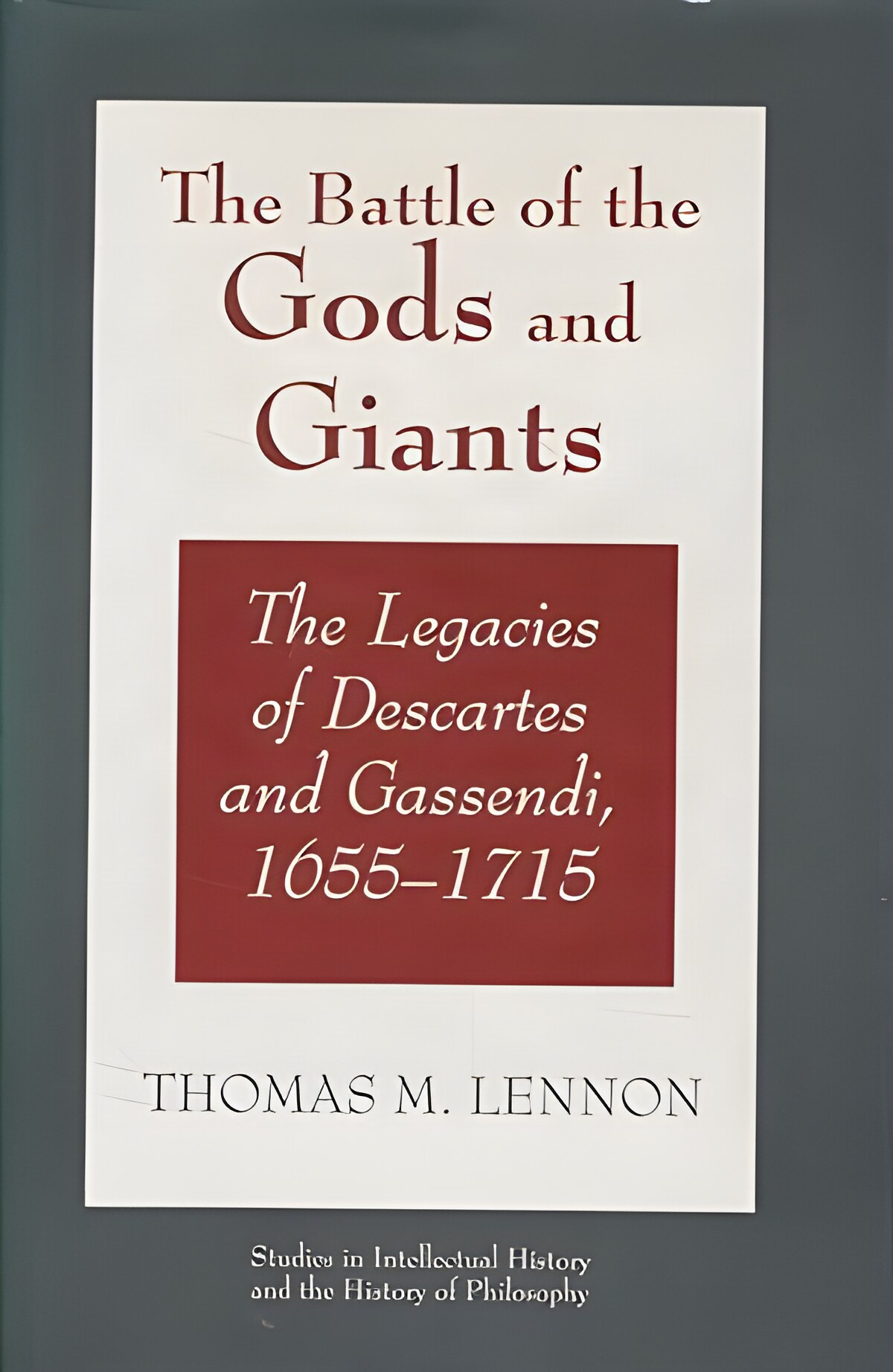
Hardcover. Princeton NJ, Princeton University Press, 1st, 1993, Book: Very Good, Dust Jacket: Very Good, Hardcover in a bright dust jacket with light edgewear, 419 pages. By the mid-1600s, the commonsense, manifest picture of the world associated with Aristotle had been undermined by skeptical arguments on the one hand and by the rise of the New Science on the other. What would be the scientific image to succeed the Aristotelian model? Thomas Lennon argues here that the contest between the supporters of Descartes and the supporters of Gassendi to decide this issue was the most important philosophical debate of the latter half of the seventeenth century. Descartes and Gassendi inspired their followers with radically opposed perspectives on space, the objects in it, and how these objects are known. Lennon maintains that differing concepts on these matters implied significant moral and political differences: the Descartes/Gassendi conflict was typical of Plato's perennial battle of the gods (friends of forms) and giants (materialists), and the crux of that enduring philosophical struggle is the exercise of moral and political authority. Lennon demonstrates, in addition, that John Locke should be read as having taken up Gassendi's cause against Descartes. In Lennon's reinterpretation of the history of philosophy between the death dates of Gassendi and Malebranche, Locke's acknowledged opposition to Descartes on some issues is applied to the most important questions of Locke exegesis.
Hardcover. NY/London, Verso, 1st, 2003, Book: Very Good, Dust Jacket: Very Good, Hardcover in a bright, unclipped dustjacket. The violence that has ravaged Algeria has often defied explanation. Regularly invoked in debates about political Islam, transitions to democracy, globalization, and the right of humanitarian interference, Algeria's tragedy has been reduced to a clash of stereotypes: Islamists vs.a secular state, terrorists vs. innocent civilians, or generals vs. a defenseless society. The prevalence of such simplistic representations has disabled public opinion inside as well as outside the country and contributed to the intractability of the conflict. This collection of essays offers a radical corrective to Western misconceptions. Rejecting essentialist and determinist approaches, Hugh Roberts explores the outlook and evolution of the various internal forces as they emerged--the Islamists, the Berberists, the factions within the army, and the regime in general--and he looks at external interests and actors. Clean copy.
Hardcover. Berkeley CA, University of California Press, 1st, 1994, Book: Very Good, Dust Jacket: Very Good, Hardcover in a bright dust jacket, 200 pages, b&w illustrations. Kathleen Kete's wise and witty examination of petkeeping in nineteenth-century Paris provides a unique window through which to view the lives of ordinary French people. She demonstrates how that cliche of modern life, the family dog, reveals the tensions that modernity created for the Parisian bourgeoisie. Kete's study draws on a range of literary and archival sources, from dog-care books to veterinarians's records to Dumas's musings on his cat. The fad for aquariums, attitudes toward vivisection, the dread of rabies, the development of dog breeding-all are shown to reflect the ways middle-class people thought about their lives. Petkeeping, says Kete, was a way to imagine a better, more manageable version of the world-it relieved the pressures of contemporary life and improvised solutions to the intractable mesh that was post-Enlightenment France. Clean copy.
Hardcover. NY, Alfred A. Knopf, 1st, 1946, Book: Very Good, Dust Jacket: None, Hardcover, 313 pages plus index. Tan cloth boards that show minor fading to top, spine and light discoloration to back cover. Otherwise very good. No dust jacket. Generous selection of black and white illustrations. This copy also complete with both the fold-out maps that are often missing: (1) City of Richmond in 1861; and (2) Richmond-Petersburg Theatre of Operations. These ten chapters reconstitute, across an eighty-year gap, the everyday life of a capital city close behind the fighting fronts of a prolonged war. From records that originated close to the facts or in the midst of them--newspapers, advertisements, diaries, letters, stenographic reports of the time--Mr. Bill discloses how people lived on the home front of the Confederacy. He tells in abundant detail what the people did to amuse themselves, what rumors alternately exalted and depressed them, about what and whom they gossiped, what they found procurable in the black market and what it cost them.
Softcover. NY, American Telephone and Telegraph Company, 1938, Book: Very Good, Softcover, blue wraps, 6 3/4 x 10 inches, 22 pages of text + 24 pages of plates (photos). Account of the massive effort to restore telephone service after the devastating hurricane of September 21, 1938. Clean copy, mild musty odor.
NY, St. Martin's Press, 1st, 2002, Book: Very Good, Dust Jacket: Very Good, Hardcover in a bright, unclipped dust jacket. A masterful, definitive, and eloquent look at the enormous cultural and economic impact on America of New England's textile mills. The author, an award-winning CBS producer, traces the history of American textile manufacturing back to the ingenuity of Francis Cabot Lodge. The early mills were an experiment in benevolent enlightened social responsibility on the part of the wealthy owners, who belonged to many of Boston's finest families. But the fledgling industry's ever-increasing profits were inextricably bound to the issues of slavery, immigration, and workers' rights. William Moran brings a newsman's eye for the telling detail to this fascinating saga that is equally compelling when dealing with rags and when dealing with riches. Clean copy.
Hardcover. NY, G.P. Putnam's Sons, 1st US, 1873, Book: Good, Dust Jacket: None, Hardcover, brown cloth stamped in black and gilt, 442 pages. While a fictional story based on actual events, the author relates a wealth of information on the history, customs and political divisions in the Arab world at the time. Hinges weak but holding, bookplate on inside front cover. Light shelf wear.Originally published in England in 1850.
Hardcover. NY, H. Bittner and Company, 1st, 1945, Book: Very Good, Dust Jacket: None, Hardcover, blue buckram stamped with gilt code of arms and lettering on spine. Limited to 1000 copies. A study of an artistic family who created theatrical designs dating from the 1680s to the 1780s under eight names. Illustrated with 53 plates. Small review slip tipped on front fly leaf. Some darkening to covers and spine, internally clean and bright. No dust jacket.
Hardcover. Ontario CA, Wilfrid Laurier University Press, 1st, 2004, Book: Very Good, Dust Jacket: Very Good, Hardcover in a bright dust jacket, 201 pages. Clean, bright copy. "Parker has produced a clear and well-researched study of an aspect of Locke's thought that theologians may have tended to miss because it is to do with politics, and that political theorists may have tended to overlook because it involves the Bible and theology. For this he is to be congratulated. Theologians today may also learn from the debate between Filmer and Locke the profoundly unsatisfactory character of attempts to resolve contemporary issues, whether in politics, society, or religion, by imaginative and inventive applications of stray texts. In this respect what is past gives a warning to the present. How will current debates citing biblical texts (for example, in debates about the treatment of homosexuals, or about the consecration of women, or about divine intervention and design in creation) be seen in centuries hence? Those who, with Locke, confidently condemn the speck distorting Filmer's religio-political view, must examine whether, what they see is free from distortion by the `learned Gibberish' of inherited prejudices and convictions. It is to Parker's credit that this useful contribution to the history of thought also raises controversial contemporary challenges.''
Hardcover. NY, Flatiron, 1st, 2020, Book: Very Good, Dust Jacket: Very Good, Hardcover in a bright dust jacket, 397 pages. Wasson for the first time peels off layers of myth to provide the true account of its creation. Looming over the story of this classic movie is the imminent eclipse of the '70s filmmaker-friendly studios as they gave way to the corporate Hollywood we know today.
Hardcover. NY, Rodale, 1st, 2003, Book: Very Good, Dust Jacket: Very Good, Hardcover in a bright, unclipped dust jacket. While The Big O: My Life, My Times, My Game will not disappoint basketball purists longing for Oscar Robertson's play-by-play of favorite games, the attraction of this autobiography is Robertson's perspective on the evolution of the sport and on the racial struggles that were the context of his formative years. Called by many basketball experts the greatest all-around player ever, Robertson earned an astonishing array of honors including an Olympic gold medal, 12 NBA All-Star appearances, the NBA Rookie of the Year award, and the 1964 NBA MVP award. Most remarkably, Robertson remains the only player in basketball history with a triple-double season (double-digit averages for scoring, rebounds, and assists). While Robertson could have easily candy-coated this impressive record for his retrospective, he devotes large sections of his book to the racial battles he faced off court, and his final chapters recount his controversial efforts as an NBA union leader to create free agency, a pension plan, and disability protection for players. In telling his life story, he lays bare the racism and mistreatment he suffered at the hands of individuals and institutions throughout his career, from the Mayor of Indianapolis and Cincinnati University to the NBA and CBS Sports. At times, his critiques can seem excessive (e.g. his discussions of the distortions in the film Hoosiers, while interesting, are repeated a bit too often), and some sections (like his attempts to compare himself to contemporary players) border on self-indulgence. Yet, he seems justified in arguing that his achievements--largely accomplished on second-rate teams, against a back-drop of unprecedented racial strife, and before the modern era of sports-media saturation--are easily underrepresented. In the end, The Big O offers a complex, human portrait to complement a spectacular sports career.
Hardcover. Chicago, University of Chicago Press, 1st, 2000, Book: Very Good, Dust Jacket: Very Good, Hardcover in a bright, unclipped dust jacket. In this daring reexamination of the connections between national politics and Hollywood movies, Lary May offers a fresh interpretation of American culture from the New Deal through the Cold War and one in which a populist, egalitarian ethos found itself eventually supplanted by a far different view of the nation. Clean copy.
Hartford CT, Clapp and Benton, 1st, 1832, Book: Good, Hardcover, leather bound, 422 pages. A rare, early 19th-century account of the famed American President, focusing primarily on his career as a military officer and as a lawyer. This 1832 first edition of Goodwin's book includes a portrait frontispiece of Andrew Jackson. It is filled with information regarding his early childhood, civil life as lawyer senator and judge, as well as heroics in the War of 1812, the Creek War, and the American Revolution with an inclusion of his time in the presidency. Previous owner's name on verso of frontis. Covers show edgewear, top 2" of title page missing, frontispiece engraving of Jackson has a repaired tear. Still a solid copy, spine label with gilt title.
Hardcover. Seattle, University of Washington Press, 1st, 2009, Book: Very Good, Dust Jacket: Very Good, Hardcover, 210 pages, illustrated throughout in b&w. Clean, unmarked copy with only minor wear to dust jacket. Stafford worked for Commerical Press in Shanghai and his photographs capture both sides of the revolutionary struggle in China.
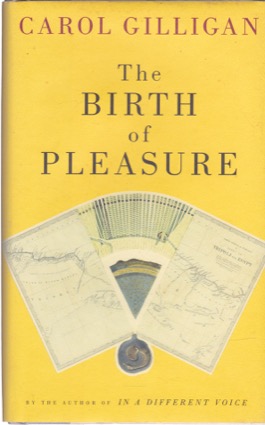
Hardcover. NY, Knopf, 1st, 2002, Book: Very Good, Dust Jacket: Very Good, Hardcover in a bright dust jacket, 253 pages. Carol Gilligan, breaking through imprisoning tradition, writes about love and the forces that stand in the way of pleasure. She shows us why love between a man and a woman is so often burdened by a history of loss and how it can be freed and opened to the pursuit of happiness. Tracing a lineage from Greek mythology to our own most intimate relationships, she asks why we relive tragic stories of loss and betrayal; drawing on her own research, she offers a radical new map of love. Clean copy.
Hardcover. NY, Abrams Press, 1st, 2022, Book: Very Good, Dust Jacket: Very Good, Hardcover in a bright, unclipped dust jacket. Illustrations, 470 pages with index. A groundbreaking, timely history of the largely unknown early days of Black basketball, bringing to life the trailblazers, entertainers, gangsters, and supremely talented athletes who made the game From the introduction of the game of basketball to Black communities in 1904 to the integration of the NBA in 1950, there was a full era in the development of the game. It was a time when Black players were discriminated against and opportunities were limited, but entrepreneurial men and women nurtured the game and breathed life into a sport they loved. This period was known as the Black Fives Era (teams at the time were often called "fives"), and was akin to the golden age of the Negro Leagues. But despite fierce rivalries between big-city clubs, innovative managers, and star players, this period is almost entirely unknown to basketball fans. Claude Johnson has made it his mission to change that. An advocate fiercely committed to our history, for more than two decades Johnson has conducted interviews, mined archives, collected artifacts, and helped to preserve an important, culturally rich era that otherwise would have been lost. The Black Fives is the result of his work, a landmark narrative history that will braid together the stories of these forgotten pioneers and rewrite our understanding of the story of basketball.


 "The Avant-Garde in Russia, 1910-1930: New Perspectives by: Stephanie Barron (Editor), Maurice Tuchman (Editor)")
 "The Barefoot Book of Ballet Stories (SIGNED COPY)by: Jane Yolen , Heidi E. Y. Stemple, et al.")

 "The Battle of the Atlantic: September 1939 - May 1943 (History of United States Naval Operations in World War Ii, Volume 1)by: Morison, Samuel Eliot")
 "The Battlefield: Algeria 1988 2002 Studies in a Broken Polity by: Roberts, Hugh")
 "The Beast in the Boudoir: Petkeeping in Nineteenth-Century Parisby: Kathleen Kete")


 "The Belles of New England:The Women of the Textile Mills and the Families Whose Wealth They Woveby: Moran, William")




 "The Big Goodbye: Chinatown and the Last Years of Hollywood by: Wasson, Sam")
 "THE BIG O: My Life My Times My Gameby: Robertson, Oscar")
 "The Big Tomorrow: Hollywood and the Politics of the American Way by: Lary May")


 "The Birth of a Republic: Francis Stafford's Photographs of China's 1911 Revolution and Beyond (A China Program Book)by: Lu, Hanchao")
 "The Black Fives: The Epic Story of Basketball's Forgotten Era by: Claude Johnson")