Softcover. Englewood Cliffs, NJ, Prentice-Hall, Inc., 1st, 1981, Book: Good, Dust Jacket: None, 141 pages. Illustrated color and b&w captioned photographs throughout text. Light edge wear to wrappers. Small water stain on bottom of front cover. Else a clean, tight copy.
Softcover. Gloucestershire UK, History Press, 1st pbk, 2019, Book: Very Good, Dust Jacket: None, Softcover, 237 pages. Before Marilyn tells the story of Marilyn Monroe's modeling career, during which time she was signed to the famous Blue Book Agency in Hollywood. The head of the agency, Miss Emmeline Snively, saw potential in the young woman and kept detailed records and correspondence throughout their professional relationship and beyond. On the day of Monroe's funeral, Snively gave an interview from her office, talking about the girl she had discovered, before announcing, rather dramatically, that she was closing the lid on her Marilyn Monroe archive that day - to 'lock it away forever'. This archive was purchased by Astrid Franse, and together with bestselling Marilyn Monroe biographer Michelle Morgan they draw on this collection of never-before-seen documents, letters and much, much more. Before Marilyn explores an aspect of Monroe's life that has never been fully revealed - by charting every modelling job she did, and illustrating the text with rare and unpublished photographs of the young model and her mentor.
Hardcover. NY, The Overlook Press, 2nd pr., 1978, Book: Very Good, Dust Jacket: Very Good, Hardcover in a bright, unclipped dust jacket, 203 pages. A pictorial survey with over 300 rare b&w photos. Clean copy.
Hardcover. Stanford CA, Stanford University Press, 1st, 2006, Book: Very Good, Dust Jacket: Very Good, Hardcover in a bright, unclipped dust jacket, 559 pages. "Behind the Bamboo Curtain is an important collection of essays on Sino-Vietnamese relations during the Cold War An excellent contribution from a Vietnamese historian and well-documented chapters on Soviet and French policy further augment the importance of the volume. The contributors make extensive use of primary documents from the United States, the People's Republic of China, Vietnam, and Russia and offer authoritative analyses." -- The Journal of Cold War Studies. Claen, unread copy.
Softcover. NY, Skyhorse, 1st, 2014, Book: Very Good, Dust Jacket: None, Softcover, 361 pages, b&w illustrations. Burlesque was one of America's most popular forms of live entertainment in the first half of the 20th century. Gaudy, bawdy, and spectacular, the shows entertained thousands of paying customers every night of the week. And yet the legacy of burlesque is often vilified and misunderstood, left out of the history books. By telling the intimate and surprising stories from its golden age through the women (and men!) who lived it, Behind the Burly Q reveals the true story of burlesque, even as it experiences a new renaissance. Lovingly interviewed by burlesque enthusiast Leslie Zemeckis who produced the hit documentary of the same name, are former musicians, strippers, novelty acts, club owners, authors, and historians--assembled here for the first time ever to tell you just what really happened in a burlesque show. From Jack Ruby and Robert Kennedy to Abbott and Costello--burlesque touched every corner of American life. The sexy shows often poked fun at the upper classes, at sex, and at what people were willing to do in the pursuit of sex. Sadly, many of the performers have since passed away, making this their last, and often only interview. Behind the Burly Q is the definitive history of burlesque during its heyday and an invaluable oral history of an American art form. Funny, shocking, unbelievable, and heartbreaking, their stories will touch your hearts. We invite you to peek behind the curtain at the burly show.
Hardcover. New York , Alfred A. Knopf, 1st, 1990, Book: Very Good, Dust Jacket: Very Good, 579 pages. Hardcover with dust jacket, many BW illus. The third book in a triology, prefaced by The Parade's Gone By ... (1968) and The War, the West and the Wilderness (1979). Offers a full and illustrated "exploration of a vital and now almost forgotten chapter of American moviemaking: the response of early producers and directors to the agonizing social problems of the decades before World War I. ... An essential work of silent-film history, certain to become a standard reference." Clean, tight copy.
Hardcover. Austin TX, Texas State Historical Association, 1st, 1994, Book: Very Good, Dust Jacket: Very Good, Hardcover, 128 pages, 109 b&w photographs by Hickman. Bright copy in a nice dust jacket. This remarkable book reproduces more than one hundred photographs taken by R. C. Hickman, a professional photographer whose work provides a fascinating visual record of life in Dallas's black community during the three decades following World War II. After the war, he returned to Dallas and joined the staff of the Dallas Star Post. He also worked as a freelance photographer for Jet magazine, for several newspapers in the East, and for the NAACP. His work led him to photograph notables such as Martin Luther King Jr., Thurgood Marshall, Ella Fitzgerald, Joe Louis, and others when they visited Dallas.
Hardcover. New York, Sully and Kleinteich, 3rd, 1918, Book: Very Good, Dust Jacket: None, Hardcover, blue cloth with gilt, red and white decoration, 342 pages, with frontispiece portrait of Belinda Melnotte by A. O. Scott. Previous owner's signature on front fly leaf, minor corner and edge wear, otherwise, very clean and tight copy.
Hardcover. Boston, Little Brown, 4th pr., 1939, Book: Very Good, Dust Jacket: Poor, Hardcover, light tan cloth stamped in dark brown, in a poor dust jacket with large chios to front panel and pieces gone from rear. ($1.50 on flap). B&w illustrations by Lawson, endpapers drawing of Benjamin Franklin (with Amos the mouse) dozing off while flying a kite. Once you've met Amos you'll always remember Benjamin Franklin a little differently than the history books do. The first of Lawson's three animal narrated biographical tales. The basis for the 1953 Walt Disney animated movie. With a promotional sticker on a blank prelim page from a paper company that gave the book as a Christmas gift, otherwise clean.
Hardcover. NY, Da Capo Press, 1st, 1973, Book: Very Good, Dust Jacket: Very Good, Hardcover, 82 pages. This is the first book devoted exclusively to Shahn's photographs. All of the photographs selected for this volume were taken during the 1930s from Rod Stryker's great Farm Security Administration project.
Softcover. US, University of Illinois Press, 1st, 2010, Book: Very Good, Dust Jacket: None, 190 pages, illustrated throughout in b&w. Clean, unmarked copy with only minor wear to wrappers. The paintings, murals, and graphics of Ben Shahn (1898-1969) have made him one of the most heralded American artists of the twentieth century, but during the 1930s he was also among the nation's premier photographers. Much of his photographic work was sponsored by the New Deal's Farm Security Administration, where his colleagues included Dorothea Lange and Walker Evans. Ben Shahn's American Scene: Photographs, 1938 presents one hundred superb photographs from his most ambitious FSA project, a survey of small-town life in the Depression. John Raeburn's accompanying text illuminates the thematic and formal significance of individual photographs and reveals how, taken together, they address key cultural and political issues of the years leading up to World War II. Shahn's photographs highlight conflicts between traditional values and the newer ones introduced by modernity as represented by the movies, chain stores, and the tantalizing allure of consumer goods, and they are particularly rich in observation about the changes brought about by Americans' universal reliance on the automobile. They also explore the small town's standing as the nation's symbol of democratic community and expose the discriminatory social and racial practices that subverted this ideal in 1930s America.
Softcover. US, University of Illinois Press, 1st, 2010, Book: Near Fine, Dust Jacket: None, 190 pages, illustrated throughout in b&w. Clean, unmarked copy with only minor wear to wrappers. The paintings, murals, and graphics of Ben Shahn (1898-1969) have made him one of the most heralded American artists of the twentieth century, but during the 1930s he was also among the nation's premier photographers. Much of his photographic work was sponsored by the New Deal's Farm Security Administration, where his colleagues included Dorothea Lange and Walker Evans. Ben Shahn's American Scene: Photographs, 1938 presents one hundred superb photographs from his most ambitious FSA project, a survey of small-town life in the Depression. John Raeburn's accompanying text illuminates the thematic and formal significance of individual photographs and reveals how, taken together, they address key cultural and political issues of the years leading up to World War II. Shahn's photographs highlight conflicts between traditional values and the newer ones introduced by modernity as represented by the movies, chain stores, and the tantalizing allure of consumer goods, and they are particularly rich in observation about the changes brought about by Americans' universal reliance on the automobile. They also explore the small town's standing as the nation's symbol of democratic community and expose the discriminatory social and racial practices that subverted this ideal in 1930s America.
Hardcover. New York, Vanguard Press, 1st, 1932, Book: Good, Dust Jacket: None, 306 pages. Hardcover. B/w illustrated frontispiece. Some age wear to covers. Bound in gray fabric. Previous owner's bookplate on front endpaper. Deckled edges. Some age yellowing to pages and edges. In good condition for its age.
Hardcover. Indianapolis/NY, Bobbs-Merrill, 1st, 1971, Book: Very Good, Dust Jacket: Good, Hardcover in a worn dust jacket, 490 pages, b&w frontis. Rush, the Philadelphia doctor who signed the Declaration of Independence, was an energetic, ambitious man given to devising reforms and, as the author puts it, meddling in politics. He studied medicine in Edinburgh and London, meeting Hume, Goldsmith, Samuel Johnson, et al. and, Hawke thinks, solidifying his republican disposition. Back in Pennsylvania he agitated for independence, made friends with John Adams, urged Paine to write Common Sense, and entered Congress. Apart from the recurrent epidemics of the age, the practice of military medicine and propaganda for resuming debt payments occupied Rush during the war; afterwards he turned to progressive education, speculated in land, fought paper money, equivocally supported the abolition of slavery, declared that tobacco is unhealthful, and boosted the Constitution before it was even written. Dust jacket chipped, faded in parts, clean internally.
Hardcover. Boston Ma., Houghton Mifflin Co., 1st, 1978, Book: Very Good, Dust Jacket: Very Good, 525 pages, b&w illustrations. Green cloth, gilt titles to front and spine. Light wear and rubbing to edges and spine of pictorial dust jacket, else a very nice, tight copy.
Softcover. Baltimore, MD, Baltimore Museum of Art, 1st, 1989, Book: Near Fine, Dust Jacket: None, Softcover, 119 pages, illustrated throughout in color and b&w. Blue pictorial stiff wrappers. Lovely copy. Like new.
Softcover. Washington , Smithsonian Institution Press, 1st, 1980, Book: Very Good, Dust Jacket: None, Exhibition catalog. 202 pages, illustrated throughout with 148 plates in b&w. White pictorial stiff wrappers. Light wear to covers, small tear to upper edge of spine, else a very nice, tight copy.
Hardcover. Philadelphia, J.B. Lippincott, 1st, 1965, Book: Very Good, Dust Jacket: Very Good, Hardcover, 192 pages. B&W illustrations by Leonard Vosburgh. In a lightly chipped dust jacket, price-clipped. A young adult novel set in the Carolinas during the Revolutionary War.
Hardcover. Hampshire UK, Bentley Milliennium Committee, 1st, 2001, Book: Very Good, Dust Jacket: Very Good, Hardcover in a bright dust jacket. 224 pages, b&w illustrations. Memories of the early 1900s in the rural village in north-east Hampshire. Previous owner's bookplate otherwise clean.
Hardcover. New York, Norton, 1st, 2018, Book: Very Good, Dust Jacket: Very Good, Hardcover, 634 pages, b&w illustrations. In a bright, unclipped dj. In Berenice Abbott: A Life in Photography, author, archivist, and curator Julia Van Haaften brings this iconic public figure to life alongside outlandish, familiar characters from artist Man Ray to cybernetics founder Norbert Wiener. A teenage rebel from Ohio, Abbott escaped first to Greenwich Village and then to Paris-photographing, in Sylvia Beach's words, "everyone who was anyone." As the Roaring Twenties ended, Abbott returned to New York, where she soon fell in love with art critic Elizabeth McCausland, with whom she would spend thirty years. In the 1930s, Abbott began her best-known work, Changing New York, in which she fearlessly documented the city's metamorphosis. When warned by an older male supervisor that "nice girls" avoid the Bowery-then Manhattan's skid row-Abbott shot back, "I'm not a nice girl. I'm a photographer...I go anywhere." This bold, feminist attitude would characterize all Abbott's accomplishments, including imaging techniques she invented in her influential, space race-era science photography and her tenure as The New School's first photography teacher. With more than ninety stunning photos, this sweeping, cinematic biography secures Berenice Abbott's place in the histories of photography and modern art, while framing her incredible accomplishments as a female artist and entrepreneur.
Softcover. Bergen County Historical Society, 1st, 1960, Book: Very Good, Dust Jacket: None, Softcover, pale rose wrappers with black type and engraving of courthouse and church in Hackensack. 112 pages, clean copy.
Softcover. Chicago, University of Chicago Press, 1st pbk., 1993, Book: Very Good, Dust Jacket: None, Softcover, 322 pages, b&w illustrations. In this first modern, critical assessment of the place of mathematics in Berkeley's philosophy and Berkeley's place in the history of mathematics, Douglas M. Jesseph provides a bold reinterpretation of Berkeley's work. Jesseph challenges the prevailing view that Berkeley's mathematical writings are peripheral to his philosophy and argues that mathematics is in fact central to his thought, developing out of his critique of abstraction. Jesseph's argument situates Berkeley's ideas within the larger historical and intellectual context of the Scientific Revolution.

 "BEETLE BOOK, THE: America's 30 Year Love Affair With The \"Bug\"by: Steinwedel, Louis William")
 "Before Marilyn: The Blue Book Modeling Yearsby: Astrid Franse and Michelle Morgan")


 "Before the Revolution: Russia and Its People Under the Czarby: Kyril Fitzlyon, Tatiana Browning")
 "Behind the Bamboo Curtain: China, Vietnam, and the World beyond Asia (Cold War International History Project)by: Priscilla Roberts (Ed.)")
 "Behind the Burly Q: The Story of Burlesque in Americaby: Leslie Zemeckis, Blaze Starr (foreword)")
 "Behind the Mask of Innocence: Sex, Violence, Prejudice, Crime: FIlms of Social Conscience in the Silent Eraby: Brownlow, Kevin")
 "Behold the People: R.C. Hickman's Photographs of Black Dallas 1949-1961by: Hickman, R.C.")


 "Belinda of the Red Crossby: Hamilton, Robert W.")
 "Bells of Christmas, Theby: Hamilton, Virginia")
 "Ben and Me: A New Astonishing Life of Benjamin Franklin As Written by his Good Mouse Amos by: Lawson, Robert")
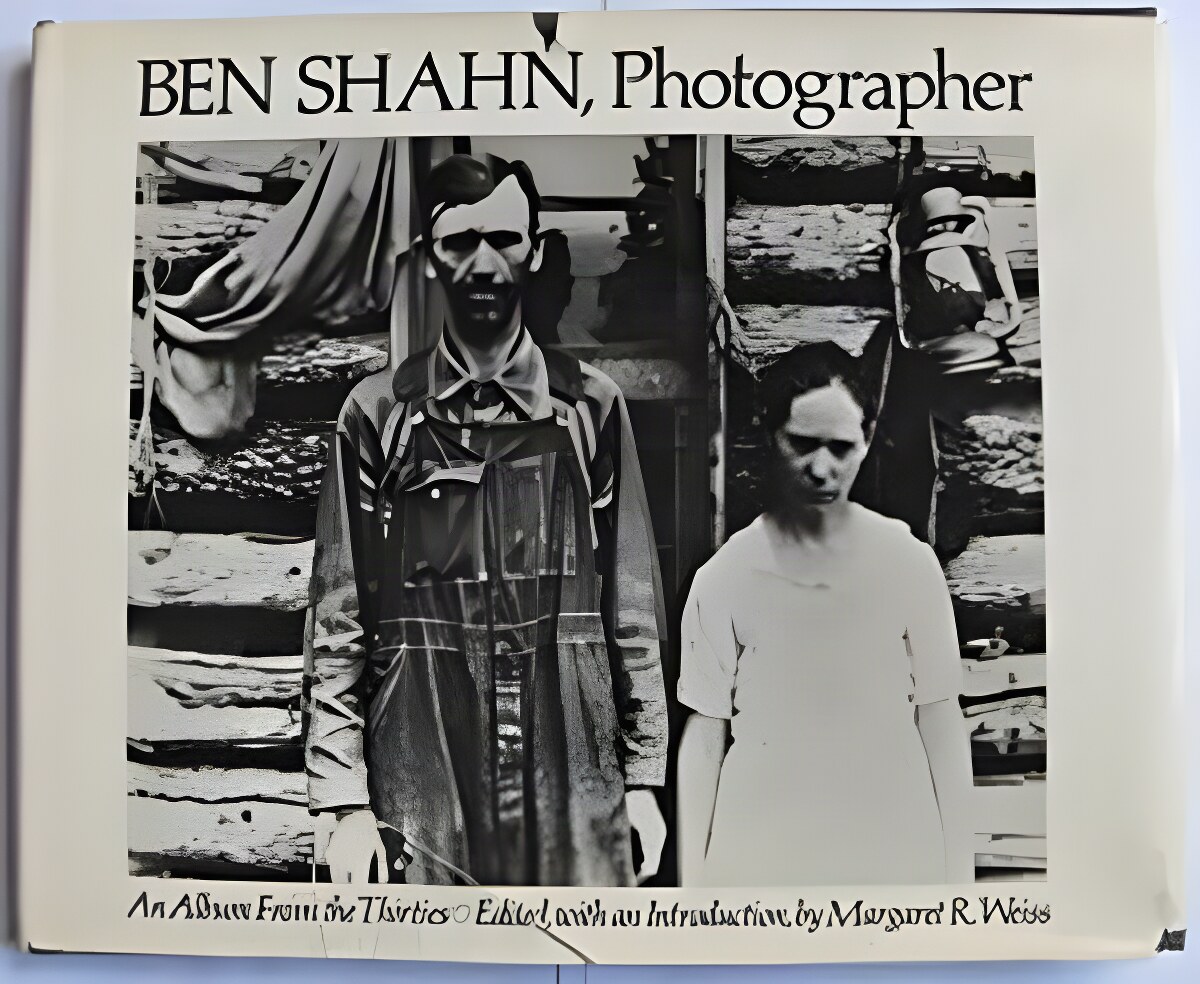
 "Ben Shahn's American Scene: Photographs, 1938by: Raeburn, John")
 "Ben Shahn's American Scene: Photographs, 1938by: Raeburn, John")
 "Benedict Arnold: Military Racketeerby: Sullivan, Edward Dean")
 "Benjamin Rush: Revolutionary Gadfly by: David Freeman Hawke")
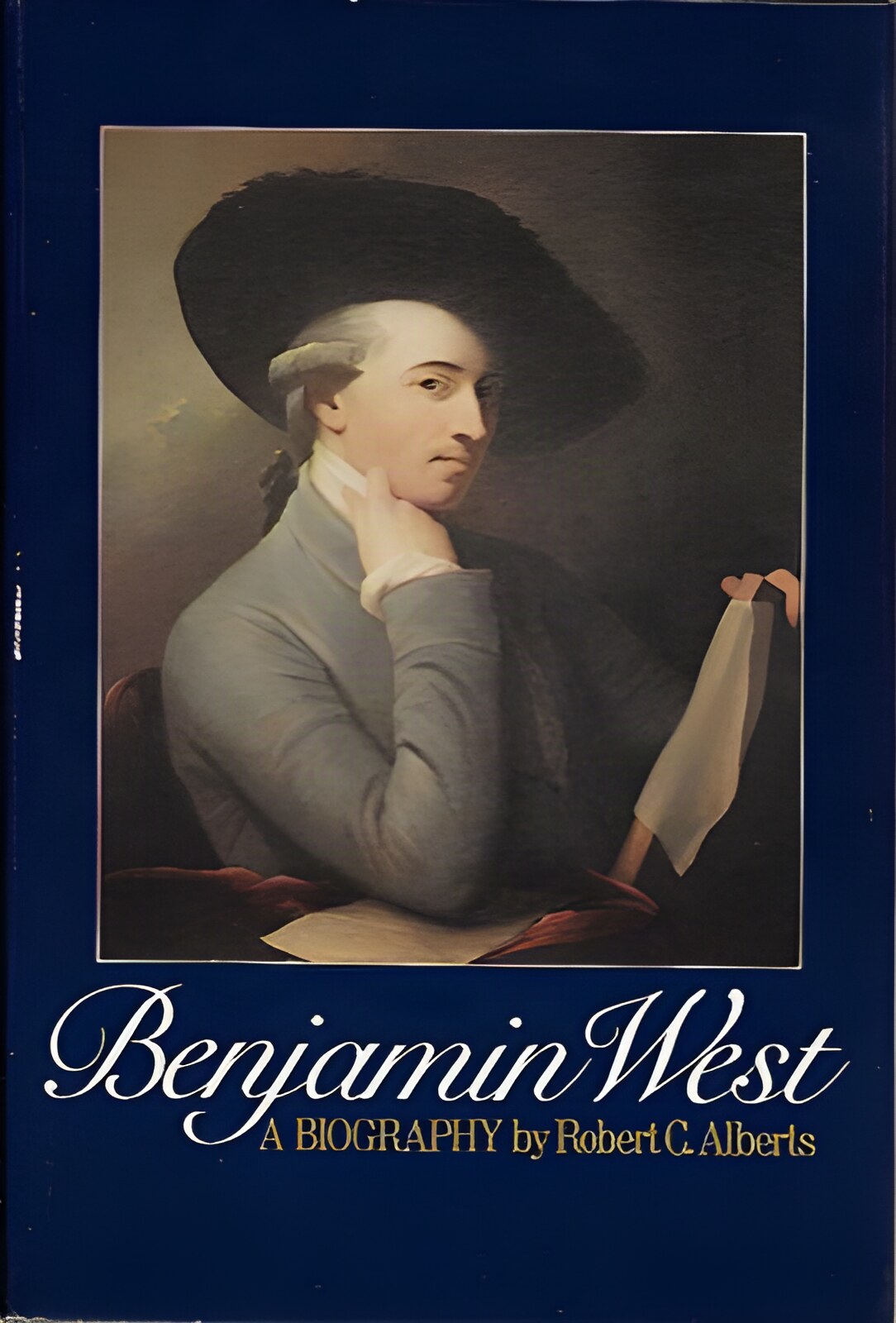
 "Benjamin West : American Painter at the English Courtby: Baltimore Museum of Art")
 "Benjamin West and His American Studentsby: Evans, Dorinda")
 "Benjy Brant: Dragooning with the Swamp Foxby: Koob, Theodora")
 "Bentley: The Way We Were: Portrait of a Hampshire Villageby: Brenda Updegraff (Ed.)")
 "Berenice Abbott: A Biographyby: Van Haaften, Julia")
 "Bergen County Historical Society Papers: Revolutionary War Round Table Papers 1960by: Albert T. Klyberg et. al.")