Hardcover. Boston, Faber and Faber, 1st, 1994, Book: Very Good, Dust Jacket: Very Good, Hardcover in a bright, unclipped dust jacket, pages. "I write of peoples and of a struggle." So begins A New World, an ambitious and extraordinary book that challenges conventional historical narrative by presenting episodes in North America's history through the eyes and voices of the Europeans who established the first colonial outposts here. Beginning with the swaggering John Smith at Jamestown and ending with the beleaguered Montcalm at Quebec, Arthur Quinn allows towering historical figures to emerge from an often beautiful, sometimes forbidding early American landscape and speak. An elderly William Bradford looks back with growing despair at the early promise of the Pilgrim colony at Plymouth. Governor John Winthrop tries to administer a dose of practicality to the Puritans of Massachusetts. Jesuit missionaries bring Christianity and disaster to the Huron Confederacy. A blustering Peter Stuyvesant watches Manhattan slip from Dutch grasp. William Penn's Holy Experiment in Pennsylvania goes increasingly awry. And, finally, the British and the French fight history's first world war for supremacy in the New World. Telling each story using the literary conventions of the day, Quinn casts North America's colonial beginnings as a multicultural epic, gripping the reader throughout with his uncanny eye and storytelling skill. Clean copy.
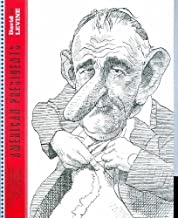
Softcover. Seattle, Fantagraphics, 1st, 2008, Book: Very Good, Dust Jacket: None, Softcover, 128 pages. For more than a half century, David Levine has taken on the most powerful men of the free world with only his pen and a bottle of India ink. That pen has proved to be mightier than the sword as Levine skewered, illuminated, satirized and condemned every president of the 20th century, as well as the most significant presidents from colonial times and the Civil War era. His drawing of Lyndon Johnson revealing a scar in the shape of Vietnam is considered one of the most recognized (and most copied) of the Vietnam era. His devastating wit and delicately cross hatched drawing have exposed the venality of the Nixon administration, the phoniness of the Reagan years, the duplicity of the Clinton era, and the evil of the Bush cabal. Nine administrations have come and gone during Levine's tenure, and with a new one on the horizon, the artist remains, unbowed, unfazed, and unrelenting. Now for the first time, the best of Levine's five decades of portraits of American Presidents and their administrations are gathered in a comprehensive and visually dynamic book. From John Adams to George Bush; from John Quincy Adams to George W. Bush; from the Great Emancipator to the Great Society, Levine has captured them all including newly elected Barack Obama.
Hardcover. Greenfield, MA, Ansel Phelps, 1st, 1824, Book: Fair, 312 pages. Hardcover with detached front cover to title page. All pages present. Moderate foxing to internal pages, light soil. Good candidate for rebinding.
Hardcover. New York, Morrow, 1st, 1993, Book: Very Good, Dust Jacket: Very Good, Hardcover, 160 pages. Illustrated in full color. In a clean, bright dust jacket. A commercial artist who started out sketching in the 1930s for pulp magazines, Lovell advanced to the glossier "slicks" in the 1950s and has since specialized in Old West, Plains Indian, and Civil War themes. He here presents from that long career his best canvases, among them his famed depictions of Lee's surrender and the Fifty-fourth Massachusetts' assault (in film, the climax of Glory). His spark of inspiration is usually to visualize an incident he has read of in the journals of the first white explorers and trappers, such as those of Lewis and Clark. Whether it's Clark firing his rifle or Indians encountering a cannon lost by Fremont, Native Americans are generally presented as wary but curious about the newcomers; Lovell puts the warfare outside of the frame. Themes aside, he works expertly with natural color, and though not a modern George Caitlin, his attention to the detail of Indian dress, carriage, and equipage is quite affecting, fully reflective of his respect for the cultures of Apache, Sioux, etc. A rich tribute to a captivating artist who evokes the West's vast landscape and its individual braves and traders in moods of exuberance and perseverance.
Hardcover. New York, William Morrow & Co, 1st, 1993, Book: Very Good, Dust Jacket: Very Good, 160 pages. Hardcover. Color illustrations. Clean, unmarked copy with only minor wear to dust jacket. "A commercial artist who started out sketching in the 1930s for pulp magazines, Lovell advanced to the glossier "slicks" in the 1950s and has since specialized in Old West, Plains Indian, and Civil War themes. He here presents from that long career his best canvases, among them his famed depictions of Lee's surrender". Gorgeous color plates.
Hardcover. Indianapolis/NY, Bobbs-Merrill, 1st, 1971, Book: Very Good, Dust Jacket: Good, Hardcover in a worn dust jacket, 490 pages, b&w frontis. Rush, the Philadelphia doctor who signed the Declaration of Independence, was an energetic, ambitious man given to devising reforms and, as the author puts it, meddling in politics. He studied medicine in Edinburgh and London, meeting Hume, Goldsmith, Samuel Johnson, et al. and, Hawke thinks, solidifying his republican disposition. Back in Pennsylvania he agitated for independence, made friends with John Adams, urged Paine to write Common Sense, and entered Congress. Apart from the recurrent epidemics of the age, the practice of military medicine and propaganda for resuming debt payments occupied Rush during the war; afterwards he turned to progressive education, speculated in land, fought paper money, equivocally supported the abolition of slavery, declared that tobacco is unhealthful, and boosted the Constitution before it was even written. Dust jacket chipped, faded in parts, clean internally.
Hardcover. NY, Atheneum, 3rd pr., 1999, Book: Very Good, Dust Jacket: Very Good, Hardcover in a bright, unclipped dust jacket. In a clear, straightforward style, Katz describes the settlement of the Ohio and Mississippi Valleys (covering Ohio, Indiana, Illinois, Michigan, Wisconsin, Minnesota, Iowa, Kansas, and Missouri) by African Americans seeking freedom, including biographical sketches of men and women who formed churches, started schools, or were politically active in their region. Some of these settlers were fugitive slaves; several set up stations on the Underground Railroad with the aid of the Quakers; others were farmers, poets, and soldiers. In several states, they helped form black regiments in the Civil War. Chronologically arranged, the book introduces many lesser-known personages not found in most collective biographies and places them in a broader context of U.S. history as a whole.
Hardcover. NY, Atheneum, 3rd pr., 1999, Book: Very Good, Dust Jacket: Very Good, Hardcover in a bright, unclipped dust jacket. In a clear, straightforward style, Katz describes the settlement of the Ohio and Mississippi Valleys (covering Ohio, Indiana, Illinois, Michigan, Wisconsin, Minnesota, Iowa, Kansas, and Missouri) by African Americans seeking freedom, including biographical sketches of men and women who formed churches, started schools, or were politically active in their region. Some of these settlers were fugitive slaves; several set up stations on the Underground Railroad with the aid of the Quakers; others were farmers, poets, and soldiers. In several states, they helped form black regiments in the Civil War. Chronologically arranged, the book introduces many lesser-known personages not found in most collective biographies and places them in a broader context of U.S. history as a whole.
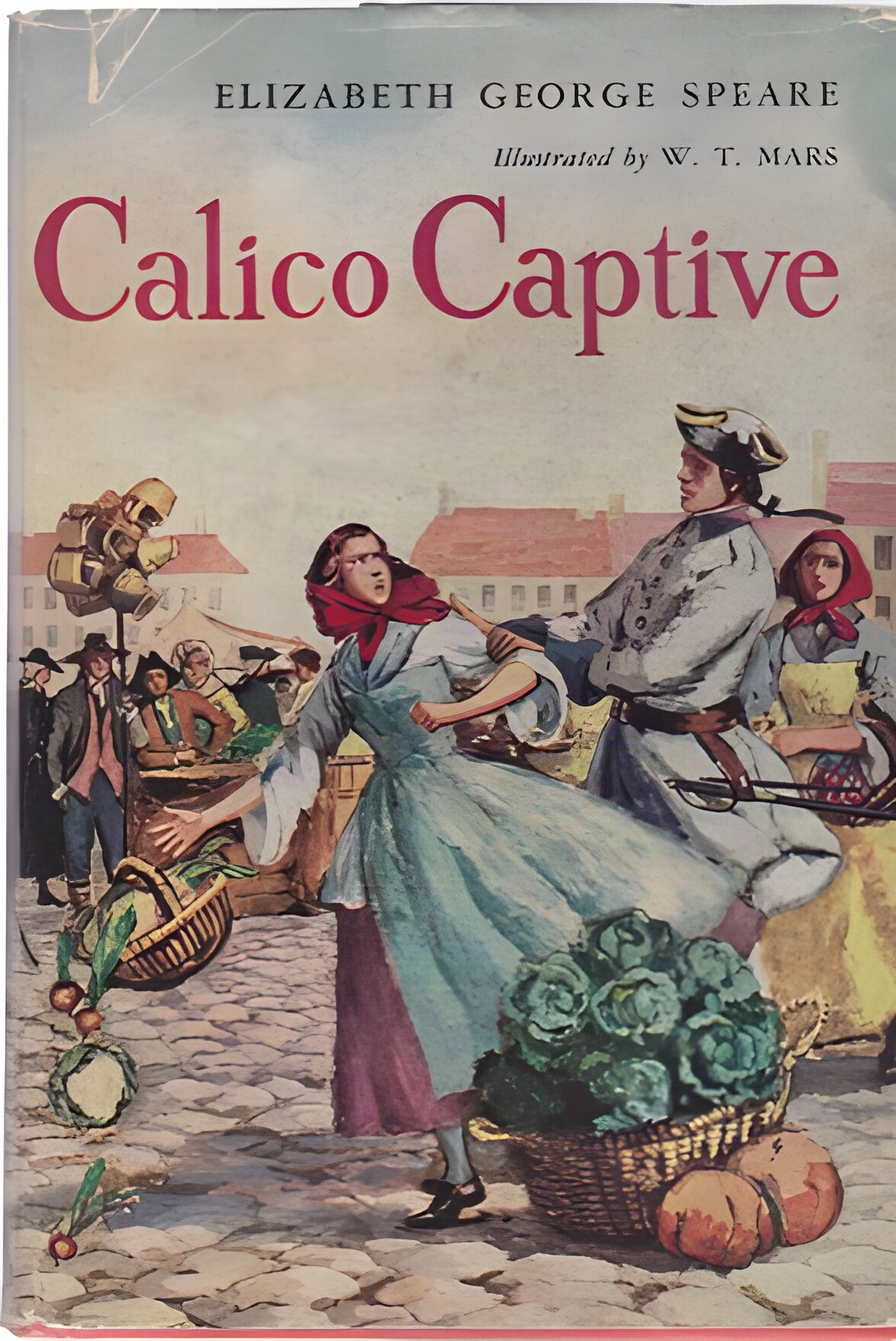
Hardcover. Boston, Houghton Mifflin, reprint, 1957, Book: Very Good, Dust Jacket: Very Good, Hardcover in a lightly worn dust jacket. $3.50 on flap, no date on title page, so assumed reprint. B&w illustrations by W.T. Mars. Short repaired tear, light chipping to dust jacket, clean copy. Newbery Award-winning author Elizabeth George Speare adapted the true account by Charlestown NH colonial settlers for this youth historical fiction. The lead character was developed from the imagined adventures of Miriam Willard, younger sister to Susanna Johnson. Set on the brink of the French & Indian War, the Johnson family was captured and marched to the French enclave in Montreal, where they were sold. Susanna wrote her account when she was 70.
Hardcover. New York, Harper and Brothers, reprint, 1890, Book: Very Good, Dust Jacket: None, Hardcover, blue cloth with gilt lettering and design, 295 pages, frontispiece portrait of author. The Indian War of 1876 in the Big Horn and Yellowstone campaigns. Previous owner's inscription on front fly leaf. Light fraying to bottom of spine otherwise very good, clean.
Softcover. Chapel Nill NC, University of North Carolina Press , 1st, 2002, Book: Very Good, Dust Jacket: None, Softcover, 419 pages. This sweeping, richly evocative study examines the origins and legacies of a flourishing captive exchange economy within and among native American and Euramerican communities throughout the Southwest Borderlands from the Spanish colonial era to the end of the nineteenth century. Indigenous and colonial traditions of capture, servitude, and kinship met and meshed in the borderlands, forming a "slave system" in which victims symbolized social wealth, performed services for their masters, and produced material goods under the threat of violence. Slave and livestock raiding and trading among Apaches, Comanches, Kiowas, Navajos, Utes, and Spaniards provided labor resources, redistributed wealth, and fostered kin connections that integrated disparate and antagonistic groups even as these practices renewed cycles of violence and warfare. Always attentive to the corrosive effects of the "slave trade" on Indian and colonial societies, the book also explores slavery's centrality in intercultural trade, alliances, and "communities of interest" among groups often antagonistic to Spanish, Mexican, and American modernizing strategies. The extension of the moral and military campaigns of the American Civil War to the Southwest in a regional "war against slavery" brought differing forms of social stability but cost local communities much of their economic vitality. Clean copy.
Hardcover. NY, Random House, 1st, 2013, Book: Very Good, Dust Jacket: Very Good, Hardcover, 228 pages. At the beginning of World War II Cecil Beaton was commissioned by the British government to photograph the home front. He set to work recording both the destruction of the city, and the heroism of Londoners under attack. He conducted a survey of Bomber and Fighter Commands for the RAF, which was published with his own astute commentary. Beaton was an effective propagandist, but his voice, like his photographs, was touchingly elegant. Beaton's wartime work amounted to 7,000 photographs. He traveled through the Western Desert and on to Iraq, Palestine, Transjordan, Syria, and India, where he photographed the final days of the Raj in New Delhi and Calcutta before joining the Burma campaign. He ended the war deep in Chinese territory where he witnessed the Nationalist resistance to the Japanese. This collection of Beaton's masterful WWII photography captures the home front, the Middle East, arms and vehicle manufacturing in Britain, India, the Burma Campaign, and the war in China. It also includes a chronology placing events in Beaton's life alongside developments in photography, journalism, and the arts; war photography; and world events. His original photographs are reproduced large on the page, alongside his diary extracts, allowing for deep scrutiny and appreciation of the images and their artist.
Hardcover. Norman, OK, University of Oklahoma Press (, 1st, 1989, Book: Very Good, Dust Jacket: Very Good, Hardcover, 415 pages, b&w illustrations. Light edge wear to dust jacket, creases to front flap. Light soiling to edges. Else a clean, tight copy. The first major battle between the U.S. Army and the Cheyenne Indians took place on the south fork of the Solomon River in present-day northwest Kansas. In this stirring account, William Y. Chalfant recreates the human dimensions of what was probably the only large-unit sabre charge against the Plains tribes, in a battle that was as much a clash of cultures as of cavalry and Cheyenne warriors.
NY, Clarion Books, 1st US, 1999, Book: Very Good, Dust Jacket: Very Good, Hardcover in a bright, unclipped dust jacket. 48 pages. Color photos and illustrations. Illustrated end papers. More than 130 full-color photographs adorn this handsome re-creation of daily life in a Plains Indian village in 1868. Readers will meet Real Bird and his family, part of a Northern Cheyenne tribe in southeastern Montana. Each member has an important role: Men prepare to become warriors and hunters, while women learn to raise crops and build a home-a tipi-from poles and buffalo hides. The clothes the family wears, from elaborate ceremonial headdresses to colorful beaded moccasins; the foods they eat; the games they play; the crafts and jewelry they make; and the spiritual rituals they perform are among the many topics included. This large-format book, with clear text and informative sidebars, provides a detailed pictorial account of the Plains Indian life more than a century ago. Clean copy.
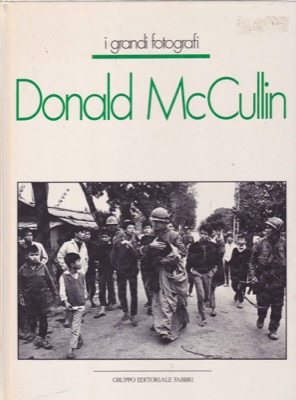
Hardcover. Italy, Gruppo Editoriale Fabbri, 1st, 1982, Book: Very Good, Dust Jacket: None, Hardcover, glossy pictorial boards. A retrospective survey of the photographs of Donald McCullin. The text is in Italian. He covered lots of violent events, war, civil war, terrorism. 50+ photos in this book from: Northern Ireland, Vietnam, Biafra, Cambodia, Beirut, India. ITALIAN TEXT. Clean copy.
Hardcover. NY, Harcourt, Brace & Co, reprint, 1946, Book: Good, Dust Jacket: Good, Hardcover in a worn, chipped dust jacket. A fine adventure story for young people. Soon after their dragonship lands on the coast of Vineland, Erik--the youngest of the Vikings--is captured by a raiding party of Mengwi warriors. How heescapes with a friendly Algonquin Indian with whom he lives for many moons, and how he and a rescue party from the dragon-ship aid the Algonkins to defeat the Mengwi make a story full of excitement. 199 pages, b&w illustrations by Lorence Bjorklund. Text pages tanning, probably a book club edition.
Softcover. Cloud Books, 1st, 2011, Book: Very Good, Dust Jacket: None, Softcover, 526 pages. Based on nearly 40 hours of interviews, Escaping from Reality Without Really Trying is the memoir of a 61-year-old, life-long merchant seaman re-counting his fantastic, hilarious, and politically incorrect exploits. He's a sailor-scholar and an individualist anarchist; he's read Voltaire and The Egyptian Book of the Dead. He admits to working at his hobby, sailing, to keep up his real occupation, drinking.He's lived 40 years of adventures around the world, including an incursion into Cambodia during the Vietnam War; a prison break from a Ceylon jail; a dockside fistfight in the Philippines in 1977; a 2-week stowaway run on a British merchant ship sailing around South Africa; meeting Omar Sharif in Aqaba, Jordan; an around-the-world trip (with Greg Cousins, the third mate on the Exxon Valdez, and we learn what really happened!) that ends in Alang, India and the beaching of the ship to be cut up for scrap metal; seeing the rise and fall of communism and capitalism in Africa and the newly independent states after the Soviet Union's collapse and division; and an ammunition delivery to Kuwait on the eve of the 2003 American-led invasion of Iraq.
Hardcover. New York, Scribner, 1st, 2018, Book: Very Good, Dust Jacket: Very Good, 287 pages. Hardcover with dust jacket. Black and white pictures in center. Clean, tight copy with light edgewear to cover boards.
Softcover. Seattle WA, University of Washington Press, 1st, 2000-06-01, Book: Very Good, Dust Jacket: None, Softcover, 122 pages. Like new in publishers shrink-wrap.
Softcover. Seattle, University of Washington Press, 1st, 2000, Book: Very Good, Dust Jacket: None, Softcover. Like new in publishers shrink-wrap. Chief Joseph's exhausted words of surrender, 'Hear me, my chiefs, I am tired; my heart is sick and sad. From where the sun now stands, I will fight no more forever', are the accepted end of the Nez Perce War of 1877, in which several bands of Nez Perce attempting to find a new home outside their diminished Idaho reservation clashed with the U.S. military (and occasionally other Indians) along the Clearwater and Big Hole Rivers, and finally at the foot of the Bear Paw Mountains. However, a number of Nez Perce escaped transportation to Indian Territory with Joseph and continued their flight to Canada, with perhaps a hundred eventually joining Sitting Bull's Lakota."I Will Tell of My War Story" reproduces, describes, and discusses a remarkable series of drawings by an anonymous Indian artist who fought with Chief Joseph and later reached Canada. The drawings, in red, blue, and black pencil, include portraits of principal participants in the war, battle scenes, and views of Nez Perce camp life and celebrations during the war and after. The drawings are preserved in a small pocket ledger labeled 'Cash Book' on the front, which was acquired by Indian Agent Charles D. Warner in the 1880s. It was willed by him to a family living in northern Idaho, and is now in the collection of the Idaho State Historical Society. Scott Thompson worked closely both with the owners and with members of the Nez Perce community in preparing his manuscript. Thompson's detective work and research methods to identify Nez Perce and other parties pictured in the Cash Book make fascinating reading. He is careful to point out what is speculation and what has been documented or attested to by experts on dress, weapons, ceremony, and other aspects of Native culture. The Cash Book drawings are unique in several ways. They are one of very few firsthand pictorial records of the Nez Perce War, representing an even scarcer record of this war as seen from the Indian viewpoint. They contain invaluable historical and ethnographic information not only explicit in the form of military and Native dress, regalia, and quite graphic battle scenes, but also implicit. The drawings reveal an important stage of cultural adaptation as shown by the mixture of white and Native goods combined in Nez Perce material culture during the 1870s and 1880s, and by the artist's assimilation of white/European drawing techniques such as texture and perspective. The artist combined these drawing techniques with Native art traditions to make exceptionally effective pictorial communications. Scott M. Thompson is an art teacher at Chase Middle School in Spokane, Washington.
Softcover. Bangor ME, Bangor and Aroostook Railroad , 1st, 1941, Book: Very Good, Dust Jacket: None, Softcover. Published by the Bangor and Aroostook Railroad, this wonderfully evocative magazine brings the unspoiled Maine woods of pre-World War II back to life. The magazine has articles on a variety of topics, including camping, canoeing, Indian relics, Maine guides, Moosehead Lake and climbing Mt. Katahdin. Illustrated throughout with black and white photos designed to make you drop everything and head North. With canoeing map, list of big game records for 1940, Sportsman's Directory of camps, hotels and fishing waters reached by the railroad and 39 pages of vintage advertisements. 128 pages. Light edgewear, small name on first page, otherwise clean.
Hardcover. London, Griffith Faqrran & Co., Book: Very Good, Dust Jacket: None, Hardcover, red cloth stamped in gilt and 2-colors, 343 pages. Illustrated with 19 b&w plates, illustrator uncredited. All edges gilt. Previous owner's inscription on inside front cover (dated 1895). A story set during the Indian Rebellion of 1857. The story follows two British brothers, Dick and Ned Warrender, who are the sons of an officer in the local garrison. Clean copy.
Hardcover. Hartford CT, Hurlbut, Scranton & Co., 1st, 1864, Book: Very Good, Dust Jacket: None, Hardcover, 763 pages, illustrated with many full-page plates, most hand-colored (including second title page). Leather bound with some splitting along spine edges. Black spine label with gilt lettering. Internally very good, minor foxing.
Hardcover. New Haven CT, Yale University Press;, 1st, 2009, Book: Very Good, Dust Jacket: Very Good, Hardcover, 180 pages. John Gutmann (1905-1998) was one of America's most distinctive photographers. Born in Germany where he trained as an artist and art teacher, he fled the Nazis in 1933 and settled in San Francisco, reinventing himself as a photo-reporter. Gutmann captured images of American culture, celebrating signs of a vibrant democracy, however imperfect. His own status as an outsider--a Jew in Germany, a naturalized citizen in the United States--informed his focus on individuals from the Asian-American, African-American, and gay communities, as well as his photography in India, Burma, and China during World War II. This handsome book acknowledges Gutmann's place in the history of photography. Drawing on his archive of photographs and papers at the Center for Creative Photography, it presents both unfamiliar works and little-known contexts for his imagery, linking his photography to his passionate interest in painting and filmmaking, his collections of non-Western art and artifacts, and his pedagogy. In addition to a major essay by Sally Stein, the volume includes an introduction by Douglas R. Nickel, and an overview of the Gutmann archive by Amy Rule.


 "Antiquarian Researches Comprising A History of the Indian Wars in the Country Bordering Connecticut River and Parts Adjacent and Other Interesting Events.by: Hoyt, E.")
 "Art of Tom Lovell, The - An Invitation to Historyby: Hedgpeth, Don/Walt Reed")
 "Art of Tom Lovell, The: An Invitation to Historyby: Hedgpeth, Don and Walt Reed")
 "Benjamin Rush: Revolutionary Gadfly by: David Freeman Hawke")
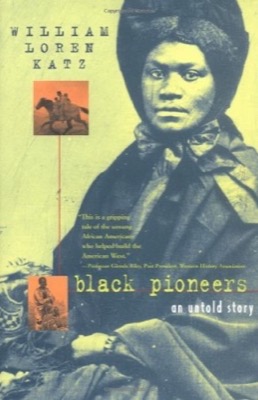
 "Black Pioneers: An Untold Storyby: William Loren Katz")
 "Campaigning With Crook and Stories of Army Lifeby: King, Captain Charles")
 "Cecil Beaton: Theatre of Warby: Beaton, Cecil")
 "Cheyennes and Horse Soldiers: The 1857 Expedition and the Battle of Solomon's Forkby: Chalfant, William Y.")
 "Daily Life In A Plains Indian Village 1868by: Terry, Michael Bad Hand")


 "God, War, and Providence: The Epic Struggle of Roger Williams and the Narragansett Indians against the Puritans of New Englandby: Warren, James A.")
 "I Will Tell of My War Story: A Pictorial Account of the Nez Perce War (Samuel and Althea Stroum Book)by: Thompson, Scott M.")
 "I Will Tell of My War Story: A Pictorial Account of the Nez Perce War (Samuel and Althea Stroum Book)by: Thompson, Scott M.")

 "Indian Races of North and South America, The: Including the Late Sioux War and Indian Massacre in Minnesotaby: Brownell, Charles de Wolf")
 "John Gutmann: The Photographer at Workby: Sally Stein , Douglas R. Nickel, et al.")