Hardcover. Paris, Braun & Co., 1st, 1928, Book: Very Good, Dust Jacket: None, 150 pages of duotone plates, all photographed by Gerstmann. Introduction by Dr. F. Ahlfeld, 22 page index in English, Spanish and German. Frontispiece portrait of photographer with tissue guard, map at rear with his travels throughout Bolivia delineated. Olive suede covers with spine showing fading, gilt on front cover and spine faded, otherwise clean, bright copy. Hinges tender but no cracking.
hardcover. NY, Aperture, 1st, 1989, Book: Very Good, Dust Jacket: Very Good, 105 pages. Hardcover with dust jacket. Black & white photos by Klich. Review-slip laid-in. Essays by Cornell Capa and Bengt Borjeson. By combining his intimate and disturbing photographs with police and hospital records, handwritten notes left behind by Beth, and other texts, author Ken Klich searches for a rationale -what could cause this intelligent child to end up as a prostitute and drug addict?
Hardcover. Brooklyn, NY, PowerHouse Books, 1st, 2013, Book: Very Good, Dust Jacket: Very Good, 200 pages. Hardcover with dust jacket. Remainder mark on bottom edge, otherwise, clean, unmarked copy with only minor wear to dust jacket. Color and Black and white pictures throughout. Explores the genre of self-portraits through nineteenth, twentieth, and twenty-first-century photographic techniques, including also block prints, watercolor drawings, and accompanying essays.
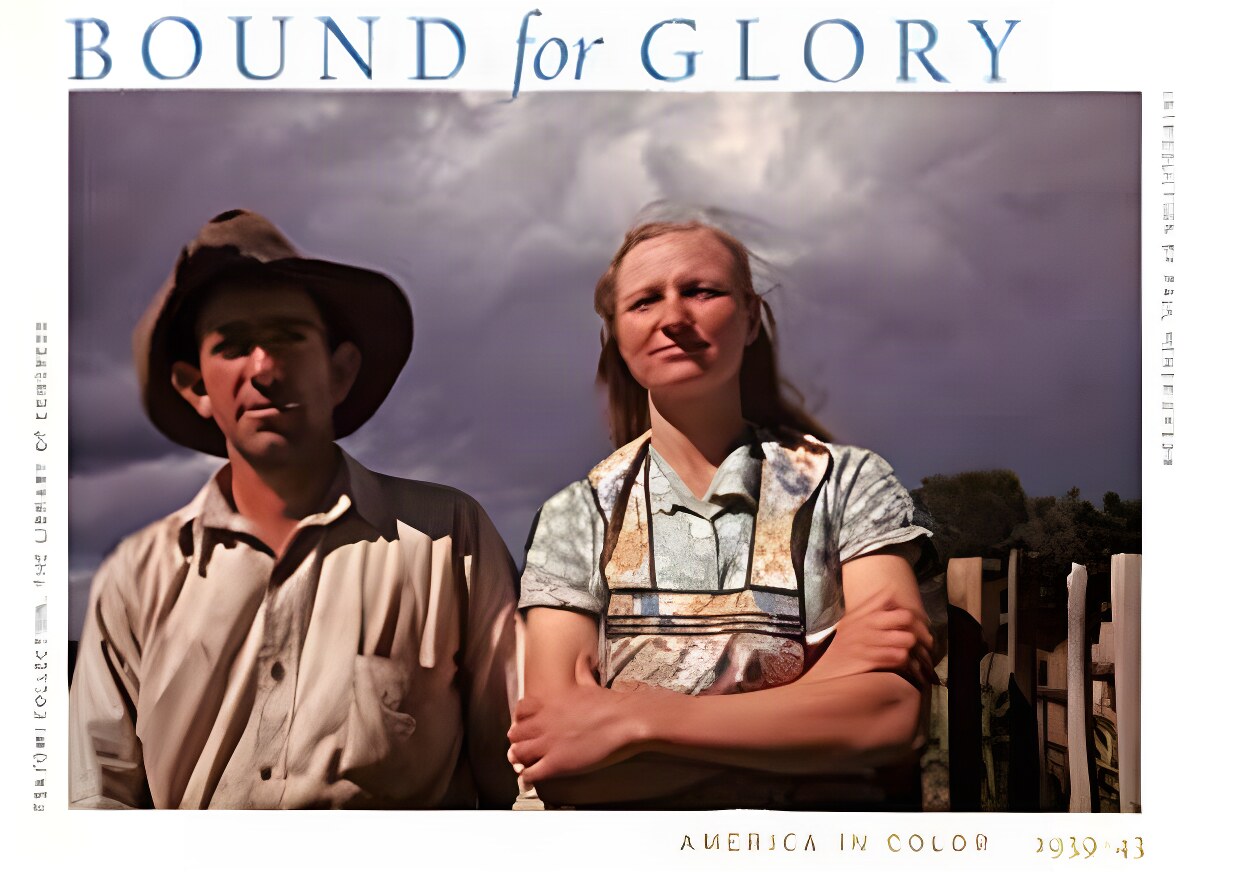
Hardcover. NY, Abrams, 1st, 2004, Book: Very Good, Dust Jacket: Very Good, Hardcover, 192 pages. Taken from 1939 to 1943 under the auspices of the Farm Security Administration and the Office of War Information, these 175 "lost" photos feature shots by Russell Lee, Andreas Feininger and Marion Post Wolcott, using the then-revolutionary technology of Kodachrome film. Color photographs taken before 1939 have largely deteriorated, so these surviving photos are later than the most familiar b&w Depression-era shots. This 11 3/4 "x8 1/2 " volume thus "colorizes" one's normally black-and-white impressions of a very vibrant time, as Hendrickson (Sons of Mississippi) notes in his introduction. The logic behind the arrangement of the photos, which at first seems largely random, as it follows neither photographer, location nor chronology, becomes clear by the end of the book: the U.S.'s industrial rise. Images of urban lethargy and farmhands picking cotton under hot blue skies (the unbearable conditions of cotton-picking somehow seem more apparent in color) gradually give way to images of mobility, mechanization and a changing economy. Arnold T. Palmer's gleaming portraits of Rosie the riveter-like aircraft workers follow Jack Delano's earthier photos of male railroad workers, their sweaty and intent faces caked with soot. Tellingly, the book ends with photos of bombers flying over California.
Hardcover. NY, United Technologies Corp., 1st , 1988, Book: Very Good, Dust Jacket: None, Hardcover, 120 pages. A catalogue for the exhibition Bourke-White: A Retrospective, organized and circulated by the International Center of Photography, New York, which toured various US museums in 1988-90. Black cloth with photo portrait of the legendary photojournalist with large-format camera perched on side of skyscraper affixed to front cover. Titles stamped in white on front boards and spine. Beautiful reproductions.
Hardcover. Santa Fe NM, Twin Palms Pub, 1st, 1998, Book: Very Good, Dust Jacket: Very Good, Hardcover, 112 pages, Like new in publisher's shrink-wrap. In a series of intimate portraits infused with purpose, determination, and the physical and emotional struggles of intense training, Markus gives a more human face to a sport that rewards only those from its highest ranks. Far from the bright lights and stereotyped fame, these young fighters possess unrivaled dignity and grace.
Hardcover. Santa Fe NM, Twin Palms Pub, 1st, 1998, Book: Very Good, Dust Jacket: Very Good, Hardcover, 112 pages, Like new in publisher's shrink-wrap. In a series of intimate portraits infused with purpose, determination, and the physical and emotional struggles of intense training, Markus gives a more human face to a sport that rewards only those from its highest ranks. Far from the bright lights and stereotyped fame, these young fighters possess unrivaled dignity and grace.
Hardcover. Boston, Bulfinch, 1st, 2001, Book: Very Good, Dust Jacket: Very Good, Hardcover in a lightly worn dust jacket. Roaming Paris streets by night in the early 1930s, Brassai created arresting images of the city's dramatic nocturnal landscape. First published in French in 1932, this new edition brings one of Brassai's finest works back into print. The back alleys, metro stations, and bistros he photographed are at turns hauntingly empty or peopled by prostitutes, laborers, thugs, and lovers. "Paris by Night" is a stunning portrait of nighttime in the City of Light, as captured by its most articulate observer. 62 photos. Short closed tear to rear panel of dj, clean copy.
NY, Abrams, 1st, 1999, Book: Very Good, Dust Jacket: Very Good, Hardcover, 367 pages. Brassai: The Eye of Paris is both the catalog of an exhibition of Brassai's photographs organized by the Houston Fine Arts Museum and a valuable biography of the artist. In 1932, only three years after he purchased his first camera (a Leica), Brassai published a portfolio of 64 photos titled Paris by Night that caused an immediate sensation. His lively eye (seen in an enigmatic photograph at the beginning of the book) captured fresh, unique images of the city and its citizens. Fascinated by the underworld, he moved easily among gangsters and prostitutes in bars and bordellos; he was equally at home among the fashionable and wealthy, and just as devastating in his depiction of them. He used magnesium flares for low-contrast shadows, catching his subjects in natural poses at significant moments. The wide range of Brassai's work is suggested by his formal nudes, which have an affinity with Edward Weston's, and his informal portraits, which remind viewers of Diane Arbus, who admired his work. Brassai was a central figure in the intellectual and artistic circles of Montparnasse that made Paris the most exciting city in the world during the 1930s. In a long essay that includes lively anecdotes of the photographer's relationships with Picasso, Henry Miller, Kertesz, and many other luminaries, the author re-creates the aesthetic and philosophical ferment of the period. Brassai: The Eye of Paris recognizes the artist's talents in five different media--photography, filmmaking, sculpture, writing, and drawing--but focuses on what he is best known for: lyrical and penetrating photographs of the City of Light.
Hardcover. Atlas, 1st, 2008, Book: Very Good, Dust Jacket: Very Good, Hardcover, 224 pages. In the spring and summer of 1961, several hundred Americans--blacks and whites, men and women--converged on Jackson, Mississippi, to challenge state segregation laws. The Freedom Riders, as they came to be known, were determined to open up the South to civil rights: it was illegal for bus and train stations to discriminate, but most did and were not interested in change. Over 300 people were arrested and convicted of the charge "breach of the peace." Collected here in a richly illustrated, large-format book featuring over seventy contemporary photographs, alongside the original mug shots, and exclusive interviews with former Freedom Riders, is that testament: a moving archive of a chapter in U.S. history that hasn't yet closed.
Hardcover. NY, Assouline, 1st, 2002, Book: Very Good, Dust Jacket: Very Good, Hardcover, 190 pages, color plates. Step inside the fabulous lives of 40 architects, artists, designers, and writers to discover why they embody everything London is known for: wit, cutting-edge style, and glamour. Along with elegant photographs by Vanity Fair photographer Jonathan Becker are intimate anecdotes written by the people who know these bright young things best. In a bright, unclipped dust jacket.
Hardcover. New York, Skira Rizzoli, 1st, 2011, Book: Very Good, Dust Jacket: Very Good, 240 pages. Hardcover with dust jacket. Very clean, unmarked copy still in shrink wrap. Full color, full page photographs throughout. Dust jacket designed to look torn with trash underneath. Tight copy. The work of counterculture artists Tim Noble and Sue Webster, whose art is a complex punk-rock take on modern consumer culture. Enormous neon signs, intricate silhouette portraits constructed of trash heaps, and a work titled Instant Gratification: British artists Tim Noble and Sue Webster thrive on the thrills of illumination, love, language, shadows, garbage, and cash. British Rubbish showcases their work in all its splashy glory. Their art evokes both gaudy Vegas culture and down-and-dirty punk rock: a combination of cynical extravagance and a defiant, rebellious sensibility. Extravagant, irreverent, sometimes coarse, and always sharply clever, British Rubbish is both a paean to and sly denunciation of conspicuous consumption.
Hardcover. New York, powerHouse Books, 1st, 2007, Book: Very Good, Dust Jacket: None, Hardcover, glazed boards, 160 pages. For over three years, writer Anthony LaSala and photographer Seth Kushner trekked tirelessly across the borough, documenting these charismatic characters in 'The Brooklynites,' a collection of images, interviews, and essays. Clean, bright copy. No dust jacket issued.
Hardcover. NY, Agrinde Publications, 1st, 1978, Book: Very Good, Dust Jacket: Very Good, Hardcover in publisher's unclipped dust jacket, brown paper-covered boards over beige cloth spine, gilt lettering to spine, copiously illustrated with mostly full-page or two-page renderings of Davidson's photography, 167 pages, 11 1/4 X 11 3/4", 116 black and white photos. Introduction by Henry Geldzahler. Small ink notation on rear free endpaper otherwise clean.
Hardcover. NP, Daylight Books, 1st, 2014, Book: Very Good, Dust Jacket: None, Hardcover, oblong pictorial covers. Bull City Summer: A Season At The Ballpark unites a group of artists and documentarians (Hiroshi Watanabe, Alec Soth, and Hank Willis Thomas) around the 2013 season of minor league baseball in Durham, North Carolina, evoking an atmosphere described by The New York Times as "lazing out on the porch of a summer's night and meditating to your favorite ball team." INSCRIBED BY EDITOR STEPHENSON on the title page. Clean copy.
Softcover. Atglen PA, Schiffer , 1st, 2004, Book: Very Good, Dust Jacket: None, Softcover, 128 pages, b&w photos throughout. As the 1950s dawned, a new level of sexual openness developed in behavior and dress. In magazines and on beaches, women appeared in revealing two-piece bathing suits called bikinis. Bunny Yeager, model and commercial photographer, forged a unique role in 1952, photographing bikinis and the beautiful women who wore them. This collection of Bunny's work from the 1950s features 169 original photographs and featuring little known models and women she helped launch to fame, such as Betty Page. The bikinis they wore were often of Bunny's own creation, sewn with her own hands. Clean, bright copy.
Hardcover. Portland, Or., Collectors Press, 1st, 2004, Book: Very Good, Dust Jacket: Very Good, Hardcover, 176 pages, illustrated throughout with portraits of vintage burlesque dancers in color and b&w. Minor dust jacket edge wear, otherwise, very clean and tight copy.
Hardcover. NY, powerHouse Books, 1st, 2008, Book: Very Good, Dust Jacket: Very Good, Hardcover, 268 pages. A privileged witness to the glamorous spirit of the 1950s and 60s, Milton H. Greene photographed the greatest artists, actors, and personalities of the twentieth century, including Marilyn Monroe, Frank Sinatra, Grace Kelly, Marlene Dietrich, Sammy Davis Jr., Elizabeth Taylor, Cary Grant, Sophia Loren, Groucho Marx, Audrey Hepburn, Judy Garland, Lauren Hutton, Alfred Hitchcock, Sir Laurence Olivier, Ava Gardner, Steve McQueen, Claudia Cardinale, Paul Newman, Lauren Bacall, Dizzy Gillespie, and Catherine Deneuve, amongst countless others. Renowned for his fashion photographs, Greene perfectly captured the fantasy, elegance, and beauty of his models, for which he secured assignments from major national publications and prestigious advertising clients. But That's Another Story: A Photographic Retrospective of Milton H. Greene reproduces, in their original clarity and integrity, pictures that have been largely unavailable since Greene's death in 1985. Organized thematically, the book features both the widely published fashion and celebrity series (including the campaign Greene shot for American Airlines in the 1950s), and intimate backstage candids. A whole chapter is dedicated to photos of Marilyn Monroe, where some of her most iconic portraits mix with private moments from her life. Ultimately, Greene's photography invites us back to an era when film and fashion, art and style were at their highest.
Hardcover. New York, Oxford University Press, reprint, 1990, Book: Very Good, Dust Jacket: Good, 320 pages. Hardcover with dust jacket. Light edge wear to dust jacket. LIght chipping. Internally clean and tight.
Hardcover. Garden City, N.Y., 1st, 1975, Book: Very Good, Dust Jacket: Very Good, Hardcover. Unpaginated, b&w photographs throughout, 2 photographs of Casals laid in. Light edge wear, rubbing to price-clipped dust jacket. Else a very clean, tight copy.
Hardcover. Ostfildern GR, Hatje Cantz, 1st, 2011, Book: Very Good, Dust Jacket: None, Like new in publisher's shrink-wrap. Catherine Opie (born 1961) has forged new idioms in both portrait and landscape photography, frequently combining the two genres to explore how people occupy different landscapes--from high school football players on the field to ice fishermen on frozen lakes, to surfers waiting for the next wave.
Hardcover. NY, Simon & Schuster, 1st, 1988, Book: Very Good, Dust Jacket: Very Good, Hardcover, 228 pages. Illustrated with full color and black & white photographs. Clean, bright copy. British photographer Beaton was noted for his portraits of royalty. His career spanned 50 years and included well-known portraits of King Geroge V and Queen Mary; his last official photo was in 1979. More than just a photographer, Beaton helped the royal family develop a worldwide image, an important component in the evolution and stability of the British monarchy as symbolic leaders of the Commonwealth. His photos were also an essential part of Britain's public relations and morale efforts, especially after Edward VIII's abdication and during World War II. A splendid compendium of Beaton's best works, supplemented by text explaining his importance.
Hardcover. Little, Brown, & Co., New York Graphic Society, 1st US, 1986, Book: Very Good, Dust Jacket: Very Good, 256 pages, hardcover with dust jacket. Retrospective on famed artist. Edited by Dr. David Mellor. With color and b&w plates throughout. Light edgewear and rubbing to dust jacket. Light fading and foxing to front flyleaf. Unmarked. A bright and tight copy.
Hardcover. Chicago, University of Chicago Press, 1st, 2016, Book: Very Good, Dust Jacket: Very Good, Hardcover 192 pages. On September 25, 1890, the Mormon prophet Wilford Woodruff publicly instructed his followers to abandon polygamy. In doing so, he initiated a process that would fundamentally alter the Latter-day Saints and their faith. Trading the most integral elements of their belief system for national acceptance, the Mormons recreated themselves as model Americans. Mary Campbell tells the story of this remarkable religious transformation in Charles Ellis Johnson and the Erotic Mormon Image. One of the church's favorite photographers, Johnson (1857-1926) spent the 1890s and early 1900s taking pictures of Mormonism's most revered figures and sacred sites. At the same time, he did a brisk business in mail-order erotica, creating and selling stereoviews that he referred to as his "spicy pictures of girls." Situating these images within the religious, artistic, and legal culture of turn-of-the-century America, Campbell reveals the unexpected ways in which they worked to bring the Saints into the nation's mainstream after the scandal of polygamy.

 "Bolivia: 150 Grabadoes en Cobreby: Gerstmann, Roberto")
 "Book of Beth, Theby: Klich, Kent")

 "Bourke-Whiteby: Goldberg, Vicki")
 "Boxersby: Markus, Kurt")
 "Boxersby: Markus, Kurt")
 "Brassai: Paris by Night by: Brassai, Foreword by Paul Morand")
 "Brassai: The Eye of Parisby: Tucker, Anne W.")

 "Bright Young Things : Londonby: Ocampo, Brooke De and Jonathan Becker")
 "British Rubbishby: Noble, Tim/Sue Webster")
 "Brooklynites, Theby: Seth Kushner, Anthony LaSala")
 "Bruce Davidson Photographsby: Bruce Davidson")


 "Burlesque: Legendary Stars of the Stageby: Briggeman, Jane")
 "But That's Another Story: A Photographic Retrospective of Milton H. Greeneby: Greene, Amy")
 "Camera Portraits: Photographs from the National Portrait Gallery, London 1839-1989by: Rogers, Malcolm")
 "Casalsby: Henle, Fritz (photographer)")
 "Catherine Opie: Empty and Fullby: Medvedow, Jill")
 "Cecil Beaton - The Royal Portraitsby: Strong, Roy")
 "Cecil Beaton: A Retrospectiveby: Beaton, Cecil")
 "Charles Ellis Johnson and the Erotic Mormon Imageby: Mary Campbell")