Hardcover. Heidleburg, Kehrer Verlag, 1st, N/A, Book: Very Good, Dust Jacket: None, Hardcover. Like new in publisher's shrink-wrap. 95 pages. Collection of color photographs of families and friends photographed by the Pennsylvania photographer.
Softcover. Germany, Schirmer/Mosel, 1st, 1996, Book: Very Good, Dust Jacket: None, Softcover. 128 pages, b&w photos. Portraits include Alfred Hitchcock, Grace Jones, Marilyn Manson, Radiohead, Tubac, Andy Warhol, Mike Tyson , Frank Stella, Louise Bourgeois, Jeff Koons, Cindy Sherman. Bright, clean copy.
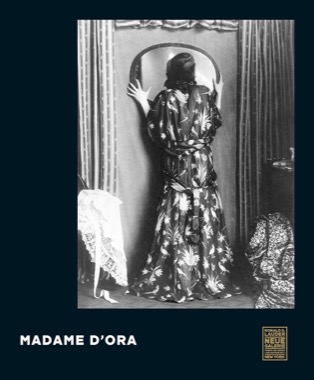
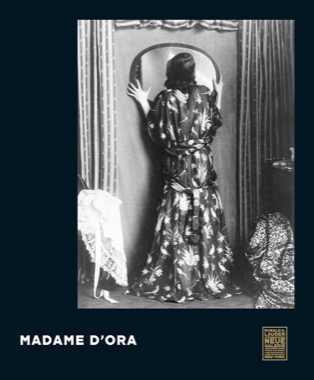
Hardcover. Munich, Prestel Verlag, 1st, 2020, Book: Very Good, Dust Jacket: Very Good, Hardcover in a bright dust jacket, pages. "Born Dora Kallmus (1881-1963), the Austrian fashion and portrait photographer who went by the moniker Madame d'Ora was the most acclaimed portraitist of fin de siecle Vienna. After relocating to Paris in the 1920s, she opened one of the most stylish Art Deco portrait studios where her models included Pablo Picasso, Josephine Baker, and Collette, among many others. This book, accompanying the largest exhibition devoted to Madame d'Ora ever presented in the United States, includes sections focusing on the different periods of the photographer's life, from her early upbringing as the daughter of Jewish intellectuals in Vienna, to her days as a premier society portraitist, through her survival during the Holocaust." Still in publisher's shrinkwrap.
Hardcover. Munich, Prestel Verlag, 1st, 2020, Book: Very Good, Dust Jacket: Very Good, Hardcover in a bright dust jacket, pages. "Born Dora Kallmus (1881-1963), the Austrian fashion and portrait photographer who went by the moniker Madame d'Ora was the most acclaimed portraitist of fin de siecle Vienna. After relocating to Paris in the 1920s, she opened one of the most stylish Art Deco portrait studios where her models included Pablo Picasso, Josephine Baker, and Collette, among many others. This book, accompanying the largest exhibition devoted to Madame d'Ora ever presented in the United States, includes sections focusing on the different periods of the photographer's life, from her early upbringing as the daughter of Jewish intellectuals in Vienna, to her days as a premier society portraitist, through her survival during the Holocaust." Still in publisher's shrinkwrap.
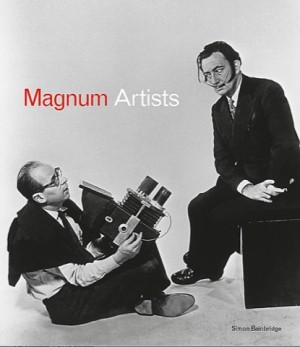
Hardcover. Laurence King Publishing, 1st, 2020, Book: Very Good, Dust Jacket: None, Hardcover in pictorial boards. 272 pages in coloe and b&w. Matisse and Picasso by Robert Capa, Takashi Murakami by Olivia Arthur, Warhol and de Kooning by Thomas Hoepker, Bonnard by Henri Cartier-Bresson, Sonia Delaunay by Herbert List, Kiki Smith by Susan Meiselas, and many more. For the first time, Magnum Artists brings together a collection of over 200 photographs that define the unique relationship between the world's greatest photography collective and the world's greatest artists. Still in publisher's shrinkwrap.
Hardcover. Corte Madera CA, Gingko Press, 1st, 1998, Book: Very Good, Dust Jacket: Very Good, Hardcover, 257 pages. Recognized as the most original photographer of the 20th century, Man Ray delighted the avant-garde of the 1920s and 1930s with daring, creative experimentation. He was the first Surrealist photographer, a gifted rebel with an incisive eye and a passion for freedom and pleasure. This outstanding monograph sheds new light on Man Ray's photographic genius -- incredibly, around one third of these images have never before been published. Visually spectacular and intellectually stimulating it shatters the myth -- cultivated by Man Ray himself -- that his photographic creativity resulted from timely mistakes and chance occurrences. Featured are many of his solarizations, rayographs, unconventional portraits and sensual nudes. Previous owner's signature on front fly leaf.
Hardcover. New Haven CT, Yale University Press, 1st, 2021, Book: Very Good, Dust Jacket: None, Hardcover, pictorial boards, 320 pages. A detailed look at the photographic processes pioneered by Man Ray in the 1920s and 30s, which resulted in groundbreaking portraits of many of his celebrated friends and lovers. Clean copy.
Hardcover. NY, Abrams, 1st, 2008, Book: N, Hardcover, 168 pages. Nelson Mandela, an icon of the international struggle for freedom and equality, whose importance rivals that of Martin Luther King and Mahatma Gandhi, turns ninety in July 2008. Mandela spent twenty-seven years in prison for his opposition to the apartheid regime of his native South Africa. Released in 1990, he pursued a policy of reconciliation, steering his nation into the ranks of the world's multi-racial democracies. He was elected president of South Africa in 1994. Photographer David Turnley covered Mandela and South Africa for the world's press, beginning in the 1980s. He witnessed the turbulence of the last violent years of apartheid, was there when Mandela was released from prison, campaigned with him during the presidential election, and sought out the significant people and places of his life. In Mandela: Struggle and Triumph, he tells in words and photographs the dramatic and emotional story of the most powerful movement for civil rights since the American civil rights movement, through the eyes of its legendary leader.
Hardcover. Santa Monica CA, RoseGallery/DAP, 1st, 2007, Book: Very Good, Dust Jacket: None, Red and burgundy cloth boards with yellow stamped lettering. 144 pages. Color and b&w illustrations, portraits. Eyes in His Eyes reintroduces some of the artist's overlooked masterpieces, and reveals, for the first time, a broad selection of never-before-seen images from his private archives. In his 80-year career, Alvarez Bravo printed, published and exhibited only a thousand images. This portfolio, culled with the help of the artist himself, and completed after his death, is full of unfamiliar abstractions, portraits, landscapes and street photography.
Hardcover. New Haven CT, Yale University Press, reprint, 2004, Book: Very Good, Dust Jacket: Very Good, Hardcover, 208 pages. Between 1936 and 1941 Walker Evans and James Agee collaborated on one of the most provocative books in American literature, Let Us Now Praise Famous Men (1941). While at work on this book, the two also conceived another less well-known but equally important book project entitled Many Are Called. This three-year photographic study of subway passengers made with a hidden camera was first published in 1966, with an introduction written by Agee in 1940. Long out of print, Many Are Called is now being reissued with a new foreword and afterword and with exquisitely reproduced images from newly prepared digital scans. Many Are Called came to fruition at a slow pace. In 1938, Walker Evans began surreptitiously photographing people on the New York City subway. With his camera hidden in his coat--the lens peeking through a buttonhole--he captured the faces of riders hurtling through the dark tunnels, wrapped in their own private thoughts. By 1940-41, Evans had made over six hundred photographs and had begun to edit the series. The book remained unpublished until 1966 when The Museum of Modern Art mounted an exhibition of Evans's subway portraits.
Hardcover. New Haven CT, Yale University Press, 1st, 2022, Book: Very Good, Hardcover, pictorial boards, Photographer Marcia Resnick (b. 1950) earned recognition as part of the legendary Downtown New York art scene of the 1970s and 1980s. Her portraits of the era's major cultural figures, such as Jean-Michel Basquiat, John Belushi, and Susan Sontag, have contributed to the scene's mythic status. Against this backdrop, Resnick also produced a significant body of work that engaged with the history of art, took a humorous approach to conceptual art and feminism, and proposed new ideas for what photography could be. Spanning the artist's career, this richly illustrated volume explores Resnick's early influences and education at Cooper Union and CalArts; discusses her series and photobooks such as See and Re-visions; and situates the artist's work within the history of contemporary art. An afterword by Laurie Anderson speaks to the very personal vision of Resnick's photography. Still in publisher's shrinkwrap.
Hardcover. New York, D.A.P.//La Fabrica , 1st, 2013, Book: Very Good, Dust Jacket: Very Good, Hardcover, 192 pages. Like new in publisher's shrink-wrap. America's first female war correspondent, Margaret Bourke-White was also something of a media star, with the portrait of her decked out in flying gear, camera in hand, about to set off on a bombing raid, being a favorite pin-up among U.S. forces. Focusing on the work Bourke-White made in the 1930s and 40s in Czechoslovakia, Germany, Italy, the Soviet Union and the U.K., Moments in History presents 150 classic photographs alongside revelatory extracts from letters and publications in periodicals. Bourke-White traveled to the USSR when the first Five-Year Plan was being implemented; she documented the German invasion of the Soviet Union in 1941, and the Allied bombing of Germany. In the summer of 1945 she was commissioned by Life to make a photographic record of the destroyed German cities. She was present at the liberation of the Buchenwald concentration camp and the Leipzig-Thekla forced labor camp. She recorded the partition of India and the Korean War, and one of her most famous pictures of this period is "Gandhi," which shows the subject at his spinning wheel. Also included in the catalogue are some of the word-picture sequences Bourke-White did for Fortune and Life, as well as extracts from her correspondence with personalities from the worlds of politics and culture, such as Winston Churchill and Georgia O'Keeffe. Bourke-White wanted to be the "eyes of the age," and her pictures testify to (as she put it) her "unquenchable desire to be present when history is being made."
Hardcover. Bloomington, IN, Indiana University Press, 1st, 2016, Book: Very Good, Dust Jacket: Very Good, 152 pages. Hardcover with dust jacket. A very clean, unmarked copy with only minor wear to dust jacket edges. A tight copy. As a photographer for Life and Fortune magazines, Margaret Bourke-White traveled to Russia in the 1930s, photographed the Nazi takeover of Czechoslovakia in 1938, and recorded the liberation of Buchenwald at the end of WWII. In 1949, Life sent her to South Africa to take photographs in a country that was becoming racially polarized by white minority rule. Life published two photo-essays highlighting Bourke-White's photographs, but much of her South African work remained unpublished until now. Here, these stunning photographs collected by Alex Lichtenstein and Rick Halpern offer an unparalleled visual record of white domination in South Africa during the early days of apartheid. In addition to these powerful and historically significant photographs, Lichtenstein and Halpern include two essays that explore Bourke-White's artistic and political formation and provide background material about the cultural, political, and economic circumstances that produced the rise and triumph of Afrikaner nationalism in South Africa. This richly illustrated book brings to light a large body of photography from a major American photographer and offers a compelling history of a reprehensible system of racial conflict and social control that Bourke-White took such pains to document.
Hardcover. Koln GR, Taschen , reprint, 2007, Book: Very Good, Dust Jacket: Very Good, Hardcover in a bright dust jacket. 233 pages. Edited by Steve Crist and Shirley T. Ellis De Dienes. Very large, heavy book, smooth glossy white covers, gray lettering on front and spine, light blue background with pattern of photographer's name inside covers and adjacent end papers, 233 very heavy glossy pages with photographs of the young and virtually undiscovered Marilyn Monroe. No nudity. Author's notes. Clean copy. DOMESTIC SHIPPING ONLY.
Hardcover. New York, Knopf, 1st, 1987, Book: Very Good, Dust Jacket: Very Good, Hardcover, 141 pages, 70 b&w and color photos of Marilyn Monroe. Over a ten-year period from the early 1950's until shortly before Marilyn Monroe's death - the years in which she went from virtual anonymity to super-stardom,photographer Eve Arnold had six photo sessions with her. And here she has chosen the best images. Bright, clean copy in an unclipped dust jacket.
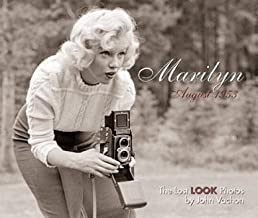
Hardcover. NY, Calla Editions, 1st, 2010, Book: Very Good, Dust Jacket: Very Good, Hardcover. 128 pages. Picture this: A master photographer shoots the most breathtaking movie star of her time high in the Canadian Rockies in the summer of 1953. And the negatives are filed away for nearly 60 years -- most never seen until now! It was yet another assignment for LOOK magazine staff photographer John Vachon. But when he arrived in Banff, Alberta, in mid-August of 1953 to shoot Marilyn Monroe on location making River of No Return, Vachon encountered an opportunity never afforded the many great photographers who took pictures of Marilyn during her short life. Due to an injured ankle that prevented her from filming, Vachon got access to Marilyn over a period of several days. Vachon's lens captured her in a variety of contexts and countenances. Here is Marilyn the way we want to remember her: luminous, sexually charismatic, smiling radiantly -- even on crutches. This extraordinary portfolio of revealing images ranges from her mugging poolside to riding high on a ski lift to nuzzling with her then-husband-to-be, the legendary Joe DiMaggio -- the only time that the two posed formally together for a photographer.
Hardcover. New York, St. Martin's Press, 2nd Printing, 1985, Book: Very Good, Dust Jacket: Very Good, Hardcover, 155 pages, large black & white photographs throughout. Minor dust jacket edge wear and fade, otherwise, very clean and tight copy.
Hardcover. US, Dey Street Books, 1st, 2015, Book: Very Good, Dust Jacket: Very Good, 256 pages. Hardcover with dust jacket. Clean, unmarked copy with only minor wear to dust jacket. Like new in publisher's shrink-wrap. A stunning collection of hundreds of rare and unseen photographs, behind-the-scenes notes, and interviews chronicling the media's lifelong love affair with Marilyn, created by the acclaimed curator and author of Marilyn Monroe: Metamorphosis. Drawing on unseen troves from dozens of photographers, archives, and collectors, acclaimed photography expert David Wills brings together an unprecedented array of press photos from throughout Marilyn's career--including hundreds of unpublished and rare photographs that have been beautifully restored; uncropped and unretouched outtakes; handwritten notations; period captions; clippings; and more. With a foreword by Robert J. Wagner and interviews from key press agents and others, this portfolio of images offers a fresh, indelible portrait of one of the most enduring icons in history and illuminates the special alliance she shared with the press as never before.
Hardcover. US, Zenith Press, 1st, 2007, Book: Very Good, Dust Jacket: Very Good, 168 pages, illustrated throughout in color and b&w. Clean, unmarked copy with only minor wear to dust jacket. "This spectacular book is the first of its kind - an illustrated history of the fierce fight on the streets of Hue which contains over 200 amazing images! Marines in Hue City covers all phases of the battle, from the opening shots and the Marines' arrival to the 'six-block war' and the seizure of the Citadel. The detailed city maps of downtown Hue and the Citadel provide overall context of the battle, and allows you to connect the book's images with the battle zone. And in addition to describing all the tactics and weaponry used by the Marines, author Eric Hammel provides an extraordinarily detailed caption for every picture.
Hardcover. St. Paul MN, Zenith Press, 1st, 2007, Book: Very Good, Dust Jacket: Very Good, Hardcover, 168 pages, illustrated in color and b&w. The Battle for Hue became one of the most important of the Vietnam War, a month of grueling house-to-house fighting through buildings and around civilians. Marines in Hue City documents the intense urban combat in Hue with many never-before-published photographs. Very good in a bright dust jacket.
Hardcover. NY, powerHouse, 1st, 2005, Book: Very Good, Dust Jacket: None, Hardcover, pictorial boards, 128 pages. During the early 80s, New York's Lower East Side was a hotbed of creative activity. Unknown artists were synthesizing the fertile ground at the legendary New York nightclubs Studio 54, the Mudd Club, Club 57, Palladium, and Danceteria while on their way to international fame and acclaim. Among those emerging were Madonna, Jean-Michel Basquiat, Grace Jones, Keith Haring, Kenny Scharf, Vincent Gallo, Anna Sui, Exene Cervenka, Kid Creole, and Diego Cortez. Maripol was part of a collective of artists, graffiti writers, street dancers, and performers who all thrived together in the explosive downtown eccentricity. As an image maker and stylist for Madonna during her "Like a Virgin" days, jewelry designer, art director, and producer Maripol relentlessly documented the movers and shakers of the early 80s scene through the lens of her instant Polaroid SX-70. Collected for the first time in Maripolarama, Maripol's photographs vividly depict the extraordinary personalities that inhabited the "forever" hip, arty Manhattan clubland during the post-punk era when hip hop was in its earliest stages and graffiti covered the landscape. Whether it's Andy Warhol, Debbie Harry, Basquiat, or Madonna modeling a bright pink wig, Maripolarama provides lively and inspiring insight into a time long gone.
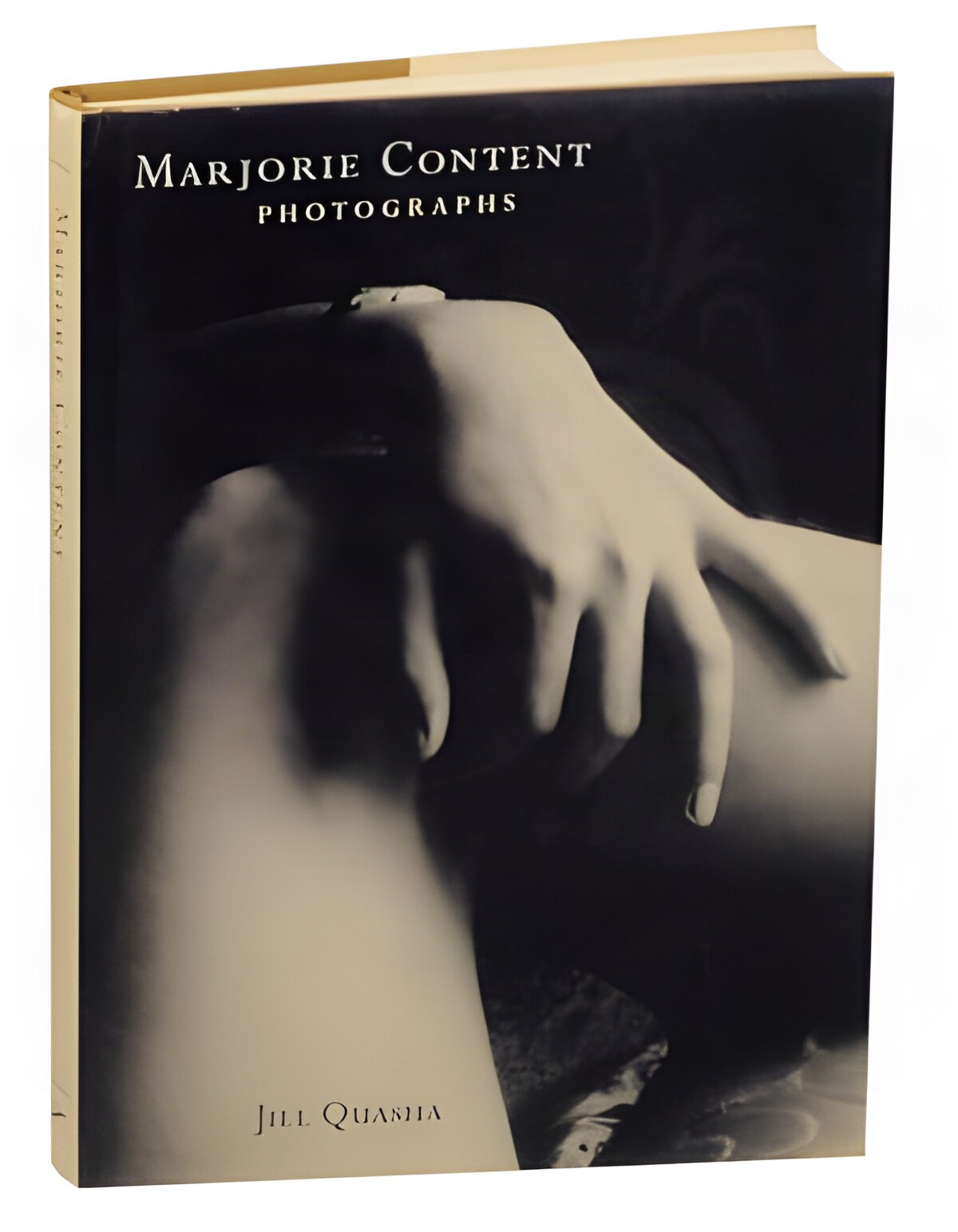
Hardcover. New York, Norton, 1st, 1994, Book: Very Good, Dust Jacket: Very Good, Hardcover, 159 pages. Black & white photography by Marjorie Content. Marjorie Content, a well-bred, intelligent woman who moved in artistic circles that included Georgia O'Keeffe and Jean Toomer (her last and worst husband), produced a body of sensitive black-and-white photographs in the 1920s and 1930s that were little known then but may reach a wider audience now. Quasha gathers them and a biographical essay in a lovely, pocketable volume that is a pleasure for those weary from hefting usually much heavier photography tomes. The pictures themselves are of familiar, early modernist types: close-ups of calla lilies and other plants, head-only portraits, and city vignettes. Quasha writes, "The photographs will not change our sense of photographic history . . . [but] will add to our understanding of what photography is capable of, especially in the lyric mode." More interesting, perhaps, is that Content exemplifies the kind of woman (more common in the past) who gives of herself to others and doesn't take her own work seriously enough, in spite of which she left behind a few lovely things that photography collections will cherish.
Hardcover. NY, Random House, 1st, 2001, Book: Very Good, Dust Jacket: Very Good, Hardcover, 304 pages, 289 photographs from her own collection. Legendary actress Marlene Dietrich is honored in this beautiful coffee-table book, which is introduced by brief recollections from director Josef von Sternberg, Orson Welles (who worked with her in Touch of Evil), Ernest Hemingway, and others. The Film Museum of Berlin contains 25,000 objects and 18,000 images related to Dietrich, and this book is like a museum exhibition held expressly for Dietrich lovers. It is divided into sections such as "Portraits," "Beads, Furs, and Feathers," and "Possessions" and displays her dresses and accessories in pristine condition, alongside excerpts from letters and diaries. Daughter Maria Riva (author of a 1994 biography, Marlene Dietrich) provides extended captions to the many photographs of the actress and her belongings. Also included are a filmography, theatography, concertography, discography, and collection inventory with exhibitions.
Hardcover. Munchen, Schirmer/Mosel., 1st US, 1984, Book: Very Good, Dust Jacket: Very Good, Hardcover in a bright dust jacket, 269 pages. "Here is a breathtaking visual celebration of this all-time movie goddess, with the world's greatest photographers contributing their most famous landmark portraits collected from the thirty-five years during which Marlene Dietrich reigned supreme in the history of motion pictures."

 "Lydia Panas: The Mark of Abelby: George Slade, Maile Maloy, Lydia Panas (Photographer)")
 "Mad Dogby: Watson, Albert")






 "Man Ray: Photography and Its Doubleby: Alain Sayag and Emmanuelle De I'Ecotais")

 "Mandela : Struggle and Triumphby: Turnley, David")
 "Manuel Alvarez Bravo: The Eyes in His Eyes by: Shoshana, Rose; Sheridan, Guillermo; Fox, Lorna")
 "Many Are Calledby: Walker Evans , James Agee, et al.")

 "Margaret Bourke- White: moments in historyby: Quimby, Sean")
 "Margaret Bourke-White and the Dawn of Apartheidby: Lichtenstein, Alex")

 "Marilyn Monroe: An Appreciation by: Arnold, Eve")
 "MARILYN, MON AMOUR: The private album of Andre de Dienes, her preferred photographerby: Dienes, Andre de (Photographer)")
 "Marilyn: In the Flashby: Wills, David")
 "Marines in Hue City: A Portrait of Urban Combat, Tet 1968by: Hammel, Eric")
 "Marines in Hue City: A Portrait of Urban Combat, Tet 1968by: Hammel, Eric")
 "Maripolaramaby: Anna Sui (Author), Glenn O'Brien (Author, Introduction), Diego Cortez (Author, Afterword)")


 "Marlene Dietrich: Photographs and Memoriesby: Marlene Dietrich, Filmmuseum Berlin")
 "Marlene Dietrich: Portraits, 1926-1960 by: Wensinger, Arthur S.")