Hardcover. San Diego, Thunder Bay Press , 1st, 2018, Book: Very Good, Dust Jacket: None, Hardcover, pictorial boards, 224 pages. From singer-songwriters like Billy Joel and the Bee Gees to folk artists like John Denver and James Taylor to the rock legends Aerosmith and Led Zeppelin, you won't find a more complete list of albums that defines the '70s music scene. Each listing features the full-color, original sleeve artwork, and is packed with information about the musician lineup, track listings, and number-one singles that resulted. A celebration of this funky era. Clean, bright copy.
Hardcover. Milwaukee OR, Dark Horse Books, 3rd pr., 1999, Book: Very Good, Dust Jacket: None, Hardcover, oblong pictorial boards, 88 pages in color. Writer-artist Frank Miller and colorist Lynn Varley retell the battle of Thermopylae in the exciting and moving graphic novel 300. They focus on King Leonidas, the young foot soldier Stelios, and the storyteller Dilios to highlight the Spartans' awe-inspiring toughness and valor. Miller and Varley's art is terrific, as always; the combat scenes are especially powerful.The armies of Persia--a vast horde greater than any the world has ever known--are poised to crush Greece, an island of reason and freedom in a sea of madness and tyranny. Standing between Greece and this tidal wave of destruction are a tiny detachment of but three hundred warriors. Frank Miller's epic retelling of history's supreme moment of battlefield valor is finally collected in its intended format--each two-page spread from the original comics is presented as a single undivided page. Clean copy.
NY, Alfred A. Knopf, 1st, 1967, Book: Good, Dust Jacket: Fair, Hardcover in a bright dust jacket with flaps glued to inside covers. 145 pages, b&w drawings by David Stone Martin. An engaging chronicle that concerns three generations of cats and their provider, Ann, a single woman with a ground-floor apartment and a back yard. Ex-lib with light stamping, residue.
Hardcover. NY, Random House, 1st, 2022, Book: Very Good, Dust Jacket: Very Good, Hardcover in a bright, unclipped dust jacket. In 2018, without any plan or agenda for what might happen next, Patti Smith posted her first Instagram photo: her hand with the simple message "Hello Everybody!" Known for shooting with her beloved Land Camera 250, Smith started posting images from her phone including portraits of her kids, her radiator, her boots, and her Abyssinian cat, Cairo. Followers felt an immediate affinity with these miniature windows into Smith's world, photographs of her daily coffee, the books she's reading, the graves of beloved heroes--William Blake, Dylan Thomas, Sylvia Plath, Simone Weil, Albert Camus. Over time, a coherent story of a life devoted to art took shape, and more than a million followers responded to Smith's unique aesthetic in images that chart her passions, devotions, obsessions, and whims. Original to this book are vintage photographs: anniversary pearls, a mother's keychain, and a husband's Mosrite guitar. Here, too, are photos from Smith's archives of life on and off the road, train stations, obscure cafes, a notebook always nearby. In wide-ranging yet intimate daily notations, Smith shares dispatches from her travels around the world. With over 365 photographs taking you through a single year, A Book of Days is a new way to experience the expansive mind of the visionary poet, writer, and performer.
Hardcover. NY, Random House, 1st, 2022, Book: Very Good, Dust Jacket: Very Good, Hardcover in a bright, unclipped dust jacket. In 2018, without any plan or agenda for what might happen next, Patti Smith posted her first Instagram photo: her hand with the simple message "Hello Everybody!" Known for shooting with her beloved Land Camera 250, Smith started posting images from her phone including portraits of her kids, her radiator, her boots, and her Abyssinian cat, Cairo. Followers felt an immediate affinity with these miniature windows into Smith's world, photographs of her daily coffee, the books she's reading, the graves of beloved heroes--William Blake, Dylan Thomas, Sylvia Plath, Simone Weil, Albert Camus. Over time, a coherent story of a life devoted to art took shape, and more than a million followers responded to Smith's unique aesthetic in images that chart her passions, devotions, obsessions, and whims. Original to this book are vintage photographs: anniversary pearls, a mother's keychain, and a husband's Mosrite guitar. Here, too, are photos from Smith's archives of life on and off the road, train stations, obscure cafes, a notebook always nearby. In wide-ranging yet intimate daily notations, Smith shares dispatches from her travels around the world. With over 365 photographs taking you through a single year, A Book of Days is a new way to experience the expansive mind of the visionary poet, writer, and performer.
Hardcover. NY, Random House, 1st, 2003, Book: Very Good, Dust Jacket: Very Good, Hardcover in a bright, unclipped dust jacket. Reminiscent of the author's early fiction -- "Room Temperature" and "The Mezzanine." It features Emmett, a man in his forties with a wife, two children, a cat and a duck, who gets up most mornings between 4 and 5 a.m., lights a fire in the living room fireplace with a single match, and thinks about the ordinary things in his life in an extraordinary way. Clean copy.
Hardcover. NY, Harry N. Abrams, 1st, 2000, Book: Very Good, Dust Jacket: Very Good, Hardcover, 240 pages. This stylish book re-creates the charmed life of two American expatriates in France at the turn of the 20th century-the noted artist Walter Gay and his wife, Matilda, whose glittering social circle included John Singer Sargent, Edith Wharton, Henry James, and many other artists and aristocrats. Narrated by witty excerpts from Matilda Gay's recently discovered journal, and richly illustrated with Walter Gay's remarkable, sought-after paintings of the rooms in which they and their friends lived, in Paris, Fontainebleau, Venice, and elsewhere, A Charmed Couple offers an intimate glimpse of a long-gone social milieu whose hold on the popular imagination continues to this day. WILLIAM RIEDER is a curator in the Department of European Sculpture and Decorative Arts at the Metropolitan Museum of Art in New York. Author of numerous articles, most on European furniture, in such journals as Architectural Digest, Connoisseur, and Antiques, he lives in New York City. 128 illustrations, 55 in full color, 81/2 x 101/2".
Hardcover. NY, Schwartz & Wade, 1st, 2015, Book: Very Good, Dust Jacket: None, Hardcover, pictorial cloth, no dust jacket. 48 pages illustrated by the author in b&w and two colors. When Mini finds a small moppet of a dog, with fluffy ears, no collar, and wearing yellow booties, she understandably wants to take it home. Despite Mom's insistence that the dog probably already has a family, Mini gets attached and is awfully proud of her new pal, who can sing, sit, and give both paws. But when the pup runs off one day at the park, Mini comes to understand how someone else out there might be missing the little guy too.
Hardcover. NY, Doubleday, 1st, 1994, Book: Very Good, Dust Jacket: Very Good, Hardcover in a bright, unclipped dust jacket with minor edgewear. 1118 pages. This book is the second volume in John Meier's masterful trilogy on the life of Jesus. In it he continues his quest for the answer to the greatest puzzle of modern religious scholarship: Who was Jesus? To answer this Meier imagines the following scenario: "Suppose that a Catholic, a Protestant, a Jew, and an agnostic were locked up in the bowels of the Harvard Divinity School library... and not allowed to emerge until they had hammered out a consensus document on who Jesus of Nazareth was and what he intended...". A Marginal Jew is what Meier thinks that document would reveal. Volume one concluded with Jesus approaching adulthood. Now, in this volume, Meier focuses on the Jesus of our memory and the development of his ministry. To begin, Meier identifies Jesus's mentor, the one person who had the greatest single influence on him, John the Baptist. All of the Baptist's fiery talk about the end of time had a powerful effect on the young Jesus and the formulation of his key symbol of the coming of the "kingdom of God." And, finally, we are given a full investigation of one of the most striking manifestations of Jesus's message: Jesus's practice of exorcisms, hearings, and other miracles. In all, Meier brings to life the story of a man, Jesus, who by his life and teaching gradually made himself marginal even to the marginal society that was first century Palestine. Clean copy.
Hardcover. Shippensburg PA, White Mane, 1st, 2003, Book: Very Good, Dust Jacket: Very Good, Hardcover in a bright, unclipped dust jacket, 267 pages, b&w illustrations, front endpapers map. A Melancholy Affair at the Weldon Railroad examines what occurred on a single afternoon to a brigade of Vermonters during the last year of the Civil War, and why it happened. Vermont, though a small, rural state, contributed far beyond its size and wealth to preserve the Union in the struggle of the Civil War. The worst moment and greatest sacrifice for Vermont was the disaster that befell the proud Vermont Brigade of the Army of the Potomac on June 23, 1864--forever "Black Thursday" in the Green Mountain State. Cowardliness, negligence and inept behavior by multiple officers resulted in the needless capture of more than four hundred Vermonters. The enlisted men were sent to Andersonville and later to other Confederate prisons where 60 percent of them perished. Many of the survivors came home mere wrecks of men. Exactly what occurred at the Weldon Railroad--what went wrong and who was to blame--is thoroughly examined for the first time. Previous owner's inscription on title page, small notation on rear flap of dj, otherwise clean.
Hardcover. Cambridge MA, Harvard University Press, 1st, 2007, Book: Very Good, Dust Jacket: Very Good, Hardcover in a bright, unclipped dust jacket. 457 pages, b&w illustrations. Few of us question the slips of green paper that come and go in our purses, pockets, and wallets. Yet confidence in the money supply is a recent phenomenon: prior to the Civil War, the United States did not have a single, national currency. Instead, countless banks issued paper money in a bewildering variety of denominations and designs - more than ten thousand different kinds by 1860. Counterfeiters flourished amid this anarchy, putting vast quantities of bogus bills into circulation. Their success, Stephen Mihm reveals, is more than an entertaining tale of criminal enterprise: it is the story of the rise of a country defined by a freewheeling brand of capitalism over which the federal government exercised little control. It was an era when responsibility for the country's currency remained in the hands of capitalists for whom "making money" was as much a literal as a figurative undertaking. Mihm's witty tale brims with colorful characters: shady bankers, corrupt cops, charismatic criminals, and brilliant engravers. Based on prodigious research, it ranges far and wide, from New York City's criminal underworld to the gold fields of California and the battlefields of the Civil War. Clean copy.
Hardcover. NY, Macmillan, reprint, 1932, Book: Very Good, Dust Jacket: None, Hardcover, 257 pages. Later printing. Bound in black cloth boards with paper titles present to the spine and front board. Stuart Chase was an American economist and engineer trained at MIT. His writings covered topics as diverse as general semantics and physical economy. His hybrid background of engineering and economics places him in the same philosophical camp as R. Buckminster Fuller. Chase's thought was shaped by Henry George, Thorstein Veblen and Fabian socialism. Chase spent his early political career supporting "a wide range of reform causes: the single tax, women's suffrage, birth control and socialism." Chase's early books The Tragedy of Waste (1925) and Your Money's Worth (1928) were notable for their criticism of corporate advertising and their advocacy of consumer protection. Although not a Marxist, Chase admired the planned economy of the Soviet Union, being impressed with it after a 1927 visit. Chase stated that "The Russians, in a time of peace, have answered the question of what an economic system is for." It has been suggested that he was the originator of the expression a New Deal, which became identified with the economic programs of American president Franklin Delano Roosevelt. Inscription on front fly leaf, otherwise clean.
Hardcover. NY, Scholastic, BC Ed., 2002, Book: Very Good, Dust Jacket: Very Good, Hardcover in a bright dust jacket. Newbery Medal sticker on front. 152 pages. A nice Book Club reprint of the Newbery winner. Clean.
Hardcover. Kent OH, Kent State Univ Pr, 1st, 2003, Book: Very Good, Dust Jacket: Very Good, Hardcover, 180 pages, illustrated throughout in b&w. Clean, unmarked copy with only minor wear to dust jacket. Zoar, Ohio, a German-Christian utopian community founded in 1817, encouraged tourism and "gawkers." This has left a rich photographic record of the community, which includes tourists's photos and Zoarite-produced postcards. Fernandez uses many previously unpublished photos, captioned with the words of journalists, diarists, and other visitors.
Hardcover. Boston, Garden Press, 1st, 1910, Book: Very Good, Dust Jacket: None, Hardcover, 143 pages, b&w frontispiece. INSCRIBED BY BAYLEY on front fly leaf. Maroon and gray cloth with gilt lettering on front cover.
Hardcover. NY, The Literary Guild of America , BC Ed., Hardcover in a bright, lightly worn dust jacket. Book Club edition. The 2nd Tommy Hambledon adventure. When it was first published in 1941 in the U.S., A Toast to Tomorrow ( Pray Silence in Britain), along with its predecessor Drink to Yesterday, was heralded by famed critic Anthony Boucher as "a single long and magnificent novel of drama, intrigue and humor." Howard Haycraft, the dean of mystery historians, called the two books "superior" examples of the new wave of realistic spy-and- intrigue. Clean copy.
Hardcover. NY, Knopf, 1st, 1988, Book: Very Good, Dust Jacket: Very Good, Hardcover in a bright, unclipped dust jacket. 202 pages. A collection of four pieces on African history or culture. "The Woman Who Loved Gorillas" is a stark, unflattering look at Dian Fossey. Differing from the usual hagiography about Fossey, this essay focuses on her mistreatment of the Africans, her erratic and supposedly violent behavior, and her anti-social arrogance. It's not a slam piece, though, offering motives about her murder and admitting that Dian did much for the gorillas of Rwanda. "The Last of the Dog-Headed Men" is a look at the elusive indri, a "singing" lemur of Madagascar. "The Emperor Who Ate His People" is a look back at the career of Central African Republic dictator Bokassa. Finally, "In Search of the Source Of AIDS" is both a quest for possible sources of the virus and a look at how the disease is ravaging Africa (circa 1987). Clean, bright copy.
Hardcover. Atlanta, High Museum of Art/Yale University Press, 1st, 2003, Book: Very Good, Dust Jacket: Very Good, 272 pages. Hardcover. Full color illustrations. Bright, clean copy. This illustrated book, published to commemorate the centenary of the artist's death, addresses Whistler's extraordinary legacy and establishes his pivotal place in the history of American art. array of pictures by 38 other American painters-including Henry Ossawa Tanner, William Merritt Chase, and John Singer Sargent-to demonstrate how Whistler's American contemporaries were affected by his techniques, colour palette, compositions and subject matter. with American artists and the reception of his work in the United States. The essays that follow discuss Whistler's Venetian sojourn and its effect on the American artists who flocked to that city, his relationship with Philadelphia's art community, the Whistler Memorial Exhibition held in Boston in 1904, and much more. Clean, bright copy.
Hardcover. NY, Skira, 1st, 2008, Book: Very Good, Dust Jacket: Very Good, Hardcover, 240 pages. Winner of the 1990 Pritzker Architecture Prize, Italian architect and theorist Aldo Rossi (1931-1997) gained international renown for his imaginative and starkly beautiful designs. Rossi's writings, drawings and buildings have distinguished him as one of the great architects of our time. They are unique for their simple forms such as cones, cylinders, prisms, and cubes. His work is at once bold yet ordinary, original without being novel, refreshingly simple in appearance but extremely complex in content and meaning. Rossi has been able to follow the lessons of classical architecture without copying them. In a period of diverse styles and influences, Aldo Rossi has eschewed the fashionable and popular to create an architecture singularly all his own. Sketches, drawings, concepts, watercolors, and collages from the early 1960s through to 1998 help us to understand Aldo Rossi the artist and architect, as well as his mindset and how he elaborated his projects. The volume is complete with a register of the Aldo Rossi Foundation's works. This is truly a valuable tool for scholars.
Hardcover. NY, E. P. Dutton & Company, 1st, 1958, Book: Very Good, Dust Jacket: Good, Hardcover in a lightly worn dust jacket, 93 pages. This is a selection of b&w Hazel cartoons from The Saturday Evening Post. Key's most famous creation, the single-panel Hazel, about a wry and bossy household maid, came to Key in 1943 in a dream that he drew the next morning and sent to The Saturday Evening Post, where it was accepted and began running regularly. Name and previous owner's inscription on the front endpaper, otherwise clean.
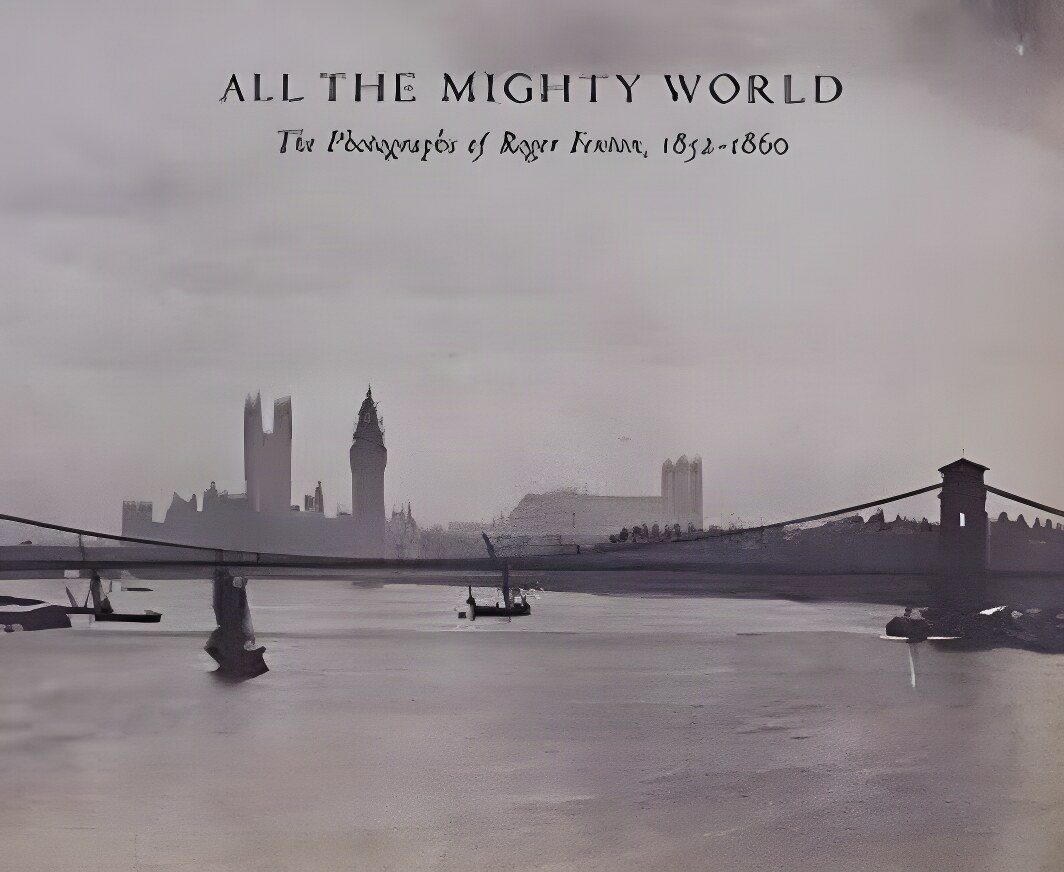
Hardcover. NY, Metropolitan Museum of Art , 1st, 2004, Book: Very Good, Dust Jacket: Very Good, Hardcover, 304 pages. Roger Fenton (1819-1869) was England's most celebrated and influential photographer during the 1850s, the "golden age" of this radically new medium. Fenton's majestic pictures of cathedrals, country houses, and varied countryside were without peer in England--as were his views of the royal castles and Houses of Parliament that embodied Britain's power. But Fenton's choice of subjects ranged more widely still: he was among the first to photograph the Kremlin and other landmarks of Moscow and Kiev; he was commissioned in 1855 to document the Crimean War, producing early war photographs; and he created theatrical Orientalist costume pictures and a startling series of lush still lifes. Fenton had first studied law and painting, but soon after he took up the camera he was making photographs that were technically superb and highly original in their handling of composition, perspective, atmosphere, and light. Always he strove to demonstrate that photography could equal the art of painting and even surpass it. He was the force behind the founding of the Photographic Society (later the Royal Photographic Society), which worked to advance the profession and encouraged the exhibition of members' works throughout Britain. In a career of a single decade, Fenton did much to transform photography into a medium of powerful expression and visual delight. This exquisitely produced book--the first comprehensive publication on Fenton in almost twenty years--presents eighty-five of the artist's finest photographs and discusses every aspect of his work and his remarkable career.
NY, Knopf, 1st, 1942, Book: Good, Dust Jacket: None, Hardcover, maroon cloth covers with white cloth spine. Illustrated in color by Elizabeth Black Carmer. 244 pages. Previous owner's signature front end paper, light wear, spine a bit faded. A collecton of folk tales followed by a piece of music that was inspired by the story. Name on inside front cover. Otherwise clean.
Hardcover. NY, Little Simon, 1st, 2004, Book: Very Good, Dust Jacket: None, Hardcover. Every Robert Sabuda pop-up book is a marvel, but America the Beautiful is singularly remarkable for its inspired interpretation of the classic American anthem. Each page presents a magnificent pop-up featuring a line from the first (and best known) verse of "America the Beautiful." Sabuda has included the song in its entirety, featuring mini pop-ups, in a small booklet on the final page. Beginning with the Golden Gate Bridge, and ending with a spectacularly regal Statue of Liberty, Sabuda's America the Beautiful is a lovely keepsake that also serves as a patriotic primer for teaching young ones about America. Clean with all pop-ups in excellent condition.
Hardcover. Boston, Lothrop, Lee & Shepard & Co., 2nd printing, 1933, Book: Very Good, Dust Jacket: Very Good, 318 pages. Blue cloth covers, gilt titles to front board and spine, blue dust jacket with illustration, b&w frontispiece of Hamilton's portrait, 7 additional b&w plates. Mild rubbing and chipping to dust jacket, previous owner's signature to front endpaper, otherwise pages crisp and unmarked, clean covers; overall, a very neat, tight copy.

 "100 Best-selling Albums of the 70sby: Hamish Champ")



 "A Back Fence Story: The Adventures of a Family of Cats by: Walker, Augusta/David Stone Martin")
 "A Book of Days by: Patti Smith")
 "A Book of Days by: Patti Smith")
 "A Box of Matches: A Novel by: Nicholson Baker")
 "A Charmed Couple: The Art and Life of Walter and Matilda Gayby: Rieder, William")

 "A Marginal Jew: Rethinking the Historical Jesus, Vol. 2 - Mentor, Message, and Miraclesby: John P. Meier")




 "A Singular People: Images of Zoarby: Fernandez, Kathleen M.")
 "A Sketch of the Life and a List of Some of the Works of John Singleton Copley (SIGNED COPY)by: Bayley, Frank W.")
 "A Toast to Tomorrow by: Manning Coles")
 "African Madnessby: Shoumatoff, Alex")
 "After Whistler - The Artist and His Influence on American Painting by: Merrill, Linda")


 "America Sings - Stories and Songs of Our Country's Growingby: Carmer, Carl")
 "America the Beautiful: A Pop-up Bookby: Robert Sabuda")
 "American Colossus, An: The Singular Career of Alexander Hamiltonby: Bailey, Ralph Edward")