Hardcover. Ostfildern GR, Hatje Cantz, 1st, 2008, Book: Very Good, Dust Jacket: Very Good, Hardcover, 288 pages 231 illustrations 60 in color with 274 plans and drawings. Biography. Like new in publisher's shrink-wrap. Josef Paul Kleihues (1933-2004) was one of the most prolific architects of postwar Germany, famous both as the Director of the International Building Exhibition Berlin in 1987 and for his design for the Museum of Contemporary Art in Chicago. He was also known for his sensitive interventions into older buildings, an instance of which is the former Hamburger Bahnhof--now the Museum fur Gegenwart--in Berlin, where Kleihues intermixed glass walls and light installations by the American Minimalist Dan Flavin with the building's original nineteenth-century Neoclassical design. (His reconstruction was widely deemed to rival or even surpass Gae Aulenti's overhaul of the interior of the Musee d'Orsay in Paris.) This first volume of a three-part monograph presents projects up to 1980, including the highly acclaimed Berlin Sanitation Department and the Neukolln Hospital. Even in these early works, Kleihues' practical, problem-solving approach is already evident, indicating his readiness to reflect on the traditional approaches of Modern architecture and his capacity to expand them in interesting ways. This very generously illustrated volume was designed by Kleihues himself, just before his death in 2004.
Hardcover. New York, Harry N. Abrams, 1st, 2010, Book: Very Good, Dust Jacket: Very Good, 224 pages. Hardcover with dust jacket. 200 illustrations in color. Foreword by Jennifer B. Lee, Performing Arts Curator, Rare Book and Manuscript Library, Columbia University. Index. Clean, unmarked copy with only minor wear to dust jacket. Joseph Urban is a lavish celebration of this prolific artist, architect, and designer, whose accomplishments include magnificent Art Deco buildings, spectacular Ziegfeld Follies productions, and dramatic sets for the Metropolitan Opera. Joseph Urban (1872-1933) began his career as an architect and artist in Vienna before moving to America in 1911. In 1914 he moved to New York, where he ultimately signed on as set designer of the Metropolitan Opera. He also became immersed in an astonishing array of outside projects, designing nightclubs, hotel lounges, skyscrapers, theaters, stage and film sets, and even children's books. Though his creative output was immense, little remains of his work except the Mar-a-Lago in Palm Beach, and the New School and the base of the Hearst Tower in New York.
Hardcover. Cambridge MA, MIT Press, 1st, 1999, Book: Very Good, Dust Jacket: Very Good, 420 pages, illustrated with mostly b&w plates, 8 color pages. Small remainder stamp on bottom edge. "Tiege was at one and the same time both an agent provocateur and seismograph, at once provoking action and debate and yet simultaneously reacting with the utmost sensitivity to the shifting political spectrum of his time."--from the introduction by Kenneth FramptonKarel Teige (1900-1951), a leading figure of the avant-garde of the 1920s and 1930s, participated in every important argument and controversy of those turbulent years. He edited the most influential avant-garde journals on Czech and international cultural affairs and wrote profoundly original essays and books on the theory and criticism of art and architecture. He also produced paintings, collages, photomontages, film scripts, book covers, and typefaces and participated in theatrical performances.
Softcover. Amsterdam, Amsterdam Scheltema en Holkema's Boekhandel, First Edition, 1912, Book: Very Good, Dust Jacket: None, Hardcover, large folio size, in Dutch text. 40 pages text followed by 470 plates in black & white. Brown cloth covered boards with embossed illustration in black & gilt. Moderate rubbing, scuff marks to covers. Fraying to head & heel of spine. Gilt titles to cover & spine. Tender front board with crack to top quarter hinge. Toning to edges throughout. Striking, full page black & white illustrations detailing castles, gardens, mansions, intricate woodwork throughout. Previous owner's signature & stamp to front flyleaf. Otherwise clean & unmarked.
Hardcover. Los Angeles, Calif., Harry N. Abrams, 1st, 2001, Book: Very Good, Dust Jacket: Very Good, Hardcover with a dust jacket. This copy is still shrink-wrapped in plastic. Many b&w and color illustrations throughout. Accompanied an exhibit at the Los Angeles County Museum of Art in 2001. Examines more than seventy-five paintings and other artworks, representing the Purist movement in twentieth-century modernist art, featuring the works of Le Corbusier, AmTdTe Ozenfant, and Fernand LTger as well as a complete translation of the classic work AprFs le cubisme.
Hardcover. San Francisco, CA, Chronicle Books, 1st, 1997, Book: Very Good, Dust Jacket: Very Good, 298 pages. Dark blue cloth covers, embossed titles to spine, dark blue dust jacket with photographic illustration, profusely illustrated with gorgeous color photographs. Light rubbing to dust jacket, small nick to dust jacket at mid-spine, pages crisp and unmarked, clean boards; a beautiful book in great condition. Author Harvey H. Kaiser spent ten years exploring the historic architecture of the Western National Parks, from the rain forrests of the Olympic Peninsular to the awesome wonder of the Grand Canyon, and from rough-hewn travelers' cabins to Yosemite's spectacular Ahwahnee Hotel and Mount Hood's Timberline Lodge. Organized by region and park, and rich with historic detail.
Softcover. New York, Syracuse University Press, 1st, 1974, Book: Very Good, Dust Jacket: None, Softcover. 276 pages. Black and white photographs. Foxing on top edge.
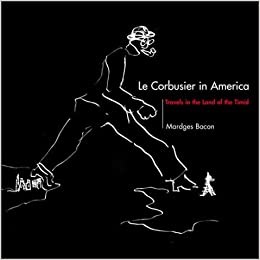
Hardcover. Cambridge MA, MIT Press, 1st, 2001, Book: Very Good, Dust Jacket: Very Good, 406 pages, Hardcover with dust jacket. B&w illustrations. Clean, tight copy. How Le Corbusier's first trip to the United States shaped his critique of the country and affected both his work and the diffusion of his ideas. Le Corbusier's first trip to the United States in 1935 is generally considered a failure because it produced no commissions. The experience nevertheless had a profound effect on him, both personally and professionally. Sponsored by the Museum of Modern Art in New York, Le Corbusier promoted his ideas through a lecture tour, exhibition, and press conferences, as well as in meetings with industrialists, housing reformers, New Deal technocrats, and editors. His lectures were watershed events that advanced the cause of European modernism. Yet he returned to France empty-handed and published a bittersweet account, Quand les Cathedrales etaient blanches: Voyage au Pays des Timid Personnes (When the Cathedrals Were White: Journey to the Country of Timid People), which faulted America for lacking the courage to adopt his ideas.
Hardcover. NY, Phaidon Press, 1st, 2008, Book: Very Good, Dust Jacket: None, This slip-cased, oversized book, weighing 20 pounds and containing over 2000 illustrations, summarizes the life and work of the most important modern architect of the 20th century: the legendary, controversial, and confrontational Le Corbusier. Le Corbusier was not exclusively an architect but an artist (painter and sculptor), urbanist, author, furniture designer, world traveler, and media figure. What is most impressive in this volume are the huge-scale photographs drawn from the Le Corbusier archives at the Fondation Le Corbusier in France. These photographs are personal, professional, indicative, anecdotal, illustrative, and symbolic of the entire saga of Le Corbusier's life and career over 60 years. They make this book an absolute gold mine for anyone wanting to understand and steep themselves in the spirit and character of this greatest modern architect of the last century. The written material is also first-rate: Jean-Louis Cohen, France's best-known historian of modern architecture, contributes an informative introduction, and Tim Benton, a well-known British architectural historian, writes opening texts for individual chapters. Recommended for architecture and art libraries as well as public libraries with serious art collections.--Peter S. Kaufman, Boston Architectural Ctr. NOTE; DUE TO SIZE AND WEIGHT THIS VOLUME CANNOT BE SHIPPED OUTSIDE THE U.S.
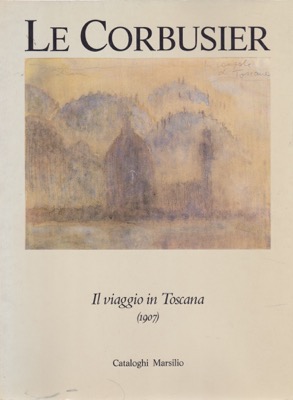
Softcover. Venice, Cataloghi Marsilio, 1st, 1987, Book: Very Good, Dust Jacket: None, Softcover, 140 pages. TEXT IN ITALIAN. A catalog of drawings and architectural watercolor sketches done by Le Corbusier on a trip to Italy in 1907. His career spanned five decades, with his buildings constructed throughout Europe, India, and America. He was a pioneer in studies of modern high design and was dedicated to providing better living conditions for the residents of crowded cities. (1907) - Catalogo della Mostra. Clean copy.
Hardcover. Chicago, University of Chicago Press, 1st, 1987, Book: Very Good, Dust Jacket: Very Good, Hardcover, 200 pages. The City of Refuge complex--commissioned by the Salvation Army as part of its program to transform social outcasts into spiritually renewed workers--represents a significant confluence of design principles, technological experiments, and attitudes on reform. It also provides rare insights into the work of one of the twentieth century's greatest architects, Le Corbusier. Brian Brace Taylor draws on extensive archival research to reconstruct each step of the architect's attraction to the commission, his design process and technological innovations, the social and philosophical compatibility of the Salvation Army with Le Corbusier's own ideas for urban planning, and finally, the many modifications required, first to eliminate defects and later to accommodate changes in the services the building provided. Throughout, Taylor focuses on Le Corbusier's environmental, technological, and social intentions as opposed to his strictly formal intentions. He shows that the City of Refuge became primarily a laboratory for the architect's own research and not simply a conventional solution to residents' requirements or the Salvation Army's program.
Hardcover. Paris, Editions Albert Morance, 1st, 1953, Book: Very Good, Dust Jacket: Fair, 320 pages. Hardcover. Text in French. Illustrated with black & white photographs and drawings of decorative cast iron. Previous owners name and date written on front interior hinge flap. Dust jacket worn with tape repair, chipping along edges - jacket now protected with clear plastic cover. Clean, tight copy.
Softcover. New Haven CT, Yale School of Architecture/Norton, 1st, 2010, Book: Very Good, Dust Jacket: None, Softcover, 194 pages illustrated in color and b&w. The fifth in a series documenting the Edward P. Bass Visiting Fellowship in Architecture at Yale, this book chronicles the collaboration of Fellow Chuck Atwood, the former vice chairman of Harrah's board of directors, with Davenport Visiting Professor David M. Schwarz, assisted by Brook Denison and Darin Cook. Focusing on Las Vegas's lack of pedestrianism, they asked the students to investigate vital urban sites around the world and then apply theses lessons learned to the automobile-centric Strip. The students met with Las Vegas Mayor Oscar Goodman, Harrah's CEO Gary Loveman, and private-equity managers David Bonderman and Marc Rowman as they devised ways to transform the world's premiere themed playground into a livable and pedestrian-oriented city. Documents the development of plans for a campus of resorts on the Las Vegas Strip by a studio of ten Yale students. Clean copy.
Hardcover. Gloucester, Rockport Publishers, 1st, 1999, Book: Very Good, Dust Jacket: Very Good, 132 pages. Scarce hardcover. Features full color photography and illustrations. Fold-out pages. Clean, bright copy.
Hardcover. Monteal, Montreal Museum of Fine Art, 1st, 1987, Book: Very Good, Dust Jacket: Very Good, 345 pages plus 8 pages in rear. Large, hardcover exhibition catalog profusely illustrated with DaVinci's drawings. Some color fade to the dust jacket spine otherwise very good.
Softcover. London, Hamish Hamilton Ltd., Reprint, 1988, Book: Very Good, Dust Jacket: None, 454 pages. Softcover with moderate wear to edges, creases to cover & spine. Light foxing throughout & to top edge. Toning to edges. Includes drawings in bw by the author, decorating his letters, memoirs. Over 20 additional portraits in black & white. Clean copy.
Hardcover. London, A&C Black Publishers, Ltd., 1st, 2003, Book: Very Good, Dust Jacket: Very Good, Hardcover, 256 pages, illustrated throughout in color and b&w. Clean, unmarked copy with only minor wear to dust jacket.
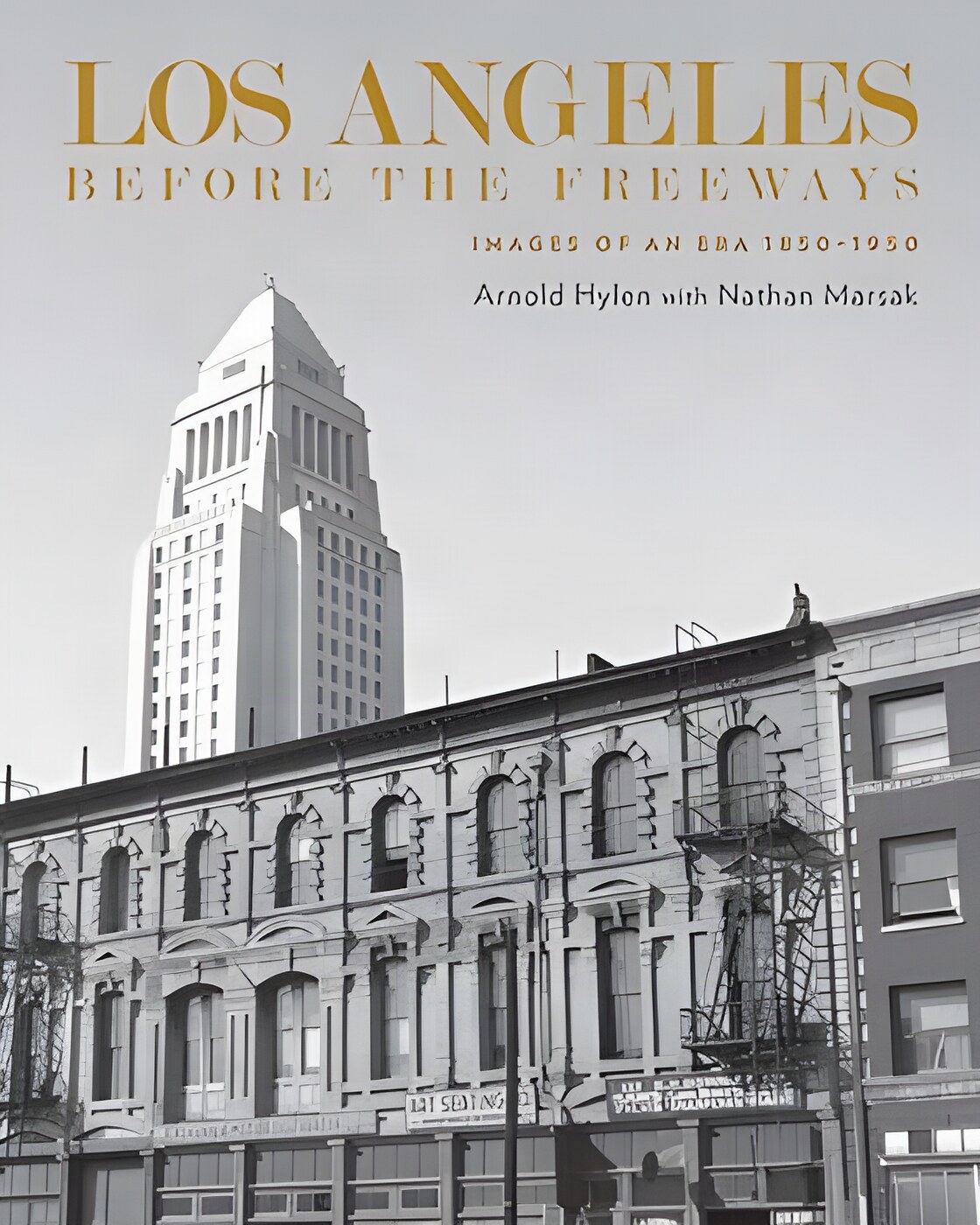
Hardcover. Santa Monica CA, Angel City Press, Book: Very Good, Dust Jacket: None, Hardcover, pictorial boards. Gives a lush, visual tour of a Los Angeles that no longer exists--one of elegant office buildings and stately mansions that were razed in the name of "progress" to build the city's famous freeways. Featuring stunning black-and-white photography from Arnold Hylen that captures a lost era, the book contains an original essay by the photographer that provides historical background and context for the time period. This new edition contains additional, never-before-seen photographs from Hylen and newly unearthed information from historian Nathan Marsak on these lost architectural treasures. Arnold Hylen (1908-1987) was a commercial and architectural photographer based in Los Angeles. Between the late 1940s and the late 1960s, Hylen traversed the streets of Los Angeles, photographing it's vanishing landscape. Still in publisher's shrinkwrap.
Hardcover. NY, Prestel, 1st, 2017, Book: Very Good, Dust Jacket: None, Hardcover, 160 pages. This photographic homage to Los Angeles presents a timeless depiction of the great city. In his book New York Sleeps, Christopher Thomas traveled the empty streets of New York City shooting dreamy cityscapes with a large-format Polaroid camera. For this new book he focuses his lens on Los Angeles, capturing in duotone images of the iconic buildings and spaces in the city: the Chinese Theatre without tourists, the Griffith Observatory peacefully alone, the Hollywood Boulevard without celebrities or onlookers. Around the city's artdeco buildings and mid-century drive-ins, sidewalks, and parking lots are vacant. Shot in the early morning, with the sun's rays just hinting between buildings, or at dusk, when the light is inchoate and mournful, these pictures are a tender valentine to Los Angeles. Fans of New York Sleeps will be thrilled to encounter another sublime project by Thomas. And residents and lovers of Los Angeles will be awestruck at this new interpretation of the City of Angels.
Hardcover. San Francisco, Chronicle Books, 1st, 1989, Book: Very Good, Dust Jacket: Very Good, Hardcover in a bright dust jacket, More than 200 illustrations in color and in black & white. 224 pages. Analyzes in detail Scottish architect Charles Rennie Macintosh's greatest work, the Glasgow School of Art, with commentaries discussing the school's place in the development of architecture. Clean copy.
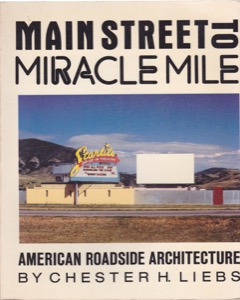
Softcover. Baltimore, Johns Hopkins University Press, 1st, 1995, Book: Very Good, Dust Jacket: None, Softcover in pictorial wraps, 259 pages with bibliography, index. Illustrated with vintage and contemporary photographs. First published in 1985, author Liebs' work established the 20th Century roadside landscape as a subject for serious study. Liebs traces the transformation of commercial development as it moved from centralized town main streets outward along street car line and highways (with old gas stations, small restaurants, motels, and truck stops) to the "miracle miles" and shopping malls of today. This, the first softcover edition, contains new commentary by the author. Clean copy.
Hardcover. New Brunswick NJ, Rutgers University, 1st, 2002, Book: Very Good, Dust Jacket: Very Good, Hardcover, 114 pages, color and b&w photos by Pietropaolo.
Hardcover. New Brunswick NJ, Rutgers University, 1st, 2002, Book: Very Good, Dust Jacket: Very Good, Hardcover, 114 pages, color and b&w photos by Pietropaolo.


 "Landmarks in the Landscapeby: Kaiser, Harvey H.")
 "Landmarks of Rochester and Monroe County: A Guide to Neighborhoods and Villagesby: Malo, Paul")



 "Le Cupole Del Brunelleschi: Capire per conservare by: Rossi, Paolo Alberto")


 "Ledge House - Bohlin Cywinski Jackson - Single Building Series - Process of an Architectural Workby: Ojeda, Oscar Riera/William P. Bruder/Karl A. Backus")
 "Leonardo Da Vinci: Engineer and Architectby: Theberge, Pierre")