Hardcover. Conway NH, TMC Books, 1st, 2008, Book: Very Good, Dust Jacket: Very Good, Hardcover in a bright, unclipped dust jacket. 131 pages, illustrated throughout in color. SIGNED BY AUTHORS on title page. This is the story of what happens when big people decide to be kids again and they have tools and lumber. A beautifully written tale about building an elaborate two story treehouse in the Maine woods, Treehouse Chronicles is reflective and insightful, and carries the reader along as a dream is made real. We meet the author's family, and friends, and a squirrel with an attitude, and you will be captivated by this poignant and humorous story of process, a house is hung in the sky. Packed with over 180 spectacular photographs, evocative watercolors, and line drawings. Clean, tight copy.
Softcover. Chicago, Ludowici-Celadon Co., 1st, 1929-1932, Book: Very Good, Dust Jacket: None, 26 softcover brochures, approx. 24 pages each. Illustrated with b&w photographs and drawings. Issues from 1929 to 1932. Very good condition.
Hardcover. NY, Dodd, Mead & Co., reprint, 1902, Book: Very Good, Dust Jacket: None, Hardcover, green cloth covers with elaborate gilt decoration to front cover and spine, top edge gilt. Design by Alice Cordelia Morse. 317 pages with 48 b&w plates. Selections from Dickens, Hugo, Ruskin, and many others. Originally published in 1898. Hinges cracked, Small ownership sticker to front fly leaf, otherwise a clean, tight copy.
Hardcover. London, Thames and Hudson, 1st, 1973, Book: Very Good, Dust Jacket: Very Good, Hardcover, 288 pages, 34 color and 126 b&w gravure photographs by Alexander Zielcke. Dust jacket with light wear.
Hardcover. Berlin, Argon, 1st, 1991, Book: Very Good, Dust Jacket: Very Good, Hardcover in a bright dust jacket, 136 pages, historical images of Linden, Germany. Many from the late 1800s, mostly landmarks and buildings. Endpapers map of the city. Essay by Dieter Hildebrandt, introduction by Hans-Werner Klunner. GERMAN TEXT.
Hardcover. NY, McGraw-Hill, 4th pr., 1965, Book: Very Good, Dust Jacket: Very Good, Hardcover in a bright dust jacket, 241 pages illustrated in b&w. Foreword by Charles A. Blessing. Voluminously illustrated by the author with drawings and plans. Bibliography. Index. This book traces the history of urban design to date. The monograph has become a classic.
Softcover. Paris, ACAER/GPC, 1st, 1994, Book: Very Good, Dust Jacket: None, 68 pages. Softcover. Exhibition catalog. French and English text. Black & white photographs. From the introduction: "This catalogue has been re-edited by advanced reading copy wraps en reve architecture centre with the Georges Pompidou Centre, for the presentation in France of the exhibition "Warchitecture-Sarajevo, a wounded city". The exhibition and the catalogue were prepared by the architects of the Sarajevo association, members of the associations of Architects of Bosnia-Herzegovina DAS-SABIH". Light rubbing to cover edges, minor creases at corners. Clean, unmarked text.
Hardcover. New York, Five Ties Publishing, 1st, 2006, Book: Very Good, Dust Jacket: Very Good, Hardcover, 163 pages. Like new in publishers shrink-wrap. Contains 93 color photos spanning 25 years of the photographer's work; Includes photos of Exeter Cathedral, the Millenium Dome, Lloyds of London, Washington National Gallery, the Louvre, and many more.
Hardcover. New York, Five Ties Publishing, 1st, 2006-11-01, Book: Very Good, Dust Jacket: Very Good, Hardcover, 163 pages. Like new in publishers shrink-wrap. Contains 93 color photos spanning 25 years of the photographer's work; Includes photos of Exeter Cathedral, the Millenium Dome, Lloyds of London, Washington National Gallery, the Louvre, and many more.
Softcover. New England Press, 1st, 1985, Book: Very Good, Dust Jacket: None, Softcover, color pictorial wrappers. Many full-page black & white photographs. 118 pages including index.
Softcover. New York, The Museum of Modern Art, 1st, 1986, Book: Very Good, Dust Jacket: None, 264 pages. Softcover. A very clean, unmarked copy with minor foxing to textblock edges. Color photographs throughout.
Hardcover. Harrisburg PA, National Historical Society, reprint, 1988, Book: Very Good, Dust Jacket: None, Hardcover, glossy green pictorial boards. No DJ as issued. Volume 7 of the Architectural Treasures of Early America. From material originally published as White Pine Series of Architectural Monographs edited by Russell F. Whitehead and Frank Chouteau Brown. 238 page book with historic photographs and home plans. Clean copy.
Hardcover. New York, Princeton Architectural Press, 1st, 2003, Book: Very Good, Dust Jacket: Very Good, 152 pages. Hardcover with dust jacket. Minor soiling to front cover of dust jacket. An otherwise clean, unmarked copy with only minor wear to dust jacket edges. Color illustrations throughout. A tight copy. "A collection of exquisite large-format pen-and-ink watercolor renderings of all of Palladio's villas."
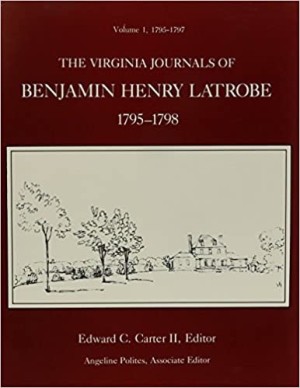
Hardcover. New Haven CT, Yale University Press, 1st, 1977, Book: Very Good, Dust Jacket: Very Good, Two volume set. 575 pages, 63 b&w illustrations. Latrobe (1764-1820), English-born architect of the United States Capitol under Jefferson, Madison, and Monroe, set the course for a vast amount of nineteenth-century American architecture with such works as the Capitol, the Bank of Pennsylvania, and the Baltimore Cathedral. A pioneering engineer as well, he designed the nation"s first comprehensive steam-powered waterworks in Philadelphia. Latrobe combined his professional concerns with an astonishing range of other interests and an acutely ob- servant eye. His papers form one of the finest existing literary and pictorial descriptions of the young republic.
Softcover. Cambridge MA, Lincoln Institute of Land Policy, 1st, 2007, Book: Very Good, Dust Jacket: None, Softcover, oblong format, 152 pages illustrated in color. A richly illustrated book by landscape architect Julie Campoli and aerial photographer Alex S. MacLean helps planners, designers, public officials, and citizens better understand how residential density can help save energy, dollars, and the environment. Name on front fly leaf, otherwise clean.
Hardcover. Scranton PA, International Textbook Company, reprint, 1919, Book: Very Good, Dust Jacket: None, Hardcover, thin black textured cloth covers with embossed titles, gilt lettering on spine, marbled endpapers, 104 pages. With drawings, illustrations, a few in color, diagrams, a few as foldouts, questions and exorcises, and index. Clean, bright copy.
Hardcover. Chapel Hill & London, The University Of North Carolina Press,, 1st, 1991, Book: Very Good, Dust Jacket: Very Good, Hardcover, 297 pages. illustrated throughout in color and b&w. Oblong folio. Light gray cloth with gilt title to spine. Pictorial dust jacket. Minor wear to covers, else like new. The 15x11.5" format accommodates 160 color and 12 b&w illustrations, many of them decidedly horizontal, and accompanying text laid out in two wide (5.5") columns. Before photography, Washington, DC was the subject of numerous engravings, aquatints, and lithographs which were published separately as well as in newspapers and magazines, souvenir booklets, and guidebooks and brochures. A selection of these illustrations depicting buildings or districts, views from public structures, and bird's-eye views is presented along with descriptions of Washington from contemporary published works by journalists, architects, travelers, politicians, and others. Nine chapters review successive periods of growth and identify events that shaped the city's character.
Hardcover. Zurich, Scheidegger and Spiess, 1st, 2016, Book: Very Good, Dust Jacket: None, Hardcover in pictorial cloth, 210 pages, 164 color and 76 b/w illustrations. Le Corbusier (1887-1965) is one the most influential architects of the twentieth century. In the Scandinavian countries, his influence is arguably most pronounced in the writings and art of the Danish experimentalist Asger Jorn (1914-1973). Their collaboration on Le Corbusier's pavilion for the 1937 Paris World Exhibition sparked Jorn's lifelong fascination with the great architect and with architecture more broadly as an inherently public form of art. At the same time, Le Corbusier started working in the visual arts and began to move from a rational, technological approach to architecture towards a more poetic, materialist approach. Published in collaboration with the Museum Jorn, Silkeborg, What Moves Us? focuses specifically on the reception of Le Corbusier in Scandinavia, with the relationship between Jorn and Le Corbusier as a thematic thread. The book first highlights the architect's change of direction and subsequently takes readers through his influence on the young artist. The book's distinguished contributors explore the relationships that emerged among their artistic theories and practices, including Jorn's later critique of Le Corbusier. Essays also explore the wider influence of Le Corbusier on Scandinavian architecture and urbanization and consider Le Corbusier alongside the Danish architect Jorn Oberg Utzon and the Aarhus Brutalism movement.
Hardcover. Chicago, University Of Chicago Press, 1st, 2006, Book: Very Good, Dust Jacket: Very Good, Hardcover, pages. In When Buildings Speak,Anthony Alofsin explores the rich yet often overlooked architecture of the late Austro-Hungarian Empire and its successor states. He shows that several different styles emerged in this milieu during the late nineteenth and early twentieth centuries. Moreover, he contends that each of these styles communicates to us in a manner resembling language and its particular means of expression. Covering a wide range of buildings--from national theaters to crematoria, apartment buildings to warehouses, and sanatoria to postal savings banks--Alofsin proposes a new way of interpreting this language. He calls on viewers to read buildings in two ways: through their formal elements and through their political, social, and cultural contexts. By looking through Alofsin's eyes, readers can see how myriad nations sought to express their autonomy by tapping into the limitless possibilities of art and architectural styles. And such architecture can still speak very powerfully to us today about the contradictory issues affecting parts of the former Habsburg Empire.
Softcover. Island Press, 1st, 1998, Book: Very Good, Dust Jacket: None, Softcover, 382 pages, b&w illustrations. Strips of urban and suburban "fabric" have extended into the countryside, creating a ragged settlement pattern that blurs the distinction between rural, urban, and suburban. As traditional rural industries like farming, forestry, and mining rapidly give way to residential and commercial development, the land at the edges of developed areas -- the rural-urban fringe -- is becoming the middle landscape between city and countryside that the suburbs once were. When City and Country Collide examines the fringe phenomenon and presents a workable approach to fostering more compact development and better, more sustainable communities in those areas. It provides viable alternatives to traditional land use and development practices, and offers a solid framework and rational perspective for wider adoption of growth management techniques.
Hardcover. NY, Reynal and Hitchcock, 1st, 1947, Book: Very Good, Dust Jacket: Poor, Hardcover in a tattered and chipped dust jacket. Off-white cloth with black spine title. 217 pages, b&w drawings by the author. Translated from the French, Quand les Cathedrales Etaient Blanches, by Francis E. Hyslop, Jr. Dj is poor with tape repair to the reverse side. Book has a small stamp to the front fly leaf, otherwise clean.
Hardcover. Newtown CT, The Taunton Press, 1st, 2006, Book: Very Good, Dust Jacket: Very Good, Hardcover in a bright dust jacket, 266 pages. The past has left behind only scattered clues that, on their own, provide little insight into how the people of early America lived and the details of their daily lives. The photographs in this book, the deeply informed narrative that accompanies them, and the eyewitness accounts of daily life that the author weaves throughout, provide a fresh perspective on our early American ancestors and the places they called home. This book is about how their houses and their life in them, from the wealthy to the impoverished, from New York City to the small farms and plantations of the South, from coastal fishing towns to the Western frontier of Indiana and Kentucky. The stories focus on the remarkably vivid differences from one part of the country to the next, class and culture, and the realities of everyday life for American families. These stories twine around a wide selection of HABS photographs of early houses, covering the variety and evolutions of house styles -- not by labeling the style but by explaining the style in the context of everyday life. Richly illustrated with handsome black-and-white photography of old houses from the Library of Congress Historic American Building Survey (HABS) collection and supplemented with period woodcuts, engravings, drawings, paintings, artifacts, and maps, the book is printed on a 4-color press for a depth of tone. Sidebar excerpts from diaries, journals, and letters inject graphic eyewitness descriptions, adding an additional layer of insight. The book also includes sidebars called Still Standing that traces the history of specific houses, from their origins to the present and includes information on the original family, how the house has evolved over the centuries, and how it's used today.
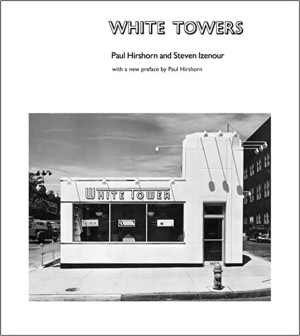
Hardcover. Cambridge MA, The MIT Press , reprint, 2007, Book: Very Good, Dust Jacket: Very Good, Hardcover in a bright dust jacket. An interesting look at the first hamburger chain of restaurants White Towers. Includes numerous black and white images. The pioneering hamburger chain founded in 1926, never felt the need for advertising; it depended on its instantly recognizable building to say it all 189 pages, clean copy.

 "Town House, The by: Smith, Gwenda")

 "Tuileries Brochures, The - A Series of Monographs on European Architecture with Special Reference to Roofs of Tile (26 issues)by: V/A")

 "Tuscan Villasby: Acton/Alexander Zielcke, Harold")

 "Urban Design: The Architecture of Towns and Cities by: Paul D. Spreiregen")


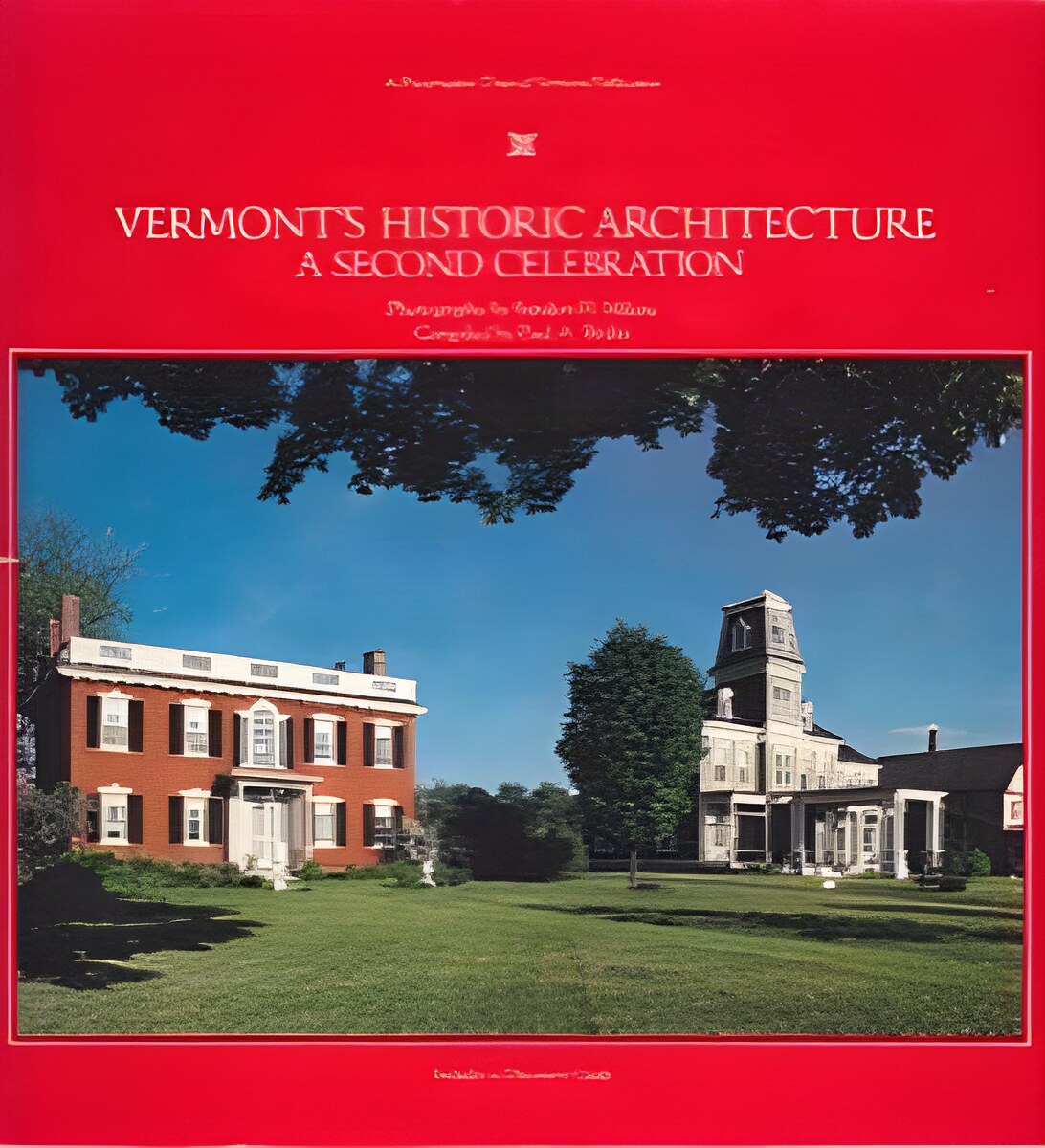

 "Village Architecture of Early New England (Architectural Treasures of Early America Vol 7)by: Mullins, Lisa C. (editor)")


 "Wash Work, Brush and Perspective Drawingby: ICS Staff")


![When the Cathedrals Were White: A Journey to the Country of Timid Peopleby: Le Corbusier [Charles-Edouard Jeanneret]](https://www.browsingisarousing.com/shop/images/NoImage.jpg "When the Cathedrals Were White: A Journey to the Country of Timid Peopleby: Le Corbusier [Charles-Edouard Jeanneret]")