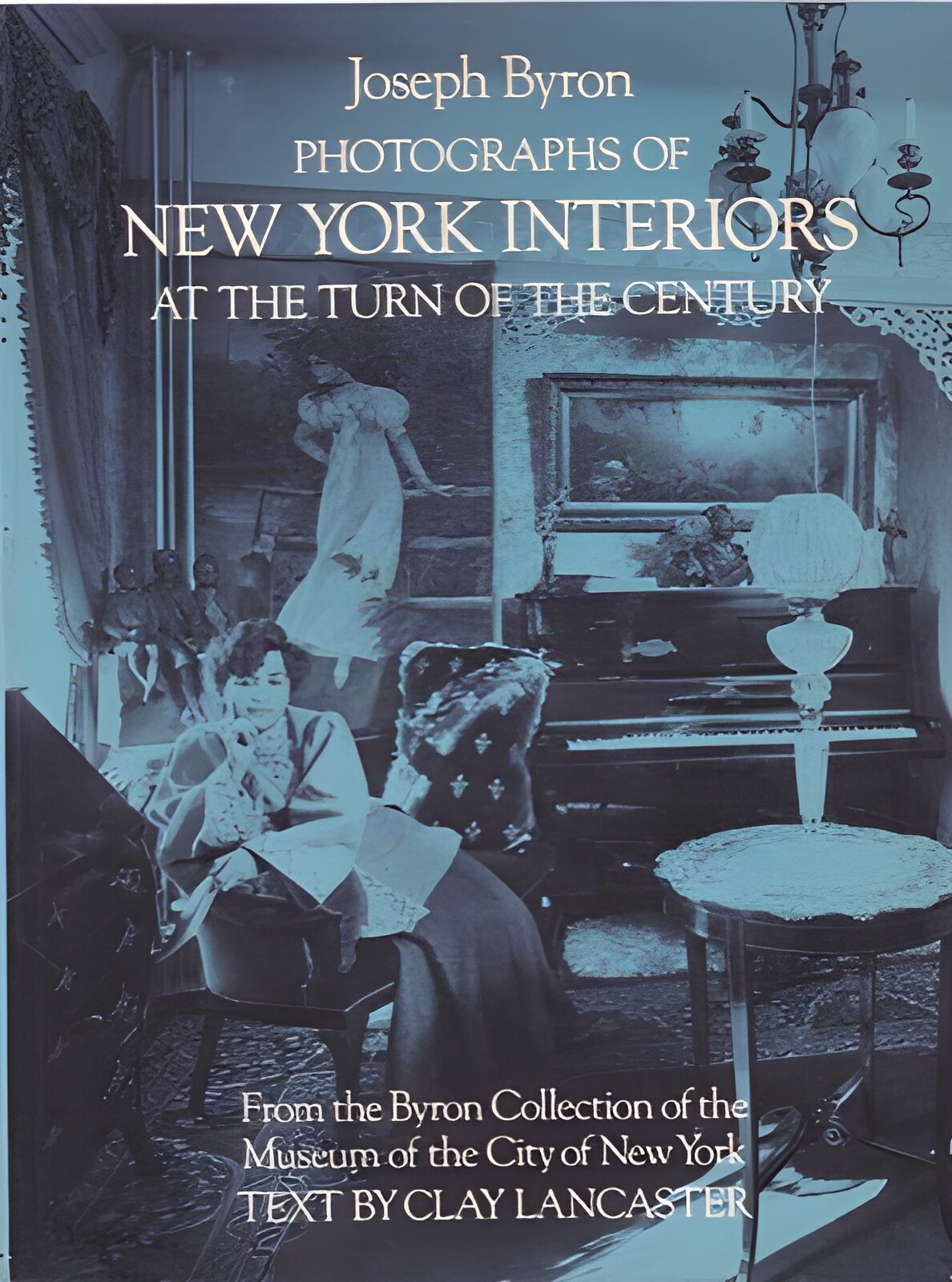
Softcover. NY, Dover, 1st, 1978, Book: Very Good, Dust Jacket: None, Softcover, 154 pages. 131 rare photographs capture some of the most remarkable Victorian-Edwardian interiors ever created. Extraordinary furnished drawing rooms, dining rooms, studies, libraries, bedrooms, music rooms, kitchens, and bathrooms in the homes of well-to-do New Yorkers recall turn-of-the-century charm. Text by Clay Lancaster. Clean copy.
Hardcover. Montreal, Canada, Canadian Centre for Architecture, 1st, 1982, Book: Very Good, Dust Jacket: Very Good, 282 pages. Hardcover. B/w illustrations throughout. Dust jacket front flap price clipped. Tan colored fabric covered. Clean copy, Dust jacket shows some light age wear. From the front flap: "...presents works that show aspects of the history of architecture seen through photography and the history of photography through architecture."
Hardcover. New York, William Morrow and Company, Inc., 1st, 1994, Book: Very Good, Dust Jacket: Very Good, 128 pages. Hardcover. Color and b/w illustrations throughout. Dust jacket unclipped. Gilt title on spine. Dust jacket has a little bit of chipping at top of spine, patched with tape. Otherwise great. Clean and unmarked inside. Gilt endpapers.
Hardcover. New York, W. W. Norton, 1st, 1976, Book: Very Good, Dust Jacket: Good, Hardcover in a very good plus dust jacket. 192 pages. Color frontispiece, color photographs, illustrations, diagrams, bibliography, index. The dust jacket has very minor edgewear. A photographic look at some of the earlier churches built in North America.
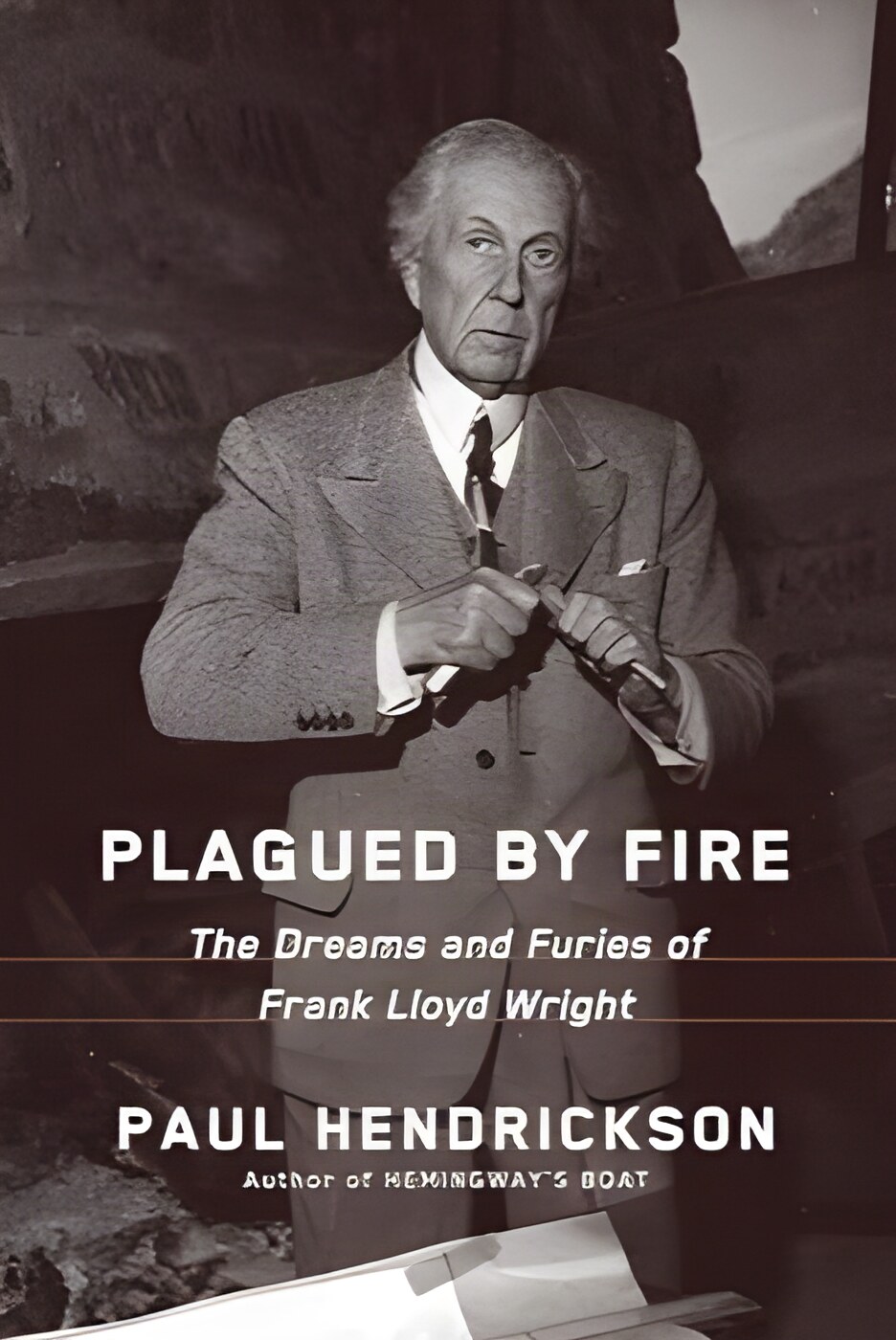
Hardcover. NY, Knopf, 1st, 2019, Book: Very Good, Dust Jacket: Very Good, Hardcover in a bright, unclipped dust jacket, 600 pages. Frank Lloyd Wright has long been known as a rank egotist who held in contempt almost everything aside from his own genius. Harder to detect, but no less real, is a Wright who fully understood, and suffered from, the choices he made. This is the Wright whom Paul Hendrickson reveals in this masterful biography: the Wright who was haunted by his father, about whom he told the greatest lie of his life. And this, we see, is the Wright of many other neglected aspects of his story: his close, and perhaps romantic, relationship with friend and early mentor Cecil Corwin; the eerie, unmistakable role of fires in his life; the connection between the 1921 Black Wall Street massacre in Tulsa, Oklahoma, and the murder of his mistress, her two children, and four others at his beloved Wisconsin home.In showing us Wright's facades along with their cracks, Hendrickson helps us form a fresh, deep, and more human understanding of the man. Clean copy.
Hardcover. New York, D.T. Valentine, N/A, 1856, Book: Very Good, Dust Jacket: None, B&w lithographic print of New York street scene for a proposed pedestrian overpass on Broadway, allowing horse-drawn vehicles to pass underneath. Image size 9 1/2" X 6 1/2", with matte 10 X 12". Two vertical creases where it was once folded. Matte has light soiling.
Softcover. Los Angeles, University of California Press , 1st, 1982, Book: Very Good, Dust Jacket: Very Good, Large softcover, 100 pages; many illustrations. Clean and tight; fairly unblemished. Stiff card wraps with wraparound jacket. Following the publication of the 3-volume Plan of St. Gall an exhibition was mounted which used selected text, drawings, models, etc. that were used to produce the large work This shorter volume grew out of that exhibition.
Hardcover. Baton Rouge LA, Louisiana State University Press., reprint, Book: Very Good, Dust Jacket: Very Good, Hardcover, large oblong book. Contains 134 printed pages of text with color photographs throughout. From the Greek Revival grandeur of Belle Helene, to the Moorish fantasy of Longwood, to the simplicity of Rosella, the plantation homes of Louisiana and the Natchez was powerfully recall the brief flowering of the unique civilization of the Old South. Clean copy in a bright dust jacket.
Hardcover. New York, William T. Comstock, 5th, 1889, Book: Very Good, Dust Jacket: None, 44 pages. Hardcover. Green cloth with gilt titles on spine and cover. Fifth edition. Light rubbing to cover edges, corners. Clean, unmarked.
Hardcover. NY, Abbeville Press, 1st, 2010, Book: Very Good, Dust Jacket: Very Good, Hardcover in a bright dust jacket. 336 pages illustrated in color. This authoritative yet accessible study begins with an overview of the aesthetics, meanings, functions, and techniques of Mesoamerican architecture, and then proceeds to survey the historical development of the builder's art in each of the region's cultural areas. As readers travel from the Maya heartland of Guatemala and the Yucatan to the Aztec stronghold of the Valley of Mexico, and all the way to the northern hinterlands of Mesoamerica, they will gain an appreciation of both the unity and the diversity of the region's architecture. Clean copy. DOMESTIC SHIPPING ONLY.
Softcover. NY, Columbia University Press, reprint, 1991, Book: Very Good, Dust Jacket: None, Softcover, 351 pages, profusely illustrated in b&w. Name on front fly leaf, otherwise a bright, clean copy.
Hardcover. Philadelphia , John Wanamaker, 1st, 1899, Book: Very Good, Dust Jacket: None, Hardcover, green cloth with gilt and black decoration, 147 illustrations by Joseph Pennell and others. Folded Map laid In. Covers with light edgewear and chipping. Top edge gilt.
hardcover. London, Turnberry Consulting , reprint, 2013, Book: Very Good, Dust Jacket: Very Good, 271 pages. Hardcover. Extensive color and b&w photographs throughout. Silver gilt titles on spine. Includes extensive glossary. Like new in publisher's shrink-wrap.
Hardcover. Philadelphia, PA, George W. Jacobs & Company, 1st Edition, 1924, Book: Very Good, Dust Jacket: Fair, 334 pages. Hardcover. Color frontispiece and b/w illustrations throughout. Previous owner's bookplate, stamp, and pencil markings on front endpapers. Some pages untrimmed. Blue leather cover boards, gilt title on spine and front cover boards with two color decoration. Boards are excellent. Dust jacket has agewear, but present. binding very good. Pages and edges have some tanning. Top edge dyed. Dr. Gordon brings an artist's eye as well as the knowledge of a historian to the beautiful city of London and her historic landmarks.
Hardcover. Germany, Hatje Cantz Publishers, 1st, 2006, Book: Very Good, Dust Jacket: Very Good, Hardcover, 159 pages. Like new in publishers shrink-wrap. The prominent Genovese architect Renzo Piano--recipient of the 1998 Pritzker Award and architect of the Whitney Museum of American Art and Morgan Library renovations, as well as the new New York Times building--has just completed a new and unusual museum building--the Zentrum Paul Klee on the outskirts of Bern. The center, says Piano, is dedicated to the "poet of silence," and thus it was fitting to consider building a museum that would speak softly. The Zentrum Paul Klee rises upward in the form of three hills connected by a 150-meter-long thoroughfare, the "Museum Street" serving as a path within the complex. The three structures make up a harmonious yet prominent landscape sculpture whose roofs are supported by innovative steel construction. Includes photographs, design sketches, plans and models--a living image of a magnificent building.
Hardcover. Germany, Hatje Cantz Publishers, 1st, 2006, Book: Very Good, Dust Jacket: Very Good, Hardcover, 159 pages. Like new in publishers shrink-wrap. The prominent Genovese architect Renzo Piano--recipient of the 1998 Pritzker Award and architect of the Whitney Museum of American Art and Morgan Library renovations, as well as the new New York Times building--has just completed a new and unusual museum building--the Zentrum Paul Klee on the outskirts of Bern. The center, says Piano, is dedicated to the "poet of silence," and thus it was fitting to consider building a museum that would speak softly. The Zentrum Paul Klee rises upward in the form of three hills connected by a 150-meter-long thoroughfare, the "Museum Street" serving as a path within the complex. The three structures make up a harmonious yet prominent landscape sculpture whose roofs are supported by innovative steel construction. Includes photographs, design sketches, plans and models--a living image of a magnificent building.
Hardcover. London, Laurence King Publishers, 1st, 2008, Book: Very Good, Dust Jacket: None, Hardcover, 192 pages. A pictorial tour of unique loos of the world. No dj issued.
Hardcover. Koln GR, Taschen, 1st, 2000, Book: Very Good, Dust Jacket: None, Hardcover, 464 pages. Original publisher's faux wood boards, lettered orange at the spine and front cover. Copiously illustrated in color and black and white throughout. Text in English, German and French. Many photographs By Julius Shulman. Originally from Vienna, Richard Neutra came to America early in his career, settling in California. His influence on post-war architecture is undisputed, the sunny climate and rich landscape being particularly suited to his cool, sleek modern style. Neutra had a keen appreciation for the relationship between people and nature; his trademark plate glass walls and ceilings which turn into deep overhangs have the effect of connecting the indoors with the outdoors. Neutra's ability to incorporate technology, aesthetic, science, and nature into his designs brought him to the forefront of Modernist architecture. For the first time, all of Neutra's works (nearly 300 private homes, schools, and public buildings) are gathered together in one volume.
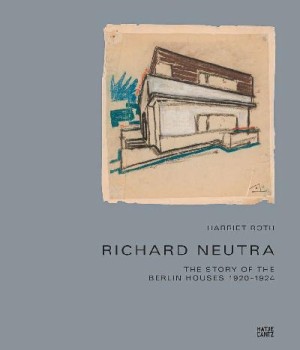
Hardcover. Hatje Cantz, 1st, 2019, Book: Very Good, Dust Jacket: None, Hardcover, pictorial boards, 304 pages illustrated in b&w and color. At the first mention of his name, one can easily picture them: light-flooded bungalows that are lavishly composed into nature and that characterize the architectural style of the American West Coast surrounding Los Angeles. But it is sometime overlooked that the career of Richard Neutra (1892-1970) began in Berlin-Zehlendorf. And yet these houses in Zehlendorf represent a fascinating phase in Neutra's work. With their complex color schemes and extravagant interior design, they reveal themselves to be more than just an experimental and radically innovative design. Indeed, these lesser-known aspects already hint at elements that will be taken up again in future projects. The present publication finally provides for a rightful appreciation of Neutra's early works and, alongside historical sources, it collects countless new and unpublished documents about the houses and their first residents. Clean, still in publisher's shrink wrap.
Softcover. Cambridge MA, The MIT Press , 1st, 2021, Book: Very Good, Dust Jacket: None, Softcover, 373 pages. A history of New York subway passengers as they navigated the system's constraints while striving for individuality, or at least a smooth ride. When the subway first opened with much fanfare on October 27, 1904, New York became a city of underground passengers almost overnight. In this book, Stefan Hohne examines how the experiences of subway passengers in New York City were intertwined with cultural changes in urban mass society throughout the twentieth century. Hohne argues that underground transportation--which early passengers found both exhilarating and distressing--changed perceptions, interactions, and the organization of everyday life. Clean copy.
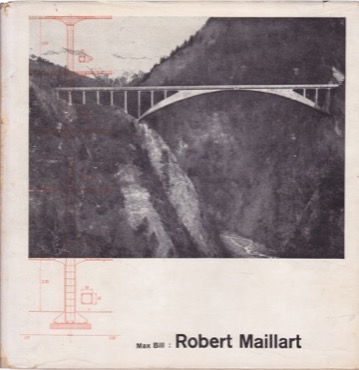
Hardcover. Zurich, Verlag fur Architektur], 1st, 1949, Book: Very Good, Dust Jacket: Fair, Hardcover in a worn, lightly soiled dust jacket with a chunk missing from the rear panel. 180 pages. Text in German, French and English, illustrated in black and white throughout. History of Robert Maillart bridges. Previous owner's signature on inside front cover, otherwise clean.
New York , Princeton Architectural Press, 2001, Book: Very Good, Dust Jacket: Very Good, Hardcover, 330 pages, color, b&w illustrations. Like-new condition. The first architect trained in America, Robert Mills is best known as the designer of many iconic buildings in our nation's capital: the Washington Monument, the Department of Treasury headquarters, the Patent Office Building (now National Portrait Gallery) , and the Post Office Headquarters.Beautifully illustrated with never-before-published watercolors and renderings and new color photography commissioned for the book.
Hardcover. NY, Universe Books, 1st, 1971, Book: Very Good, Dust Jacket: None, Hardcover, red cloth with gilt titles. 196 pages, illustrated throughout in color and b&w. Discusses the history of the movement and shows examples of architecture, sculpture, metalwork, ivories, stained glass, wall paintings, and book illuminations. Clean, tight copy.
Hardcover. New York, Henry Holt & Co, 1st, 1991, Book: Very Good, Dust Jacket: Good, Hardcover, 205 pages, illustrated throughout. Minor dust jacket edge wear, otherwise, very clean and tight copy. An examination of rooftop designs for living spaces, conservatories, studios, conference rooms, tea houses, and pool rooms includes floor plans and discusses building and zoning codes





 "Practical Lessons in Architectural Drawing or How to Make the Working Drawings and Write the Specifications for Buildings - Illustrated by 33 Full-page Plates (One in Color) and 33 Woodcuts, showing methods of Construction and Repres")


 "Racecourse Architectureby: Roberts, Paul")





 "Robert Mills: America's First Architectby: Bryan, John M.")