Hardcover. London, Conran/Octopus, 1st, 1998, Book: Very Good, Dust Jacket: Very Good, Hardcover in a bright dust jacket, 220 pages. Illustrated with full color photographs. Clean, tight copy. Vast, obsolete buildings are now taking on new life as people seek out living space. This work presents an international collection of conversions, including those of architects and designers such as Andree Putman and John Pawson. Through the designs and accompanying text, the reader witnesses how empty shells are transformed into unconventional homes.
Hardcover. NY, Rizzoli, 1st, 2010, Book: Very Good, Dust Jacket: Very Good, Hardcover, More than a century ago, when Abbot Kinney built his Venice-of-America with its network of canals and fanciful buildings, cultural aspirations were high. Over the years, this aura of fantasy and imaginative possibility endured as integral to the zeitgeist of the place. Today, this spirit of innovation and creativity is richly expressed in the vintage bungalows and cottages that have been embraced and brought back to life by homeowners more in love with place than size. Stalwart survivors of the ebb and flow of the area's fortunes over a century, these small homes channel the creative spirit of the place and provide a welcome counterpoint to oversize houses. Color, landscape, treasured collections, personal narrative, contemporary overlays and additions, art and craft, and inventive design--all combine in various ways to produce domestic environments with unique and deeply personal points of view.
Hardcover. Boston, MA, University of Massachusetts Press, 1st, 2013, Book: Very Good, Dust Jacket: Very Good, 516 pages. Hardcover with dust jacket. A very clean, unmarked copy with only minor wear to dust jacket edges. This volume documents Fenn's prolific career from the 1860s until his death in 1911. Sue Rainey also recounts his adventurous sketching trips in the western United States, Europe, and the Middle East, which enhanced his reputation for depicting far-flung places at a time when the nation was taking a more prominent role on the world stage.
Hardcover. Vilnius, Baltos Lankos, 1st, 1995, Book: Very Good, Dust Jacket: Very Good, 69 duotone plates, images taken by the Lithuanian photographer Jozef Chechowicz (1819-1888). Mostly landscapes of the city and it's buildings, some with people. Beautifully produced volume, limited to 2000 copies. Light edgewear to dust jacket.
Hardcover. Boston, Bulfinch, 1st, 1999, Book: Very Good, Dust Jacket: Very Good, Hardcover in a bright dust jacket. Illustrated with 382 photographs and sketches, 152 in color. 9 3/4 x 10 5/8 inches. 224 pages. Dan Kiley has influenced generations of landscape designers, and his work has heightened our awareness of our surroundings through his lifelong tenet that the actions of people are integral to nature and its course. Despite his international renown, no comprehensive monograph has ever been published on Dan Kiley. Produced in close collaboration with the architect, this is the definitive book on the man and his oeuvre, from early projects to his most recent works. Remainder line to bottom edge, otherwise clean.
Softcover. London, Unicorn Press Ltd, 1st, 2015, Book: Very Good, Dust Jacket: None, 96 pages. Softcover. Very clean, unmarked copy with only minor wear to wrapper edges. Many color illustrations and photographs throughout. Artist David Shillinglaw is as comfortable in the street as in the studio, as likely to paint on found objects as on canvas, as interested in tiny hand-made artist's books as in large-scale public murals. His mural in the Olympic Park in East London is the longest mural ever commissioned in Great Britain, while his brilliantly inventive creations enliven construction hoardings throughout London's changing cityscape. The Dance of 1000 Faces is the first book to gather a significant number of Shillinglaw's works. It presents his art in full color in all its many forms: not only paintings and murals, but journals drawings, sketches, and more. It reveals Shillinglaw's particular genius for depictions--and distortions--of the human face, grimacing and grinning, shifting and shaping as it becomes no one and everyone at once.
Hardcover. NY, Norton, 1st, 2003, Book: Very Good, Dust Jacket: Very Good, Hardcover, 160 pages. A tribute to the barn by the master documentarian of our time. As an elemental part of our landscape and our history, barns evoke childhood memories for many of us, recollections of a simpler way of life. Regardless of their size or shape, their forms follow their functions. They are honest. They are beautiful. And they are rapidly vanishing. Across the land we see abandoned farms with barns falling down, being torn down, and only occasionally being converted to other uses. As urban sprawl eats up the countryside and food-producing Goliaths put small farmers out of business, the need for old barns has diminished. For most of his life as a photographer, David Plowden has admired and photographed barns. In recent years, as their disappearance accelerated, he made it his mission to document these beautiful structures, before they too are lost. The result is this beautiful book, his hymn to the American barn. 130 duotone photographs.
Hardcover. Benteli Verlags , 1st, 2017, Book: Very Good, Dust Jacket: None, Oblong hardcover with a pictorial label, 192 pages. The faded remnants of a glorious past are captured in all their morbid beauty, in images that manifest the ephemeral and go beyond all conventional associations and conceptions of the American South: Days Gone By combines carefully crafted photographs from the past ten years with a cultural history of the region's social and structural changes. With an unflinching gaze, Jorg Rubbert presents the demise of countless small towns between Georgia, Mississippi and Texas, their suffering particularly tangible following the financial crisis. Rural towns, idyllic at first glance, are soon revealed as forgotten relics of times long past.
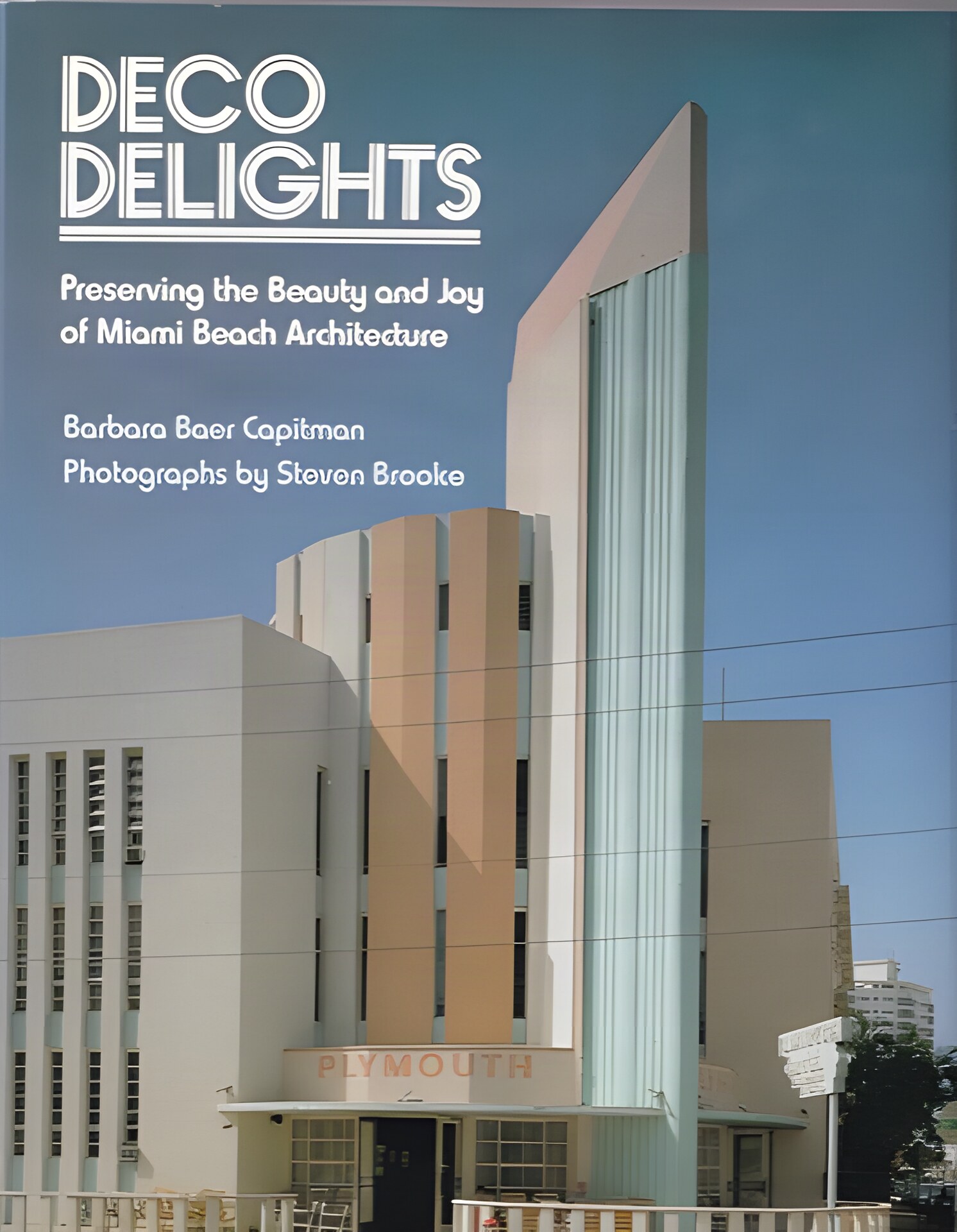
Softcover. NY, E. P. Dutton & Co., 1st, 1988, Book: Very Good, Dust Jacket: None, Softcover in pictorial wrappers, 116 pages illustrated in color. Documents the superb and amazing Art Deco buildings of Miami Beach. Bright and beautiful full color photos feature mainly the exteriors of these gems. Clean copy.
Hardcover. E.L. Hildreth & Co., Inc. (printers), Ltd. Ed., 1937, Book: Very Good, Dust Jacket: None, Hardcover, brick-red cloth with bright gilt lettering an cover and spine. Signed by Booth on the limitation page, #193 of 500 copies. No dust jacket if issued. 98 pages, illustrated with b/w photographs. Clean copy.
Hardcover. Gibbs Smith, 1st, 2005, Book: Very Good, Dust Jacket: Very Good, Hardcover, 192 pages. Sim Van der Ryn is the president of Van der Ryn Architects, a northern California firm known worldwide for its work in sustainable architecture. He taught architecture and design at the University of California, Berkeley for more than thirty years, inspiring a new generation to create buildings and communities that are sensitive to place, climate, and the flow of human interactions. He is the author of six groundbreaking books about planning and design, including Sustainable Communities and Ecological Design. He lives and works in the San Francisco Bay area.
Hardcover. NY, Stewart, Tabori & Chang, 1st, 2004, Book: Very Good, Dust Jacket: Very Good, Hardcover in a bright dust jacket. 192 pages illustrated in color. A complete guide to using wood in the home offers practical information and hard knowledge about types of wood and their uses, as well as inspiration on the uses for wood, complete with a buying guide and 250 color photos.
Hardcover. London, Cassell & Company, 1st, 1931, Book: Very Good, Dust Jacket: None, Hardcover, tan boards stamped in black, 82 pages with dozens of gorgeous b&w pen line drawings by Moreland. "The face of London is changing so rapidly that the time cannot be far distant when much that is recording these pages will have disappeared". As this was written in 1931, the anticipated changes came of course much sooner and much more dramatically than had been anticipated. The author has depicted Dickens' storied locations as they appeared when written. Previous owner's inscription, name stamp on front fly leaf, otherwise clean.
Hardcover. New York, Hudson Hills Press, 1st, 1996, Book: Very Good, Dust Jacket: Very Good, Hardcover, 175 pages, illustrated with 247 plates, 37 in color. In publisher's shrinkwrap. Nobel Prize-winner Heaney introduces a volume that richly reflects every aspect of Hadzi's career, from intimate studio photographs to large architectural commissions. Hadzi's works in bronze and stone are powerfully abstract and expressionist, yet involved with the past as a literary and aesthetic source.
Softcover. Mechanicsburg PA, Stackpole, 1st, 2005, Book: Very Good, Dust Jacket: None, 274 pages, paperback. A definitive guide to New England diners. Mild edgewear to wraps. With color photographs throughout. Bright and clean; a tight copy.
Softcover. NY, Harry N. Abrams, 2nd pr., 1981, Book: Very Good, Dust Jacket: None, Softcover, 144 pages. 117 illustrations including 50 plates in full color. Clean, tight copy. Included here are paintings and descriptions of more than 100 diners from every part of the United States. The artist's own captions introduce each diner - many of which no longer exist - and describe their food specialties, their sometimes quirky histories, and their owners, managers, or patrons. In the first edition 50 paintings were reproduced in color; for this new, revised, and updated edition, there are 69 in color. The artist has selected forty recent paintings to replace earlier works, most of which were shown only in black and white. New reminiscences, new anecdotes, and new facts accompany the paintings. Written by Baeder in his inimitable, conversational style, these brief texts tell the reader much about diner history, fashions in food and popular architecture, and about the amiable, slightly nutty man who pursues diners obsessively, yet views them with a perception that rivals that of a connoisseur of haute cuisine.
Softcover. NY, Harry N. Abrams, reprint, 1981, Book: Very Good, Dust Jacket: None, Softcover, 144 pages. 117 illustrations including 50 plates in full color. Clean, tight copy. Included here are paintings and descriptions of more than 100 diners from every part of the United States. The artist's own captions introduce each diner - many of which no longer exist - and describe their food specialties, their sometimes quirky histories, and their owners, managers, or patrons. In the first edition 50 paintings were reproduced in color; for this new, revised, and updated edition, there are 69 in color. The artist has selected forty recent paintings to replace earlier works, most of which were shown only in black and white. New reminiscences, new anecdotes, and new facts accompany the paintings. Written by Baeder in his inimitable, conversational style, these brief texts tell the reader much about diner history, fashions in food and popular architecture, and about the amiable, slightly nutty man who pursues diners obsessively, yet views them with a perception that rivals that of a connoisseur of haute cuisine.
Hardcover. Taschen, 1st, 2006, Book: N, Hardcover in a bright dust jacket. 792 pages. This volume covers the second half of the 1970s, an era marked by the oil crisis and the related global economic crisis. For the first time, architecture and design dealt with alternative resources, ecological building methods, and recyclable materials. Nevertheless synthetics remained present in many fields, especially in interior design. Examples of projects featured are the postmodern and lightflooded buildings by Richard Meier, the modernistic buildings by Foster Associates, the Centre Georges Pompidou by Renzo Piano and Richard Rogers, and the buildings of the Japanese architects Arata Isozaki and Kisho Kurakawa. The industrial design of modern transport systems, office machines, and electrical appliances is also highlighted.
Hardcover. Taschen, 1st, 2006, Book: Very Good, Dust Jacket: Very Good, Hardcover in a bright dust jacket, 580 pages, profusely illustrated. This title covers the years 1985-1989 - the eighties in full force. The many styles of architecture and design that became prominent in the second half of the 1980s are the focus of this volume. Along with Postmodernism - represented by buildings, interior decoration, and designs by Peter Shire, Richard Meier, Gustav Peichl, Ricardo Bofill, Ettore Sottsass, Arata Isozaki, and the Arquitectonica firm - it was the buildings of the High-Tech Style which dominated. The most prominent examples are the Head Office of the Hong Kong & Shanghai Banking Corporation in Hong Kong, designed by the architectural firm Foster Associates, and the Lloyds Building by Richard Rogers in London. In publisher's shrink wrap.
Hardcover. Taschen, 1st, 2006, Book: Very Good, Dust Jacket: Very Good, Hardcover in a bright dust jacket, Taschen's Domus collection is a major publishing achievement and a must-have item for all design and architecture teaching institutions, practicing architects, designers, collectors, students, and anyone who loves design. /// The first half of the 1990s represented a generational change in architecture and design.//// This title covers the years 1990-1994 - the next generation. The first half of the 1990s, this volume's focus, marked a shifting of the generations in architecture and design. "domus" - up to date as always - documented the work of this new generation with elaborate articles and reports. The architects Tadao Ando, Jean Nouvel, David Chipperfield, Philippe Starck, Rem Koolhaas, Peter Eisenman, Jacques Herzog, and Pierre de Meuron made their debuts in domus during this period. In addition, established architectural greats like Frank O. Gehry, Mario Bellini, Richard Meier, Renzo Piano, Norman Foster, Santiago Calatrava, and Zaha Hadid were also featured. In product design, Marc Newson, Rodney Kinsman, Jasper Morrison as well as the brothers Fernando and Humberto Campana appeared in the spotlight.


 "Cutler Anderson Architects by: Sheri Olson")






 "Decoration and Furniture of English Mansions During the 17th and 18th Centuriesby: Lenygon, Francis")





 "Domus, Volume 10: 1985-1989by: Fiell, Peter")
