Hardcover. London, John Lane the Bodley Head, 1st, 1913, Book: Very Good, Dust Jacket: None, Hardcover, 291 pages. Photographs and illustrations throughout. Minor spine edge wear. Gilt title on front cover and spine. A clean and tight copy.
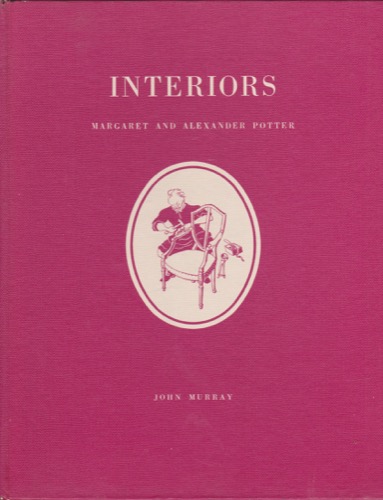
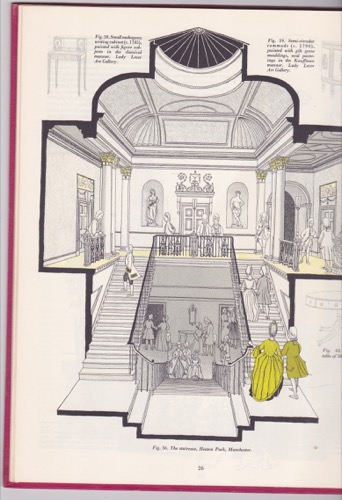
Hardcover. London, John Murray, 1st, 1957, Book: Very Good, Dust Jacket: None, Hardcover, red cloth stamped with white lettering, decoration. Delightfully illustrated history of interior design and furniture. 48 pages, 2-color art throughout by the authors. Small library stamp on title page, otherwise clean.
Hardcover. New York, Macmillan Company, 1st Edition, 1905, Book: Very Good, Dust Jacket: None, 436 pages. Hardcover. Green cloth cover boards, gilt title on spine and front cover with decoration. Tanning to pages and edges (agewear). Top edge gilt (faded). Binding good, spine straight. The autobiography of Justin McCarthy (1830-1912), who was an Irish politician, journalist, novelist, and historian.
Hardcover. London, Cambridge University Press, 1st, 1989, Book: Very Good, Dust Jacket: Very Good, Hardcover, 408 pages. Jacobitism, or support for the exiled Stuarts after the revolution of 1688, has become a topic of great interest in recent years. Historians have debated its influence on Parliamentary politics, but none has yet attempted to explore its broader implications in English society. This study offers a wide-ranging analysis of every aspect of Jacobite activity, from pamphlets and newspapers to songs, cartoons, riots, seditious words, clubs, and armed insurrection. Previous owner's inscription on first page, light marginal notes to about 20 pages. In a bright dust jacket.
Hardcover. Dublin, M. H. Gill and Son, reprint, Book: Very Good, Dust Jacket: Good, Hardcover in a worn, price-clipped dust jacket. 463 pages. numerous b&w illustrations. Described as "Original Edition With a Continuation of the Journal in New York and Paris, a Preface, Appendices and Illustrations". The Journal of an Irishman who fell foul of English rule in the mid-19th century, was transported to Van Diemen's Land (Tasmania) and escaped. No date but probably late 1940s. Mild musty odor.
Hardcover. New Haven, Conn, Yale University Press, 1st, 1926, Book: Good, Dust Jacket: None, Hardcover, blue cloth, 139 pages. Gilt title on spine. Slight corner and edge wear, previous owner's signature on front end paper. Otherwise, very clean and tight copy.
Hardcover. New York, G. P. Putnam's Sons, 1st, 1978, Book: Very Good, Dust Jacket: Very Good, Hardcover, 192 pages. Blue cloth covers, gilt titles to spine, laminate dust jacket fully illustrated in color, 145 illustrations throughout with 24 pages in full-color. Clean covers, slight rubbing to dust jacket, pages crisp and unmarked, with light discoloration due to age around page edges; overall, a very clean, tight copy in great condition.
Hardcover. London, Phillimore & Co., 1st, 1975, Book: Very Good, Dust Jacket: Very Good, Hardcover in a bright, price-clipped dust jacket. 116 pages of b&w historical photographs of Jersey Island. Clean copy.
Hardcover. NY, F.A. Stokes Company, 1st, 1900, Book: Very Good, Dust Jacket: None, Hardcover, red cloth with bright gilt stamping, 137 pages. Top edge gilt. Ribbon marker, photographic frontispiece portrait of actor John Drew, as well as numerous photographs of John Drew (and other actresses) in various dramatic productions. Clean copy.
Hardcover. Edinburgh, E. & S. Livingstone Ltd, 1st, 1950, Book: Very Good, Dust Jacket: Very Good, Hardcover in a bright dust jacket, 104 pages, b&w illustrations. Biography of an 18th century man of medicine and natural science. Small name stamp on front fly leaf, oterwise clean.
Hardcover. Edinburgh, Paul Harris Publishing, 1st, 1980, Book: Good, Dust Jacket: Very Good, Hardcover in a lightly worn dust jacket. 53 pages of text, color frontis., 96 plates. A study of the self taught caricaturist John Kay of Edinburgh. Lavishly illustrated. PLEASE NOTE: This book while tight and clean, has a musty odor.
Hardcover. Cambridge UK, Cambridge University Press, 1st, 2006, Book: Very Good, Dust Jacket: Very Good, Hardcover in a bright dust jacket, 767 pages. 'This book is a major new intellectual and cultural history of intolerance and toleration in early modern and early Enlightenment Europe. John Marshall offers an extensive study of late seventeenth-century practices of religious intolerance and toleration in England, Ireland, France, Piedmont and the Netherlands and of the arguments which John Locke and his associates made in defence of 'universal religious toleration'. He analyses early modern and early Enlightenment discussions of toleration; debates over toleration for Jews and Muslims as well as for Christians; the limits of toleration for the intolerant, atheists, 'libertines' and 'sodomites'; and the complex relationships between intolerance and resistance theories including Locke's own Treatises. This study is a significant contribution to the history of the 'republic of letters' of the 1680s and the development of early Enlightenment culture and will be essential reading for scholars of early modern European history, religion, political science, and philosophy.' Clean copy.
Hardcover. London, Oxford University Press, reprint, 2011, Book: Very Good, Dust Jacket: None, Two volume set complete, glossy boards, 977 pages in total. Professor Toomer's two-volume set is not only an indispensable reference work but also provides the first thorough treatment of the scholarship of John Selden, acknowledged as the most learned man of 17th-century England. All of his numerous published works, especially in the fields of history, law, and Hebraica, are critically examined and described in detail. The narrative also relates his writings to contemporary events, in the Civil War and the parliaments (including the Long Parliament) in which he played a prominent part, and to the work of other scholars in Europe (notably Scaliger and Grotius) and in Britain (including Camden and Ussher). Selden's involvement with the Universities, the support of libraries, and the promotion of scholarship is discussed. The work will be an essential resource, not only for the life of a major figure of his time, but also for the intellectual history of 17th-century England in general. No djs as issued, like new.
Softcover. NA, NA, 1st, NA, Book: Good, Dust Jacket: None, 51 pages. Softcover. No date or publication information. Library stamp at bottom left corner of front cover. Number stamped on reverse of title page. Text is clean, unmarked. Some light chipping to cover edges. The journal starts in 1848, with a voyage to Glasgow at fifteen years of age, for famine relief. Later voyages took Crockett to Paris, Russia, and Calcutta, Entertaining anecdotes about the passengers, his reading, and his wedding in Boston. The narrative is taken up later at his Golden Wedding. Entertaining and informative. Stapled in green wrappers.
Hardcover. Lavenham, Terence Dalton Limited, 1st, 1983, Book: Very Good, Dust Jacket: Good, Hardcover, 190 pages. Minor dust jacket edge wear, small chunk missing on top left corner, with protective clear cover. A very clean and tight copy. Many dramatic incidents recorded here for the first time. Large format. B/w photos and diagrams. Index.
Hardcover. Swindon, English Heritage, 1st, 2012, Book: Very Good, Dust Jacket: Very Good, Hardcover, 434 pages, illustrated throughout in color and b&w. Clean, unmarked copy with only minor wear to dust jacket. The Iveagh Bequest at Kenwood House in Hampstead, London, is one of the world's great private art collections assembled by an individual. In quality it challenges the Frick collection in New York, with whose eponymous collector Iveagh was in competition for acquisitions during the great age of the industrial barons on both sides of the Atlantic, and the Wallace collection in London. They all saw collecting great art - much as the oligarchs of today - as ultimate status symbols.
Hardcover. New York, E. P. Dutton & Company, First Edition, 1938, Book: Very Good, Dust Jacket: None, 107 pages. Hardcover. Previous owner's signature to front flyleaf. Black & white illustrations throughout. Dust jacket with moderate wear, tears to edges & chipping, now protected with a plastic cover. Toning throughout. Clean & unmarked.
Hardcover. NY, E. P. Dutton & Co., 1st us, 1959, Book: Very Good, Dust Jacket: Good, Hardcover in a lightly worn and chipped dust jacket. Horatio Herbert, 1st Earl, Kitchener of Khartoum (1850-1916) , English soldier and statesman. The commander of the Anglo-Egyptian army from 1890, he helped to win back the Sudan for Egypt, and was made a peer. After the Boer War in South Africa he was made viscount and became secretary for war in August 1914, losing his life aboard the H. M. S. HAMPSHIRE when it was mined off Orkney. Index. 12 pages of b/w illustrations, plus 3 illus in text and 3 pages of maps. Clean copy.
Hardcover. London, Seeley & Co, 1st, Book: Very Good, Dust Jacket: None, Hardcover bound in brown gilt decorated cloth, 355 pages, many b&w illustrations.
Softcover. NY, King's Crown Press, 1st, 1946, Book: Very Good, Dust Jacket: None, Softcover, gray wrappers, 287 pages. Local government bodies known as county councils were the landlords for 25,000 small farmers, market gardeners, and part-time agriculturalists in England and Wales in 1935. Clean copy.
Hardcover. NY, Jonathan Cape & Harrison Smith, 1st, 1929, Book: Very Good, Dust Jacket: None, Hardcover, purple cloth, gilt lettering on spine, 288 pages with index, b&w illustrations. Previous owner's inscription on front fly leaf. Light fading to spine. Otherwise clean.
Hardcover. London, England, Oxford at the Clarendon Press, 2nd Edition, 1955, Book: Very Good, Dust Jacket: None, 479 pages plus maps and fold-out family tree/timeline. Hardcover. Paste down presentation label on front flyleaf. Previous owner's signature on front flyleaf. Blue cloth cover boards, gilt title on spine (slightly faded). A touch of tanning to pages. In very good condition.

 "In the Wake of the Eighteen-Twelvers: Fights and Flights of Frigates and Fore-'n'-afters in the War of 1812-1815 on the Great Lakes by: Snider, C. H. J.")
 "INSIDE S.O.E. The first full story of Special Operations Executive in Western Europe, 1940-45 by: E.H. Cookridge")
 "Interiors: a Record of Some of the Changes in Interior Design and Furniture of the English Home From Mediaeval Times to the Present Day by: Margaret and Alexander Pott")
 "Irishman's Story, An by: McCarthy, Justin")

 "Jacobitism and the English People, 1688-1788 by: Monod, Paul Kleber")
 "Jail Journal: With an Introductory Narrative of Transactions in Ireland by: Mitchel, John")
 "James Durand, An Able Seaman of 1812: His Adventures on \"Old Ironsides\" and as an Impressed Sailor in the British Navy by: Brooks (Ed.), George S.")
 "James Whistler McNeill by: Taylor, Hillary")
 "Jersey Through the Lens by: Mayne, Richard & Stevens, Joan")
 "John Drew by: Dithmar, Edward A.")
 "John Hunter by: Gloyne, S. Roodhouse")
 "John Kay of Edinburgh: Barber, Miniaturist and Social Commentator by: Evans, Hilary/Evans, Mary")
 "John Locke, Toleration and Early Enlightenment Culture (Cambridge Studies in Early Modern British History) by: Marshall, John")
 "John Selden: A Life in Scholarship (Two Volumes) by: Toomer, G. J.")
 "Joseph Mallord William Turner by: Walker, John")
 "Journal of Charles B. Crockett, The by: Crockett, Charles B.")
 "Keepers of the Sea: A History of the Yachts and Tenders of Trinity House by: Woodman, Richard")
 "Kenwood: Paintings in the Iveagh Bequest by: Bryant, Julius")
 "King's Daughters, The - An Intimate and Authentic Study by: Asquith, Cynthia")
 "Kitchener: Portrait of an Imperialist by: Magnus, Philip")
 "Lancashire: Brief Historical and Descriptive Notes by: Grindon, Leo H.")
 "Land for the Small Man English and Welsh Experience With Publicly-Supplied Small Holdings, 1860-1937 by: Smith, Newlin R.")
 "Later Letters of Lady Augusta Stanley: 1864-1876 by: Dean Of Windsor/Bolitho, Hector")
 "Later Stuarts, The: 1660-1714 by: Clark, Sir George")

