Hardcover. Princeton NJ, Princeton University Press, 1st, 2020, Book: Very Good, Dust Jacket: Very Good, Hardcocer in a bright dust jacket, 257 pages plus 143 b&w pages of photographs in the front of the book. Walker Evans (1903-75) was a great American artist photographing people and places in the United States in unforgettable ways. He is known for his work for the Farm Security Administration, addressing the Great Depression, but what he actually saw was the diversity of people and the damage of the long Civil War. In Walker Evans, renowned art historian Svetlana Alpers explores how Evans made his distinctive photographs. Delving into a lavish selection of Evans's work, Alpers uncovers rich parallels between his creative approach and those of numerous literary and cultural figures, locating Evans within the wide context of a truly international circle. Alpers demonstrates that Evans's practice relied on his camera choices and willingness to edit multiple versions of a shot, as well as his keen eye and his distant straight-on view of visual objects. Illustrating the vital role of Evans's dual love of text and images, Alpers places his writings in conversation with his photographs. She brings his techniques into dialogue with the work of a global cast of important artists--from Flaubert and Baudelaire to Elizabeth Bishop and William Faulkner--underscoring how Evans's travels abroad in such places as France and Cuba, along with his expansive literary and artistic tastes, informed his quintessentially American photographic style.
Hardcover. New York , Basic Books, 1st, 1999, Book: Very Good, Dust Jacket: Very Good, Hardcover, 651 pages, landmark biography of photographer Walker Evans, once labeled a propagandist, but in reality, was an observer of the true nature of things. Based on unrestricted access to all of Evan's diaries, letters, work logs and contact sheets as well as the diaries of Lincoln Kirstein. Clean copy in an unclipped dust jacket.
Hardcover. New York, Times Books, 1st, 1988, Book: Very Good, Dust Jacket: Very Good, 259 pages. Hardcover with dust jacket. A very clean, unmarked copy with only minor dust jacket wear. Black and white images throughout. SIGNED AND INSCRIBED BY AUTHOR OFFEN ON FRONT FLYLEAF.
Hardcover. NY, Simon and Schuster, 2nd pr., 1980, Book: Very Good, Dust Jacket: Very Good, Hardcover in a bright, unclipped dust jacket. Whitman's genius, passions, poetry, and androgynous sensibility entwined to create an exuberant life amid the turbulent American mid-nineteenth century. In vivid detail, Kaplan examines the mysterious selves of the enigmatic man who celebrated the freedom and dignity of the individual and sang the praises of democracy and the brotherhood of man. Clean copy.
Softcover. Cambridge MA, Harvard University Press, 1st pbk, 2014, Book: Very Good, Dust Jacket: None, Softcover, 755 pages. Walter Benjamin is one of the twentieth century's most important intellectuals, and also one of its most elusive. His writings-mosaics incorporating philosophy, literary criticism, Marxist analysis, and a syncretistic theology-defy simple categorization. And his mobile, often improvised existence has proven irresistible to mythologizers. His writing career moved from the brilliant esotericism of his early writings through his emergence as a central voice in Weimar culture and on to the exile years, with its pioneering studies of modern media and the rise of urban commodity capitalism in Paris. That career was played out amid some of the most catastrophic decades of modern European history: the horror of the First World War, the turbulence of the Weimar Republic, and the lengthening shadow of fascism. Now, a major new biography from two of the world's foremost Benjamin scholars reaches beyond the mosaic and the mythical to present this intriguing figure in full. Clean copy.
Hardcover. Boston, Little Brown, 1st, 1926, Book: Good, Dust Jacket: None, Hardcover. 238 pages. Introduction by E. K. Hall. Black & white illustrations. Corners a bit bumped. Spine sunned. Spine slightly cocked. Some markings to covers.
Hardcover. London/NY, Thames & Hudson, 1st, 2019, Book: Very Good, Dust Jacket: None, Hardcover, pictorial cloth, 112 pages illustrated in color, b&w. Jenny Uglow narrates the story of Walter Crane, an intriguing and most prolific figure not only in illustration, but in political culture more broadly. Uglow expertly weaves a fascinating study of how Crane's art and politics developed from his childhood love of Pre-Raphaelite painting to the influences of Morris and William Blake on the journals, books, banners, pamphlets and postcards he went on to create as he forged a new style for the international socialist movement. Comprising a staggering range of visual material, Crane's images became a symbolic code that leapt over linguistic boundaries. This book is a brilliant record of an artist who blended styles and influences like no one before him. An exploration of the life and work of Walter Crane, the pioneering British socialist artist who transformed the illustration of children's books. Clean copy.
Hardcover. Boston, Houghton Mifflin, 1st, 1918, Book: Very Good, Dust Jacket: None, Hardcover, slate gray boards. Paper label on spine, 64 pages with b&w plates. Walter James Dodd (1869 -1916) was a physician and one of the first radiologists in the United States. He was an early innovator in the use of X-rays in medicine, and suffered the consequences. He underwent over 50 surgical procedures to treat X-ray damage to his skin and had several appendages amputated. He ultimately died from X-ray induced cancer. Related clippings laid in. Clean copy.
Hardcover. NY, St. Martins Press, 1st, 1984, Book: Very Good, Dust Jacket: Very Good, Hardcover in a bright dust jacket, 208 pages, b&w photos. Here is his vivid and surprising story: his tough childhood in New York; his early jobs as boxing instructor, basketball coach, and filing clerk; his lifelong (and very expensive) addition to gambling; his heart attack; and many others. Clean.
Hardcover. NY, Alfred A. Knopf, 2nd pr., 1967, Book: Very Good, Dust Jacket: Very Good, Hardcover in a bright, unclipped dust jacket, 302 pages. A follow-up to Margaret Murie's classic Two in the Far North about their earlier life in Alaska, this book set in and around Jackson Hole was co-authored with her husband Olaus, who died before its publication. In alternating chapters, Olaus, a renown wildlife biologist, writes about his animal studies, especially of elk (wapiti), and Margaret writes more generally about "their life together, on the trail, in the various camps, and nature adventures in the wilderness during four seasons." The Muries were pivotal in the wilderness movement and lived at the base of the Tetons in Moose, Wyoming. Their home is now the Murie Center in the National Park. Margaret has been called "the grandmother of the conservation movement." With photographs and illustrations by Olaus. Clean copy.
Hardcover. New York, Prestel Publishing, 1st, 2011, Book: Very Good, Dust Jacket: Very Good, Hardcover, 214 pages, color plates. Like new in publisher's shrink-wrap. Catalog of an exhibition held at the National Gallery of Art, Washington, D.C., and three other institutions between Sept. 25, 2011 and Jan. 6, 2013.
Hardcover. New York, HarperCollins Publishers, First Edition, 2008, Book: Very Good, Dust Jacket: Very Good, 845 pages. Hardcover SIGNED BY AUTHOR to title page. Brown cloth covers with orange titles to spine. Black & white illustrations throughout. Bright dust jacket with only marginal wear. Clean & unmarked. A nice copy.
Hardcover. Chicago, University of Chicago Press, 1st, 1948 , Book: Very Good, Dust Jacket: Very Good, 234 pages. Green cover with small gilt head silhouette to cover and lettering to spine, acetate-protected dust jacket, "Sally and Rockwell Kent" bookplate - formerly owned by the famous illustrator Rockwell Kent. Color frontispiece, 59 b&w plates of Allston's paintings. Light wear and chipping evident to dust jacket under acetate cover; overall, a clean, tight copy.
Hardcover. NY, Crown, 1st, 1999, Book: Very Good, Dust Jacket: Good, Hardcover, 218 pages, b&w illustrations. SIGNED BY DUNNE on title page. Mesmerizing, revelatory text combines with more than two hundred photographs -- most of them taken by the author -- in a startling illustrated memoir that will both astonish and move you. He partied with all the stars and big shots. Each weekend he carefully arranged his snapshots along with the week's invitations, telegrams, and news-clippings into a set of scrapbooks. In a bright dust jacket with sticker on front panel.
Hardcover. NY, Crown, 1st, 1999, Book: Very Good, Dust Jacket: Very Good, Hardcover, 218 pages, b&w illustrations. Mesmerizing, revelatory text combines with more than two hundred photographs -- most of them taken by the author -- in a startling illustrated memoir that will both astonish and move you. He partied with all the stars and big shots. Each weekend he carefully arranged his snapshots along with the week's invitations, telegrams, and news-clippings into a set of scrapbooks. In a bright dust jacket with sticker residue on rear panel.
Hardcover. NY, Crown, 1st, 1999, Book: Very Good, Dust Jacket: Very Good, Hardcover, 218 pages, b&w illustrations. Mesmerizing, revelatory text combines with more than two hundred photographs -- most of them taken by the author -- in a startling illustrated memoir that will both astonish and move you. He partied with all the stars and big shots. Each weekend he carefully arranged his snapshots along with the week's invitations, telegrams, and news-clippings into a set of scrapbooks. In a bright dust jacket with sticker residue on rear panel.
Softcover. Lake Front Editions, 1st, 2002, Book: Very Good, Dust Jacket: None, Memoirs of Vermont's own "Big" Joe Burrell with inscription by Big Joe on front fly leaf. Illustrated with photos in b&w. Light wear and rubbing to covers and spine, else a very nice, tight, clean copy.
Hardcover. NY, Skira Rizzoli, 1st, 2010, Book: Very Good, Dust Jacket: Very Good, Hardcover, 224 pages. Illustrated in color and b&w. The most comprehensive book on the artist to date, offering an insightful look into the legendary musician and his enormous impact on the development of jazz. Miles Davis explores the life and art of one of the greatest visionaries in jazz history--through photographs, handwritten musical scores, album covers, posters, and more--cementing his reputation as the embodiment of cool, both on- and offstage. To examine his extraordinary career is also to examine the history of jazz from the mid-1940s through the early 1990s, as Davis was crucial in almost every important innovation and stylistic development during that time. His genius paved the way for these changes, both with his own performances and recordings, and by choosing collaborators with whom he forged new directions. Miles Davis--trumpeter, bandleader, and composer--was one of the most important figures in jazz history. He was born in a well-to-do family in St. Louis in 1926 and died in a Los Angeles hospital in 1991. He was at the forefront of several major developments in jazz music, including cool jazz, hard bop, free jazz, and fusion. Davis worked with many of the greatest jazz musicians of all time, including Ron Carter, John Coltrane, Chick Corea, Herbie Hancock, Quincy Jones, Charlie Parker, and Max Roach, among numerous others.
Hardcover. NY, Harper, 1st, 2020, Book: Very Good, Dust Jacket: Very Good, Hardcover in a bright dust jacket, 672 pages. 16 pages of photos. What Becomes a Legend Most is the first definitive biography of this luminary--an intensely driven man who endured personal and professional prejudice, struggled with deep insecurities, and mounted an existential lifelong battle to be recognized as an artist. Philip Gefter builds on archival research and exclusive interviews with those closest to Avedon to chronicle his story, beginning with Avedon's coming-of-age in New York between the world wars, when cultural prejudices forced him to make decisions that shaped the course of his life. Compounding his private battles, Avedon fought to be taken seriously in a medium that itself struggled to be respected within the art world. Gefter reveals how the 1950s and 1960s informed Avedon's life and work as much as he informed the period. He counted as close friends a profoundly influential group of artists--Leonard Bernstein, Truman Capote, James Baldwin, Harold Brodkey, Renata Adler, Sidney Lumet, and Mike Nichols--who shaped the cultural life of the American twentieth century. It wasn't until Avedon's fashion work was exhibited at the Metropolitan Museum of Art in the late 1970s that he became a household name. Balancing glamour with the gravitas of an artist's genuine reach for worldy achievement--and not a little gossip--plus sixteen pages of photographs, What Becomes a Legend Most is an intimate window into Avedon's fascinating world. Dramatic, visionary, and remarkable, it pays tribute to Avedon's role in the history of photography and fashion--and his legacy as one of the most consequential artists of his time.
Hardcover. NY, Harper, 1st, 2020, Book: Very Good, Dust Jacket: Very Good, Hardcover in a bright dust jacket, 672 pages. 16 pages of photos. What Becomes a Legend Most is the first definitive biography of this luminary--an intensely driven man who endured personal and professional prejudice, struggled with deep insecurities, and mounted an existential lifelong battle to be recognized as an artist. Philip Gefter builds on archival research and exclusive interviews with those closest to Avedon to chronicle his story, beginning with Avedon's coming-of-age in New York between the world wars, when cultural prejudices forced him to make decisions that shaped the course of his life. Compounding his private battles, Avedon fought to be taken seriously in a medium that itself struggled to be respected within the art world. Gefter reveals how the 1950s and 1960s informed Avedon's life and work as much as he informed the period. He counted as close friends a profoundly influential group of artists--Leonard Bernstein, Truman Capote, James Baldwin, Harold Brodkey, Renata Adler, Sidney Lumet, and Mike Nichols--who shaped the cultural life of the American twentieth century. It wasn't until Avedon's fashion work was exhibited at the Metropolitan Museum of Art in the late 1970s that he became a household name. Balancing glamour with the gravitas of an artist's genuine reach for worldy achievement--and not a little gossip--plus sixteen pages of photographs, What Becomes a Legend Most is an intimate window into Avedon's fascinating world. Dramatic, visionary, and remarkable, it pays tribute to Avedon's role in the history of photography and fashion--and his legacy as one of the most consequential artists of his time.
Hardcover. NY, Norton, 1st, 2020, Book: Very Good, Dust Jacket: Very Good, Hardcover in a bright, unclipped dust jacket. Effortlessly blending biography, criticism, and memoir, National Book Award-winning poet and best-selling memoirist Mark Doty explores his personal quest for Walt Whitman. Mark Doty has always felt haunted by Walt Whitman's bold, perennially new American voice, and by his equally radical claims about body and soul and what it means to be a self. In What Is the Grass, Doty--a poet, a New Yorker, and an American--keeps company with Whitman and his Leaves of Grass, tracing the resonances between his own experience and the legendary poet's life and work. What is it then between us? Whitman asks. In search of an answer, Doty explores spaces--both external and internal--where he finds the poet's ghost. He meditates on desire, love, and the mysterious wellsprings of the poet's enduring work: a radical experience of transformation and enlightenment, queer sexuality, and an obsession with death, as well as unabashed love for a great city and for the fresh, rowdy character of American speech. In riveting close readings threaded with personal memoir and illuminated by awe, Doty reveals the power of Whitman's persistent presence in his life and in the American imagination at large. Clean copy.
Hardcover. NY, Harcourt Brace Jovanovich, 1st, 1973, Book: Good, Dust Jacket: Good, Hardcover in a lightly worn and chipped dust jacket. 401 pages with index. Ex-lib copy with stamp to front fly leaf, envelope on rear endpaper, sticker on dust jacket spine, interior clean.
Hardcover. London, Harrap, 1st, 1976, Book: Very Good, Dust Jacket: Very Good, 200 pages. Hardcover with dust jacket. Light soil on top page block, otherwise clean, tight copy. Moderate chipping/rubbing to dust jacket edges now covered in plastic protective sleeve.
Softcover. Jackson Hole WY, self-published, 1st, 2010, Book: Very Good, Dust Jacket: None, Softcover, 341 pages, b&w illustrations. The autobiography of a successful woman rancher in Wyoming. INSCRIBED BY AUTHOR on the front fly leaf. Bright, clean copy.
Hardcover. NY, Harper & Row, 1st, 1972, Book: Very Good, Dust Jacket: Good, Hardcover in a lightly worn, unclipped dust jacket. INSCRIBED BY AUTHOR on front fly leaf. An amusing coming-of-age memoir of a young girl growing up in Newark where her mother was a landlord in an apartment building.
Hardcover. NY, Houghton Mifflin Harcourt, 4th pr., 2009, Book: Very Good, Dust Jacket: Very Good, Hardcover in a bright. unclipped dust jacket, 340 pages. A compelling, up-close-and-personal portrait of basketball's most inimitable duo. It is also a rollicking ride through professional basketball's best times, the golden age of hoops for the boomer generation. This work tells the story of Magic and Larry from their vantage point and takes the reader inside their fascinating rivalry, with new insights and revealing details about two men who evolved from bitter competitors into lifelong friends. Clean copy.
Hardcover. NY, Pantheon, 1st, 2000, Book: Very Good, Dust Jacket: Very Good, Hardcover in a bright, unclipped dust jacket. If you want to know why a no-name like Kathy Bates was cast in Misery, it's in here. Or why Linda Hunt's brilliant work in Maverick didn't make the final cut, William Goldman gives you the straight truth. Why Clint Eastwood loves working with Gene Hackman and how MTV has changed movies for the worse, William Goldman, one of the most successful screenwriters in Hollywood today, tells all he knows. Devastatingly eye-opening and endlessly entertaining. Clean copy.
Hardcover. New York, Watson-Guptill Publications, 1st, 1969, Book: Very Good, Dust Jacket: Good, Hardcover, 87 pages. 32 color illustrations. Dark blue cloth, gilt lettering to spine. Very nice, clean and tight copy. Dust jacket edgewear on upper corner of spine. In good shape.
Hardcover. New Haven CT, Yale University Press, 1st, 2014, Book: Very Good, Dust Jacket: Very Good, Hardcover in a bright dust jacket, 440 pages, colo and b&w illustrations. The first biography in more than twenty years of James McNeill Whistler (1834-1903) is also the first to make extensive use of the artist's private correspondence to tell the story of his life and work. This engaging personal history dispels the popular notion of Whistler as merely a combative, eccentric, and unrelenting publicity seeker, a man as renowned for his public feuds with Oscar Wilde and John Ruskin as for the iconic portrait of his mother. The Whistler revealed in these pages is an intense, introspective, and complex man, plagued by self-doubt and haunted by an endless pursuit of perfection in his painting and drawing. In his beautifully illustrated and deeply human portrayal of the artist, Daniel E. Sutherland shows why Whistler was perhaps the most influential artist of his generation, and certainly a pivotal figure in the cultural history of the nineteenth century. Whistler comes alive through his own magnificent work and words, including the provocative manifestos that explained his bold artistic vision, sparked controversy in his own time, and resonate to this day.
Hardcover. New Haven CT, Yale University Press, 1st, 2014, Book: Very Good, Dust Jacket: Very Good, 440 pages, illustrations in color and b&w. Clean, unmarked copy with only minor wear to dust jacket. The first biography in more than twenty years of James McNeill Whistler (1834-1903) is also the first to make extensive use of the artist's private correspondence to tell the story of his life and work. This engaging personal history dispels the popular notion of Whistler as merely a combative, eccentric, and unrelenting publicity seeker, a man as renowned for his public feuds with Oscar Wilde and John Ruskin as for the iconic portrait of his mother. The Whistler revealed in these pages is an intense, introspective, and complex man, plagued by self-doubt and haunted by an endless pursuit of perfection in his painting and drawing. In his beautifully illustrated and deeply human portrayal of the artist, Daniel E. Sutherland shows why Whistler was perhaps the most influential artist of his generation, and certainly a pivotal figure in the cultural history of the nineteenth century. Whistler comes alive through his own magnificent work and words, including the provocative manifestos that explained his bold artistic vision, sparked controversy in his own time, and resonate to this day.
Hardcover. Cambridge MA, Schenkman Publishing, 1st US, 1966, Book: Very Good, Dust Jacket: Good, Hardcover in a lightly faded dust jacket. Written in 1936, long before his fame as a archeologist and anthropologist. He tells the story of his life as an African in White Africa from the time he left his family in search of a new life until he returned as a successful scientist. Leakey vividly describes his experiences as a hunter, gatherer, and farmer, and his encounters with the natural world and the people he met there. He also describes the challenges he and his fellow Africans faced in trying to establish themselves as a minority community in a hostile environment. Clean copy.
Hardcover. Lausanne, Acatos, 1st, 1999, Book: Very Good, Dust Jacket: Very Good, Hardcover in a bright dust jacket., 206 pages. With photographs and reproductions in color and black and white of Lam's paintings and drawings. With facsimile of small booklet by Andre Breton in pocket inside front cover.
Hardcover. Seattle, Mountaineers Books, 1st, 2020, Book: Very Good, Dust Jacket: Very Good, Hardcover in a bright dust jacket, 302 pages. Every year wildfires ravage forests, destroy communities, and devastate human lives, with only the bravery of dedicated firefighters creating a barrier against even greater destruction. Throughout the 2016 wildfire season, journalist Heather Hansen witnessed firsthand the heroics of the Station 8 crew in Boulder, Colorado. She tells that story here, layered with the added context of the history, science, landscape, and human behavior that, year-by-year, increases the severity, frequency, and costs of conflagrations in the West. She examines the changes in both mindset and activity around wildfires and tracks the movement from wildfire as something useful, to something feared, to something necessary but roundly dreaded. Clean copy.
Hardcover. Toronto, The Ryerson Press, 1st, 1959, Book: Very Good, Dust Jacket: None, Hardcover, red cloth with gilt lettering on spine. 272 pages. Map endpapers, frontispiece, illustrations, bibliography, index. Black and white frontispiece portrait of Grenfell. Endpapers feature a map of Newfoundland and Labrador. The first full biography of the founder of the Grenfell Mission in Labrador and Newfoundland. Lacks dust jacket, clean copy.
Hardcover. New York, Bloomsbury, 1st US , 2010, Book: Very Good, Dust Jacket: Very Good, 359 pages, hardcover. 16 pages of color illustrations. Extensive b&w illustrations and photographs. Clean, unmarked copy with only minor wear to dust jacket.
Hardcover. NY, Abrams, 1st, 2015, Book: Very Good, Dust Jacket: None, Hardcover, 220 pages. Will Eisner (1917-2005) is universally considered the master of comics storytelling, best known for The Spirit, his iconic newspaper comic strip, and A Contract With God, the first significant graphic novel. This seminal work from 1978 ushered in a new era of personal stories in comics form that touched every adult topic from mortality to religion and sexuality, forever changing the way writers and artists approached comics storytelling. Noted historian Paul Levitz celebrates Eisner by showcasing his most famous work along-side unpublished and rare materials from the family archives. Also included are original interviews with creators such as Jules Feiffer, Art Spiegelman, Scott McCloud, Jeff Smith, Denis Kitchen, and Neil Gaiman--all of whom knew Eisner and were inspired by his work to create their own graphic novels for a new generation of readers.
Hardcover. New York, Alfred A. Knopf, 1st, 1956, Book: Very Good, Dust Jacket: Good, Hardcover, 178 pages. Dust jacket slightly worn and with short tears. Some foxing on endpages, top edge stained red.
Hardcover. Boston, Little Brown, reprint, 1913, Book: Very Good, Dust Jacket: None, Hardcover, maroon cloth with gilt lettering on spine. 470 pages with index, b&w frontis of an English church. A detailed history of the Willard family first published 1n 1848. Clean copy.
Hardcover. US, Focal Point, 1st, 2010, Book: Very Good, Dust Jacket: Very Good, 303 pages, illustrated throughout in color. Clean, unmarked copy with only minor wear to dust jacket. Nearly 50 years of photography by seasoned National Geographic photographer Bill Allard. Allard was a pioneer of color photography with a style that called for entering people's homes and hearts; by winning their confidence he was able to capture "off guard" moments, and reveal the depth of human nature as never before seen in the pages of National Geographic. Always in search of "what is happening at the edges," his work reveals beauty, mystery, and a sense of adventure. Part photography retrospective and part personal memoir, this book paints a full picture -through images and narrative -of the life of a globe-trekking photographer over the past half century.
Softcover. New York, Harry N Abrams, 1st, 1994, Book: Very Good, Dust Jacket: None, 159 pages. Cover has minor wear to edges. Inside is bright and clean. Many color plates throughout. A nice copy. This book celebrates the art as well as the poetry of the great English poet William Blake. The Huntington Library has the most extensive collection of Blake's artwork in the world.
Hardcover. London, Paul Elek, 1st, 1977, Book: Very Good, Dust Jacket: Very Good, Hardcover, green cloth, 181 pages. 11 color, 58 black-and-white illustrations. This account of Blake's life discusses his artistic, religious, philosophical, political and sexual ideas; his politics; his compelling myths and truths; his poems and his prophetic books; his artworks and illustrations. Bright, clean copy in a similar dust jacket.
Hardcover. NY, New York University Press, 1st, 1970, Book: Very Good, Dust Jacket: Very Good, Hardcover in a bright dust jacket, 116 pages, b&w illustrations. Name on front fly leaf otherwise clean.
Softcover. Middletown PA, Pennsylvania State University, 1st, 1983, Book: Good, Dust Jacket: None, Softcover. Red perfect bound wrappers, 176 pages. Covers with a few faint creases, spine slightly faded, mild wave to book. Prints Williams' 80-page 1914 little red notebook in exact-size facsimiles with a transcription and two additional essays from his son William Eric Williams; additional contributions by Reed Whittemore, James Laughlin, Cecelia Tichi, Peter Schmidt, Mary Ellen Solt, Henry Sayre, Emily Wallace, Louis Martz and Albert Sonnenfeld. The journal showcases scholarly essays on any aspect of the life and work of William Carlos Williams.
Hardcover. Norman, OK, University of Oklahoma Press, 1st, 1984, Book: Near Fine, Dust Jacket: Good, Hardcover. This illustrated biography describes a trip taken by William de la M. Cary and two companions by steamboat on the Missouri River. 242 pages, b&w illustrations, 16 pages of color plates. SIGNED BY LADNER on the half-title page. Book tightly bound and in near fine condition. Dust jacket shows some rubbing and fading in areas.
Hardcover. Norman, University of Oklahoma Press, 1st, 1984, Book: Very Good, Dust Jacket: Very Good, Hardcover, 242 pages, illustrated in color and b&w. In a bright, unclipped dust jacket Clean, tight copy.
Hardcover. NY, Oxford University Press, 1st, 2013, Book: Very Good, Dust Jacket: Very Good, Hardcover in a bright, unclipped dust jacket. In 1628, the English physician William Harvey published his revolutionary theory of blood circulation. Offering a radical conception of the workings of the human body and the function of the heart, Harvey's theory overthrew centuries of anatomical and physiological orthodoxy and had profound consequences for the history of science. It also had an enormous impact on culture more generally, influencing economists, poets and political thinkers, for whom the theory triumphed not as empirical fact but as a remarkable philosophical idea. In the first major biographical study of Harvey in 50 years, Thomas Wright charts the meteoric rise of a yeoman's son to the elevated position of King Charles I's physician, taking the reader from farmlands of Kent to England's royal palaces, and paints a vivid portrait of an extraordinary mind formed at a fertile time in England's intellectual history. Clean copy.
NY, Viking Press, 1st, 1964, Book: Very Good, Dust Jacket: Very Good, Hardcover, 205 pages. Black & white drawings by Douglas Gorsline. Back & white photos by William Henry Jackson. Dust jacket with chip to spine bottom, closed tear.
Hardcover. NY, Harry N. Abrams, 1st, 1995, Book: Very Good, Dust Jacket: Very Good, Hardcover in a bright dust jacket, 143 pages. 44 color, 59 bw plates. One of a series focusing on America's foremost artists from the colonial era to the present, this volume covers the work of American Impressionist, William Merritt Chase (1849-1916). Chase worked mainly in oil, but he also used watercolour and pastel, and produced prints. Includes bibliiographical references and index. Clean copy.

 "Walker Evans: A Biographyby: Rathbone, Belinda")

 "Walker Evans: Starting from Scratchby: Svetlana Alpers")









 "Wapiti Wildernessby: Margaret & Olaus Murie Murie")

 "Warlord - A Life of Winston Churchill at War - 1874 - 1945 (SIGNED BY AUTHOR)by: D'Este, Carol")



 "Way We Lived Then, The: Recollections of a Well-Known Name Dropperby: Dunne, Dominick")


 "What Becomes a Legend Most: A Biography of Richard Avedonby: Philip Gefter")


 "What Becomes a Legend Most: A Biography of Richard Avedonby: Philip Gefter")


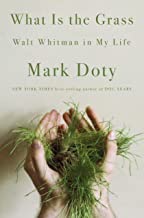
 "What the Woman Lived: Selected Letters of Louise Bogan, 1920-1970 by: Bogan, Louise; Edited by Ruth Limmer")
 "Wheel of Things, The; A Biography of L.M. Montgomery, Author of Anne of Green Gablesby: Gillen, Mollie")
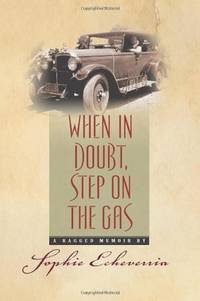



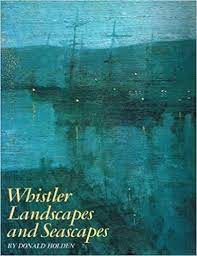

 "Whistler: A Life for Art's Sakeby: Sutherland, Daniel E.")

 "Wifredo and Helena: My Life With Wifredo Lam 1939-1950by: Benitez, Helena")
 "Wildfire: On the Front Lines with Station 8by: Hansen, Heather")

 "WILL EISNER : A DREAMER'S LIFE IN COMICSby: Schumacher, Michael")
 "Will Eisner: Champion of the Graphic Novelby: Paul Levitz and Brad Meltzer")



 "William Albert Allard: Five Decadesby: Allard, William Albert")
 "William Blake at the Huntington: An Introduction to the William Blake Collection in the Henry E. Huntington Library and Art Gallery, San Marino, Calby: Essick, Robert")
 "William Blake: A New Kind of Man by: Davis, Michael")
 "William Brewster of the Mayflower: Portrait of a Pilgrim by: Brewster, Dorothy")
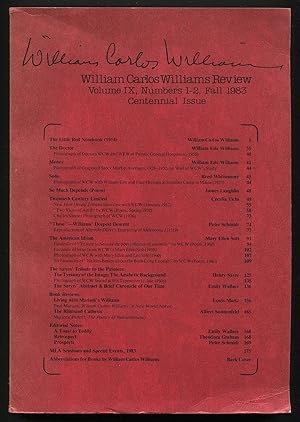
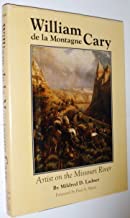
 "William de la Montagne Cary: Artist on the Missouri Riverby: Ladner, Mildred D.")