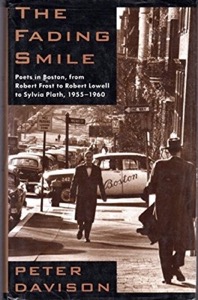
Hardcover. NY, Knopf, 1st, 1994, Book: Very Good, Dust Jacket: Very Good, Hardcover in a bright, unclipped dust jacket, 346 pages. An intimately perceptive account, by a poet who knew them all, of the brilliant circle of poets who lived and worked in Boston through the half-decade beginning in 1955. That was the year Peter Davison, coming to Boston as a book editor. was swept up in a world -- in a tumult -- of poetry. He rediscovered his father's old friend Robert Frost. He briefly squired Sylvia Plath. He came to know Robert Lowell (whose poems and private disasters dominated the period) and Adrienne Rich, Stanley Kunitz, Richard Wilbur. Anne Sexton, W. S. Merwin, and others who, closely bound together in friendship or rivalry or both, defined the shape of American poetry at mid-century Through their eves as well as his own, and often in their words, Davison presents a sharply fresh vision of the shift from confidence to a troubled questioning that overtook America -- a transformation that was, in a sense, foreshadowed in the sensibilities, in the writings, sometimes in the lives, of some of our finest poets. Clean copy.
Hardcover. Philadelphia, Benjamin Warner, 1st thus, 1817, Book: Good, Hardcover, 477 pages. Lithographed portrait frontispiece of Hamilton, two other plates with portraits of Madison and Jay, all portraits have tissue overlays. NOTE: This copy has a 1817 date on the title page, and a total of 477 pages while other books listed are dated 1818 with 504 pages. So this is the first single-volume edition minus the Appendix which was added to the 1818 edition. This is an ex-lib from Columbia University, with several stamps and thie bookplate on inside front cover. The book has been rebound in brown buckram with gilt title on spine and call numbers at bottom. The frontispiece plate has a crease through the center and all 3 plates have light foxing and an embossed stamp. Overall Good Plus with about 12 pages having some light pencil marks in margins. Binding is solid. More pictures available on request.
Hardcover. Birmingham AL, The Legal Classics Library, reprint, 1983, Book: Very Good, Dust Jacket: None, Hardcover, Two volumes bound as one. Brown calf with decorative gilt stamping, raised bands, all edges gilt, marbled endpapers, ribbon marker. Facsimile reprint of the rare first edition. Includes the text of the United States Constitution. One of the undisputed landmarks in American political thought, The Federalist is a collected edition of essays by Hamilton. Madison and Jay that were published under the pseudonym "Publius" in several New York newspapers and journals in 1787 and 1788. Numbered copy #1778 with prior owners name typed on the publishers nameplate pasted to fly leaf, otherwise clean, bright copy.
Hardcover. New York, Franklin Watts, 1st, 1959, Book: Very Good, Dust Jacket: Very Good, 83 pages. Black & white illustrations by Douglas Gorsline. Dust jacket has light edgewear. Dust jacket is protected by a mylar cover.
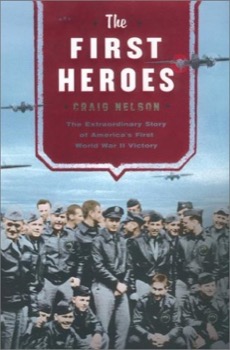
Hardcover. NY, Viking Press, 2nd pr., 2002, Book: Very Good, Dust Jacket: Very Good, Hardcover in a bright, unclipped dust jacket, 430 pages. Immediately after Japan's attack on Pearl Harbor, President Franklin D. Roosevelt sought to restore the honor of the United States with a dramatic act of a retaliatory bombing raid on Tokyo. On April 18, 1942, eighty brave young men, led by the famous daredevil Jimmy Doolittle, took off from a navy carrier in the mid-Pacific on what everyone regarded as a suicide mission but instead became a resounding American victory and helped turn the tide of the war. The First Heroes is the story of that mission. Meticulously researched and based on interviews with twenty of the surviving Tokyo Raiders, this is a true account that almost defies belief, a tremendous human drama of great personal courage, and a powerful reminder that ordinary people, when faced with extraordinary circumstances, can rise to the challenge of history. Clean copy.
Hardcover. NY, Printed for I. Riley and Co, 2nd Ed., 1806, Book: Very Good, Dust Jacket: None, The First Settlers of Virginia, an Historical Novel, Exhibiting a View of the Rise and Progress of the Colony at James Town, a Picture of Indian Manners, the Countenance of the Country, and its Natural Productions. Hardcover, Second edition, considerably enlarged. Contemporary calf over boards. Octavo. xii, [13]-284 pages. PLEASE NOTE: No frontispiece engraving of Pocahontas rescuing John Smith. No signs of extraction, so probably never bound in. A reproduction of the frontis laid in. This is one of the earliest American romantic novels about Native Americans. Davis was an English immigrant with literary aspirations who lived in Philadelphia at the beginning of the 19th century. He was acquainted with the likes of Thomas Jefferson and Aaron Burr. He originally adapted this material from his 1803 "Travels of Four Years and a Half in the United States of America" and published it in 1805 as "Captain Smith and Princess Pocahontas: An Indian Tale." This expanded version includes Davis's autobiography, "A Memoir of the Author" (pp. {275]-284). Includes "Errata" on page [274]. Clean, no markings.
Hardcover. NY, Farrar, Straus and Giroux, 1st, 2012, Book: Very Good, Dust Jacket: Very Good, Hardcover in a bright dust jacket, 270 pages. When Samuel Zemurray arrived in America in 1891, he was tall, gangly, and penniless. When he died in the grandest house in New Orleans sixty-nine years later, he was among the richest, most powerful men in the world. In between, he worked as a fruit peddler, a banana hauler, a dockside hustler, and a plantation owner. He battled and conquered the United Fruit Company, becoming a symbol of the best and worst of the United States: proof that America is the land of opportunity, but also a classic example of the corporate pirate who treats foreign nations as the backdrop for his adventures. Rich Cohen's brilliant historical profile unveils Zemurray as a hidden kingmaker and capitalist revolutionary, driven by an indomitable will to succeed. Clean copy.
Hardcover. NY, Viking, 1st, 2018, Book: Very Good, Dust Jacket: Very Good, Hardcover in a bright, unclipped dust jacket. 294 pages, b&w photos. Sam Kleiner's The Flying Tigers uncovers the hidden story of the group of young American men and women who crossed the Pacific before Pearl Harbor to risk their lives defending China. Led by legendary army pilot Claire Chennault, these men left behind an America still at peace in the summer of 1941 using false identities to travel across the Pacific to a run-down airbase in the jungles of Burma. In the wake of the disaster at Pearl Harbor this motley crew was the first group of Americans to take on the Japanese in combat, shooting down hundreds of Japanese aircraft in the skies over Burma, Thailand, and China. At a time when the Allies were being defeated across the globe, the Flying Tigers' exploits gave hope to Americans and Chinese alike. Clean copy.
Hardcover. NY, Oxford University Press, 1st, 1968, Book: Very Good, Dust Jacket: Very Good, Hardcover in a bright, unclipped dust jacket. 735 pages. light stamp to top edge. Exceptionally nice condition.
Hardcover. Baton Rouge, Louisiana State University, 1st, 1987, Book: Good, Dust Jacket: Fair, Hardcover in a lightly worn dust jacket, 227 pages, b&w illustrations. In this penetrating study, Carl Brasseaux looks beyond long-standing mythology to provide a critical account of early Acadian culture in Louisiana and the reasons for its survival. He convincingly dispels many received notions about the routes Acadians traveled from Nova Scotia to Louisiana, their original settlement sites, and the patterns of their subsequent migrations within the state, and closely examines the relations of Louisiana's Acadians with their black, Spanish, Indian, and Creole neighbors. In adapting to subtropical Louisiana, with its turmoil of alternating French and Spanish regimes, the Acadians exhibited industry, pragmatism, individualism, and the ability to close ranks in the face of a general threat. As Brasseaux reveals, Acadians' cohesiveness and insularity preserved the core elements of their culture and helped them adjust to new physical and social demands. Names, inscription to front fly leaf, interior clean and bright.
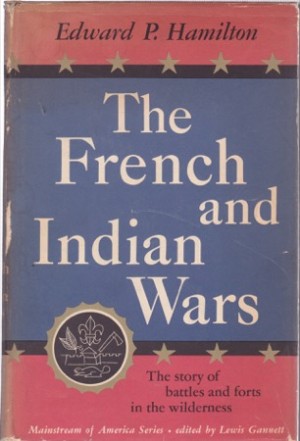
Hardcover. NY, Doubleday & Co., 1st, 1962, Book: Very Good, Dust Jacket: Fair, Hardcover in a worn and chipped dust jacket. A volume in the Mainstream of Americas Series, edited by Lewis Gannett. Between the period of settlements in colonial America and the time of the Revolutionary War, English and French interests clashed in a struggle to determine who would rule the New World. It was a time from which a great deal of fiction draws inspiration, an exciting and dramatic period well~salted with the Washingtons, Johnsons, Frontenacs, Amhersts, Wolfes, and Montcalms who so greatly influenced the early growth of our land. Edward Hamilton has reconstructed this absorbing story of wilderness, forts, and weapons with a scholarly respect for minute detail. Name on half-title page, otherwise clean copy.
Hardcover. NY, Touchstone, 1st, 2016, Book: Very Good, Dust Jacket: Very Good, Hardcover in a bright, unclipped dust jacket. The first biography of arguably the most influential member of Franklin Delano Roosevelt?s administration, Marguerite "Missy" LeHand, FDR?s de facto chief of staff, who has been misrepresented, mischaracterized, and overlooked throughout history until now. If you wanted access to Franklin, you had to get through Missy. She was one of his most trusted advisors, affording her a unique perspective on the president that no one else could claim, and she was deeply admired and respected by Eleanor and the Roosevelt children. Clean copy.
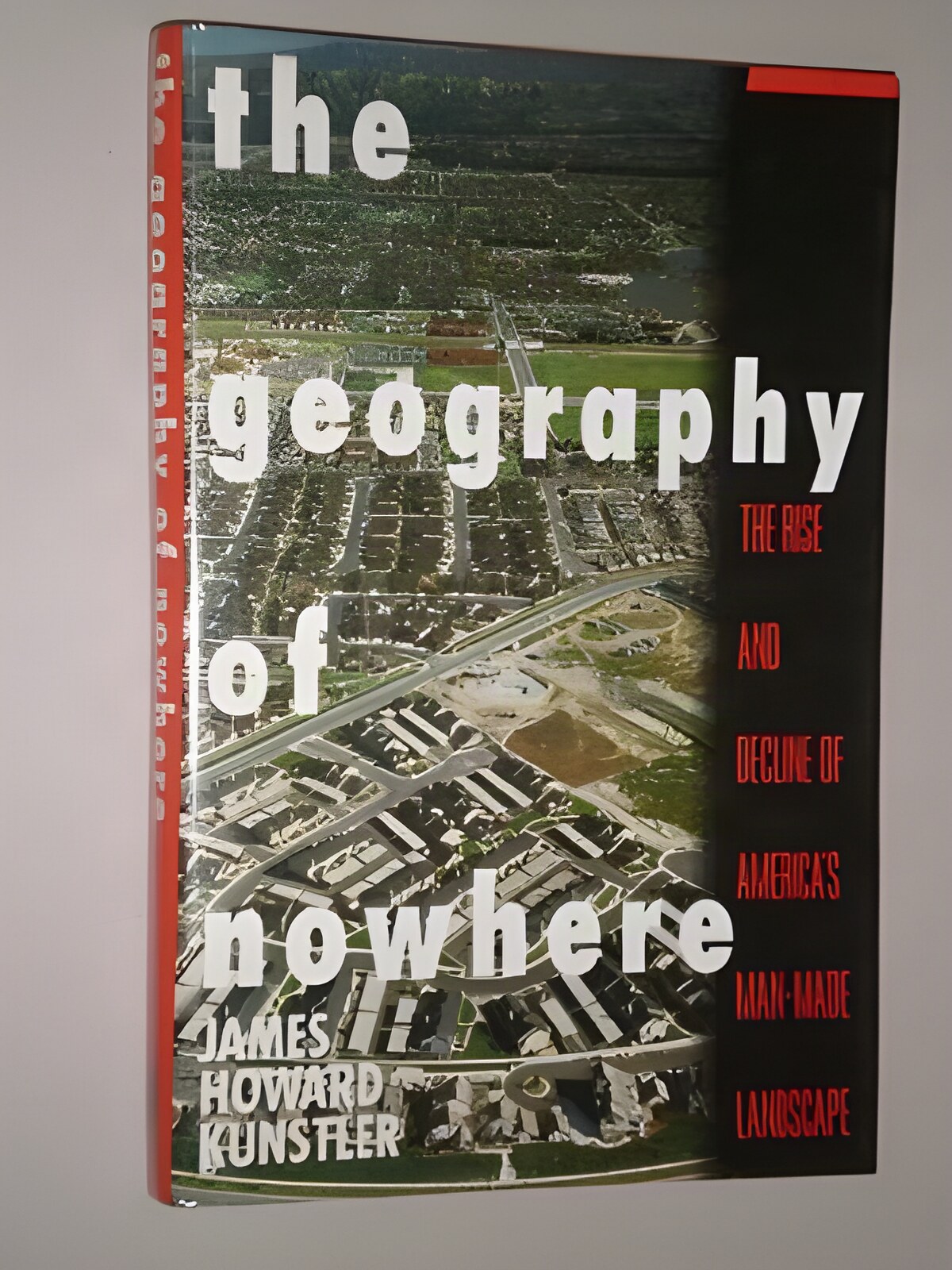
Hardcover. NY, Simon & Schuster, 1st, 1993, Book: Very Good, Dust Jacket: Very Good, Hardcover in a bright, unclipped dust jacket, 303 pages. Eighty percent of everything ever built in America has been built since the end of World War II. This tragic landscape of highway strips, parking lots, housing tracts, mega-malls, junked cities, and ravaged countryside is not simply an expression of our economic predicament, but in large part a cause. It is the everyday environment where most Americans live and work, and it represents a gathering calamity whose effects we have hardly begun to measure. In The Geography of Nowhere, James Howard Kunstler traces America's evolution from a nation of Main Streets and coherent communities to a land where everyplace is like noplace in particular, where the city is a dead zone and the countryside a wasteland of cars and blacktop. Now that the great suburban build-out is over, Kunstler argues, we are stuck with the consequences: a national living arrangement that destroys civic life while imposing enormous social costs and economic burdens. Kunstler explains how our present zoning laws impoverish the life of our communities, and how all our efforts to make automobiles happy have resulted in making human beings miserable. Name on front fly leaf, otherwise like new.
Hardcover. NY, New York University Press, 1st, 2002, Book: Very Good, Dust Jacket: Very Good, Hardcover in a bright dust jacket, pages. The GI War Against Japan recounts the harrowing experiences of American soldiers in Asia and the Pacific. Based on countless diaries and letters, it sweeps across the battlefields, from the early desperate stand at Guadalcanal to the tragic sinking of the U.S.S. Indianapolis at war's very end. From the daunting spaces of the China-India theater to the fortress islands of Iwo Jima and Okinawa, Schrijvers brings to life the GIs' struggle with suffocating wilderness, devastating diseases, and Japanese soldiers who preferred death over life. Amidst the frustration and despair of this war, American soldiers abandoned themselves to an escalating rage that presaged Hiroshima and Nagasaki.
Softcover. Cambridge MA, Harvard University Press, 1st, 1995, Book: Very Good, Dust Jacket: None, Softcover, 139 pages. How does a poet repeatedly make art over a lifetime out of an arbitrary assignment of fate? By asking this question of the work of four American poets--two men of the postwar generation, two young women writing today--Helen Vendler suggests a fruitful way of looking at a poet's career and a new way of understanding poetic strategies as both mastery of forms and forms of mastery. Fate hands every poet certain unavoidable "givens." Of the poets Vendler studies, Robert Lowell sprang from a family famous in American and especially New England history; John Berryman found himself an alcoholic manic-depressive; Rita Dove was born black; Jorie Graham grew up trilingual, with three words for every object. In Vendler's readings, we see how these poets return again and again to the problems set out by their givens, and how each invents complex ways, both thematic and formal, of making poetry out of fate. Clean copy.
Softcover. Berkeley, University of California Press, 1st, 1987, Book: Very Good, Dust Jacket: None, Softcover, 248 pages. Name on front fly leaf whited out, otherwise clean.
Hardcover. San Francisco, Encounter Books, 1st, 2002, Book: Very Good, Dust Jacket: Very Good, Hardcover in a bright dust jacket, 222 pages. SIGNED BY AUTHOR ON HALF TITLE PAGE. Clean, unmarked copy. Black and white pictures in center. Goodyear was an entrepreneur who actually made good on the ever-popular claim that his company would change the world. Korman, senior editor of Engineering News-Record, dryly traces the life of the rubber pioneer and American industrial legend in this part scientific history lesson and part American business story. Goodyear (1800-1860) became an inventor not out of any great scientific thirst; he was self-taught and wanted to make money. He earned success, but endured continual patent monopoly battles and numerous trips to debtors' prison as he steadfastly and compulsively held onto his dream of using rubber to change just about every aspect of life. (According to Korman, Goodyear frequently wore a coat made of rubber in his early inventing days to underscore the versatility of his product.) Korman waxes scientific at times, offering in-depth descriptions of how Goodyear cooked rubber and sulfur compounds, yet his technical discourses are not so esoteric that they will turn away amateurs. His book is also valuable for its accurate portrayal of factory life in the 1830s and '40s; his accounts of the aproned men who chopped rubber with axes and knives and the machines that ground it are lively examples of industrial age America. Clean copy.
Hardcover. San Francisco, Encounter Books, 1st, 2002, Book: Very Good, Dust Jacket: Very Good, Hardcover in a bright dust jacket, 222 pages. Clean, unmarked copy. Black and white pictures in center. Goodyear was an entrepreneur who actually made good on the ever-popular claim that his company would change the world. Korman, senior editor of Engineering News-Record, dryly traces the life of the rubber pioneer and American industrial legend in this part scientific history lesson and part American business story. Goodyear (1800-1860) became an inventor not out of any great scientific thirst; he was self-taught and wanted to make money. He earned success, but endured continual patent monopoly battles and numerous trips to debtors' prison as he steadfastly and compulsively held onto his dream of using rubber to change just about every aspect of life. (According to Korman, Goodyear frequently wore a coat made of rubber in his early inventing days to underscore the versatility of his product.) Korman waxes scientific at times, offering in-depth descriptions of how Goodyear cooked rubber and sulfur compounds, yet his technical discourses are not so esoteric that they will turn away amateurs. His book is also valuable for its accurate portrayal of factory life in the 1830s and '40s; his accounts of the aproned men who chopped rubber with axes and knives and the machines that ground it are lively examples of industrial age America. Clean copy.
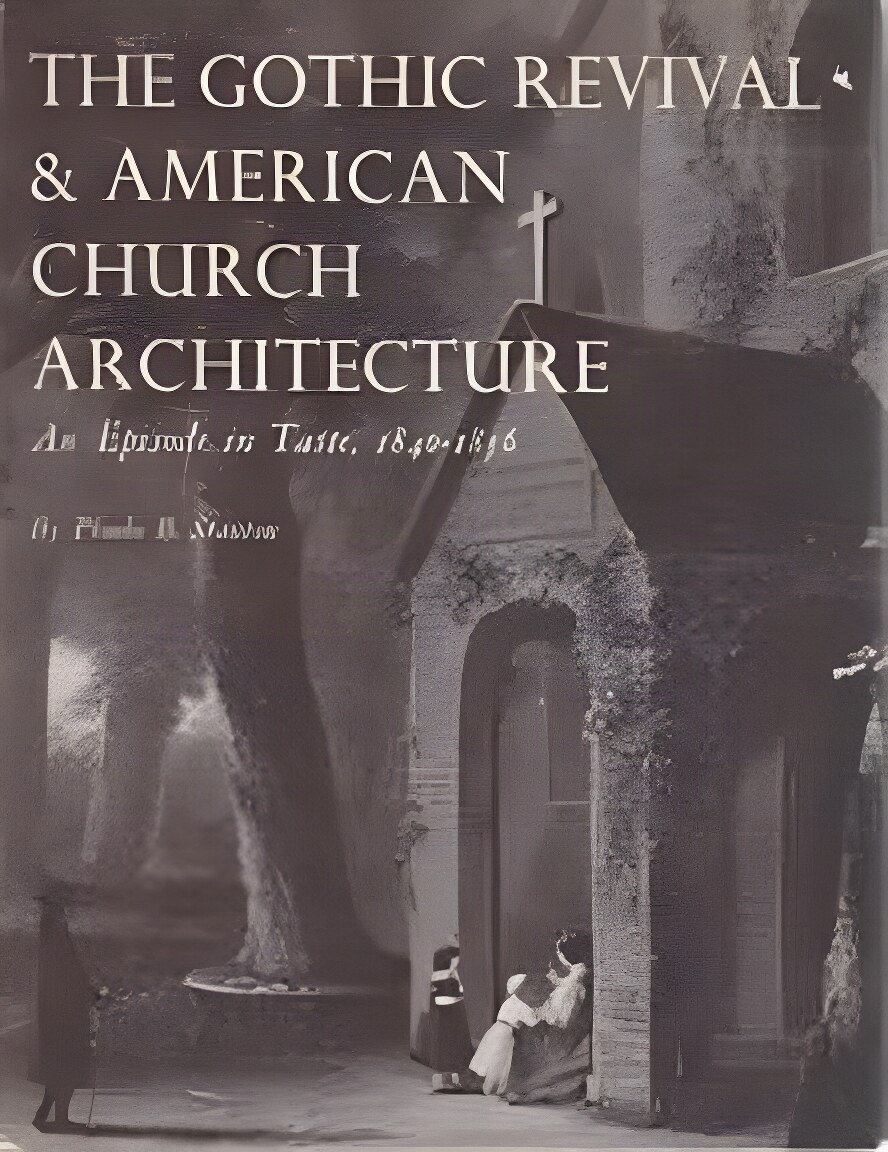
Hardcover. Baltimore, Johns Hopkins University, 1st, 1968, Book: Very Good, Dust Jacket: Very Good, Hardcover in a lightly worn, unclipped dust jacket, 350 pages, b&w illustrations. This illustrated account of the impact of the English Gothic revival on American church architecture in the mid-nineteenth century finds that this fundamentally conservative movement provided the foundation for a new, influential aesthetic. Clean copy.
Hardcover. NY, Liveright, 1st, 2023, Book: Very Good, Dust Jacket: Very Good, Hardcover in a bright, unclipped dust jacket. Years before Charles Lindbergh's flight from New York to Paris electrified the nation, a group of daredevil pilots, most of them veterans of the World War I, brought aviation to the masses by competing in the sensational transcontinental air race of 1919. The contest awakened Americans to the practical possibilities of flight, yet despite its significance, it has until now been all but forgotten. In The Great Air Race, journalist and amateur pilot John Lancaster finally reclaims this landmark event and the unheralded aviators who competed to be the fastest man in America. His thrilling chronicle opens with the race's impresario, Brigadier General Billy Mitchell, who believed the nation's future was in the skies. Mitchell's contest--critics called it a stunt--was a risky undertaking, given that the DH-4s and Fokkers the contestants flew were almost comically ill-suited for long-distance travel: engines caught fire in flight; crude flight instruments were of little help in clouds and fog; and the brake-less planes were prone to nosing over on landing. The race was a test of endurance that many pilots didn't finish: some dropped out from sheer exhaustion, while others, betrayed by their engines or their instincts, perished. For all its tragedy, Lancaster argues, the race galvanized the nation to embrace the technology of flight. A thrilling tale of men and their machines, The Great Air Race offers a new origin point for commercial aviation in the United States. Clean copy.
Hardcover. NY, Alfred A Knopf, 1960, Book: Very Good, Dust Jacket: Very Good, Hardcover in a lightly worn, unclipped dust jacket, 324 pages plus index. Illustrated with 17 halftone reproductions from various sources and with line drawings by Nick Eggenhofer. A comprehensive history of the slaughter of the buffalo, the battles between the hunters and Indians. Also tells of the buffalo hunting for sport by Washington Irving and the Russian Prince Alexis. Describes Buffalo Bill's killing buffaloes to feed the men who were building a railroad across the plains. Most of the book, however chronicles the hide hunters who swarmed over the ranges in 1871 and reduced the herds of nearly forty million buffaloes to fewer than one-thousand, taking the hides and leaving the meat to rot. Bookplate on inside front cover, otherwise clean.
NY, Simon & Schuster, 1st, 2021, Book: Very Good, Dust Jacket: Very Good, Hardcover in a bright, unclipped dust jacket. 609 pages, b&w illustrations. They say that history is written by the victors. But not in the case of the most famous dissenter on the Supreme Court. Almost a century after his death, John Marshall Harlan's words helped end segregation and gave us our civil rights and our modern economic freedom. But his legacy would not have been possible without the courage of Robert Harlan, a slave who John's father raised like a son in the same household. After the Civil War, Robert emerges as a political leader. With Black people holding power in the Republican Party, it is Robert who helps John land his appointment to the Supreme Court. At first, John is awed by his fellow justices, but the country is changing. Northern whites are prepared to take away black rights to appease the South. Giant trusts are monopolizing entire industries. Against this onslaught, the Supreme Court seemed all too willing to strip away civil rights and invalidate labor protections. So as case after case comes before the court, challenging his core values, John makes a fateful decision: He breaks with his colleagues in fundamental ways, becoming the nation's prime defender of the rights of Black people, immigrant laborers, and people in distant lands occupied by the US. Harlan's dissents, particularly in Plessy v. Ferguson, were widely read and a source of hope for decades. Thurgood Marshall called Harlan's Plessy dissent his "Bible"--and his legal roadmap to overturning segregation. In the end, Harlan's words built the foundations for the legal revolutions of the New Deal and Civil Rights eras.
Hardcover. Boston, Little, Brown and Company, 1st, 1961, Book: Very Good, Dust Jacket: Very Good, Hardcover in a bright, lightly worn dust jacket. "The Great Epidemic" by A. A. Hoehling is a dramatic documentary about the worst plague in history, the flu epidemic of 1918. Between March and December five hundred thousand Americans perished, and nearly twenty million sickened.

 "The Federalist, On the New Constitution; Written in 1788, By Mr. Hamilton, Mr. Jay, and Mr. Madison - A New Edition (1817)by: Hamilton, Alexander, John Jay and James")

![The First Settlers of Virginia, an Historical Novel, Exhibiting a View of the Rise and Progress of the Colony at James Town...by: [Davis, John (1774-1854)]](https://www.browsingisarousing.com/shop/images/The-First-Settlers-of-Virginia-an-Historical-Novel-Exhibiting-a-View-of-the-Rise-and-Progress-of-the398264-451892.jpg "The First Settlers of Virginia, an Historical Novel, Exhibiting a View of the Rise and Progress of the Colony at James Town...by: [Davis, John (1774-1854)]")
![The First Settlers of Virginia, an Historical Novel, Exhibiting a View of the Rise and Progress of the Colony at James Town...by: [Davis, John (1774-1854)]](https://www.browsingisarousing.com/shop/images/The-First-Settlers-of-Virginia-an-Historical-Novel-Exhibiting-a-View-of-the-Rise-and-Progress-of-the398264-451892_50_th.jpg)
![The First Settlers of Virginia, an Historical Novel, Exhibiting a View of the Rise and Progress of the Colony at James Town...by: [Davis, John (1774-1854)]](https://www.browsingisarousing.com/shop/images/The-First-Settlers-of-Virginia-an-Historical-Novel-Exhibiting-a-View-of-the-Rise-and-Progress-of-the398264-451893_50_th.jpg)



 "The Founding of New Acadia: The Beginnings of Acadian Life in Louisiana, 1765 - 1803 by: Brasseaux, Carl A")




 "The Great Air Race: Glory, Tragedy, and the Dawn of American Aviationby: Lancaster, John")
 "The Great American Rascal: The Turbulent Life of Aaron Burr by: Vail, Philip")


