Hardcover. NY, Oxford University Press, 1st, 2008, Book: Very Good, Dust Jacket: Very Good, Hardcover in a bright dust jacket, 323 pages. Although Buddhism is often depicted as a religion of meditators and philosophers, some of the earliest writings extant in India offer a very different portrait of the Buddhist practitioner. In Indian Buddhist narratives from the early centuries of the Common Era, most lay religious practice consists not of reading, praying, or meditating, but of visually engaging with certain kinds of objects. These visual practices, moreover, are represented as the primary means of cultivating faith, a necessary precondition for proceeding along the Buddhist spiritual path. In Thus Have I Seen: Visualizing Faith in Early Indian Buddhism, Andy Rotman examines these visual practices and how they function as a kind of skeleton key for opening up Buddhist conceptualizations about the world and the ways it should be navigated. Clean copy.
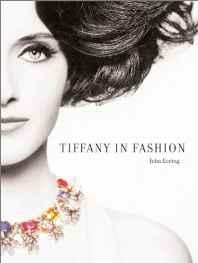
Hardcover. New York, Harry N. Abrams, 1st, 2003, Book: Very Good, Dust Jacket: Very Good, 271 pages. Hardcover. Extensive color photographs throughout. Illustrated end papers and paste downs. Gilt titles on spine. Minor shelf wear to dust jacket, otherwise clean, tight copy. A collection of 250 glamorous images chronicle the simultaneous evolution of fashion photography and fine jewelry, featuring extraordinary photographs that range from Richard Avedon's portrait of Elizabeth Taylor bedecked in cultured pearls to Scavullo's photograph of Paloma Picasso wearing her own jewelry designs.
Hardcover. New York, Harry N. Abrams, 1st, 2003, Book: Very Good, Dust Jacket: Good, 271 pages. Hardcover. Extensive color photographs throughout. Illustrated end papers and paste downs. Gilt titles on spine. Some shelf wear to dust jacket, otherwise clean, tight copy. A collection of 250 glamorous images chronicle the simultaneous evolution of fashion photography and fine jewelry, featuring extraordinary photographs that range from Richard Avedon's portrait of Elizabeth Taylor bedecked in cultured pearls to Scavullo's photograph of Paloma Picasso wearing her own jewelry designs.
Softcover. Madison WI, University of Wisconsin Press, reprint, 1972, Book: Very Good, Dust Jacket: None, Softcover, 469 pages."One of the first histories to treat non-whites as active self conscious protagonists in twentieth-century South African affairs rather than as a dark acquiescent host before which the really important story of white South Africa unfolds. The new edition has been corrected and eight new chapters extend the coverage to the end of 1963. It is an important addition to the literature about South Africa."--The Historian. C;ean copy.
Hardcover. St. Ann's Press, 1st, 2002, Book: Very Good, Dust Jacket: Very Good, Hardcover, 172 pages. On May 25, 1961, Bruce Davison joined a group of Freedom Riders traveling by bus from Montgomery, Alabama to Jackson, Mississippi. The actions of these youths challenged and disobeyed federal laws allowing for integrated interstate bus travel. These historic episodes, which ended in violence and arrests, marked the beginning of Davidson's exploration into the heart and soul of the civil rights movement in the United States during the years 1961-1965. In 1962, Davidson received a Guggenheim Fellowship and continued documenting the era, including an early Malcolm X rally in Harlem, steel workers in Chicago, a Ku Klux Klan cross burning near Atlanta, farm migrant camps in South Carolina, cotton picking in Mississippi, protest demonstrations in Birmingham, and the heroic Selma March that led to the Voting Rights Act of 1965, which was instrumental in changing the political power base in the segregated Southern states. In the 140 photographs collected here, many of which have never before been published, we see intimate and revealing portraits of Dr. Martin Luther King Jr., John Lewis, and other leaders made by Davidson during those turbulent times. These images describe the mood that prevailed during the civil rights movement with a lyrical imagery that is both poignant and profound. As Davidson bears witness to these historical events, and documents the degradation and segregation that were endured, he gives testimony to the struggle for freedom, equality, justice, and human dignity.
Hardcover. NY, E.P. Dutton , 1st, 1932, Book: Good, Dust Jacket: None, Hardcover, green cloth stamped in red, 235 pages. A masterpiece of humanism, Time Stood Still recounts Paul Cohen-Portheim's years of internment in England as an enemy alien during World War One. An artist and theatre designer, he at first viewed internment as a sort of holiday: 'Should I bring my bathing things and evening dress?' he asked the policeman taking him prisoner. Though confined in a 'gentleman's camp' near Wakefield, as Cohen-Portheim shows with grace, humor, and deep compassion, even under the best conditions, the simple act of being confined and placed in a sort of limbo is a form of torture: 'Where there is no aim, no object, no sense, there is no time.' Time Stood Still is a passionate but balanced argument against internment and its inherently dehumanizing effects. Paul Cohen-Portheim (1880-1932) was an Austrian artist, travel writer and linquist. When WWI broke out, he was painting in Devonshire, England and found himself interned for the length of the war. Flap copy pasted to front fly leaf, stamp to endpapers (Harvard Club of Boston), some light notations as well to endpapers.
Hardcover. NY, Skira, 1ST, 2006, Book: Very Good, Dust Jacket: Very Good, Like new in publisher's shrink-wrap. Hardcover, 224 pages. Insightful essays and gorgeous portraits by one of contemporary photography's most remarkable artists.
Hardcover. NY, Oxford University Press, 1st, 2011, Book: Very Good, Dust Jacket: Very Good, Hardcover in a bright, unclipped dust jacket. 336 pages, b&w illustrations. Author Larry Hamberlin guides us through this large but oft-forgotten repertoire of operatic novelties, and brings to life the rich humor and keen social criticism of the era. In the early twentieth-century, when new social forces were undermining the view that our European heritage was intrinsically superior to our native vernacular culture, opera-that great inheritance from our European forebearers-functioned in popular discourse as a signifier for elite culture. Tin Pan Opera shows that these operatic novelty songs availed this connection to a humorous and critical end. Combining traditional, European operatic melodies with the new and American rhythmic verve of ragtime, these songs painted vivid images of immigrant Americans, liberated women, and upwardly striving African Americans, striking emblems of the profound transformations that shook the United States at the beginning of the American century. Clean copy.
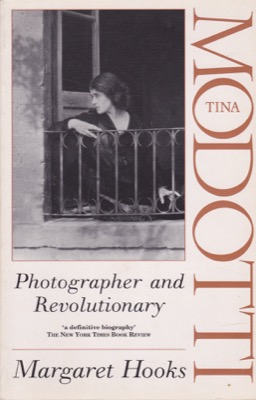
Softcover. NY, HarperCollins, 1st pbk, 1995, Book: Very Good, Dust Jacket: None, Softcover, 296 pages, b&w illustrations. The apt subtitle of this award-winning biography, Photographer & Revolutionary, sums up the creative tensions that characterized Tina Modotti's life and brief photographic career. Active as a photographer for only nine years, Modotti was pulled between formal and social concerns. Producing striking modernist compositions of everyday objects, photojournalism of poverty and conflict, and portraits of celebrities and common people alike, Modotti balanced political concerns with formal rigor. First published in 1993 and long out of print, Tina Modotti: Photographer & Revolutionary is the definitive portrayal of Modotti's life and work. Few photographers are more deserving of a biographical treatment than Modotti, whose work as an actress and artist's model introduced her to Edward Weston, who was to become her lover. Soon after she arrived in Mexico City with Weston, Modotti became increasingly politicized, working for the communist newspaper El Machete and establishing herself as the go-to photographer for the Mexican Muralist movement. The book includes extensive archival material, interviews with Modotti's contemporaries and many rare photographs. Clean copy.
Hardcover. NY, Arno Press, reprint, 1976, Book: Very Good, Dust Jacket: None, Hardcover, red cloth. Black and gilt spine lettering. Well illustrated. 385 pages. Reprint of the 1885 edition. 14 pages of b/w plates, 178 b/w text illus. Bright, clean copy.
Hardcover. Boulder CO, Westview Press, 2nd pr., 1999, Hardcover in a bright dust jacket, 264 pages, color and b&w illustrations. This introduction to the life and works of one of the giants of Western painting also surveys the golden age of Venetian painting from Bellini to Veronese and its place in the history of Western art. Sometimes referred to as the founder of modern painting Titian's legacy and influence was immense and continuing?: Italian Baroque painting, El Greco, Rubens, Rembrandt and Dutch painting, French 18th century painting, Velazquez, and Picasso. There are 119 black and white illustrations integrated with the text and 8 plates in full color, a selected bibliography and index. Clean copy.
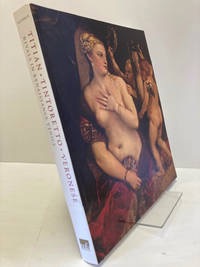
Softcover. Boston, Museum of Fine Arts, 1st, 2009, Book: Very Good, Dust Jacket: None, Softcover, 315 pages. Color illustrations. For nearly four decades in the sixteenth century, the careers of Venice's three greatest painters-, Titan, Tintoretto and Veronese, overlapped, producing mutual influences and bitter rivalries that changed art history. Venice was then among Europe's richest cities, and its plentiful commissions fostered an exceptionally fertile and innovative climate. In it, the three artists, brilliant, ambitious and fiercely competitive, vied with one another for primacy, employing such new media as oil on canvas, with its unique expressive possibilities, and such new approaches as a personal and identifiable signature style. They also pioneered the use of easel painting, a newly portable format that led to unprecedented fame in their lifetimes. With more than 150 stunning examples by the three masters and their contemporaries, this volume elucidates the technical and aesthetic innovations that helped define the uniquely rich "Venetian style," as well as the social, political and economic context in which it flourished. Essays range from examinations of seminal new techniques to such crucial institutions as state commissions and the patronage system. Most of all, by concentrating on the lives and careers of Venice's three greatest painters, Titian, Tintoretto, Veronese paints a vibrant human portrait--one brimming with savage rivalry, one-upmanship, humor and passion. Clean copy. DOMESTIC SHIPPING ONLY.
Hardcover. New York, Prestel Publishing, reprint, 1990, Book: Very Good, Dust Jacket: Very Good, 452 pages. Hardcover with dust jacket. Color pictures throughout. Black covers with gilt lettering on spine. Previous owner's signature and bookplate on front flyleaf. Light wear and rubbing to dust jacket. This excellent catalog of the 1990-1991 exhibition in Venice and Washington is a work of permanent value. Featuring essays by 16 authorities, primarily Italian and American, on every aspect of the art of Titian (Tiziano Vecelli, c. 1490-1576), the quintessential Venetian artist of the high Renaissance, the work transcends the limits of spatial and temporal exhibition to summarize and extend current scholarship. At the same time, the text is accessible, well translated, and aimed at a broad audience. Many of the works in the exhibit were conserved or cleaned, so the book features fresh illustrations and a hefty amount of technical discussion of specialist interest.
Hardcover. London, Phaidon Press, 1st, 2007, Book: Very Good, Dust Jacket: None, 240 pages. Hardcover no dust jacket. Like new in publisher's shrink-wrap. Titian (Tlziano Vecellio, c. 1488/90-1576) was an outstanding painter of the Renaissance. An Ideal introduction to Titian's life and work for the general reader and scholar alike. Places Titian's career and work into the social and historical context of sixteenth-century Italy and explores his approach to a number of themes.
Hardcover. Seattle, Fantagraphics, 1st, 2023, Book: Very Good, Dust Jacket: None, Hardcover, pictorial boards. In 1972, underground cartoonists Joyce Farmer and Lyn Chevli produced Tits & Clits - a funny, rowdy, raucous underground comix series about female sexuality that one reviewer described as "the ultimate in vaginal politics" - and became the first American women ever credited with writing, drawing, and publishing their own comic books. A feminist answer to Zap, Tits & Clits quickly became an anthology showcase for other women cartoonists, featuring the work of Mary Fleener, Roberta Gregory, Krystine Kryttre, Lee Marrs, Carel Moiseiwitsch, Trina Robbins, Dori Seda, among others. Like other underground comix, Tits & Clits leaned into being lewd in order to satirize women's experiences with so-called sexual liberation. Featuring stories about birth control, abortion, menstruation, masturbation, and more, Tits & Clits featured intimate politics which occasionally clashed with contemporaneous feminist concepts about sex and sexuality. As Chevli put it: their work had something to offend everyone. (In 1973, conservative legal authorities in Orange County deemed their work pornographic and even threatened the two editors with arrest on obscenity charges.) Now, for the first time in half a century, a new generation of readers will be shocked, entertained, enlightened, and scandalized by the bold satirical cartoonists that comprised the band of sisters in Tits & Clits. In addition to reprinting the seven-issue run of the Tits & Clits series, this collection also includes in their entirety two classic solo comics from 1972 written and drawn by Farmer and Chevli - Abortion Eve and Pandora's Box. Also included is an introductory essay providing context to Tits & Clits' place in the history of women's cartooning by the book's editor, Samantha Meie
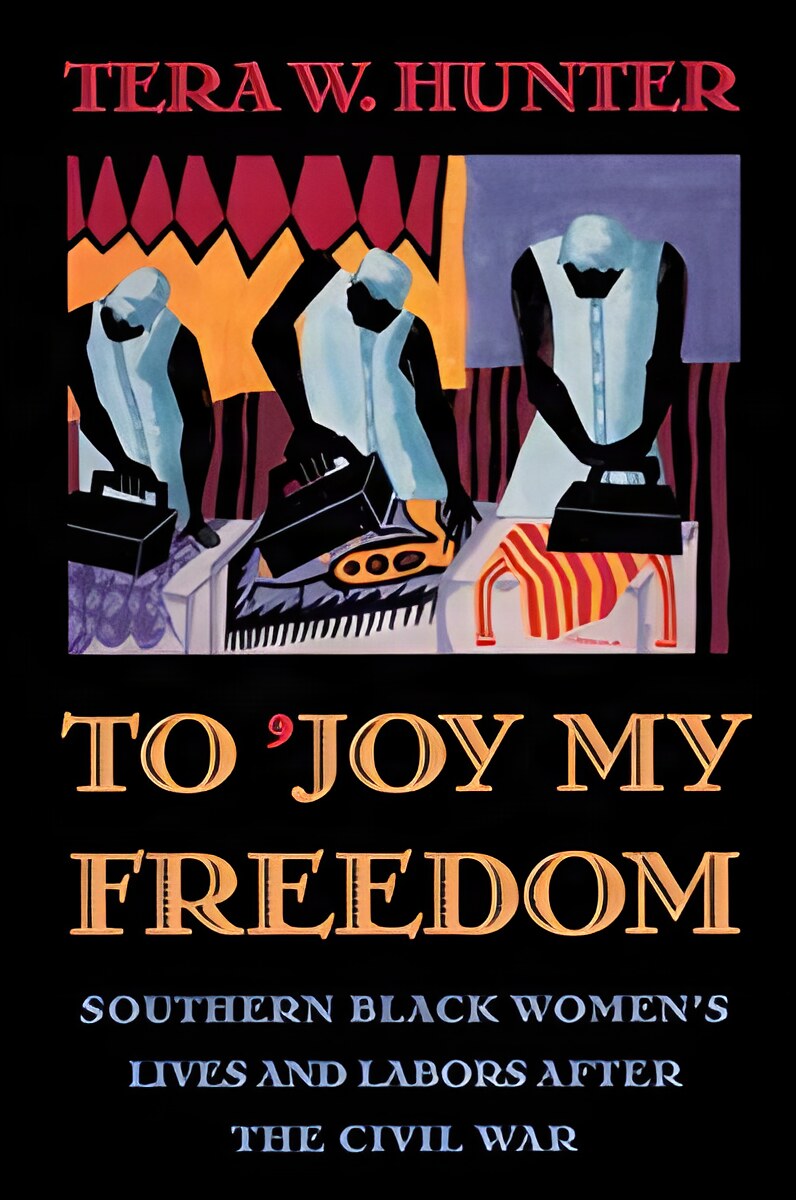
Softcover. Cambridge MA, Harvard University Press, reprint, 1998, Book: Very Good, Dust Jacket: None, Softcover, 311 pages. As the Civil War drew to a close, newly emancipated black women workers made their way to Atlanta-the economic hub of the newly emerging urban and industrial south-in order to build an independent and free life on the rubble of their enslaved past. In an original and dramatic work of scholarship, Tera Hunter traces their lives in the postbellum era and reveals the centrality of their labors to the African-American struggle for freedom and justice. Household laborers and washerwomen were constrained by their employers' domestic worlds but constructed their own world of work, play, negotiation, resistance, and community organization. Hunter follows African-American working women from their newfound optimism and hope at the end of the Civil War to their struggles as free domestic laborers in the homes of their former masters. We witness their drive as they build neighborhoods and networks and their energy as they enjoy leisure hours in dance halls and clubs. We learn of their militance and the way they resisted efforts to keep them economically depressed and medically victimized. Finally, we understand the despair and defeat provoked by Jim Crow laws and segregation and how they spurred large numbers of black laboring women to migrate north. Clean copy.
Hardcover. NY, Knopf, 1st, 2003, Book: Very Good, Dust Jacket: Very Good, Hardcover in a bright dust jacket. 185 pages, color and b&w illustrations. With these character sketches of key figures of the American Revolution and illuminating probes of its circumstances, Bernard Bailyn reveals the ambiguities, complexities, and uncertainties of the founding generation as well as their achievements. Using visual documentation--portraits, architecture, allegorical engravings--as well as written sources, Bailyn, one of our most esteemed historians, paints a complex picture of that distant but still remarkably relevant world. He explores the powerfully creative effects of the Founders' provincialism and lays out in fine detail the mingling of gleaming utopianism and tough political pragmatism in Thomas Jefferson's public career, and the effect that ambiguity had on his politics, political thought, and present reputation. And Benjamin Franklin emerges as a figure as cunning in his management of foreign affairs and of his visual image as he was amiable, relaxed, and amusing in his social life. Bailyn shows, too, why it is that the Federalist papers--polemical documents thrown together frantically, helter-skelter, by Alexander Hamilton, James Madison, and John Jay in a fierce political battle two hundred years ago--have attained canonical status, not only as a penetrating analysis of the American Constitution but as a timeless commentary on the nature of politics and constitutionalism.
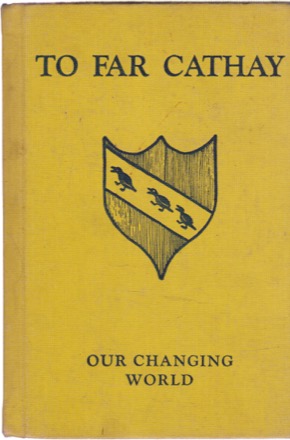
Hardcover. NY, Thomas Nelson & Sons, 1st, 1935, Book: Very Good, Dust Jacket: None, Hardcover, yellow cloth stamped in black, 72 pages, illustrated in b&w by Nils Hogner. Clean copy.
Hardcover. New York , Penguin Putnam Inc, 1st, 1993, Book: Very Good, Dust Jacket: Very Good, Hardcover, 158 pages, illustrated throughout with photos in b&w. Clean, unmarked copy with only minor wear to dust jacket. Elie Wiesel provides the preface to a master photographer's record of eastern Europe's Jewish communities in the years just before World War II with 160 photographs that capture the ordinary lives of Jews before the Holocaust.
Softcover. self-published, 1st, 2017, Softcover, 238 pages, b&w illustrations. SIGNED BY AUTHOR on the title page. An historical and biographical study of the men from College Point, Queens, New York who rendered valuable service to their country in World War One. More than six hundred fifty served in the Army, the Navy, the Marine Corps and the Merchant Marine. Twenty-eight died. What gives the book its relatively unique character is that the hamlet was basically German in origin, primarily industrial, and in the late 19th and early 20th centuries, a destination place for large numbers of entertainment-seeking New Yorkers. The book includes an overview of these elements, illustrating how each played its role before, during and, to a limited extent, after the war. These subjects are woven into a detailed analysis of how College Point, and its people weathered movements and events; labor strife, anti-German sentiment, espionage, the influenza epidemic, and a host of other forces that impacted American culture in general, and their lives in particular. Also told in chronological order, and brief vignettes are the stories of the twenty-eight men who went willingly to war, and died. Clean copy.
Hardcover. NY, Oxford University Press, 4th pr., 2000, Hardcover in a bright dust jacket. 670 pages, b&w illustrations. Written by the most prominent of the new generation of historians, this superb volume offers the most up-to-date and authoritative account available of African-American history, ranging from the first Africans brought as slaves into the Americas, to today's black filmmakers and politicians. Here is a panoramic view of African American life, rich in gripping first-person accounts and short character sketches that invite readers to relive history as African Americans experienced it. We begin in Africa, with the growth of the slave trade, and follow the forced migration of what is estimated to be between ten and twenty million people, witnessing the terrible human cost of slavery in the colonies of England and Spain. We read of the Haitian Revolution, which ended victoriously in 1804 with the birth of the first independent black nation in the New World, and of slave rebellions and resistance in the United States in the years leading up to the Civil War. There are vivid accounts of the Civil War and Reconstruction years, the backlash of notorious "Jim Crow" laws and mob lynchings, and the founding of key black educational institutions. The contributors also trace the migration of blacks to the major cities, the birth of the Harlem Renaissance, the hardships of the Great Depression and the service of African Americans in World War II, the struggle for Civil Rights in the 1950s and '60s, and the emergence of today's black middle class. From Harriet Tubman and Frederick Douglass to Martin Luther King, Jr., and Louis Farrakhan, To Make Our World Anew is an unforgettable portrait of a people. Clean copy.

 "Thus Have I Seen: Visualizing Faith in Early Indian Buddhismby: Andy Rotman")

 "Tiffany in Fashionby: Loring, John")
 "Tiger In the Well, Theby: Pullman, Philip")
 "Time Longer than Rope: A History of the Black Man's Struggle for Freedom in South Africa by: Roux, Edward")
 "Time of Change: Civil Rights Photographs, 1961-1965by: Bruce Davidson , John Lewis, et al.")

 "Timothy Greenfield-Sanders: Face to Face: Selected Portraits 1977-2005by: Paparoni, Demetrio")
 "Tin Pan Opera: Operatic Novelty Songs in the Ragtime Eraby: Larry Hamberlin")
 "Tiryns: The Prehistoric Palace of the Kings of Tiryns by: Schliemann, Heinrich")

 "Titian: Prince of Paintersby: Biadene, Susanna (editor)")
 "Titianby: Humfrey, Peter")
 "Tits & Clits 1972-1987 by: Joyce Farmer Lyn Chevli Roberta Gregory Trina Robbins Lee Marrs")
 "To Begin the World Anew: The Genius and Ambiguities of the American Foundersby: Bernard Bailyn")


 "To Give Them Light: Legacy of Roman Vishniacby: Vishniac, Roman")

 "To Image and to See: Crow Indian Photographs by Edward S. Curtis and Richard Throssel 1905-1910 by: Northern Tamara; Brown Wendi Starr")
 "To Make Our World Anew: A History of African Americansby: Kelley, Robin D. G./ Lewis, Earl (Editor)")