Softcover. Los Angeles :, Los Angeles County Museum of Art, 1st, 1984, Book: Very Good, Dust Jacket: None, Exhibition catalog. 191 pages, illustrated throughout with numerous plates in b&w. Cream dye-cut textured wrappers. Light wear and staining to covers, else a very nice, tight copy.
Hardcover. US, Getty Publications, 1st, 2010, Book: Very Good, Dust Jacket: Very Good, Hardcover with dust jacket. Like new still in publisher's shrink wrap.
Softcover. New York, Jill Newhouse, 1st, 1983, Book: Good, Dust Jacket: None, Unpaginated, staple-bound pamphlet, with 47 black-and-white illustrations. Price list for works laid in. Light soiling, edge-wear, and shelf-wear to covers. A little foxing to top edge. Otherwise, clean, tight copy.
Hardcover. Montgomery AL, Elliot & Clark Publishing, 1st, 1996, Book: Very Good, Dust Jacket: Very Good, Hardcover in a bright dust jacket, 164 pages, b&w cartoons throughout. Chronicles the nation's highs and lows in an extensive collection of cartoons that span the entire history of American political cartooning. The authors note that not all cartoonists have worn white hats many have perpetuated demeaning ethnic stereotypes, slandered honest politicians, and oversimplified complex issues. Nonetheless, most cartoonists pride themselves on attacking honestly, if ruthlessly. This collection humorously recounts some direct hits, recalling the discomfort of the cartoon's targets and the delight of their readers. Spine label otherwise clean.
Hardcover. New Haven, CT, Yale University Press, 1st, 2015, Book: Very Good, Dust Jacket: None, 160 pages. Hardcover with no dust jacket. Very clean, like new in publishers shrink-wrap. This publication presents the first in-depth survey of the Conley Harris and Howard Truelove Collection of Indian Drawings, which was recently acquired by the Philadelphia Museum of Art. This exceptional collection, which has never previously been published, consists of 65 works on paper created between the 16th and 19th centuries.
Hardcover. US, PM Press, 1st, 2013, Book: Very Good, Dust Jacket: Very Good, Hardcover, 208 pages, color illustrations. Like new in publisher's shrink-wrap. A declaration of love to Peter Kuper's adoptive city in which he has lived since 1977, this diary is a vibrant survey of New York City's history. Through Kuper's illustrations, this book depicts a climb to the top of the Brooklyn Bridge, the homeless living in Times Square, roller skaters in Central Park, the impact of September 11, the luxury of Wall Street, street musicians, and other scenes unique to the city. With comics, illustrations, and sketches, this work of art portrays everything from the low life to the high energy that has long made people from around the world flock to the Big Apple.
Hardcover. NY, Liveright, 1st, 2012, Book: Very Good, Dust Jacket: Very Good, Hardcover, 272 pages. Who could have imagined that in 1972, when Aline Kominsky, a Long Island escapee and bodaciously talented artist, broke her foot one rainy fall day, it would result in the most unique collaboration in comics history? Laid up in her house, she was persuaded by R. Crumb, her nerdy, neurotic boyfriend, to pass the time drawing together a "two-man" comic. The result is a jaw-dropping yet tender account, not only of the joys and challenges of a legendary marriage but also of the obstacles faced by struggling female artists. In Drawn Together, our foremost male-female cartooning couple recall their success at shocking America with Weirdo Magazine, the life-altering birth of their precocious daughter Sophie, and their astonishing move to the safe haven of France. With an irresistible introduction and a striking four-color section, Drawn Together becomes a graphic cause-celebre and a must-have for any comics devotee.
Softcover. Manchester, England, Manchester University Press, 1st Paperback Edition, 1994, Book: Very Good, Dust Jacket: None, 300 pages. Softcover. Color and b/w illustrations throughout. Wrapper very good, has a crease at the top right corner of front cover. Pages clean and unmarked, edges have some light foxing/tanning. Binding tight. In great shape. This superbly-illustrated new book explores English society and its relationship to the landscape, as seen through photography and tourism over the last hundred years.
Hardcover. New Haven, Yale University Press, 1st, March 1, 2002, Book: Very Good, Dust Jacket: Very Good, Hardcover, 245 pages, illustrated throughout. Clean, bright pages and tight binding. Pierre Puvis de Chavannes (1824-1898) was a towering figure in late nineteenth-century France. The country's greatest public painter, he created murals that decorated museums in Amiens, Rouen, and Lyons as well as major buildings in Paris-most notably the Pantheon, the Sorbonne, and the city hall. Critics from the political right, left, and center, the avant-garde, the Academy, and the state all agreed on the importance of Puvis's murals. Avant-garde artists greatly admired and drew from his work. There was much controversy, however, over the meaning of these murals. This handsomely illustrated book is the first full-length examination of Puvis's murals and their critical reception during the artist's lifetime. Jennifer L. Shaw explains that Puvis's paintings were imagined to embody a vision of France. Although his regional images, allegories of the French heritage, and evocations of the nation as an embracing motherland were all part of a grand tradition of public art, Puvis's painting style was more closely aligned with the avant-garde. Rather than providing a specific narrative or allegory of France, Puvis's murals provoked viewers to experience their own fantasies of Frenchness; rather than using the close brushwork favored by most of his contemporaries, Puvis used large flat areas of color to render his subjects. Shaw persuasively argues that Puvis was the only painter of the period to unite the traditions of public art and modernist form. Her original analysis of Puvis's art underlines his importance to the history of modernism; her examination of the public response to his art illuminates debates about art, subjectivity, and national identity in fin de siecle France.
Hardcover. New York, Seven Stories Press, 1st, 2008, Book: Very Good, Dust Jacket: Very Good, Hardcover, 127 pages, very clean and tight copy. With America ever under global scrutiny, Russell Banks contemplates the questions of our origins, values, heroes, conflicts, and contradictions. He writes with conversational ease and emotional insight, drawing on contemporary politics, literature, film, and his knowledge of American history.
Softcover. New York, Universe Pub, 1st, 1993, Book: Very Good, Dust Jacket: None, 138 pages. Softcover. Color photographs. Light edgewear to wrappers otherwise clean, unmarked copy. Hotchkiss (1833-69), an American painter and intimate of Asher B. Durand and Elihu Vedder, is the quintessential delicate artist who dies, underappreciated, at a young age. The title refers not only to his romantic landscapes but also to his sketchy career. This catalog accompanies an exhibition that opens this fall at the National Academy of Design. Novak, a premier art historian of the Hudson River School, provides a provocative essay on Hotchkiss as the fragile, poetic artist fixated on capturing evocative images of the ancient past. Felker, the exhibition curator, provides an insightful catalog of works arranged by subject matter. Appendixes include an exhibition checklist, a chronology of the artist's life, and transcriptions of selected manuscript material. Recommended for academically oriented art history collections.
Hardcover. Boston, Bruce Humphries, Inc., 1st, 1939, Book: Very Good, Dust Jacket: None, Hardcover, decorated boards with red cloth spine, 96 pages. INSCRIBED BY AUTHOR ON FRONT ENDPAPER. Previous owners signature at top of front endpaper. Illustrated with black & white photographs. Spine cloth faded. Clean, tight copy.
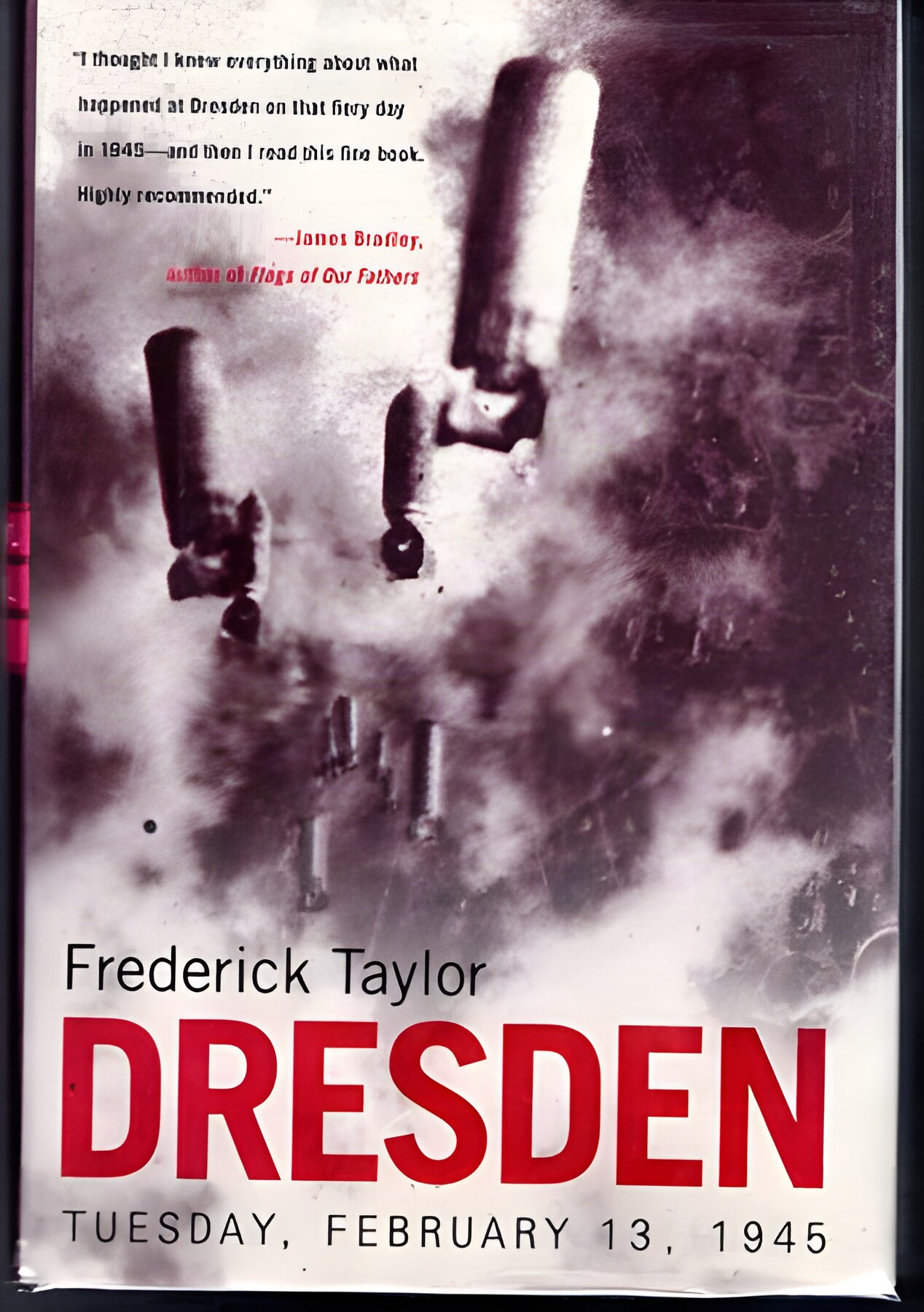
Hardcover. NY, HarperCollins, 1st, 2004, Book: Very Good, Dust Jacket: Very Good, Hardcover in a bright dust jacket, 518 pages with index. B&w illustrations. The allied bombing of Dresden created a massive fire that swept the city center, killing thousands of people and destroying its medieval heart. Debate began almost immediately: Was the destruction of this seemingly civilian city necessary militarily, or was it, some asked, equivalent to a war crime? Not just another in an endless parade of books on Dresden, Taylor's account may go a long way toward putting such questions to rest. It opens with the start, by British bombers, of the nighttime attack, and immediately turns to the past, meandering through several centuries of Dresden history, from its founding in the Middle Ages to the 20th century and the rise of the Nazis. Taylor, translator of The Goebbels Diaries, also covers the history of aerial bombardment and its international laws; gives glimpses of life under the Nazi regime; details the Allied bombing campaign against Germany; and, most excitingly, puts forth new information concerning Dresden's part in the German war effort, which turns out to be much greater than postwar information generally portrays. Clean copy.
Hardcover. London, B. T. Batsford, 1st, 1984, Book: Very Good, Dust Jacket: Very Good, Hardcover in a bright, unclipped dust jacket. Many b&w plates, some color, 216 pages. In this beautiful book, Aileen Ribeiro surveys the clothing worn by the middle and upper classes throughout Europe in the eighteenth century and discusses what this meant in terms of social definition and identity. Ribeiro, one of the world's premier historians of dress, also looks at such subjects as developments in retailing and distribution, etiquette, the rise of the dress designer and couturier, the evolution of ready-made clothes, fancy dress and the masquerade. Clean copy.
Hardcover. New Haven, Yale University Press, 1st, 2013, Book: Very Good, Dust Jacket: Very Good, Hardcover. Like new in publisher's shrink-wrap. 304 pages illustrated in color and b&w. A thought-provoking examination of the challenging and sometimes sinister roles that fashion has played in the history of cinema.
Hardcover. NY, Harper Design, 1st, 2023, Hardcover in pictorial boards, 223 pages illustrated in color. From longtime fashion director, consultant, media personality, and author, Hal Rubenstein, comes a lush, full color, illustrated guide to the most influential fashion on television from the 1950s to today, revealing the surprising ways our favorite shows have significantly reflected and often shaped the way we dress. From Mary Tyler Moore's capri pants on The Dick van Dyke Show and Emma Peel's dominatrix jumpsuit on The Avengers to Olivia Pope's trademark white trench on Scandal and Don Drapers' grey sharkskin suits on Mad Men Dressing the Part is a rich history of popular American fashion and culture in the modern age. In this gorgeous compendium, the longtime fashion director and expert identifies the most stylish television shows of the past 70 years, highlighting the ways they have affected and often inspired ordinary Americans' wardrobes. Combining his decades of fashion expertise and insider knowledge with lush photographs, archival sketches, fascinating interviews with over two dozen of television's best costume designers, commentary from showrunners and co-stars, and little-known backstories, Rubenstein reveals with insight and wit how television has shaped everyday fashion, guiding and often elevating how we dress. Clean copy.
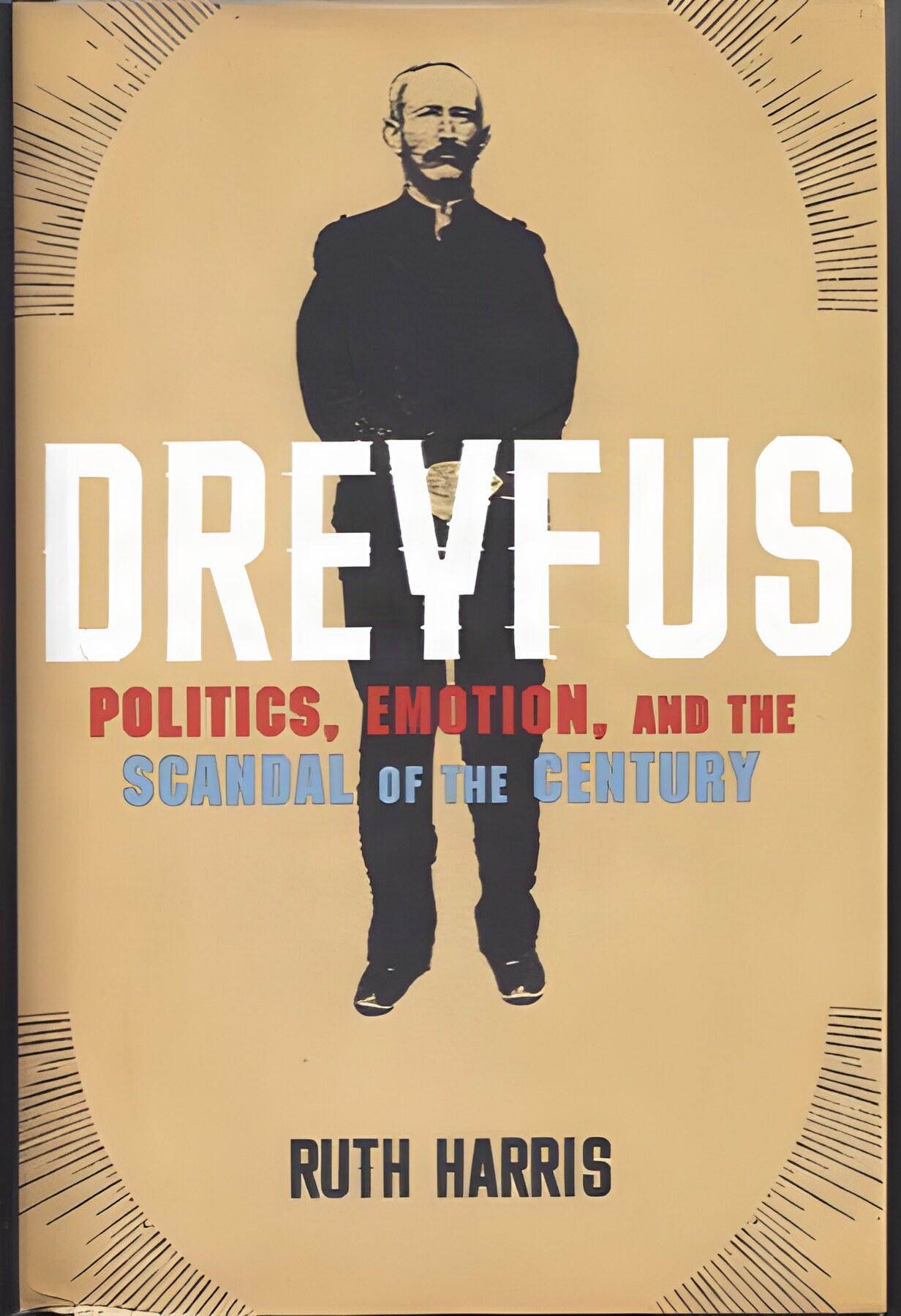
Hardcover. NY, Metropolitan Books, 1st, 2010, Book: Very Good, Dust Jacket: Very Good, Hardcover in a bright, unclipped dust jacket, 542 pages with index. In 1894, Alfred Dreyfus, a Jewish officer in the French army, was wrongfully convicted of being a spy for Germany and imprisoned on Devil's Island. Over the following years, attempts to correct this injustice tore France apart, inflicting wounds on the society which have never fully healed. But how did a fairly obscure miscarriage of justice come to break up families in bitterness, set off anti-Semitic riots across the French empire, and nearly trigger a coup d'etat? Drawing upon thousands of previously unread and unconsidered sources, prizewinning historian Ruth Harris goes beyond the conventional narrative of truth loving democrats uniting against proto-fascists. Instead, she offers the first in-depth history of both sides in the Affair, showing how complex interlocking influences--tensions within the military, the clashing demands of justice and nationalism, and a tangled web of friendships and family connections--shaped both the coalition working to free Dreyfus and the formidable alliances seeking to protect the reputation of the army that had convicted him. Clean copy.
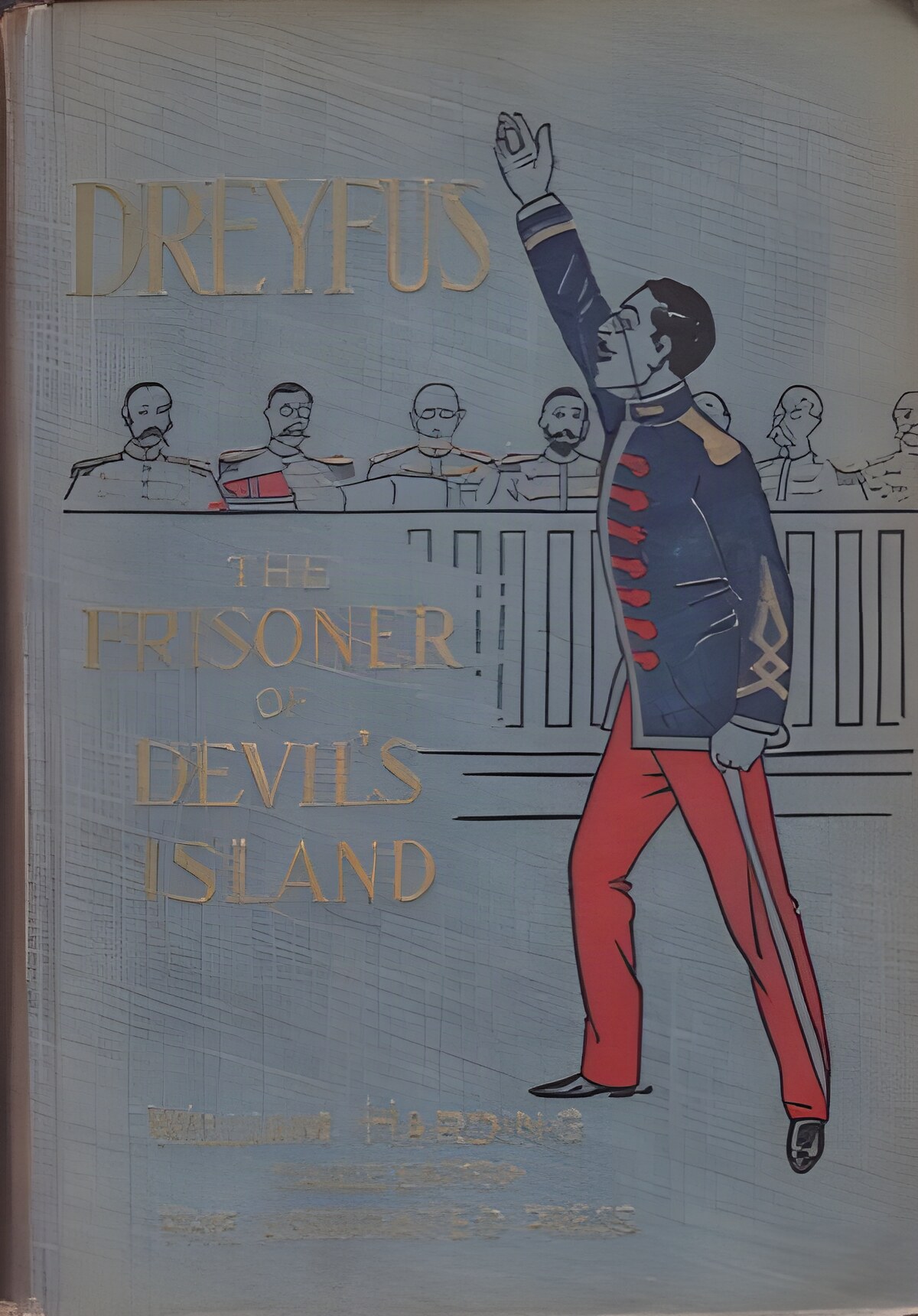
Hardcover. Associated Publishing Company, 1st, 1899, Book: Good, Dust Jacket: None, Hardcover, blue pictorial cloth illustrated on upper cover with gilt, red, blue and black illustration and embossed gilt title. Gilt title on spine faded. 406 pages, frontispiece illustrated with b/w plate of Captain Dreyfus. Profusely illustrated with b/w portraits of the principal actors, and photographic reproductions of the places and scenes of Dreyfus trial and exile. Name and embossed stamp on front fly leaf, cover with light edge wear, interior clean.
Hardcover. Hildesheim GR, Edition Olms, 1st, 2010, Book: Very Good, Dust Jacket: Very Good, Hardcover, 325 pages. Illustrated in color and b&w. Like new in publishers shrink-wrap.
Hardcover. NY, Oxford University Press, 1st, 2002, Book: Very Good, Dust Jacket: Very Good, Hardcover in a bright, unclipped dust jacket. 308 pages, b&w illustrations. Burt Korall is widely recognized as the most authoritative writer on jazz drumming. His first book Drummin' Men--The Heartbeat of Jazz: The Swing Era is considered a classic. It was praised by Nat Hentoff as "a book that illuminates not only the pantheon of jazz drummers in classic jazz, but makes clear the very essence of the jazz spirit." Now, in this exciting sequel, Korall offers a richly informative history of drumming in the Bebop era. Bebop--hard driving, discordant, melodically unconventional--introduced new sounds and innovative rhythms that changed the face of jazz. Korall looks at this music through the eyes of the musicians themselves, covering a whole range of important jazz drummers, but focusing upon the most original and significant--principally Kenny Clarke, Max Roach, and Art Blakey. Korall provides a knowledgeable background about the history of bebop--and the unfortunate and almost universal heroin addiction that swept through the jazz world in the wake of Charlie Parker's habit. The book contains Korall's own memoir of nearly 50 years in the jazz world, linked by his narrative of the careers of these drummers and their place in the bebop jazz scene. But the most remarkable aspect of the book is the oral history that weaves together the stories of the drummers themselves as well as their friends and contemporaries. Clean copy.
Hardcover. New York, Charles Scribner's Sons, 1st Ed., 1928, Book: Very Good, Dust Jacket: None, Hardcover, black cloth with color label on front cover. 14 color plates, pen drawings, endpapers design by N.C. Wyeth. Cover with some rubbing and scratches, overall very good.
Hardcover. NY, Abrams, 1st, 2010, Book: Very Good, Dust Jacket: Very Good, Hardcover, 320 pages. From its first issue in April, 1970, the National Lampoon blazed like a comet, defining comedy as we know it today. To create Drunk Stoned Brilliant Dead, former Lampoon illustrator Rick Meyerowitz selected the funniest material from the magazine and sought out the survivors of its first electrifying decade to gather their most revealing and outrageous stories. The result is a mind-boggling tour through the early days of an institution whose alumni left their fingerprints all over popular culture: Animal House, Caddyshack, Saturday Night Live, Ghostbusters, SCTV, Spinal Tap, In Living Color, Ren & Stimpy, The Simpsons--even Sesame Street counts a few Lampooners among its ranks. Long before there was The Onion and Comedy Central news shows, there was the National Lampoon, setting the bar in comedy impossibly high!
Softcover. London, Tate Publishing, 1st, 2008, Book: Very Good, Dust Jacket: None, Softcover, 248 pages, color and b&w illustrations. This book examines the work of Duchamp, Man Ray, and Picabia, three pioneering figures in the history of modernism. It explores the points of convergence and the parallels in their development throughout their careers. Central to this is their response to photography and film, and to the challenges posed to fine art by the development of mass production. Duchamp's paintings of 1911-12 were influenced by the representation of movement in photography, while Picabia's were shaped in part by the belief that the advent of the camera spelled the end of traditional painting. Man Ray used photography first to record his own art works and those of others, but soon saw in it a means of creating images of a status and inventiveness traditionally restricted to fine art. And, as this fully illustrated book shows, humor and eroticism were themes common to the work of all three artists.

 "Drawing Near - Whistler Etchings from the Zelman Collectionby: Fine, Ruth E")
 "Drawings by Rembrandt and His Pupils: Telling the Differenceby: Bevers, Holm; Hendrix, Lee; Robinson, William W.; Schatborn, Peter")
 "Drawings of Frederick A. Bridgman, Theby: Fort (introduction and chronology), Ilene Susan")

 "Drawn From Courtly India: The Conley Harris and Howard Truelove Collectionby: Cameron, Ainsley")
 "Drawn to New York: An Illustrated Chronicle of Three Decades in New York Cityby: Kuper, Peter/Eric Drooker")
 "Drawn Together: The Collected Works of R. and A. Crumbby: R. Crumb and A. Crumb")
 "Dream of England, A: Landscape, Photography and the Tourist's Imaginationby: Taylor, john")


 "Dream States: Puvis de Chavannes, Modernism, and the Fantasy of Franceby: Shaw, Professor Jennifer L.")
 "Dreaming Up Americaby: Banks, Russell")
 "Dreams and Shadows: Thomas H. Hotchkiss in Nineteenth-Century Italyby: Novak, Barbara")

 "Dress in Eighteenth Century Europe 1715-1789by: Ribeiro, Aileen")
 "Dressing Dangerously : Dysfunctional Fashion in Filmby: Faiers, Jonathan")

 "Driving: The Horse, the Man, and the Carriage from 1700 up to the Present Dayby: Furger, Andres")

 "Drumsby: Boyd, James")

 "Duane Michals: Foto Follies: How Photography Lost Its Virginity on the Way to the Bankby: Michals, Duane")
 "Duchamp, Man Ray, Picabiaby: Mundy, Jennifer")