Hardcover. Ithaca NY, Cornell University Press, 1st, 1990, Book: Very Good, Dust Jacket: Very Good, Hardcover in a bright dust jacket, 249 pages. Berkeley's Essay towards a New Theory of Vision (1709), his first substantial publication, revolutionized the theory of vision. His approach provided the framework for subsequent work in the psychology of vision and remains influential to this day. Among philosophers, however, the New Theory has not always been read as a landmark in the history of scientific thought, but instead as a halfway house to Berkeley's later metaphysics. In this book, Margaret Atherton seeks to redress the balance through a commentary on and a reinterpretation of Berkeley's New Theory. Clean copy.
Hardcover. New York, Graphis Press, 1st, 1999, Book: Very Good, Dust Jacket: Very Good, Hardcover, 106 pages, 45 full-page nude photographs by the Hungarian-born photographer Ferenc Berko, who worked in in Aspen Colorado since 1949. Like new in publishers shrink-wrap.
Hardcover. New York, Graphis Press, 1st, 1999, Book: Very Good, Dust Jacket: Very Good, Hardcover, 106 pages, 45 full-page nude photographs by the Hungarian-born photographer Ferenc Berko, who worked in in Aspen Colorado since 1949. Like new in publishers shrink-wrap.
Hardcover. NY, Norton, 1st, 1991, Book: Very Good, Dust Jacket: Very Good, Hardcover in a bright dust jacket, 352 pages. Shock waves from the fall of the Berlin Wall in November 1989 continue to pulse through German society. As the difficult process of reunification continues, it is worth recalling the revolutionary moment when immense crowds took to the streets of Leipzig and Berlin under the banner "We Are the People" and brought down one of the world's most oppressive dictatorships. Robert Darnton's eyewitness account of those historic days "is direct and vivid. His prose conveys the immediacy of the drama." He gives us a memorable cast of characters, from two experts on the repair of broken-down Trabis to the environmental councilor for the polluted city of Bitterfeld, and Isaak Behar, a Jew who managed to survive the Holocaust while hiding in wartime Berlin. With wit and insight Darnton takes us behind the scenes to meet "ordinary people grappling with great change, humanizing history."
Softcover. Corte Madera, CA, Gingko Press, 1st Wraps, 1998, Book: Very Good, Dust Jacket: None, Softcover, black & white photograph, 96 pages. "This book is a remarkable collection of photographs that will take you on a fascinating journey back to Berlin of the 1920s and early 1930s". A bright, clean copy.
Hardcover. US, Schirmer/Mosel, 1st, 2010-02-15, Book: Very Good, Dust Jacket: Very Good, Like new in publishers shrink-wrap. Text in German. English language booklet included. Text by Kurt Forster. Color photos of Berlin's unseen corners.
Hardcover. Boston, Davis Godine, 1st, 2011, Book: Very Good, Dust Jacket: Very Good, 188 pages. Hardcover with dust jacket with only light wear. Clean tight copy. Color pictures throughout. Fine art and fine bookmaking meet in this full color selection of 77 books from Europe and the Americas. The authors select, and comment upon, the "best of both worlds": books whose pages reveal the best graphic work of the past century; artwork from the hands of masters as diverse as Braque, Calder, Dine, Hockney, Mapplethorpe, Matisse, Maillol, Picasso, Oldenburg and Rivers-coupled with memorable texts orchestrated by the best designers, printers, and binders.
Hardcover. New York, Rizzoli International Publications, reprint, 2014, Book: Very Good, Dust Jacket: None, Hardcover with dust jacket. Like new in publisher's shrink-wrap. These facsimile pages from the twelve issues of Flair are a celebration of Fleur Cowles zest for creativity in the arts. The 338 pages must have been a challenge for the Hong Kong printers, they had to cope with various foldout pages, die-cut holes, different paper stock and bind in several short pages, two concertina foldouts and five sixteen page booklets.
Hardcover. Lanham MD, Rowman & Littlefield , 1st, 2022, Book: Very Good, Dust Jacket: None, Hardcover, pictorial boards, 314 pages. A fascinating history of motion pictures through the lens of the Academy Awards, the Best Picture winners, and the box-office contenders. In Best Pick: A Journey through Film History and the Academy Awards, John Dorney, Jessica Regan, and Tom Salinsky provide a captivating decade-by-decade exploration of the Oscars. For each decade, they examine the making of classic films, trends and innovations in cinema, behind-the-scenes scandals at the awards ceremony, and who won and why. Twenty films are reviewed in-depth, alongside ten detailed "making-of" accounts and capsule reviews of every single Best Picture winner in history. In addition, each Best Picture winner is carefully scrutinized to answer the ultimate question: "Did the Academy get it right?" Full of wonderful stories, cogent analysis, and fascinating insights, Best Pick is a witty and enthralling look at the people, politics, movies, and trends that have shaped our cinematic world. Clean copy.
Hardcover. Bennington, The Bennington Museum, First Edition, 1995, Book: Very Good, Dust Jacket: Very Good, 172 pages. Hardcover with facsimile of early ads to endpapers. Published to accompany the exhibition by the same title, held at the Bennington Museum, Bennington VT, May 6 - July 30, 1995 and Shelburne Museum, Shelburne VT. Full page, full color & bw illustrations throughout detailing antiques, collectibles, furniture, related maps & historical documentation. Dust jacket with only light, marginal wear. Unmarked & bright copy.
Softcover. Canada, The History Press, 1st, Book: Very Good, Dust Jacket: None, 143 pages, softcover. Extensive b&w illustrations throughout. Clean, unmarked copy with only minor wear to wrappers.
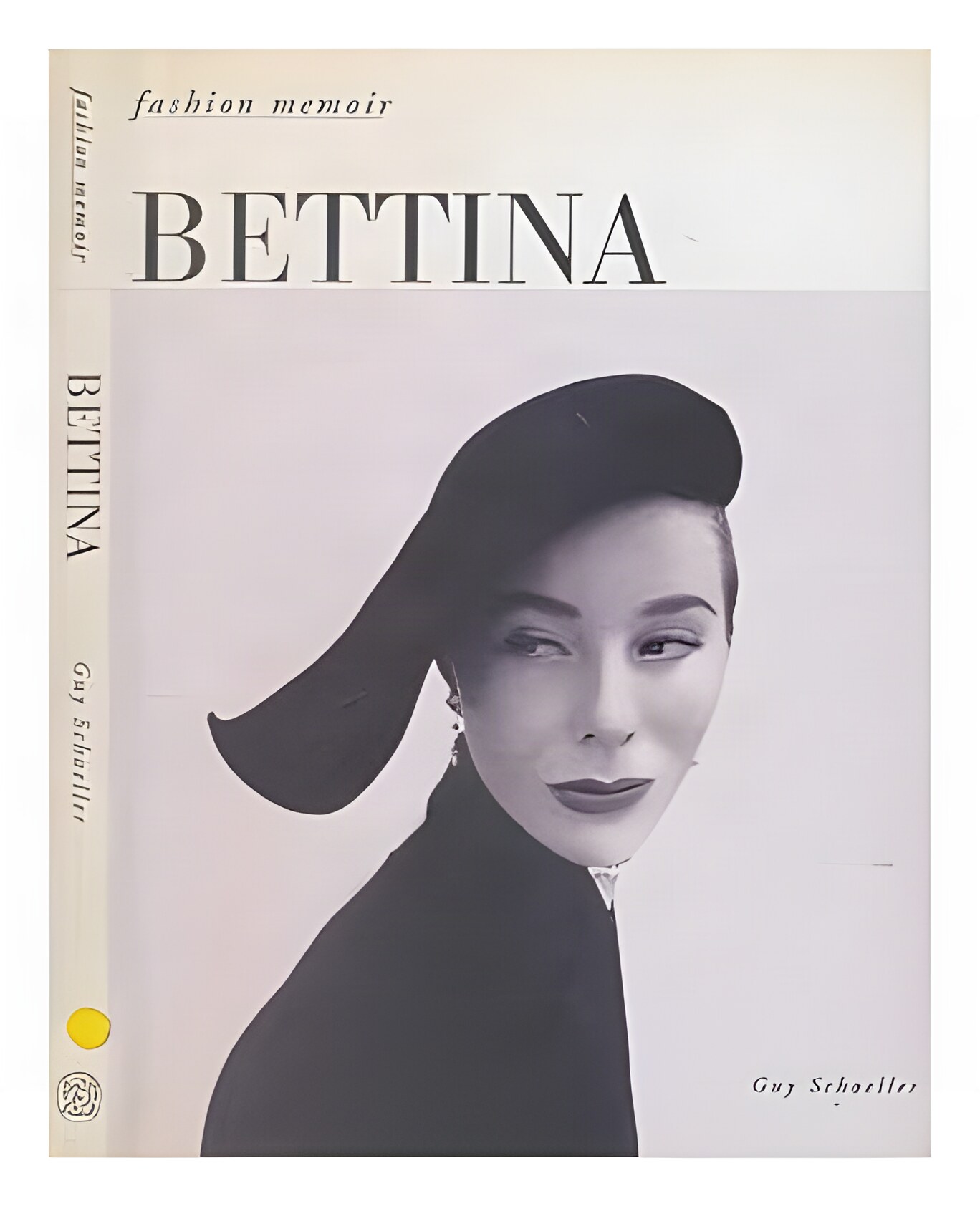
London, Thames & Hudson, 1st, 1998, Book: Very Good, Dust Jacket: Very Good, Hardcover in a bright dust jacket, 80 pages. 56 illustrations, 13 in color. At 18, Bettina arrived in Paris hoping to become a fashion designer, but it was as a model that her career began. She later became the most famous French model of the 1950s, with fashion's leading photographers - among them, Henry Clarke, Irving Penn and Henri Cartier-Bresson - fighting over her. Bettina remains to this day a leading figure in the field of fashion. NOTE: This book has a light musty odor.
Hardcover. Princeton NJ, Princeton University Press, 1st, 2011, Book: Very Good, Dust Jacket: Very Good, Hardcover in a bright dust jacket. Small ink notation on front fly leaf otherwise clean. 320 pages with extensive notes and index. This book tracks the dramatic outcomes of the federal government's growing involvement in higher education between World War I and the 1970s, and the conservative backlash against that involvement from the 1980s onward. Using cutting-edge analysis, Christopher Loss recovers higher education's central importance to the larger social and political history of the United States in the twentieth century, and chronicles its transformation into a key mediating institution between citizens and the state. Framed around the three major federal higher education policies of the twentieth century--the 1944 GI Bill, the 1958 National Defense Education Act, and the 1965 Higher Education Act--the book charts the federal government's various efforts to deploy education to ready citizens for the national, bureaucratized, and increasingly global world in which they lived. Loss details the myriad ways in which academic leaders and students shaped, and were shaped by, the state's shifting political agenda as it moved from a preoccupation with economic security during the Great Depression, to national security during World War II and the Cold War, to securing the rights of African Americans, women, and other previously marginalized groups during the 1960s and '70s. Along the way, Loss reappraises the origins of higher education's current-day diversity regime, the growth of identity group politics, and the privatization of citizenship at the close of the twentieth century. At a time when people's faith in government and higher education is being sorely tested, this book sheds new light on the close relations between American higher education and politics.
Hardcover. Hamden CT, Archon Books, 1st, 1979, Book: Good, Dust Jacket: None, 221 pages. Hardcover. Previous owners name at top right corner of title page. Faint damp smell. No dust jacket. Clean, tight copy.
Hardcover. NY, Abrams, 1st, 1992, Book: Very Good, Dust Jacket: Very Good, Hardcover, 303 pages. Eclipsed by the Impressionists, Naturalist painters are restored to their rightful place in the history of art in this remarkable, lavishly illustrated study. Influenced by Emile Zola's writings, French Naturalist artists documented personalities and locales in a detached, impersonal style. With photography as their chief tool and ally, the Naturalists aimed for the look of unposed, spontaneous nature, which put them on a collision course with the Impressionists. Now this challenging book adds a new dimension to that period, showing that at the same time the Naturalists were shaping a different view of painting. Weisberg reveals that the Naturalists went beyond Impressionism in both technique and subject matter. 307 illustrations, 86 in full color. Very good in a bright dust jacket.
Hardcover. US, Yale University Press, 1st, 1992, Book: Very Good, Dust Jacket: Very Good, Hardcover, 549 pages, illustrated throughout in color and b&w. Clean, unmarked copy with only minor wear to dust jacket. This book presents a survey of Chinese painting from the eighth to the 14th century, a period during which the nature of China's pictorial art changed dramatically. Illustrated by works in the collection of The Metropolitan Museum of Art, New York, the author begins by describing the advent toward the end of the Bronze Age of figural representation in Chinese art, and next traces the development of Chinese landscape painting from the third to the tenth century. He then moves on to discuss the art of the Sung dynasty, when the imperial government was increasingly absolute and repressive. In this period artists shifted from a realistic rendition of nature to more symbolic representation of single flowers, rocks and trees. By the time of the Yuan dynasty, following the Mongol conquest of 1279, objective representation in art had been replaced by imagery that drew on the artist's inner response to his world. Because it was believed that the meaning of a painted subject, made complex by personal and symbolic associations, could no longer be expressed without language, the painter began to inscribe poems and incorporate calligraphy in his works, the multiple relationships among word, image and calligraphy forming the basis of a new art. At this stage Chinese art entered its richest and most diverse stage f development.
Hardcover. New York, Dutton Books, 1st, 1998, Book: Very Good, Dust Jacket: Very Good, 304 pages. Hardcover with dust jacket. A very clean, unmarked copy with only minor wear to dust jacket edges. A tight copy.
Hardcover. London, David & Charles , reprint, 1970, Book: Very Good, Dust Jacket: Very Good, Hardcover in a dust jacket. 79 pages with b&w illustrations. A reprint of a 1874 British publication. Clean copy.
Hardcover. NY, Praeger Publishers, 1st, 1972, Book: Very Good, Dust Jacket: Very Good, Hardcover in a bright, unclipped dust jacket, 214 pages. Social history on two wheels (sometimes more or less), many b&w pictures, early photographs of the famous Dursley-Pedersen (1893), complete with hammock-saddle; the astonishing Crypto "Bantam" (1895); and the stylish Singer de luxe of the Edwardian period, to name but a few. There is even a photograph of the legendary G.P. Mills on the Humber tricycle aboard which he beat the Land's End to John O'Groats record in 1893. Small owner's stamp on front fly leaf, otherwise clean.
Hardcover. NY, Farrar, Straus and Giroux, 1st, 2000, Book: Very Good, Dust Jacket: Very Good, Hardcover in a bright dust jacket, 358 pages. A riveting historical mystery of Colonial America. In April, 1586, Queen Elizabeth I acquired a new and exotic title. A tribe of Native Americans, "savages," had made her their weroanza-a word that meant "big chief." The news was received with great joy, both by the Queen and by her favorite, Sir Walter Ralegh. His first American expedition had brought back a captive, Manteo, whose tattoed face and otter-skin cloak had caused a sensation in Elizabethan London. In 1857, Manteo was returned to his homeland as Lord and Governor, along with more than 100 English men, women and children.In 1590, a supply ship arrived at the colony to discover that the settlers had vanished. For almost twenty years the fate of Ralegh's colonists was to remain a mystery. When a new wave of settlers sailed to America to found Jamestown, their efforts to locate the lost colony were frustrated by the mighty chieftain, Powhatan, father of Pocahontas, who vowed to drive the English out of America. Only when it was too late did the settlers discover the incredible news that Ralegh's colonists had survived in the forests for almost two decades before being slaughtered in cold blood by Powhatan's henchmen. Clean copy.
Softcover. Clinton ME, self-published, 1st, 1971, Book: Very Good, Dust Jacket: None, Softcover, stapled binding, 103 pages illustrated with b&w photos, maps, one a fold-out. Engaging history of the Wiscasset and Quebec Railroad from its incorporation in 1854 to its last run in 1933. Full of stories. and anecdotes handed down by actual workmen on the railroad or members of their families, on all the important events in the life of the railway, and examines the role it played in the small Maine communities through which it passed. Clean copy.
Hardcover. NY, Thomas Y. Crowell, 1st, 1958, Book: Very Good, Dust Jacket: Good, Hardcover, red cloth covers with a lightly worn dust jacket with some chipping. 207 pages, b&w drawings by Hubert Buel. Story of journey from Mexico to what is now San Francisco in 1775 to claim land for Spain. For 10 to 14-year-olds. Previous owner's signature on front fly leaf otherwise clean.
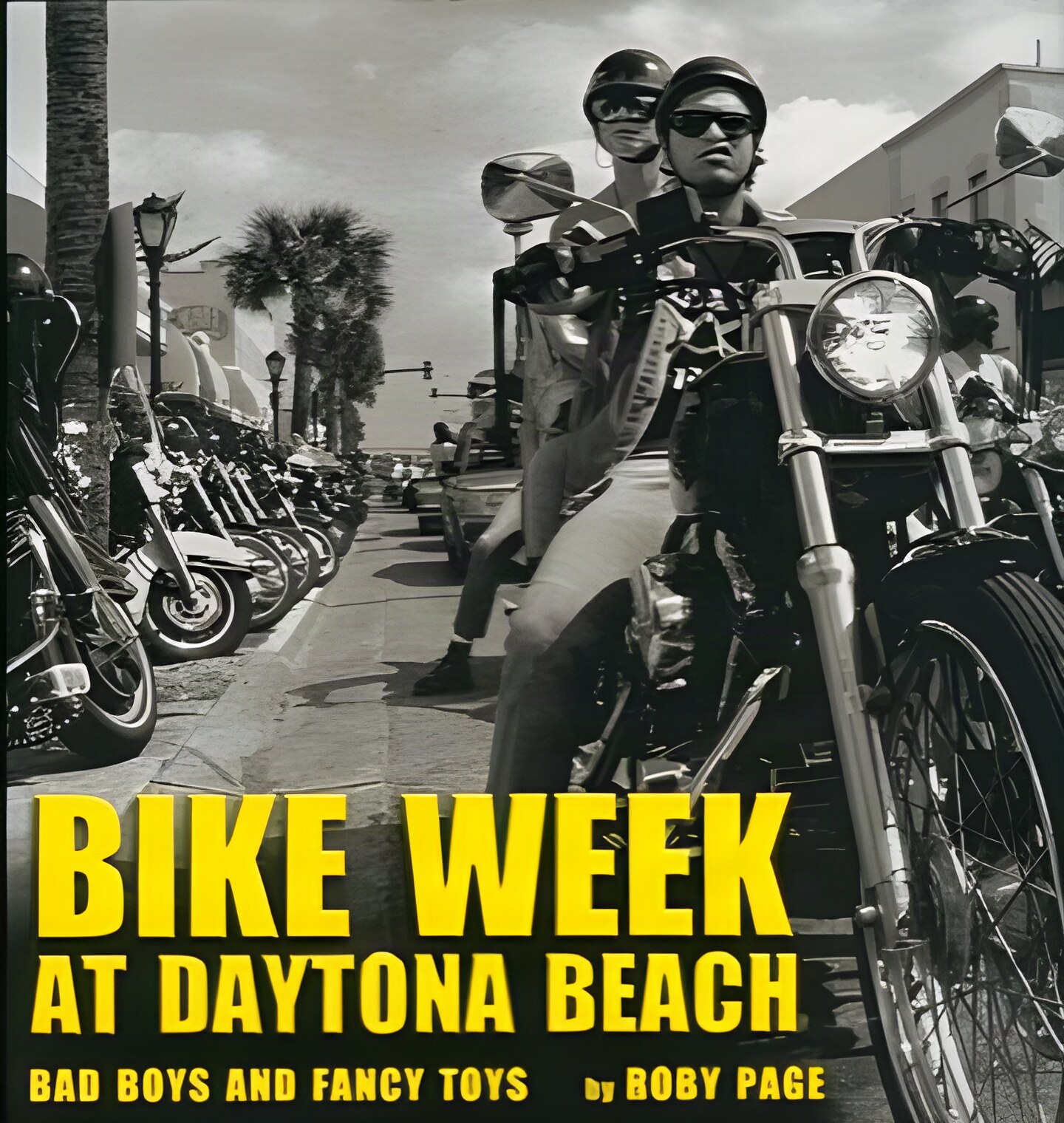
Softcover. Jackson MS, University Press of Mississippi, 1st, 2005, Book: Very Good, Dust Jacket: None, Softcover, 147 pages, b&w photos throughout. When photojournalist and writer Roby Page first started trekking to Daytona Beach, Florida, for Bike Week in 1985, the counterculture gathering was dominated by rogues, ruffians, and rebels. Now the leather-clad biker rumbling down Atlantic Avenue might be a doctor or a lawyer. More than a half-million enthusiasts arrive at Daytona Beach every March, a number swelled by new bikers from the American mainstream. Page sets out on his Harley-Davidson to search for what it really means to be a biker. Part memoir, part narrative history, and part photo essay, the book not only chronicles Bike Week, but also vividly documents the evolution of two American icons--the Harley and the biker. Remainder dot on bottom edge, light crease to back cover, otherwise like new.
New York, Harcourt Brace/Gulliver, 1st, 1996, Book: Very Good, Dust Jacket: Very Good , Hardcover in a bright, unclipped dust jacket. Color illustrations by Brian Pinkney.The true sweat-and-dirt tale of the feisty cowboy-child who became the most famous black rodeo performer who ever lived. Includes a note about the history of the black West and a bibliography.


 "Berko: Photographs 1935 1951 by: Berko, Ferenc")
 "Berko: Photographs 1935 1951 by: Berko, Ferenc")
 "Berlin Journal, 1989-1990by: Robert Darnton")
 "Berlin Yesterdayby: Wolsdorff, Christian (Ed.)")
 "Berlin: The City of Eternal Becomingby: Chiaramonte, Giovanni")
 "Best of Both Worlds, The; Finely Printed Livres d'Artistes 1910-2010by: Kelly, Jerry; Castleman, Riva; Hoy, Anne H.")


 "Best Pick: A Journey Through Film History and the Academy Awards by: Dorney, John; Regan, Jessica; Salinsky, Tom; O'Hara, Helen")
 "Best the Country Affords, The - Vermont Furniture - 1765 - 1850by: Zogry, Kenneth Joel")


 "Between Citizens and the State: The Politics of American Higher Education in the 20th Centuryby: Christopher P. Loss")

 "Beyond Impressionism: The Naturalist Impulseby: Weisberg, Gabriel P.")
 "Beyond Representation: Chinese Painting and Calligraphy, 8Th-14th Century (Princeton Monographs in Art and Archaeology, No 48)by: Fong, Wen C.")
 "Beyond the World of Pooh: Selections from the Memoirs of Christopher Milneby: Milne, Christopher")


 "Big Rideby: Erskine, Dorothy Ward")
 "Bill Pickett - Rodeo-Ridin' Cowboyby: Pinkney, Andrea D. and Brian")