Softcover. NY, Thames & Hudson, 1st pbk., 1988, Book: Very Good, Dust Jacket: None, Softcover in pictorial wrappers, 304 pages. Profusely illustrated in b&w. Piranesi has a powerful appeal for our time. His brilliance as a graphic artist, his transformation of the European vision of Classical antiquity, and his themes of fantasy have been the focus of considerable study in recent years. But though these aspects are important for an appreciation of Piranesi's visual significance, they have tended to obscure other factors essential for a complete understanding of his unique achievement. In this copiously illustrated study, John Wilton-Ely - one of the world's foremost authorities on Piranesi - offers a full reappraisal of the complex personality of an astonishingly versatile artist. His book covers every aspect of Piranesi's life and work, emphasizing especially his importance as a pioneer of Roman archaeology, the high quality of his technical illustrations, and his role in the great Graeco-Roman debate of the 1760s. The author brings to life the Enlightenment world of the artist's ideas - fundamentally bound up with the birth of Neo-Classicism - and the search for an appropriately modern form of expression; and he shows the practical and influential form taken by these ideas in Piranesi's architectural projects, his designs for furniture and decorative schemes and his imaginative restoration of antiquities. Clean copy.
Hardcover. London, Macgibbon & Kee, 1st, 1966, Book: Very Good, Dust Jacket: Fair, Hardcover in a worn, chipped dust jacket, 204 pages. "A valuable well-researched study of brinkmanship and of people under pressure presented fully for the first time." Name on front fly leaf, otherwise clean.
Hardcover. London, Macgibbon & Kee, 1st, 1966, Book: Very Good, Dust Jacket: Fair, Hardcover in a worn, chipped dust jacket, 204 pages. "A valuable well-researched study of brinkmanship and of people under pressure presented fully for the first time." Name on front fly leaf, otherwise clean.
Hardcover. Center for American Places, 1st, 2005, Book: Very Good, Dust Jacket: Very Good, Hardcover, 232 pages. The Mississippi River flows through American history and culture as a mythic waterway brimming with tragedy and hope, and awash in passionate ambitions and harsh realities. In 1953, a young Charles Dee Sharp traveled twice down the Mississippi (first by towboat and then by car along the renowned river road Highway 61) to make a documentary film of it, taking black-and-white photographs of the river, its communities, and its people. While Sharp's documentary never came to fruition, the striking images he captured survived as moving and evocative historical testaments to a lost era, now collected in his new book The Mississippi in 1953. These images create a vivid portrait of America's heartland a half century ago, and they are enriched with excerpts from Sharp's original trip journal, intriguing anecdotes from the people he encountered along his journey, and an engaging environmental history of the river by historian John O. Anfinson. The Mississippi in 1953 offers an original and poignant look at the living artery of the American landscape and how it molded the United States into the nation it is today.
Hardcover. University of Nebraska Press, 1st, 2016, Book: Very Good, Dust Jacket: Very Good, Hardcover, 512 pages. Historians, biographers, and scholars of John James Audubon and natural history have long been mystified by Audubon's 1843 Missouri River expedition, for his journals of the trip were thought to have been destroyed by his granddaughter Maria Rebecca Audubon. Daniel Patterson is the first scholar to locate and assemble three important fragments of the 1843 Missouri River journals, and here he offers a stunning transcription and critical edition of Audubon's last journey through the American West. Patterson's new edition of the journals--unknown to Audubon scholars and fans--offers a significantly different understanding of the very core of Audubon's life and work. Readers will be introduced to a more authentic Audubon, one who was concerned about the disappearance of America's wild animal species and yet also loved to hunt and display his prowess in the wilderness. This edition reveals that Audubon's famous late conversion to conservationism on this expedition was, in fact, a literary fiction. Maria Rebecca Audubon created this myth when she rewrote her grandfather's journals for publication to make him into a visionary conservationist. In reality the journals detail almost gratuitous hunting predations throughout the course of Audubon's last expedition.
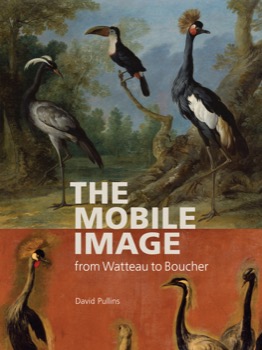
Softcover. Los Angeles, Getty Research Institute, 1st, 2024, Book: Very Good, Dust Jacket: None, Softcover, 199 pages illustrated in color. This book provides a new way of thinking about eighteenth-century French art and visual culture by prioritizing production over reception. Abandoning the ideologically driven discourse that distinguished fine from decorative art between the 1690s and 1770s, The Mobile Image reveals how the two have been inextricably bound from the earliest stages of artistic instruction through the daily life of painters' workshops. In this study, author David Pullins defines artisanal and artistic means of learning, seeing, and making through a system of "mobile images": motifs that were effectively engineered for mobility and designed never to be definitive, always awaiting replication and circulation. He examines the careers of Antoine Watteau, Jean-Baptiste Oudry, and Francois Boucher, situating them against a much broader cast of actors--such as printmakers, publishers, anonymous studio assistants, and architects, among others--to place eighteenth-century painting within a wider context of media and making. clean, bright copy.
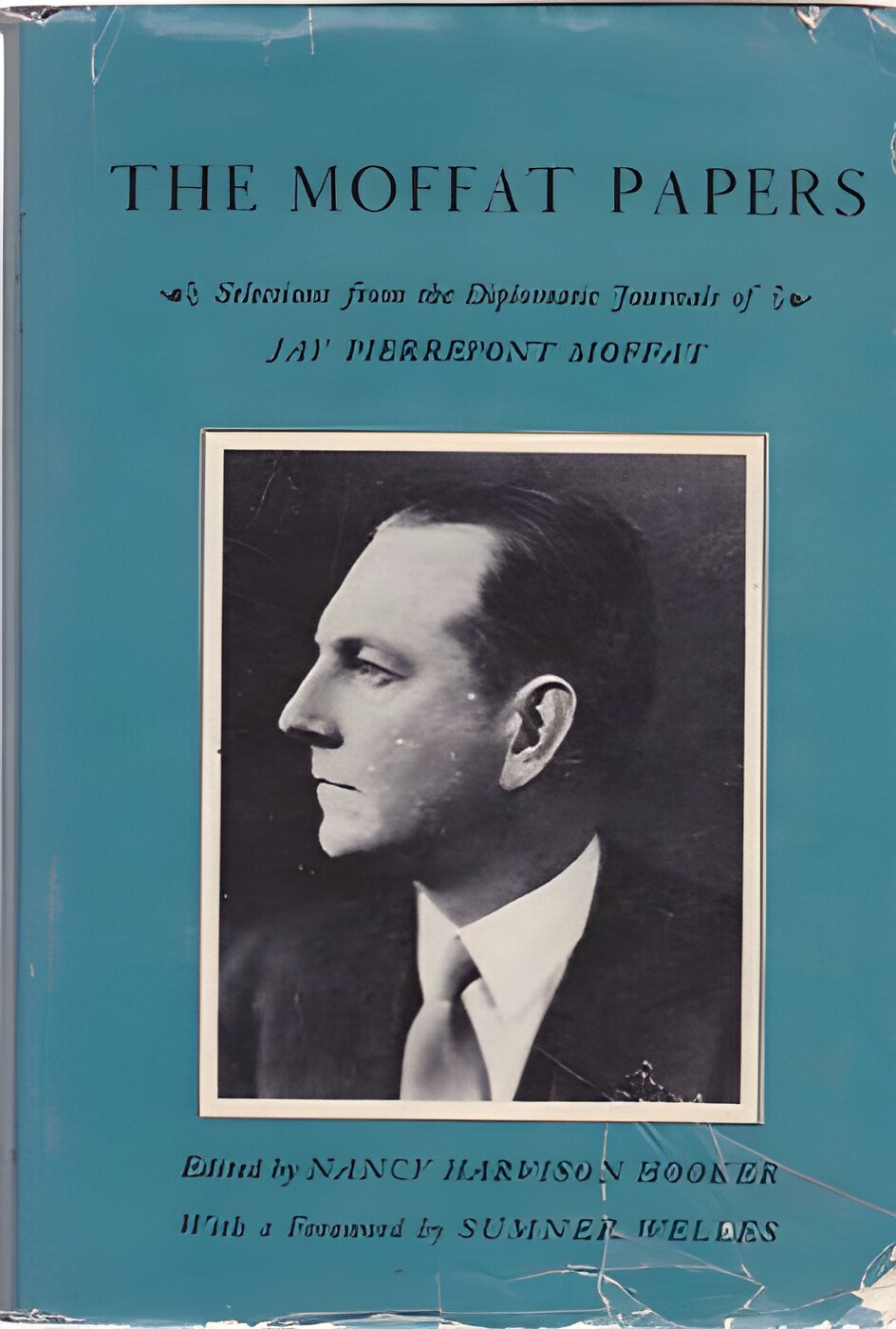
Hardcover. Cambridge MA, Harvard University Press, 1st, 1956, Book: Very Good, Dust Jacket: Fair, Hardcover in a worn, chipped dust jacket, 408 pages, index. Black and white frontis photo portrait of author. "Moffat served for a protracted period and with notable distinction in the key position of what was then termed Chief of the Division of European affairs; he accompanied me as my chief assistant when FDR sent me to Europe as his personal representative in the spring of 1940; and I was in the closest touch with him during the time he served as American Minister to Canada, a service so tragically terminated by his untimely death in 1943. I know of no man who came up through the ranks of the Foreign Service with whose work I am personally familiar who impressed me as having in his latter years greater knowledge, a wiser and more balanced judgement, or a greater devotion to the highest interests of this country." - Sumner Welles.
Hardcover. UK, Routledge / Thoemmes, reprint, 1995, Book: Very Good, Dust Jacket: None, Hardcover, maroon cloth with gilt lettering on spine. 450 pages plus index. A facsimile reprint of the second edition published in 1738. One of 8 volumes in the series History of British Deism. Clean, bright copy.
Hardcover. NY, Doubleday, 3rd pr., 2006, Book: Very Good, Dust Jacket: Very Good, Hardcover in a bright, unclipped dust jacket. 527 pages, b&w illustrations. No one predicted success for Henry Ward Beecher at his birth in 1813. The blithe, boisterous son of the last great Puritan minister, he seemed destined to be overshadowed by his brilliant siblings--especially his sister, Harriet Beecher Stowe, who penned the century's bestselling book Uncle Tom's Cabin. But when pushed into the ministry, the charismatic Beecher found international fame by shedding his father Lyman's Old Testament-style fire-and-brimstone theology and instead preaching a New Testament-based gospel of unconditional love and healing, becoming one of the founding fathers of modern American Christianity. By the 1850s, his spectacular sermons at Plymouth Church in Brooklyn Heights had made him New York's number one tourist attraction, so wildly popular that the ferries from Manhattan to Brooklyn were dubbed "Beecher Boats." SIGNED BY APPLEGATE on the half-title page. Clean copy.
Hardcover. NY, W. W. Norton , 2nd Ed., 1983, Book: Very Good, Dust Jacket: Very Good, Hardcover in a bright dust jacket, 291 pages, b&w illustrations. Records the findings and methodology of archaeologists concerned with the civilizations of ancient Italy. Clean copy.
Hardcover. Cambridge MA, Harvard University Press, 1st, 1941, Book: Very Good, Dust Jacket: Fair, Hardcover in a worn, soiled dust jacket. Bright blue cloth covers with spine label. 257 pages. Frontispiece, 9 black and white illustrations. The Mysterious Science of Law was based on Boorstin's Yale SJD thesis. (He also held an Oxford BCL and was admitted to the Inner Temple.). It was the first of many important books by Boorstin, who went on to became a prominent historian and, from 1975 to 1987, Librarian of Congress. Appears to se SIGNED on the inside cover and dated Dec., 1941. Otherwise a clean copy.
Hardcover. NY, Kraus Reprint, reprint, 1977, Book: Very Good, Dust Jacket: None, Hardcover, brown cloth, 341 pages. A reprint of a book first published in 1856. No dust jacket issued.
Hardcover. Princeton Architectural Press, 1st, 2005, Book: Very Good, Dust Jacket: Very Good, Hardcover, 224 pages. Daring, bold, dramatic, towering, impossibly glamorous: this is how we imagine New York in its golden age, and this is how Samuel H. Gottscho, the preeminent architectural photographer of his generation, captured it. Through his lens, New York of the 1930s became the quintessential modern metropolis, a round-the-clock city in which night was as charismatic as day. Rigorously editing out the Depression-weary city's more seamy aspects--its tenement slums, breadlines, and soup kitchens--Gottscho presented a dreamlike Gotham of skyscrapers and penthouse luxury that literally and figuratively glowed with glamour's sheen. His gimlet eye focused on the bold interplay of sun and shadow, dramatizing the chiseled forms of Manhattan's signature skyline and bridges. The Empire State and Chrysler buildings, Rockefeller Center, the Plaza, the George Washington Bridge--Gottscho brought them all to sparkling life. In this beautifully produced, landmark book, historian Donald Albrecht presents 175 of Gottscho's extraordinary images of the city, from the Battery to Harlem. An introductory essay tells the story of this legendary photographer, describing his working methods and philosophy, while placing his work in the broader context of photographic history.
Hardcover. Washington DC, National Geographic Society, 1924, Book: Very Good, Dust Jacket: None, Hardcover, red cloth covers with black spine labels with gilt lettering. Six issues from the first half of 1924, 696 pages devoid of ads or inserts. Clean, bright pages, some color, mostly b&w. Include:s 1, Lost Tribes of Islam, Eastern Darfur; 2, Carthage Acheology; 3, Sahara by Automobile; 4, Hawaiian Islands; 5, Sakurajima, Japan volcanic eruption; 6, Norway; and 7, Tunisia. Clean, no markings. DOMESTIC SHIPPING ONLY.
Hardcover. Washington DC, National Geographic Society, 1913, Book: Very Good, Dust Jacket: None, Hardcover, red cloth covers with faded black spine labels with gilt lettering flaking, faded. Six issues from the second half of 1913, 597 pages devoid of ads or inserts. Clean, bright pages, some color, mostly b&w. Clean, no markings. DOMESTIC SHIPPING ONLY.
Burlington VT, Samuel Mills, 2nd Ed., 1809, Book: Very Good, Dust Jacket: None, Hardcovers, 2 volume set. Second Edition, Corrected and Much Enlarged, after the first edition of 1794. 487 total pages. Vol. 1 does NOT have the folding map frontis. The handwritten name of Peter Starr (1778-1860) appears on the title page of both volumes. He was the head of a prominent Middlebury family whose name now graces two buildings: Starr Hall and Starr Library (now home to the Axinn Center). Brown calf covers with some rubbing and chipping to edges, red morocco spine labels with gilt lettering. Clean, tight set.
Hardcover. Chapel Hill , University of North Carolina, 1st, 1949, Book: Very Good, Dust Jacket: None, Hardcover, dark green cloth, gilt lettering, design on spine, 280 pages. "The story of a Confederate childhood, a Reconstruction boyhood, and the education of a medical pioneer in the new South." This book is first of all a personal narrative that is alternately dramatic, thoughtful, and hilariously funny. It is also a vivid picture of plantation life before and during the Civil War and the beginnings of the building of a New South. Clean copy, spine a bit darkened.
Hardcover. Seattle, University of Washington Press, 1st, 2003, Book: Very Good, Dust Jacket: Very Good, Hardcover in a bright dust jacket. 290 pages, b&w illustrations. In 1896, a small group of prospectors discovered a stunningly rich pocket of gold at the confluence of the Klondike and Yukon rivers, and in the following two years thousands of individuals traveled to the area, hoping to find wealth in a rugged and challenging setting. Ever since that time, the Klondike Gold Rush - especially as portrayed in photographs of long lines of gold seekers marching up Chilkoot Pass - has had a hold on the popular imagination. In this first environmental history of the gold rush, Kathryn Morse describes how the miners got to the Klondike, the mining technologies they employed, and the complex networks by which they obtained food, clothing, and tools. She looks at the political and economic debates surrounding the valuation of gold and the emerging industrial economy that exploited its extraction in Alaska, and explores the ways in which a web of connections among America's transportation, supply, and marketing industries linked miners to other industrial and agricultural laborers across the country. The profound economic and cultural transformations that supported the Alaska-Yukon gold rush ultimately reverberate to modern times. Clean copy.
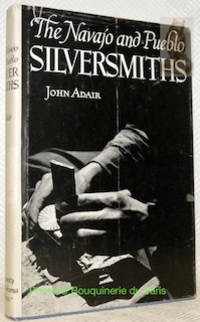
Hardcover. Norman OK, University of Oklahoma Press, 8th pr., 1970, Book: Very Good, Dust Jacket: Very Good, Hardcover in a lightly worn dust jacket, 220 pages with black & white illustrations. A thorough study of the art of the Indian silversmiths of the Southwest. Includes the history of the craft as well as names and localities of pioneer artisans. Bookplate on inside front cover, otherwise clean.
Hardcover. Cambridge MA, Harvard University Press, 1st, 2003, Book: Very Good, Dust Jacket: Very Good, Hardcover in a bright dust jacket, 362 pages. Hitler, Koonz says, understood the German people's need for a sense of coherence in the wake of what many saw as the degeneracy of the Weimar Republic--and 'he promised to rescue old-fashioned values of honor and dignity' by offering a secular faith to replace lost religious certainties. Koonz explores the promotion of these beliefs in German culture and law, and how they led to the catastrophe of the Holocaust, adding much to our understanding of how a civilized society could reach such infamous levels of violence. Clean copy.
Softcover. Washington DC, The Infantry Journal, reprint, 1944, Book: Very Good, Dust Jacket: None, Small softcover, 335 pages. "The primary purpose of this book is to provide a guide to the main forces, institutional and ideological, in the Nazi system." Published for the American servicemen. Name on front cover,mild wear to covers.
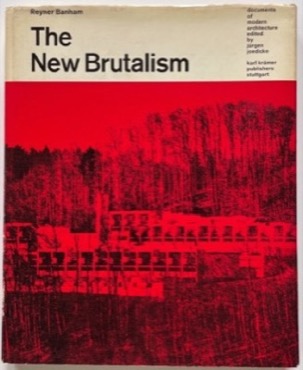
Hardcover. London, The Architectual Press, 1st, 1966, Book: Very Good, Dust Jacket: Good, Hardcover in a bright, lightly edgeworn dust jacket. First edition of Reyner Banham's foundational disquisition on Brutalist architecture presenting, per the liner notes, a scholarly history of the documentable facts on Brutalism, an eye-witness account of the period and personalities that produced it, and a comparative critique of numerous buildings regarded rightly or wrongly as examples of Brutalist architecture. Explores texts and buildings by an international roster of architects including Le Corbusier, Mies van der Rohe, James Stirling, Sir Owen Williams, Louis Kahn, Johannes van den Broke, Vladimir Bodiansky, William G. Howell, Richard Llewelyn-Davies, Denys Lasdun, Sir Basil Spence, Peter Moro, Andre Wogenscky, Atelier 5, Walter Forderer, Sverre Fehn, Oswald Mathias Ungers, Sir Leslie Martin, Vittorio Vigano, Aldo van Eyck, Paul Rudolph, Kiyonori Kikutake, Kunio Mayekawa, and not least, the architects regarded by Banham as the founders of the New Brutalism, Peter and Alison Smithson. 196 pages, illustrated throughout in black-and-white. Clean copy.
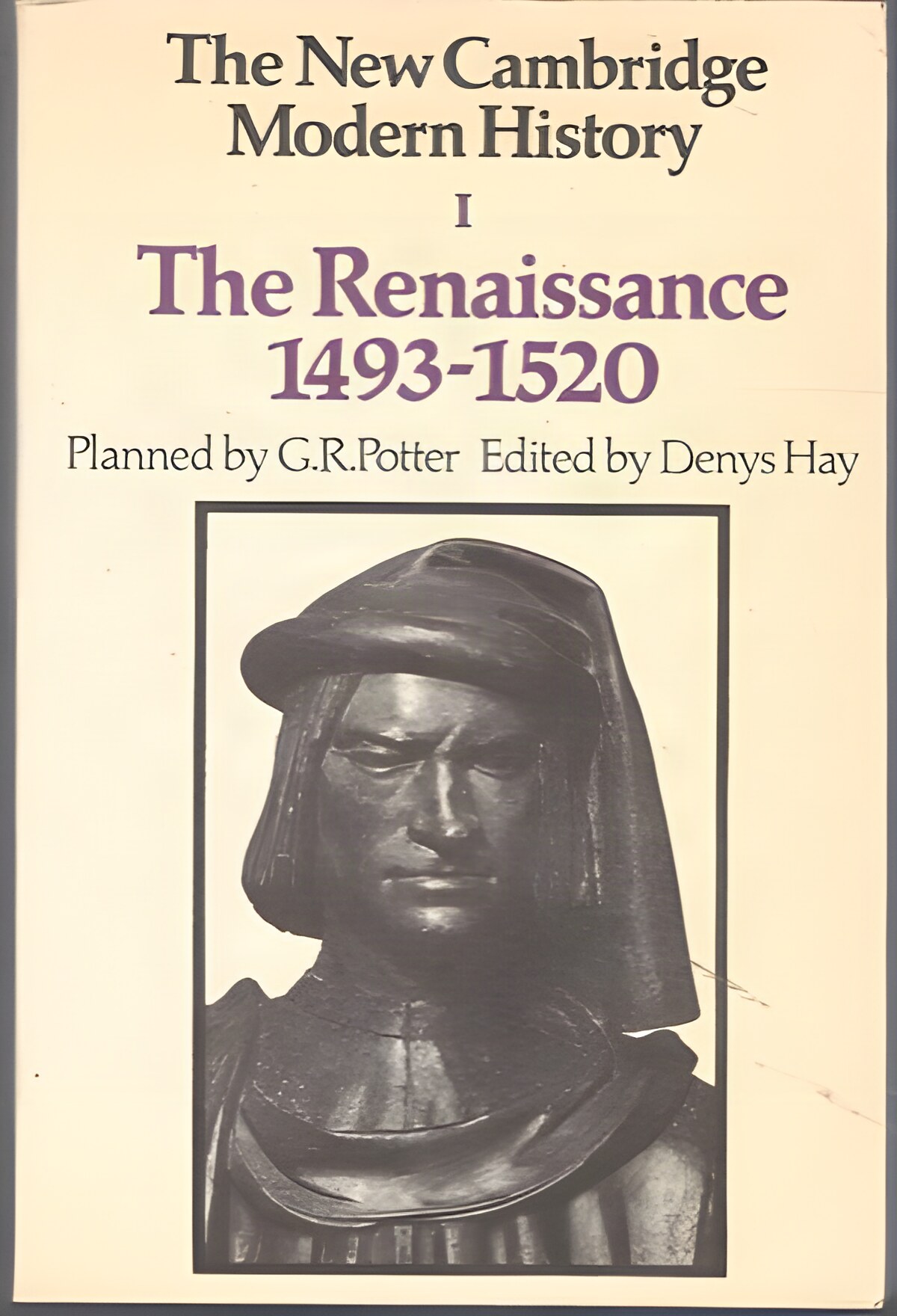
Softcover. Cambridge UK, Cambridge University Press, reprint, 1975, Book: Very Good, Dust Jacket: None, Softcover, 532 pages. In a preface written for this paperback edition, Professor Hay examines some of the changes in Renaissance scholarship since the first publication of this volume in 1957. Successive chapters examine the social and economic structure of a continent about to establish trade and colonies in the New World, the intellectual and artistic movements which made up the Renaissance, the position of the Church on the eve of the Reformation, the political inheritance of the Middle Ages, with its rising nation states, and the growth of the Ottoman Empire. Clean copy.
Hardcover. Ithaca NY, Cornell University Press, 1st, 1968, Book: Very Good, Dust Jacket: Very Good, Hardcover in a bright, unclipped dust jacket, 387 pages. A study of nationalisms of the modern world on all continents. Includes Black Nationalism in Africa. Name on front fly leaf otherwise clean.

 "The Mind and Art of Giovanni Battista Piranesi by: John Wilton-Ely")


 "The Mississippi River in 1953: A Photographic Journey from the Headwaters to the Deltaby: Sharp, Charles Dee")
 "The Missouri River Journals of John James Audubonby: John James Audubon and Daniel Patterson")


 "The Moral Philosopherby: Morgan, Thomas /Price, John V. (Intro)")
 "The Most Famous Man in America: The Biography of Henry Ward Beecher (SIGNED COPY)by: Debby Applegate")




 "The Mythic City: Photographs of New York by Samuel H. Gottscho, 1925-1940by: Donald Albrecht")
 "The Natural and Civil History of Vermontby: Williams, Samuel")


 "The Natural Bent:The Memoirs of Dr. Paul B. Barringer by: Barringer, Paul B.")
 "The Nature of Gold: An Environmental History of the Klondike Gold Rushby: Morse, Kathryn")