Hardcover. NY, Harper, 1st, 2020, Book: Very Good, Dust Jacket: Very Good, Hardcover in a bright dust jacket, 672 pages. 16 pages of photos. What Becomes a Legend Most is the first definitive biography of this luminary--an intensely driven man who endured personal and professional prejudice, struggled with deep insecurities, and mounted an existential lifelong battle to be recognized as an artist. Philip Gefter builds on archival research and exclusive interviews with those closest to Avedon to chronicle his story, beginning with Avedon's coming-of-age in New York between the world wars, when cultural prejudices forced him to make decisions that shaped the course of his life. Compounding his private battles, Avedon fought to be taken seriously in a medium that itself struggled to be respected within the art world. Gefter reveals how the 1950s and 1960s informed Avedon's life and work as much as he informed the period. He counted as close friends a profoundly influential group of artists--Leonard Bernstein, Truman Capote, James Baldwin, Harold Brodkey, Renata Adler, Sidney Lumet, and Mike Nichols--who shaped the cultural life of the American twentieth century. It wasn't until Avedon's fashion work was exhibited at the Metropolitan Museum of Art in the late 1970s that he became a household name. Balancing glamour with the gravitas of an artist's genuine reach for worldy achievement--and not a little gossip--plus sixteen pages of photographs, What Becomes a Legend Most is an intimate window into Avedon's fascinating world. Dramatic, visionary, and remarkable, it pays tribute to Avedon's role in the history of photography and fashion--and his legacy as one of the most consequential artists of his time.
Hardcover. Cambridge UK, Cambridge University Press, 1st, 1986, Book: Very Good, Dust Jacket: None, Hardcover, green cloth with black and gilt stamping, 291 pages. Gift exchange plays a crucial role in the social and political organization of Mendi in Papua New Guinea. This book reveals how considerable light can be shed on Mendi society, particularly on its political economy, by examining both the well-known ceremonial exchange festivals and the hitherto relatively little-studied everyday gift-giving practices. The author shows that the latter are crucial for understanding inter-group politics, the process of leadership, male-female relationships and the status of women, and the production, distribution and circulation of wealth. Currently the only book available on this society, the work offers an unusual combination of a social structural analysis with a study of local history and change. It is also of interest for its integration of the study of gift exchange and politics with the study of gender roles and relationships. Clean, bright copy.
Art Intitute of Chicago/Yale University Press, 1st, 2021, Book: Very Good, Dust Jacket: None, Hardcover, pictorial cloth, 251 pages illustrated in color. The extraordinary life of a captivating American artist, beautifully illustrated with his dreamlike drawings Much of Joseph Elmer Yoakum's story comes from the artist himself--and is almost too fantastic to believe. At a young age, Yoakum (1891-1972) traveled the globe with numerous circuses; he later served in a segregated noncombat regiment during World War I before settling in Chicago. There, inspired by a dream, he began his artistic career at age seventy-one, producing some two thousand drawings over a decade. How did Yoakum gain representation in major museum collections in Chicago and New York? What fueled his process, which he described as a "spiritual unfoldment"? This volume delves into the friendships Yoakum forged with the Chicago Imagists that secured his place in art history, explores the religious outlook that may have helped him cope with a racially fractured city, and examines his complicated relationship to African American and Native American identities. With hundreds of beautiful color reproductions of his dreamlike drawings, it offers the most comprehensive study of the artist's work, illuminating his vivid and imaginative creativity and giving definition and dimension to his remarkable biography. Clean copy. NOTE: DUE TO WEIGHT, DOMESTIC SHIPPING ONLY.
Hardcover. Chicago, Triumph Books, 1st, 2010, Book: Very Good, Dust Jacket: None, Hardcover in glossy pictorial boards. 306 pages, b&w illustrations. Taking a decade-by-decade approach to the Chicago Cubs baseball tradition, this collection brings together over 40 stories from the most outstanding voices of the team. The spirit of Cubs baseball is not captured by just one phrase, one season, or one particular game; instead, the players and managers who made the magic happen over the decades blend their experiences to capture the true essence of their beloved team. Clean copy.
Hardcover. Zurich, Scheidegger and Spiess, 1st, 2016, Book: Very Good, Dust Jacket: None, Hardcover in pictorial cloth, 210 pages, 164 color and 76 b/w illustrations. Le Corbusier (1887-1965) is one the most influential architects of the twentieth century. In the Scandinavian countries, his influence is arguably most pronounced in the writings and art of the Danish experimentalist Asger Jorn (1914-1973). Their collaboration on Le Corbusier's pavilion for the 1937 Paris World Exhibition sparked Jorn's lifelong fascination with the great architect and with architecture more broadly as an inherently public form of art. At the same time, Le Corbusier started working in the visual arts and began to move from a rational, technological approach to architecture towards a more poetic, materialist approach. Published in collaboration with the Museum Jorn, Silkeborg, What Moves Us? focuses specifically on the reception of Le Corbusier in Scandinavia, with the relationship between Jorn and Le Corbusier as a thematic thread. The book first highlights the architect's change of direction and subsequently takes readers through his influence on the young artist. The book's distinguished contributors explore the relationships that emerged among their artistic theories and practices, including Jorn's later critique of Le Corbusier. Essays also explore the wider influence of Le Corbusier on Scandinavian architecture and urbanization and consider Le Corbusier alongside the Danish architect Jorn Oberg Utzon and the Aarhus Brutalism movement.
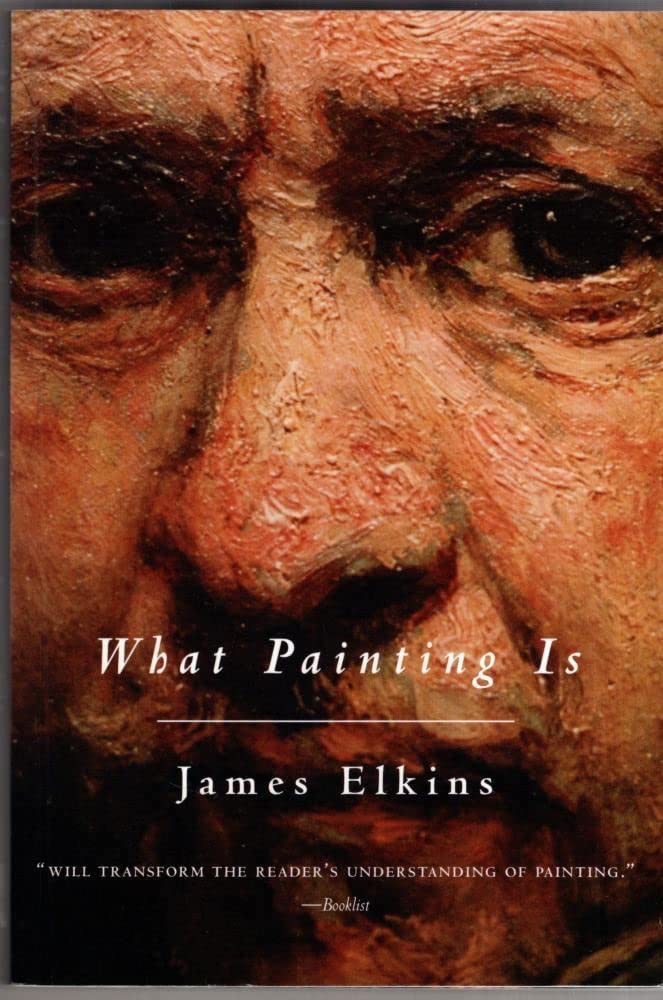
Hardcover. NY, Routledge, 1st, 1999, Book: Very Good, Dust Jacket: Very Good, Hardcover in a bright, price-clipped dust jacket, 246 pages, color and b&w illustrations. Unlike many books on painting that usually talk about art or painters, James Elkins' compelling and original work focuses on alchemy, for like the alchemist, the painter seeks to transform and be transformed by the medium. James Elkins communicates the experience of painting beyond the traditional vocabulary of art history. Alchemy provides a magical language to explore what it is a painter really does in her or his studio - the smells, the mess, the struggle to control the uncontrollable, the special knowledge only painters hold of how colours will mix, and how they will look. Clean copy.
Hardcover. NY, Prentice-Hall, 1st, 1978, Book: Very Good, Dust Jacket: Good, Hardcover in a lightly worn, unclipped dust jacket, 263 pages. A Seattle sports reporter follows the Seattle Supersonics through the tumultuous 1978-77 season, A team full of superstars, Bill Russell as coach and championship hopes, all go sour. Clean copy.
Hardcover. Boston, Mariner Books, 1st, 2022, Book: Very Good, Dust Jacket: Very Good, Hardcover in a bright dust jacket, 253 pages, b&w illustrations. From a longtime New Yorker staff cartoonist, an evocative family memoir, a love letter to New York City, and a delightful exploration of the origins of creativity--richly interleaved with the author's witty, beloved cartoons. David Sipress, a dreamer and obsessive drawer living with his Upper West Side family in the age of JFK and Sputnik, goes hazy when it comes to the ceaselessly imparted lessons-on-life from his meticulous father and the angsty expectations of his migraine-prone mother. With wry and brilliantly observed prose, Sipress paints his hapless place in the family, from the time he is tricked by his unreliable older sister into rocketing his pet turtle out his twelfth-floor bedroom window to the moment he walks away from a Harvard PhD program in Russian history to begin his life as a professional cartoonist. Sipress's cartoons appear in the story with spot-on precision, inducing delightful Aha! moments in answer to the perennial question aimed at cartoonists: Where do you get your ideas?
Hardcover. South Tamworth NH, Bearcamp Press, 1st, 1969, Book: Very Good, Dust Jacket: Very Good, Hardcover in a dust jacket with a sunned spine, 151 pages. Signed by the author on the title page. Writings on the beginnings of cycling. B&w illustrations. Previous owner's stamp on front fly leaf, otherwise clean.
Hardcover. Chicago, University Of Chicago Press, 1st, 2006, Book: Very Good, Dust Jacket: Very Good, Hardcover, pages. In When Buildings Speak,Anthony Alofsin explores the rich yet often overlooked architecture of the late Austro-Hungarian Empire and its successor states. He shows that several different styles emerged in this milieu during the late nineteenth and early twentieth centuries. Moreover, he contends that each of these styles communicates to us in a manner resembling language and its particular means of expression. Covering a wide range of buildings--from national theaters to crematoria, apartment buildings to warehouses, and sanatoria to postal savings banks--Alofsin proposes a new way of interpreting this language. He calls on viewers to read buildings in two ways: through their formal elements and through their political, social, and cultural contexts. By looking through Alofsin's eyes, readers can see how myriad nations sought to express their autonomy by tapping into the limitless possibilities of art and architectural styles. And such architecture can still speak very powerfully to us today about the contradictory issues affecting parts of the former Habsburg Empire.
Hardcover. NY, William Morrow , 1st, 2006, Book: Very Good, Dust Jacket: Very Good, Hardcover in a bright, unclipped dust jacket. In 1906 the baseball world saw something that had never been done. Two teams from the same city squared off against each other in a World Series that pitted the heavily favored Cubs of the National League against the hardscrabble American League champion White Sox. Now, more than a century later, noted historian Bernard A. Weisberger tells the tale of a unique time in baseball, a unique time in America, and a time when Chicago was at the center of it all. 213 pages, b&w photos. Clean copy.
Hardcover. Washington DC, Smithsonian Institution Press, 1st, 1998, Book: Very Good, Dust Jacket: Very Good, Hardcover in a bright dust jacket, 292 pages, b&w illustrations. SIGNED BY BOTH AUTHORS on the title page. Additionally INSCRIBED BY COHN on the dedication page. Kevin J. Crisman and Arthur B. Cohn show how a confluence of geographic, technological, economic, and social conditions in the United States and Canada turned an ancient idea into a practical alternative to more expensive and dangerous steamboats. Reviewing evidence from travelers' memoirs, regional histories, pictorial records, and the only horseboat ever studied by archaeologists - a wreck on the floor of Lake Champlain's Burlington Bay, in Vermont - the authors trace the evolution of horseboats from early mechanisms that forced the animals to walk in tight circles to "endless floor" treadmills that resembled modern exercise machines. In a lively narrative interspersed with quotes from passenger accounts, the book charts the rise and demise of horseboat businesses on the Hudson River, as well as in New York City, St. Louis, and Halifax, Nova Scotia. The authors also describe and record the underwater excavation of the Lake Champlain wreck, revealing a wealth of detail about the construction and operation of a typical treadwheel horseboat of the 1830s and 1840s. Clean copy.
Hardcover. Baton Rouge, Louisiana State University Press, 1st, 1961, Book: Very Good, Dust Jacket: Very Good, Hardcover in a bright dust jacket, 251 pages including index. Clean copy.
Hardcover. NY, Reynal and Hitchcock, 1st, 1947, Book: Very Good, Dust Jacket: Poor, Hardcover in a tattered and chipped dust jacket. Off-white cloth with black spine title. 217 pages, b&w drawings by the author. Translated from the French, Quand les Cathedrales Etaient Blanches, by Francis E. Hyslop, Jr. Dj is poor with tape repair to the reverse side. Book has a small stamp to the front fly leaf, otherwise clean.
Hardcover. New York, Free Press, 1st, 2006, Book: Very Good, Dust Jacket: Very Good, 346 pages, b&w photographs. Remainder mark to top edge. Small tear to dust jacket. Else a very clean, tight copy. Documents the story of the luxury liner that burned off the coast of New Jersey in 1934, drawing on previously classified FBI reports and first-person survivor interviews to reveal how the Morro Castle's captain died under mysterious circumstances seven hours before the ship caught fire and how many of the crew abandoned ship, leaving passengers to fend for themselves.
Hardcover. Ames IA, University Museums at Iowa State, 1st, 2006, Book: Very Good, Dust Jacket: Very Good, Hardcover in a bright dust jacket, 398 pages. Mainly b&w illustrations with a small color section in center. In 1927, President Raymond Hughes began planning aesthetic improvements to the Iowa State campus. In 1933, at the depth of the Great Depression, and in an act that dramatically illustrates his artistic commitment, he began discussion with Grant Wood and Christian Petersen for each to create a significant mural cycle for the Iowa State College campus in Ames. The federal New Deal s Public Works of Art Project began in 1934 and offered a grand opportunity to employ artists in executing Grant Wood s painted mural for the library, When Tillage Begins, Other Arts Follow, and Christian Petersen s sculpted mural for the Dairy Industry Building, The History of Dairying. This book presents the first history of the Public Works of Art Project in Iowa and the first in-depth examination of the Grant Wood and Christian Petersen murals at Iowa State College. It also discusses the co-operative painting group that Grant Wood developed and illuminates the collaborative nature of the Iowa Project among its artists, as well as between the State University of Iowa in Iowa City and Iowa State College in Ames. Clean, like new. DOMESTIC SHIPPING ONLY.
Hardcover. London, Quiller Press, 1st, 1989, Book: Very Good, Dust Jacket: Very Good, Hardcover in a bright, unclipped dust jacket, 432 pages. Profusely illustrated in color and b&w, folding map in rear pocket. The story of Lake Rudolph/Turkana, and its exploration by numerous expeditions of explorers from the earliest days. The author has spent his life in Kenya and roamed the Northern Frontier District for over 35 years. Clean copy.
Hardcover. London, George Allen & Unwin , 1st, 1926, Book: Very Good, Dust Jacket: None, Hardcover. Very good copy in the original title-blocked black cloth with red lettering. 178 pages including index. The Russian revolutionary's thesis on the economic and political decline of England. Clean copy.
Hardcover. NY, Metro Books, 1st, 1998, Book: Very Good, Dust Jacket: Very Good, Hardcover in a bright dust jacket. The late nineteenth century brought a transportation explosion in North America and Europe, much of it produced by the steam engine, which by that time had become strong and versatile enough to power ocean-crossing vessels and large freight trains. Where Rails Meet the Sea tells the exciting story of how the transportation industry was revolutionized by steam power and how the industry in turn changed the face of the world. Written by an expert in the history of ships and trains and heavily illustrated throughout in color and b&w.
Hardcover. Newtown CT, The Taunton Press, 1st, 2006, Book: Very Good, Dust Jacket: Very Good, Hardcover in a bright dust jacket, 266 pages. The past has left behind only scattered clues that, on their own, provide little insight into how the people of early America lived and the details of their daily lives. The photographs in this book, the deeply informed narrative that accompanies them, and the eyewitness accounts of daily life that the author weaves throughout, provide a fresh perspective on our early American ancestors and the places they called home. This book is about how their houses and their life in them, from the wealthy to the impoverished, from New York City to the small farms and plantations of the South, from coastal fishing towns to the Western frontier of Indiana and Kentucky. The stories focus on the remarkably vivid differences from one part of the country to the next, class and culture, and the realities of everyday life for American families. These stories twine around a wide selection of HABS photographs of early houses, covering the variety and evolutions of house styles -- not by labeling the style but by explaining the style in the context of everyday life. Richly illustrated with handsome black-and-white photography of old houses from the Library of Congress Historic American Building Survey (HABS) collection and supplemented with period woodcuts, engravings, drawings, paintings, artifacts, and maps, the book is printed on a 4-color press for a depth of tone. Sidebar excerpts from diaries, journals, and letters inject graphic eyewitness descriptions, adding an additional layer of insight. The book also includes sidebars called Still Standing that traces the history of specific houses, from their origins to the present and includes information on the original family, how the house has evolved over the centuries, and how it's used today.
Hardcover. NY, Bobbs-Merrill , 1st, 1975, Book: Very Good, Dust Jacket: Very Good, Hardcover in a bright, lightly worn dust jacket, 226 pages, b&w photos. An expose' of the World Football League: "The story of the men who manipulated bodies to make or prevent touchdowns and the men who manipulated the dream of owning a professional football team to make fortunes for themselves." It all ended with lies, financial sleights-of-hand, and bounced checks. Rare and informative look at "the complexities of creating a major sports empire." Dust with short closed tear, wrinkle to front flap. Name on front fly leaf, otherwise clean.
Hardcover. New Haven CT, Yale University Press, 1st, 2014, Book: Very Good, Dust Jacket: Very Good, Hardcover in a bright dust jacket, 440 pages, colo and b&w illustrations. The first biography in more than twenty years of James McNeill Whistler (1834-1903) is also the first to make extensive use of the artist's private correspondence to tell the story of his life and work. This engaging personal history dispels the popular notion of Whistler as merely a combative, eccentric, and unrelenting publicity seeker, a man as renowned for his public feuds with Oscar Wilde and John Ruskin as for the iconic portrait of his mother. The Whistler revealed in these pages is an intense, introspective, and complex man, plagued by self-doubt and haunted by an endless pursuit of perfection in his painting and drawing. In his beautifully illustrated and deeply human portrayal of the artist, Daniel E. Sutherland shows why Whistler was perhaps the most influential artist of his generation, and certainly a pivotal figure in the cultural history of the nineteenth century. Whistler comes alive through his own magnificent work and words, including the provocative manifestos that explained his bold artistic vision, sparked controversy in his own time, and resonate to this day.
Hardcover. New Haven CT, Yale University Press, 1st, 2014, Book: Very Good, Dust Jacket: Very Good, 440 pages, illustrations in color and b&w. Clean, unmarked copy with only minor wear to dust jacket. The first biography in more than twenty years of James McNeill Whistler (1834-1903) is also the first to make extensive use of the artist's private correspondence to tell the story of his life and work. This engaging personal history dispels the popular notion of Whistler as merely a combative, eccentric, and unrelenting publicity seeker, a man as renowned for his public feuds with Oscar Wilde and John Ruskin as for the iconic portrait of his mother. The Whistler revealed in these pages is an intense, introspective, and complex man, plagued by self-doubt and haunted by an endless pursuit of perfection in his painting and drawing. In his beautifully illustrated and deeply human portrayal of the artist, Daniel E. Sutherland shows why Whistler was perhaps the most influential artist of his generation, and certainly a pivotal figure in the cultural history of the nineteenth century. Whistler comes alive through his own magnificent work and words, including the provocative manifestos that explained his bold artistic vision, sparked controversy in his own time, and resonate to this day.

 "What Becomes a Legend Most: A Biography of Richard Avedonby: Philip Gefter")


 "What Gifts Engender: Social Relations and Politics in Mendi, Highland Papua New Guinea by: Rena Lederman")






 "When Buildings Speak: Architecture as Language in the Habsburg Empire and Its Aftermath, 1867-1933by: Alofsin, Anthony")

 "When Horses Walked on Water: Horse-Powered Ferries in Nineteenth-Century America (SIGNED COPY)by: Kevin J. Crisman, Arthur B. Cohn")

![When the Cathedrals Were White: A Journey to the Country of Timid Peopleby: Le Corbusier [Charles-Edouard Jeanneret]](https://www.browsingisarousing.com/shop/images/NoImage.jpg "When the Cathedrals Were White: A Journey to the Country of Timid Peopleby: Le Corbusier [Charles-Edouard Jeanneret]")
 "When the Dancing Stopped: The Real Story of the Morro Castle Disaster and Its Deadly Wakeby: Hicks, Brian")
 "When Tillage Begins, Other Arts Follow: Grant Wood and Christian Petersen Muralsby: Lea Rosson DeLong")
 "Where Giants Trod: The Saga of Kenya's Desert Lakeby: Brown, Monty")
 "Where is Britain Going?by: Leon Trotsky with an Introduction by H.N. Brailsford")
 "Where Rails Meet the Sea: America's Connections Between Ships & Trains by: Krieger, Michael")


 "Whistler: A Life for Art's Sakeby: Daniel E. Sutherland")
 "Whistler: A Life for Art's Sakeby: Sutherland, Daniel E.")