Hardcover. Chicago, University of Chicago Press, 1st, 2008, Book: Very Good, Dust Jacket: Very Good, 320 pages, b&w illustrations. Clean, unmarked copy with only minor wear to dust jacket. Building the Devil's Empire is the first comprehensive history of New Orleans's early years, tracing the town's development from its origins in 1718 to its revolt against Spanish rule in 1768. Shannon Lee Dawdy's picaresque account of New Orleans's wild youth features a cast of strong-willed captives, thin-skinned nobles, sharp-tongued women, and carousing travelers. But she also widens her lens to reveal the port city's global significance, examining its role in the French Empire and the Caribbean, and she concludes that by exemplifying a kind of rogue colonialism--where governments, outlaws, and capitalism become entwined--New Orleans should prompt us to reconsider our notions of how colonialism works.
Softcover. Berkeley CA, University of California Press, 1st, 1999, Book: Very Good, Dust Jacket: None, Softcover, 220 pages. This book provides a fascinating history of the planning, design, and construction of the six-building Getty Center in Los Angeles, one of the great cultural complexes to be built in our time. Writing with wit and passion, Richard Meier takes us behind the scenes of the thirteen-year-long, one-billion-dollar project.
Hardcover. Salt Lake City, Gibbs Smith, 1st, 2005, Book: Very Good, Dust Jacket: Very Good, Hardcover, 229 pages, profusely illustrated in b&w. In "Building with Nature: Inspiration for the Arts & Crafts Home" Freudenheim weaves together the lives and philosophies of William Morris, John Ruskin, Frederick Law Olmsted, John Muir, Greene & Greene, Irving Gill, Bernard Maybeck, and others with the dramatic economic, social, design and cultural changes that took place in America between 1876 and 1916. Chronicling both intellectual theory and architectural history, this ground-breaking book will appeal to general readers as well as to those enthusiastic about the Arts and Crafts Movement, its architecture and furniture. Freudenheim demonstrates how the "simple life" manifested in the rustic architecture found in Yosemite, English cottages, Japanese barns, and Swiss chalets, became the basis for the design of the American Arts and Crafts home advocated by these pioneering thinkers. Their devotion to simplicity for both the interior and exterior design of these houses also helps to explain why they embraced plain, sturdy Mission Style furniture. Freudenheim points out how numerous individuals, both American and British, helped spread these ideas across America.
New York, Brockhampton/William R. Scott, 1st, 1969, Book: Very Good, Dust Jacket: Very Good, Hardcover. 40 pages. Many black & white and color detailed illustrations of buildings by the Leacrofts. Dust jacket with mild wear. Clean copy.
Hardcover. London, Weidenfeld and Nicolson, 1st, 1967, Book: Very Good, Dust Jacket: Good, Hardcover, 72 pages, illustrated throughout in b&w. Light edge wear and creases to dust jacket. Previous owner's signature on front flyleaf. Otherwise, clean and tight copy.
Hardcover. Italy, Leonardo Arte Srl , 1st, 1996, Book: Very Good, Dust Jacket: Very Good, 255 pages. Hardcover with dust jacket in slipcase. A very clean, unmarked copy with only minor wear to slipcase edges. Color illustrations throughout. A book about Italy's greatest jeweler.
Softcover. Athens/Paris, Ecole Francaise d'Athenes, 1st, 1967, Book: Very Good, Dust Jacket: None, Softcover, Volume Two: pages 371-900, followed by 16 b&w plates. Cream paper wraps. Glossy pages with many black and white photographs are uncut. Text in English and French.
Softcover. US, Schiffer Publishing, 1st, 2004, Book: Very Good, Dust Jacket: None, 128 pages. Softcover. Light edgewear to wrappers. Black and white pictures throughout.
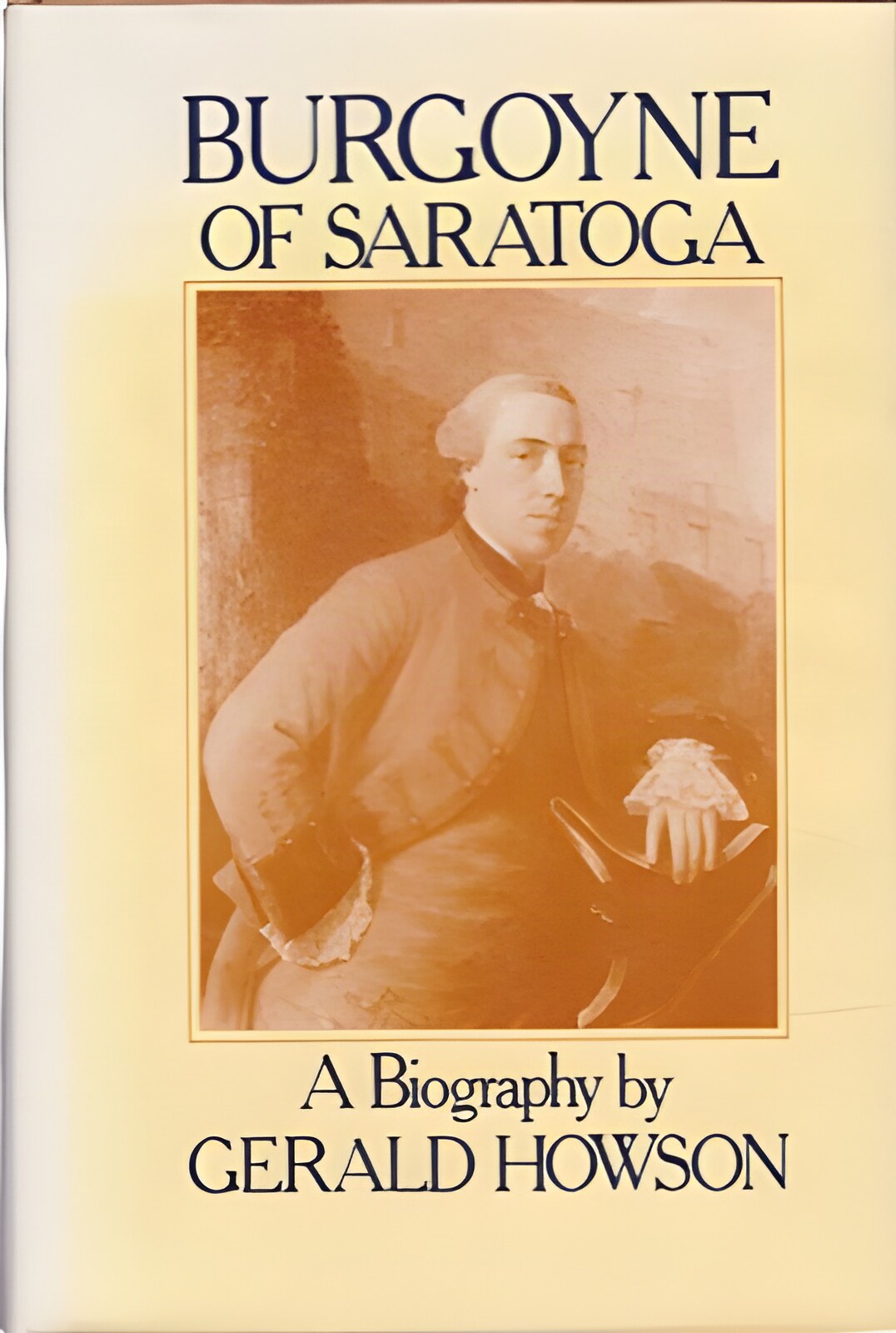
Hardcover. NY, Times Books, 1st, 1979, Book: Very Good, Dust Jacket: Good, Hardcover in a lightly worn dust jacket that shows fading, 360 pages, b&w illustrations, endpaper maps. General John Burgoyne was a British army officer, politician and dramatist. He first saw action during the Seven Years' War when he participated in several battles, mostly notably during the Portugal Campaign of 1762. Burgoyne is best known for his role in the American War of Independence. During the Saratoga campaign he surrendered his army of 5,000 men to the American troops on October 17, 1777. Appointed to command a force designated to capture Albany and end the rebellion, Burgoyne advanced from Canada but soon found himself surrounded and outnumbered. He fought two battles at Saratoga, but was forced to open negotiations with Horatio Gates. Although he agreed to a convention, on 17 October 1777, which would allow his troops to return home, this was subsequently revoked and his men were made prisoners. Burgoyne faced criticism when he returned to Britain, and never held another active command. Clean copy.
Softcover. Burlington VT, New England Telephone & Telegraph Company, 1933, Book: Very Good, Dust Jacket: None, Softcover, light green card covers with dark blue lettering. 60 pages of listed subscriber phone numbers with ads throughout plus a 24 page classified business section. Directory covers Bristol, Burlington, Charlotte, Essex Center, Essex Junction and Richmond. Small perforated hole in upper corner, clean, bright copy of uncommon Vermont ephemera.
Hardcover. NY, St. Martin's Press, 1st US, 1985, Book: Very Good, Dust Jacket: None, Hardcover, olive green boards, gilt lettering on spine. Illustrated with B&W plates and maps; Large 8vo 9' - 10' tall; 686 pages; 'Allen's work deals primarily with the human elements of the forgotten war waged between the doomed empires of Great Britain and Japan in Southeast Asia between 1941 and 1945. The author's familiarity with Japanese sources enables him to strike a balance unusual in Western accounts. Allen's Japanese are as much prisoners of their culture as the British are of theirs. They are victims of incompetent command and inadequate logistics. They do not want to die, but their ready acceptance of death lends a special horror to Allen's descriptions of some of the century's most vicious fighting.' Clean bright copy, no dust jacket.
Hardcover. NY, Columbia University Press, 1st, 1966, Book: Very Good, Dust Jacket: Good, Hardcover in a lightly worn, chipped dust jacket, 181 pages. The tales contained in this collection were first told in the dark decade of Burmese history (1876-85) during the coming event of the British conquest. The stories combine exotic background with strong details that offer the Western reader both a picture of Burma in the nineteenth century and an understanding of the basic good sense, gaiety, and gentleness of the Burmese people and the Buddhist clergy. The characters that appear in the book illustrate timeless truths about human nature, which today's reader can apply to existing people and situations. For the first time since the eleventh century the future of Burmese Buddhism became uncertain, and there was widespread fear, both in Upper Burma still under a Burmese king and in Lower Burma already under British rule, that the final fall of the Burmese kingdom would result in the total extinction of both the national religion and the Burmese way of life. Told with the purpose of allaying this anxiety and fear, these tales give a full and faithful resume and appraisal of the position of Burmese Buddhism on the eve of the British conquest of 1886. Name on front fly leaf which has mild edgewear. Clean, tight copy.
Hardcover. Weymouth, MA, George H. Ellis Co, 1st, 1906, Book: Good, Dust Jacket: None, 88 pages. Hardcover with no dust jacket. INSCRIBED BY AUTHOR WITH HANDWRITTEN POEMS AID IN. Light foxing and age discoloration on pages. Light soil to covers. Tight copy.
Softcover. Manchester University Press , 1st pbk, 2012, Book: Very Good, Dust Jacket: None, Softcover, 416 pages, b&w illustrations. During the Algerian War the French army engaged in the 'emancipation' of Muslim women as part of a strategy of subverting the nationalist movement whilst also inflicting widespread violence. First comprehensive study in English of the role of Muslim women during the Algerian war, bringing a unique interdisciplinary approach to the subject. Clean copy.
Hardcover. Chapel Hill, University of North Carolina, 1st, 1991, Book: Very Good, Dust Jacket: Very Good, Hardcover, 514 pages, b&w illustrations, in a bright dust jacket. Biography of Union general Ambrose Burnside, reassessing his reputation as an "incompetent leader" by viewing his entire career as a soldier during the war: along the Carolina coast, at Antietam, and his capture of Knoxville in East Tennessee, while still recognizing the debacle at Fredericksburg.
Hardcover. London, Barrie & Jenkins, 1st UK, 1970, Book: Very Good, Dust Jacket: Very Good, Hardcover in a lightly worn, price-clipped dust jacket. The first British edition featuring wrap-around color pictorial artwork by Frederick S. Remington (The Sign of the Buffalo Scout,1907). 487 pages. Notes, Bibliography, Index; illustrated in photos, reproductions, double-page frontis map. Clean copy.
Softcover. Boston, Harvard Business School, 1st wraps, 2003, Book: Very Good, Dust Jacket: None, Articles: U.S. Advertising in Latin America, Industrial Structure: the American Pottery Industry, Selling Elegant Glassware, etc. Paperback.
Hardcover. Seattle WA, Fantagraphics Books, 1st, 2011, Book: Very Good, Dust Jacket: None, Hardcover, 336 pages, World War II action/adventure from one of the all-time great cartoonists. No dust jacket issued.
Hardcover. Chicago IL, Fleming H. Revell, reprint, 1902, Book: Very Good, Dust Jacket: None, Hardcover. 402 pages. Contains two-tone plate illustrations by E. S. Paxson. Previous owner's signature front end paper. Edgewear. Spine and corner rubbed.
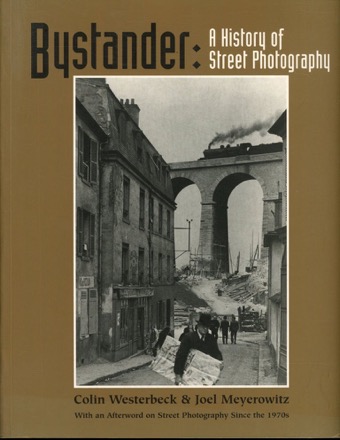
Softcover. Boston, Bulfinch, 1st pbk, 2001, Book: Very Good, Dust Jacket: None, Softcover, 446 pages. This landmark book chronicles the development of a kind of photography that is created out of the energy and chance juxtapositions found in everyday life on the street. Street photography is at the heart of what makes photography unique. An unprecedented study that is the first history of this tradition ever published, Bystander explores street photography through a discussion of the medium's masters - Atget, Stieglitz, Strand, Cartier-Bresson, Brassai, Kertesz, Evans, Levitt, Frank, Arbus, Winogrand, and many others - and reveals along the way much about the craft and creative process of photography. Profusely illustrated with the work of more than eighty photographers, the book is composed of four parts separated by lively folios of pictures. Each part discusses a different era - from the early days of the medium in nineteenth-century Europe, to America in the late twentieth century - and devotes entire chapters to the key figures of that period. Clean copy. DOMESTIC SHIPPING ONLY.
Hardcover. New York, New York University Press, 1st, 1970, Book: Very Good, Dust Jacket: Very Good, 274 pages. Hardcover. Previous owners name at top right corner of front endpaper. Black & white illustrations. Faint foxing to edges. Includes Errata slip. Clean, tight copy.


 "Building the Gettyby: Meier, Richard")
 "Building with Nature: Inspiration for the Arts and Crafts Homeby: Freudenheim, Leslie M.")

 "Buildings of Belfast 1700-1914by: Brett, C. E. B.")

 "Bulletin de Correspondance Hellenique XCI, 1967-IIby: Ecole Francaise d'Athenes")
 "Bunny Yeager's Bikini Girls of the 1950sby: Yeager, Bunny")
 "Burgage Tenure in Mediaeval Englandby: Hemmeon, Morley de Wolf")

 "Burma: The Longest War, 1941-1945by: Allen, Louis")

 "Burning of Royalton, Vermont by Indians (SIGNED)by: Dunklee, Ivah")


 "Burnsideby: Marvel, William")
 "Burr Bibliography: A List of Books Relating to Aaron Burrby: Tompkins, Hamilton Bullock")

 "Business Contracts of Medieval Provence: Selected Notulae from the Cartulary of Giraud Amalric of Merseilles 1248by: Pryor, John H.")
 "Business History Review - Autumn 2003by: Friedman (Eds.), Walter A. and Thomas K. McCraw")
 "Buz Sawyer: The War in the Pacific - Vol.1by: Crane, Roy")
 "By Order of the Prophet: A Tale of Utahby: Henry, Alfred H.")


 "Byzantine Art and the West - The Wrightsman Lecturesby: Demus, Otto")