Hardcover. Oxford, UK, Bodleian Library, University of Oxford, 1st, 2012, Book: Very Good, Dust Jacket: Very Good, 304 pages. Hardcover with dust jacket. Very clean, unmarked copy with only minor wear to dust jacket edges. An introduction to Acland's entire body of work, this volume contains more than two hundred previously unpublished examples of her photographs, spanning portraiture, studies of Oxford architecture, and landscape and garden photographs captured in Madeira, Portugal.
Hardcover. Oxford, UK, Bodleian Library, University of Oxford, 1st, 2012, Book: Very Good, Dust Jacket: Very Good, 304 pages. Hardcover with dust jacket. Very clean, unmarked copy with only minor wear to dust jacket edges. An introduction to Acland's entire body of work, this volume contains more than two hundred previously unpublished examples of her photographs, spanning portraiture, studies of Oxford architecture, and landscape and garden photographs captured in Madeira, Portugal.
Softcover. Saratoga Springs NY, Lyrical Ballad Book Store, 1st, 1991, Book: Very Good, Dust Jacket: None, Softcover, 183 pages. Conceiving of the City of Saratoga Springs as a museum in which the exteriors of buildings are the works of art, many key examples of architecture are carefully placed within the context of local and national history and of architectural style. Illustrated with many black and white photos. Clean copy
Hardcover. New Haven CT, Yale University Press;, 1st, 2006, Book: Very Good, Dust Jacket: Very Good, Hardcover, 288 pages. Saul Steinberg (1914-99) described himself as a "writer who draws," thus inspiring curator Smith to characterize Steinberg's brilliantly satiric drawings as "illuminations," thus linking his work to illuminated manuscripts and, given Steinberg's love of literature, to a particular favorite, Arthur Rimbaud's Illuminations. Smith also explores Steinberg's mission to illuminate the overlooked and the absurd. In the biographical sections of his beautifully crafted critique, Smith affectingly recounts Steinberg's life as a Jew in anti-Semitic Romania and an architecture student in Fascist Milan whose distinctive cartoons served as his ticket out of Nazi Europe and onto the pages of the New Yorker. Both Smith and renowned poet Charles Simic associate Steinberg's fascination with documents with his harrowing refugee experiences, while Simic, a fellow immigrant from the Balkans and a friend of Steinberg's, offers striking insights into the artist's comic sensibility. Both commentators reflect on the great change in Steinberg's work after 1960, as his images turned hallucinatory and nightmarish, his protest against tyranny more intense. As instantly recognizable as Steinberg's kinetic, punning, and slyly skewering art is, there hasn't been a comprehensive Steinberg book in years, making this outstanding volume invaluable in its reclamation of Steinberg's agile, philosophic, and category-defying art.
Hardcover. Savannah, Beehive Press, 3rd pr., 1977, Book: Very Good, Dust Jacket: Very Good, Hardcover, 214 pages. INSCRIBED BY AUTHOR on half title page. Illustrated with black & white photographs and reproductions relating to the architecture and history of Savannah, Georgia. Clean, Tight copy.
Softcover. Flammarion, 1st, 1995, Book: Very Good, Softcover, 223 pages, illustrated in color and b&w. Tracing the origins of Americanism back to the late nineteenth century, Scenes of the World to Come focuses on the European discovery of the American city--with its grand hotels, skyscrapers, and massive industrial plants, its new-found sense of efficiency and mobility, and its infatuation with domestic appliances and mechanization. The book analyzes the global structures and thematic strategies according to which American architectural forms and urban models migrated to Europe, bringing the promise of a new architecture and, along with it, the threat of a dissolution of European identity. Clean copy.
Hardcover. Venice IT, Arsenale Editrice, 2nd Ed., 1997, Book: Very Good, Dust Jacket: Very Good, Hardcover in a bright dust jacket, 168 pages, color photos throughout. This edition of Secret Gardens in Venice, entirely in color, is intended to satisfy the growing desire of Venetians and tourists to know more about this fascinating city and its history. Examining both the present reality and the past history of the gardens of Venice, the authors seek to understand the special fascination of these places. Gianni Berengo Gardin has created a series of fascinating poetic images, which reveal a wholly new and unknown side of Venice. Clean copy.
Softcover. Spain, Editorial Escudo de Oro. S.A., 1st, 1995, Book: Very Good, Dust Jacket: None, 93 pages. Softcover. Mild soiling throughout. An otherwise unmarked copy with only minor edgewear. Color photographs throughout.
Hardcover. London/NY, Phaidon Press, 1st, 2014, Book: Very Good, Dust Jacket: Very Good, Hardcover in a bright dust jacket, 240 pages. Photography has played an important role in how architecture is communicated and this book examines the critical relationship between the two practices today through the work of fifty international renowned and emerging artists including Annie Liebovitz, James Welling , Thomas Struth, Wolfgang Tillmann's, Walter Niedermayr and many others. Lavishly illustrated with color reproductions of many iconic buildings. Divided into five chapters, the book covers collaborations between photographer and architect, globaL urbanization, alterations to the landscape, reappraised Modernist icons, and imagined environments. Clean copy. DUE TO WEIGHT, DOMESTIC SHIPPING ONLY.
Hardcover. Cologne GR, Taschen, 1st, 2007, Book: Very Good, Dust Jacket: Very Good, Hardcover in a bright dust jacket, 245 pages, illustrated in color and b&w. An extensive collection of hand-illustrated shop window designs from 1938 to 1950. These spectacular, often grandiose plans for grocery stores, shoe shops, beauty salons, bakeries, and more are reminders of a time when stores were sacred shrines for the congregation of American shoppers - impressive and even slightly intimidating, just like the future itself.
Hardcover. Cambridge MA, The MIT Press, 1st, 2009, Book: Very Good, Dust Jacket: Very Good, Hardcover in a bright dust jacket, 329 pages. The chapters include: the social economic & political life of sidewalks; construction & evolution of sidewalks; parades festivals & celebrations; disruption & confrontation; the right to the sidewalk; sidewalk as space of dissent; sidewalk as shelter; sidewalk as urban forest. Clean copy.
Hardcover. Baltimore, John Hopkins University Press, 1st, 2000, Book: Very Good, Dust Jacket: Very Good, Hardcover in a bright dust jacket. Starkly beautiful photos of abandoned and converted movie theaters with new essays by Peter Bogdanovich, Molly Haskell, Andrew Sarris, and Chester H. Liebs. The single-screen movie theaters that punctuated small-town America's main streets and city neighborhoods since the 1920s are all but gone. The well-dressed throng of moviegoers has vanished; the facades are boarded. In Silent Screens, photographer Michael Putnam captures these once prominent cinemas in decline and transformation. His photographs of abandoned movie houses and forlorn marquees are an elegy to this disappearing cultural icon.
Hardcover. Baltimore, Johns Hopkins University Press, 1st, 2000, Book: Very Good, Dust Jacket: Very Good, Hardcover in a bright dust jacket, oblong format. Starkly beautiful photos of abandoned and converted movie theaters with new essays by Peter Bogdanovich, Molly Haskell, Andrew Sarris, and Chester H. Liebs. The single-screen movie theaters that punctuated small-town America's main streets and city neighborhoods since the 1920s are all but gone. The well-dressed throng of moviegoers has vanished; the facades are boarded. In Silent Screens, photographer Michael Putnam captures these once prominent cinemas in decline and transformation. Clean copy.
Hardcover. London, Thames and Hudson, 1st, 2015, Book: Very Good, Dust Jacket: Very Good, Hardcover in a bright dust jacket, 144 pages, Color photos by Ara Guller. Sinan was the greatest architect of the Ottoman Golden Age of the sixteenth century when the Ottoman Empire reached its zenith of power and magnificence. His style marks the apogee of Turkish art. Under Sleyman the Magnificent and his succcessor Selmi II, Sinan designed hundreds of buildings: mosques, palaces, tombs, mausolea, hospitals, schools, caravanserai, bridges, aqueducts and baths, many of them presented and analysed in this book. In his greatest works, he adapted Byzantine and Islamic styles to produce something quite new: a centralized organization of absolute space unhindered by pillars or columns and covered by a soaring dome. An architect of genius in a dynamic new empire expanding into both Asia and Europe, he was a true man of the Renaissance. Clean, bright copy.
Hardcover. London, Hodder & Stroughton, 1st, 1923, Book: Very Good, Dust Jacket: Very Good, Hardcover, 280 pages, blue cloth covers with gilt design. Color frontispiece portrait of the famous English architect. Illustrated with 12 color plates, 91 b&w plates (some fold-outs). Top edge gilt, clean copy with the scarce light blue dust jacket that has light edgewear with coat-of-arms on front panel, title on spine.
Hardcover. Cambridge, Cambridge University Press, 1st, 2000, Book: Very Good, Dust Jacket: None, 328 pages with bibliography and index. A revised and abridged version of Watkins earlier work on Soane (1753-1837), concentrating on the twelve lectures the eminent architect gave to the Royal Academy between 1810 and 1820, dealing with the huge scope of the lessons to be gained from world architecture.
Hardcover. San Francisco, Chronicle Books, 1st, 2000, Book: Very Good, Dust Jacket: None, Hardcover, gray boards with a dark brown cloth spine and a pictorial label on the cover. No dust jacket issued. Legendary for his massive photographic undertaking, The North American Indian, Edward Sheriff Curtis (1868-1952) recorded much more than portraits of Native American tribespeople. Among his huge body of work are numerous images of all manner of native dwellings: tipis, hogans, huts, cliff houses, adobes, and many more that are far less familiar to the public eye. Though people are largely absent from these photographs, each image speaks volumes about the lives and lifestyles of the tribes to which they belonged. Other structures such as tombs, religious buildings, granaries, and totem poles are also featured prominently, further glimpses into ways of life that were in the process of disappearing. Taken from the Dan and Mary Solomon collection,Sites & Structures: The Architectural Photographs of Edward S. Curtis is the first book of Curtis photographs to explore these dwellings and structures, faithfully reproduced from the original prints and gravures.
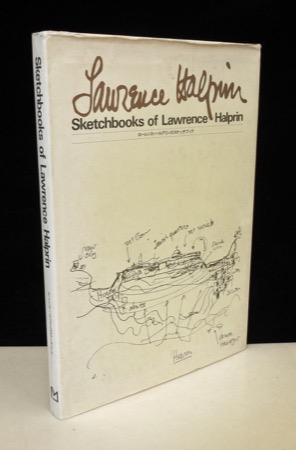
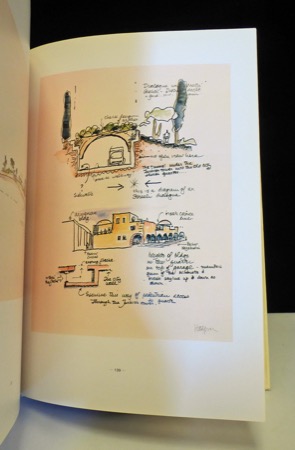
Hardcover. Tokyo, Process Architecture Company, 1st, 1981, Book: Very Good, Dust Jacket: Good, Hardcover, large folio in dust jacket that has fading to spine and edges. First Edition In English and Japanese. Large (folio-size) compilation of the architectural drawings of prominent landscape architect Lawrence Halprin, who was associated with the 1962 Seattle World's Fair, UC Berkeley, the city of Jerusalem, Ghirardelli Square in San Francisco, Nicollet Mall in Minneapolis, the Franklin Delano Roosevelt Memorial in Washington and many other famous sites. DOMESTIC SHIPPING ONLY.
Hardcover. NY, Rand McNally , 1st, 1995, Book: Very Good, Dust Jacket: None, Hardcover, color art by Stephen Conlin. With the turn of each page, the book's illustrations will grow to five feet. On one side of the book, peer into a cut away of Chicago's John Hancock Center. On the flip side, size up the world's tallest structures, from Ulm Cathedral spire to the CN Tower, all drawn to scale. Climb to the top as the story of skyscrapers unfolds in this unforgettable book.
Softcover. NY, Princeton Architectural Press, 1st, Book: Very Good, Dust Jacket: None, Softcover, 64 pages, b&w photos throughout. A portfolio of the small buildings designed by the author with a handwritten note laid in. Tectonically beautiful and intricate, his work represents some of the finer points of simple thought in architecture. His own commentary and a conclusion by Turner Brooks allow a clear and concise understanding of the projects. Clean, bright copy.
Hardcover. NY, The Monacelli Press, 1st US, 2003, Book: Very Good, Dust Jacket: Very Good, Hardcover in a bright dust jacket, 407 pages. As much a visionary as he is an architect, Paolo Soleri, born in Turin in 1919, worked with Frank Lloyd Wright in the late 1940s and went on to develop his own organically expressive architecture. Since 1935 he has been involved almost exclusively with the design of alternative urban planning models. By 1970 he had designed thirty 'Arcologies,' his term for a series of high-density, fantastically unreal megastructures for up to six million inhabitants. This comprehensive monograph, the first on Soleri to be published in the United States, follows his entire career through a presentation of drawings, sketches, and built work. Over 600 illustrations in color and b/w. Clean copy. DOMESTIC SHIPPING ONLY.
Hardcover. US, Mark Batty Publisher, 1st, 2011, Book: Very Good, Dust Jacket: None, 128 pages. Hardcover with no dust jacket. Clean, unmarked copy with only minor wear to covers. color and black and white pictures throughout. Simon Weller presents his vivid photographs of these shops, their signage and their patrons alongside interviews with the proprietors, customers and the sign makers.
Hardcover. US, Mark Batty Publisher, 1st, 2011, Book: Very Good, Dust Jacket: None, 128 pages. Hardcover with no dust jacket. Clean, unmarked copy with only minor wear to covers. color and Black and white pictures throughout. Simon Weller presents his vivid photographs of these shops, their signage and their patrons alongside interviews with the proprietors, customers and the sign makers.
Hardcover. US, The Monacelli Press, 1st, 2009, Book: Very Good, Dust Jacket: None, Hardcover, 128 pages. Lynn Davis, known for surveys of natural and man-made wonders, has long been fascinated with the objects and venues of space exploration. Her photographs of the architectural icons, cornerstones, and abandoned sites of the space race reflect the many facets of a historically complex industry: the beginnings of space exploration; the changing nature of technology; and a fascination with otherworldly ruins. She emphasizes the bold modernism of these sites while evoking the presence of obsolete technologies. Davis traveled to historic sites in Kazakhstan, Russia, Germany, French Guiana, and the United States. She received special permission to visit Baikonur in Kazakhstan, a leading launch site shrouded in secrecy since the 1950s, and her photographs offer one of the first inside glimpses of launches, transmission towers, fuel lines, and satellites.

 "Sarah Angelina Acland: First Lady of Colour Photographyby: Hudson, Giles")
 "Sarah Angelina Acland: First Lady of Colour Photographyby: Hudson, Giles")
 "Saratoga Springs: An architectural history, 1790-1990 by: Kettlewell, James K")
 "Saul Steinberg: Illuminationsby: Joel Smith and Charles Simic")
 "Savannah Revisited - History, Architecture, Restoration (SIGNED COPY)by: Lane, Mills")
 "Scenes of the World to Come: European Architecture and the American Challenge, 1893-1960 by: Jean-Louis Cohen")
 "Secret Gardens In Venice by: Moldi-Ravenna, Christina & Tudy Sammartini")
 "Sevilla Cathedral by: Delgado. Francisco Gil (Editor)")
 "Shooting Space: Architecture in Contemporary Photography by: Redstone, Elias/Gadanho, Pedro/ Bush, Kate")
![Shop America: Midcentury Storefront Design 1938-1950 by: Heimann, Jim [editor]; Heller, Steven [essay]](javascript:largeIMTop('https://www.browsingisarousing.com/shop/images/Shop-America-Midcentury-Storefront-Design-1938-1950_by_Heimann-Jim-editor-Heller-Steven-essay360856-415894.jpg','https://www.browsingisarousing.com/shop/images/Shop-America-Midcentury-Storefront-Design-1938-1950_by_Heimann-Jim-editor-Heller-Steven-essay360856-415894.jpg',0,'360856',0,'') "Shop America: Midcentury Storefront Design 1938-1950 by: Heimann, Jim [editor]; Heller, Steven [essay]")
 "Sidewalks: Conflict and Negotiation over Public Space by: Loukaitou-Sideris, Anastasia; Ehrenfeucht, Renia")
 "Silent Screens the Decline and Transformation of the American Movie Theater by: Putnam, Michael")
 "Silent Screens: The Decline and Transformation of the American Movie Theaterby: Michael Putnam")
 "Sinan:Architect of Suleyman the Magnificent and the Ottoman Golden Ageby: Freely, John; Burelli, Augusto Romano")
 "Sir Christopher Wren A.D. 1632-1723: Bicentenary Memorial Volumeby: Royal Institute of British Architects")
 "Sir John Soane: The Royal Academy Lecturesby: Watkin, David (Editor)")
 "Sites and Structures: The Architectural Photographs of Edward S. Curtis by: Solomon, Mary/Slemmons, Rod")


 "Sketchbooks of Lawrence Halprin by: Halprin, Lawrence")
 "Skyscrapers: A Fold-Out Bookby: Nicholas Harris/Stephen Conlin (Illustrator)")
 "Small Buildings: Pamphlet Architecture 17by: Cadwell, Mike")
 "Soleri: Architecture as Human Ecologyby: Antonietta Iolanda Lima")
 "South African Township Barbershops & Salonsby: Weller, Simon")
 "South African Township Barbershops & Salonsby: Weller, Simon")
 "Space Projectby: Davis, Lynn (Photographer)")