Hardcover. London, Paul Holberton Publishing, 1st, 2015, Book: Very Good, Dust Jacket: Very Good, Hardcover in a bright dust jacket, 197 pages. Color and b&w plates throughout. This groundbreaking architectural history examines what people actually wanted in their institutional and private patronage over the last two centuries as opposed to what architects and theorists thought they should want - as seen through the prism of Oxford's principal building contractor and craft practitioner, Symm & Company. Clean, bright copy.
Softcover. Seattle, Fantagraphics, 1st, 2008, Book: Very Good, Dust Jacket: None, Softcover, 200 pages. Gary Groth interviews father and son cartoonists Gene and Kim Deitch. Academy-award-winning Gene Deitch, whose wide-ranging career has spanned over 60 years, talks about doing illustrations for The Record Changer, directing cartoons such as Munro and Krazy Kat, and creating his comic strip Terr'ble Thompson. Underground comics pioneer Kim Deitch, touches on his father's influence, reminisces about the New York-based scene and outlines the evolution of Waldo the Cat. Plus: The innovative Grant Morrison fills us in on his X-Men run, All Star Superman, the ambitious Seven Soldiers "maxiseries," and how he became one of the architects of the current DC Comics universe. Finally, the comics gallery presents an historical essay and highlights from the turn-of-the-19th-century work of Puck cartoonist, F. M. Howarth.
Softcover. Seattle, Fantagraphics, 1st, 2009, Book: Very Good, Dust Jacket: None, Softcover, 207 pages. A career-spanning interview with Mort Walker, the creator of Beetle Bailey and Hi & Lois. Jordan Crane discusses The Clouds Above: comics by the famous 17th century caricaturist Thomas K. Rowlandson.
Softcover. Seattle, Fantagraphics, 1st, 2015, Book: Very Good, Dust Jacket: None, Large softcover, 263 pages, b&w photos ad illustrations. In-depth, career-spanning interviews with the cartoonists - Crumb, Shelton, and more - who forever altered the course of American comics with their anthology title, Zap Comix. The definitive Comics Journal interviews with the cartoonists behind Zap Comix, featuring: Supreme 1960s counterculture/underground artist Robert Crumb on how acid unleashed a flood of Zap characters from his unconscious; Marxist brawler Spain Rodriguez on how he made the transition from the Road Vultures biker gang to the exclusive Zap cartoonists' club; Yale alumnus Victor Moscoso and Christian surfer Rick Griffin on how their poster-art psychedelia formed the backdrop of the 1960s San Francisco music scene; Savage Id-choreographer S. Clay Wilson on how his dreams insist on being drawn; Painter and Juxtapoz-founder Robert Williams on how Zap #4 led to 150 news-dealer arrests; Fabulous, Furry, Freaky Gilbert Shelton on the importance of research; Church of the Subgenius founder Paul Mavrides on getting a contact high during the notorious Zap jam sessions; and much more. In these career-spanning interviews, the Zap contributors open up about how they came to create a seminal, living work of art. Partial color.
Softcover. Seattle, Fantagraphics, 1st, 2015, Book: Very Good, Dust Jacket: None, Large softcover, 263 pages, b&w photos ad illustrations. In-depth, career-spanning interviews with the cartoonists - Crumb, Shelton, and more - who forever altered the course of American comics with their anthology title, Zap Comix. The definitive Comics Journal interviews with the cartoonists behind Zap Comix, featuring: Supreme 1960s counterculture/underground artist Robert Crumb on how acid unleashed a flood of Zap characters from his unconscious; Marxist brawler Spain Rodriguez on how he made the transition from the Road Vultures biker gang to the exclusive Zap cartoonists' club; Yale alumnus Victor Moscoso and Christian surfer Rick Griffin on how their poster-art psychedelia formed the backdrop of the 1960s San Francisco music scene; Savage Id-choreographer S. Clay Wilson on how his dreams insist on being drawn; Painter and Juxtapoz-founder Robert Williams on how Zap #4 led to 150 news-dealer arrests; Fabulous, Furry, Freaky Gilbert Shelton on the importance of research; Church of the Subgenius founder Paul Mavrides on getting a contact high during the notorious Zap jam sessions; and much more. In these career-spanning interviews, the Zap contributors open up about how they came to create a seminal, living work of art. Partial color.
Softcover. New York, Fantagraphics Books, 1st, 2014, Book: Very Good, Dust Jacket: None, 300 pages. Softcover with light edgewear to paper wrappers. Clean, tight copy. Color and black and white illustrations throughout. The definitive Comics Journal interviews with the cartoonists behind Zap Comix, featuring: Supreme 1960s counterculture/underground artist Robert Crumb on how acid unleashed a flood of Zap characters from his unconscious; Marxist brawler Spain Rodriguez on how he made the transition from the Road Vultures biker gang to the exclusive Zap cartoonists' club; Yale alumnus Victor Moscoso and Christian surfer Rick Griffin on how their poster-art psychedelia formed the backdrop of the 1960s San Francisco music scene; Savage Id-choreographer S. Clay Wilson on how his dreams insist on being drawn; Painter and Juxtapoz-founder Robert Williams on how Zap #4 led to 150 news-dealer arrests; Fabulous, Furry, Freaky Gilbert Shelton on the importance of research; Church of the Subgenius founder Paul Mavrides on getting a contact high during the notorious Zap jam sessions; and much more. In these career-spanning interviews, the Zap contributors open up about how they came to create a seminal, living work of art.
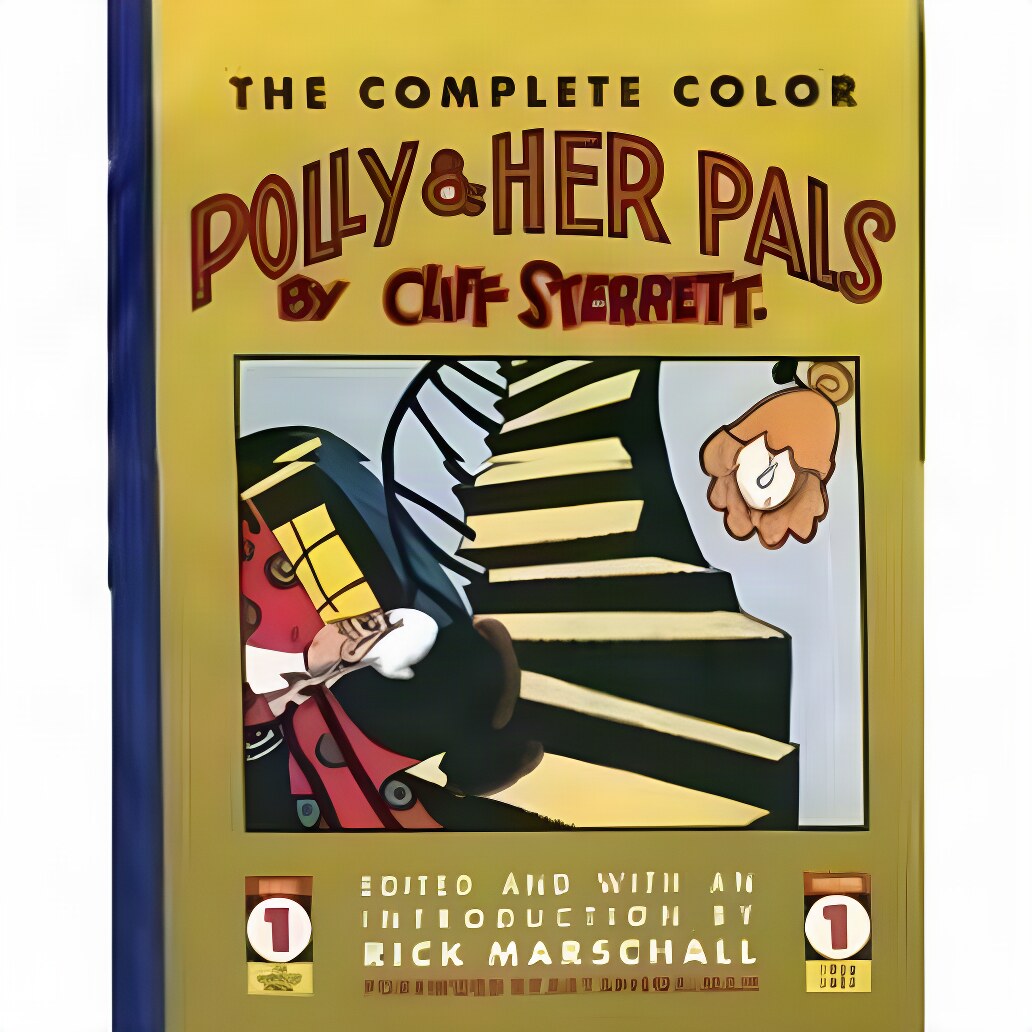
Hardcover. Kitchen Sink Press, 1st, 1990, Book: Very Good, Dust Jacket: Very Good, 95 pages. Hardcover with dust jacket. Extensive color illustrations throughout. Foxing to dust jacket interior, several pages, and top edge. Some soiling to fly leafs. Otherwise clean, tight copy. Cliff Sterrett was one of the outstanding newspaper cartoon artists in the formative period of this 20th Century art: a skilled draftsman, borderline (and sometimes over the line) surrealist, and humorist. DUE TO SIZA AND WEIGHT, This is a heavy and oversized book and will require extra shipping. International customers please ask for a shipping quote before purchasing.
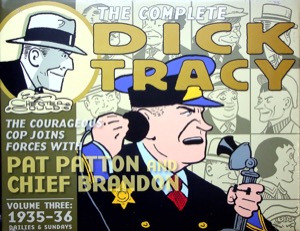
Hardcover. San Diego, Clover Press, Revised Ed., 2023, Book: Very Good, Dust Jacket: Very Good, Hardcover in a bright dust jacket, oblong format. 254 pages, some color, mostly black and white. Introduction by Max Allan Collins. Reformatted and re-scanned, revised from the 2007 printing. Includes over 500 comic strips from January 1935 to July 1936. A special section on the Dick Tracy Big Little Books in color. Clean copy.
Softcover. Stanford CA, Stanford University Press, 1st pbk, 2004, Book: Very Good, Dust Jacket: None, Softcover, 271 pages, b&w illustrations. The Cult of Art in Nazi Germany presents a new interpretation of National Socialism, arguing that art in the Third Reich was not simply an instrument of the regime, but actually became a source of the racist politics upon which its ideology was founded. Through the myth of the "Aryan race," a race pronounced superior because it alone creates culture, Nazism asserted art as the sole raison d'etre of a regime defined by Hitler as the "dictatorship of genius." Michaud shows the important link between the religious nature of Nazi art and the political movement, revealing that in Nazi Germany art was considered to be less a witness of history than a force capable of producing future, the actor capable of accelerating the coming of a reality immanent to art itself. Light sticker residue to rear cover otherwise clean, very good.
Hardcover. University Park PA, Pennsylvania State University Press, 1st, 2010, Book: Very Good, Dust Jacket: Very Good, Hardcover in a bright dust jacket, 295 pages illustrated in b&w and color. Beginning in the 1730s, Heather Minor tells us, Rome "began to resemble one huge construction site," with a series of ambitious and expensive new building campaigns that transformed the face and substance of the city. From renovations of the Santa Maria Maggiore and San Giovanni in Laterano and the restoration of the Arch of Constantine to the creation of the Capitoline Museum and the establishment of the papacy's Calcografia, the push for reform not only renewed papal and Church identity but also revived Italian culture as a whole. Based on extensive archival research and full of fascinating stories about the often stormy theological and intellectual debates central to the attempts at reform, The Culture of Architecture in Enlightenment Rome brings to life the personalities of architects, theologians, and intellectuals and links the extensive architectural programs with powerful shifts in the intellectual climate of the time. Clean, bright copy.
Hardcover. NY, Princeton Architectural Press, 1st, 2015, Book: Very Good, Dust Jacket: Very Good, Hardcover in a bright, unclipped dust jacket, 224 pages. The Dakota is arguably the best-known residential address in the world, home to dozens of New York City's most famous artists, performers, and successful executives. The rare sale of an apartment there, usually at jaw-dropping prices, is newsworthy, as is the financial and architectural health of the building itself, a landmark in every sense of the word. The first true luxury apartment house built in New York City, more than 130 years ago, the Dakota is still the gold standard against which all other apartment buildings are weighed. Historian Andrew Alpern tells the fascinating story of how the Dakota came to be, how Singer sewing magnate Edward Clark dared to build an apartment building luxurious enough to coax the city's wealthy from their mansions downtown for ultra-modern living on what was then the swamplands of the Upper West Side. Redrawn plans of the entire building, published here for the first time, show how Clark created apartments glamorous enough that they made living under a shared roof as acceptable in Manhattan as it already was in Europe's grand capitals, forever revolutionizing apartment life in New York City.
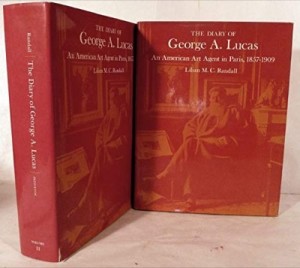
Hardcover. Princeton NJ, Princeton University Press, 1st, 1979, Book: Very Good, Dust Jacket: Very Good, Two volume set. Matching gold cloth boards with titles in gold on spine, in bright dust jackets. Transcribed and with Introduction by Lilian M.C. Randall. B&w illustrations of the sculptures, paintings, drawings and etchings that Lucas dealt with while in Europe. Double-column English text. Provides an extraordinary archive for historians and dealers. Provides a hugely empirical database for prices paid and commissions issued to artists, dealers, and craftsmen. George A. Lucas's acquaintances include Daumier, Cassatt, Whistler and Barye, among many, many others. Volume Two is given over wholly to Lucas's daily diary, which ran for an extraordinary length of time. Volume 1: xv [2], 3-148 pages.; Volume 2: iv [ii], 3-965 pages. DUE TO WEIGHT, DOMESTIC SHIPPING ONLY.
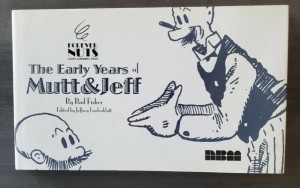
Hardcover. NY, NBM, 1st, 2007, Book: Very Good, Dust Jacket: Very Good, Hardcover, 192 pages. Early b&w comic strips. Mutt and Jeff was the first successful daily comic strip; before it, the funnies were Sunday features. It debuted in 1907, however, as A. Mutt, limning the follies of lanky racetrack gambler Augustus Mutt. Diminutive sidekick Jeff appeared the following year to form a partnership that lasted until the strip's overdue demise in 1983. Mutt and Jeff was the first strip to essay weeks-long story lines, such as a trip to Mexico to join Pancho Villa's revolution. Compared to better-remembered strips of the era, Mutt and Jeff was crudely drawn, yet it captured the nation's fancy. Despite its significance in comics history, Mutt and Jeff is scantly regarded today. By the mid-1920s, Fisher handed creative duties over to ghosts to free up time for the playboy lifestyle that the strip's sizable revenues allowed him. Clean copy.
Hardcover. Weldon Owen , 1st, 2012, Book: Very Good, Dust Jacket: Very Good, Hardcover, 320 pages. In 2012 Disney celebrated the 75th anniversary of the Snow White movie, a beloved classic and an important milestone in film history. This book, created with the Walt Disney Family Foundation, run by Walt's daughter, is an exploration of the making of the film that includes never-before-published facts and art. This book is the first to reconstruct that process in exacting detail, with the loving attention it deserves from an internationally noted film scholar. Author J.B. Kaufman spent years researching the film's history, interviewing participants, and studying the marvelous archival art that appears in these pages. The result is a work that can be appreciated equally as a piece of film history and as a collectable art book, a joy for anyone who loves film, animation, and the magical world that Walt Disney created.
Hardcover. NY, Random House, 1st, 1954, Book: Very Good, Dust Jacket: Good, 403 pages. Hardcover. 65 illustrations, 40 in full color. Price clipped dust jacket worn with tape repairs, fading - jacket now protected with clear plastic cover. "An account of the life and death of an art, of the men who made it and of the lusty age in which they flourished. 65 illustrations, including 40 in full color." Index, glossary, bibliography, appendices, artist biographies, chronology. Clean, tight copy.
Hardcover. London, Thames & Hudson, 1st, 1984, Book: Very Good, Dust Jacket: Very Good, Hardcover in a bright dust jacket. 536 pages, 1117 illustrations, 74 in color. Translated from the Dutch & edited by Elizabeth Willems-Treeman. The chapter headings are: iconoclasm & revolt 1566-1588; the artist's social position; the patrons; theories of art; realism & symbolism; different genres; the development of painting in the early 17th century; painting in Haarlem, Leiden, Amsterdam, the Northern Quarter, Utrecht, Delft, The Hague etc 1625-1650; The Republic in the third quarter of the 17th Century; painting in Haarlem, Leiden, Amsterdam, the Northen Quarter, Utrecht, Delft, The Hague etc 1650-1680. Name on half-titile page, otherwise clean. NOTE: DUE TO WEIGHT, DOMESTIC SHIPPING ONLY.
Hardcover. Ithaca NY, Cornell University Press, 1st thus, 1976, Book: Very Good, Dust Jacket: None, Hardcover, tan cloth covers, 250 pages illustrated in color and b&w. Gilt title on spine. Chapters include: The heritage of Apelles; Light, form, and texture in fifteenth-century painting north and south of the Alps; The form of movement in water and air; The grotesque heads; The earliest description of the Triptych; 'As it was in the days of Noe'; From the revival of letters to the reform of the arts: Niccolo Niccoli and Filippo Brunelleschi; The leaven of criticism in Renaissance art: texts and episodes; The pride of Apelles: Vives, Durer and Bruegel. No dust jacket, clean copy.
Hardcover. New York, Madison Square Press, 1st, 1993, Book: Very Good, Dust Jacket: Very Good, Hardcover, 355 pages, illustrated throughout in color and b&w. SIGNED BY AUTHORS on half title page. Over 700 illustrations by 460 artists. Early masters such as Howard Pyle, Charles Dana Gibson, A. B. Frost.followed by Frederic Remington, Howard Chandler Christy, Maxfield Parrish, James Montgomery Flagg, John Held, Jr. , Norman Rockwell, Stevan Dohanos, Albert Dorne and more contemporarily, by Bernard Fuchs, Austin Briggs, Mark English, Bob Peak, Brad Holland and Milton Glaser. Light edgewear and rubbing to dust jacket. Faint foxing to top edge, otherwise a clean, tight copy.
Hardcover. Charlottesville, VA, University Press of Virginia, 1st, 1981, Book: Very Good, Dust Jacket: Very Good, 185 pages. Black cloth cover with silhouette of Jefferson's head embossed to front and gilt lettering to spine, b&w illustrated dust jacket, 60 b&w figures, 8 b&w plates. Light wear to dust jacket; otherwise a very tight, clean copy.
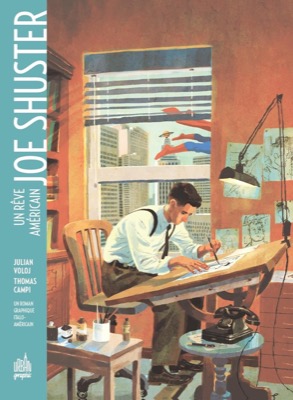
Hardcover. NY, Super Genius, 1st, 2018, Book: Very Good, Dust Jacket: None, Hardcover, pictorial boards, 180 pages. Everyone knows Superman, but not everyone knows the story of two youngsters from Cleveland who created Superman. Based on archival material and original sources, "Truth, Justice, and the American Way: The Joe Shuster Story" tells the story of the friendship between writer Jerry Siegel and illustrator Joe Shuster, and puts it into the wider context of the American comicbook industry. Told in graphic novel format in color.
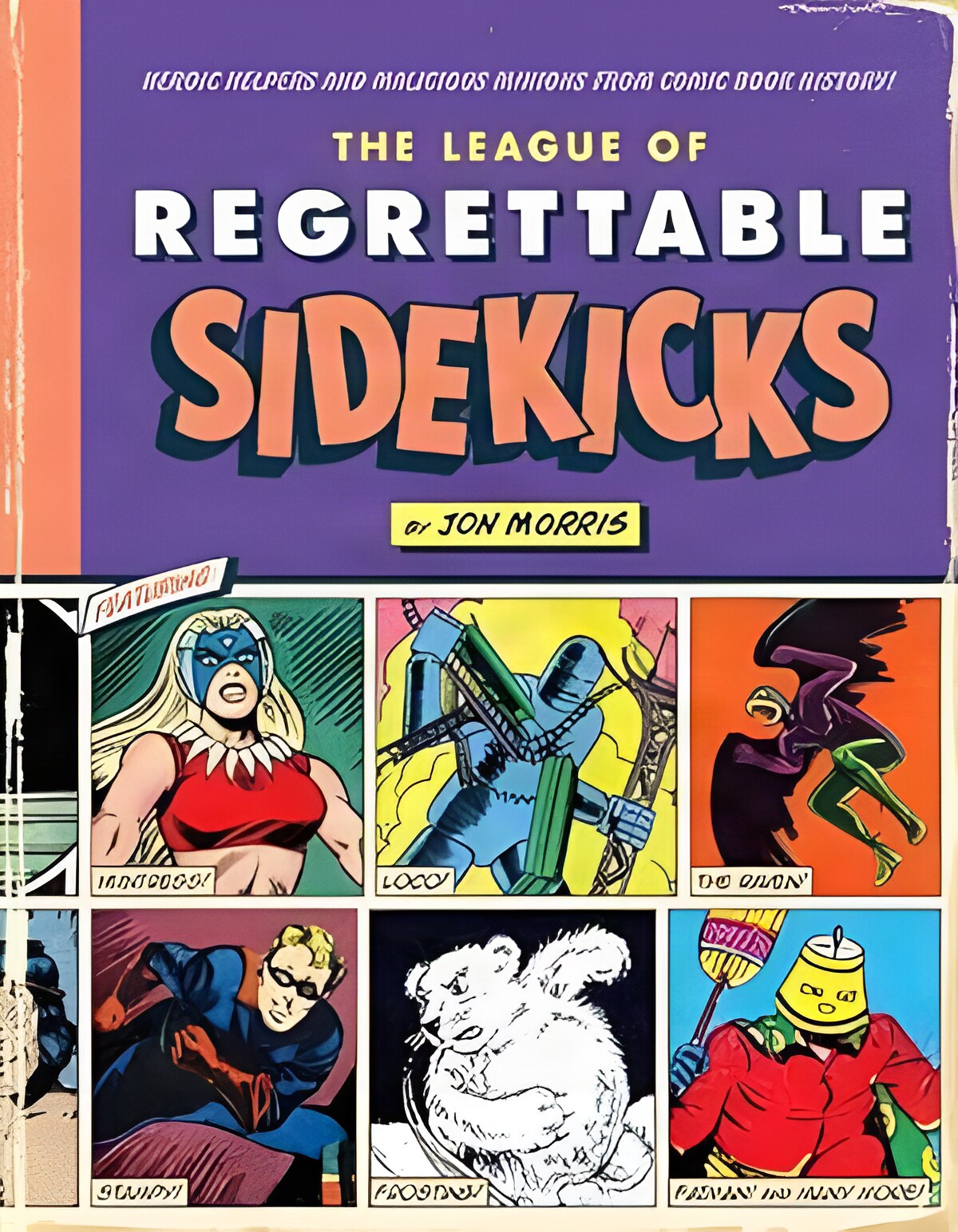
Hardcover. Philadelphia, Quirk Books, 1st, 2018, Book: Very Good, Dust Jacket: None, Hardcover in pictorial boards, 255 pages. A hilarious spotlight on the strangest second bananas in superhero comics, including junior partners, animal assistants, and even heinous henchmen (sidekicks of the villain world). Complete with vintage art and publication details.Batman has Robin. Captain America has Bucky. And Yankee Doodle had Dandy. Being a superhero is hard work, which is why so many comics characters rely on a sidekick for help. Someone who can watch the hero's back, help search for clues, or, if nothing else, give the hero someone to talk to. But just as not every superhero achieves the glory of Batman, not all sidekicks are as capable as the Boy Wonder. In The League of Regrettable Sidekicks, author Jon Morris discusses some of the strangest iterations of the sidekick phenomenon, and in the process explores how important these characters were to comic book storytelling.
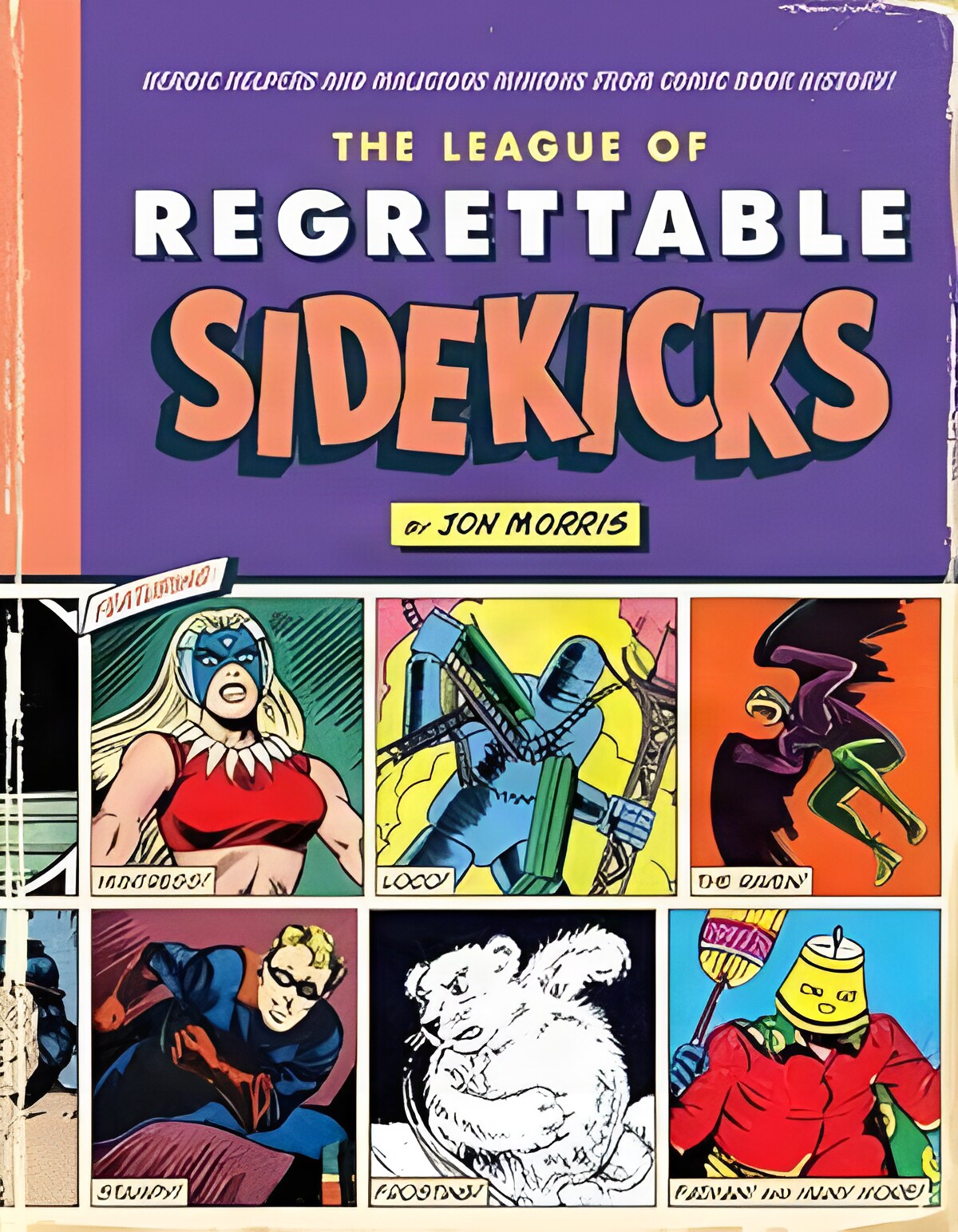
Hardcover. Philadelphia, Quirk Books, 1st, 2018, Book: Very Good, Dust Jacket: None, Hardcover in pictorial boards, 255 pages. A hilarious spotlight on the strangest second bananas in superhero comics, including junior partners, animal assistants, and even heinous henchmen (sidekicks of the villain world). Complete with vintage art and publication details. Batman has Robin. Captain America has Bucky. And Yankee Doodle had Dandy. Being a superhero is hard work, which is why so many comics characters rely on a sidekick for help. Someone who can watch the hero's back, help search for clues, or, if nothing else, give the hero someone to talk to. But just as not every superhero achieves the glory of Batman, not all sidekicks are as capable as the Boy Wonder. In The League of Regrettable Sidekicks, author Jon Morris discusses some of the strangest iterations of the sidekick phenomenon, and in the process explores how important these characters were to comic book storytelling.
Hardcover. NY, Benjamin Blom, reprint, 1971, Hardcover, oversize folio, brick red boards with gilt lettering and black etchings on the front. 1971 reissue of the commemorative edition published in Antwerp, 1642, by Meursius, with descriptive text by Casperius Gervatius and engravings, after design Of Peter Paul Rubens, by Theodor van Thulden. Clean, bright copy, no dust jacket. DOMESTIC SHIPPING ONLY.
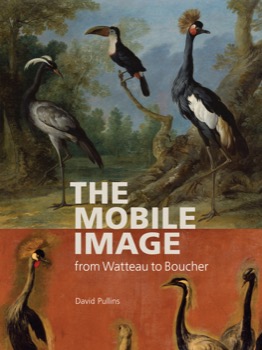
Softcover. Los Angeles, Getty Research Institute, 1st, 2024, Book: Very Good, Dust Jacket: None, Softcover, 199 pages illustrated in color. This book provides a new way of thinking about eighteenth-century French art and visual culture by prioritizing production over reception. Abandoning the ideologically driven discourse that distinguished fine from decorative art between the 1690s and 1770s, The Mobile Image reveals how the two have been inextricably bound from the earliest stages of artistic instruction through the daily life of painters' workshops. In this study, author David Pullins defines artisanal and artistic means of learning, seeing, and making through a system of "mobile images": motifs that were effectively engineered for mobility and designed never to be definitive, always awaiting replication and circulation. He examines the careers of Antoine Watteau, Jean-Baptiste Oudry, and Francois Boucher, situating them against a much broader cast of actors--such as printmakers, publishers, anonymous studio assistants, and architects, among others--to place eighteenth-century painting within a wider context of media and making. clean, bright copy.


 "The Comics Journal #292 (No. 292)by: Gary Groth, Mike Dean & Kristy Valenti (Ed.)")
 "The Comics Journal #297 (No. 297)by: Gary Groth (Ed.)")
 "The Comics Journal Library Vol. 9: Zap - The Interviews by: Gary Groth (Editor), Michael Dean (Editor), Bob Levin (Introduction)")


 "The Comics Journal Library Vol. 9: Zap - The Interviews by: Gary Groth (Editor), Michael Dean (Editor), Bob Levin (Introduction)")


 "The Comics Journal Library Vol. 9: Zap - The Interviewsby: Rosenkranz, Patrick")


 "The Dakota: A History of the World's Best-Known Apartment Buildingby: Andrew Alpern/Christopher Gray/Kenneth Grant (Photos)")





 "The Heritage of Apelles: Studies in the art of the Renaissance by: Gombrich, E.H.")
 "The Illustrator in America, 1880-1980: A Century of Illustration (SIGNED COPY)by: Reed, Walt and Roger Reed")
 "The Image of Thomas Jeffersonby: Cunningham, Jr., Noble E.")
![The Magnificent Ceremonial Entry Into Antwerp of His Royal Highness Ferdinand of Austria on the Fifteenth Day of May, 1635 as Designed by Peter Paul Rubens. [Facsimile of the Antwerp, 1642 edition].](https://www.browsingisarousing.com/shop/images/387596.jpg "The Magnificent Ceremonial Entry Into Antwerp of His Royal Highness Ferdinand of Austria on the Fifteenth Day of May, 1635 as Designed by Peter Paul Rubens. [Facsimile of the Antwerp, 1642 edition].")
![The Magnificent Ceremonial Entry Into Antwerp of His Royal Highness Ferdinand of Austria on the Fifteenth Day of May, 1635 as Designed by Peter Paul Rubens. [Facsimile of the Antwerp, 1642 edition].](https://www.browsingisarousing.com/shop/images/387596_50_th.jpg)
![The Magnificent Ceremonial Entry Into Antwerp of His Royal Highness Ferdinand of Austria on the Fifteenth Day of May, 1635 as Designed by Peter Paul Rubens. [Facsimile of the Antwerp, 1642 edition].](https://www.browsingisarousing.com/shop/images/387596-2_50_th.jpg)