Hardcover. London, Art / Books Publishing, 1st, 2013, Book: Very Good, Dust Jacket: Very Good, 240 pages. Hardcover with dust jacket. Very clean, like new in publishers shrink-wrap. A tight copy. Terence Donovan was one of the foremost photographers of his generation--among the greatest Britain has ever produced. He came to prominence in London as part of a postwar renaissance in art, fashion, graphic design and photography, and--alongside David Bailey and Brian Duffy (photographers of a similar working-class background)--he captured and helped create the Swinging London of the 1960s. Donovan socialized with celebrities and royalty, and found himself elevated to stardom in his own right, and yet, despite his success and status, there has never been a serious evaluation of Donovan's fashion work: he allowed no monographs to be published during his lifetime. Terence Donovan Fashion is therefore the first publication of his fashion photographs. Arranged chronologically, and with an illuminating text by Robin Muir (ex-picture editor of Vogue), the book considers Donovan in the social and cultural context of his time, showing how his constant experimentation not only set him apart, but also influenced generations to come. Designed by former art director of Nova magazine and Pentagram partner David Hillman, and with images selected by Hillman, the artist's widow Diana Donovan and Grace Coddington, creative director of American Vogue, this volume is indisputably a landmark publication in the history of fashion photography.
Hardcover. San Diego, Clover Press, 1st, 2023, Book: Very Good, Dust Jacket: None, Hardcover in pictorial boards, 164 pages in large format. The saga continues in Terry and the Pirates Volume 6, reproduced from Milton Caniff's personal set of color syndicate tabloid proofs! Invader soldiers scatter the occupants of Singh-Singh's outpost, forcing Pat, Blaze, and April to flee. They take refuge at Raven Sherman's orphanage just in time for an outbreak of cholera (this is refuge?). Returning to the city, Raven meets the mysterious Hu Shee, while Pat is reunited with Terry, Big Stoop, and Connie and crosses paths with old friend Dude Hennick. All the newcomers to the cast--together with the Dragon Lady, no less!--fall prey to the schemes of Chopstick Joe. A strike by invader forces separate Terry and Hu Shee from the others, setting up an encounter with the elusive Chinese guerrilla leader known only as the Blue Tiger! This tabloid-sized Volume 6 containing the 1940 dailies and Sundays is an unparalleled upgrade that no Terry fan can afford to pass up. Still in publisher's shrinkwrap. PLEASE NOTE: DUE TO WEIGHT, DOMESTIC SHIPPING ONLY.
Hardcover. New York, Henry Holt and Company, 1st, 1988, Book: Very Good, Dust Jacket: Very Good, Hardcover, 252 pages. B&W and color animation throughout. Pictorial dust jacket, slight wear to covers, edges, and spine. Dust jacket price-clipped. Blue boards with gilt title to spine. Overall, a clean, tight copy.
Softcover. Washington DC, National Gallery of Art, 1st, 2010, Book: Very Good, Dust Jacket: None, Softcover, pictorial wrappers, 430 pages. This volume of essays reexamines the establishment and early history of the Accademia di San Luca in Rome, one of the most important centers of governance, education, and theory in the arts for the early modern period and the model for all subsequent academies of art worldwide. It is the most comprehensive history of the Accademia to be published in more than forty years, and the first in nearly two hundred years to be based almost entirely on new primary and documentary material. In reconstructing the early history of the institution, the volume also provides a new basis for tracking the careers of painters, sculptors, and architects working in Rome in the early 16th century, and for understanding the artistic and professional issues that engaged them.
Softcover. Hermes Press, reprint, 2005, Book: Very Good, Dust Jacket: None, Softcover, 192 pages. Long out of print, The Adventurous Decade is now available again, covering the background and art of such strips as Buck Rogers, Flash Gordon, Tarzan, Scorchy Smith, Dick Tracy, Terry and the Pirates, Prince Valiant, The Phantom, Brick Bradford, The Spirit, and Don Winslow together with many seldom-discussed strips such as Bronc Peeler, Tex Throne, Roy Powers, Dan Dunn and Tailspin Tommy. While the text of the book, based on interviews with such comic strip luminaries as Noel Sickles, Milton Caniff, Roy Crane, Alfred Andriola, Dick Moore, Mel Graff, Leslie Turner and other improtant strip artists, remains unchanged (why change a classic?), the book has been totally redesigned in a 9 inch by 12 inch landscape format to showcase the fabulous artwork from these strips. The reprint is printed on deluxe heavy paper stock with all new illustrations, many taken from rarely seen original artwork.
Hardcover. New York, Universe Publishing, 2nd printing, 2009, Book: Very Good, Dust Jacket: None, Non paginated. Hardcover. Six pages of pop-ups in excellent condition, each page has several smaller pop-ups laid in. Bright cover boards & bright illustrations throughout by illustrator, Anton Radevsky. A magnificent journey through the history of architecture. Featuring amazing three-dimensional replications of famous buildings from ancient to modern times, The Architecture Pop-Up Book showcases artwork, photographs, pop-ups, and detailed text of the ancient Egyptian pyramids; the great constructions of Greece and Rome, such as the Parthenon and the Colosseum; majestic Asian wonders, including the Taj Mahal; Gothic and Neoclassical masterpieces, such as Notre Dame and the Florence Duomo; and the work of such important modern architects as Gaudi, Frank Lloyd Wright, and Frank Gehry. From a brilliantly elaborate Gothic cathedral nave to a telescoping Chrysler Building skyscraper, the talent and imagination of architects and builders from all eras and from all over the world are displayed and compared here.Clean, unmarked & tight copy.
Softcover. NY, Da Capo Press , reprint, 1982, Book: Very Good, Dust Jacket: None, Softcover, 315 pages, b&w illustrations. This same volume was originally published by Heinemann in 1968, and reissued by Da Capo in 1982. Clean copy.
Hardcover. New York, William Morrow & Co, 1st, 1992, Book: Very Good, Dust Jacket: Very Good, 160 pages. Hardcover with dust jacket. Very clean, unmarked copy with some minor shelfwear to dust jacket. This beautiful book is a spectacular overview of McCarthy's exciting Western work, presenting colorful paintings from his fine art career. Color illustrations throughout.
Hardcover. NY, Abrams, 1st, 2009, Book: Very Good, Dust Jacket: Very Good, Hardcover, 256 pages. Harvey Kurtzman discovered Robert Crumb and gave Gloria Steinem her first job in publishing when he hired her as his assistant. Terry Gilliam also started at his side, met an unknown John Cleese in the process, and the genesis of Monty Python was formed. Art Spiegelman has stated on record that he owes his career to him. And he's one of Playboy publisher Hugh Hefner's favorite artists. Harvey Kurtzman had a Midas touch for talent, but was himself an astonishingly talented and influential artist, writer, editor, and satirist. The creator of MAD and Playboy's "Little Annie Fanny" was called, "One of the most important figures in postwar America" by the New York Times. Kurtzman's groundbreaking "realistic" war comics of the early '50s and various satirical publications (MAD, Trump, Humbug, and Help!) had an immense impact on popular culture, inspiring a generation of underground cartoonists. Without Kurtzman, it's unlikely we'd have had Airplane, SNL, or National Lampoon. The Art of Harvey Kurtzman is the first and only authorized celebration of this "Master of American Comics." This definitive book includes hundreds of never-before-seen illustrations, paintings, pencil sketches, newly discovered lost E.C. Comics layouts, color compositions, illustrated correspondence, and vintage photos from the rich Kurtzman archives
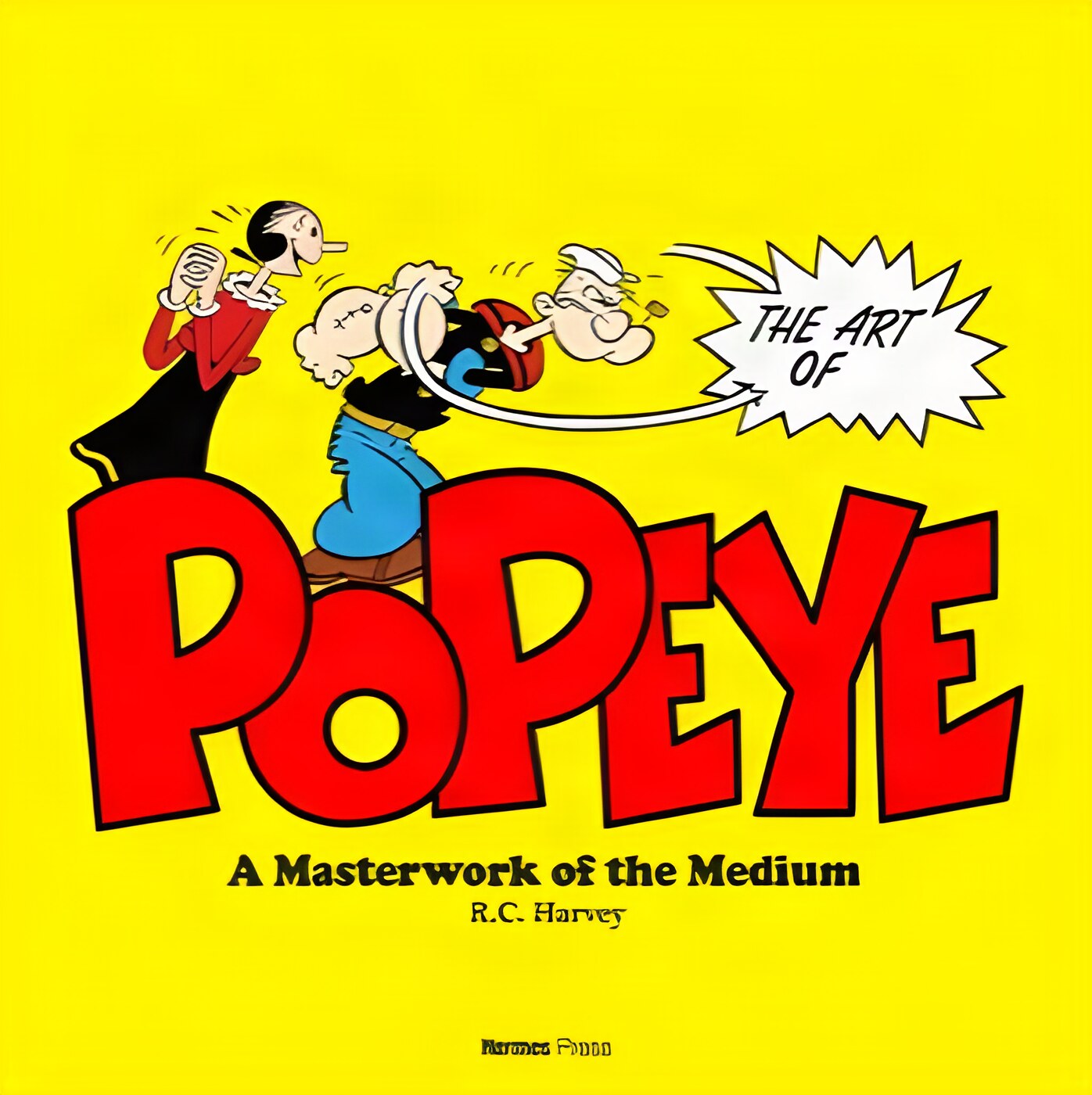
Hardcover. Hermes Press, 1st, 2024, Book: Very Good, Dust Jacket: None, Hardcover, pictorial boards, 190 pages. When cartoonist Elzie Segar created Popeye, as a minor character ten years into the run of the Thimble Theatre strip in 1929, little did he know that the world's most famous sailor would still be around over ninety years later and still being offered as a Sunday feature. To celebrate Popeye, the character, the comic strip and his universe, a feature cartoonist Charles M. Schulz described as "perfect... consistent in drawing and humor," Hermes Press is publishing the definitive art monograph on the subject. This book features a comprehensive essay written by pop culture historian R.C. Harvey accompanied by over 350 illustrations of original strip and comic book art, animation art, illustrations, advertising art, products, the Robert Altman film, and everything Popeye. Every aspect of Popeye is explored, from Olive Oyl and Eugene the Jeep to Wimpy and Bluto. Clean, bright copy.
Hardcover. Cambridge MA, Harvard University Press , 1st, 1960, Book: Very Good, Dust Jacket: Very Good, Hardcover in a bright dust jacket, 313 pages. Reprint of the 1864 original. Edited by Benjamin Rowland, Jr. Blue cloth, gilt lettering to spine and front cover. A very crisp, clean and well preserved copy
Hardcover. NY/London, Sotheby's Parke Bernet, Revised Ed., 1985, Book: Very Good, Dust Jacket: Very Good, Hardcover, 376 pages. 26 illustrations in color, and 420 in black and white. Originally published in 1979. John Harris was one of England's leading Architectural Historians at the time this book was written. He was curator of the Drawing Collection for RIBA. (Royal Institute of British Architects). Each section introduces a period such as: the Age of Estate Cartographers and the Garden Converstations, The Country House and Sporting Art: John Wootton, Peter Tillemans and Others, Caneletto and the Architectural Topographers, Gainsborough and the Picturesque, The Art of Turner and Constable. Harris comments on the artists , their style and pictures.
Hardcover. New Haven CT, Yale University Press, 1st, 2007, Book: Very Good, Dust Jacket: Very Good, Hardcover, 224 pages. How does the artist's self-conception change in old age? How does old age affect artistic practice? In this intriguing study, art historian Philip Sohm considers some of the greatest artists of Renaissance and Baroque Italy and their experiences of aging. Sohm investigates how art critics, collectors, biographers, and fellow artists dealt with old painters, what mental landscapes preconditioned responses to art by the elderly, and how biology and psychology were co-opted to explain the imprint that artists left on their art. He also looks carefully at the impact of prejudices, stereotypes, and other imaginary truths about old age. For some artists, the problems of old age were related to physical decline-Poussin's hands became shaky, Titian's eyesight dimmed. For others, psychological symptoms emerged. The book's cast of characters includes Michelangelo, the hypochondriac young fogy; Titian, the shrewd marketer of old age; the multiphobic Pontormo; and others. With sensitivity and insight, Sohm uncovers what it meant to be an old artist and how successive generations have looked at the art of an old master.
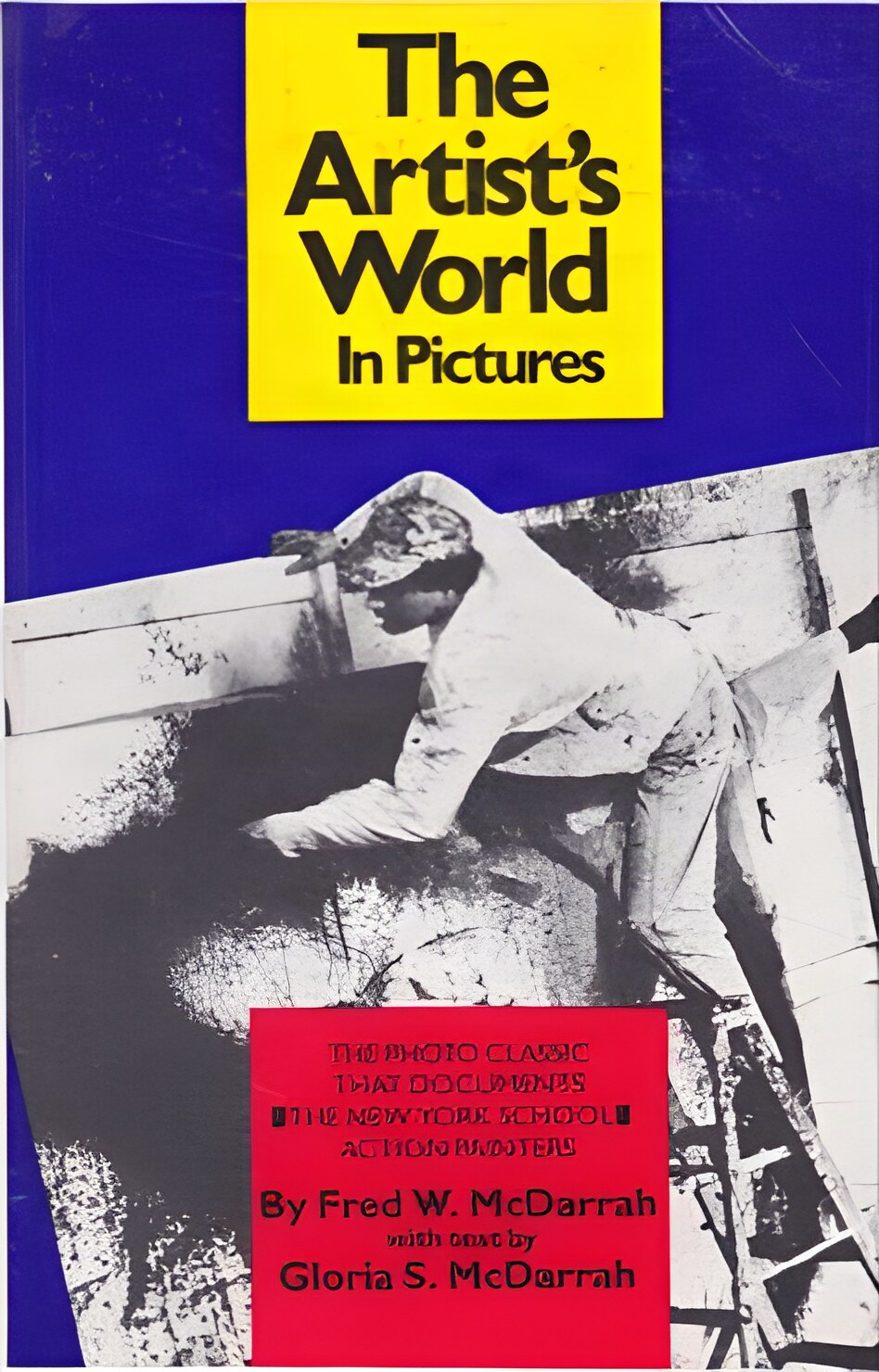
Softcover. NY, Shapolsky Publishers, 2nd Ed., 1988, Book: Very Good, Dust Jacket: None, Softcover, 196 pages, b&w photos throughout. Introduction by Thomas Hess. Fred McDarrah (1926-2007) was a photojournalist, author, and staff photographer for the Village Voice known for documenting the Beat Generation and the New York art world. The present work is a vital document of an exuberant moment in cultural history. Clean copy.
Hardcover. Seattle, Fantagraphics, 1st, 2023, Book: Very Good, Dust Jacket: None, Hardcover, pictorial cloth, 212 pages. Atlas holds a special place among aficionados of the genre, producing more horror titles and issues by far, than anyone in the industry. While the quality of EC's six horror/sci-fi titles was unsurpassed with their elite cadre of talent, Atlas was the equivalent of the B-movies studio, churning out anywhere from 8 to 12 different horror titles a month, giving a wider array of artists, including some of the best craftsmen of the era, a chance to show off their talents: in addition to those already mentioned, future volumes will include Bill Everett, John Romita, Bernie Krigstein, Jerry Robinson, Harry Anderson, and Matt Fox. Stories from Marvel's Atlas line have barely been reprinted. The Fantagraphics Atlas Comics Library is the first attempt to publish a carefully curated line of Atlas titles. The first volume, Adventures Into Terror, includes a treasure trove of stories drawn by many of the most stylistically accomplished artists of the Golden Age including George Tuska, Carl Burgos, Mike Sekowsky, Joe Maneely, and Joe Sinnott. Highlights include Russ Heath's two-part story "The Brain" from issue #4 and "Return of the Brain" from issue #6; Basil Wolverton's classic "Where Monsters Dwell" from issue #7; Gene Colan's moody "House of Horror" in issue #3; and Don Rico's wild layouts are on display from #4's "The Torture Room." The stories are written firmly in the tradition of the pulpy, perverse, borderline deranged style that brought Fredric Wertham, the United States Senate Sub-Committee, and public opinion down like a sledgehammer on comics in the early '50s. Edited by Atlas scholar Dr. Michael J. Vassallo, scanned directly from the published comics, and meticulously restored by Allan Harvey, the first volume of the new Fantagraphics Atlas Library series is an event among comics lovers, collectors, and historians.
Hardcover. NY, H. Bittner and Company, 1st, 1945, Book: Very Good, Dust Jacket: None, Hardcover, blue buckram stamped with gilt code of arms and lettering on spine. Limited to 1000 copies. A study of an artistic family who created theatrical designs dating from the 1680s to the 1780s under eight names. Illustrated with 53 plates. Small review slip tipped on front fly leaf. Some darkening to covers and spine, internally clean and bright. No dust jacket.
Hardcover. Last Gasp, 1st, 2019, Book: Very Good, Dust Jacket: None, Hardcover, pictorial boards, 288 pages. Illustrated with photographs and back and white illustrations. Introduction by Drew Friedman. Fantastic reference work on the history and back story of the creation of R. Crumb's legendary humor comics anthology.
Hardcover. Last Gasp, 1st, 2019, Book: Very Good, Dust Jacket: None, Hardcover, 288 pages. The Book of Weirdo is the definitive - and hugely entertaining- examination of Weirdo magazine, renowned underground comix cartoonist Robert Crumb's legendary humor comics anthology, which was originally published throughout the 1980s. A "low-brow" counterpoint to Art Spiegelman and Francoise Mouley's rather high-faluttin' RAW comix publication, Weirdo influenced an entire generation of alternative and neo-underground artists, as well as creative refuge for the underground comix veterans, and this book features the complete story of the well-recalled comics magazine, along with testimonials from over 130 of the publication's contributors, including interviews with Weirdo's three editors - R. "Keep on Truckin'" Crumb, Peter "Hate" Bagge, and Aline "The Bunch" Kominsky-Crumb - and publisher "Baba Ron" Turner. As much a history of the alternative comics scene of the 1980s - from New York City punk to Seattle grunge - this exhaustive retrospective includes rare and unseen artwork from that era, as well as new comics from modern-day artists celebrating their love for the great oddball magazine. In its time, the periodical featured the finest work of many artists, particularly the best material by Robert Crumb himself, Weirdo's founder and best known for ZAP Comix, Fritz the Cat, and Mr. Natural, and a man widely heralded as the greatest cartoonist of all time. We get photos of the various contributors, some samples of the work, more than a few brand-spanking-new artistic tributes to the magazine and the people who made it. And lots and lots of stories about what it was like to work for and with Robert Crumb.
Hardcover. NY, The Monacelli Press, 1st, 2005, Book: Very Good, Dust Jacket: Very Good, Hardcover, 640 pages, pofusely illustrated. In the late nineteenth century, Chicago -- the birthplace of modern architecture in the United States -- was a magnet for aspiring architects. The city was forced to rebuild after the destruction wrought by the Great Fire of 1871 and also to expand to accommodate a surge in the population. The seemingly endless demand for taller and more sophisticated buildings offered young draftsmen an unprecedented opportunity to influence the design of the American skyscraper. The Chicago Architecture Club: Prelude to the Modern documents the history of these draftsmen, the organization they founded, and its role in shaping architectural education and modern architectural practice.
Hardcover. NY, The Monacelli Press, 1st, 2005, Book: Very Good, Dust Jacket: Very Good, Hardcover, 640 pages, pofusely illustrated. In the late nineteenth century, Chicago -- the birthplace of modern architecture in the United States -- was a magnet for aspiring architects. The city was forced to rebuild after the destruction wrought by the Great Fire of 1871 and also to expand to accommodate a surge in the population. The seemingly endless demand for taller and more sophisticated buildings offered young draftsmen an unprecedented opportunity to influence the design of the American skyscraper. The Chicago Architecture Club: Prelude to the Modern documents the history of these draftsmen, the organization they founded, and its role in shaping architectural education and modern architectural practice.
Hardcover. Cleveland, World Publishing Company, 1st, 1966, Book: Very Good, Dust Jacket: Good, 336 pages. Hardcover. Previous owners name on front endpaper. Includes cartoonists: John Held, Jr., Charles Keene, George Herriman, A. B. Frost, Peter Arno, Saul Steinberg, Charles Addams, Virgil Partch, William Steig, Gerald Scarfe, Shel Silverstein, Tomi Ungerer, and more. Black & white illustrations. Dust jacket with chipping along edges. Clean, unmarked pages.
Hardcover. Prion, 1st, 2009, Book: Very Good, Dust Jacket: Very Good, Hardcover, 230 pages. In terms of both words and images the world had never seen the like of the American comic book. They were bizarre, morbid, lurid, risque and bursting with subconscious desires of burgeoning youth culture. By the time 1954 arrived their were 500 different comics being published by 35 different companies, selling over 60 million copies a month between them. This is the history of the era and the art it produced. The book looks at the pioneers of the comic book and the comic's founding links with sleazy pulp magazines; the campaign for censorship; the fraught relationship between the comic book artists and their publishers; how what they did was rarely recognized as art at the time - and of course the comics themselves.
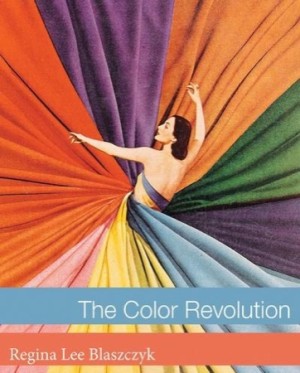
Hardcover. Cambridge MA, The MIT Press, 1st, 2012, Book: Very Good, Dust Jacket: Very Good, Hardcover in a bright dust jacket In this book, 380 pages, illustrated in color. The award-winning historian Regina Lee Blaszczyk traces the relationship of color and commerce, from haute couture to automobile showrooms to interior design, describing the often unrecognized role of the color profession in consumer culture. Blaszczyk examines the evolution of the color progression from 1850 to 1970, telling the stories of innovators who managed the color cornucopia that modern artificial dyes and pigments made possible. These color stylists, color forecasters, and color engineers helped corporations understand the art of illusion and the psychology of color. Clean copy.

 "Terence Donovan Fashionby: Hillman, David (Editor)")
 "Terry and the Pirates: The Master Collection Vol. 6: 1940 - The Time of Choleraby: Milton Caniff")
 "That's All Folks: The Art of Warner Bros. Animationby: Schneider, Steve")
 "The ABC's of The Bauhaus and Design Theoryby: Miller, J. Abbott; Lupton, Ellen")
 "The Accademia Seminars: The Accademia di San Luca in Rome, c. 1590-1635by: Peter M. Lukehart")
 "The Adventurous Decade: Comic Strips In The Thirtiesby: Goulart, Ron")

 "The Art And History Of Booksby: Levarie, Norma")
 "The Art of Frank C. McCarthyby: Kelton, Elmer")
 "The Art of Harvey Kurtzman: The Mad Genius of Comicsby: Denis Kitchen , Paul Buhle , et al.")

 "The Artist & the Country House: A History of Country House & Garden View Painting 1540-1870by: John Harris")
 "The Artist Grows Old: The Aging of Art and Artists in Italy, 1500-1800by: Philip Sohm")

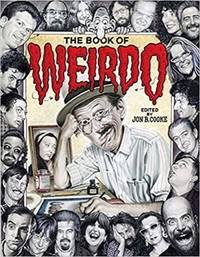
 "The Book of Weirdo: A Retrospective of R. Crumb's Legendary Humor Comics Anthology by: Cooke, Jon B.")


 "The Chicago Architectural Club: Prelude to the Modernby: Wilbert Hasbrouck")
 "The Chicago Architectural Club: Prelude to the Modernby: Wilbert Hasbrouck")
 "The Classic Cartoons - A Definitive Gallery of the Cartoon as Art and as Humorby: Cole (Editors), William/Mike Thaler")
 "The Classic Era of American Comicsby: Wright, Nicky")