Hardcover. Paris, J. Hetzel, Reprint, 1867, Book: Very Good, Dust Jacket: None, 636 pages. Hardcover. French text only. Previous owners name at top left corner of preliminary page dated 1868. Gilt title and decorations on red leather spine with embossed pebbled cloth covers. Satirical black & white illustrations by Jean-Jacques Grandville. Marbled endpapers. All edges gilt. Light rubbing to cover edges and spine. Small area of discoloration on lower section of front cover. Clean, bright pages.
Hardcover. New York, Harry N. Abrams, 1st English, 1996, Book: Very Good, Dust Jacket: Very Good, Hardcover, 143 pages, b&w photographs throughout. A very clean, tight copy.
Hardcover. Cambridge MA, The MIT Press, 1st, 2005, Book: Very Good, Dust Jacket: Very Good, Hardcover in a bright dust jacket, 316 pages, b&w illustrations. The history, theoretical frameworks, methodology, and pedagogy of the new field of visual culture; current debates and the possibility for future consensus. In recent years, visual culture has emerged as a growing and important interdisciplinary field of study. Visual culture regards images as central to the representation of meaning in the world. It encompasses "high" art without an assumption of its higher status. But despite the current proliferation of studies and programs in visual culture, there seems to be no consensus within the field itself as to its scope and objectives, definitions, and methods. In Visual Culture, Margaret Dikovitskaya offers an overview of this new area of study in order to reconcile its diverse theoretical positions and understand its potential for further research. Clean copy. Uncommon in the hardcover.
Hardcover. London, Melcher/Virgin, 1st, 1999, Book: Very Good, Dust Jacket: None, Non-Paginated. Illustrated with black & white photographs. Features photographs by Atget, Larry Clark, Walker Evans, Larry Fink, Weegee, Susan Meiselas, and more. Essay by Luc Sante. Slip case and covers show light wear. Clean, tight copy.
Softcover. Berkeley CA, University of California Press, 1st, 1994, Book: Very Good, Dust Jacket: None, Softcover, 316 pages. Few twentieth-century thinkers have proven as influential as Walter Benjamin, the German-Jewish philosopher and cultural and literary critic. Richard Wolin's book remains among the clearest and most insightful introductions to Benjamin's writings, offering a philosophically rich exposition of his complex relationship to Adorno, Brecht, Jewish Messianism, and Western Marxism. Wolin provides nuanced interpretations of Benjamin's widely studied writings on Baudelaire, historiography, and art in the age of mechanical reproduction. In a new Introduction written especially for this edition, Wolin discusses the unfinished Arcades Project, as well as recent tendencies in the reception of Benjamin's work and the relevance of his ideas to contemporary debates about modernity and postmodernity. Clean, bright copy.
Hardcover. Dresden, Verlag der Kunst, 1st, 1990, Book: Very Good, Dust Jacket: Very Good, Hardcover, 211 pages. Illustrated with 140 black & white photographs by Walter Rosenblum. Red remainder stamp on bottom edge. Text in English and German. Clean, tight copy.
Hardcover. Prestel Publishing/ Montreal Museum of Fine Arts, 1st, 2008, Book: Very Good, Dust Jacket: Very Good, Hardcover, 286 pages, color illustrations. This catalogue reveals the myriad ways Warhol immersed himself in the music of his time. Tracing back to Warhol's introduction to music through the musical comedies. songs and soundtracks of his youth. this book opens with Warhol's portraits of the great films stars of his childhood. As the fascinating essays collected in this volume discuss. Warhol's renowned portraits of pop music icons such as Mick Jagger. Debbie Harry and Grace Jones are just one manifestation of his interest in music. Warhol collaborated with choreographer Merce Cunningham. served as producer for the Velvet Underground. incorporated music into his films. produced video-clips. designed dozens of record albums. filmed live concerts and created multimedia spectacles. Although never a musician himself. Warhol appropriated the imagery of a pop icon for some of his most arresting and haunting self portraits.
Hardcover. New York, Glitterati, 1st, 2006, Book: Very Good, Dust Jacket: Very Good, Hardcover, 176 pages. illustrated in color and b&w. A visual survey of Black style from the 1940s through the 1970s. In publisher's shrinkwrap. This is the 2006 first printing with a different cover than the later reprint.
Hardcover. New York, Simon & Schuster, 1st, 1979, Book: Very Good, Dust Jacket: Very Good, Hardcover, a pictorial history of the wedding ritual. INSCRIBED BY AUTHOR on front fly leaf. Very clean and tight copy.
Softcover. New York, Abbeville Press, 1st US, 1984, Book: Very Good, Dust Jacket: None, 160 pages, illustrated throughout in b&w. Previous owner's sticker on front end paper, light edgewear and soil to wrappers. Clean, tight copy. The pictures assembled here show how this artistic culture originated in the aftermath of the First World War and the unsettled early years of the Weimar Republic, uneasily balanced between revolutionary pretensions and the desire for order. The montage of images--photographs, paintings, drawings, collages, books, and film stills--evokes the period with shocking vividness.
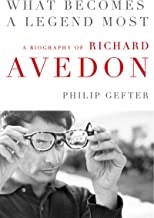
Hardcover. NY, Harper, 1st, 2020, Book: Very Good, Dust Jacket: Very Good, Hardcover in a bright dust jacket, 672 pages. 16 pages of photos. What Becomes a Legend Most is the first definitive biography of this luminary--an intensely driven man who endured personal and professional prejudice, struggled with deep insecurities, and mounted an existential lifelong battle to be recognized as an artist. Philip Gefter builds on archival research and exclusive interviews with those closest to Avedon to chronicle his story, beginning with Avedon's coming-of-age in New York between the world wars, when cultural prejudices forced him to make decisions that shaped the course of his life. Compounding his private battles, Avedon fought to be taken seriously in a medium that itself struggled to be respected within the art world. Gefter reveals how the 1950s and 1960s informed Avedon's life and work as much as he informed the period. He counted as close friends a profoundly influential group of artists--Leonard Bernstein, Truman Capote, James Baldwin, Harold Brodkey, Renata Adler, Sidney Lumet, and Mike Nichols--who shaped the cultural life of the American twentieth century. It wasn't until Avedon's fashion work was exhibited at the Metropolitan Museum of Art in the late 1970s that he became a household name. Balancing glamour with the gravitas of an artist's genuine reach for worldy achievement--and not a little gossip--plus sixteen pages of photographs, What Becomes a Legend Most is an intimate window into Avedon's fascinating world. Dramatic, visionary, and remarkable, it pays tribute to Avedon's role in the history of photography and fashion--and his legacy as one of the most consequential artists of his time.
Hardcover. NY, Harper, 1st, 2020, Book: Very Good, Dust Jacket: Very Good, Hardcover in a bright dust jacket, 672 pages. 16 pages of photos. What Becomes a Legend Most is the first definitive biography of this luminary--an intensely driven man who endured personal and professional prejudice, struggled with deep insecurities, and mounted an existential lifelong battle to be recognized as an artist. Philip Gefter builds on archival research and exclusive interviews with those closest to Avedon to chronicle his story, beginning with Avedon's coming-of-age in New York between the world wars, when cultural prejudices forced him to make decisions that shaped the course of his life. Compounding his private battles, Avedon fought to be taken seriously in a medium that itself struggled to be respected within the art world. Gefter reveals how the 1950s and 1960s informed Avedon's life and work as much as he informed the period. He counted as close friends a profoundly influential group of artists--Leonard Bernstein, Truman Capote, James Baldwin, Harold Brodkey, Renata Adler, Sidney Lumet, and Mike Nichols--who shaped the cultural life of the American twentieth century. It wasn't until Avedon's fashion work was exhibited at the Metropolitan Museum of Art in the late 1970s that he became a household name. Balancing glamour with the gravitas of an artist's genuine reach for worldy achievement--and not a little gossip--plus sixteen pages of photographs, What Becomes a Legend Most is an intimate window into Avedon's fascinating world. Dramatic, visionary, and remarkable, it pays tribute to Avedon's role in the history of photography and fashion--and his legacy as one of the most consequential artists of his time.
Hardcover. Cambridge UK, Cambridge University Press, 1st, 1986, Book: Very Good, Dust Jacket: None, Hardcover, green cloth with black and gilt stamping, 291 pages. Gift exchange plays a crucial role in the social and political organization of Mendi in Papua New Guinea. This book reveals how considerable light can be shed on Mendi society, particularly on its political economy, by examining both the well-known ceremonial exchange festivals and the hitherto relatively little-studied everyday gift-giving practices. The author shows that the latter are crucial for understanding inter-group politics, the process of leadership, male-female relationships and the status of women, and the production, distribution and circulation of wealth. Currently the only book available on this society, the work offers an unusual combination of a social structural analysis with a study of local history and change. It is also of interest for its integration of the study of gift exchange and politics with the study of gender roles and relationships. Clean, bright copy.
Hardcover. New York, Farrar, Straus, Giroux, 1st, 1976, Book: Very Good, Dust Jacket: Very Good, Hardcover. Non-paginated. Illustrated with full color photographs of group portraits. Dust jacket with a few small chips along edges - dust jacket now protected with clear plastic cover. Clean, tight copy.
Hardcover. New York, Glitterati, 1st, 2014, Book: Very Good, Dust Jacket: None, Hardcover. Like new in publisher's shrink-wrap. The book is the first to document the American punk scene to the public at large and now represents the epitome of the scene at the time Features photographs of artistic and performance luminaries such as Man Ray, Tennessee Williams, Mick Jagger, Patti Smith, Richard Hell, Alice Cooper, Iggy Pop, David Bowie, Zandra Rhodes, Divine, Lance Loud, and Marilyn Chambers, among others.
Hardcover. New York, Glitterati, 1st, 2014, Book: Very Good, Dust Jacket: None, Hardcover. Like new in publisher's shrink-wrap. The book is the first to document the American punk scene to the public at large and now represents the epitome of the scene at the time Features photographs of artistic and performance luminaries such as Man Ray, Tennessee Williams, Mick Jagger, Patti Smith, Richard Hell, Alice Cooper, Iggy Pop, David Bowie, Zandra Rhodes, Divine, Lance Loud, and Marilyn Chambers, among others.
Hardcover. Jackson MS, University Press of Mississippi, 1st, 2014, Book: Very Good, Dust Jacket: None, Hardcover, 240 pages. Like new in publisher's shrink-wrap. Cartoonist Winsor McCay (1869-1934) is rightfully celebrated for the skillful draftmanship and inventive design sense he displayed in the comic strips Little Nemo in Slumberland and Dream of the Rarebit Fiend. McCay crafted narratives of anticipation, abundance, and unfulfilled longing. This book explores McCay's interest in dream imagery in relation to the larger preoccupation with fantasy that dominated the popular culture of early twentieth-century urban America. McCay's role as a pioneer of early comics has been documented; yet, no existing study approaches him and his work from an art historical perspective, giving close readings of individual artworks while situating his output within the larger visual culture and the rise of modernism. From circus posters and vaudeville skits to department store window displays and amusement park rides, McCay found fantastical inspiration in New York City's burgeoning entertainment and retail districts. Wide Awake in Slumberland connects McCay's work to relevant children's literature, advertising, architecture, and motion pictures in order to demonstrate the artist's sophisticated blending and remixing of multiple forms from mass culture. Studying this interconnection in McCay's work and, by extension, the work of other early twentieth-century cartoonists, Roeder traces the web of relationships connecting fantasy, leisure, and consumption. Readings of McCay's drawings and the eighty-one black and white and color illustrations reveal a man who was both a ready participant and an incisive critic of the rising culture of fantasy and consumerism.
Hardcover. Boston, Ticknor and Fields, 1st, 1860, Book: Good, Dust Jacket: None, 283 pages. Hardcover. Stated Author's Edition. Brick colored end papers scarred & chipped. Small discard stamp on title-page - ex-library with few markings. Short tear to page 7 of preface. Original embossed brown cloth, gilt lettering on spine faded. Uncommon book detailing the hunting of Indian animals, including man-eaters, panthers, bears, buffalo and wild elephants.
Hardcover. New York, Fowler and Wells, reprint, 1852, Book: Good, Dust Jacket: None, Hardcover, 237 pages. Black cloth, gilt, embossed design. Minor wear to spine edge. Shelf wear. Pages are foxed and tanned throughout. Copyright page states 1849 so assumed reprint. (...A Complete and Authentic History of the Manners and Customs, Character and Condition of the Female Sex, in Civilized and Savage Countries, from the Earliest Ages to the Present Time)
Softcover. South Royalton VT, Steerforth Press, reprint, 2001, Book: Very Good, Dust Jacket: None, Softcover, 187 pages plus b&w photos. With haunting photographs and piercing descriptions, Women of the Shadows depicts the secluded women of southern Italy and their passionate, painful, heartrending existence. Cornelisen, who lived among these women in the mountainous villages of Lucania after World War II, reveals their struggles during a time when most of their men had to leave for factories in the industrial north. The women remained behind to work the fields. There's Peppina, Ninetta, Teresa, Maria, Pinuccia, and Cettina, all women who "have done things of which they are not proud; they know it in their hearts, as one woman said, that nothing is private, they would also agree with her conclusion: That doesn't mean you get used to it." With an extraordinary understanding of the interior lives of these and other women, Cornelisen brings them out of the shadows to tell their heroic stories in a book which truly merits the label "classic." A new introduction by the author suggests that the more things change, the more, in essence, they remain the same. Wrappers sunned, otherwise tight and clean.
Softcover. Durham NC, Duke University Press, 1st, 1998, Book: Very Good, Dust Jacket: None, Softcover, 494 pages. Women's Camera Work explores how photographs have been and are used to construct versions of history and examines how photographic representations of otherness often tell stories about the self. In the process, Judith Fryer Davidov focuses on the lives and work of a particular network of artists linked by time, interaction, influence, and friendship--one that included Gertrude Kasebier, Imogen Cunningham, Dorothea Lange, and Laura Gilpin. Clean copy.
Softcover. Los Angeles, Deborah Caplan & Associates, 1st, 1985, Book: Very Good, Dust Jacket: None, Non-paginated. Softcover. Black and white comics by Matt Groening. True first edition - stated first printing December 1985 0n copyright page. Measures 12" X 12". Bright, clean copy.

 "Vie Privee et Publique des Animaux Vignettes par Grandville Publiee Sous la Direction de P. J. Stahl - Edition Complete, Revue et Augmentee - 1 Volumeby: Stahl, P. J.")
 "Village in France: Louis Clergeau's Photographic Portrait of Daily Life in Pontlevoy, 1902-1936by: Couderc, Jean-Mary")
 "Visual Culture: The Study of the Visual after the Cultural Turn by: Margaret Dikovitskaya")
 "Voyeurby: Melcher (Editors), Charles/Steven Diamond")
 "Walden - Then & Now - An Alphabetical Tour of Henry Thoreau's Pondby: McCurdy, Michael")
 "Walter Benjamin: An Aesthetic of Redemptionby: Richard Wolin")
 "Walter Rosenblum - Photographerby: Rice, Shelley/Naomi Rosenblum")
 "Warhol Live: Music and Dance in Andy Warhol's Work by: Andy Warhol; Stephane Aquin; Emma Lavigne; Matt Wrbican")
 "Way We Wore, The: Black Style Thenby: McCollom (Ed.), Michael")
 "Wedding (SIGNED COPY)by: Norfleet, Barbara")
 "Weimar Years, The : A Culture Cut Shortby: Willett, John")
 "What Becomes a Legend Most: A Biography of Richard Avedonby: Philip Gefter")
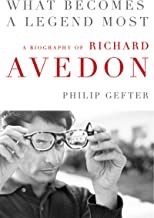

 "What Becomes a Legend Most: A Biography of Richard Avedonby: Philip Gefter")

 "What Gifts Engender: Social Relations and Politics in Mendi, Highland Papua New Guinea by: Rena Lederman")
 "When Two Or More Are Gathered Togetherby: Slavin, Neal")
 "White Trash Uncutby: Makos, Christopher")
 "White Trash Uncutby: Makos, Christopher")
 "Wide Awake In Slumberland: Fantasy, Mass Culture And Modernism In The Art Of Winsor McCayby: Roeder, Katherine")
 "Wigwam Bam (Love and Rockets Collection)by: Jaime Hernandez")


 "Wild Sports of India - With Remarks on the Breeding and Rearing of Horses and the Formation of Light Irregular Cavalry, Theby: Shakespear, Captain Henry")
 "Women in all Ages and Nations...by: Nichols, Thomas L.")
 "Women of the Shadows: Wives and Mothers of Southern Italy by: Ann Cornelisen")
 "Women's Camera Work: Self/Body/Other in American Visual Culture by: Davidov, Judith Fryer")
