Hardcover. Boston, Little, Brown and Co., 1st, 1921, Book: Good, Dust Jacket: None, Hardcover, green cloth covers with gilt lettering on spine, 375 pages. With a frontispiece portrait of Roosevelt, and 10 other illustrations. "A biography, written con amore (with love) by a Harvard classmate, that is full of illuminating anecdotes and memories of this great American." Ink name on front fly leaf and following page. Covers show wear to edges, top of spine. Interior clea, binding solid.
Hardcover. Montpelier, Vermont General Assembly, 1st, 1927, Book: Very Good, Dust Jacket: None, 1665 pages, black leatherette binding with gilt lettering. Bright, clean copy.
Hardcover. Cambridge UK, Cambridge University Press, 1st, 2010, Book: Very Good, Dust Jacket: Very Good, Hardcover in a bright dust jacket, 187 pages. Examines Rousseau's contribution as a constitutionalist and builder of institutions, relating his major ideas to twenty-first century debates. Rubber stamp on copyright page, otherwise clean.
Softcover. Port Townsend WA, Feral House, 1st, 2022, Book: Very Good, Dust Jacket: None, Softcover, 339 pages. Ladies' man. Child soldier. Civil War hero. Egotist. Tramp. Drunkard. Published author. Roving Bill Aspinwall: Dispatches from a Hobo in Post-Civil War America tells the story of an American hobo entirely in his own words. William 'Roving Bill' Aspinwall was all of these things and yet no lone descriptor does him justice. Born one of 23 siblings, married 5 times, wounded fighting for the Union in one of the bloodiest battles of the American Civil War, kicked out of numerous jobs and soldiers' homes for drunkenness, and having spent decades wandering as a penniless vagabond, Bill also kept up a 24-year correspondence with John James McCook, Professor of Modern Languages at Trinity College, Hartford, Connecticut. In so doing Bill provided the earliest and best account of life on the road by an American hobo. Written between 1893 and 1917, Roving Bill Aspinwall: Dispatches from a Hobo in Post-Civil War America tells Bill's story entirely in his own words. Describing experiences on the road, the people he meets, his dalliances with women and his memories of the Civil War, the letters are a rich and unique correspondence. Having been physically and mentally scarred at the 1863 Battle of Champion Hill, Bill details his lifelong battle with booze. He also gives first-hand accounts of men thrown out of work during the economic Panic of 1893, of wandering around the country as an itinerant umbrella-mender, of working in factories, farms and even a circus, as well as his visit to the St. Louis World's Fair in 1903. Bill's words are the real voice of a nineteenth-century hobo.
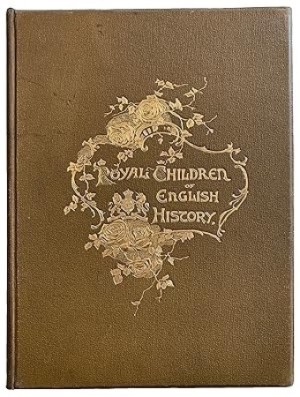
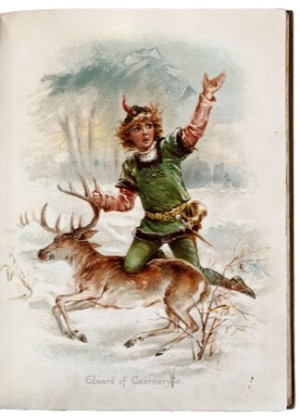
Hardcover. London, Raphael Tuck & Sons, 1st, Book: Very Good, Dust Jacket: None, Hardcover. 94 pages. Brown cloth covers, beveled edges, gilt titles to spine and front cover, lovely gilt pictorial to front, patterned endpapers, all edges gilt, 10 full-page color plates (1 plate torn in half) and numerous b&w illustrated figures, by Frances Brundage and M. Bowley. Previous owner's bookplate to front endpaper, light edgewear to covers, endpapers lightly discolored with age, chipping and tear to first plate, half of 9th color plate torn off, a few pages separate from page block.
Hardcover. London, St. Bartholomew's Hospital, 1st, 1974, Book: Very Good, Dust Jacket: Very Good, Hardcover in a bright dust jacket, 423 pages, b&w illustrations. Published to commemorate the 850th anniversary of the founding of St Barts with two chapters devoted specifically to the development of the Medical College. A comprehensive history of London's oldest Hospital now a centre of excellence for cancer and cardiac care part of the NHS in Central London. Notation and small stamp to front endpapers, otherwise clean.
Softcover. New Jersey, Princeton University Press, 1st, 1982, Book: Very Good, Dust Jacket: None, 278 pages including plates. (INSCRIBED) Softcover. B/w illustrations throughout. Wrapper has a touch of age yellow, otherwise very good. A small bit of soil on bottom edge. In very good condition.
Softcover. NY, Pierpont Morgan Library,, 1979, Book: Very Good, Dust Jacket: None, Softcover, stiff paper wrappers. 298 pages. Catalogue of Rubens and Rembrandt drawings in the Pierpont Morgan Library, New York. Introduction, indexed by artists and former owners. 130 black and white plates. Index of artists. Illustrations of 57 watermarks.
Softcover. Ithaca NY, Cornell University Press, reprint, 1990, Book: Very Good, Dust Jacket: None, Softcover, 309 pages. A major contribution to the cultural and literary history of the Victorian age, Rule of Darkness maps the complex relationship between Victorian literary forms, genres, and theories and imperialist, racist ideology. Critics and cultural historians have usually regarded the Empire as being of marginal importance to early and mid-Victorian writers. Patrick Brantlinger asserts that the Empire was central to British culture as a source of ideological and artistic energy, both supported by and lending support to widespread belief in racial superiority, the need to transform "savagery" into "civilization," and the urgency of promoting emigration. Rule of Darkness brings together material from public records, memoirs, popular culture, and canonical literature. Brantlinger explores the influence of the novels of Captain Frederick Marryat, pioneer of British adolescent adventure fiction, and shows the importance of William Makepeace Thackeray's experience of India to his novels. He treats a number of Victorian best sellers previously ignored by literary historians, including the Anglo-Indian writer Philip Meadows Taylor's Confessions of a Thug and Seeta. Brantlinger situates explorers' narratives and travelogues by such famous author-adventurers as David Livingstone and Sir Richard Burton in relation to other forms of Victorian and Edwardian prose. Through readings of works by Arthur Conan Doyle, Joseph Conrad, H. Rider Haggard, Rudyard Kipling, John Hobson, and many others, he considers representations of Africa, India, and other non-British parts of the world in both fiction and nonfiction. Clean, bright copy.
Hardcover. Cloverdale CA, Buti Publications, 1st, 1996, Book: Very Good, Dust Jacket: Very Good, Hardcover in a bright dust jacket, 355 pages illustrated with b&w drawings, not credited. GENERIC INSCRIPTION & SIGNATURE BY AUTHOR on the front fly leaf. Bruno Buti, (pronounced "booty") born to immigrant Italian parents May 23, 1922, in San Bruno, California, the youngest of three children. Nursed to an age he can still remember, then weaned on wine for lack of a cow, he was raised in an era when milk pails runneth over with fresh made alcohol. Growing up underfoot of tough bootleggers, he spent his childhood experiencing unpleasant run-ins between them and crooked lawmen. Haunted by memories of the involvement that his father, relatives and colleagues had in bucking prohibition, their ups and downs in the struggle to make it in a society hostile to immigrant minorities, the author finally dares to unload the burden he carried for so long. His tale attempts to bring out the characteristics and qualities of this particular group of people by depicting them the way they were during those fabulous Twenties. Clean copy.
Hardcover. NY, Oxford University Press, 1st, 1999, Book: Very Good, Dust Jacket: Very Good, Hardcover in a bright, unclipped dust jacket. 455 pages, b&w illustrations. From John Hope Franklin, America's foremost African American historian, comes this groundbreaking analysis of slave resistance and escape. A sweeping panorama of plantation life before the Civil War, this book reveals that slaves frequently rebelled against their masters and ran away from their plantations whenever they could. For generations, important aspects about slave life on the plantations of the American South have remained shrouded. Historians thought, for instance, that slaves were generally pliant and resigned to their roles as human chattel, and that racial violence on the plantation was an aberration. In this precedent setting book, John Hope Franklin and Loren Schweninger demonstrate that, contrary to popular belief, significant numbers of slaves did in fact frequently rebel against their masters and struggled to attain their freedom. By surveying a wealth of documents, such as planters' records, petitions to county courts and state legislatures, and local newspapers, this book shows how slaves resisted, when, where, and how they escaped, where they fled to, how long they remained in hiding, and how they survived away from the plantation. Of equal importance, it examines the reactions of the white slaveholding class, revealing how they marshaled considerable effort to prevent runaways, meted out severe punishments, and established patrols to hunt down escaped slaves. Clean copy.
Hardcover. Albany NY, Luther Tucker & Son, 1st, 1866, Book: Good, Dust Jacket: None, Hardcover, spine ends worn. 12mo; 338 pages. Brown cloth with gilt stamping, fading to spine, tiny holes to cloth along spine, illustrated with 400 engravings. Volume 4 only, covers 1864-5-6.Covers all aspects of agriculture and rural life. Previous owner's signature on front fly leaf otherwise clean internally.
Hardcover. Philadelphia, Carey and Hart, 1st, 1843-46, Book: Good, Dust Jacket: None, Five volumes bound into one, 537 total pages. Half leather with marbled boards, edgeworn. All first American editions. The final book's full title: The Military Operations at Cabul, Which Ended in the Retreat and Destruction of the British Army, January 1842. With a Journal of Imprisonment in Afghanistan. Condition good with some browning and foxing to paper. Front inner hinge repaired with tape.
Softcover. UK, Dodo Press, reprint, 2008, Book: Very Good, Dust Jacket: None, Softcover, 261 pages. Susan Augusta Fenimore Cooper (1813- 1894) was an American writer and amateur naturalist. She was the daughter of the well known novelist James Fenimore Cooper. Her most famous work is Rural Hours (1850), a nature diary of Cooperstown, New York. Amongst her works are Female Suffrage: A Letter to the Christian Women of America, The Lumley Autograph, and Elinor Wyllys; or, The Young Folk of Longbridge (1846), a novel. Clean copy.
Hardcover. New York, Oxford University Press, 1st, 1990, Book: Very Good, Dust Jacket: Very Good, Hardcover, 239 pages. Minor edge wear to dust jacket. Else a very clean, tight copy. The dramatic events of the twentieth century have often led to the mass migration of intellectuals, professionals, writers, and artists. One of the first of these migrations occurred in the aftermath of the Russian Revolution, when more than a million Russians were forced into exile. With this book, Marc Raeff, one of the world's leading historians of Russia, offers the first comprehensive cultural history of the "Great Russian Emigration." He examines the social and institutional structure of the emigration and describes its rich cultural and intellectual life. He points out that what distinguishes this emigration from other such episodes in European history is the extent to which the emigres succeeded in reconstituting and preserving their cultural creativity in the West. The flourishing Russian communities of Paris, Berlin, Prague and Kharbin not only enriched Russian arts and letters, but also significantly influenced the culture of their Western hosts, and Raeff concludes with an assessment of their impact on the development of modern Western and Soviet culture.
Hardcover. NY, Henry Holt and Company, 1st, 1899, Book: Good, Dust Jacket: None, 411 pages. Hardcover. Previous owners name on inside front cover. Green cloth with gilt title and decoration. Front and rear hinges cracked. Missing front endpaper. Heavy foxing to preliminary pages up to contents page, and last 5 pages at end of book; including map. Front fold-out map at title page and rear most map both badly damaged. Foxing to edges. Moderate wear to covers. Clean, unmarked text.
Hardcover. Moscow, Sovietsky Khudozhnik, 1st, 1990, Book: Very Good, Dust Jacket: Very Good, 359 pages. Hardcover with dust jacket. Russian text only. Profusely illustrated in full color and black & whiite. A survey of Russia's brief Art Nouveau movement in architecture. Bright, clean copy in a similar dust jacket. In a plain cardboard slipcase.
Hardcover. New York, Harper & Brothers, 1st, 1887, Book: Very Good, Dust Jacket: None, Hardcover, 310 pages. Brown cloth, gilt lettering to spine. Light wear and rubbing to covers and edges of spine. Clean, tight copy.
Hardcover. Russia, Aurora Art Publishers, 1st, 1991, Book: Very Good, Dust Jacket: Very Good, 199 pages. Hardcover with dust jacket. Some foxing to textblock edges. Otherwise a very clean, unmarked copy with some minor dust jacket wear. Black & white and color illustrations throughout. A tight copy.
Hardcover. New York, Basic Books , 1st, 1984, Book: Good, Dust Jacket: Good, 239 pages. Red cloth. Light edgewear to dust jacket with one small closed tear to front cover. Spine slightly slanted. Clean, tight copy.

 "Roosevelt: The Happy Warrior by: Gilman, Bradley")
 "Rose Blancheby: Innocenti, Roberto/Christophe Gallaz")
 "Roster of Vermont Men and Women in the Military and Naval Service of the United States and Allies in the World War 1917-1919by: Johnson, Herbert T.")
 "Rousseau, Law and the Sovereignty of the People by: Putterman, Ethan")
 "Roving Bill Aspinwall: Dispatches from a Hobo in Post-Civil War America by: Bill Aspinwall (Author), Owen Clayton (Editor)")
 "Royal Baker and Pastry Cookby: Chefs of the New York Cooking School")
 "Royal Children of English Historyby: Nesbit, E. (illust by Frances Brundage and M Bowley)")
 "Royal Hospital of Saint Bartholomew, 1123-1973by: Victor Cornelius Medvei: John L. Thornton (Editors)")
 "Rubens and His Circle: Studies by Julius S. Held (INSCRIBED)by: Lowenthal, Anne W., David Rosand, John Walsh Jr.")
 "Rubens and Rembrandt in Their Century: Flemish & Dutch Drawings of the 17th Century from The Pierpont Morgan Libraryby: Stampfle, Felice")
 "Ruin of The Ancient Civilization and The Triumph of Christianity, Theby: Ferrero, Guglielmo")
 "Rule of Darkness: British Literature and Imperialism, 1830 1914 by: Patrick Brantlinger")
 "Rumbling Wine Barrels (SIGNED COPY)by: Bruno Buti")
 "Runaway Slaves: Rebels on the Plantationby: Franklin, John Hope & Schweninger, Loren")
 "Rural Affairs: A Practical And Copiously Illustrated Register Of Rural Economy and Rural Taste, Including Country Dwellings, Improving and Planting Grounds, Fruits and Flowers, Domestic Animals, and all Farm and Garden Processes - V")
 "Rural and Domestic Life of Germany, Scotland, Austria, England and Wales, Military Operations at Cabul (5 separate travel histories in one volume)by: Howitt, William,")
 "Rural Hoursby: Cooper, Susan Fenimore")
 "Russia Abroad: A Cultural History of the Russian Emigration, 1919-1939by: Raeff, Marc")
 "Russia in Asia: A Record and a Study - 1558-1899by: Alexis Krausse")
 "Russia's Art Nouveauby: Borisova, Elena and Grigory Sternin")
 "Russian Church and Russian Dissent, The: Comprising Orthodoxy, Dissent, and Erratic Sectsby: Heard, Albert F.")
 "Russian Empire and Soviet Union - A Guide to Manuscripts and Archival Materials in the United States, Theby: Grant, Steven A./John H. Brown")
 "Russian Painted Shop Signs and Avant-Garde Artistsby: Povelikhina, A. V")
 "Russian Revolutions of 1917: The Origins of Modern Communismby: Schapiro, Leonard")