Hardcover. Louisville, University Press of Kentucky, 1st, 1986, Book: Very Good, Dust Jacket: Very Good, Hardcover in a bright dust jacket., 160 pages. Sulky races at the Mercer County Fair, church suppers, sorghum making, shooting marbles in the school yard, housing tobacco, loafing at the courthouse-here are 129 beautifully reproduced images of who we were as Kentuckians not so long ago-during the Depression and the early years of World War II. This collection is part of the remarkable series of photos shot for the Farm Security Administration-more than 125,000 photographs taken over a period of nine years by some of the best American photographers of the time, including Ben Shahn, Marion Post Wolcott, Russell Lee, John Vachon, and Arthur Rothstein. To reintroduce us to that important slice of our history, Beverly Brannan and David Horvath have selected a rich sampling from among several thousand photos taken in Kentucky for the FSA. They have added an extra dimension to the images by including in their commentary excerpts from the photographers' own correspondence and field notes.
Hardcover. London, The Hogarth Press, 1st, 1931, Book: Very Good, Dust Jacket: None, Hardcover reddish cloth, 173 pages. A classic farsighted expose of the destructive effects of colonialism on the indigenous social fabric in Kenya. Remains of dust jacket laid in. There are some handwritten notes on first and last blank pages of book, otherwise clean.
Hardcover. NY, Abrams Press, 1st, 1919, Book: Very Good, Dust Jacket: Very Good, Hardcover in a bright dust jacket. 286 pages, b&w illustrations. The list of films Irwin Winkler has produced in his more-than-fifty-year career is extraordinary: Rocky, Goodfellas, Raging Bull, The Right Stuff, Creed, and The Irishman. His films have been nominated for fifty-two Academy Awards, including five movies for Best Picture, and have won twelve. In A Life in Movies, his charming and insightful memoir, Winkler tells the stories of his career through his many films as a producer and then as a writer and director, charting the changes in Hollywood over the past decades. Winkler started in the famous William Morris mailroom and made his first film--starring Elvis--in the last days of the old studio system. Beginning in the late 1960s, and then for decades to come, he produced a string of provocative and influential films, making him one of the most critically lauded, prolific, and commercially successful producers of his era. Clean copy.
Hardcover. NY, Random House, 1st, 1996, Book: Very Good, Dust Jacket: Very Good, Hardcover, 500 pages, b&w illustrations. In this second volume of his definitive biography of Pablo Picasso, John Richardson draws on the same combination of lively writing, critical astuteness, exhaustive research and personal experience that made a bestseller out of the first volume and vividly re-creates the artist's life and work during the crucial decade of 1907-1917--a period during which Picasso and Georges Braque invented cubism. Clean copy in a bright dust jacket.
Softcover. NY, Fordham University Press, 1st, 2011, Book: Very Good, Dust Jacket: None, Softcover, 387 pages. Focusing on major authors and problems from the Italian fourteenth and sixteenth centuries, from Petrarch and Boccaccio to Machiavelli, Ariosto and Tasso, A Local Habitation and a Name examines the unstable dialectic of "reality" and "imagination," as well as of "history" and "literature." Albert Ascoli identifies and interprets the ways in which literary texts are shaped by and serve the purposes of multiple, intertwined historical discourses and circumstances, and he equally probes the function of such texts in constructing, interpreting, critiquing, and effacing the histories in which they are embedded. Throughout, he poses the theoretical and methodological question of how formal analysis and literary forms can at once resist and further the historicist enterprise. Mild damp wrinkle to bottom corner of first 10 pages, otherwise very good, clean.
Hardcover. Boston, Little, Brown and Company, 1st, 1948, Book: Good, Dust Jacket: None, Hardcover, beige cloth hardcover book in good condition. McWilliams examines the growth of discrimination and persecution of Jews in America from 1877 to 1948 and the "myths with which the anti-semite surrounds his position." Light shelfwear, no dust jacket. Clean copy.
Hardcover. New York, G. K. Hall & Company, 1st, 1996, Book: Very Good, Dust Jacket: Very Good, 319 pages. Hardcover with dust jacket. Minor dust jacket edge wear, otherwise, spotless and tight copy.
Hardcover. Cambridge MA, Harvard University Press, 1st, 2007, Book: Very Good, Dust Jacket: Very Good, Hardcover in a bright, unclipped dust jacket. 457 pages, b&w illustrations. Few of us question the slips of green paper that come and go in our purses, pockets, and wallets. Yet confidence in the money supply is a recent phenomenon: prior to the Civil War, the United States did not have a single, national currency. Instead, countless banks issued paper money in a bewildering variety of denominations and designs - more than ten thousand different kinds by 1860. Counterfeiters flourished amid this anarchy, putting vast quantities of bogus bills into circulation. Their success, Stephen Mihm reveals, is more than an entertaining tale of criminal enterprise: it is the story of the rise of a country defined by a freewheeling brand of capitalism over which the federal government exercised little control. It was an era when responsibility for the country's currency remained in the hands of capitalists for whom "making money" was as much a literal as a figurative undertaking. Mihm's witty tale brims with colorful characters: shady bankers, corrupt cops, charismatic criminals, and brilliant engravers. Based on prodigious research, it ranges far and wide, from New York City's criminal underworld to the gold fields of California and the battlefields of the Civil War. Clean copy.
Hardcover. Boston, Faber and Faber, 1st, 1994, Book: Very Good, Dust Jacket: Very Good, Hardcover in a bright, unclipped dust jacket, pages. "I write of peoples and of a struggle." So begins A New World, an ambitious and extraordinary book that challenges conventional historical narrative by presenting episodes in North America's history through the eyes and voices of the Europeans who established the first colonial outposts here. Beginning with the swaggering John Smith at Jamestown and ending with the beleaguered Montcalm at Quebec, Arthur Quinn allows towering historical figures to emerge from an often beautiful, sometimes forbidding early American landscape and speak. An elderly William Bradford looks back with growing despair at the early promise of the Pilgrim colony at Plymouth. Governor John Winthrop tries to administer a dose of practicality to the Puritans of Massachusetts. Jesuit missionaries bring Christianity and disaster to the Huron Confederacy. A blustering Peter Stuyvesant watches Manhattan slip from Dutch grasp. William Penn's Holy Experiment in Pennsylvania goes increasingly awry. And, finally, the British and the French fight history's first world war for supremacy in the New World. Telling each story using the literary conventions of the day, Quinn casts North America's colonial beginnings as a multicultural epic, gripping the reader throughout with his uncanny eye and storytelling skill. Clean copy.
NY, Crown Archetype, 1st, 2015, Book: Very Good, Dust Jacket: Very Good, Hardcover in a bright, unclipped dust jacket. In A Nice Little Place on the North Side, leading columnist George Will returns to baseball with a deeply personal look at his hapless Chicago Cubs and their often beatified home, Wrigley Field, as it enters its second century. Baseball, Will argues, is full of metaphors for life, religion, and happiness, and Wrigley is considered one of its sacred spaces. But what is its true, hyperbole-free history? Winding beautifully like Wrigley's iconic ivy, Will's meditation on "The Friendly Confines" examines both the unforgettable stories that forged the field's legend and the larger-than-life characters--from Wrigley and Ruth to Veeck, Durocher, and Banks--who brought it glory, heartbreak, and scandal. Drawing upon his trademark knowledge and inimitable sense of humor, Will also explores his childhood connections to the team, the Cubs' future, and what keeps long-suffering fans rooting for the home team after so many years of futility. 223 pages, clean copy.
Softcover. Chicago/LaSalle IL, Open Court, reprint, 2000, Book: Very Good, Dust Jacket: None, Softcover, 175 pages. This work examines how social and political events intertwined and influenced philosophy during the early 20th-century, ultimately giving rise to two different schools of thought - analytic philosophy and continental philosophy. Light marking to ten pages. Otherwise a clean, bright copy.
Softcover. NY/LA, Indochina Information Project, 1st, 1972, Book: Very Good, Dust Jacket: None, Softcover, stapled wraps, 44 pages including cover. Presumed first edition/first printing. Photos by Philip Jones Griffith and Marc Rimboud. This was written and researched by the Indochina Information Project whose members included: Jill Rodewald, Vicki Camilli, Terry Poxon, Kim Shanley, Drew Bonthius, Mike Picker, Mark Thompson, and Tom Hayden. Paper age-toned. A valuable document of the Peace Movement. Page 13 with short tear to margin, otherwise clean.
Softcover. Hong Kong, API Press, 1st, 1989, Book: Very Good, Dust Jacket: None, Softcover, 265 pages. The Chinese Stepping-Stone Syndrome is presented as a social-psychological complex that characterizes the Chinese and helps to explain their behavior and the socio-political problems of China. Regards Hong Kong as the original geopolitical and psychological stepping-stone. "It awes me how Professor Albert Yee has given me within one book such graphic and gripping insight and immensely greater perception of both the historical roots and the evolved enormous complexities of the ancient and indelible Chinese culture." - Alex Haley. Clean copy.
Hardcover. NY, Clark Austin and Smith, 1st, 1854, Book: Good, Dust Jacket: None, Hardcover, embossed brown cloth, 283 pages. This is the original 1854 edition. Mild water stain to margins of first 30 pages, scattered foxing throughout. A comprehensive exploration of the origins, practices, and beliefs of various secret societies throughout history, with a particular focus on Freemasonry. The book delves into the philosophical and spiritual underpinnings of these societies, examining their rituals, symbols, and traditions. Arnold also explores the historical context in which these societies emerged, tracing their evolution from ancient mystery cults to modern-day fraternal organizations. The book provides a nuanced and objective analysis of these secretive groups, debunking myths and misconceptions while also acknowledging their enduring cultural significance. The secret societies of all ages considered in their relations with and influence on, the moral, social and intellectual progress of man. Through them came the new revelations of life, which contributed to the progress of Humanity. Contents: Importance of this History; Providential Character of these Institutions; Egyptian Mysteries; Secret Institution of Orpheus; Initiation at Eleusis; Secret Order of Pythagoras; Templars; Freemasonry; Second Period of Masonic History; Present Position of the Order; Christianity and Freemasonry; Thomas Paine's Essay on Freemasonry, with Comments. Gilt lettering on spine faded but readable. Bottom corner of front cover bumped. No markings.
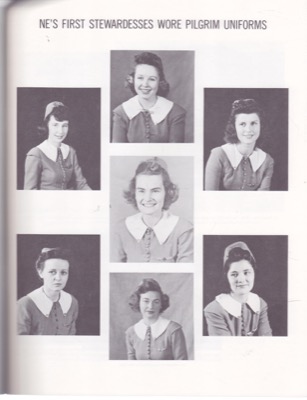
Softcover. Logan Airport, Northeast Airlines, 1st, 1972, Book: Very Good, Dust Jacket: None, Softcover, 64 pages, profusely illustrated with b&w photos. No author but with opening statement by Bill Michaels, President of the airline at the time. Lively commemorative booklet published by Northeast for its employees on July 31, 1972, the day before officially merging with Delta. Features many black & white photos of personnel, advertising and operations. Clean copy.
Hardcover. NY, Holiday House, 1st, 2009, Book: Very Good, Dust Jacket: Very Good, Hardcover in a bright dust jacket. Color illustrations by Ronald Himler. This picture-book biography focuses mainly on the War of 1812, but also mentions Madison's contributions to the Constitution and the creation of the three branches of government. Although this is a biography of the couple, there is more specific information on James Madison than on Dolley. Still, readers do learn some interesting facts about her, such as how she rescued a portrait of George Washington while the Executive Mansion burned. Adler's writing is clear yet not oversimplified, and is without fictionalization.
Softcover. Los Angeles, Augustan Reprint Society, reprint, 1982, Book: Very Good, Dust Jacket: None, Softcover, 48 pages with a fold-out plan, 2 other b&w plates. A facsimile reproduction of the 1745 publication. Introduction by Morris R. Brownell. Clean copy.
Hardcover. London, Printed by the Proprietor and Sold by James Carpenter and Son, Book: Very Good, Dust Jacket: None, Hardcover, olive-colored morocco covers with gilt borders, spine with raised bands and gilt design and lettering. Attractive collection of Burnet's three principal works bound together with a general title page: Practical Hints on Composition in Painting (6th edition 1845), Practical Hints on Light and Shading in Painting (2nd edition 1927), and Practical Hints on Colour in Painting (2nd edition 1828). 25 pages of plates of which 8 are hand-colored. Bookplate on inside front cover, name on blank page opposite half-title dated 1917. Overall very good with minor rubbing to covers.
Hardcover. NY, G. P. Putnam's Sons, 1st, 1975, Book: Very Good, Dust Jacket: Very Good, Hardcover in a lightly worn dust jacket, 446 pages with index, b&w photos. Name on half-title page otherwise clean.
Hardcover. Boston, City Registrar's Office of Boston, MA, 1886, Book: Very Good, Dust Jacket: None, Hardcover. Sixteenth Report of the Record Commissioners, 344 pages. Minor wear, chipping to spine cloth, gilt decorated binding. Special topics considered during this time period included "Schools, Inns, Faneuil-Hall Market, the Fire of 1760, Inoculation, Long Wharf, and Beacon Hill", plus the approval of Hancock's Hospital, etc. Name on blank prelim page, otherwise tight and clean.
Hardcover. NY, Harcourt Brace, 1st, 1927, Book: Very Good, Dust Jacket: None, Hardcover, blue cloth stamped in black, 314 pages. Color frontis and endpaper drawing by Rowland Hilder, b&w illustrations by Richard Southern. An historical adventure set on the high sea. Mild shelf wear to covers, clean copy.
Hardcover. Hoboken NJ, Wiley, 1st, 2009, Book: Very Good, Dust Jacket: Very Good, Hardcover in a bright, unclipped dust jacket, 508 pages.Take a dazzling journey through the Gilded Age, the period from roughly the 1870s to 1914, when bluebloods from older, established families met the nouveau riche headlong-railway barons, steel magnates, and Wall Street speculators-and forged an uneasy and glittering new society in New York City. The best of the best were Caroline Astor's 400 families, and she shaped and ruled this high society with steel. A Season of Splendor is a panoramic sweep across this sumptuous landscape, presenting the families, the wealth, the balls, the clothing, and the mansions in vivid detail-as well as the shocking end of the era with the sinking of the Titanic. Clean copy.
Softcover. NY, Oxford University Press, reprint, 1980, Book: Very Good, Dust Jacket: None, Softcover, 384 pages with index. In this major contribution to cultural history Kammen focuses on the American Revolution and it's impact on literature and art. Name on front fly leaf, otherwise clean.

 "A Kentucky Album: Farm Security Administration Photographs, 1935-1943by: Beverly W. Brannan, David Horvath, et al.")
 "A Last Chance in Kenyaby: Leys, Norman")
 "A Life in Movies: Stories from 50 Years in Hollywood by: Irwin Winkler")
 "A Life of Picasso Volume II 1907-1917: The Painter of Modern Lifeby: Richardson, John")
 "A Local Habitation and a Name: Imagining Histories in the Italian Renaissance by: Ascoli, Albert Russell")
 "A Mask For Privilege: Anti-Semitism in America by: McWilliams, Carey")
 "A Narrative of the Negro: Missing Pages in American History : Revealing the Services of Negros in the Early Wars in the United States of America 1641-1815by: Wilkes,")
 "A Nation of Counterfeiters: Capitalists, Con Men, and the Making of the United States by: Stephen Mihm")
 "A New World: An Epic of Colonial America from the Founding of Jamestown to the Fall of Quebec by: Quinn, Arthur")
 "A Nice Little Place on the North Side: Wrigley Field at One Hundred by: Will, George")
 "A Parting of the Ways: Carnap, Cassirer, and Heideggerby: Friedman, Michael")
 "A Pentagon Papers Digestby: Indochina Information Project")
 "A People Misruled: Hong Kong and the Chinese Stepping-Stone Syndrome by: Yee, Albert H.")
 "A Philosophical History of Free-masonry and Other Secret Societiesby: Rev. Augustus C L Arnold")


 "A Pictorial History of Northeast Airlinesby: Bill Michaels (Intro.)")

 "A Picture Book of Dolley and James Madison by: David A. Adler , Michael S. Adler, Ronald Himler")
 "A Plan of Mr. Pope's Garden (1745)by: Serle, John and Morris R. Brownell (Introduction)")
 "A Practical Treatise on Painting: In Three Partsby: John Burnet")

 "A Rendezvous with Destiny: The Roosevelts of the White House by: Roosevelt, Elliott and Brough, James")
 "A Report of the Record Commissioners of the City of Boston Containing the Boston Town Records 1758 to 1769 by: N/A")
 "A Sailor of Napoleon by: John Lesterman")
 "A Season of Splendor: The Court of Mrs. Astor in Gilded Age New Yorkby: King, Greg")
 "A Season of Youth: The American Revolution and the Historical Imaginationby: Michael G Kammen")
 "A Selection of Cases on the Law of Contractsby: Langdell, C. C.")