Softcover. Forty Fort PA, Harold Cox, 1st, 1975, Book: Very Good, Softcover, 68 pages. B&w photos, drawings and maps. Clean, bright copy of a scarce pamphlet.
Softcover. Forty Fort PA, Harold Cox, 1st, 1970, Book: Good, Dust Jacket: None, Softcover, 86 pages, b&w photos, drawings and maps. Some light soill to covers. Folded map in rear is missing.
Hardcover. NY, Arno Press, reprint, 1976, Book: Very Good, Dust Jacket: None, Hardcover, red cloth. Black and gilt spine lettering. Edited by Philip Smith. Reprinted from the 1875 edition. Illustrated with 52 full-page plates, 498 figures, 5 maps, plans and tables. 392 pages. Bright, clean copy.
Hardcover. Troy NY, William H. Young, 1st, 1891, Book: Very Good, Dust Jacket: None, 453 pages. Hardcover, dark green covers stamped in black. Previous owners name on preliminary page. Black & white illustrations. One fold-out city view. Title in gilt on spine. Cloth covers with areas of light surface rubbing. Clean, unmarked text.
Softcover. New York, Writers and Readers Pub., reprint, 1994, Book: Very Good, Dust Jacket: None, 200 pages, softcover. Extensive b&w photography throughout. Light edge wear, otherwise clean, tight copy. Collects recently discovered portraits made by a commercial Black photographer of Columbia, South Carolina's Black middle class during the 1920's and '30's
Hardcover. Boston, D. Lothrop and Co., 1st, 1887, Book: Very Good, Dust Jacket: None, Hardcover, brown cloth stamped in gilt and orange, 13 b&w plates. A dozen tales of incidents in American wars. Light pencil note on front fly leaf dated in 1887. Otherwise clean.
Hardcover. Rutland VT, Charles E. Tuttle Company, reprint, 1988, Book: Very Good, Dust Jacket: None, Hardcover, brick-red cloth covers with gilt lettering. 580 pages, b&w illustrations, maps. Reprint of a book first published in 1883 on Boston by Lothrop. Clean, bright copy. No dust jacket issued.
Hardcover. Alabama, University of Alabama Press, 1st, 1985, Book: Very Good, Dust Jacket: Very Good, 299 pages. Hardcover with dust jacket. Illustrated with black & white photographs. Clean, bright copy.
Hardcover. Amsterdam, Uitgeverij Aksant, 1st, 2008, Book: Very Good, Dust Jacket: None, Hardcover, pictorial boards, 366 pages, a few color and b&w illustrations. INSCRIBED BY THE AUTHOR on the half title page. This study describes and analyses a wide array of initiatives leading to the hunt, by Dutch whalemen, of whales and seals in Arctic waters, the temperate zones of the South Pacific and the waters of the Dutch East Indies during the major part of the nineteenth century (1815-1885) - an era neglected so far. A pioneering book focused on the men involved in the two maritime industries, be it on shore or aboard the whaleship.
Softcover. Berkeley CA, University of California Press, 2nd pr., 2004, Book: Very Good, Dust Jacket: None, Softcover, 421 pages, b&w illustrations. Located only blocks from Tokyo's glittering Ginza, Tsukiji-the world's largest marketplace for seafood-is a prominent landmark, well known but little understood by most Tokyoites: a supplier for countless fishmongers and sushi chefs, and a popular and fascinating destination for foreign tourists. Early every morning, the worlds of hi-tech and pre-tech trade noisily converge as tens of thousands of tons of seafood from every ocean of the world quickly change hands. Clean, bright copy.
Hardcover. Baton Rouge LA, Louisiana State University, 1st, 1972, Book: Very Good, Dust Jacket: Very Good, Hardcover in a lightly worn dust jacket, 294 pages. Name on front fly leaf otherwise clean.
Softcover. University of Chicago Press, reprint, 1965, Book: Very Good, Dust Jacket: None, Softcover, 555 pages. Traces the political fortunes of the Puritans from 1524, the year in which William Tyndale left London for Germany, to the Stuart Settlement at the beginning of the seventeenth century. The author then examines the social, cultural, and intellectual aspects of Puritanism which, he believes, represented a more genuine idealism than any rival religious movement during the Tudor period. Remainder mark to bottom edge, otherwise a clean copy.
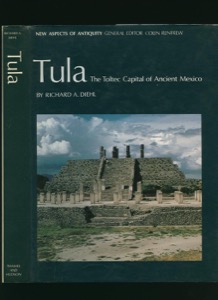
Hardcover. NY, Thames & Hudson , 1st, 1983, Book: Very Good, Dust Jacket: Very Good, Hardcover in a bright dust jacket, 184 pages. Traces the rise and fall of the Toltec civilization, and describes what has been learned about their culture from the excavation of Tula, their principal city. 130 illustrations, 15 in color.
Hardcover. London, Oxford University Press, 1st, 1969, Book: Very Good, Dust Jacket: Very Good, Hardcover in a bright dust jacket. Detailed analysis of the events surrounding independence by former British ambassador. 138 pages plus index. Clean copy.
Hardcover. NY, Frederick A. Praeger , 1st, 1966, Book: Good, Dust Jacket: Fair, Hardcover in a worn, chipped dust jacket. 303 pages, b&w illustrations, maps. Eight years after the Russian capture of Tashkent in 1865, Schuyler, then American consul in St. Petersburg, set out to tour Russia's newly acquired dominions. Traveling entirely by road under primitive conditions, he managed in the space of 18 months to traverse the Steppe Region and record his observations of the Muslim people. Name, date on front fly leaf, no other markings.
Hardcover. Solana Beach, CA, Santa Monica Press LLC, 1st, 2014, Book: Very Good, Dust Jacket: Very Good, 336 pages. Hardcover with dust jacket. A very clean, unmarked copy with only minor wear to dust jacket edges. A very clean, unmarked copy. Color and black & white photographs throughout.
Hardcover. Boston, Houghton Mifflin Company, 1st, 1928, Book: Good, Dust Jacket: None, Hardcover, 500 pages, with illustrations. Corner and edge wear and fade, scuff mark on spine, some red spots on back cover, two small watermarks on front cover and black ink stains on bottom edge. Overall in good condition with clean pages and tight binding.
Hardcover. NY, Dodd, Mead & Co., reprint, 1902, Book: Very Good, Dust Jacket: None, Hardcover, green cloth covers with elaborate gilt decoration to front cover and spine, top edge gilt. Design by Alice Cordelia Morse. 317 pages with 48 b&w plates. Selections from Dickens, Hugo, Ruskin, and many others. Originally published in 1898. Hinges cracked, Small ownership sticker to front fly leaf, otherwise a clean, tight copy.
Hardcover. NY, Simon & Schuster, 1st, 2002, Book: Very Good, Dust Jacket: Very Good, Hardcover in a bright dust jacket, 352 pages. Alfred Lee Loomis (1887-1975) made his fortune in the 1920s by investing in public utilities, but science was his first love. In 1928, he established a premier research facility in Tuxedo Park, N.Y., that attracted such brilliant minds as Einstein, Bohr and Fermi and became instrumental in the Allies' WWII victory. Conant, a magazine writer, draws on studies, family papers and interviews with Loomis's friends, family and colleagues (she's a relative of two scientists who worked with Loomis) to trace the story of the tycoon's professional and social life (the latter fairly racy). At the Tuxedo Park lab, Loomis attracted top-flight scientists who experimented with sound, time measurement and brain waves. During WWII, he established a laboratory at MIT (the "rad lab") where radar was developed. He also served as a conduit between civilian scientists and Roosevelt's military establishment. Although he lost some of his top people to the Manhattan Project, the "rad lab" was a major contributor to the allies' defense. In his well-publicized personal life, Loomis angered family members by trying to have his emotionally unstable wife institutionalized while he pursued an affair with another woman. Through Conant's spare, unobtrusive prose and well-paced storytelling, Loomis emerges as a contradictory man who craved scientific accomplishment and influence, but rarely took credit for himself.
Softcover. New York , Ira Spanierman Gallery, 1st, 1987, Book: Very Good, Dust Jacket: None, Exhibition catalog. 88 pages, illustrated throughout with numerous plates in b&w and 19 plates in full color. French folded pictorial wrappers. Lovely copy. like new.
Hardcover. Indianapolis, State of Indiana, 1st, 1870, Book: Good, Dust Jacket: None, Hardcover, green cloth covers with blind-stamp design, gilt title on spine. 432 pages interspersed with dozens of b&w detailed engravings of farm machinery from the period. Light foxing throughout.
Softcover. Lincoln NE, Bison Books, reprint, 2004, Book: Very Good, Dust Jacket: None, Softcover, 368 pages. Documents the generations of Native peoples who for twelve millennia have moved through and eventually settled along the rocky coast, rivers, lakes, valleys, and mountains of a region now known as Maine. Arriving first to this area were Paleo-Indian peoples, followed by maritime hunters, more immigrants, then a revival of maritime cultures. Beginning in the sixteenth century, Native peoples in northern New England became tangled in the far-reaching affairs of European explorers and colonists. Twelve Thousand Years reveals how Penobscots, Abenakis, Passamaquoddies, Maliseets, Micmacs, and other Native communities both strategically accommodated and overtly resisted European and American encroachments. Clean copy.
Hardcover. Norman OK, University of Oklahoma Press, 1st, 1959, Book: Very Good, Dust Jacket: Very Good, Hardcover in a bright dust jacket, 183 pages. The Western Frontier Library, Vol. 12. B&w illustrations. The timeframe extends from the Mexican War to the 1880's. Much on the Comanches in Texas, cattle raids and killings on both sides of the Rio Grande by both Mexican and American cowboys, the murder of a Pinkerton detective, the Lincoln County cattle war, and the pursuit of Billy the Kid. Clean copy.
Hardcover. NY, W. W. Norton & Company, 2nd pr., 2020, Book: Very Good, Dust Jacket: Very Good, Hardcover in a bright dust jacket, 926 pages, illustrations. In June 1944, the United States launched a crushing assault on the Japanese navy in the Battle of the Philippine Sea. The capture of the Mariana Islands and the accompanying ruin of Japanese carrier airpower marked a pivotal moment in the Pacific War. No tactical masterstroke or blunder could reverse the increasingly lopsided balance of power between the two combatants. The War in the Pacific had entered its endgame. Beginning with the Honolulu Conference, when President Franklin Delano Roosevelt met with his Pacific theater commanders to plan the last phase of the campaign against Japan, Twilight of the Gods brings to life the harrowing last year of World War II in the Pacific, when the U.S. Navy won the largest naval battle in history; Douglas MacArthur made good his pledge to return to the Philippines; waves of kamikazes attacked the Allied fleets; the Japanese fought to the last man on one island after another; B-29 bombers burned down Japanese cities; and Hiroshima and Nagasaki were vaporized in atomic blasts. Ian W. Tolls narratives of combat in the air, at sea, and on the beaches are as gripping as ever, but he also reconstructs the Japanese and American home fronts and takes the reader into the halls of power in Washington and Tokyo, where the great questions of strategy and diplomacy were decided. Clean copy.

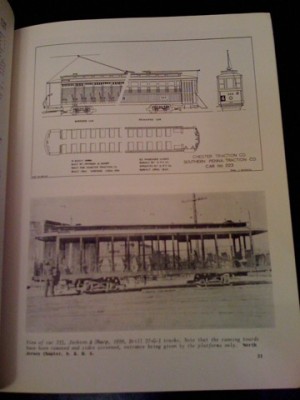
 "Trolleys of Chester County Pennsylvaniaby: Stanley Bowman, Harold Cox")
 "Trolleys of Lower Delaware Valley, Pennsylvaniaby: Harold Cox, Paul J. Schieck")

 "Troy and its remains: A narrative of researches and discoveries made on the site of Ilium, and in the Trojan Plain by: Schliemann, Heinrich")
 "Troy's One Hundred Years - 1789-1889by: Weise, Arthur James")
 "TRUE LIKENESS, A : THE BLACK SOUTH OF RICHARD SAMUEL ROBERTS, 1920-1936by: Roberts, Richard Samuel")
 "True Stories of American Wars from Old Records and Family Traditionsby: N/A")
 "Truro--Cape Cod: Or Land Marks and Sea Marks by: Rich, Shebnah")
 "Trying Times: Alabama Photographs, 1917-1945by: Thomason, Michael V. R.")
 "Trying-out: An Anatomy of Dutch Whaling and Sealing in the Nineteenth Century, 1815-1885by: Schokkenbroek, Joost C.A.")
 "Tsukiji: The Fish Market at the Center of the Worldby: Bestor, Theodore C.")
 "Tudor Men And Institutions; Studies in English Law and Government by: Slavin, Arthur J. (Ed.)")
 "Tudor Puritanism: A Chapter in the History of Idealismby: Knappen, M.M.")
 "Tula: the Toltec Capital of Ancient Mexicoby: Richard A. Diehl")

 "Tumbled House: The Congo at Independence by: Ian Scott")
 "Turkistan: Notes of a Journey in Russian Turkistan Koland Bukhara and Kuldja by: Schuyler, Eugene (Geoffrey Wheeler editor/intro)")
 "Turn Up the Radio!: Rock, Pop, and Roll in Los Angeles 1956-1972by: Kubernik, Harvey")

 "Turrets, Towers, and Temples: The Great Buildings of the World, as Seen and Described by Famous Writersby: Esther Singleton")
 "Tuxedo Park : A Wall Street Tycoon and the Secret Palace of Science That Changed the Course of World War IIby: Jennet Conant")
 "Twachtman in Gloucester : His Last Years, 1900 - 1902by: Hale, Essays by John Douglas & Richard J Boyle, William H Gerdts")
 "Twelfth Annual Report of the Indiana State Board of Agricultureby: Cox, Prof. E.T.")
 "Twelve Thousand Years: American Indians in Maine by: Bruce J. Bourque")
 "Twenty-Four Years a Cowboy and Ranchman in Southern Texas and Old Mexico by: Will Hale")
 "Twilight of the Gods: War in the Western Pacific, 1944-1945 (The Pacific War Trilogy, 3) by: Toll, Ian W.")