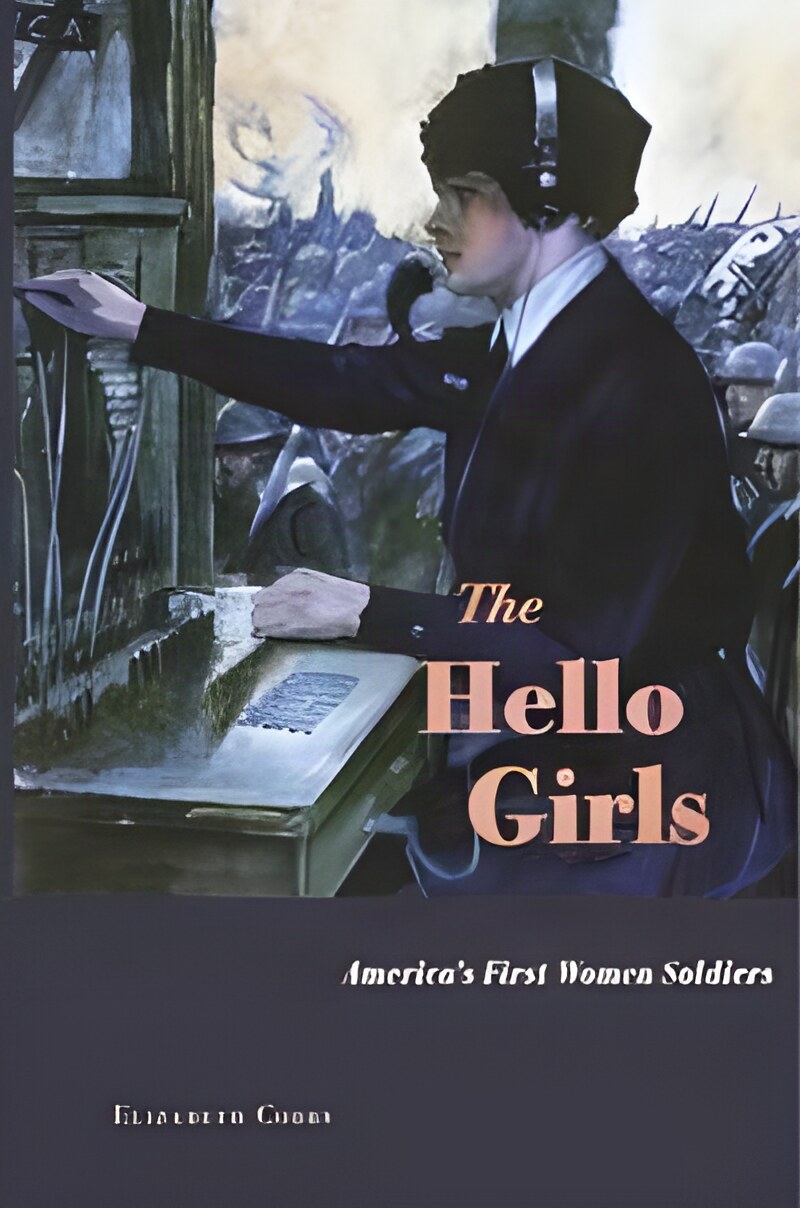
Hardcover. Cambridge MA, Harvard University Press, 3rd pr., 2017, Book: Very Good, Dust Jacket: Very Good, Hardcover in a bright dust jacket, 370 pages with index. Photographs, illustrations, notes, index. "This is the story of how America's first women soldiers helped win World War I, earned the vote, and fought the U.S. Army. In 1918, the U.S. Army Signal Corps sent 223 women to France. They were masters of the latest technology: the telephone switchboard. General John Pershing, commander of the American Expeditionary forces, demanded female 'wire experts' when he discovered that inexperienced doughboys were unable to keep him connected with troops under fire. Without communications for even an hour, the army would collapse". Clean copy.
Softcover. Dekalb IL, Northern Illinois University Press, reprint, 2006, Book: Very Good, Dust Jacket: None, Softcover, 342 pages, b&w illustrations. Prostitutes, shoplifters, vagrants, murderesses -- Dodge tracks the history of such "improper" women as she explores the history of female incarceration in Illinois from 1835 to the present. In court and in prison, these women - some who are considered beyond all hope of reformation - have received vastly different treatment than their male counterparts. A woman's fate in court often hung on officials' estimates of her moral and sexual reputation. Alleged promiscuity, illegitimate births, venereal disease, interracial relationships, or use of alcohol could condemn her in the eyes of judge and jury. Ethnic and social prejudice played a role, too, as most incarcerated women poor, working-class, immigrants, or members of a racial minority. Highly readable yet theoretically sophisticated, Whores and Thieves of the Worst Kind provides a striking collective portrait of incarcerated women. Drawn from extensive primary sources, the voices of female prisoners emerge powerfully and poignantly as individuals tell their stories. Clean copy.
Hardcover. Munich GDR, Te Neues Publishing Company, 1st, 1996, Book: Very Good, Dust Jacket: None, Hardcover, 144 pages. Photos of Naomi Campbell, Helena Christensen, Cindy Crawford, Linda Evangelista, Kristen McMenamy, Kate Moss, Tatjana Patitz, Claudia Schiffer, Christy Turlington and Amber Valetta. About 10 pages dedicated to each, which comprise amazing shots by Lindbergh in full bleed b&w. Preface by Karl Lagerfeld.
Softcover. NY, Automatic Photograph Co., 1995, Book: Very Good, Unique item: 13 rounded cards, 4 X 6 1/2", hole-punched at the top with a string binding. The top card is the title, listing the women shown in the following cards for the 12 months of the year. Each has a pasted down actual photograph of the female celebrity: Katherine Grey, Lillian Russell, Maud Adams, Lulu Tabor, etc. All in excellent condition in the original white box which is worn at the corners.
Softcover. Ashland OR, Hellgate Press, 1st, 2011, Book: Very Good, Dust Jacket: None, Softcover, 230 pages, b&w illustrations. Italy, July 1944. The unendurable insult to Italy's inherently genial way of life brought about by Hitler's storm-troopers and Mussolini's Fascist toadies was both taking its toll on the people of Italy and creating a fledgling underground Resistance movement whose heroic ranks would soon swell to nearly 200,000 brave men and women. Author Leon Weckstein was there--an American GI in combat fighting with and befriending the Partisans. Here is the story, as told through eyewitness accounts and carefully researched historical archives, of the Italian Partisans and their American OSS allies' battle to destroy the Nazi-Fascist regime and expel the culprits from their beloved Italy. Clean, bright copy.
Hardcover. College Station, Texas A&M University , 1st, 1994, Book: Very Good, Dust Jacket: Very Good, Hardcover in a bright dust jacket, 318 pages. In their own vivid words, the women members of the Soviet air force recount their dramatic efforts against the German forces in World War II. These brave women, the first ever to fly in combat, proved that women could be among the best of warriors, withstanding the rigors of combat and downing the enemy. B&w illustrations. Clean copy.
Hardcover. London, T. Carnan and F. Newbery, 4th Ed., 1778, Book: Good, Dust Jacket: None, Hardcover, calf binding with covers detached, 262 pages, engraved frontispiece (depicting Millenium Hall). A 1762 novel by Sarah Scott. It was Scott?'s most significant novel, popular enough to go into four editions very early into its publication. Interest has revived in the 21st century among feminist literary scholars. Elizabeth Montague, Sarah Scott?s sisters, had become a leader of the bluestockings, a coterie of reform-minded individuals. Hall is a fictional embodiment of bluestockings ideals. The book was a best seller when it first appeared in 1762, running through four editions by 1778. Frontispiece detached but all text pages still firmly bound and clean. A candidate for rebinding.
Hardcover. New Brunswick, Rutgers University Press, 1st, 1991, Book: Very Good, Dust Jacket: Very Good, Hardcover in a lightly worn dust jacket, 326 pages. Firth Haring Fabend has studied a large colonial American family over five generations. The Haring family settled in the Hackensack Valley (on the New York/New Jersey border), where they lived, prospered, and remained throughout the eighteenth century. Fabend looks at how this ordinary family of independent, middle-class farmers coped with immigration, established themselves in a community, acquired land and capital, and took part in the social, political, economic, and religious changes of the seventeenth and eighteenth centuries. As she traces the lives of the Harings and their neighbors, Fabend focuses on their marriage and childbearing patterns, living conditions, agricultural methods, and relative economic position. She investigates inheritance patterns, concluding that the position of women deteriorated under English law. She is equally interested in the political and religious life of the family. Name on front fly leaf, light pencil checks in margins to several pages, otherwise clean.
Hardcover. NY, Random House, 1st, 2016, Book: Very Good, Hardcover in a bright, unclipped dust jacket. 1941. The City of Light is dark and silent at night. But in Paris and in the farmhouses, barns, and churches of the French countryside, small groups of ordinary men and women are determined to take down the occupying forces of Adolf Hitler. Mathieu, a leader of the French Resistance, leads one such cell, helping downed British airmen escape back to England. Alan Furst's suspenseful, fast-paced thriller captures this dangerous time as no one ever has before. He brings Paris and occupied France to life, along with courageous citizens who outmaneuver collaborators, informers, blackmailers, and spies, risking everything to fulfill perilous clandestine missions.
Hardcover. NY, Charles Scribner's, 1st US, 1989, Book: Very Good, Dust Jacket: Very Good, Hardcover in a bright, unclipped dust jacket. Set in a windblown resort in Cornwall, a tale of passion, greed, and murder unfolds as Lennox Kemp is drawn to a beautiful, mysterious women, a gruesome killing takes place, and he searches for clues. Clean copy.
Hardcover. NY, Macmillan, reprint, 1932, Book: Very Good, Dust Jacket: None, Hardcover, 257 pages. Later printing. Bound in black cloth boards with paper titles present to the spine and front board. Stuart Chase was an American economist and engineer trained at MIT. His writings covered topics as diverse as general semantics and physical economy. His hybrid background of engineering and economics places him in the same philosophical camp as R. Buckminster Fuller. Chase's thought was shaped by Henry George, Thorstein Veblen and Fabian socialism. Chase spent his early political career supporting "a wide range of reform causes: the single tax, women's suffrage, birth control and socialism." Chase's early books The Tragedy of Waste (1925) and Your Money's Worth (1928) were notable for their criticism of corporate advertising and their advocacy of consumer protection. Although not a Marxist, Chase admired the planned economy of the Soviet Union, being impressed with it after a 1927 visit. Chase stated that "The Russians, in a time of peace, have answered the question of what an economic system is for." It has been suggested that he was the originator of the expression a New Deal, which became identified with the economic programs of American president Franklin Delano Roosevelt. Inscription on front fly leaf, otherwise clean.
Hardcover. Dublin, The Cuala Press, 1st, 1929, Book: Very Good, Dust Jacket: None, Hardcover, one of 425 copies, publisher's device vignette by T. Sturge Moore on title page, minor offsetting to endpapers, else unmarked internally, publisher's cloth-backed blue boards, paper label on spine is chipped, black lettering to upper cover, blue endpapers, spine and extremities slightly toned, else very good. One of 425 copies, printed at the Cuala Press, with the date misprinted as 'MCMXXVIV' on the title page (as noted by Wade). The Cuala Press originally started out as the Dun Emer Press in 1903, founded by Evelyn Gleeson. Influenced by the Gaelic revival occurring in Ireland, it promoted Ireland's cultural heritage, while at the same time training women to work in a useful trade. Eventually the two sisters of W.B. Yeats took over the press, continuing Gleeson's work, and renaming it The Cuala Press in 1908. No dust wrapper, as issued. There is some tanning/foxing to last 8 pages including colophon.
Hardcover. NY, W W Norton & Co., 1st, 1988, Book: Very Good, Dust Jacket: Good, Hardcover in a bright, price-clipped dust jacket with light edgewear, 158 pages. SIGNED BY PLOWDEN on the half title page. Midwestern rural America is captured in photographs of the farmhouses, furnishings, barns, and grain elevators, as well as the men and women who live and work in the region. Clean copy.
Hardcover. Naval Institute Press, 1st, 2014, Book: Very Good, Dust Jacket: Very Good, Hardcover in a bright dust jacket, 192 pages. This collection of stunning shipyard photos, most previously unpublished, showcases the work of a major shipbuilder during the Great War. Although best known for large liners and capital ships, between 1914 and 1920, the Clydebank shipyard of John Brown & Sons built a vast range of vessels. This volume features 200 photos depicting in unprecedented detail every aspect of the yard's output, from the liner Aquitania in 1914 to the cruiser Enterprise, completed in 1920. While ships are the main focus of the book, the photos also chronicle the impact of the war on working conditions in the yard, most noticeably in the introduction of women in large numbers to the workforce. This book is a vivid portrait of a lost industry at the height of its success. Clean copy.
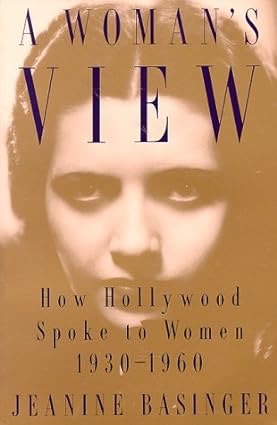
Softcover. Hanover NH, Wesleyan University Press, 1st, 1993, Book: Very Good, Dust Jacket: None, Softcover, 542 pages. Now, Voyager, Stella Dallas, Leaver Her to Heaven, Imitation of Life, Mildred Pierce, Gilda ...these are only a few of the hundreds of "women's films" that poured out of Hollywood during the thirties, forties, and fifties. The films were widely disparate in subject, sentiment, and technique, they nonetheless shared one dual to provide the audience (of women, primarily) with temporary liberation into a screen dream--of romance, sexuality, luxury, suffering, or even wickedness--and then send it home reminded of, reassured by, and resigned to the fact that no matter what else she might do, a woman's most important job was...to be a woman. Now, with boundless knowledge and infectious enthusiasm, Jeanine Basinger illuminates the various surprising and subversive ways in which women's films delivered their message. Basinger examines dozens of films, exploring the seemingly intractable contradictions at the convoluted heart of the woman's genre--among them, the dilemma of the strong and glamorous woman who cedes her power when she feels it threatening her personal happiness, and the self-abnegating woman whose selflessness is not always as "noble" as it appears. Basinger looks at the stars who played these women and helps us understand the qualities--the right off-screen personae, the right on-screen attitudes, the right faces--that made them personify the woman's film and equipped them to make believable drama or comedy out of the crackpot plots, the conflicting ideas, and the exaggerations of real behavior that characterize these movies.
Hardcover. New Haven/Atlanta, Yale/High Museum of Art, 1st, 2001, Book: Very Good, Dust Jacket: Very Good, Hardcover, 176 pages, color illustrated. Like new copy in a bright dust jacket. Expressing the anxieties of the late nineteenth century and the uncertainties of the modern world, Edvard Munch (1862-1944) often depicted in his works dangerously seductive fin de siecle women, sickly figures, and isolated characters in barren landscapes. These powerful, haunting paintings are widely recognized and revered, especially his iconic work The Scream (1893). Yet few admirers of Munch's early works realize that the artist lived well into the twentieth century and was enormously productive almost to the time of his death. This compelling book, focusing on more than sixty of Munch's later paintings, reveals the surprising, vibrant work of a fascinating man who never ceased to grow as an artist. Following decades of restless wandering among the capitals of Europe, Munch suffered a breakdown in Copenhagen in 1908 and retreated to his native Norway. In 1916 he purchased an estate near present-day Oslo where he lived and worked, mostly in his outdoor studio, for the next twenty years. Although Munch never abandoned a deeply introspective approach to image-making,
Hardcover. NY, Rizzoli, 1st, 2002, Book: Very Good, Dust Jacket: Very Good, Hardcover, 192 pages. This volume surveys over thirty groundbreaking women who were able to negotiate the conventional boundaries of their time in order to forge successful careers and build distinguished bodies of work. Includes works by Dorothea Lange, Berenice Abbott, Margaret Bourke-White, etc.
Hardcover. NY, Pegasus , 2nd pr., 2022, Book: Very Good, Dust Jacket: Very Good, Hardcover in a bright, unclipped dust jacket, 415 pages. Why did Agatha Christie spend her career pretending that she was 'just' an ordinary housewife, when clearly she wasn't? As Lucy Worsley says, 'She was thrillingly, scintillatingly modern'. She went surfing in Hawaii, she loved fast cars, and she was intrigued by the new science of psychology, which helped her through devastating mental illness. So why - despite all the evidence to the contrary - did Agatha present herself as a retiring Edwardian lady of leisure? She was born in 1890 into a world which had its own rules about what women could and couldn't do. With access to personal letters and papers that have rarely been seen, Lucy Worsley's biography is both authoritative and riveting. Clean copy.
Hardcover. New Haven CT, Yale University Press, 1st, 2009, Book: Very Good, Dust Jacket: Very Good, Hardcover, 148 pages. This book celebrates the achievements of Alice Guy Blache (1873-1968), the first woman motion picture director and producer. From 1896 to 1907, she created films for Gaumont in Paris. In 1907, she moved to the United States and established her own film company, Solax. From 1914 to 1920, Guy Blache was an independent director for a number of film companies. Despite her immensely productive and creative career, Guy Blache's indispensable contribution to film history has been overlooked. She entered the world of filmmaking at its nascent stage, when films were seen primarily as a medium in the service of science or as an adjunct to selling cameras. Working with Gaumont cameramen and cameras and the new technical advances for the projection of film, she became one of the film pioneers ushering in the new era of motion pictures as a narrative form. Written by cinema history experts and curators, this handsome volume brings to light a critical new mass of Guy Blache's film oeuvre in an effort to restore her to her rightful place in film history.
Hardcover. Philadelphia PA, Philadelphia Museum Of Art, 1st, 2000-06-01, Book: Very Good, Dust Jacket: Good, Hardcover, 198 pages, illustrated throughout in color and b&w. Light edgewear to dust jacket with two faint damp stains to front panel. Clean, tight copy.
Softcover. London, Thames & Hudson, 1st, 2017, Book: Very Good, Dust Jacket: None, Softcover, 224 pages in color. A trip around the globe with fashion photographer Alice Hawkins, capturing unique personalities in locales as far-flung as Texas, India, Nairobi, Cuba, and Jamaica. Displaying an uncommon flair for storytelling that imbues each image with a sense of wonder, Alice Hawkins's work explores the importance of individuality, role play, dressing up, fantasy, and playfulness. Her extended series of stylized "fashion portraits" from around the world question and ultimately celebrate beauty and the representation of the feminine outside of the mainstream. Her photographs for some of the world's leading fashion magazines document the men and women Hawkins has encountered on "road trips" in far-flung locations, focusing on people she sees on the street or locals whose particular style or appearance she has sought out in lieu of fashion models'. Mild bumps to corners, otherwise like new.
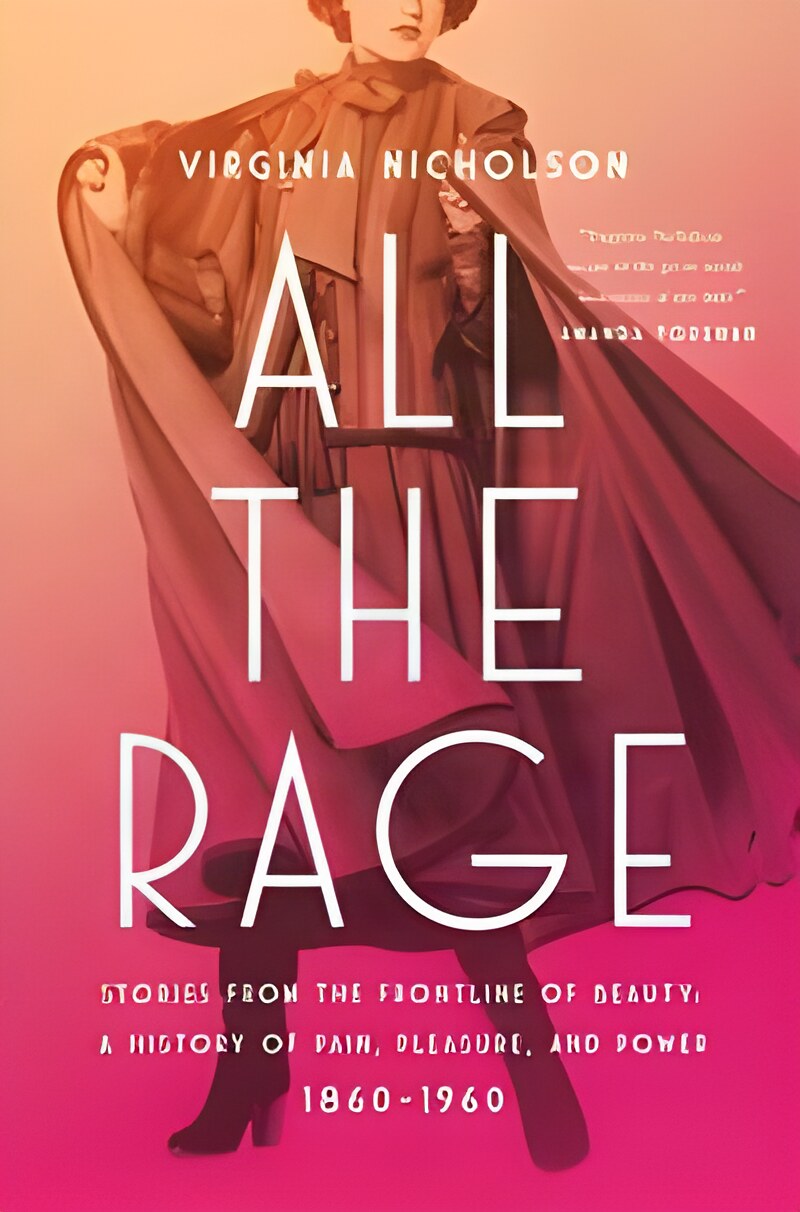
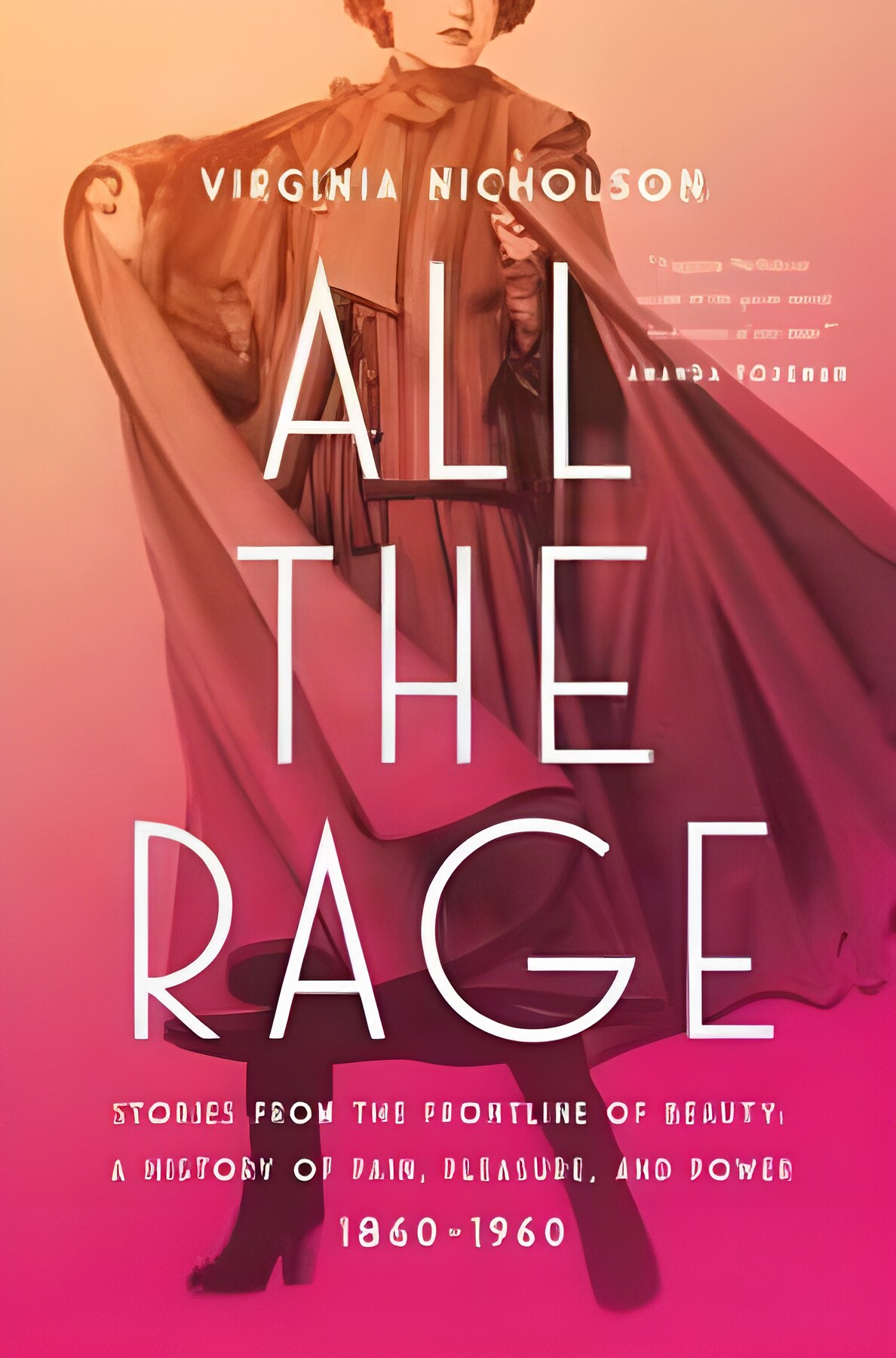
Hardcover. NY, Pegasus Books, 1st, 2024, Book: Very Good, Dust Jacket: Very Good, Hardcover in a bright, unclipped dust jacket, 519 pages. At the heart of this history is the female body. The century-span between the crinoline and the bikini witnessed more mutations in the ideal western woman's body shape than at any other period. In this richly detailed account, Virginia Nicholson, described as 'one of the great social historians of our time.' (Amanda Foreman) and a truly brilliant researcher has produced a most remarkable social history revealing the power, the pain and the pleasure involved in adorning the female body. She asks how custom, colour, class and sex fit into the picture, and shrewdly charts how the advances made by feminism collided with the changing shape of desirability. Full of surprising facts - the feminist plastic surgeon, the radioactive corset - alongside stories of the 'New Women' who discovered freedom by bobbing their hair, those who were the early adopters of trousers, and early Black beauty entrepreneurs, this book chronicles the codes, the contradictions, the lies and the highs of beauty.
Hardcover. NY, Pegasus Books, 1st, 2024, Hardcover in a bright, unclipped dust jacket, 519 pages. At the heart of this history is the female body. The century-span between the crinoline and the bikini witnessed more mutations in the ideal western woman's body shape than at any other period. In this richly detailed account, Virginia Nicholson, described as 'one of the great social historians of our time.' (Amanda Foreman) and a truly brilliant researcher has produced a most remarkable social history revealing the power, the pain and the pleasure involved in adorning the female body. She asks how custom, colour, class and sex fit into the picture, and shrewdly charts how the advances made by feminism collided with the changing shape of desirability. Clean copy.


 "10 Women by Peter Lindberghby: Lindbergh, Peter")



 "1896 Calendar of Beautyby: N/A")







 "A Mouthful of Sandby: M. R. D. Meek")





 "After the Scream: The Late Paintings of Edvard Munchby: Prelinger, Elizabeth")
 "Against the Odds: Women Pioneers in the First Hundred Years of Photographyby: Sandler, Martin W.")




 "Alice Neelby: Temkin, Ann")