Hardcover. Moscow, Progress Publishers, 1st, 1971, Book: Very Good, Dust Jacket: Very Good, Hardcover in a bright dust jacket, 357 pages. "On March 18, 1871, the workers of Paris expelled the bourgeois rulers of the city and took power into their own hands , a shining achievement never to be forgotten. Ten days later, on March 28, they set up the Paris Commune, the world's first proletarian state. It was of an entirely new type, being governed by the people and for the people, with all its social and political measures taken in the interest of the working people, the working class above all." -from the Preface. First printing of this selection, published for the centenary of the Commune. With ribbon bookmark. Clean copy.
Hardcover. NY, A. T. Goodrich, 1st, 1839, Book: Good, Hardcover, publisher's ribbed dark green cloth, gilt-lettered at the spine. Cloth tight and sound. 12mo, With four views and nine (of 10) maps, all in very good condition. The map opposite page 78 pertaining to the Niagara Falls area has been excised. Previous owner's 1840 ownership signature on reverse on copyright page bleeds through to title page. Water stain to front endpapers, affects first 10 pages, otherwise tight and clean.
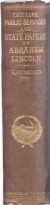
Hardcover. NY, Derby & Miller, 1st, 1865, Book: Very Good, Dust Jacket: None, Hardcover embossed brown cloth with bright gilt title and decoration on spine. 808 pages plus 6 pages of ads. Beautiful steel engraving frontispiece of Lincoln engraved by A. H. Ritchie. Illustrated with 15 additional engravings. The book is tight and square. Raymond was the Editor of the New York Times and he brought this volume out with amazing dispatch after the assassination of Lincoln. Frank B. Carpenter, who had lived in the White House for an extended period , added a section , "Anecdotes And Personal Reminiscences Of President Lincoln." Mild wear to rear cover, clean copy.
Softcover. Evanston IL, Evanston Publishing, 1st, 1993, Book: Very Good, Dust Jacket: None, Softcover, 221 pages, b&w illustrations. This biography chronicles the experiences of White-Man-Runs-Him, Crow Indian warrior, chief, and scout for General Custer. Clean copy.
Hardcover. Wichita KS, Kansas Aviation Museum , 1st, 2000, Book: Very Good, Dust Jacket: Very Good, Hardcover in a bright dust jacket, oblong format, 127 pages with many b&w historical photos. Susan Thompson's clearly written, well-illustrated history of what was one of the nation's premier airports in the pre-jet age is a great read for serious and casual aviation fan and anybody with a general interest in aviation history. Wichita's Municipal Airport was the primary stop-off point for coast to coast air travel in the days that preceded long-distance flight. Clean copy.
Hardcover. UK, Cambridge At the University Press , 1st, 1952, Book: Good, Dust Jacket: None, Hardcover, red cloth with faded spine, 523 pages .VOL. 2 ONLY. Includes bibliography and index. Illustrated with black-and-white plates and genealogy foldout chart. Comprehensive study on the Kingdom of Jerusalem and the Frankish East during the Crusades, by well-noted historian Steven Runciman. Lacks dust jacket. Clean copy.
Softcover. West Danville VT, United Methodist Church, 1st, 1976, Book: Very Good, Dust Jacket: None, Softcover booklet, stapled wrappers, 16 pages. Indian Joe was a Native American guide active in the early conflicts and settlement of Vermont in the 1700s. B&w illustrations, photo of his tomb in the Oxbow cemetery in Newbury, Vermont. Clean copy.
Hardcover. NY, G. P. Putnam's Sons, 1st, 1954, Book: Very Good, Dust Jacket: Fair, Hardcover in an edgeworn, price-clipped dust jacket, spine faded. 312 pages. SIGNED BY ELEANOR ROOSEVELT on a tipped-in page following the front fly leaf. This publication by Mrs. Roosevelt and Lorena Hickok came well after their days in the White House together. It tracts the activities of women in politics from Stanton to 1952 but concentrates on the 1948-1952 period where Hickok's journalistic experience would be particularly useful. The book concludes with a " How To Break Into Politics " chapter. However, the highlight of the book is Hickok's chapter on Eleanor which Eleanor agreed to reluctantly and did not see before publication. Clean copy.
Softcover. Helena MT, FarCountry Press, 2nd pr., 2009, Book: Very Good, Dust Jacket: None, Softcover, 295 pages, b&w illustrations. In this remarkable and important book, Sarah Carter introduces us to some of Montana's first women homesteaders through their journals and other writings. By shedding light on these determined nineteenth- and early twentieth-century pioneers, Carter reveals inspiring stories filled with joy, tragedy, and redemption.
Hardcover. Boston, Little, Brown and Company, 1st, 1948, Book: Good, Dust Jacket: None, Hardcover, beige cloth hardcover book in good condition. McWilliams examines the growth of discrimination and persecution of Jews in America from 1877 to 1948 and the "myths with which the anti-semite surrounds his position." Light shelfwear, no dust jacket. Clean copy.
Hardcover. NY, St. Martin's, 1st, 1999, Book: Very Good, Dust Jacket: Very Good, Hardcover, 342 pages. Dark blue cloth covers, gilt titles, color-illustrated dust jacket, profusely illustrated with b&w plates. A comprehensive chronicle of the various arctic expeditions, lasting from the sixteenth to the twentieth century, that searched for a Northern route by sea to China, includes accounts of the ill-fated John Franklin effort and Amundsen's eventual success. Clean copy.
Hardcover. New York, privately printed, reprint, 1906, Book: Very Good, Dust Jacket: None, 13 page essay, Franklin's famous essay on farting. Here printed and bound in a 64 page signature, most of the pages therefore blank. Three-quarter leather with marbled boards, gold lettering on spine. Limited to 250 copies, this being #90.
Hardcover. Montpelier, Miss A.M. Hemenway, 1st, 1882, Book: Fair, Dust Jacket: None, 592 pages. Red cloth covers with black stamped decoration and gilt lettering. Edgewear and fraying on spine. age discoloration on pages, black & white illustrations, binding cracked, multiple pages loose and some separated. Previous owner's marking on front end paper.
Hardcover. Baton Rouge, Louisiana State University , 1st, 1989, Book: Very Good, Dust Jacket: Good, Hardcover, sticker residue on front of dust jacket. 392 pages. Written in the 1840's these are Thomas Bang Thorpe's sketches of the old Southwest, Edited, with a Critical Introduction and Textual Commentary, by David C. Estes .
Hardcover. Boston, American Unitarian Association, 1st, 1905, Book: Very Good, Dust Jacket: None, Hardcover, black cloth with white lettering, 232 pages. Collection of six essays, including "Atlanta University" by Professor W. E. Burghardt Du Bois in which the author discusses the significance of Atlanta University. Other institutions and authors include: Howard University by Prof. Kelly Miller; Berea College, by President William G. Frost; Tuskegee Institute by Prof. Roscoe Conkling Bruce; Hampton Institute by Principal H. B. Frissell; and Fisk University by President James G. Merrill. From a church library with label on spine, bookplate and stamp on front endpapers. Otherwise a sharp copy with no other markings or residue. Scarce in original edition.
Hardcover. New York, Alfred A. Knopf, 1st, 1986, Book: Very Good, Dust Jacket: Very Good, 668 pages. Hardcover. B/w illustrations throughout. Gilt title on spine. Dust jacket unclipped. Front cover board slightly splayed. Dust jacket has a touch of agewear. In good shape for its age.
Hardcover. Boston, Gray & Bowen, 1st, 1830, Book: Good, Dust Jacket: None, Hardcover, 312 pages, leather spine and corners with marbled boards. Gilt title on spine. Copyright page states "on the eleventh day of November, A. D. 1830." With frontispiece folding map of the eclipse of Feb 12th, in its passage across the United States. A very good copy with mild wear to leather, map in very good condition. moderate foxing to text. There is some minimal marking, numbers and light residue to endpapers.
Softcover. Montpelier, VT, Vermont Bureau of Publicity, 1st Edition, 1917, Book: Very Good, Dust Jacket: None, 63 pages. Softcover pamphlet with string binding. Buff, textured endpapers, some tanning throughout from age. B/w illustrations throughout. Wrapper has some moisture staining and other soil, but otherwise very good and intact (see image).
Hardcover. Leicester University Press, 1st, 1983, Book: Very Good, Dust Jacket: Very Good, Hardcover in a bright dust jacket, 262 pages, b&w photographs. Minor shelf wear to dust jacket. Else a very clean, tight copy.
Hardcover. London, England, Pickering & Chatto, 1st, 2001, Book: Very Good, Dust Jacket: None, Six volumes, Hardcovers. 1636-1691. Volume 1: 521 pages. Two bumps to front cover board edge. Volume 2: 674 pages. front cover board top right corner bump. Volume 3: 445 pages. Volume 4: 528 pages. Volume 5: 474 pages. Volume 6: 616 pages. Some b/w illustrations. Blue cover boards, gilt title on black with decoration on spines. Previous owner's name and information on flyleaf of volumes 1, 2, and 6. Pages clean and bright. Binding tight. Spines straight. Beautiful set right out of a professor's library. Domestic Shipping Only.
Hardcover. London, England, Gret Western Railway, 1st edition, 1925, Book: Very Good, Dust Jacket: None, 154 pages. Hardcover. Color illustrated frontispiece, color and b/w illustrations, including several fold out blueprint diagrams, throughout. Previous owner's ID stamp on front flyleaf. Red cover boards (some fading), black quarter cloth, gilt title on spine and front cover board. Pages unmarked, some light tanning from age. Binding good, spine straight. With additional chapter on "Monastic Life and Buildings" by A. Hamilton Thompson, M.A., D.LITT., F.S.A. Professor of Mediaeval History in the University of Leeds. With One Hundred Illustrations by Photographic Reproduction, fifty-six drawings, thirteen plans, seven color plates and map (in pocket on back endpapers).
Hardcover. Boston, Houghton Mifflin , 1st, 1929, Book: Very Good, Dust Jacket: None, Hardcover, illustrations by F.C. Yohn. Color frontispiece. illustrated end papers. Book store stamp on rear paste-down. light edgewear, otherwise clean.
France, Michelin & Co., 1st, 1931, Book: Very Good, Dust Jacket: Very Good, Hardcover, 176 pages. Guide book to WW1 battlefield, illust. with black & white photos, maps (color two-page of Verdun). End-pages with ads. Previous owner's signature front endpaper. Dust jacket in excellent condition.
Hardcover. New York, Harper & Brothers, reprint , 1923, Book: Very Good, Dust Jacket: None, Hardcover, 274 pages. Illustrated with full color and black & white plates by Frederic Remington. Brown paper covered boards with cover pastedown of Remington drawing. black cloth spine. Copyright page with 1923 date and Harper's G-B code indicating later printing of 1st edition. Light foxing to outer edges of some pages and plates. Fraying to cloth at top of spine. Light darkening of pages close to gutter. Still an attractive copy.
Softcover. Bloomington, IN, Indiana University Press, 1st, 2015, Book: Very Good, Dust Jacket: None, 232 pages. Softcover. A very clean, unmarked copy with only minor edgewear. Black and white photographs throughout. The center of the art world before the war, Paris fired the Nazis' greed. The discovery of more than 1,500 prized paintings and drawings in a private Munich residence, as well as a recent movie about Allied attempts to recover European works of art, have brought Nazi plundering back into the headlines, but the thievery was far from being limited to works of art. From 1942 onwards, ordinary Parisian Jews-mostly poor families and recent immigrants from Eastern Europe-were robbed, not of sculptures or paintings, but of toys, saucepans, furniture, and sheets. Witnessing the Robbing of the Jews tells how this vast enterprise of plunder was implemented in the streets of Paris by analyzing images from an album of photographs found in the Federal Archives of Koblenz. Brought from Paris in 1945, the photographs were cataloged by the staff of the Munich Central Collecting Point. Beyond bearing witness to the petty acts of larceny, these images provide crucial information on how the Germans saw their work. They enable us to grasp the "Nazi gaze" and to confront the issue of the relation between greed and mass destruction.
Hardcover. Mohr Siebeck, 1st, 1991, Book: Very Good, Dust Jacket: Very Good, Hardcover, 654 pages, b&w illustrations. Light shelf-wear to dust jacket, previous owner's stamp on front end paper. Faint foxing to top edge, otherwise a clean, tight copy.
Hardcover. New Haven CT, Yale University Press, 1st, 1977, Book: Very Good, Dust Jacket: Very Good, Two volume set. 575 pages, 63 b&w illustrations. Latrobe (1764-1820), English-born architect of the United States Capitol under Jefferson, Madison, and Monroe, set the course for a vast amount of nineteenth-century American architecture with such works as the Capitol, the Bank of Pennsylvania, and the Baltimore Cathedral. A pioneering engineer as well, he designed the nation"s first comprehensive steam-powered waterworks in Philadelphia. Latrobe combined his professional concerns with an astonishing range of other interests and an acutely ob- servant eye. His papers form one of the finest existing literary and pictorial descriptions of the young republic.
Hardcover. Bennington, Vermont Heritage Press Inc./Vermont Historical Society, 1st, 1984, Book: Very Good, Dust Jacket: None, Non-paginated. Hardcover with slipcase. One of a limited edition of 250 copies - does not include the additional map portfolio. Measures: 15.75"L X 12.25"W. Blue cloth covers with titles and decoration in silver. Features black & white illustrations, maps - including 3 fold-out maps. Clean, tight copy.
Hardcover. GR, DZA Verlag fur Kultur und Wissenschaft, 1st, 1994, Book: Very Good, Dust Jacket: None, Hardcover, 161 pages, no dust jacket, pictorial boards. A collection of essays and photographs on the city of Dresden, ending in it's destruction at the end of WWII. Foreward by Herbert Wagner.
Hardcover. Barton, Frederick W. Baldwin, 1st, 1886, Book: Good, Dust Jacket: None, 303 pages. Hardcover. Black & white steel engraved portraits. Gilt titles on leather spine. Crack along top 5" of front hinge. Rubbing to cover edges. All edges gilt. Clean, unmarked pages.
Hardcover. np, Privately printed, 1st, 1914, Book: Very Good, Dust Jacket: None, 225 pages. Hardcover with no dust jacket. Gilt lettering and decoration on front cover. Previous owner's name on front end paper. Light edgewear to covers.
Hardcover. Norwich, Norwich University, First Edition, 1920, Book: Very Good, Dust Jacket: None, 156 pages. Hardcover. Red pebbled cloth covers with gilt titles to cover. Toning throughout. Pages untrimmed, and many unopened. Frontis illustration, Captain Alden Partridge, Founder. Black & white illustrations throughout. Clean & unmarked copy.
Hardcover. New York, Simon & Schuster, First Edition, 2017, Book: Very Good, Dust Jacket: Very Good, 599 pages. Hardcover. Wine cloth boards with gilt titles to spine & illustrated, sepia toned endpapers. Profusely illustrated in full color & black & white, images beautifully presented to accompany text. Bright dust jacket with marginal wear. Clean & unmarked copy.
Hardcover. Boston, Beacon Press, 1st, 2001, Book: Very Good, Dust Jacket: Very Good, Hardcover, pages. Life on the run as an activist during Vietnam Protests of 1960s America. Clean, bright copy of the first printing.
Hardcover. New York, James Pott & Co, 1st, 1911, Book: Very Good, Dust Jacket: None, 340 pages. Red cloth covers, gilt titles and gilt embossed illustration to front, top edge gilt, tissue-protected b&w frontispiece, 16 b&w plates. Very light edgewear and rubbing to covers, spine lightly faded, pages crisp and unmarked, stiff binding; a very clean, tight copy.
Hardcover. Chicago, University of Chicago Press, 1st, 2002, Book: Very Good, Dust Jacket: Very Good, Hardcover in a bright dust jacket, 293 pages. Despite John Stuart Mill's widely respected contributions to philosophy and political economy, his work on political philosophy has received a much more mixed response. Some critics have even charged that Mill's liberalism was part of a political project to restrain, rather than foster, democracy. Redirecting attention to Mill as a political thinker, Nadia Urbinati argues that this claim misrepresents Mill's thinking. Although he did not elaborate a theory of democracy, Mill did devise new avenues of democratic participation in government that could absorb the transformation of politics engendered by the institution of representation. More generally, Urbinati assesses Mill's contribution to modern democratic theory by critiquing the dominant "two liberties" narrative that has shaped Mill scholarship over the last several decades. As Urbinati shows, neither Isaiah Berlin's theory of negative and positive freedom nor Quentin Skinner's theory of liberty as freedom from domination adequately captures Mill's notion of political theory. Drawing on Mill's often overlooked writings on ancient Greece, Urbinati shows that Mill saw the ideal representative government as a "polis of the moderns," a metamorphosis of the unique features of the Athenian polis: the deliberative character of its institutions and politics; the Socratic ethos; and the cooperative implications of political agonism and dissent. The ancient Greeks, Urbinati shows, and Athenians in particular, are the key to understanding Mill's contribution to modern democratic theory and the theory of political liberty.
Hardcover. Rockland, C. E. Hunt & Co., 1st, 1878, Book: Fair, Ends at page 502; MIssing back pages. B&w frontispiece and illustrations throughout. Ornately decorated red cloth cover with gilt titles and decoration. Cover separated with soiling, rubbing, and edgewear. Foxing to edges and some light spotting throughout.
Hardcover. NY, Time Life, reprint, 1984, Book: Very Good, Dust Jacket: None, 436 pages. Hardcover with no dust jacket. Dark blue leather bound with gilt titles to front cover and spine. Embossed decoration on front cover. Gilt text block edges, red ribbon marker. Clean, tight copy.
Hardcover. NY, Time Life, reprint, 1981, Book: Very Good, Dust Jacket: None, 546 pages. Hardcover with no dust jacket. Dark blue leather bound with gilt titles to front cover and spine. Embossed decoration on front cover. Gilt text block edges, red ribbon marker. Clean, tight copy.In 1863 Horace Porter, then a captain, met Ulysses S. Grant as Grant commenced the campaign that would break the Confederate siege at Chattanooga. After a brief stint in Washington, Porter rejoined Grant, who was now in command of all Union forces, and served with him as a staff aide until the end of the war. Porter was at Appomattox as a brevet brigadier general, and this work, written from notes taken in the field, is his eyewitness account of the great struggle between Lee and Grant that led to the defeat of the Confederacy.
Hardcover. Toronto, McClelland & Stewart, 1st, 1923, Book: Good, Dust Jacket: None, Hardcover, 430 pages, with illustrations throughout. Gilt titles and decorated cover on blue cloth. Minor corner and spine edge wear, cracked binding at front and rear end paper. Yellowing on pages 104 and 105, otherwise, clean and tight overall. A book about the sea battles of the War of 1812 by a noted Canadian naval historian.
Hardcover. Washington DC, Island Press, 1st, 1998, Book: Very Good, Dust Jacket: Very Good, 489 pages. Hardcover. gilt title on spine. B/w illustrations throughout. Dust jacket unclipped. Dust jacket has a touch of age-wear (chipping at corners/creases), but very good. Very clean and bright inside. Boards bound in yellow cloth, excellent. Binding tight. In beautiful shape.


 "The North American Tourist by: N/A")


 "The Life and Public Services of Abraham Lincoln Sixteenth President of the United States together with His State Papers including His Speeches Addresses Messages Letters and Proclamations and the Closing Scenes connected with His Lif")



![THE HISTORY OF THE CRUSADES - THE KINGDOM OF JERUSALEM AND THE FRANKISH EAST 1100-1187 [VOLUME TWO]by: Steven Runciman](javascript:largeIMTop('https://www.browsingisarousing.com/shop/images/THE-HISTORY-OF-THE-CRUSADES-THE-KINGDOM-OF-JERUSALEM-AND-THE-FRANKISH-EAST-1100-1187-VOLUME-TWO_by_S399373-454915.jpg','https://www.browsingisarousing.com/shop/images/THE-HISTORY-OF-THE-CRUSADES-THE-KINGDOM-OF-JERUSALEM-AND-THE-FRANKISH-EAST-1100-1187-VOLUME-TWO_by_S399373-454915.jpg',0,'399373',0,'') "THE HISTORY OF THE CRUSADES - THE KINGDOM OF JERUSALEM AND THE FRANKISH EAST 1100-1187 [VOLUME TWO]by: Steven Runciman")

 "Ladies Of Courage (SIGNED COPY)by: Roosevelt, Eleanor and Lorena Hickok")


 "Cambridge Ancient History,Third Edition, Volume II, Part I: History of the Middle East and the Aegean Region 1800-1380 BCby: Edwards, I.E.S., C.J. Gadd, H.G.L. Hammon")
 "To the Royal Academy of Brusselsby: Franklin, Benjamin")
 "Some Ancestors and Descendants of David Preston Parker & Mary Louise Pottsby: Parker, Thomas M.")

 "New Collection of Thomas Bangs Thorpe's Sketches of the Old Southwestby: Estes, David C. (Ed)")
 "From Servitude to Service, Being the Old South Lectures on the History and Work of Southern Institutions for the Education of the Negroby: Du Bois, W.E.B. and others")
 "Voyagers to the West: A Passage in the Peopling of America on the Eve of the Revolutionby: Bailyn, Bernard")
 "Lakes of Eastern Vermontby: n/a")


 "The Royal Dockyards during the Revolutionary and Napoleonic Warsby: Morriss, Roger")
 "Correspondence of Robert Boyle, The (Six volumes, complete set)by: Hunter, Michael (Editor), Antonio Clericuzio (Editor), Lawrence M. Principe (Editor)")


 "Abbeysby: James, M.R.")


 "French Occupation of the Champlain Valley from 1609 to 1759by: Coolidge, Guy Omeron")
 "Hero of Vincennes, The: The Story of George Rogers Clarkby: Thomas, Lowell")
 "Verdun - Argonne (1914-1918)by: Michelin Co.")
 "Cowboy Upby: Introduction: Johnson, Dirk, Photographer: Frank, Arthur")
 "Book of the American Indian, Theby: Garland, Hamlin")
 "Witnessing the Robbing of the Jews: A Photographic Album, Paris, 1940-1944by: Gensburger, Sarah")
 "Vermont Voices, 1609 Through The 1990's: A Documentary History of the Green Mountain Stateby: Graffagnino (Editors), J. Kevin/Samuel B. Hand/Gene Sessions")
 "Second Chance: Two Centuries of German-speaking Jews in the United Kingdom (Schriftenreihe Wissenschaftlicher Abhandlungen Des Leo Baeck Instituts)by: Carlebach, Juli")
 "Wandering the Corners of Elgin Spring Farm 2009by: Bessette, Earl W.")
 "Virginia Journals of Benjamin Henry Latrobe, The: 1795-1798 (2 Volumes)by: Benjamin Henry Latrobe; Editor-Edward Carter II; Editor-Angeline Polites")
 "Atlas of Lake Champlain 1779-1780by: Chambers, R. N., Capt. William/J. Kevin Graffagnino")
 "Verbrannt bis zur Unkenntlichkeit - die Zerstorung Dresdens 1945 (German Edition)by: N/A")
 "Biography of the Bar of Orleans County, Vermontby: Baldwin, Frederick W.")
 "Dedication of the Statue to Brevet Major-General William Wells and the Officers and Men of the First Regimanet Vermont Cavalryby: N/A")
 "Norwich University A Record of the Celebration of the One Hundredth Anniversary of Its Founding by: Flint (Editor), K. R. B./C. V. Woodbury & C. N. Barber")


 "Fifty Years on the Mississippi: Gould's History of River Navigationby: Gould, E.W.")
 "Leonardo Da Vinciby: Isaacson, Walter")
 "Fugitive Days: A Memoirby: Ayers, Bill")
 "Coburgs, The: The Story of the Rise of a Great Royal Houseby: D'Auvergne, Edmund B.")
 "Mill on Democracy: From the Athenian Polis to Representative Governmentby: Urbinati, Nadia")
 "History of Turkey and the War in the Eastby: Hammond, R. A.")
 "Three Years in the Sixth Corps: A Concise Narrative of Events in the Army of the Potomac, from 1861 to the Close of the Rebellion, April, 1865 (Collector's Library of the Civil War)by:")
 "American Marine: The Shipping Question in History and Politicsby: Bates, William W.")
 "Campaigning with Grant (Collector's Library of the Civil War)by: Porte, Horace")
 "Glorious \"Shannon's\" Old Blue Duster and Other Faded Flags of Fadeless Fame, Theby: Snider, C. H. J.")
 "Green Versus Gold: Sources in California's Environmental Historyby: Merchant (Ed.), Carolyn")

