Hardcover. NY, New York University Press, 1st, 1970, Book: Very Good, Dust Jacket: Very Good, Hardcover in a bright dust jacket, 116 pages, b&w illustrations. Name on front fly leaf otherwise clean.
Hardcover. NY, Oxford University Press, 1st, 1992, Book: Very Good, Dust Jacket: Very Good, Hardcover in a bright dust jacket, 418 pages. The first book to show how the Civil War transformed gender roles and attitudes toward sexuality among Americans. This unique volume brings together a wide spectrum of critical viewpoints by newly emerging scholars as well as distinguished authors in the field to show how gender became a prism through which the political tensions of antebellum America were filtered and focused. Through the course of the book, many fascinating subjects are explored, from new "manly" responsibilities both black and white men had thrust upon them as soldiers, to women's roles in the guerrilla fighting, to the wartime dialogue on interracial sex. In addition, an incisive introduction by Pulitzer Prize-winning historian James McPherson helps place these various subjects within an overall historical context. Copyright page states first edition, but no price on dj says Book Club. Clean, bright copy.
Hardcover. Norman OK, University of Oklahoma Press, 2nd pr., 1968, Book: Very Good, Dust Jacket: Very Good, Hardcover in a bright, price-clipped dust jacket, 349 pages. Dual biography of two authors of the Declaration of Indepenence, their subsequent feud, and reconciliation. Name on front fly leaf, otherwise clean.
Softcover. New Lebanon NY, Omega Publications, 1st, 2007, Book: Very Good, Dust Jacket: None, Softcover, 234 pages, b&w photos. Everything about Noor Inayat Khan was extraordinary. A great-great-great granddaughter of Tipu Sultan, the Tiger of Mysore, she was born in Moscow to an American mother and an Indian Sufi Muslim father. Due to the unrest in Russia the family moved to London and from there to France where she spent the happiest years of her life studying music, child psychology and writing children's books. In 1940, her father having deserted the family and died in India years before, the family moved once again to England where Noor was trained as a wireless operator with the aim of sending her to German-occupied France to join up with the resistance. Noor was small and delicate, emotional, imaginative, shy, easily flustered and distracted. On the other hand there was her steely determination to serve her country, the desperate need for wireless operators and her perfect French. She was sent on her mission in June 1943. Her biography contains all the elements of an exciting spy novel but it was horrific and deadly reality. Clean copy.
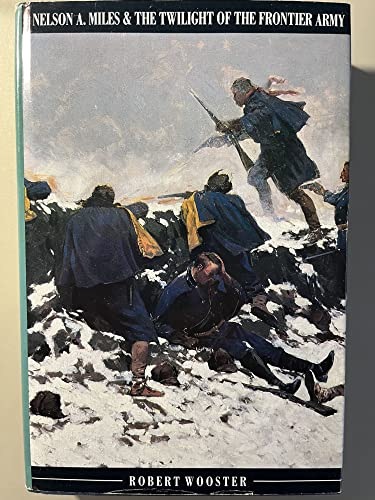
Hardcover. Lincoln NE, University of Nebraska Press, 1st, 1993, Book: Very Good, Dust Jacket: Very Good, Hardcover in a bright dust jacket, 391 pages, b&w illustrations. An excellent study of a military commander who transformed the American Frontier and the West. Based on a wide range of sources, including materials only recently made available to researchers, this first complete, carefully documented biography of Miles skillfully delineates the brilliant, abrasive, and controversial tactician whose career in many respects epitomized the story of the Old Army. Nelson A. Miles was probably the best Indian fighter produced by the U.S. Army between 1865 and 1890, figuring prominently in some of the most famous and significant conflicts between whites and Native Americans. This carefully documented biography of Miles skillfully delineates the brilliant, abrasive, and controversial tactician whose career in many respects epitomized the story of the Old Army. Clean copy.
Hardcover. London, Routledge & Kegan Paul, 3rd pr., 1950, Book: Very Good, Dust Jacket: None, Hardcover, maroon cloth with gilt lettering on spine. 439 pages, b&w illustrations with fold-out map of Polo's travels in rear. First published in 1931, this is the 1950 third printing. None of the manuscripts which have come down to us represents the original form of Marco Polo's narrative, but it is clear that certain texts are closer to the lost original than others. Entrusted with the task of preparing a new Italian edition of Marco Polo, Benedetto discovered many unknown manuscripts. He carefully edited the most famous of the manuscripts (the Geographic text) and collated it with the other best known ones. * An invaluable index has been added to Aldo Ricci's of Benedetto's text, which includes all the identifications made in the Geographic text and also later editions by Marsden (1818), Pauthier (1865) and Yule (1871). * The difficulty of following Polo on his many journeys has also been simplified by the process of distinguishing between those places on his main route to China and his return journey by sea to Persia and those places which he visited during his stay in China and those he never visited at all. Clean copy.
Hardcover. Erie PA, Ashby Printing Company, reprint, 1913, Book: Very Good, Dust Jacket: None, Hardcover, bright blue cloth with gilt lettering. Frontis. Illustrated w/ b/w photos. Previous owner's name on front fly leaf. Interior leaves are clean and tight. A memoir of Commodore Perry's victory of the battle of Lake Erie against a British squadron, September 1813. Includes period correspondence and memoranda of Sailing Master Daniel Dobbins. Second edition of this history first published in 1876. Standard account by this captain (1800-76) whose "father. was a pioneer in the construction of the squadron, and served actively upon the upper lakes during the war" -- which inspired and informed this chronicle of the pivotal War of 1812 battle off the coast of Ohio in which the American fleet gained control and turned the tides against the British.
Hardcover. Rutland VT, Tuttle Co., 1st, 1926, Book: Very Good, Dust Jacket: None, Hardcover, green cloth, 83 pages, b&w illustrations. This copy has an actual photo of Peck taped to the page opposite the title page (taken in March 1929, 3 years after this book was published). The author was the town clerk for 40 years, the first 58 pages devoted to Ira's history. The second part is Peck's recollections of his experiences in the Great West 1866-67. Some of the white lettering on the book's cover has been chipped off but the volume is in very good, tight shape.
Hardcover. NY, Zone Books, 1st, 2022, Book: Very Good, Dust Jacket: Very Good, Hardcover in a bright dust jacket, 214 pages. The philosopher and literary and cultural critic Samuel Weber returns to past narratives of plagues and pandemics to reproduce the myriad ways individual and collective, historical and actual, intentional and unintentional forces converge to reveal how cultures and societies deal with their vulnerability and mortality. The "preexisting conditions"-a phrase taken from the American healthcare industry-of these very cultures converge and collide with the urgent situations of individuals confronting the plague. Texts drawn from the Bible, Sophocles, Thucydides, Boccaccio, Luther, Defoe, Kleist, Holderlin, Artaud, and Camus demonstrate how in the process of narration individuals come to reconsider their relationship to others, to themselves, and to the collectives to which they belong and on which they depend. Clean copy.
Hardcover. Burlington VT, Evergreen Press, 2nd pr., 2005, Book: Very Good, Dust Jacket: Very Good, Hardcover in a bright dust jacket, 105 pages, b&w illustrations. This pictorial history chronicles the rise and fall of the White River Valley railroad. Like new condition.
Hardcover. Fresno CA, Mariposa County Historical Society, 1st, 1979, Book: Very Good, Dust Jacket: None, Hardcover, orange cloth stamped in black, 118 pages, b&w illustrations. Horace C. Snow, the writer of the "Dear Charlie" letters, was one of many young men who came to California to make their fortune in the gold fields. Laid in is a 8-page supplement containing a lost letter not included in the first edition. Signed on title page by a member of the historical society. Spine faded. Clean copy.
Hardcover. Saranac Lake NY, Adirondack Yesteryears, 2nd pr., 1972, Book: Very Good, Dust Jacket: Very Good, Hardcover in a bright dust jacket, 152 pages, b&w illustrations. Edited and with Biographical Sketch by Maitland C. De Sormo. Endpapers map.
Hardcover. Washington DC, United States Government Printing Office, 4th Ed., 1925, Book: Very Good, Dust Jacket: None, Hardcover, green cloth with gilt lettering, 270 pages, b&w photos throughout. This 4th Edition contains new information on 10 new national monuments and three new pictures, updated from the 1921 3rd ed. Name on inside front cover, otherwise tight, clean copy.
Softcover. Baltimore MD, Johns Hopkins University, 1st pbk., 2006, Book: Very Good, Dust Jacket: None, Softcover, 210 pages. Historian and literary scholar Christopher Celenza argues that serious interest in the intellectual life of Renaissance Italy can be reinvigorate, and the nature of the Renaissance itself re-accessed, by recovering a major part of its intellectual and cultural activity that has been largely ignored since the Renaissance was first "discovered": the vast body of works-literary, philosophical, poetic, and religious-written in Latin. Produced between the mid-fourteenth and the early sixteenth centuries by major figures such as Leonardo Bruni, Lorenzo Valla, Marsilio Ficino, and Leon Battista Alberti, as well as minor but interesting thinkers like Lapo da Castiglionchio the Younger, this literature was initially overlooked by scholars of the Renaissance because they were not written in the vernacular Italian which alone was seen as was the supreme expression of a culture. Clean copy.
Hardcover. New York, Wiley & Halsted, 2nd Ed., 1822, Book: Very Good, Dust Jacket: None, 246, 256 pages, two volumes bound as one. A total of 6 engraved plates - 2 illustrations in vol. I and 4 illustrations in vol. II, but lacks the map, an illustration at page 20, fold-out chart and frontispiece portrait that some dealers describe. Polished brown calf with leather label, gilt lettering still very readable. Previous owner's small stamp on front fly leaf, otherwise clean.
Hardcover. London, Society for the Promotion of Hellenic Studies, 1st, 1905 1906, Book: Very Good, Dust Jacket: None, Two years (1905 and 1906) bound in one volume. Handsome half black calf with raised bands on spine along with red label and gilt lettering. Part one for 1905: 382 pages plus 13 full-page b&w plates and 1 color fold-out. Part two for 1906: 303 pages plus 16 b&w and 2 color plates. Former university library with minimal stamping to edge of text block and on bookplate inside front cover. Sticker residue to bottom of spine.
Hardcover. Burlington VT, Free Press Association, 1st, 1869, Book: Very Good, Dust Jacket: None, Hardcover, 191 pages, errata slip in rear, map plates. Brown cloth covers with decorative gilt cross on front and gilt lettering on spine. Bright, clean copy.
Softcover. Manchester, VT, Friends of Hildene, Inc., 1st, 2004, Book: Very Good, Dust Jacket: None, 280 pages. Softcover. "Vermont and the North Shire in the Civil War". B/w illustrations throughout. Very clean inside and out. From the back cover: "This is the story of the Equinox Guards, who joined to fight for the Union cause in the fall of 1861."
Hardcover. New York, The Free Press, 1st, 2001, Book: Very Good, Dust Jacket: Very Good, 263 pages. Hardcover. Dust jacket unclipped. Color illustrations throughout. Gilt title on spine. A touch of foxing on spine, otherwise clean inside. Binding tight, in great shape.
Hardcover. Nevada Publications, 1st, June 2001, Book: Very Good, Dust Jacket: Very Good, Hardcover in a bright dust jacket. SIGNED BY AUTHOR. 208 pages, b&w photographs and maps throughout. A very clean, tight copy.
Hardcover. NY, Harcourt Brace, 1st, 1935, Book: Very Good, Dust Jacket: Fair, Hardcover, 307 pages, b&w drawings by the author. 40 short fifteen minute essays/lectures the author gave over radio in the mid-thirties. They were broadcast every Thursday and Sundays at 8:45 pm. B&w frontispiece photo of Van Loon at the microphone. Dust jacket worn, chipped.
Hardcover. Bloomington, Indiana University Press, 1st, 1978, Book: Very Good, Dust Jacket: Good, Hardcover, 237 pages, b&w illustrations. Small tears to the edges of several pages. Dust jacket w/rubbing, light edgewear. Else clean and tight.
Hardcover. Oxford at the Clarendon Press, London, England, 1959, Book: Very Good, Dust Jacket: None, 505 pages. Hardcover. Previous owner's name on front flyleaf. Navy blue cloth boards, some chipping at top and bottom of spine, gilt title on spine, faded. Some light tanning to pages and edges. Spine straight. Binding good.
Hardcover. Cambridge, Mass., The MIT Press, 1st, 2000, Book: Very Good, Dust Jacket: Very Good, Hardcover, 351 pages, illustrated throughout in color. SIGNED AND INSCRIBED BY AUTHOR on half-title and title page. Clean, unmarked copy with only minor wear to dust jacket.
Hardcover. New York, AMS Press, Inc. , Reprint, 1967, Book: Very Good, Dust Jacket: None, 455 pages. Hardcover. Reprint of 1936 edition. B/w illustrations (maps/diagrams). Blue cloth cover boards, gilt title on spine. Pages unmarked. Spine straight. Binding tight. Very good condition throughout. This volume is not only an admirable study in social and economic history, but a unique and valuable contribution to the history of American agriculture as well.
Hardcover. Montpelier, VT, Times Argus, 1st, 1999, Book: Very Good, Dust Jacket: Very Good, Montpelier, VT, Times Argus, 1st, 1999, Book: Very Good, Dust jacket: Very Good, 207 pages. Hardcover with dust jacket. Extensive b&w photography throughout. Gilt titles on spine and cover. Illustrated title page. Light edge wear to dust jacket, otherwise clean, tight copy. . Record # 467675
Hardcover. Princeton, NJ, Princeton University Press, 1st US, 1982, Book: Very Good, Dust Jacket: Good, Hardcover. 360 pages. Dust jacket with edgewear, sun-fading. Clean, tight copy. The first monograph on English medieval county courts, this book provides a major revision of traditional conceptions of the character of these courts and the organization of English society from the twelfth to the fourteenth century. THe county courts have been considered courts of custom dominated by local knights unskilled in the law. By analyzing county peronnel and their role of the courts, Robert C. Palmer shows that these courts were, on the contrary, clearly professional and controlled by the magnates through their lawyers. Nevertheless, as the author demonstrates by his study of the process of jurisdictional change, the county courts were increasingly relegated to lesser roles by changes meant to assure justice to county litigants, while the king's court became the normal court of original jurisdiction for most important cases.
Hardcover. US, Borealis Books, 1st, 2008, Book: Very Good, Dust Jacket: Very Good, 128 pages. Hardcover with dust jacket. Clean, unmarked copy with only minor wear to dust jacket. "Larry Millett delivered Weegee-style images of midwestern noir from the photo files of the "St. Paul Pioneer Press. "
Hardcover. London, Eveleigh Nash, 1st, 1912, Book: Very Good, Dust Jacket: None, Hardcover, dark green cloth with gilt design, 315 pages plus ads. Black & white illustrations. Minor foxing to some pages. Light wear to covers. Clean, tight copy. Illustrated from rare prints and portraits in the collection of A. M. Broadley. Frontispiece plate of Elizabeth Chudleigh, Countess of Bristol with tissue facing. Illustrated with 24 more plates in text.
Hardcover. New York, Harry Abrams, 1st, 1983, Book: Very Good, Dust Jacket: Very Good, 216 pages. Hardcover with dust jacket. SIGNED AND INSCRIBED ON TITLE PAGE. Clean, tight copy.
Hardcover. Newport, Tony O'Connor Civil War Enterprises, Reprint, NA, Book: Very Good, Dust Jacket: None, Hardcover, tan cloth with gilt lettering, 608 pages. Black & white illustrations. Clean, bright copy.
Hardcover. London, Sampson Low, Marston, Low, & Searle, 1st, 1873, Book: Good, Dust Jacket: None, 511 pages. Hardcover with gilt and black lettering on front and spine. Fraying on corners. Heavy soil on top page block. Illustrations and maps. Gutter crack on page 176.
Hardcover. New York, Fifth Avenue Association, 1st, 1924, Book: Good, Dust Jacket: None, Hardcover, 124 pages of text and illustrations followed by 66 pages of ads. Hinges tender. Green cloth covers with full color pastedown on front. Light rubbing to cover corners. Clean, unmarked copy.
Hardcover. Salisbury, Keewaydin Camp, 1st Thus, 2005, Book: Very Good, Dust Jacket: Good, Hardcover, 67 pages plus section of black & white group camp photographs from 1912 to 1958. Hardcover. SIGNED BY ABBOTT FENN ON DEDICATION PAGE. Updated and corrected edition of the original 1959 'The Story of Keewaydin'. Dust jacket with wear to edges, tape repaired closed tears - jacket now protected with clear plastic cover. Clean, tight copy.
Hardcover. New York, Thomas Y. Crowell, 1st, 1886, Book: Very Good, Dust Jacket: None, 462 pages. Hardcover with no dust jacket. Gilt lettering on front and spine. Previous owner's name on front and rear end papers. Gutter crack throughout.
Hardcover. Brattleboro, VT, Stephen Greene Press, 1st, 1974, Book: Very Good, Dust Jacket: Good, 194 pages. Hardcover with dust jacket. SIGNED ON FRONT FLY LEAF. Clean, tight copy with light rubbing to cover edges. Dust jacket has crease and small closed tear on rear.
Hardcover. New York, Harry Abrams, 1st, 1992, Book: Very Good, Dust Jacket: Very Good, 208 pages. Hardcover with dust jacket. Clean, tight copy. Illustrated heavily by author. To create this latest gem, Poortvliet found inspiration in the rich legacy of Dutch landscape and genre painting traditions and in his own Dutch heritage as well. He became intrigued by a document dating from the year 1566 that revealed the existence of an armoire owned by his distant ancestor, Jacob Jansz Poortvliet. That armoire led Rien Poortvliet to come upon something valuable indeed - a treasure trove of insights into the world of his ancestor. Characteristically evocative, the words and images in Daily Life in Holland are rich in detail and delicate in coloration, and perhaps the most beautiful of any of Poortvliet's works to date. In this fascinating saga, he recreates the lives of his forebears as they toiled and celebrated their way through daily existence. He does not conjure up a romantic vision of the past - the Dutch countryside was not all tulips and windmills! There were adversity and hard work, and we learn that 1566 was an extraordinary year in Holland, marked by famine and plague, great freezes, floods and droughts, comets and earthquakes, and an invasion by the Spanish as well.
Hardcover. New York, HarperCollins Publishers, First Edition, 2008, Book: Very Good, Dust Jacket: Very Good, 845 pages. Hardcover SIGNED BY AUTHOR to title page. Brown cloth covers with orange titles to spine. Black & white illustrations throughout. Bright dust jacket with only marginal wear. Clean & unmarked. A nice copy.
Nafziger Collection , reprint, 2007, Book: Very Good, Dust Jacket: None, Softcover, 214 pages. Large size 28cm x 21cm in soft card covers. Clean and sound. History of the Polish Revolution of 1830 by Joseph Hordynski - Major of the Late Tenth Regiment of Lithuanian Lancers (Originally pub. in 1833) .
Hardcover. Philadelphia, W.A. Leary & Co., 1853, Book: Good, Dust Jacket: None, 588 pages w/ appendix. Brown leather w/ raised bands on spine, outlined in gilding. Spine cracking and worn. Edge wear. Colorful marbled end pages. Engraving of G. Washington pictured on frontispiece. Inscription in pencil on prelim page dated 1954. Blue design on top/bottom/sides of pages. Corners of boards have gilt design. B/W sketches throughout. Some tissue guards.
Hardcover. London, printed by C. & R. Baldwin for Thomas Payne, 1st, 1808, Book: Very Good, Dust Jacket: None, Hardcover, polished brown calf, 253 pages. A clean copy of the First Edition of Samuel Johnson's tract on the Corn Laws written in 1766 for the use of his friend William Gerard Hamilton - an important politician of the period who achieved a brilliant reputation as an orator - despite his nickname of 'Single Speech Hamilton' The volume was edited by Malone, who found the tract among Hamilton's papers and contributed a long preface. 8vo., xlvi, 253, [1]p colophon.; Stipple engraved frontispiece portrait. Previous owner's bookplate on inside front cover, edgewear/rubbing to calf along gilt ruled border on covers, spine with gilt decoration, red morroco label on spine. Front cover hinge tender, but holding.
Hardcover. Norman, OK, University of Oklahoma Press, new, 1964, Book: Very Good, Dust Jacket: Very Good, 120 pages. Light rubbing to dust jacket; protected by mylar cover. Else a very clean, tight copy.
Hardcover. London, Ward & Downey, 1st, 1885, Book: Very Good, Dust Jacket: None, Hardcover, 567 pages. Expertly rebound in a plain black buckram with the gilt title on spine. INSCRIBED BY O'CONNOR on the half-title page and dated March 2 1895. O'Connor was a famous Irish politician and journalist. Very clean.

 "William Brewster of the Mayflower: Portrait of a Pilgrim by: Brewster, Dorothy")
![Divided Houses: Gender and the Civil Warby: Clinton, Catherine /Silber, Nina [Editors]](http://www.browsingisarousing.com/images-books/397501.jpg "Divided Houses: Gender and the Civil Warby: Clinton, Catherine /Silber, Nina [Editors]")



 "The Travels of Marco Poloby: Benedetto, L. F. F./ Translator: Ricci, Aldo/ Introduction: Ross, E. Denison")
 "History of the Battle of Lake Erie (September 10 1813) and Reminiscences of the Flagships Lawrence and Niagaraby: Dobbins, Capt. W. W.")
 "History of Ira, Vermontby: Simon L. Peck")





 "Journal of a Cruise Made to the Pacific Ocean by Captain David Porter in the United States Frigate Essex in the Years 1812, 1813, and 1814 (2 Vols in One)by: Porter,")
 "Journal of Hellenic Studies: Volume XXV & Volume XXVIby: Journal of Hellenic Studies")

 "Vermont Lease Lands, Theby: Bogart, Walter Thompson")
 "No Braver Deeds: The Story of the Equinox Guardsby: Knight, Brian L.")
 "Nine Old Men, Theby: Pearson, Drew and Robert S. Allen")
 "Images From the Storm: 300 Civil War Images by the Author of Eye of the Stormby: Sneden, Private Robert Knox (Author/Illustrator), Charles F. Bryan, Jr., James c. Kel")
 "Nevada Ghost Town and Mining Camps: Illustrated Atlasby: Paher. Stanley")
 "Air Storming A Collection of 40 Radio Talks Delivered Over the Stations of NBCby: Van Loon, Hendrik Willem")
 "Underwater Warfare in the Age of Sailby: Roland, Alex")


 "Hands on the Land: A History of the Vermont Landscape (SIGNED COPY)by: Albers, Jan")
 "The Hill Country of Northern New England: Its Social and Economic History 1790-1930by: Wilson, Harold Fisher")


 "Vermont Century: Photographs & Essays from the Green Mountain Stateby: N/A")
 "Trading In Santa Fe - John M. Kingsbury's Correspondence with James Josiah Webb 1853-1861by: Elder, Jane Lenz and David J. Weber")
 "County Courts of Medieval England, 1150-1350, Theby: Palmer, Robert C.")
 "Murder Has a Public Face: Crime and Punishment in the Speed Graphic Eraby: Millett, Larry")
 "Society at Tunbridge Wells - In the Eighteenth Century and Afterby: Melville, Lewis")
 "Gods of Greece, The (SIGNED COPY)by: Stassinopoulos, Arianna; Beny, Roloff")


 "Santo Domingo: Past & Present with a Glance at Haytiby: Hazard, Samuel")
 "Fifth Avenue - Old and New 1824-1924by: Brown, Henry Collins")
 "ORIGINAL PHOTO/BW/ Vermont flood/1938/ East Middleburyby: N/A")
 "Story of Keewaydin, The: 50 Years at Dunmore 1910-1959by: Fenn, Abbott T.")

 "30 Miles for Ice Cream (SIGNED COPY)by: Hoyt, Murray")
 "Daily Life in Holland in the Year 1566 And the Story of My Ancestor's Treasure Chestby: Poortvliet, Rien")
 "Warlord - A Life of Winston Churchill at War - 1874 - 1945 (SIGNED BY AUTHOR)by: D'Este, Carol")


 "History of the Polish Revolution of 1830by: Hordynski, Joseph")
 "Pictorial Life of General Washington: Embracing a Complete History of the Seven Years' War, the Revolutionary War, the Formation of the Federal Constitution, and the Administration of Washingtonby:")
 "PARLIAMENTARY LOGICK: to which are subjoined two speeches, delivered in the House of Commons of Ireland.With an appendix, containing Considerations on the Corn Laws, by Samuel Johnson, LL.D. never before")


 "Cattle-Raising on the Plains of North Americaby: von Richthofen, Walter Baron")
 "Gladstone's House of Commons (SIGNED COPY)by: T. P. O'Connor")
)