Hardcover. Baltimore, Genealogical Publishing Co., reprint, 1976, Book: Very Good, Dust Jacket: None, Hardcover, orange cloth with purple and gilt title block an front and spine. 409 pages. VOLUME 6 ONLY of a 7 volume set. Reprint of the 1897 edition. Clean, bright copy.
Softcover. Los Angeles, Augustan Reprint Society, reprint, 1980, Book: Very Good, Dust Jacket: None, Softcover, facsimile reprint of a 1673 pamphlet. Introduction by Paula L. Babour, 56 pages. Early feminist tract. Name on front cover, otherwise a clean copy.
Softcover. Burlington VT, University of Vermont, 1st, 2002, Book: Very Good, Dust Jacket: None, Softcover, 231 pages plus 9 pages of photos from the Leach family album. These 200+ letters were written during the Civil War to Leach's wife, Ann Leach, from June 1861 - June 1864. Leach's hometown was Fletcher, Vermont and many members of Fletcher, as well as surrounding towns of Fairfax and Fairfield, enlisted in what would become Company H of the 2nd Vermont Volunteer Infantry Regiment. It has been reported that during the Civil War, at least one out of every five military aged Vermont males served at some time. Leach gives his (and his Regiment's) opinion on the war as well as details history about developments, strategies, and occurrences. The close of the book also features 30+ pages titled "Who is Who." This is a large listing of Vermont Civil War soldiers, their rank, and details with dates (enlisted, commissioned, discharged, wounded, died, mustered, taken prisoner, etc.) INSCRIBED BY FEIDNER on the title page. Some sun fading to front cover, otherwise very good, clean. Newspaper review laid in.
Hardcover. Princeton NJ, Princeton University Press, 1st, 1999, Book: Very Good, Dust Jacket: Very Good, Hardcover in a bright dust jacket, 335 pages. The Barbarians Speak re-creates the story of Europe's indigenous people who were nearly stricken from historical memory even as they adopted and transformed aspects of Roman culture. The Celts and Germans inhabiting temperate Europe before the arrival of the Romans left no written record of their lives and were often dismissed as "barbarians" by the Romans who conquered them. Accounts by Julius Caesar and a handful of other Roman and Greek writers would lead us to think that prior to contact with the Romans, European natives had much simpler political systems, smaller settlements, no evolving social identities, and that they practiced human sacrifice. A more accurate, sophisticated picture of the indigenous people emerges, however, from the archaeological remains of the Iron Age. Here Peter Wells brings together information that has belonged to the realm of specialists and enables the general reader to share in the excitement of rediscovering a "lost people." In so doing, he is the first to marshal material evidence in a broad-scale examination of the response by the Celts and Germans to the Roman presence in their lands.
Hardcover. NY, Forest & Stream Publishing, 5th Ed., 1891, Book: Very Good, Dust Jacket: None, Hardcover, pictorial gray cloth stamped in black and gold. 187 pages, floral decorative endpapers. Tales of Vermont life back in the day. Chapter headings include: The School Meeting in District 13; Uncle Lisha's Spring Gun; Concerning Owls, Uncle Lisha's Courting; A Rainy Day in the Shop; The Turkey Shoot at Hamner's; Sam Lovel's Bee-Hunting; In the Shop Again; The Fox Hunt; The Coon Hunt; In the Sugar Camp; Indians in Danvis; The Boy out West; Breaking Up; The Departure; The Wild Bees' Swarm, etc. Robinson (1833-1900) was a noted Quaker author from a well-respected and artistic Vermont family whose writings and art captured the dialect, culture and time of pre-Civil War Vermont, set in the imaginary town of Danvis, largely drawing from his the inhabitants and experiences of Ferrisburgh, VT. Name and date on a blank prelim page. Otherwise clean, tight copy.
Hardcover. Princeton NJ, Princeton University Press, 1st, 1958, Book: Very Good, Dust Jacket: Very Good, Hardcover in a lightly worn, price-clipped dust jacket, 513 pages, b&w illustrations. In 1918 the U.S. government decided to involve itself with the Russian Revolution by sending troops to Siberia. This book re-creates that unhappily memorable story: the arrival of British marines at Murmansk, the diplomatic maneuvering, the growing Russian hostility, the uprising of Czechoslovak troops in central Siberia which threatened to overturn the Bolsheviks, the acquisitive ambitions of the Japanese in Manchuria, and finally the decision by President Wilson to intervene with American troops. Of this period Kennan writes, "Never, surely, in the history of American diplomacy, has so much been paid for so little." Name on front fly leaf, otherwise clean.
Hardcover. Urbana IL, University of Illinois Press, 1st, 1961, Book: Very Good, Dust Jacket: Very Good, Hardcover in alightly worn dust jacket, 260 pages. "In this first biography of Warren since 1865, John Cary re-establishes Warren's deserved reputation as an American patriot and leading figure of the American Revolution. He ranks Warren with Samuel Adams as the two most important figures in the Massachusetts revolutionary movement." Name on front fly leaf, otherwise clean.
Hardcover. Princeton NJ, Princeton University Press, 1st, 1966, Book: Very Good, Dust Jacket: Very Good, Hardcover in a lightly worn dust jacket, 228 pages. This study is an attempt to add a new dimension to our understanding of the causes of the American Revolution. It is an analysis of the role of the subministers--the secretaries and undersecretaries--of the major departments of the British government responsible for colonial policy during the period from 1763 to the outbreak of the Revolution--the period of the Stamp and Sugar Acts, the Townshend Duties, and the Coercive Acts--and of their role in the war itself. Name on front fly leaf otherwise clean.
Hardcover. Indianapolis, Bobbs-Merrill, 1st, 1972, Book: Very Good, Dust Jacket: Very Good, Hardcover in a bright, unclipped dust jacket. All about the motivation and planning for the Wars in Laos (1959-62), Vietnam (from 1954) and Cambodia. Peter Dale Scott examines the many ways in which war policy has been driven by "accidents" and other events in the field, in some cases despite moves toward peace that were directed by presidents. Name on front fly leaf, light rubbing to dj, otherwise clean.
Hardcover. NY, Farrar, Straus & Giroux, 3rd pr., 1968, Book: Very Good, Dust Jacket: Very Good, Hardcover in a lightly worn dust jacket, 290 pages. This book about slavery and the southern plantation system includes writings by Nat Turner, Frederick Douglass, Thomas Jefferson, and many others. Name on a blank prelim page, otherwise clean.
Hardcover. NY, Da Capo Press, reprint, 1971, Book: Very Good, Dust Jacket: None, Hardcover, red cloth with gilt lettering on spine, front cover. 280 pages plus index. Facsimile reprint from 1777. Name on front fly leaf otherwise clean.
Hardcover. Baltimore, Johns Hopkins University, 1st, 1978, Book: Very Good, Dust Jacket: Very Good, Hardcover in a bright dust jacket with light edgewear, 460 pages. Translated by Lawrence Lipson. A vivid historical narrative of the US military intervention in Central America. Uncommon. Name on front fly leaf otherwise clean.
Hardcover. NY, Random House, reprint, 1974, Book: Very Good, Dust Jacket: Very Good, Hardcover in a bright, unclipped dust jacket. The Civil War: A Narrative, Vol. 1 begins one of the most remarkable works of history ever fashioned. All the great battles are here, of course, from Bull Run through Shiloh, the Seven Days Battles, and Antietam, but so are the smaller ones: Ball's Bluff, Fort Donelson, Pea Ridge, Island Ten, New Orleans, and Monitor versus Merrimac. The word "narrative" is the key to this extraordinary book's incandescence and its truth. The story is told entirely from the point of view of the people involved in it. One learns not only what was happening on all fronts but also how the author discovered it during his years of exhaustive research. This first volume in Shelby Foote's comprehensive history is a must-read for anyone interested in one of the bloodiest wars in America's history. Endpaper maps. First published in 1958, this appears to be a 70s reprint ($40 price on dust jacket). Clean copy.
Hardcover. Boston, Faber and Faber, 1st, 1994, Book: Very Good, Dust Jacket: Very Good, Hardcover in a bright, unclipped dust jacket, pages. "I write of peoples and of a struggle." So begins A New World, an ambitious and extraordinary book that challenges conventional historical narrative by presenting episodes in North America's history through the eyes and voices of the Europeans who established the first colonial outposts here. Beginning with the swaggering John Smith at Jamestown and ending with the beleaguered Montcalm at Quebec, Arthur Quinn allows towering historical figures to emerge from an often beautiful, sometimes forbidding early American landscape and speak. An elderly William Bradford looks back with growing despair at the early promise of the Pilgrim colony at Plymouth. Governor John Winthrop tries to administer a dose of practicality to the Puritans of Massachusetts. Jesuit missionaries bring Christianity and disaster to the Huron Confederacy. A blustering Peter Stuyvesant watches Manhattan slip from Dutch grasp. William Penn's Holy Experiment in Pennsylvania goes increasingly awry. And, finally, the British and the French fight history's first world war for supremacy in the New World. Telling each story using the literary conventions of the day, Quinn casts North America's colonial beginnings as a multicultural epic, gripping the reader throughout with his uncanny eye and storytelling skill. Clean copy.
Softcover. NY, Schocken Books, reprint, 1973, Book: Very Good, Dust Jacket: None, Softcover, 439 pages. Reprint of a work first published in 1875, b&w illustrations. Name on front fly leaf, otherwise clean. An historical account written during the late 19th century. The book explores various communistic communities in the United States, documenting their origins, practices, and social structures. Nordhoff's investigation is based on personal visits and observations, aiming to provide insights into how these societies operate and their contributions to the labor question.
Hardcover. NY, Oxford University Press, 2nd pr., 1980, Book: Very Good, Dust Jacket: Very Good, Hardcover in a bright, unclipped dust jacket, 657 pages. Robert Dallek vigorously and convincingly defends Roosevelt's foreign policy. He emphasizes how Roosevelt operated as a master politician in maintaining a national consensus for his foreign policy throughout his presidency and how he brilliantly achieved his policy and military goals. Name on half-title page otherwise a clean copy.
Softcover. San Francisco, Chronicle Books, 1st, 1986, Book: Very Good, Dust Jacket: None, Softcover, 186 pages, b&w illustrations. Warm, wonderfully entertaining accounts by a general store proprietor, a basket weaver, a gravedigger, a town gadfly, and 34 others reveal how time-honored traditions are carried on in spite of the inroads of the 20th century. As colorful as the state's autumn hues, and, in the matter of opinions, as obdurate as mountain granite, these recollections are accompanied by candid portraits. Clean copy.
Hardcover. Minneapolis, University of Minnesota, 2nd pr., 1965, Book: Very Good, Dust Jacket: Very Good, Hardcover in a lightly worn dust jacket, 197 pages. Professor Noble examines the basic philosophy and writing of six American historians, George Bancroft, Frederick Jackson, Charles A. Beard, Carl Becker, Vernon Louis Parrington, and Daniel J. Boorstin, and finds in them a common tradition which he calls anti-historical. He argues that this viewpoint is founded in the frontier interpretation of American history, that American historians have served as the chief political theorists and theologians of this country since 1830, and that their writings can be interpreted as Jeremiads designed to preserve a national covenant with nature. Clean copy.
Softcover. NY, Harper Torchbooks, reprint, 1969, Book: Good, Dust Jacket: None, Softcover, 458 pages. This book argues that there was a middle-class democracy in Massachusetts even before the Revolution, which only removed British power from the area. Bump to top corner of volume causing a crease, remainder lines to bottom edge. No markings.
Hardcover. Northfield VT, Norwich University, 1st, 1916, Book: Very Good, Dust Jacket: None, Hardcover, light tan cloth with black lettering on front cover, 39 pages. A study of the social conditions in the counties of Vermont in the earl part of the 20th century. Flint was Professor of Political Science at Norwich University.
Softcover. Lincoln NE, Bison Books, reprint, 2004, Book: Very Good, Dust Jacket: None, Softcover, 368 pages. Documents the generations of Native peoples who for twelve millennia have moved through and eventually settled along the rocky coast, rivers, lakes, valleys, and mountains of a region now known as Maine. Arriving first to this area were Paleo-Indian peoples, followed by maritime hunters, more immigrants, then a revival of maritime cultures. Beginning in the sixteenth century, Native peoples in northern New England became tangled in the far-reaching affairs of European explorers and colonists. Twelve Thousand Years reveals how Penobscots, Abenakis, Passamaquoddies, Maliseets, Micmacs, and other Native communities both strategically accommodated and overtly resisted European and American encroachments. Clean copy.
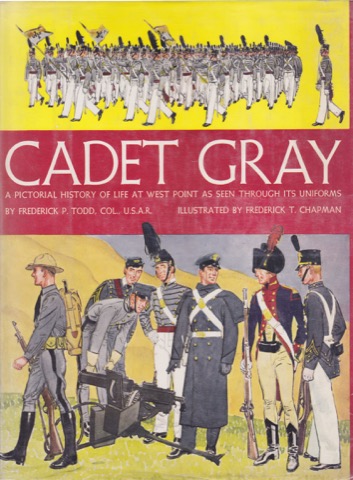
Hardcover. NY, Bonanza Books, reprint, n.d., Book: Very Good, Dust Jacket: Very Good, Hardcover in a lightly worn dust jacket, 112 pages, many b&w illustrations plus gorgeous color plates by Frederick Chapman. A reprint of the 1955 edition. Clean copy.
Softcover. NY, American Italian Historical Association, 1st, 2007, Book: Very Good, Dust Jacket: None, Softcover, 244 pages, 35th Conference of the American Italian Historical Association . "'Italian Americans and World War II, ' explores many facets of the dynamic period of the 1940s and the consequences of war and peace. Scholars within AIHA and outside the academy have been slow to recognize the significance of World War II, now recognized as a seminal event in Italian-American life and culture. . . . "This volume is dedicated to all Italian Americans who lived and died, fought and prayed during World War II." Clean copy.
Hardcover. Rochester NY, Du Bois Press, 1st, 1944, Book: Very Good, Dust Jacket: None, Hardcover, blue cloth with gilt lettering and rules, 444 pages. Written with numerous extracts from period sources. This is a social and economic history of the settlement of the lands west of the Mohawk River. Well done. Includes notes, appendices & index. A nice copy. Name on front fly leaf, otherwise clean.
Hardcover. Washington DC, Vermont Historical Society, 1st, 1904, Book: Very Good, Dust Jacket: None, Hardcover, gray boards with white cloth spine, dark brown lettering on front cover with original seal of Vermont. Records of Conventions in the New Hampshire Grants for the Independence of Vermont 1776-1777. The publisher is not stated but the Society has an introductory letter. 26 pages of text and letters. Majority of text block is photo-copies of original documents (unpaginated). Clean, bright copy.
Softcover. Albuquerque NM, University of New Mexico Press, reprint, 1993, Book: Very Good, Dust Jacket: None, Softcover, 365 pages, b&w illustrations. Professor Myres gives frontier women a voice they never had. She uses extensive source material by and about women ( letters, journals, and reminiscences from over 400 collections ) to study the impact of the frontier on women's lives and the role of women in the West. She offers a major reinterpretation of the experience of pioneer women, including that of Indian, Mexican, French, black, and Anglo-American women. The account recreates in detail the frontier experience of all these women, beginning with their physical and intellectual responses to the trek West, and concluding with their struggle for political suffrage and economic opportunity. Clean copy.
Hardcover. NY, G.P. Putnam"s Sons, 1st, 1904, Book: Very Good, Dust Jacket: None, Hardcover, blue cloth with gilt stamping, pictorial label, top edge gilt, 377 pages. Tissued frontis, b&w plates plus text illustrations. Folding map. Sound and square. All very good, clean copy.
Softcover. Shelburne VT, New England Press, 1st, 2004, Book: Very Good, Dust Jacket: None, Softcover, 323 pages, b&w illustrations. A selection of 52 interviews (from over 120) conducted 1938-1940 around Barre, Vermont. All of whom had a connection to the granite industry. Edited by Alfred Rosa and Mark Wanner. Name and address on front fly leaf, otherwise clean.
Softcover. Barstow CA, Back Door Publishing, 2nd Ed., 2016, Book: Very Good, Dust Jacket: None, Softcover, 607 pages of text and black & white illustrations. The book is signed and inscribed by the author on the front free end paper. After 22 years of interviewing old timers and researching newspapers, archives and document, Walker finished this book on California bootlegging, rum-running and moonshining. The years covered are from 1917-1935, the war years, Roaring 20s, and early depression years. Bootleggers, moonshiners, border patrolmen, and constables tell their own stories. To cover more of the state, about 30 local authors and historians contributed their articles. Clean, bright copy.
Hardcover. Utica NY, North Country Books, 1st, 1991, Book: Very Good, Dust Jacket: Very Good, Hardcover in a bright dust jacket, 332 pages, b&w illustrations. The story of how Adirondack forests lured investments from financial centers; how roads pushed deep into the wilderness; how tanneries were built in remote places and how towns sprang up around them; how hides were shipped to canal ports in Warrensburg or along the Erie Canal and how teamsters drove great distances to reach the tanneries. A largely forgotten history is brought to life in this well-researched book of an industry that disappeared in the 1890s.
Softcover. New York, I. Riley & Co./Hopkins and Seymour, 1st, 1806, Book: Good, Dust Jacket: None, 76 pages, original marbled paper wrappers with blue title label on cover. Second signature is bound upside-down (pages 9-16), but all there. Marbled pattern on outer wraps faded in spots. Mild foxing to pages, edgewear with light loss of paper to bottom corner.
Hardcover. New York, Neale Publishing Co., 1st, 1914, Book: Very Good, Dust Jacket: None, Hardcover, 324 pages, dark blue cloth with gilt lettering on spine. An account of a Civil War battle fought in Missouri. Tight, clean copy.
Hardcover. Middlebury VT, A.H. Copeland, 1st, 1860, Book: Very Good, Dust Jacket: None, 362 pages, embossed green cloth covers. B&w illustrations. Front spine edge with 2 inch cloth tear, previous owner's stamp on prelim page, small label on spine, numbers on title page. Internally very good, clean.
Hardcover. Boston, Bradbury Soden & Co., 1st thus, 1844, Book: Good, Dust Jacket: None, Hardcover, 336 pages, frontispiece engraving with tissue guard, extra engraved title page, several other full page engraved plates as well as text illustrations. Brown cloth with black leather spine stamped in gilt. Pages with tanning to edges, faint water stain to top corners of some pages, not affecting text or images. Covers show mottling, discoloration to foredges, front and rear. Interior clean, binding tight.
Softcover. New York, Harry N. Abrams, Inc., 1st, 1997, Book: Very Good, Dust Jacket: None, 336 pages. Softcover. Color and b/w illustrations throughout. Covers in excellent condition. Touch of foxing to top edge. Pages clean and bright. The ever-rapacious Nazis looted staggering quantities of great art and antiques from the nations they occupied. Much of it found its way back to Germany, and following the Allied victory, many thousands of rare (and some priceless) pieces were identified, and returned to the countries from which they had been taken. But not all of the paintings, statues, and archaeological treasures were recovered: Some were taken by Soviet troops and disappeared into Russia. Still others slipped into the black market in western Europe, and were snapped up by wealthy (if unprincipled) collectors. A 1995 symposium at the Bard Graduate Center for Studies in the Decorative Arts brought together European and American investigators and historians to discuss both the the Nazi thefts and the current state of knowledge of the whereabouts of the many still missing treasures. Those papers are reprinted here. While the pieces are detailed, dry, and likely to be of most interest to specialists, there are some extraordinary stories, most prominently the description of the recent rediscovery of ``Priam's treasure,'' excavated by Schliemann at Troy and hidden since WW II in a Russian museum. (123 illustrations, 25 in color).
Hardcover. Philadelphia, J.B. Lippincott, 2nd Ed., 1865, Book: Very Good, Dust Jacket: None, Hardcover, dark green pebbled cloth with gilt lettering on spine, 4" x 6 1/4", 303 pages including index. A detailed instructional guide for the Civil War era soldier. Copyright page states 1964, title page says 1865. Probably a second edition. Still scarce in this nice condition. A few pages with dog ears, previous owner's pencil signature on front fly leaf. Otherwise clean, tight copy.
Hardcover. New Haven, CT, Yale University Press, 1st thus Edition, 1948, Book: Very Good, Dust Jacket: Very Good, 211 pages. Hardcover. Dust jacket price clipped, in very good condition with some tanning from age. Dj wrapped in protective clear plastic brodart. Cover boards bound in tan cloth, black title on spine, boards very good, clean. Edges and pages clean, with a touch of tanning from age. Young Union officer and great American writer, De Forest wrote about what he saw with quiet precision and humor, without favor or prejudice or any concessions to the cherished beliefs of the orthodox in the North or the South.
Hardcover. Cambridge UK, Cambridge University Press, 1st, 1983, Book: Very Good, Dust Jacket: Very Good, Hardcover, 414 pages. Translation by Richard Taylor. Dust jacket spine faded. Previous price sticker on dust jacket front flap. Else a clean, tight copy.
Hardcover. Boston, Houghton Mifflin, 2nd pr., 1973, Book: Very Good, Dust Jacket: Very Good, Hardcover. Black & white photos. 337 pages. Dj price clipped
Hardcover. Annapolis, Md., Naval Institute Press, 1st, 1989, Book: Very Good, Dust Jacket: Very Good, Hardcover, 308 pages. Illustrations, diagrams and photographs throughout. A very clean and tight copy in a bright dust jacket.
Hardcover. New York, Macmillan Company, 1st Edition, 1918, Book: Very Good, Dust Jacket: None, 310 pages including publisher advertisements. B/w illustrations throughout, including frontispiece. Decorated ribbon bookmark, no longer attached, but laid in. Black cloth cover boards, gilight title on spine. Tanning to pages and edges, otherwise unmarked.
Hardcover. Osceola, WI, MBI, 1st, 1998, Book: Good, Dust Jacket: Very Good, Hardcover, 191 pages, illustrated throughout in color and b&w. Printers error and weak glue has caused signatures to separate from glued binding and protrude slightly. Otherwise a nice, clean copy.
hardcover. New York, Cambridge University Press, 1st, 2007, Book: Very Good, Dust Jacket: Very Good, 314 pages. Hardcover with dust jacket. SIGNED AND INSCRIBED ON FRONT FLY LEAF BY JOOST (AUTHOR) Clean, tight copy with only minor wear to dust jacket. In March 1988, during the Iran-Iraq war, thousands were killed in a chemical attack on a town in Iraqi Kurdistan. Both sides accused the other. Gradually it emerged that Saddam Hussein, with the tacit support of his western allies, was responsible. This book tells the story of the gassing of Halabja, and how Iraq amassed chemical weapons to target Iranian soldiers and Kurdish villagers as America looked the other way. Today, as the Middle East sinks further into turmoil, these policies are coming back to haunt the West.
Paperback. Ann Arbor, MI, University Microfilms, Reprint wraps , 1969, Book: Very Good, Dust Jacket: None, Softcover, 145 pages. A dissertation submitted to Yale University in 1953. Clean.
Softcover. New York, D. Appleton & Company, 1st, 1914, Book: Fair, Dust Jacket: None, Hardcover. 355 pages. Illustrated by Charles M. Russell. Spine faded and ripped, cardboard showing, back cover faded. Foxing on edges. Ex-library copy with all usual stamping. Previous owner's inscription.

 "Records of New Amsterdam From 1653 t0 1674 Anno Domini - Vol. 6: Minutes of the Court of Burgomasters and Schepens May 8 1666 to Sept. 5 1673 Inclusive. by: Fernow,")
 "An Essay to Revive the Antient Education of Gentlewomen (1673)by: Bathsua Makin")


 "Uncle Lisha's Shop: Life in a Corner of Yankeelandby: Rowland E. Robinson")
 "The Decision to Intervene: The Prelude to Allied Intervention in the Bolshevik Revolution by: Kennan, George F.")
 "Joseph Warren: Physician, Politician, Patriotby: Cary, John")
 "British Subministers and Colonial America 1763-1783by: Wickwire, Franklin B.")
 "The War Conspiracy; The Secret Road to the Second Indochina War by: Peter Dale Scott")
![Slavery in the South: First-Hand Accounts of the Ante-Bellum American Southland from Northern & Southern Whites, Negroes, & Foreign Obervers by: Wish, Harvey [Ed.]](javascript:largeIMTop('https://www.browsingisarousing.com/shop/images/Slavery-in-the-South-First-Hand-Accounts-of-the-Ante-Bellum-American-Southland-from-Northern-Souther396380-446228.jpg','https://www.browsingisarousing.com/shop/images/Slavery-in-the-South-First-Hand-Accounts-of-the-Ante-Bellum-American-Southland-from-Northern-Souther396380-446228.jpg',0,'396380',0,'') "Slavery in the South: First-Hand Accounts of the Ante-Bellum American Southland from Northern & Southern Whites, Negroes, & Foreign Obervers by: Wish, Harvey [Ed.]")
 "A Collection of Papers Relative to the Dispute Between Great Britain and America 1764-1775by: Almon, John (Ed.)")
 "The Dominican Crisis: The 1965 Constitutional Revolt and American Interventionby: Gleijeses, Piero")
 "The Civil War: A Narrative. Volume I. Fort. Sumter to Perryvilleby: Foote, Shelby")
 "A New World: An Epic of Colonial America from the Founding of Jamestown to the Fall of Quebec by: Quinn, Arthur")
 "Communistic Societies of the United States from Personal Visit and Observation by: Charles Nordhoff")

 "Vermonters: Oral Histories from Down Country to the Northeast Kingdomby: Strickland, Ron")
 "The Night The Revolution Began: The Boston Tea Party, 1773by: Wesley S. Griswold")


 "The Impact of World War II on Italian Americans 1935-Present by: Mormino, Gary R. (Ed.)")
 "The Development of Central and Western New York: From the Arrival of the White Man to the Eve of the Civil War by: Mau, Clayton")
 "Early Vermont Conventions 1776-1777 Arranged by Redfield Proctor by: Redfield Proctor /Jonas Fay")

 "Narragansett Bay: Its Historic and Romantic Associations and Picturesque Settingby: Bacon, Edgar Mayhew")

 "Two Centuries Of Cornwall Lifeby: Sanford, Beulah M.")
![One Eye Closed, the Other Red: The California Bootlegging Years [INSCRIBED] by: Walker, Clifford James](http://www.browsingisarousing.com/images-books/399863.jpg "One Eye Closed, the Other Red: The California Bootlegging Years [INSCRIBED] by: Walker, Clifford James")


 "An Answer to War In Disguise, or, Remarks Upon the New Doctrine of England, concerning Neutral Tradeby: King)(Rufus")
 "Pilot Knob: The Thermopylae of the Westby: Peterson, Cyrus A. and Joseph Mills Hanson")

 "Lights and Shadows of African History (Parley's Cabinet Library #10)by: Goodrich, Samuel G.")
 "Spoils of War, The: World War II and Its Aftermath: The Loss, Reappearance, and Recovery of Cultural Propertyby: Simpson (Ed.), Elizabeth")
 "Customs Of Service for Non Commissioned Officers and Soldiers as Derived from Law and Regulations and Practised in the Army of the United States by: Kautz, August V.")
 "Union Officer in the Reconstruction, Aby: De Forest, John William, James, H. Croushore, David M. Potter (Editors)")


 "Kinta Years, The - An Oklahoma Childhoodby: Giles, Janice Holt")
 "Arming the Fleet: U.S.Navy Ordnance in the Muzzle-Loading Eraby: Tucker, Spencer")


 "Flying Boats and Seaplanes: A History from 1905by: Nicolaou, Stephane")
 "Rutland in Retrospectby: Robert Edward West (Editor)")


 "Poisonous Affair, A: America, Iraq, and the Gassing of Halabja (SIGNED COPY)by: Hiltermann, Joost R.")
 "Connecticut and the Foundation of Vermont by: Creighton, Robert C.")
 "Beating Backby: Jennings, Al & Will Irwin")
)