Hardcover. Santa Rosa CA, Black Sparrow Press, 1st, 1977, Book: Very Good, Dust Jacket: Very Good, Hardcover, 67 pages. Printed paper over boards backed in brown cloth with matching paper spine label. Acetate dust jacket. Remainder mark to top edge.
Hardcover. Boston, David R. Godine, 1st, 2016, Book: Very Good, Dust Jacket: Very Good, Hardcover in a bright, unclipped dust jacket, 391 pages. INSCRIBED BY PAYNE on the half-title page and also SIGNED on the title page. In Orion on the Dunes, the first biography of Beston, scholar Daniel Payne-granted unrestricted access to the writer's archives and drawing on interviews with friends and family-has crafted a scrupulously researched narrative; one presenting a masterful portrait that traces the intellectual growth and tumultuous life of a vital American writer whose work and thought have exerted a tremendous pull on poets, naturalists, and novelists alike. This is the story of a life, at once hidden and transparent, that is here finally revealed. Clean copy.
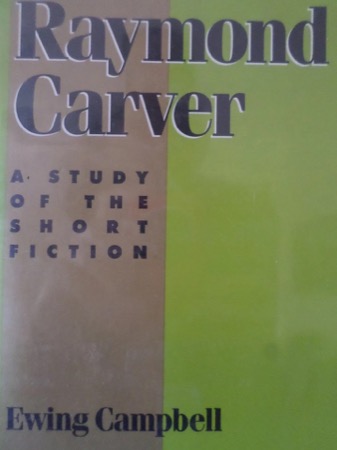
Hardcover. Twayne Publishers, 1st, 1992, Book: Very Good, Dust Jacket: Very Good, Hardcover in a bright, unclipped dust jacket, 177 pages. Perhaps the most significant and influential figure in this century's wave of American realism, Raymond Carver (1938-1988) is credited not only with reviving the short story as an artistically legitimate form, but also with perfecting minimalist fiction. Moving chronologically through Carver's complete short fiction canon and examining key stories in depth, Ewing Campbell traces the author's development through and beyond literary minimalism, into the tradition of tragic allegory. He explores Carvers persistent use of myth and archetype; motifs of the grotesque; religious iconography; and oppressed, spiritually paralyzed characters. From the earliest stories through the latest, Campbell illuminates Carvers constant fascination with the way individuals connect or fail to connect with one another. Clean copy.
Hardcover. NY, Henry Holt, 1st, 2006, Book: Very Good, Dust Jacket: Very Good, Hardcover in a bright dust jacket, 531 pages. Martha Gellhorn's reporting career brought her to the front lines of virtually every significant conflict from the Spanish Civil War to the end of the cold war. While Gellhorn's wartime dispatches rank among the best of the century, her personal letters are their equal: as vivid and fascinating as her reporting was trenchant. Gellhorn's correspondence introduces us to the woman behind the often inscrutable journalist, chronicling her friendships with twentieth-century luminaries as well as her tempestuous marriage to Ernest Hemingway. Caroline Moorehead, Gellhorn's critically acclaimed biographer, was granted exclusive access to the letters. This expertly edited volume contextualizes Gellhorn's correspondence within the arc of her entire life; the result is an intimate portrait of one of the most accomplished women of modern times.
Softcover. Durham NC, Duke University Press, 1st pbk, 1994, Book: Very Good, Dust Jacket: None, Softcover, 279 pages. Much recent critical theory has dismissed or failed to take seriously the question of the self. French theorists--such as Derrida, Barthes, Benveniste, Foucault, Lacan, and Levi-Strauss--have in various ways proclaimed the death of the subject, often turning to German intellectual tradition to authorize their views. Stanley Corngold's heralded book, The Fate of the Self, published for the first time in paperback with a spirited new preface, appears at a time when the relationship between the self and literature is a matter of renewed concern. Originally published in 1986 (Columbia University Press), the book examines the poetic self of German intellectual tradition in light of recent French and American critical theory. Focusing on seven major German writers--Holderlin, Dilthey, Nietzsche, Mann, Kafka, Freud, and Heidegger--Corngold shows that their work does not support the desire to discredit the self as an origin of meaning and value but reconstructs the allegedly fragmented poetic self through effects of position and style. Offering new and subtle models of selfhood, The Fate of the Self is a source of rich insight into the work of these authors, refracted through post-structuralist critical perspectives. Clean copy.
Hardcover. Charlottesville VA, University of Virginia Press, 1st, 2020, Book: Very Good, Dust Jacket: Very Good, Hardcover in a bright dust jacket, 476 pages, b&w illustrations. Rollyson has drawn on an unprecedented amount of material to present the richest rendering of Faulkner yet published. In addition to his own extensive interviews, Rollyson consults the complete and never fully shared research of pioneering Faulkner biographer Joseph Blotner, who discarded from his authorized biography substantial findings in order to protect the Faulkner family. Rollyson also had unrivaled access to the work of Carvel Collins, whose decades-long inquiry produced one of the greatest troves of primary source material in American letters. This first volume follows Faulkner from his formative years through his introduction to Hollywood. Rollyson sheds light on Faulkner's unpromising, even bewildering youth, including a gift for tall tales that blossomed into the greatest of literary creativity. He provides the fullest portrait yet of Faulkner's family life, in particular his enigmatic marriage, and offers invaluable new insight into the ways in which Faulkner's long career as a screenwriter influenced his iconic novels. Clean copy.
Hardcover. Saint Paul MN, Paragon House, 1st, 1990, Book: Very Good, Dust Jacket: Very Good, Hardcover in a bright, unclipped dust jacket, 231 pages. Nearly twenty years of letters beginning with the poet's encouragement of guidance, and the sharp critic's mentoring, developing into a sparring intellectual relationship discussing philosophies of literature and culture, and then mental dueling, and finally a rejection of one another. Clean copy.
Hardcover. NY, Twayne Publishers, 1st, 1996, Book: Very Good, Dust Jacket: Very Good, Hardcover in a bright dust jacket, 162 pages. The first full-length critical treatment of this significant and neglected figure in American realism. Arguing that raw naturalism and subtle craftsmanship - seemingly incompatible qualities join to make Yates one of the most accomplished writers of the post - World War II period, the authors provide a comprehensive survey of his life and work. An introductory chapter outlines the historical, literary, and social contexts important to Yates's writings, comparing him, for example, with his contemporaries Philip Roth and Mary McCarthy and articulating strong lines of continuity between his themes and the ideas of the French historian Alexis de Tocqueville, the Marxist-oriented socialist C. Wright Mills, and the social theoretician Erving Goffman. Next a thorough biographical portrait illuminates Yates's obsession with the American middle class and its dislocated, disordered, and psychologically stifled populace, followed by sharp readings of the novels and story collections, including unfinished and minor works. Clean copy.
Hardcover. NY, New Directions, 1st, 1969, Book: Good, Dust Jacket: Good, Hardcover in a worn, lightly wrinkled dust jacket that's unclipped. This is Snyder's first essay/excerpt collection, "Earth House Hold" being a play on the roots of the word "ecology. 143 pages. Dust jacket with foxing, tanning. No markings.
Hardcover. NY, Farrar Straus Giroux, 1st, 1980, Book: Very Good, Dust Jacket: Very Good, Hardcover in a bright, unclipped dust jacket, 204 pages. This is a book of essays, including: On Paul Goodman, Approaching Artaud, Fascinating Fascism, Under the Sign of Saturn, Syberberg's Hitler, Remembering Barthes, and, Mind as Passion. This particular book was printed in a small initial run. 'Susan Sontag (January 16, 1933 - December 28, 2004) was an American writer, film-maker, teacher, and political activist. She published her first major work, the essay 'Notes on 'Camp'', in 1964. Her best-known works include On Photography, Against Interpretation, Styles of Radical Will, The Way We Live Now, Illness as Metaphor, Regarding the Pain of Others, The Volcano Lover, and In America. Remainder mark to top edge otherwise a tight, clean copy.
Hardcover. New Haven CT, Yale University Press, 1st, 1965, Book: Very Good, Dust Jacket: Good, Hardcover in a lightly worn and chipped dust jacket, 391 pages. "The two aims of this vast work are to present for the first time a catalogue raisonne of the Pope portraits and to tell the story of his life as a valued friend, constant associate, and willing subject of the artists of his day." More than 200 illustrations, over 45 published here for the first time. Clean copy.
Softcover. NY, Archipelago Books, 1st English, 2021, Book: Very Good, Dust Jacket: None, Softcover in pictorial wrappers, 131 pages. With an introduction by award-winning author Alberto Manguel, Milongas is Edgardo Cozarinsky's love letter to tango, and the diverse array of people who give it life. Argentine writer and filmmaker Edgardo Cozarinsky traces [tango's] fascinating journey through time and the seedy brothels and rough Argentine and European bars where the dance could be quite mannered or could spark with theatrical violence . . . Cozarinsky takes us through the ebbs and flows of the popularity of the tango, and also through a number of its evolutionary adaptive speciations. Clean copy.
Hardcover. New York, Alfred A. Knopf, 1st, 1926, Book: Very Good, Dust Jacket: Fair, 130 pages. Hardcover with dust jacket. Purple and orange striped boards with orange wrap-around title label. In a worn, chipped dust jacket currently covered in plastic. Chunk missing from dust jacket on rear bottom. Tight copy.
Hardcover. Gutersloh GR, C. Bertelsmann,, 1st, 1955, Book: Very Good, Dust Jacket: Good, Hardcover, 438 pages, chipped dust jacket. GERMAN TEXT. JULIA CHILD'S COPY with her signature, address and 1956 on the front fly leaf.
Hardcover. Saint Paul, Minn., Graywolf Press, 1st, 1997, Book: Very Good, Dust Jacket: Very Good, Hardcover in a bright dust jacket, 245 pages, SIGNED BY AUTHOR on title page. Spotless and tight copy.
Hardcover. NY, Simon and Schuster, 1st, 1984, Book: Very Good, Dust Jacket: Very Good, Hardcover, 249 pages. Light edgewear and tanning to dust jacket, else a clean, tight copy.
Hardcover. New York, Baker and Taylor, 1st, 1910, Book: Good, Dust Jacket: None, Hardcover. 348 pages. Contains some black & white illustrations and color frontispiece with tissue-guard. Green cloth covers with gold lettering and decoration. Color illustration pasted on front cover. Gilt top edge. Light rubbing to front cover, corners, spine. Both hinges starting to crack.
Hardcover. New York, Knopf, 1st, 2010, Book: Very Good, Dust Jacket: Very Good, Hardcover, 219 pages. Clean, bright copy. "I doubt very much that I'm the only person who's finding it more and more difficult to want to read or write novels," David Shields acknowledges in Reality Hunger, then seeks to understand how the conventional literary novel has become as lifeless a form as the mass market bodice-ripper. Shields provides an ars poetica for writers and other artists who, exhausted by the artificiality of our culture, "obsessed by real events because we experience hardly any," are taking larger and larger pieces of the real world and using them in their work. Reality Hunger is made of 600-odd numbered fragments, many of them quotations from other sources, some from Shields's own books, but none properly sourced--the project being not a treasure hunt or a con but a good-faith presentation of what literature might look like if it caught up to contemporary strategies and devices used in the other arts, and allowed for samples (that is, quotation from art and from the world) to revivify existing forms. Shields challenges the perceived superiority of the imagination and exposes conventional literary pieties as imitation writing, the textual equivalent of artificial flavoring, sleepwalking, and small talk. I can't name a more necessary or a more thrilling book.
Hardcover. New York, Henry Holt , 2nd, 1998, Book: Very Good, Dust Jacket: Very Good, 215 pages. Hardcover with dust jacket. SIGNED BY AUTHOR. 1/4 black cloth, 3/4 green paper. Gilt lettering on spine. Color pictorial dj with photograph of author.
Hardcover. New York , E. P. Dutton & Co., Inc., 1st, 1952, Book: Good, Dust Jacket: Good, Hardcover, 215 pages. Blue cloth cover, some wear to edges and corners. Dust jacket is price clipped, worn on edges. Previous owner's inscription on front flyleaf. Inside is bright and clean, with b&w decorations by E. H. Shephard. A nice copy. An assembly of articles which Milne likened to a benefit night for the author. arranged as 'a calendar of ideas such as I have often thought it would be pleasant to keep, hence arranged in chapters from January to December', each subject appearing in the appropriate month. The result might best be called Table Talk, on a wide range of themes from grave to gay, from lively to severe.
Hardcover. Bloomingdale, Indiana University Press, reprint, 1991, Book: Very Good, Dust Jacket: Very Good, 290 pages. Hardcover with dust jacket. Clean and tight copy with only light edgewear to dust jacket and very light foxing to top text block. This classic work, first published in 1956, is now available in English. Along with Luthi's The European Folktale and Propp's The Morphology of the Folktale, Rohrich's Marchen und Wirklichkeit is considered a key text in folklore scholarship.
Softcover. Los Angeles, CA, William Andrews Clark Memorial Library, Reprint, 1970, Book: Very Good, Dust Jacket: None, 77 pages. Softcover. Augustan Reprint Society. Pamphlet with staple binding. Light tanning to cover, cover is becoming detached from bound pages. No pages missing or ripped. Very good condition. Previous owner's name written on front cover. Some underlining and brief notes written inside (pencil)."The most satisfactory of Collins' many pamphlets and books..."
Hardcover. London, G. Walker; others, reprint, 1820, Book: Very Good , Dust Jacket: None, A handsome set. 3/4 polished calf with marble pattern boards and end papers, spine with raised bands, gilt type and decoration. Volume 1 - Archival tape repair to final page (512), along foredge. Light foxing to preliminary pages. Fold-out intact. Volume 2 - Light foxing to preliminary pages. Fold-out intact. Volume 3 - Minor/light margin notes in pencil scattered throughout. Volume 4 - Minor/light margin notes in pencil scattered throughout. DUE TO WEIGHT, DOMESTIC SHIPPING ONLY.
Hardcover. McFarland and Co., 1st, 2008, Book: Very Good, Dust Jacket: None, 331 pages. Hardcover. Brick cloth covered boards with gilt titles to cover & spine. Profusely illustrated in black & white. Features facsimile copies of notes made by the author held at the Rosenbach Museum & Library in Philadelphia. The Notes are kept in a specially made box with manuscripts by Stoker's fellow Dubliners Oscar Wilde, James Joyce, Lewis Carroll among other writers. Tight binding, sharp corners, clean & unmarked pages.
Hardcover. NY, Basic Books, 1st, 2006, Book: Very Good, Dust Jacket: Very Good, Hardcover, 337 pages, in a bright, unclipped dust jacket. Essays by the New York City cultural critic; examines the work of artists, filmmakers and writers ranging from Anton Chekov to J. K. Rowling, including Stanley Kubrick, The Sopranos, Sex in the City, John Updike, Norman Mailer, and Barbara Kingsolver. Clean copy.
Hardcover. University of Nebraska Press, 1st, 2017, Book: Very Good, Dust Jacket: Very Good, Hardcover, 592 pages. Ring Lardner's influence on American letters is arguably greater than that of any other American writer in the early part of the twentieth century. Lauded by critics and the public for his groundbreaking short stories, Lardner was also the country's best-known journalist in the 1920s and early 1930s, when his voice was all but inescapable in American newspapers and magazines. Lardner's trenchant, observant, sly, and cynical writing style, along with a deep understanding of human foibles, made his articles wonderfully readable and his words resonate to this day. Ron Rapoport has gathered the best of Lardner's journalism from his earliest days at the South Bend Times through his years at the Chicago Tribune and his weekly column for the Bell Syndicate, which appeared in 150 newspapers and reached eight million readers. In these columns Lardner not only covered the great sporting events of the era--from Jack Dempsey's fights to the World Series and even an America's Cup--he also wrote about politics, war, and Prohibition, as well as parodies, poems, and penetrating observations on American life.
Hardcover. NY, Henry Holt, 1st, 1995, Book: Very Good, Dust Jacket: Very Good, Hardcover in a bright dust jacket, 524 pages. Robert Graves was astonishingly prolific and worked in many genres. He wrote lyric poetry, scholarly studies of mythology, drama, criticism, and journalism, he translated from Latin, and is probably best known for his potboilers "I, Claudius" and "Claudius the God," works that he considered purely commercial and took little interest in. And, as Miranda Seymour makes clear, he was as odd a duck as ever walked. His life was defined by the women to whom he devoted himself. "Abased himself" would perhaps be the better term. The first and most influential was the American Laura Riding, a second-rate poet who fancied herself some sort of prophetess who would save the world from war and turned Graves into her adoring puppy. Later in life Graves devoted himself to a series of young women, each of whom he claimed embodied "the goddess" in whose service he thought he dwelled. Seymour (a novelist herself) writes beautifully, and with the cooperation of key members of the Graves family she has produced what will surely be the definitive biography of Graves for years to come.
Hardcover. Boston, Godine, 1st, 1982, Book: Very Good, Dust Jacket: Very Good, Hardcover in a bright dust jacket, 210 pages. Hilary Masters' memoir Last Stands exhibits uniqueness in writing with a universal appeal. Whether it be upper class zeal, lower class pride, war stories, grandparents, grandchildren, health, humor, abuse, neglect, tolerance, strength, or even food, there is something in it for everyone. Overall, Last Stands is a patchwork piece--a memoir and indirect autobiography glittered with several familial biographies. Masters constantly switches scenes and elements of focus, but he overlaps his storyline, keeping the reader grounded, despite a sequence of simultaneous events. Thus, history is tied together in a busy but logical manner. Although Masters reveals disturbing events, he adds tidbits of humor to lighten the mood. In addition, he compares and contrasts fictitious characters, such as Odysseus, to events in his own life--a technique that grants him boundless points-of-view. Furthermore, his ingenuity unfolds with his use of secondary sources: letters, poems, epitaphs, and invitations. Finally, his use of dialogue carries the story where it might otherwise seem bland.
Hardcover. NY, Doubleday, 1st, 2019, Book: Very Good, Dust Jacket: Very Good, Hardcover in a bright dust jacket, 347 pages. In 1971 Deirdre Bair was a journalist and recently minted Ph.D. who managed to secure access to Nobel Prize-winning author Samuel Beckett. He agreed that she could be his biographer despite her never having written--or even read--a biography before. The next seven years comprised of intimate conversations, intercontinental research, and peculiar cat-and-mouse games. Battling an elusive Beckett and a string of jealous, misogynistic male writers, Bair persevered. She wrote Samuel Beckett: A Biography, which went on to win the National Book Award and propel Deirdre to her next subject: Simone de Beauvoir. The catch? De Beauvoir and Beckett despised each other--and lived essentially on the same street. Bair learned that what works in terms of process for one biography rarely applies to the next. Her seven-year relationship with the domineering and difficult de Beauvoir required a radical change in approach, yielding another groundbreaking literary profile and influencing Bair's own feminist beliefs. Parisian Lives draws on Bair's extensive notes from the period, including never-before-told anecdotes. This gripping memoir is full of personality and warmth and gives us an entirely new window on the all-too-human side of these legendary thinkers.
Hardcover. Boston, Houghton Mifflin, 1st, 1986, Book: Very Good, Dust Jacket: Very Good, Hardcover in a bright, unclipped dust jacket, 190 pages. Explores the world of the North Sea oil installations and describes the life of the men who are engaged in this business. The offshore oil rig represents one of Earth's last frontiers; the ultimate example may be found in the North Sea, 300 miles off the coast of Scotland. What's it like to live in this hostile environment, in unnatural isolation, and to work to the point of exhaustion? Curiosity prompted Alvarez (The Savage God, The Biggest Game in Town to visit the Shell installation at Brent Fields. The people best fitted for offshore work, Alvarez found, are ex-military men. He talked at length to pilots, roustabouts, managers, divers and the chief official of the Shetland Islands. It's an amazing account of humanity triumphing over the elements.
Hardcover. NY, Random House;, 1st, 2020, Book: Very Good, Dust Jacket: Very Good, Hardcover, 220 pages. Kurt Vonnegut's eldest daughter, Edith, was cleaning out her mother's attic when she stumbled upon a dusty, aged box. Inside, she discovered an unexpected treasure: more than two hundred love letters written by Kurt to Jane, spanning the early years of their relationship. The letters begin in 1941, after the former schoolmates reunited at age nineteen, sparked a passionate summer romance, and promised to keep in touch when they headed off to their respective colleges. And they did, through Jane's conscientious studying and Kurt's struggle to pass chemistry. The letters continue after Kurt dropped out and enlisted in the army in 1943, while Jane in turn graduated and worked for the Office of Strategic Services in Washington, D.C. They also detail Kurt's deployment to Europe in 1944, where he was taken prisoner of war and declared missing in action, and his eventual safe return home and the couple's marriage in 1945.
Softcover. Stanford CA, Stanford University Press, 1st pbk, 1990, Book: Very Good, Dust Jacket: None, Softcover, 530 pages. Books about thinkers require a kind of unity that their thought may not possess. This cautionary statement is especially applicable to Mikhail Bakhtin, whose intellectual development displays a diversity of insights that cannot be easily integrated or accurately described in terms of a single overriding concern. Clean, bright copy, as new.
Hardcover. NY, Dutton, 1st US, 1975, Book: Very Good, Dust Jacket: Very Good, Hardcover in a price-clipped dust jacket. A memoir of the real Christopher Robin and Winnie-the-Pooh. An attractive copy of Christopher Milne's book about the origins of the Pooh stories, his childhood, and his family. Previous owner's inscription, sticker on front fly leaf.
Softcover. Bloomington IN, Indiana University Press, 1st, 2003, Book: Very Good, Dust Jacket: None, Softcover, 209 pages. This groundbreaking study explores the Harlem Renaissance as a literary phenomenon fundamentally shaped by same-sex-interested men. Christa Schwarz focuses on Countee Cullen, Langston Hughes, Claude McKay, and Richard Bruce Nugent and explores these writers' sexually dissident or gay literary voices. The portrayals of men-loving men in these writers' works vary significantly. Schwarz locates in the poetry of Cullen, Hughes, and McKay the employment of contemporary gay code words, deriving from the Greek discourse of homosexuality and from Walt Whitman. By contrast, Nugent-the only "out" gay Harlem Renaissance artist-portrayed men-loving men without reference to racial concepts or Whitmanesque codes. Schwarz argues for contemporary readings attuned to the complex relation between race, gender, and sexual orientation in Harlem Renaissance writing. Clean copy.
Hardcover. San Diego, Harcourt Brace Jovanovich, 1st, 1989, Book: Very Good, Dust Jacket: Very Good, Hardcover in a bright, unclipped dist jacket, 616 pages, b&w illustrations. These letters were written to his wife, Virginia Woolf, and to a number of friends and family members. They provide a fascinating look into the life and work of one of the most important British writers of the 20th century. Clean, like new.
Softcover. Minneapolis, University of Minnesota Press , 1st, 1993, Book: Very Good, Dust Jacket: None, Softcover, 305 pages. "In The Dark End of the Street, Maria Damon brings a new sensitivity to modern poetic criticism. She adds an important dimension to cultural theory, revealing the struggles of one group of artists as they address improtant questions about art, social life, and the oppression they encounter. Taking as her premise that the intensity of poetic language is an appropriate venue for representing the 'dark end of the street' of social pain, Damon foregrounds the work and lives of a number of modern American poets in order to argue that the American avant-garde is located in the experimental literary works of social 'outsiders."
Softcover. San Francisco, North Point Press, 1983, Book: Very Good, Dust Jacket: None, Softcover, white wraps, 439 pages, b&w photos. INSCRIBED BY ROREM on the frontfly leaf. Clean copy.
Hardcover. NY, D. Appleton & Company, 1st, 1852, Book: Good, Dust Jacket: None, Hardcover, red cloth with black title to front board and to spine. 261 pages, publisher's ads. Contains of an early review of Harriet Beecher Stowe's bestselling novel, Uncle Tom's Cabin, as well as accounts of travels to the Nubian Desert and Arctic, a history of Spanish literature, and literary essays and reviews of works by Dickens, Tennyson, Thackeray, and Hawthorne. Mild foxing, some light chipping and wear to spine.
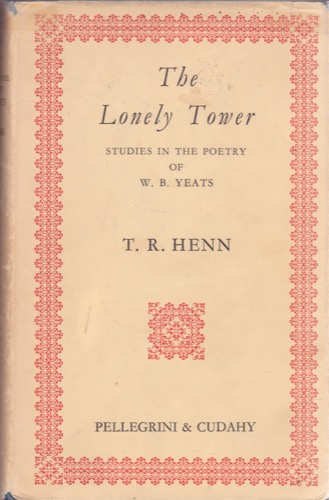
Hardcover. NY, Pellegrini & Cudahy, 1st, 1952, Book: Very Good, Dust Jacket: Very Good, Hardcover in a mildly soiled dust jacket with tanning to spine,name on front fly leaf, otherwise clean.
Hardcover. Lexington Books , 1st, 2017, Book: Very Good, Dust Jacket: None, Hardcover in glazed boards, 299 pages. John McWilliams has written the first, much needed account of the ways the promise and threat of political revolution have informed masterpieces of the historical novel. McWilliams provides close readings of some twenty historical novels, from Scott and Cooper through Tolstoy, Zola and Hugo, to Pasternak and Lampedusa, and ultimately to Marquez and Hilary Mantel, but with continuing regard to historical contexts past and present. He traces the transformation of the literary conventions established by Scott's Waverley novels, showing both the continuities and the changes needed to meet contemporary times and perspectives. Although the progressive hopes imbedded in Scott's narrative form proved no longer adaptable to twentieth century carnage and the rise of totalitarianism, the meaning of any single novel emerges through comparison to the tradition of its predecessors. A foreword and epilogue explore the indebtedness of McWilliams's perspective to the Marxist scholarly tradition of Georg Lukacs and Frederic Jameson, while defining his differences from them. This is a scholarly work of no small ambition and achievement. Clean copy.
Hardcover. Meadville PA, The Chautauqua-Century Press, reprint, 1892, Book: Very Good, Dust Jacket: None, Hardcover, tan cloth with gilt lettering and gilt and white decorations on front cover, beveled edges, top edge gilt. Illustrated with a frontispiece of King George I, and other b&w drawings and decorations by George Wharton Edwards. 211 pages, clean copy.
Hardcover. London, The Cresset Press, 1st UK, 1953, Book: Very Good, Dust Jacket: Very Good, Hardcover in a bright dust jacket, 189 pages. 3rd volume of the autobiography of this celebrated thinker and writer on philosophical and metaphysical matters. The greater part deals with the period he spent in England, in Oxford, Cambridge and elsewhere, and his circle of brilliant friends and acquaintances.
Softcover. Los Angeles, Augustan Reprint Society, reprint, 1986, Book: Very Good, Dust Jacket: None, Softcover, Facsimile reprint of 18th century edition; stapled wraps; 64 clean, umarked pages, with 10 page introduction by Simon Varey. Fictional letters by an 18th century romance writer. Clean copy.
Hardcover. NY, William Morrow,, 1st, 2002, Book: Very Good, Dust Jacket: Very Good, Hardcover in a bright, unclipped dust jacket, 309 pages, b&w illustrations. Novelist Anne Bernays and biographer Justin Kaplan -- both native New Yorkers -- came of age in the 1950s, when the pent-up energies of the Depression years and World War II were at flood tide. Written in two separate voices, Back Then is the candid, anecdotal account of these two children of privilege -- one from New York's East Side, the other from the West Side -- pursuing careers in publishing and eventually leaving to write their own books. Infused with intelligence and charm, Back Then is an elegant reflection on the transformative years in the lives of two young people and New York City. Marked by their youthful passions, this double memoir marries the authors' distinct literary styles with a riveting narrative that captures the density and texture of private, social, and working life in the 1950s. Clean copy.
Hardcover. London, Jill Norman and Hobhouse, 1st, 1981, Book: Very Good, Dust Jacket: Good, Hardcover in a lightly worn dust jacket with a mild crease to the front panel. 144 pages. Selections from the several volumes of family albums in the archive at Charleston; portraits cover most of the Bloomsbury circle's members, relations and/or adherents over a 50-year period. Introduction by Quentin Bell. Top edge scrape to front board. Bookplate on inside front cover, small ownership stamp to front fly leaf, otherwise clean.
Hardcover. Berkeley CA, University of California Press, 2010, Book: Very Good, Dust Jacket: Very Good, Hardcover in a bright dust jacket, 736 pages. The year 2010 marked the 100th anniversary of Mark Twain's death. In celebration of this important milestone, Twain's uncensored autobiography is available in its entirety and exactly as he left it. This major literary event brings to readers, admirers, and scholars the first of three volumes and presents Mark Twain's authentic and unsupressed voice, brimming with humor, ideas, and opinions, and speaking clearly from the grave as he intended. Volume 1 ONLY ( of a planned 3 volume set). Clean copy. DOMESTIC SHIPPING ONLY.
Hardcover. Nashville TN, Vanderbilt University Press, 1st, 1959, Book: Very Good, Dust Jacket: None, Hardcover, light gray cloth with black and gilt title block on spine. 224 pages, Introduction by Louis D. Rubin Jr. B&w frontis portrait of participants: Allen Tate, Robert Penn Warren,Merrill Moore, and others. The Fugitive was a poetry magazine published in the 1920s and this is a record of their gathering some 30 years later with their commentaries. Small name on front fly leaf, otherwise clean.


 "Orion on the Dunes: A Biography of Henry Beston (INSCRIBED COPY)by: Payne, Daniel G.")
 "Selected Letters of Martha Gellhornby: Caroline Moorehead (Ed.)")


![In Love, In Sorrow: The Complete Correspondence of Charles Olson and Edward Dahlberg by: [Olson, Charles and Edward Dalhberg] edited and with an introduction by Paul](http://www.browsingisarousing.com/images-books/399953.jpg "In Love, In Sorrow: The Complete Correspondence of Charles Olson and Edward Dahlberg by: [Olson, Charles and Edward Dalhberg] edited and with an introduction by Paul")
 "Richard Yates by: Castronovo, David / Goldleaf, Steven")


 "The Portraits of Alexander Pope by: Wimsatt, William Kurtz")


 "David: A Playby: Lawrence, D.H.")
 "Till Eulenspiegel (Julia Child's copy)by: Hauptmamm / Julia Child, Gerhart")
 "Burning Down the House: Essays on Fiction (SIGNED COPY)by: Baxter, Charles")
 "Getting to Know the General: The Story of an Involvementby: Greene, Graham")
 "Hawthorne's Countryby: Clarke, Helen Archibald")
 "Are You Somebody? The Accidental Memoir of a Dublin Woman (SIGNED COPY)by: O'Faolain, Nuala")


 "Year In, Year Outby: Milne, A. A.")
 "Folktales and Realityby: Rohrich, Lutz")
 "Discourse Concerning Ridicule and Irony in Writing, A (1729)by: Collins, Anthony, Bloom, Edward A. (Introducation), Lillian D. Bloom (Introduction)")


 "Life of Samuel Johnson - A New Edition (4 Vols.)by: Boswell, James")
 "Bram Stoker's Notes for Dracula: A Facsimile Editionby: Eighteen-Bisang, Robert and Elizabeth Miller")
 "Falling Upwards: Essays in Defense of the Imaginationby: Siegel, Lee")
 "The Lost Journalism of Ring Lardnerby: Ring Lardner, Ron Rapoport , et al.")
 "Robert Graves: Life on the Edgeby: Miranda Seymour")
 "Last Stands: Notes from Memoryby: Hilary Masters")
 "Parisian Lives: Samuel Beckett, Simone de Beauvoir, and Me: A Memoirby: Deirdre Bair")
 "Offshore: A North Sea Journeyby: A. Alvarez")
 "Love, Kurt: The Vonnegut Love Letters, 1941-1945by: Kurt Vonnegut / Edith Vonnegut")
 "Mikhail Bakhtin: Creation of a Prosaics by: Morson, Gary Saul /Emerson, Caryl")
 "Dante's Thought and Poetryby: Montano, Rocco")
 "The Enchanted Places: A Memoir of the Real Christopher Robin and Winnie-the-Poohby: Christopher Milne")
 "Gay Voices of the Harlem Renaissance by: Schwarz, A.B. Christa")
 "Letters of Leonard Woolf by: Spotts, Frederic (editor)")
 "A STUDY IN THE WARWICKSHIRE DIALECT: with a glossary and notes touching the Edward the Sixth grammar schools and the Elizabethan pronunciation as deduced from the puns in Shakespeare's plays by:")


 "The Dark End of the Street: Margins in American Vanguard Poetryby: Maria Damon")
 "The Later Diaries of Ned Rorem 1961-1972 (SIGNED COPY)by: Ned Rorem")
 "Essays from the London Times: A collection of personal and historical sketches- Second Seriesby: N/A")
 "Revolution and the Historical Novelby: John McWilliams")
 "THE IV GEORGES: Sketches of Manners Morals Court and Town Life by: Thackeray, William Makepeace")
 "My Host the Worldby: Santayana, George")
 "Bath-Intrigues: In Four Letters to a Friend in London (1725)by: Haywood, Eliza ; Introduction by Simon Varey")
 "Back Then: Two Lives in 1950s New Yorkby: Bernays, Anne; /Kaplan, Justin")
 "Vanessa Bell's Family Album by: Compiled by Quentin Bell and Angelica Garnett")


 "Autobiography of Mark Twain Volume 1: The Complete and Authoritative Edition by: Harriet Elinor Smith (Editor)")
 "Fugitives' Reunion; Conversations at Vanderbilt: May 3-5, 1956 by: Purdy, Rob Roy (Ed.)")