Hardcover. London, Frederick Warne, Revised Ed., 1968, Book: Very Good, Dust Jacket: Very Good, Hardcover in a bright, price-clipped dust jacket, 173 pages. Illustrated with 8 color and 30 b&w plates. Although Beatrix Potter is known and loved by generations of children brought up on "Peter Rabbit" and others, her life began in great joylessness and solitude. Drawing was her once fascination and her creative genius was able to flourish in the loneliness and isolation of her early years. Despite the fame that her skill was later to bring, she nevertheless preferred to maintain her privacy and hide behind the persona of a Lakeland farmer. Margaret's Lane biography recounts, with reference to letters and photographs, Beatrix Potter's sad childhood, her struggle for independence, her ill-fated love affair and happy marriage. Clean copy.
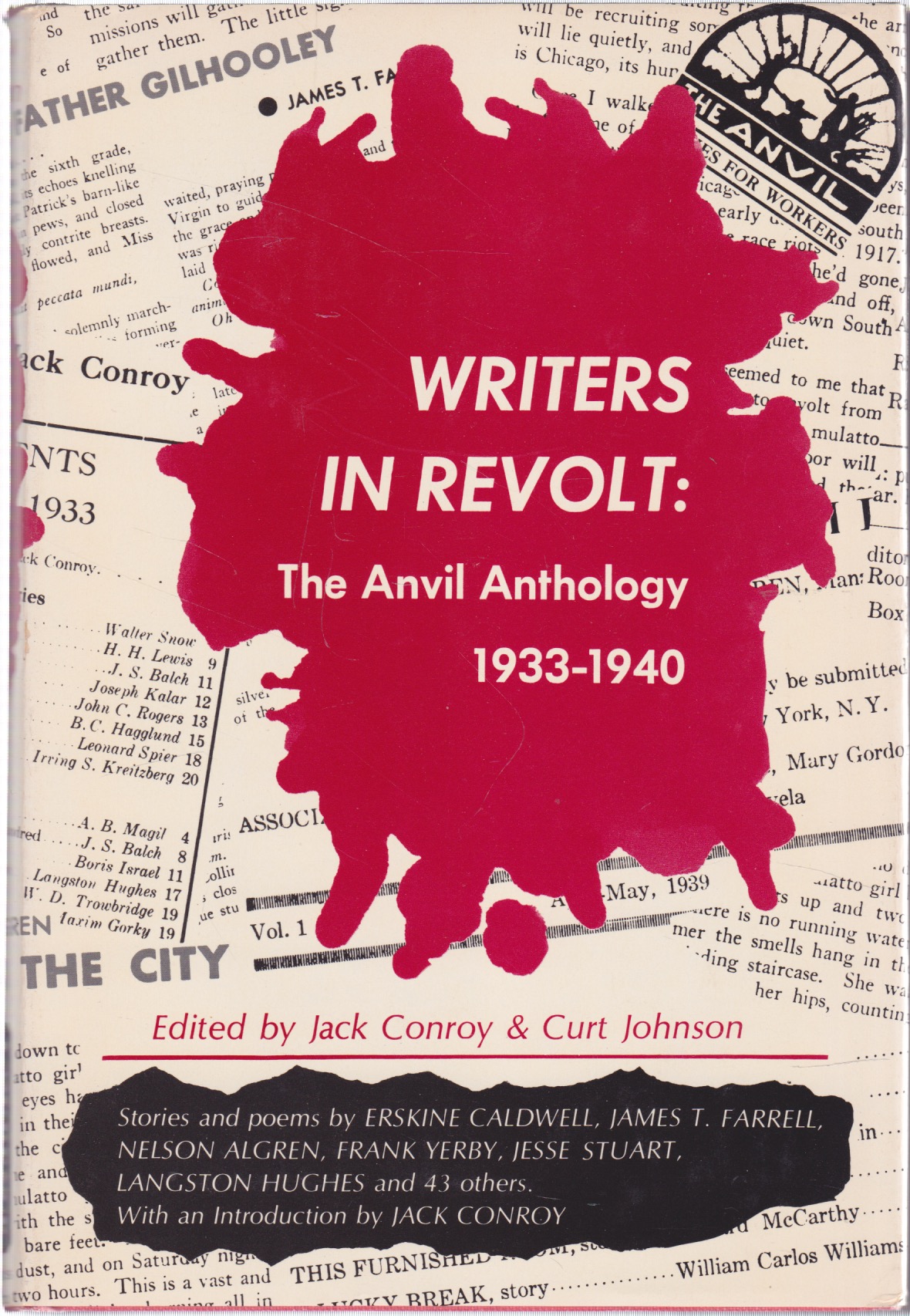
Hardcover. NY, Lawrence Hill and Company, 1st, 1973, Book: Very Good, Dust Jacket: Very Good, Hardcover in a bright, unclipped dust jacket. 234 pages.Introduction by Jack Conroy. Other contributors include Nelson Algren, Langston Hughes, Erskine Caldwell, James T. Farrell, William Carlos Williams, Michael Gold, Kenneth Patchen and Karl Shapiro. Clean, tight copy. Cheap paper tanning.
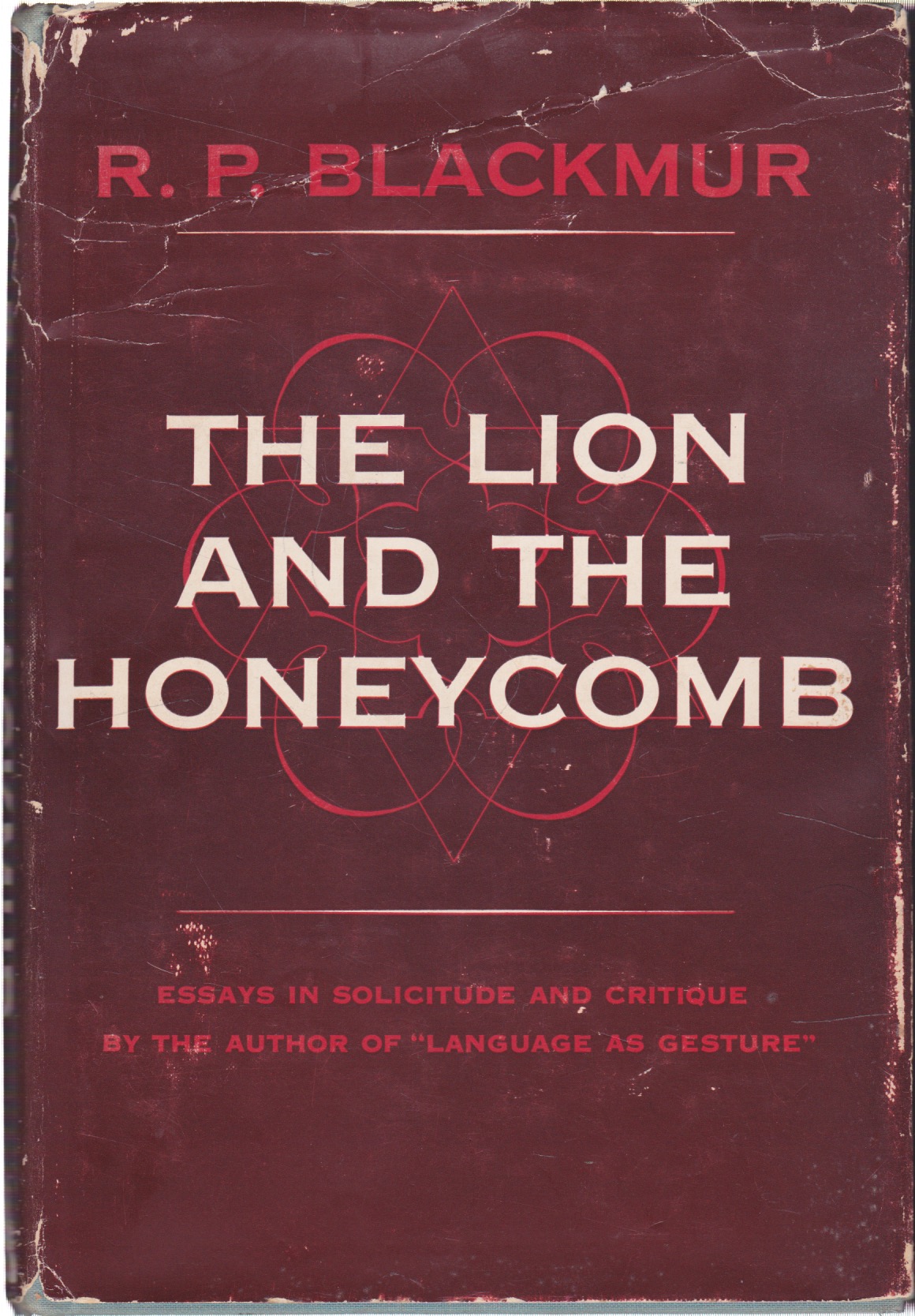
Hardcover. NY, Harcourt, Brace & World, 1st, 1955, Book: Very Good, Dust Jacket: Fair, Hardcover in a worn, chipped dust jacket, 309 pages. A collection of essays from the famed literary critic. Clean copy.
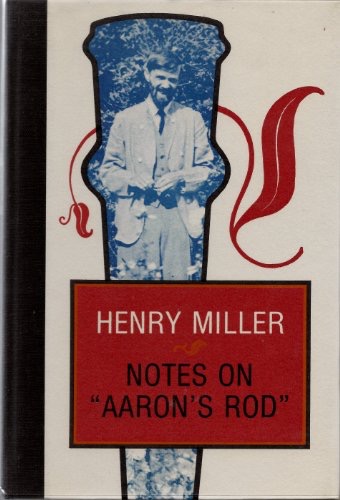
Hardcover. Santa Barbara CA, Black Sparrow Press, 1st, 1980, Book: Very Good, Dust Jacket: Good, Hardcover, 59 pages. Edition of 750 copies. This is one of the unsigned copies. Quarter black cloth with paper title label. Printed boards. Acetate dust jacket with light soil.
Softcover. Merrick NY, Cross-Cultural Communications, 1st pbk, 2006, Book: Very Good, Dust Jacket: None, Softcover, 48 pages. Edited and translated from the Italian by Stanislao G. Pugliese. Ignazio Silone, anti-fascist and founding member of the Italian Socialist Party (PSI) offers a politically conscious and soul searching memoir which details his own PSI activities and the various factors engendering the "necessity for action on behalf of liberty and democracy among the working classes." Over the course of his political career, Silone wrote a number of fiction and non-fiction works, and was imprisoned in Italy, France, Spain, and finally in Switzerland where he composed this memoir in 1942. Often compared with Andre Malraux and Albert Camus, Silone was awarded an honorary degree by Yale University, was a recipient of the Jerusalem Prize, and was twice considered for the Nobel Prize in Literature. INSCRIBED BY PUGLIESE on the title page. Clean copy.
Hardcover. Philadelphia, University of Pennsylvania Press, 1st, 2012, Book: Very Good, Dust Jacket: None, Hardcover, blue cloth with gilt lettering on spine, 266 pages. Ex-lib with a small stamp to title page and top edge, label on spine. Otherwise a clean, bright copy. After Franz Kafka died in 1924, his novels and short stories were published in ways that downplayed both their author's roots in Prague and his engagement with Jewish tradition and language, so as to secure their place in the German literary canon. Now, nearly a century after Kafka began to create his fictions, Germany, Israel, and the Czech Republic lay claim to his legacy. Kafka's Jewish Languages brings Kafka's stature as a specifically Jewish writer into focus. David Suchoff explores the Yiddish and modern Hebrew that inspired Kafka's vision of tradition. Citing the Jewish sources crucial to the development of Kafka's style, the book demonstrates the intimate relationship between the author's Jewish modes of expression and the larger literary significance of his works. No dust jacket.
Hardcover. NY, Farrar Straus & Giroux, 1st, 2017, Book: Very Good, Dust Jacket: Very Good, Hardcover in a bright, unclipped dust jacket. A groundbreaking new biography of Ezra Pound, one of the most controversial poets of the twentieth century, told through the stories of his illustrious visitors at St Elizabeths Hospital, Washington, DC. An extraordinary book of real passionate research. In 1945, Ezra Pound was due to stand trial for treason for his broadcasts in Fascist Italy during the Second World War. But before the trial could take place Pound was pronounced insane. Escaping a potential death sentence he was shipped off to St Elizabeths Hospital near Washington, DC, where he was held for over a decade. At the hospital, Pound was at his most contradictory and most controversial- a genius writer - 'The most important living poet in the English language' according to T. S. Eliot - but also a traitor and now, seemingly, a madman. But he remained a magnetic figure. Eliot, Elizabeth Bishop, Robert Lowell and John Berryman all went to visit him at what was perhaps the world's most unorthodox literary salon- convened by a fascist and held in a lunatic asylum. Told through the eyes of his illustrious visitors, The Bughouse captures the essence of Pound - the artistic flair, the profound human flaws - whilst telling the grand story of politics and art in the twentieth century. Clean copy.
Softcover. The Woodlands,TX, New Century Books, 1st, 2001, Book: Very Good, Dust Jacket: None, Softcover, 210 pages. With a typewritten letter laid in containing an inscription and the author's signature, "Tom". The Man Who Was Dr. Seuss is the first major personal and literary biography of Theodor "Dr. Seuss" Geisel. It describes the origins of the rhyme scheme he used for many of his books; his views of international justice; the morals for children in his books; why parents are seldom seen in Dr. Seuss books and finally, among fabulouse facts and fanciful fables, how and why Dr. Seuss eventually became an American icon. Clean copy.
Softcover. St. Louis, Washington University Libraries, 1st, 2001, Book: Very Good, Dust Jacket: None, Softcover. First edition. From an edition of 1500 copies. Small quarto. illustrated wrappers. 40 pages. With many facsimiles of pages from James Merrill manuscripts, correspondence, etc. Includes short essays on several different aspects of his work as well. Clean copy.
Hardcover. Amherst MA, University of Massachusetts Press, 1st, 1969, Book: Very Good, Dust Jacket: Good, Hardcover in a lightly worn and tanned dust jacket, 215 pages. Clean copy.
Hardcover. Minneapolis MN, University of Minnesota Press, 1st, 1969, Book: Very Good, Dust Jacket: Good, Hardcover in a lightly worn dust jacket that has a closed tear to the front panel. 523 pages with index. A collection of significant critical pieces about Kenneth Burke's work. 67 selections by 56 contributors arranged chronologically. Among the selections are reviews, essay-reviews, essays, excerpts from books, and some previously unpublished material. Collectively, they chart Burke's development and assess his achievements as a contemporary American man of letters. Clean copy.
Hardcover. NY, New Directions, 1st, 1951, Book: Very Good, Dust Jacket: Fair, Hardcover in a yellow dust jacket with chipping, soiling. 187 pages. Black cloth binding with titling on the spine in gilt; with Chinese ideogram on the front cover. Illustrated with rubbings by William Hawley; and a Note on the Stone Classics by Achilles Fang. Previous owner's name and address on front fly leaf, otherwise clean.
Hardcover. NY, Doubleday & Co., 1st, 1950, Book: Very Good, Dust Jacket: Fair, Hardcover in a worn, faded dust jacket, 340 pages, b&w illustrations. A witty and penetrating study of a fascinating woman and her fabulous time. Fanny wrote her first book, Evelina, anonymously. and for 6 months heard guesses made as to its authorship. Hahn writes of Fanny with affection but with characteristically satirical enjoyment of the fluttering femininities and masculine struttings of the period but depicts the real genius of Fanny. A lively picture of a prim lady, and an entertaining view of 18th century literary London. Name on front fly leaf otherwise clean.
Hardcover. New York, Oxford University Press, 3rd Ed., 1931, Book: Very Good, Dust Jacket: None, Five volumes complete, 594, 576, 543. 645 and 593 pages. Olive cloth binding with gilt lettering on spine, top edge gilt.Couple hinges tender. Bright, clean set. DUE TO WEIGHT, DOESTIC SHIPPING ONLY.
Chicago, Ivan Dee, 1st US, 1991, Book: Very Good, Dust Jacket: Very Good, Hardcover, 239 pages, in a bright, unclipped dust jacket. Author of The Moonstone and The Woman in White, Wilkie Collins has been hailed as "the father of the detective story." His own life story has a similar mysterious ring to it. When Collins died in 1899 he shocked Victorians by dividing his estate equally between two mistresses. He also acknowledged the three children of one of the mistresses as his own. In The Secret Life of Wilkie Collins, William Clarke has pieced together the truth behind this menage a trois, uncovering and exploring, with insight and sympathy, the private relationships of a fascinating writer who was a contemporary of Dickens, Constable, Wordsworth, Coleridge, Blake, and Rossetti. "A literary coup ... casts a fresh beam of light on the great, dark seam of Victorian sexual mores."--The Observer.
Softcover. Jackson MS, University Press of Mississippi, 1st, 1995, Book: Very Good, Dust Jacket: None, Softcover. Still in shrink-wrap. Spine faded. Else very good. As the acclaimed author of The Autobiography of Miss Jane Pittman and A Lesson Before Dying, Ernest J. Gaines (b. 1933) has been publishing stories and novels for more than sixty years. His brilliant portrayals of race, community, and culture in rural south Louisiana have made him one of the most respected and beloved living American writers. Ernest J. Gaines: Conversations brings together the author's own thoughts and words in interviews that range from 1994 to 2017, discussing his life, his work, and his literary legacy. The interviews cover all of Gaines's works, including his two latest books, Mozart and Leadbelly: Stories and Essays (2005) and The Tragedy of Brady Sims (2017). The book provides a retrospective of his work from the viewpoint of a senior writer, now eighty-five years old, and gives an important international perspective on Gaines and his work.
Hardcover. Cambridge MA, Belknap Press of Harvard University Press, 1st, 1975, Book: Very Good, Dust Jacket: Good, Hardcover, Volume 2. 438 pages. Light sunning to dust jacket spine, previous owner's signature on front end paper, faint foxing to edges, else a clean, tight copy.
Softcover. US, Linen Hall Library, 1st, Book: Very Good, Dust Jacket: None, Softcover, 56 pages. SIGNED BY EDITOR on title page. Light shelf-wear to wrappers, else a clean, tight copy. A very pleasing collection of letters between two fine Irish writers.
Hardcover. New York, Borzoi/Alfred A. Knopf, 1st, 1994, Book: Very Good, Dust Jacket: Very Good, Hardcover, 221 pages. Remainder-mark to bottom edge. Very nice in brodart cover.
Hardcover. New York, Random House, 1st US, 1998, Book: Very Good, Dust Jacket: Very Good, 638 pages. Hardcover. Illustrated with black & white photographs. Minor rubbing to surface of dust jacket. Clean, tight copy.
Hardcover. Garden City, NY, Doubleday, Doran & Co., 1st, 1935, Book: Very Good, Dust Jacket: Fair, Hardcover, 277 pages. Dust jacket with extensive ripping and wear. Covered in mylar for protection. Dark red boards with gilt title to spine. Red staining to top edge. Soiling to ell edges. Overall, a tight copy.
Hardcover. New York, Duffield & Company, reprint, 1909, Book: Very Good, Dust Jacket: None, Hardcover, 557 pages, originally compiled by C. M. Ingleby, L. Toulmin Smith and Dr. F. F. Furnivall. Gilt top edge and title on green cloth board. Minor foxing on fore edge, light edge wear and slight spine cock, otherwise, very clean and bright.
Hardcover. NY, Norton, 2nd pr., 1976, Book: Very Good, Dust Jacket: Very Good, Hardcover, 318 pages. SIGNED BY RICH on title page. Light soil to dust-jacket.
Hardcover. New York, Doubleday, 1st, 1973, Book: Very Good, Dust Jacket: Very Good, Hardcover, 160 pages. Very good pictorial dust jacket in mylar with very minor edge wear. SIGNED BY AUTHOR with drawing on title page.
Hardcover. NY, Rinehart & Co., 1st, 1958, Book: Very Good, Dust Jacket: Very Good, Hardcover, 241 pages. The author Cook was an English professor at Middlebury College for many years, and involved with Bread Loaf Writer's Conference almost from its inception, as Robert Frost was. INSCRIBED by Robert Frost (the subject) to Cook (the author).
Hardcover. Lincoln NE, University of Nebraska Press, 1st, 2002, Book: Very Good, Dust Jacket: Very Good, Hardcover in a bright, unclipped dust jacket, 153 pages. SIGNED BY KOOSER on title page. Ted Kooser describes with exquisite detail and humor the place he calls home in the Bohemian Alps of southeastern Nebraska.
Softcover. Oakland CA, PM Press;, 1st, 2017, Book: Very Good, Dust Jacket: None, Softcover, 336 pages. The first comprehensive account of how the rise of postwar youth culture was depicted in mass-market pulp fiction. As the young created new styles in music, fashion, and culture, pulp fiction shadowed their every move, hyping and exploiting their behavior, dress, and language for mass consumption and cheap thrills. With their lurid covers and wild, action-packed plots, these books reveal as much about society's deepest desires and fears as they do about the subcultures themselves. Featuring approximately 400 full-color covers, many of them never before reprinted, along with 70 in-depth author interviews, illustrated biographies, and previously unpublished articles, the book goes behind the scenes to look at the authors and publishers, how they worked, where they drew their inspiration and--often overlooked--the actual words they wrote. It is a must read for anyone interested in pulp fiction, lost literary history, retro and subcultural style, and the history of postwar youth culture.
Hardcover. Seattle, Fantagraphics, 1st, 2016, Book: Very Good, Dust Jacket: Very Good, Hardcover in a bright dust jacket, 304 pages. In 1976, the critic Paul Nelson spent several weeks interviewing his literary hero, legendary detective writer Ross Macdonald. Beginning in the late 1940s with his shadowy creation, ruminating private eye Lew Archer, Macdonald had followed in the footsteps of Dashiell Hammett and Raymond Chandler, but ultimately elevated the form to a new level. "We talked about everything imaginable," Nelson wrote-including Macdonald's often meager beginnings; his dual citizenship; writers, painters, music, books, and movies he admired; how he used symbolism to change detective writing; his own novels and why Archer was not the most important character-"my God, everything." It's All One Case provides an open door to Macdonald at his most unguarded. The book is far more than a collection of never-before-published interviews, though. Published in a handsome, oversized format, it is a visual history of Macdonald's professional career, illustrated with rare and select items from one of the world's largest private archives of Macdonald collectibles. Featuring in full color the covers of the various editions of Macdonald's more than two dozen books, facsimile reproductions of pages from his manuscripts, magazine spreads, and many never before seen photos of Macdonald and his friends (such as Kurt Vonnegut), including those by celebrated photojournalist Jill Krementz. It's All One Case is an intellectual delight and a visual feast, a fitting tribute to Macdonald's distinguished career. Full-color illustrations throughout
Hardcover. NY, Knopf, 1st, 1964, Book: Very Good, Dust Jacket: Very Good, Hardcover in a nice, unclipped dust jacket with light tanning to spine. 290 pages plus index. Clean copy. THE ENLIGHTENMENT has long been the victim of uninformed or hostile criticisms. Even so respected a source as the Shorter Oxford English Dictionary defines the Enlightenment as "shallow and pretentious intellectualism, unreasonable contempt for authority and tradition," thus collecting in one sentence most of our current prejudices. In this provocative book--at once a scholarly study and a vigorous polemic--Peter Gay sets out to shatter old myths, to sort out illusion from reality, and to restore the men of the Enlightenment--Voltaire, Rousseau, Diderot--to the esteem they deserve.
Hardcover. Francestown NH, Marshall Jones Company, 3rd pr., 1967, Book: Very Good, Dust Jacket: Good, Hardcover, blue cloth stamped in gilt. Dust jacket edgeworn, chipped. 295 pages. Revised Edition. Third Printing. INSCRIBED by Rosamond Thaxter ("Rosie") on half title page.
Hardcover. NY, Doubleday and Co., 1st, 1953, Book: Very Good, Dust Jacket: None, Hardcover, beige cloth with titles in black and blue on spine, no dust jacket, 317 pages. These are the life and times of Col. John R. Stingo, fabulous figure of track and ring. The Colonel who Was a raconteur In The Grand Tradition; He shares his tales Oo rainmaking, horse racing, newspaper writing; and other exploits of his long and kaleidoscopic career. Paper tanning slightly but a clean copy.
Lebanon NH, University of New Hampshire Press, 1st, 2005, Book: Very Good, Dust Jacket: Very Good, Hardcover in a bright dust jacket. 294 pages, b&w illustrations. Presents a succinct, articulate examination of the work of the pioneering but controversial archaeologist Roland Wells Robbins (1908-1987) and the development of historical archaelogy in America. In 1945, the self-taught Robbins discovered the remains of Thoreau's cabin at Walden Pond. He excavated the site, documented his findings, and in 1947 published a short book, Discovery at Walden, about the experience. This project launched Robbins's career in archaeology, restoration, and reconstruction, and he went on to excavate at a number of New England iron works and other sites, including the Philipsburg Manor Upper Mills in New York, Stawbery Banke in New Hampshire, and Shadwell, Thomas Jefferson's Virginia birthplace. Although lacking academic training, Robbins quickly developed remarkably sophisticated techniques for the period. However, his "pick and shovel" methods were considered suspect and increasingly frowned upon by the emerging American historical archaeological establishment. Clean copy.
Hardcover. Peacham VT, The Perpetua Press, 1st, 2002, Hardcover in the publisher's cream-colored linen over boards with spine and upper board gilt-stamped black leather labels. No dust jacket, as issued. 88 pages, only 500 copies printed. A collection of interviews done with Shaw from 1924 - 1945. Bright and clean copy.
Hardcover. Boston, Houghton Mifflin, 1s, 1901, Book: Very Good, Dust Jacket: None, Hardcover, Light green cloth, lettered and bordered in gilt, top text block edge in gilt. Illustrated with black and white photographic plates by Clifton Johnson. Light shelf wear, bookplate on inside front cover with black marking. Otherwise clean.
Hardcover. NY, W.W. Norton, 1st, 1986, Book: Very Good, Dust Jacket: Very Good, Hardcover in a bright, unclipped dust jacket. Illustrated by Al Hirschfeld. Clean copy.
Hardcover. Athens GA, University of Georgia Press, 1st, 1985, Book: Very Good, Dust Jacket: Very Good, Hardcover in a bright dust jacket with mild edgewear, 253 pages. Considered depraved by some and magnificent by others, Lady Chatterley's Lover was a genetic controversy the world over, inspiring landmark judicial opinions. After 50 years it's literary reputation is not yet secure -- the scent of pornography still clings. In DH Lawrence's" Lady " outstanding critics, assessing the work from a different perspective, reveal vast importance to her literature and our culture. Edited by Michael Squires and Dennis Jackson, these essays offer vigorous and perceptive readings that see the novel as it could not have been viewed at the time when it first appeared.
Hardcover. Austin TX, University of Texas Press, 1st, 1979, Book: Very Good, Dust Jacket: Very Good, Hardcover in a bright dust jacket. 201 pages. A fascinating look at the theories behind fairy tales and fantasy. The works of J.R.R.Tolkien and his essay 'On Fairy Stories' is a major focus of the book as are German fairy tales or Marchen and Marx and Fairy tales. Clean copy.
Hardcover. NY, John Wiley & Son, 1867, Book: Very Good, Dust Jacket: None, Hardcover, green cloth with gilt design and lettering on spine, beveled cloth boards, later printing (1867), 349 pages, top edge gilt. A compilation of 'hidden treasures' within Ruskin's writings. A must for anyone who appreciates the writings of John Ruskin. Some light stain to top margin of first 30 pages, not affecting text, otherwise clean.
Hardcover. NY, Charles Scribner's Sons, 1st thus, 1882, Book: Very Good, Dust Jacket: None, Hardcover, gray cloth with red, black, and gilt embossed spine title, cover title, and bright cover illustration and decoration. Boards have beveled edges. All edges gilt. 70 pages, tissue-guarded frontispiece, 30 full-page illustrations; artists include A.B. Frost. Howard Pyle. Fredericks, J. S. Davis and others. A ballad written in Paris in 1841 at the time of the second funeral of Napoleon and is a narrative of French military history. Slender piece of cloth chipped away on rear cover, otherwise clean, very good.
Hardcover. NY, Harper & Row, reprint, Book: Very Good, Dust Jacket: Very Good, Hardcover in a bright dust jacket, 119 pages. A book on linguistics by Noam Chomsky, written with the purpose of deepening 'our understanding of the nature of language and the mental processes and structures that underlie its use and acquisition'. Chomsky wished to shed light on these underlying structures of the human language, and subsequently whether one can infer the nature of an organism from its language. Cartesian linguistics refers to a form of linguistics developed during the time of RenE Descartes, a prominent 17th century philosopher whose ideas continue to influence modern philosophy. In Cartesian Linguistics, Chomsky traces the development of linguistic theory from Descartes to Wilhelm von Humboldt, that is, from the period of the Enlightenment directly up to Romanticism. The central doctrine of Cartesian linguistics maintains that the general features of grammatical structure are common to all languages and reflect certain fundamental properties of the mind. Clean copy.
Hardcover. NY, Houghton Mifflin, reprint, 2022, Book: Very Good, Dust Jacket: Very Good, Hardcover in a bright dust jacket. Illustrated in color by the Reys. A reprint of a title first published in 1944. The story of Pretzel, the longest dachshund in the world. Clean copy.
Hardcover. NY, Doubleday, 1st, 1999, Book: Very Good, Dust Jacket: Very Good, Hardcover in a bright dust jacket, 480 pages. A fascinating figure of English literary and political history, Radclyffe Hall was born in 1880 in Bournemouth, England. Hall suffered through an exceedingly unhappy childhood until her father's death. With her inheritance, Hall leased a house in Kensington and began to live the way she pleased. She started dressing in chappish clothes, called herself Peter, then John, and wrote her first collection of verse. She was a political reactionary, a reformed Catholic, a member of the Society for Psychical Research, fussy about food and obsessive about work. She got her pipes from Dunhill's, wore brocade smoking jackets, spats in winter, and had her hair cropped off at the barber's. Hall is most famous today for her book, The Well of Loneliness, which she wrote in 1928. A novel about lesbian love, the book caused an enormous scandal on its publication and it was suppressed both in the U.S. and the United Kingdom, where Hall was put on trial under the Obscene Publications Act.
Hardcover. London, Jonathan Cape, 1st, 1937, Book: Very Good, Dust Jacket: None, Hardcover, blue cloth with gilt lettering on spine. Frontiepiece photograph of the author as Lord Beaconsfield. 392 pages. Autobiography dealing with the author's life up to the mid 1930s. He was the brother of A E Housman, and was well-known in his own right as a writer of plays, as well as being active in the women's suffrage campaign and in the pacifist movement. A prolific writer with around a hundred published works to his name, Housman's output eventually covered all kinds of literature from socialist and pacifist pamphlets to children's stories. He wrote an autobiography, The Unexpected Years (1937), which, despite his record of controversial writing, said little about his homosexuality, the practice of which was then illegal. Mild shelf wear. Clean copy.
Softcover. Los Angeles, The Augustan Reprint Society , reprint, 1984, Book: Very Good, Dust Jacket: None, Softcover, Introduction by Vincent Carrata plus 52 pages. Facsimile reprints. Clean copy.
Hardcover. Boston, L. C. Page & Company, 1st US, 1903, Book: Very Good, Dust Jacket: None, Hardcover, gilt-stamped light gray cloth with Dickens' escutcheon in red & gold on cover, top edge gilt, frontispiece photographic profile of Dickens & 18 B&W photographic illustrations. Nice retrospective of London in reference to Charles Dickens life, book provides a brief look at Dickens' literary life, manner and customs, history of the area and more. 300 pages including index,
Softcover. NY/London, Palgrave , 2nd Ed., 2002, Book: Very Good, Dust Jacket: None, Softcover, 244 pages. Taking into account recent developments in historical and ecological criticism, and incorporating fresh research into poetry and politics in the 1790s, the second edition of The Politics of Nature enlarges and updates Nicholas Roe's acclaimed study of Romanticism. Hitherto marginal figures are restored to prominence, and there is new material on William Wordsworth's radical years.

 "The Tale of Beatrix Potter: A Biographyby: Lane, Margaret")



 "Memoir from a Swiss Prisonby: Ignazio Silone")

![The Bughouse: The Poetry, Politics, and Madness of Ezra Pound by: [Pound, Ezra] Swift, Daniel](http://www.browsingisarousing.com/images-books/399615.jpg "The Bughouse: The Poetry, Politics, and Madness of Ezra Pound by: [Pound, Ezra] Swift, Daniel")

 "James Merrill: Other Writings. An Exhibition from the Special Collections of Washington University by: Merrill, James")


 "Dialogues of Plato, The: Translated into English with Analyses and Introductions - Third Edition (5 Vols.)by: Jowett, B.")
 "Secret Life of Wilkie Collins, Theby: Clarke, William M.")
 "Conversations with Ernest Gainesby: Lowe, John (Editor)")
 "Letters of Henry James, Volume II: 1875-1883, The by: James, Henry")
 "Dear Mr. McLaverty --: The Literary Correspondence of John McGahern and Michael McLaverty, 1959-1980by: John Killen (Ed.)")


 "In Pharaoh's Army: Memories of the Lost Warby: Wolf, Tobias")
 "Kenneth Tynan - Lettersby: Tynan, Kenneth/Kathleen Tynan (Editor)")
 "Bibliography of Christopher Morley, Aby: Lee, Alfred P.")
 "Shakespeare Allusion Book, The: A Collection of Allusions to Shakespeare from 1591 to 1700 by: Munro (Editor), John")
 "Of Woman Born - Motherhood as Experience and Institution (SIGNED COPY)by: Rich, Adrienne")

 "Dimensions of Robert Frost, The (INSCRIBED BY ROBERT FROST)by: Frost, Robert/Reginald Cook")
 "Local Wonders: Seasons in the Bohemian Alps (SIGNED COPY)by: Kooser, Ted")
 "Girl Gangs, Biker Boys, and Real Cool Cats: Pulp Fiction and Youth Culture, 1950 to 1980by: Iain McIntyre, Andrew Nette , et al.")


 "Thomas Berry: A Biography by: Tucker, Mary Evelyn; Grim, John; Angyal, Andrew")
 "The Prose Works of William Byrd of Westover: Narratives of a Colonial Virginianby: Wright, Louis B {Edited by}")
 "It's All One Case: The Illustrated Ross Macdonald Archivesby: Kevin Avery , Paul Nelson, et al.")
 "The Party Of Humanity: Essays in the French Enlightenmentby: Peter Gay")
 "Sandpiper-The Life & Letters Of Celia Thaxter And Her Home On The Isles Of Shoals Her Family, Friends & Favorite Poems by: Rosamond Thaxter")
 "The Honest Rainmaker; The Life And Times Of Colonel John R Stingo by: Liebling, A.J.")
 "The Man Who Found Thoreau: Roland W. Robbins and the Rise of Historical Archaeology in America by: Donald W. Linebaugh")
 "George Bernard Shaw: Eight Interviews By Hayden Churchby: Bernard Shaw, Editor: Edward Connery Lathem")
 "A Year in the Field: Selections from the Writings of John Burroughs by: Burroughs, John")
 "And Did You Once See Sidney Plain?: A Random Memoir of SJ. Perelman by: Wilk, Max (Al Hirschfeld, illus)")
 "D.H. Lawrence's Lady: A New Look at Lady Chatterley's Loverby: Squires, Michael and Dennis Jackson")
 "Breaking the Magic Spell: Radical Theories of Folk and Fairy Tales by: Zipes, Jack")
 "PRECIOUS THOUGHTS: Moral and Religious; Gathered from the Works of John Ruskin by: Tuthill Louisa C. /compiler")
 "The Chronicle of the Drumby: Thackeray, William Makepeace")

 "Pretzelby: Rey, Margret / Rey, H. A.")
 "The Trials of Radclyffe Hallby: Souhami, Diana")
 "The Unexpected Years by: Housman, Laurence")
 "Satires Written by Mr. Whitehead. Viz. I. Manners. Written in 1738. II. The State Dunces. Written in 1733. III. Honour. Written in 1747. 1748 by: Whitehead, Paul ( Ca")
 "Dickens' Londonby: Francis Miltoun")
