Hardcover. London, Batsford, 1st, Book: Very Good, Dust Jacket: None, A history of the evolution of the Arts of Building, Decoration and Garden Design under classical influence. Many b&w photos, Illustrations. 528 pgs. Some sun-fading to spines, else a clean, tight set.
Hardcover. Boston/NY, Houghton Mifflin, 1st, 2007, Book: Very Good, Dust Jacket: Very Good, Hardcover in a bright dust jacket, 262 pages. Offers a compelling study that compares modern-day America to the rise and fall of ancient Rome, offering a series of warnings, nuanced lessons, and thought-provoking strategies designed to avoid the Roman Empire's fate. Clean copy.
Hardcover. NY, Time Life, reprint, 1982, Book: Very Good, Dust Jacket: None, 296 pages. Hardcover with no dust jacket. Dark blue leather bound with gilt titles to front cover and spine. Embossed decoration on front cover. Gilt text block edges, red ribbon marker. Clean, tight copy. Thomas Wentworth Higginson, a Unitarian minister, was a fervent member of New England's abolitionist movement, an active participant in the Underground Railroad, and part of a group that supplied material aid to John Brown before his ill-fated raid on Harpers Ferry. When the Civil War broke out, Higginson was commissioned as a colonel of the black troops training in the Sea Islands off the coast of the Carolinas.
Softcover. NY, Penguin Books, reprint, Book: Very Good, Dust Jacket: None, Softcover. Thomas Wentworth Higginson, a Unitarian minister, was a fervent member of new England's abolitionist movement, an active participant in the Underground Railroad, and part of a group that supplied material aid to John Brown before his ill-fated raid on Harpers Ferry. When the Civil War broke out, Higginson was commissioned as a colonel of the black troops training in the Sea Islands off the coast of the Carolinas. Shaped by American Romanticism and imbued with Higginson's interest in both man and nature, Army Life in a Black Regiment ranges from detailed reports on daily life to a vivid description of the author's near escape from cannon fire, to sketches that conjure up the beauty and mystery of the Sea Islands. This edition also features a selection of Higginson's essays, including "Nat Turner's Insurrection" and "Emily Dickinson's Letters." Clean copy.
Hardcover. NY, Time Life, reprint, 1984, Book: Very Good, Dust Jacket: None, 233 pages. Hardcover with no dust jacket. Dark blue leather bound with gilt titles to front cover and spine. Embossed decoration on front cover. Gilt text block edges, red ribbon marker. Clean, tight copy.
Hardcover. NY, Quantuck Lane Press, 1st, 2005, Book: Very Good, Dust Jacket: Good, 456 pages. Hardcover with dust jacket. Clean, unmarked copy with tear on front dust jacket and light wear to edges. Erich Lessing is a legend in photography. Born in 1923 in Vienna, he became a photo-reporter for Associated Press in 1947, and in 1951 he became one of the earliest members of the legendary Magnum photo cooperative. His remarkable 1950s images documenting post-World War Europe, and particularly his pictures of the 1956 Hungarian Revolution, garnered worldwide admiration. Lessing's works always revolve around the human condition at the moment when power and powerlessness come face to face, when the joy of living is suddnely overclouded with pain. His photographs seize the opportunity to recount an instant of history that will never be repeated. This monumental book is a tribute to Lessing's talent as a photojournalist and a visual record of a time of turmoil and great change. Lessing has received international honors, including the American Art Directors' Award, the Grand Austrian State Prize for Artistic Photography, and many others. 400 duotone photographs.
Hardcover. London, Frederick Warne & Co., 4th Edition, 1966, Book: Very Good, Dust Jacket: Very Good, 336 pages. Hardcover. Color and black & white illustrations throughout. Green cloth cover boards, gilt title on spine and design on front cover board. Dust jacket price clipped, a touch of agewear. Top edge dyed green.
Hardcover. West Port CT, Greenwood, 1st, 1980, Book: Very Good, Dust Jacket: Good, Hardcover, 240 pages. Black & white illustrations. Dust jacket shows standard wear with rubbing and chipping along edges. Clean, tight copy.
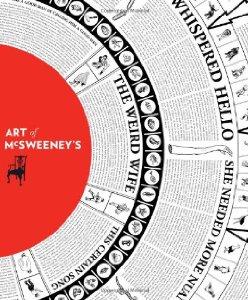
Hardcover. San Francisco, Chronicle Books, 2nd printing, 2010-06-23, Book: Very Good, Dust Jacket: Very Good, 263 pages, illustrated throughout in color and b&w. Clean, unmarked copy with only minor wear to dust jacket. 263 pages, illustrated throughout in color and b&w. Clean, unmarked copy with only minor wear to dust jacket. Created by McSweeney's in celebration of their 11th anniversary, this book showcases the independent literary publisher's award-winning art and design across all its activities, including McSweeney's books, quarterly journals, Wholphin DVDs, and The Believer magazine. Hundreds of images - from napkin sketches to final objects - offer insights into McSweeney's creative process, and a narrative history in interviews explores the incidental, accidental, and deliberate ways they have helped transform the visual experience of reading. hundreds of photos and illustrations, and interviews with the staff and writers and artists such as Rick Moody, Sarah Vowell, John Hodgeman, Lawrence Weschler, Michael Chabon, Chris Ware, Ben Katchor, Charles Burns, and many more.
Hardcover. San Francisco, Chronicle Books, 2nd printing, 2010, Book: Very Good, Dust Jacket: Very Good, 263 pages, illustrated throughout in color and b&w. Clean, unmarked copy with only minor wear to dust jacket. Created by McSweeney's in celebration of their 11th anniversary, this book showcases the independent literary publisher's award-winning art and design across all its activities, including McSweeney's books, quarterly journals, Wholphin DVDs, and The Believer magazine. Hundreds of images - from napkin sketches to final objects - offer insights into McSweeney's creative process, and a narrative history in interviews explores the incidental, accidental, and deliberate ways they have helped transform the visual experience of reading. hundreds of photos and illustrations, and interviews with the staff and writers and artists such as Rick Moody, Sarah Vowell, John Hodgeman, Lawrence Weschler, Michael Chabon, Chris Ware, Ben Katchor, Charles Burns, and many more.
Hardcover. New York, Morrow, 1st, 1993, Book: Very Good, Dust Jacket: Very Good, Hardcover, 160 pages. Illustrated in full color. In a clean, bright dust jacket. A commercial artist who started out sketching in the 1930s for pulp magazines, Lovell advanced to the glossier "slicks" in the 1950s and has since specialized in Old West, Plains Indian, and Civil War themes. He here presents from that long career his best canvases, among them his famed depictions of Lee's surrender and the Fifty-fourth Massachusetts' assault (in film, the climax of Glory). His spark of inspiration is usually to visualize an incident he has read of in the journals of the first white explorers and trappers, such as those of Lewis and Clark. Whether it's Clark firing his rifle or Indians encountering a cannon lost by Fremont, Native Americans are generally presented as wary but curious about the newcomers; Lovell puts the warfare outside of the frame. Themes aside, he works expertly with natural color, and though not a modern George Caitlin, his attention to the detail of Indian dress, carriage, and equipage is quite affecting, fully reflective of his respect for the cultures of Apache, Sioux, etc. A rich tribute to a captivating artist who evokes the West's vast landscape and its individual braves and traders in moods of exuberance and perseverance.
Hardcover. New York, William Morrow & Co, 1st, 1993, Book: Very Good, Dust Jacket: Very Good, 160 pages. Hardcover. Color illustrations. Clean, unmarked copy with only minor wear to dust jacket. "A commercial artist who started out sketching in the 1930s for pulp magazines, Lovell advanced to the glossier "slicks" in the 1950s and has since specialized in Old West, Plains Indian, and Civil War themes. He here presents from that long career his best canvases, among them his famed depictions of Lee's surrender". Gorgeous color plates.
Softcover. University of Toronto Press , 1st pbk, 2020, Book: Very Good, Dust Jacket: None, Softcover in pictorial wrappers, 312 pages. During the night of 25 July 1941, assassins planted a time bomb in the bed of the former French Interior Minister, Marx Dormoy. The explosion on the following morning launched a two-year investigation that traced Dormoy's murder to the highest echelons of the Vichy regime. Dormoy, who had led a 1937 investigation into the "Cagoule," a violent right-wing terrorist organization, was the victim of a captivating revenge plot. Based on the meticulous examination of thousands of documents, Assassination in Vichy tells the story of Dormoy's murder and the investigation that followed. At the heart of this book lies a true crime that was sensational in its day. A micro-history that tells a larger and more significant story about the development of far-right political movements, domestic terrorism, and the importance of courage, Assassination in Vichy explores the impact of France's deep political divisions, wartime choices, and post-war memory. Clean copy.
Hardcover. Annapolis MD, Naval Institute Press, 1st, 2005, Book: Very Good, Dust Jacket: Very Good, Hardcover in a bright dust jacket, 126 pages, b&w illustrations. Princeton grad Erasmus Kloman was undergoing Army training at Fort Bragg in 1943 when, due to his passing knowledge of French, he was interviewed for potential involvement in "a highly confidential activity." The interview culminated in the question, "Would you be willing to volunteer for hazardous duty behind enemy lines?" He signed up for duty with the newly formed Office of Strategic Services (OSS) and after an intensive period of training in various aspects of espionage, found himself on assignment in wartime Cairo, Algiers, and then Caserta. At age 24 with the title of OSS Acting Chief of Operations in the Mediterranean Theater of Operations, he helped organize and coordinate the actions of Operational Groups (OGs) , which infiltrated Italy and occupied France on daring sabotage missions. Clean copy.
Softcover. New Haven CT, Yale University Press, 2nd pr., 1987, Book: Very Good, Dust Jacket: None, Softcover, 450 pages. The rise of atheism in the modern world is a religious phenomenon unprecedented in history, both in the number of its adherents and in the security of its cultural establishment. How did so revolutionary a conviction as this arise? What can theological reflection learn from this massive shift in religious consciousness? In this book, Michael J. Buckley investigates the origins and development of modern atheism and argues convincingly that its impetus lies paradoxically in the very attempts to counter it. Although modern atheism finds its initial exponents in Denis Diderot and Paul d'Holbach in the eighteenth century, their works bring to completion a dialectical process that reaches back to the theologians and philosophers of an earlier period. During the seventeenth century, theologians such as Leonard Lessius and Marin Mersenne determined that in order to defend the existence of god, religious apologetics must become philosophy, surrendering as its primary warrant any intrinsically religious experience or evidence. The most influential philosophers of the period, Rene Descartes and Isaac Newton, and the theologians who followed them accepted this settlement, and the new sciences were enlisted to provide the foundation for religion. Clean, bright copy.
Softcover. New York, Seven Stories Press, 1st, 2017, Book: Very Good, Dust Jacket: None, 87 pages. Softcover. A very clean, unmarked copy with only minor edgewear.
Hardcover. London, The Bodley Head, 1st, 1970, Book: Very Good, Dust Jacket: Very Good, Hardcover. Retold by Rex Warner from "History of the Peloponnesian War" of Thucydides. 174 pages, illustrations in black & white by William Stobbs. Very good condition except for fading of spine.
Softcover. London, Bloomsbury, reprint, 2008, Book: Very Good, Softcover, 692 pages. Coursing through Austerity Britain is an astonishing variety of voices - vivid, unselfconscious, and unaware of what the future holds. A Chingford housewife endures the tribulations of rationing; a retired schoolteacher observes during a royal visit how well-fed the Queen looks; a pernickety civil servant in Bristol is oblivious to anyone's troubles but his own. An array of working-class witnesses describe how life in post-war Britain is, with little regard for liberal niceties or the feelings of their 'betters'. Many of these voices will stay with the reader in future volumes, jostling alongside well-known figures like John Arlott (here making his first radio broadcast, still in police uniform), Glenda Jackson (taking the 11+) and Doris Lessing, newly arrived from Africa, struck by the levelling poverty of postwar Britain. David Kynaston weaves a sophisticated narrative of how the victorious 1945 Labour government shaped the political, economic and social landscape for the next three decades.Deeply researched, often amusing and always intensely entertaining and readable, the first volume of David Kynaston's ambitious history offers an entirely fresh perspective on Britain during those six momentous years. Clean copy.
Softcover. Mechanicsburg PA, Stackpole Books, 1st, 2006, Book: Very Good, Dust Jacket: None, Softcover, 194 pages, b&w illustrations. This is a fascinating account of Australia's M/Z commando unit and the part it played in the Southwest Pacific during World War II. M Unit personnel were secretly landed to set up coast-watching posts and radio stations to monitor Japanese shipping movements and bombing flights. Members of the Z Unit carried out raids in enemy-controlled areas and also attacked targets of opportunity. Many commandos were delivered on their missions by U.S. Navy submarines that sneaked into dangerously shallow waters to put the men ashore. Other operatives were inserted by PT boats, Catalina aircraft, parachute, and snake boats. Clean, bright copy.
Hardcover. New York, Random House, 1st U.S., 1971, Book: Very Good, Dust Jacket: Very Good, 430 pages. Hardcover. B/w illustrations throughout. Gilt title on spine and front cover. Covers bound in red fabric, in great shape. Dust jacket unclipped and excellent. Decorated endpapers. Top edge dyed. Clean and bright inside and out.
Hardcover. NY, Atheneum, 1st, 1970, Book: Very Good, Dust Jacket: Very Good, Hardcover in a bright dust jacket. 245 pages. B&w illustrations and photographs throughout. Decorated endpapers. Decorative pink stain to top edge. Private library stamp on front endpaper. Otherwise clean. Entertaining recount of the pivotal battle of the Crimean War. Includes bibliography & index. Excellent collection of period photographs and artwork.
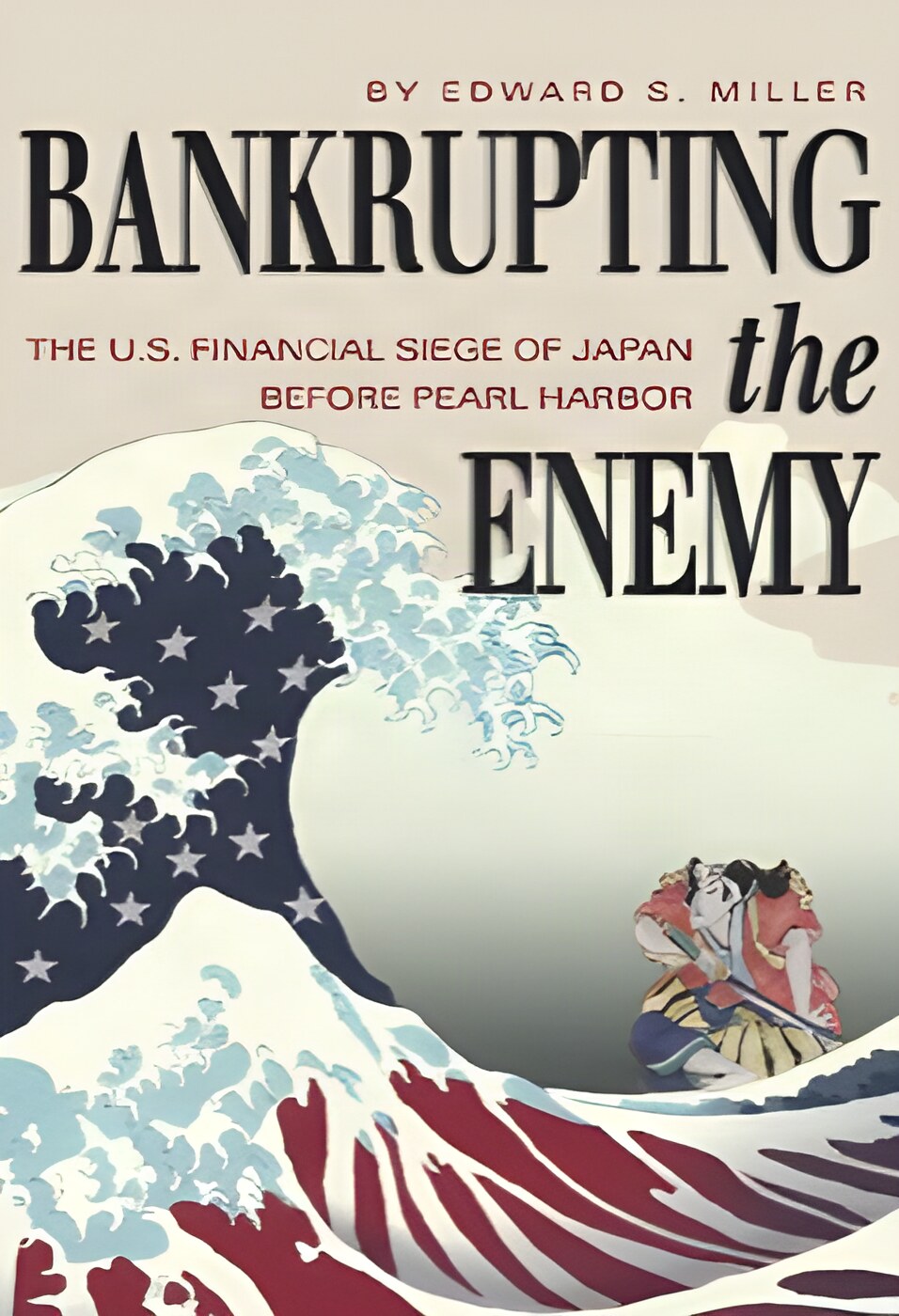
Softcover. Annapolis MD, Naval Institute Press, 1st pbk, 2023, Book: Very Good, Dust Jacket: None, Softcover, 325 pages, b&w illustrations. Author Edward S. Miller contends in this work that the United States forced Japan into international bankruptcy to deter its aggression. While researching newly declassified records of the Treasury and Federal Reserve, Miller, a retired chief financial executive of a Fortune 500 resources corporation, uncovered just how much money mattered. Washington experts confidently predicted that the war in China would bankrupt Japan, not knowing that the Japanese government had a huge cache of dollars fraudulently hidden in New York. Once discovered, Japan scrambled to extract the money. But, Miller explains, in July 1941 President Roosevelt invoked a long-forgotten clause of the Trading with the Enemy Act of 1917 to freeze Japan's dollars and forbade it to sell its hoard of gold to the U.S. Treasury, the only open gold market after 1939. Roosevelt s temporary gambit to bring Japan to its senses, not its knees, was thwarted, however, by opportunistic bureaucrats. Dean Acheson, his handpicked administrator, slyly maneuvered to deny Japan the dollars needed to buy oil and other resources for war and for economic survival. Clean copy.
Hardcover. Washington DC, Smithsonian, 1st, 2009, Book: Very Good, Dust Jacket: Very Good, Hardcover in a bright, unclipped dust jacket. Baseball, the sport that helped reunify the country in the years after the Civil War, remains the National Pastime. The Library of Congress houses the world's largest baseball collection, documenting the history of the game and providing a unique look at America since the late 1700s. Now Baseball Americana presents the best of the best from that treasure trove. From baseball's biggest stars to street urchins, from its most newsworthy stories to sandlot and Little League games, the book examines baseball's hardscrabble origins, rich cultural heritage, and uniquely American character. The more than 350 fabulous illustrations--many never before published--featured first-generation, vintage photographic and chromolithographic baseball cards; photographs of famous players and ballparks; and newspaper clippings, cartoons, New Deal photographs, and baseball advertisements.

 "Architecture of the Renaissance in France, The 1492-1830 (2 vols)by: Ward, W.H.")
 "Are We Rome?: The Fall of an Empire and the Fate of America by: Cullen Murphy")
 "Army Life in a Black Regiment (Collector's Library of the Civil War)by: Higginson, Thomas Wentworth")

 "Army Memoirs (Collector's Library of the Civil War)by: Barber, Lucius W.")
 "Arresting Time: Erich Lessing, Reportage Photography, 1948-1973by: Crawford, Alistair")


 "Art of Leadership in War - The Royal Navy from the Age of Nelson to the End of World War II, Theby: Horsfield, John")

 "Art of Tom Lovell, The - An Invitation to Historyby: Hedgpeth, Don/Walt Reed")
 "Art of Tom Lovell, The: An Invitation to Historyby: Hedgpeth, Don and Walt Reed")
 "Assassination in Vichy: Marx Dormoy and the Struggle for the Soul of Franceby: Brunelle, Gayle/ Finley-Croswhite, Stephanie Annette")
 "Assignment Algiers: With the OSS in the Mediterranean Theater by: Erasmus H. Kloman")

 "At War With War: 5000 Years of Conquests, Invasions, and Terrorist Attacksby: Chwast, Seymour")



 "Australian Commandos: Their Secret War Against the Japanese in WWII by: Feuer A. B. /foreword by Robert Barr Smith ; afterwords by George Folta and John Keith Leasure")
 "Backs to the Wall: The Heroic Story of the People of London During World War IIby: Mosley, Leonard")