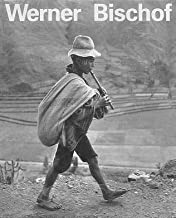
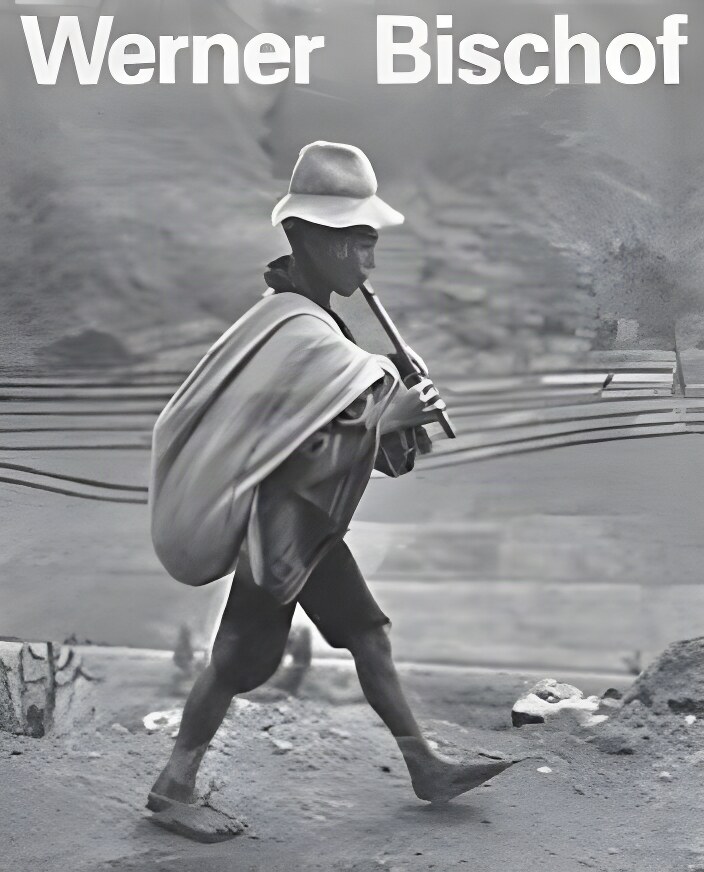
Hardcover. New York , Thames & Hudson, 1st, 1990, Book: Very Good, Dust Jacket: Very Good, 255 pages, clean hardcover in a bright, unclipped dust jacket. B&w photographs throughout by Bischof. His images were influenced by the major photo-movements of his time: the formal concepts of Das Neues Sehen (New Vision), the surrealism of Man Ray, and the documentary tradition of photojournalism. From the 1940s through the early 1950s, he covered World War II, the bombing of Hiroshima, and the Korean War for Life , Paris-Match , and other publications; his most famous series, "Famine in India," appeared in Life in 1951. This first major compilation of Bischof's work is nicely complemented by the text, a joint effort by son Marco and Swiss art historian Magnaguagno that vividly integrates biography and history. Dust jacket with minor edgewear, short closed tear to rear panel.
Hardcover. New York , Thames & Hudson, 1st, 1990, Book: Very Good, Dust Jacket: Very Good, 255 pages, clean hardcover in a bright, unclipped dust jacket. B&w photographs throughout by Bischof. His images were influenced by the major photo-movements of his time: the formal concepts of Das Neues Sehen (New Vision), the surrealism of Man Ray, and the documentary tradition of photojournalism. From the 1940s through the early 1950s, he covered World War II, the bombing of Hiroshima, and the Korean War for Life , Paris-Match , and other publications; his most famous series, "Famine in India," appeared in Life in 1951. This first major compilation of Bischof's work is nicely complemented by the text, a joint effort by son Marco and Swiss art historian Magnaguagno that vividly integrates biography and history.
Hardcover. NY, Harper, 1st, 2020, Book: Very Good, Dust Jacket: Very Good, Hardcover in a bright dust jacket, 672 pages. 16 pages of photos. What Becomes a Legend Most is the first definitive biography of this luminary--an intensely driven man who endured personal and professional prejudice, struggled with deep insecurities, and mounted an existential lifelong battle to be recognized as an artist. Philip Gefter builds on archival research and exclusive interviews with those closest to Avedon to chronicle his story, beginning with Avedon's coming-of-age in New York between the world wars, when cultural prejudices forced him to make decisions that shaped the course of his life. Compounding his private battles, Avedon fought to be taken seriously in a medium that itself struggled to be respected within the art world. Gefter reveals how the 1950s and 1960s informed Avedon's life and work as much as he informed the period. He counted as close friends a profoundly influential group of artists--Leonard Bernstein, Truman Capote, James Baldwin, Harold Brodkey, Renata Adler, Sidney Lumet, and Mike Nichols--who shaped the cultural life of the American twentieth century. It wasn't until Avedon's fashion work was exhibited at the Metropolitan Museum of Art in the late 1970s that he became a household name. Balancing glamour with the gravitas of an artist's genuine reach for worldy achievement--and not a little gossip--plus sixteen pages of photographs, What Becomes a Legend Most is an intimate window into Avedon's fascinating world. Dramatic, visionary, and remarkable, it pays tribute to Avedon's role in the history of photography and fashion--and his legacy as one of the most consequential artists of his time.
Hardcover. NY, Harper, 1st, 2020, Book: Very Good, Dust Jacket: Very Good, Hardcover in a bright dust jacket, 672 pages. 16 pages of photos. What Becomes a Legend Most is the first definitive biography of this luminary--an intensely driven man who endured personal and professional prejudice, struggled with deep insecurities, and mounted an existential lifelong battle to be recognized as an artist. Philip Gefter builds on archival research and exclusive interviews with those closest to Avedon to chronicle his story, beginning with Avedon's coming-of-age in New York between the world wars, when cultural prejudices forced him to make decisions that shaped the course of his life. Compounding his private battles, Avedon fought to be taken seriously in a medium that itself struggled to be respected within the art world. Gefter reveals how the 1950s and 1960s informed Avedon's life and work as much as he informed the period. He counted as close friends a profoundly influential group of artists--Leonard Bernstein, Truman Capote, James Baldwin, Harold Brodkey, Renata Adler, Sidney Lumet, and Mike Nichols--who shaped the cultural life of the American twentieth century. It wasn't until Avedon's fashion work was exhibited at the Metropolitan Museum of Art in the late 1970s that he became a household name. Balancing glamour with the gravitas of an artist's genuine reach for worldy achievement--and not a little gossip--plus sixteen pages of photographs, What Becomes a Legend Most is an intimate window into Avedon's fascinating world. Dramatic, visionary, and remarkable, it pays tribute to Avedon's role in the history of photography and fashion--and his legacy as one of the most consequential artists of his time.
Art Intitute of Chicago/Yale University Press, 1st, 2021, Book: Very Good, Dust Jacket: None, Hardcover, pictorial cloth, 251 pages illustrated in color. The extraordinary life of a captivating American artist, beautifully illustrated with his dreamlike drawings Much of Joseph Elmer Yoakum's story comes from the artist himself--and is almost too fantastic to believe. At a young age, Yoakum (1891-1972) traveled the globe with numerous circuses; he later served in a segregated noncombat regiment during World War I before settling in Chicago. There, inspired by a dream, he began his artistic career at age seventy-one, producing some two thousand drawings over a decade. How did Yoakum gain representation in major museum collections in Chicago and New York? What fueled his process, which he described as a "spiritual unfoldment"? This volume delves into the friendships Yoakum forged with the Chicago Imagists that secured his place in art history, explores the religious outlook that may have helped him cope with a racially fractured city, and examines his complicated relationship to African American and Native American identities. With hundreds of beautiful color reproductions of his dreamlike drawings, it offers the most comprehensive study of the artist's work, illuminating his vivid and imaginative creativity and giving definition and dimension to his remarkable biography. Clean copy. NOTE: DUE TO WEIGHT, DOMESTIC SHIPPING ONLY.
Hardcover. Chicago, University Of Chicago Press, 1st, 2006, Book: Very Good, Dust Jacket: Very Good, Hardcover, pages. In When Buildings Speak,Anthony Alofsin explores the rich yet often overlooked architecture of the late Austro-Hungarian Empire and its successor states. He shows that several different styles emerged in this milieu during the late nineteenth and early twentieth centuries. Moreover, he contends that each of these styles communicates to us in a manner resembling language and its particular means of expression. Covering a wide range of buildings--from national theaters to crematoria, apartment buildings to warehouses, and sanatoria to postal savings banks--Alofsin proposes a new way of interpreting this language. He calls on viewers to read buildings in two ways: through their formal elements and through their political, social, and cultural contexts. By looking through Alofsin's eyes, readers can see how myriad nations sought to express their autonomy by tapping into the limitless possibilities of art and architectural styles. And such architecture can still speak very powerfully to us today about the contradictory issues affecting parts of the former Habsburg Empire.
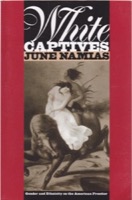
Softcover. Chapel Hill, University of North Carolina, reprint, 2002, Book: Very Good, Dust Jacket: None, Softcover, 378 pages. Namias shows that visual, literary, and historical accounts of the capture of Euro-Americans by Indians are commentaries on the uncertain boundaries of gender, race, and culture during the colonial Indian Wars, the American Revolution, and the Civil War. She compares the experiences and representations of male and female captives over time and on successive frontiers and examines the narratives of captives Jane McCrea, Mary Jemison, and Sarah Wakefield. Clean copy.
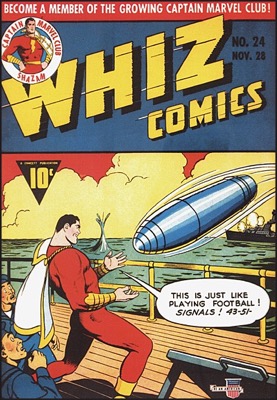
Softcover. UK, PS Artbooks, reprint, 2024, Book: Very Good, Dust Jacket: None, Softcover, pictorial wrappers. A facsimile reprint from 1941, 68 pages. Color art by C.C. Beck, Pete Costanza, Charles Sultan, Binder Studio et al. Another classic pre-war issue of Fawcett's #1 title, where Captain Marvel and all these other characters got their start. CM goes after a Nazi commander to rescue Whitey and Mr. Morris. Classic cover! Back-up strips include Doctor Voodoo, Ibis, Golden Arrow, Spy Smasher, Lance O'Casey.
Hardcover. Lawrence KS, University Press of Kansas , 1st, 2011, Book: Very Good, Dust Jacket: Very Good, Hardcover in a bright dust jacket, 386 pages, b&w illustrations. Inept leadership, inefficient campaigning, and enormous losses would seem to spell military disaster. Yet despite these factors, the Soviet Union won its war against Nazi Germany thanks to what Roger Reese calls its military effectiveness: its ability to put troops in the field even after previous forces had been decimated. Reese probes the human dimension of the Red Army in World War II through a close analysis of soldiers' experiences and attitudes concerning mobilization, motivation, and morale. In doing so, he illuminates the Soviets' remarkable ability to recruit and retain soldiers, revealing why so many were willing to fight in the service of a repressive regime--and how that service was crucial to the army's military effectiveness. He examines the various forms of voluntarism and motivations to serve-including the influences of patriotism and Soviet ideology-and shows that many fought simply out of loyalty to the idea of historic Russia and hatred for the invading Germans. He also considers the role of political officers within the ranks, the importance of commanders who could inspire their troops, the bonds of allegiance forged within small units, and persistent fears of Stalin's secret police. Clean copy.
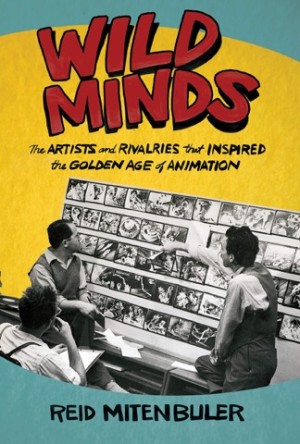
Hardcover. NY, Atlantic Monthly Press , 1st, 2020, Book: Very Good, Dust Jacket: Very Good, Hardcover in a bright, unclipped dust jacket. In 1911, famed cartoonist Winsor McCay debuted one of the first animated cartoons, based on his sophisticated newspaper strip "Little Nemo in Slumberland," itself inspired by Freud's recent research on dreams. McCay is largely forgotten today, but he unleashed an art form, and the creative energy of artists from Otto Messmer and Max Fleischer to Walt Disney and Warner Bros.' Chuck Jones. Their origin stories, rivalries, and sheer genius, as Reid Mitenbuler skillfully relates, were as colorful and subversive as their creations-from Felix the Cat to Bugs Bunny to feature films such as Fantasia-which became an integral part and reflection of American culture over the next five decades. Pre-television, animated cartoons were aimed squarely at adults; comic preludes to movies, they were often "little hand grenades of social and political satire." Early Betty Boop cartoons included nudity; Popeye stories contained sly references to the injustices of unchecked capitalism. "During its first half-century," Mitenbuler writes, "animation was an important part of the culture wars about free speech, censorship, the appropriate boundaries of humor, and the influence of art and media on society." During WWII it also played a significant role in propaganda. The Golden Age of animation ended with the advent of television, when cartoons were sanitized to appeal to children and help advertisers sell sugary breakfast cereals.
Hardcover. NY, Dutton Caliber, 1st, 2022, Book: Very Good, Dust Jacket: Very Good, Hardcover in a bright dust jacket, 324 pages, b&w illustrations. When the P-51 Mustang began tearing across European skies in early 1944, the Allies had been losing the air war for years. Staggering numbers of bomber crews, both British and American, had been shot down and killed thanks to the Luftwaffe's superior fighter force. Not only did the air war appear grim, but any landing of troops in France was impossible while German fighters hunted overhead. But behind the scenes, a team of visionaries had begun to design a bold new type of airplane, one that could outrun and outmaneuver Germany's best. Wings of War is the incredible true story of the P-51 Mustang fighter and the unlikely crew of designers, engineers, test pilots, and army officers who brought it from the drafting table to the skies over World War II. This is hardly a straightforward tale of building an airplane--for years, the team was stymied by corruption within the defense industry and stonewalled by the Army Air Forces, who failed to understand the Mustang's potential. But when squadrons of Mustangs were finally unleashed over Hitler's empire, the Luftwaffe was decimated within months, clearing the skies for D-Day. Clean copy.
Softcover. Bloomington, IN, Indiana University Press, 1st, 2015, Book: Very Good, Dust Jacket: None, 232 pages. Softcover. A very clean, unmarked copy with only minor edgewear. Black and white photographs throughout. The center of the art world before the war, Paris fired the Nazis' greed. The discovery of more than 1,500 prized paintings and drawings in a private Munich residence, as well as a recent movie about Allied attempts to recover European works of art, have brought Nazi plundering back into the headlines, but the thievery was far from being limited to works of art. From 1942 onwards, ordinary Parisian Jews-mostly poor families and recent immigrants from Eastern Europe-were robbed, not of sculptures or paintings, but of toys, saucepans, furniture, and sheets. Witnessing the Robbing of the Jews tells how this vast enterprise of plunder was implemented in the streets of Paris by analyzing images from an album of photographs found in the Federal Archives of Koblenz. Brought from Paris in 1945, the photographs were cataloged by the staff of the Munich Central Collecting Point. Beyond bearing witness to the petty acts of larceny, these images provide crucial information on how the Germans saw their work. They enable us to grasp the "Nazi gaze" and to confront the issue of the relation between greed and mass destruction.
Hardcover. New York, Warner Books, 1st, 1989, Book: Very Good, Dust Jacket: Very Good, Hardcover in a bright dust jacket, 245 pages. Illustrated with full color and black & white photographs. Clean, tight copy. A commemorative volume offers the definitive pictorial history of one of the most popular movies of all time.
Hardcover. Annapolis, Naval Institute Press, 1st, 1997, Book: Very Good, Dust Jacket: Very Good, 249 pages. Hardcover. Brick cloth boards with gilt titles to spine. Illustrated with photos in b/w. Dust jacket with light wear. Clean, unmarked copy.
Hardcover. Annapolis, MD, Navel Institute Press, 1st, 1997, Book: Very Good, Dust Jacket: Very Good, 238 pages. Hardcover with faded spine dust jacket. Black and white photographs/illustrations throughout. Clean, tight copy with only light wear to dust jacket and light rubbing to cover boards.
Hardcover. New York, Macmillan, 1st, 1996, Book: Very Good, Dust Jacket: Very Good, 182 pages. Hardcover with dust jacket. Clean, tight copy. A photographic tribute to Julia Tuell, one of the first women to photograph Native Americans at the turn of the 20th century.
Hardcover. University Press of Colorado, 1st, 1990, Book: Very Good, Dust Jacket: Very Good, Hardcover in a bright dust jacket, 198 pages, b&w illustrations. Women of the New Mexico Frontier, 1846-1912 is a collection of essays that include biographical sketches and writings from women of all walks of life who helped bring about the Americanization of the New Mexico Territory, from the Mexican War until statehood in 1912. These women were wives of missionaries, soldiers and military officers, and government officials who came from the eastern part of the United States. INSCRIBED BY AUTHOR on title page. Clean copy.
Hardcover. Hartford CT, S. S. Scranton & Co., 1st, 1866, Book: Very Good, Dust Jacket: None, Hardcover, embossed green cloth covers with gilt stamping on front cover and spine. Frontispiece, 'Before the Battle, with tissue intact shows a few light spots. Steel engraved portraits throughout with tissues intact. 596 pages. Clean, tight copy.
Hardcover. London, Ward Lock and Co., 6h Ed., nd, Book: Very Good, Dust Jacket: None, Hardcover, green cloth with color label on cover, 256 pages. illustrated with 12 color, 250 b&w illustrations. Light soil, chipping to covers, otherwise very good. No dust jacket.
Hardcover. London, Ward Lock and Co., 8th Ed., Circa 1944, Book: Very Good, Dust Jacket: None, Hardcover, brown cloth with color label on cover, 256 pages. illustrated with 8 color, 250 b&w illustrations. Light soil to covers, previous owner inscription in pencil dated 1944. No date on copyright.
Hardcover. New York, Chartwell Books, reprint, 2015, Book: Very Good, Dust Jacket: Very Good, 304 pages. Hardcover with dust jacket. Clean, unmarked copy with only minor wear to dust jacket. Color, black and white pictures throughout. Despite the fact that she's famous now, Wonder Woman had humble beginnings among a slew of other female super heroes that had their inception in the 1940s, but were seen very little after then. Created during World War II to foil Axis plots and defeat Nazis, she still fights to this day for truth, honor, and the little guy. Wonder Woman: The War Years (1941-1945) details how she used her super speed, strength, and Golden Lasso of Truth during World War II to bring peace and justice to a turbulent world.
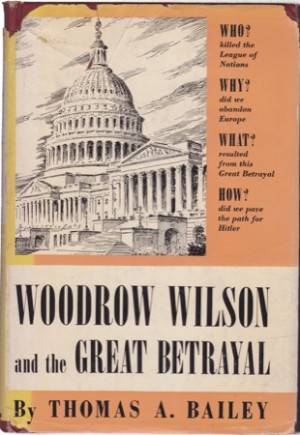
Hardcover. NY, The Macmillan Company, 1st, 1945, Book: Very Good, Dust Jacket: Poor, Hardcover in a very worn, chipped dust jacket, 429 pages. Maroon cloth with light blue lettering on spine. Bailey contends that Wilson's wartime isolationism, as well as his peace proposals at WWl's end were seriously flawed. Highlighting the fact that American delegates encountered staunch opposition to Wilson's proposed League of Nations, Bailey concluded that the president and his diplomatic staff essentially sold out, compromising American ideals to secure mere fragments of Wilson's progressive vision. Bookplate on inside front cover. Book very good, clean. Dust jacket poor.
Hardcover. NY, Abrams, 1st, 2008, Book: Very Good, Dust Jacket: None, Hardcover, 255 pages, profusely illustrated. Wordless books - stories from the early part of the twentieth century told in black-and-white woodcuts - were imaginatively illustrated, powerful, and iconic, and as relevant to the world of today as they were when they were first published. Covers the period of 1918 through 1951, and includes the works of: Helena Bocho akova-Dittrichova, William Gropper, Milt Gross, Laurence Hyde, Frans Masereel, Otto Nuckel, Giacomo Patri, e.o plauen, Istvan Szegedi-Szuts, Myron Waldman, and Lynd Ward.
Hardcover. NY, Abrams, 1st, 2008, Book: Very Good, Dust Jacket: None, Hardcover, 255 pages, profusely illustrated. Wordless books - stories from the early part of the twentieth century told in black-and-white woodcuts - were imaginatively illustrated, powerful, and iconic, and as relevant to the world of today as they were when they were first published. Covers the period of 1918 through 1951, and includes the works of: Helena Bocho akova-Dittrichova, William Gropper, Milt Gross, Laurence Hyde, Frans Masereel, Otto Nuckel, Giacomo Patri, e.o plauen, Istvan Szegedi-Szuts, Myron Waldman, and Lynd Ward.








 "Witnessing the Robbing of the Jews: A Photographic Album, Paris, 1940-1944by: Gensburger, Sarah")
 "Wizard of Oz - Official 50th Anniversary Pictorial History, Theby: Fricke, John/Jay Scarfone/William Stillman")
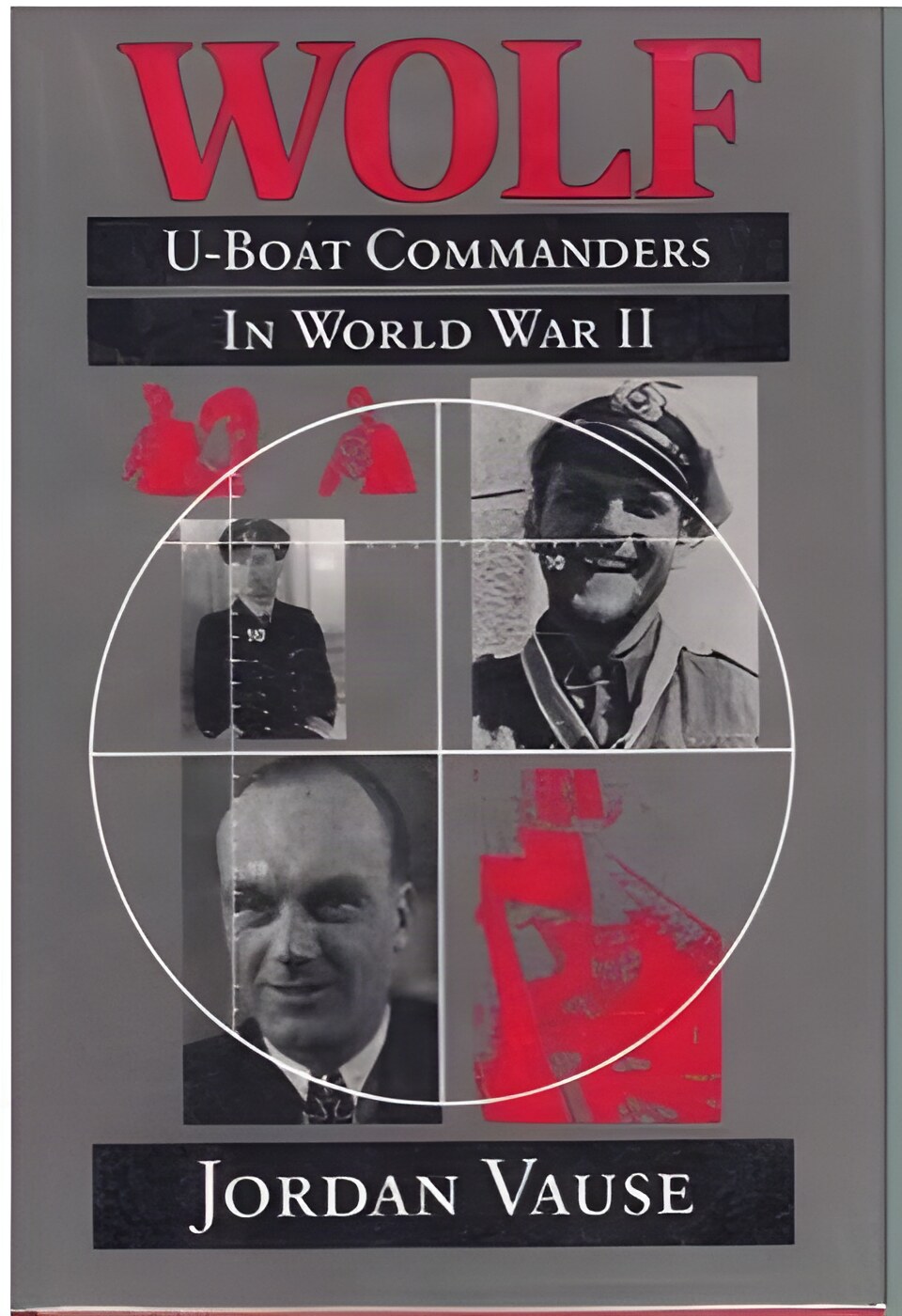
 "Wolfpack: U-Boats at War 1939-1945by: Kaplan, Philip; Currie, Jack")

 "Women of the New Mexico Frontier, 1846-1912 (SIGNED COPY)by: Cheryl Foote")
 "Women of the War: Their Heroism and Self-Sacrificeby: Frank Moore")
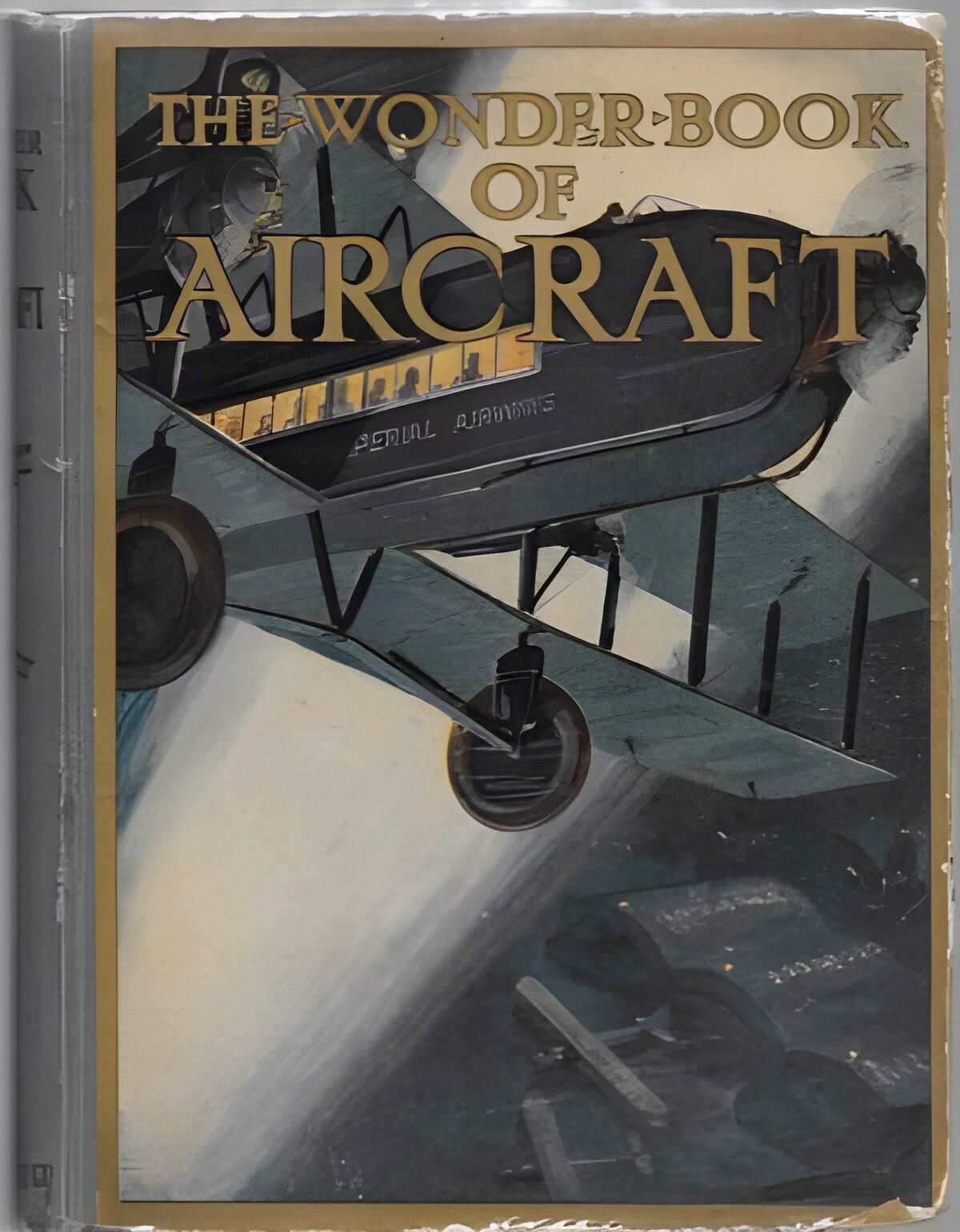
 "Wonder Book of Aircraft, Theby: Golding (Ed.), Harry")
 "Wonder Woman: The War Years 1941-1945by: Thomas, Roy")
 "Wordless Books: The Original Graphic Novelsby: Berona, David A.")
