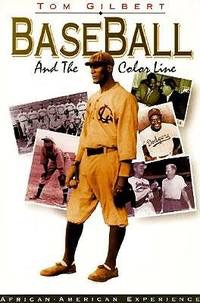
Softcover. NY, Franklin Watts, 1st, 1995, Book: Very Good, Dust Jacket: None, Softcover, 176 pages, b&w photos. The Contents are: Gentleman's Agreement - African Americans and Baseball's Beginning; A Ballplayer from Cooperstown - Post Reconstruction America and the Strange Career of Bud Fowler; False Spring - Fleet Walker and the Grudging Integration of the 1880s; Jim Crow Wins - Cap Anson Gets the Save; War Paint and Feathers - Jim Crow and Chief Tokohama; Second Class Immortals - Satchel Paige and the Black Babe Ruth; The Badge of Martyrdom - The Myth of Rickey and Robinson; and They Never Had It Made - from 1947 to Today; followed by Appendix: Professional Baseball Leagues Chronology; Glossary of Team Names; and an index. Clean copy.
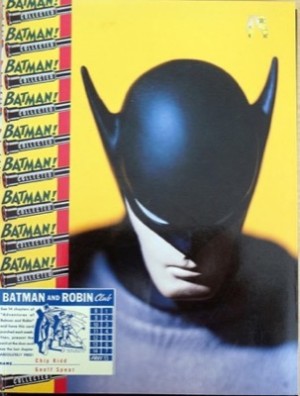
Softcover. NY, Watson-Guptill, 1st pbk, 2001, Book: Very Good, Dust Jacket: None, Softcover, 292 pages. A detailed resource on the comics and collectibles inspired by the classic character provides close-up photography and information on everything Batman, from the history of the character's graphic design to sixteen new pages of obscure memorabilia. Chip Kidd, who also wrote a neat "Batman Animated" coffee able book on the well-loved and critically acclaimed "Batman: The Animated Series" that debuted in 1992, turns here to the hobby (and serious business, for some) of collecting. He includes his own childhood remembrances of Bat-items, as well as wonderfully quirky photography. This book, full-color throughout, is not a "guide" to the collectibles, as it does not include price values or manufacturers (it does give the year and dimensions for each piece pictured). Plus, there is an editorial comment on the Andy Warhol Batman piece that's got a bit of an attitude. Clean copy.
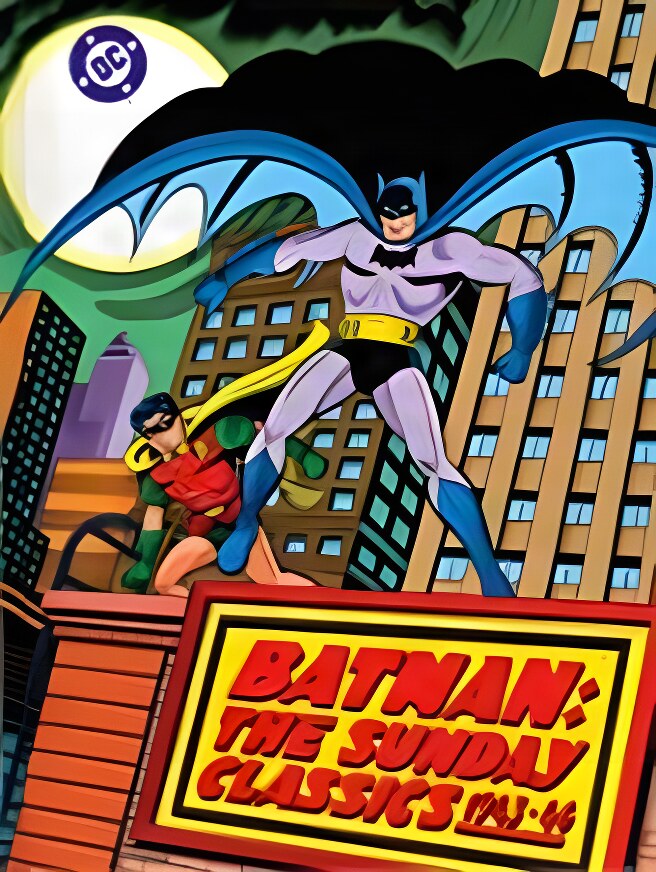
Hardcover. New York, Sterling, reprint, 2007, Book: Very Good, Dust Jacket: Very Good, Hardcover in a bright dust jacket. Originally published in 1990 by Kitchen Sink Press. Color throughout. 208 pages. When Bob Kane's seminal Batman first reached newspapers during World War II, only a small group of papers published it. So the early Batman and Robin comic strips have remained among the most elusive works in comics' history. Not anymore: these rare Sunday color pages are now reprinted in a generously sized format worthy of their importance. The many fans of the Caped Crusader will thrill to see Batman and the Boy Wonder do battle once again with both common thugs and outrageous villains in order to save Gotham City from plot after evil plot. Making their nefarious way across these illustrated panels are some of the Caped Crusader's most indelible adversaries, including the Joker, Catwoman, Penguin, and Two-Face. In addition to behind-the-scenes information and rare promotional materials, this deluxe edition collects the first four years of the classic Batman and Robin newspaper comics exactly as written and illustrated by the strip's most famous writers and artists. Among the classic stories are: ?The Penguin's Crime-Thunderstorms," ?Catwoman's Grasshopper Chase," and ?Half Man?Half Monster."
Hardcover. Philadelphia, PA, Hubbard Brothers, 1st Edition, 1882, Book: Very Good, Dust Jacket: None, 488 pages. Hardcover. B/w illustrations (including frontispiece with tissue guard--see image). Decorated endpapers. Previous owner's stamp of ownership on two preliminary pages. Cover boards bound in brown mustard cloth, gilt title and decorations on spine and front cover board (see image). Cover boards have a touch of age wear. Pages and edges have some tanning from age. Loose gutter at top of title page (see image), otherwise binding tight. "A graphic recital of personal experiences throughout the whole period of the late war for the Union--during which the author was actively engaged in 25 Battles and Skirmishes, was three times taken prisoner..."
Hardcover. NY, Oxford University Press, 1st, 1965, Book: Very Good, Dust Jacket: None, Hardcover, green cloth with black stamping, 376 pages, endpapers map. An historical account of the battles, skirmishes, and guerrilla activities of the French and Indian War. Clean copy.
Hardcover. Monmouth Beach, Philip Freneau Press, 1st, 1977, Book: Very Good, Dust Jacket: None, 96 pages. Hardcover. Illustrated with black & white maps and diagrams showing battle strategies. Blue cloth with degree of fading to front and back covers. Title in gilt on front cover and spine. No dust jacket. Clean, tight copy. Scarce.
Hardcover. Stanford CA, Stanford University Press, 1st, 2006, Book: Very Good, Dust Jacket: Very Good, Hardcover in a bright, unclipped dust jacket, 559 pages. "Behind the Bamboo Curtain is an important collection of essays on Sino-Vietnamese relations during the Cold War An excellent contribution from a Vietnamese historian and well-documented chapters on Soviet and French policy further augment the importance of the volume. The contributors make extensive use of primary documents from the United States, the People's Republic of China, Vietnam, and Russia and offer authoritative analyses." -- The Journal of Cold War Studies. Claen, unread copy.
Hardcover. New York , Alfred A. Knopf, 1st, 1990, Book: Very Good, Dust Jacket: Very Good, 579 pages. Hardcover with dust jacket, many BW illus. The third book in a triology, prefaced by The Parade's Gone By ... (1968) and The War, the West and the Wilderness (1979). Offers a full and illustrated "exploration of a vital and now almost forgotten chapter of American moviemaking: the response of early producers and directors to the agonizing social problems of the decades before World War I. ... An essential work of silent-film history, certain to become a standard reference." Clean, tight copy.
Hardcover. Austin TX, Texas State Historical Association, 1st, 1994, Book: Very Good, Dust Jacket: Very Good, Hardcover, 128 pages, 109 b&w photographs by Hickman. Bright copy in a nice dust jacket. This remarkable book reproduces more than one hundred photographs taken by R. C. Hickman, a professional photographer whose work provides a fascinating visual record of life in Dallas's black community during the three decades following World War II. After the war, he returned to Dallas and joined the staff of the Dallas Star Post. He also worked as a freelance photographer for Jet magazine, for several newspapers in the East, and for the NAACP. His work led him to photograph notables such as Martin Luther King Jr., Thurgood Marshall, Ella Fitzgerald, Joe Louis, and others when they visited Dallas.
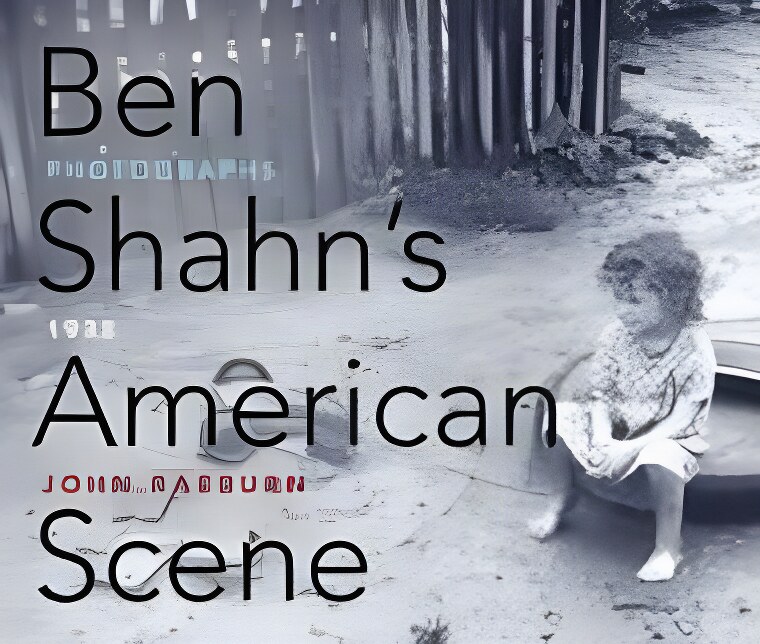
Softcover. US, University of Illinois Press, 1st, 2010, Book: Near Fine, Dust Jacket: None, 190 pages, illustrated throughout in b&w. Clean, unmarked copy with only minor wear to wrappers. The paintings, murals, and graphics of Ben Shahn (1898-1969) have made him one of the most heralded American artists of the twentieth century, but during the 1930s he was also among the nation's premier photographers. Much of his photographic work was sponsored by the New Deal's Farm Security Administration, where his colleagues included Dorothea Lange and Walker Evans. Ben Shahn's American Scene: Photographs, 1938 presents one hundred superb photographs from his most ambitious FSA project, a survey of small-town life in the Depression. John Raeburn's accompanying text illuminates the thematic and formal significance of individual photographs and reveals how, taken together, they address key cultural and political issues of the years leading up to World War II. Shahn's photographs highlight conflicts between traditional values and the newer ones introduced by modernity as represented by the movies, chain stores, and the tantalizing allure of consumer goods, and they are particularly rich in observation about the changes brought about by Americans' universal reliance on the automobile. They also explore the small town's standing as the nation's symbol of democratic community and expose the discriminatory social and racial practices that subverted this ideal in 1930s America.
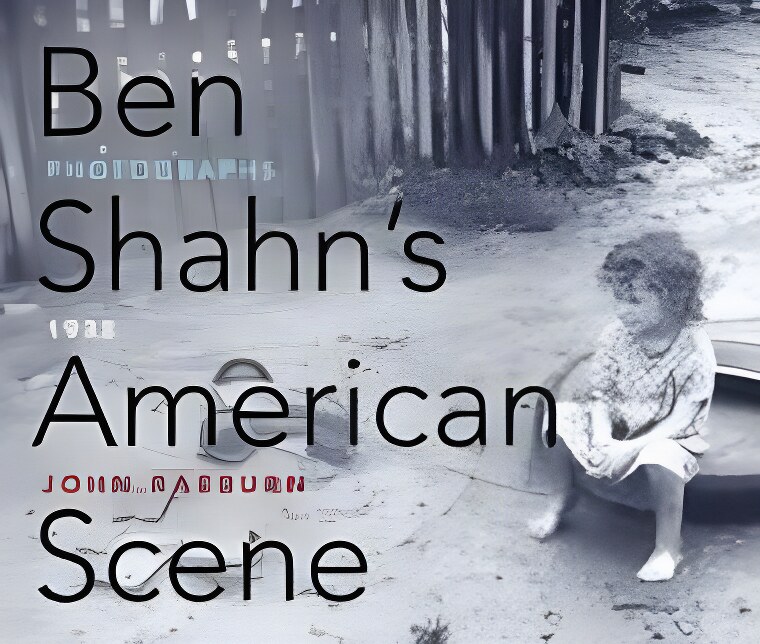
Softcover. US, University of Illinois Press, 1st, 2010, Book: Very Good, Dust Jacket: None, 190 pages, illustrated throughout in b&w. Clean, unmarked copy with only minor wear to wrappers. The paintings, murals, and graphics of Ben Shahn (1898-1969) have made him one of the most heralded American artists of the twentieth century, but during the 1930s he was also among the nation's premier photographers. Much of his photographic work was sponsored by the New Deal's Farm Security Administration, where his colleagues included Dorothea Lange and Walker Evans. Ben Shahn's American Scene: Photographs, 1938 presents one hundred superb photographs from his most ambitious FSA project, a survey of small-town life in the Depression. John Raeburn's accompanying text illuminates the thematic and formal significance of individual photographs and reveals how, taken together, they address key cultural and political issues of the years leading up to World War II. Shahn's photographs highlight conflicts between traditional values and the newer ones introduced by modernity as represented by the movies, chain stores, and the tantalizing allure of consumer goods, and they are particularly rich in observation about the changes brought about by Americans' universal reliance on the automobile. They also explore the small town's standing as the nation's symbol of democratic community and expose the discriminatory social and racial practices that subverted this ideal in 1930s America.
Hardcover. New York, Vanguard Press, 1st, 1932, Book: Good, Dust Jacket: None, 306 pages. Hardcover. B/w illustrated frontispiece. Some age wear to covers. Bound in gray fabric. Previous owner's bookplate on front endpaper. Deckled edges. Some age yellowing to pages and edges. In good condition for its age.
Hardcover. Indianapolis/NY, Bobbs-Merrill, 1st, 1971, Book: Very Good, Dust Jacket: Good, Hardcover in a worn dust jacket, 490 pages, b&w frontis. Rush, the Philadelphia doctor who signed the Declaration of Independence, was an energetic, ambitious man given to devising reforms and, as the author puts it, meddling in politics. He studied medicine in Edinburgh and London, meeting Hume, Goldsmith, Samuel Johnson, et al. and, Hawke thinks, solidifying his republican disposition. Back in Pennsylvania he agitated for independence, made friends with John Adams, urged Paine to write Common Sense, and entered Congress. Apart from the recurrent epidemics of the age, the practice of military medicine and propaganda for resuming debt payments occupied Rush during the war; afterwards he turned to progressive education, speculated in land, fought paper money, equivocally supported the abolition of slavery, declared that tobacco is unhealthful, and boosted the Constitution before it was even written. Dust jacket chipped, faded in parts, clean internally.
Hardcover. Philadelphia, J.B. Lippincott, 1st, 1965, Book: Very Good, Dust Jacket: Very Good, Hardcover, 192 pages. B&W illustrations by Leonard Vosburgh. In a lightly chipped dust jacket, price-clipped. A young adult novel set in the Carolinas during the Revolutionary War.
Hardcover. New York, Norton, 1st, 2018, Book: Very Good, Dust Jacket: Very Good, Hardcover, 634 pages, b&w illustrations. In a bright, unclipped dj. In Berenice Abbott: A Life in Photography, author, archivist, and curator Julia Van Haaften brings this iconic public figure to life alongside outlandish, familiar characters from artist Man Ray to cybernetics founder Norbert Wiener. A teenage rebel from Ohio, Abbott escaped first to Greenwich Village and then to Paris-photographing, in Sylvia Beach's words, "everyone who was anyone." As the Roaring Twenties ended, Abbott returned to New York, where she soon fell in love with art critic Elizabeth McCausland, with whom she would spend thirty years. In the 1930s, Abbott began her best-known work, Changing New York, in which she fearlessly documented the city's metamorphosis. When warned by an older male supervisor that "nice girls" avoid the Bowery-then Manhattan's skid row-Abbott shot back, "I'm not a nice girl. I'm a photographer...I go anywhere." This bold, feminist attitude would characterize all Abbott's accomplishments, including imaging techniques she invented in her influential, space race-era science photography and her tenure as The New School's first photography teacher. With more than ninety stunning photos, this sweeping, cinematic biography secures Berenice Abbott's place in the histories of photography and modern art, while framing her incredible accomplishments as a female artist and entrepreneur.
Softcover. Bergen County Historical Society, 1st, 1960, Book: Very Good, Dust Jacket: None, Softcover, pale rose wrappers with black type and engraving of courthouse and church in Hackensack. 112 pages, clean copy.
Hardcover. NY, Norton, 1st, 1991, Book: Very Good, Dust Jacket: Very Good, Hardcover in a bright dust jacket, 352 pages. Shock waves from the fall of the Berlin Wall in November 1989 continue to pulse through German society. As the difficult process of reunification continues, it is worth recalling the revolutionary moment when immense crowds took to the streets of Leipzig and Berlin under the banner "We Are the People" and brought down one of the world's most oppressive dictatorships. Robert Darnton's eyewitness account of those historic days "is direct and vivid. His prose conveys the immediacy of the drama." He gives us a memorable cast of characters, from two experts on the repair of broken-down Trabis to the environmental councilor for the polluted city of Bitterfeld, and Isaak Behar, a Jew who managed to survive the Holocaust while hiding in wartime Berlin. With wit and insight Darnton takes us behind the scenes to meet "ordinary people grappling with great change, humanizing history."
Softcover. Canada, The History Press, 1st, Book: Very Good, Dust Jacket: None, 143 pages, softcover. Extensive b&w illustrations throughout. Clean, unmarked copy with only minor wear to wrappers.
Hardcover. Princeton NJ, Princeton University Press, 1st, 2011, Book: Very Good, Dust Jacket: Very Good, Hardcover in a bright dust jacket. Small ink notation on front fly leaf otherwise clean. 320 pages with extensive notes and index. This book tracks the dramatic outcomes of the federal government's growing involvement in higher education between World War I and the 1970s, and the conservative backlash against that involvement from the 1980s onward. Using cutting-edge analysis, Christopher Loss recovers higher education's central importance to the larger social and political history of the United States in the twentieth century, and chronicles its transformation into a key mediating institution between citizens and the state. Framed around the three major federal higher education policies of the twentieth century--the 1944 GI Bill, the 1958 National Defense Education Act, and the 1965 Higher Education Act--the book charts the federal government's various efforts to deploy education to ready citizens for the national, bureaucratized, and increasingly global world in which they lived. Loss details the myriad ways in which academic leaders and students shaped, and were shaped by, the state's shifting political agenda as it moved from a preoccupation with economic security during the Great Depression, to national security during World War II and the Cold War, to securing the rights of African Americans, women, and other previously marginalized groups during the 1960s and '70s. Along the way, Loss reappraises the origins of higher education's current-day diversity regime, the growth of identity group politics, and the privatization of citizenship at the close of the twentieth century. At a time when people's faith in government and higher education is being sorely tested, this book sheds new light on the close relations between American higher education and politics.
Hardcover. NY, Thomas Y. Crowell, 1st, 1958, Book: Very Good, Dust Jacket: Good, Hardcover, red cloth covers with a lightly worn dust jacket with some chipping. 207 pages, b&w drawings by Hubert Buel. Story of journey from Mexico to what is now San Francisco in 1775 to claim land for Spain. For 10 to 14-year-olds. Previous owner's signature on front fly leaf otherwise clean.
Hardcover. US, Reel Art Press, 1st, 2014, Book: Very Good, Dust Jacket: Very Good, Large heavy book, 448 pages, illustrated throughout in b&w. Clean, unmarked copy with only minor wear to dust jacket. This breathtaking tome is the definitive and comprehensive collection of Billy Name's black-and-white photographs from Warhol's Factory. Name's photographs from this period (1964-68) are one of the most important photographic documents of any single artist in history. Name lived in a tiny closet at the Factory. He was responsible for the legendary "silverizing" of the space using aluminum paint and foil to complete the instillation. When Warhol gave Name a Pentax Honeywell 35mm camera, he took on the role of resident photographer and archivist. This visual essay, produced in collaboration with Billy name, offers an extensive trip through Warhol's world. Name photographed the day-to-day happenings at The Factory with Andy, including visits from Lou Reed and the Velvet Underground, Nico, Edie Sedgwick, Ivy Nicholson and Bob Dylan, and filming Screen Tests and features such as Chelsea Girls, Vinyl and My Hustler.
Hardcover. Cambridge MA, Harvard University Press, 1st US, 1996, Book: Very Good, Dust Jacket: Very Good, Hardcover in a bright dust jacket with minor edgewear, 468 pages. Biologists under Hitler combines exhaustive research with capsule biographies of key scientists to overturn certain assumptions about science under the Nazi regime. Biological research, for instance, was neither neglected nor underfunded during World War II; funding by the German Research Association (DFG) in fact increased tenfold between 1933 and 1938, and genetic research in particular flourished. Deichmann shows that the forced emigration of Jews had a less significant impact in biology than in other fields. Furthermore, she reveals that the widely observed decline in German biology after 1945 was not caused primarily by the Third Reich's science policy or by the expulsion of biologists but was due to the international isolation of German scientists as part of the legacy of National Socialism. Her book also provides overwhelming evidence of German scientists' conscious misrepresentation after the war of their wartime activities. In this regard, Deichmann's capsule biography of Konrad Lorenz is particularly telling. Clean copy.



 "Battle Field and Prison Pen, or Through the War, and Thrice a Prisoner in Rebel Dungeonsby: Urban, John W.")


 "Battle Fields of the South - From Bull Run to Fredericksburgh; With Sketches of Confederate Commanders, and Gossip of the Camps (Collector's Library of the Civil War)by:")



 "Benedict Arnold: Military Racketeerby: Sullivan, Edward Dean")
 "Benjamin Rush: Revolutionary Gadfly by: David Freeman Hawke")

 "Berenice Abbott: A Biographyby: Van Haaften, Julia")
 "Bergen County Historical Society Papers: Revolutionary War Round Table Papers 1960by: Albert T. Klyberg et. al.")


 "Big Rideby: Erskine, Dorothy Ward")
 "Billy Name:The Silver Age: Black and White Photographs from Andy Warhol's Factoryby: James, Dagon")