Hardcover. US, Sansom Foundation, Inc., 1st, 2011, Book: Very Good, Dust Jacket: Very Good, 240 pages. Like new in publisher's shrink-wrap. The painter William Glackens (1870-1938) and his friends were among the liveliest and most influential American artists of the opening decades of the twentieth century. Their continued importance in the history of American art is explored in this informative collection of essays. Colin Bailey chronicles the beginnings of Albert C. Barnes' unparalleled collection of modern art, as well as Glackens' role in forming it, and Avis Berman investigates the friendship of John Sloan, Robert Henri and John Butler Yeats. Carol Troyen examines George Bellows' war paintings and Richard J. Wattenmaker probes the relationship between Glackens' paintings and sketchbooks. H. Barbara Weinberg documents how the leading American Impressionists and members of The Eight dealt with the pressures of economic survival. This profusely illustrated publication is an essential reference for curators, collectors and historians.
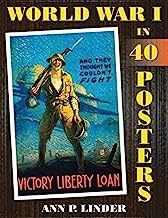
Softcover. Stackpole Books, 1st, 2016, Book: Very Good, Dust Jacket: None, Softcover, 147 pages, color illustrations. Published during the war's centennial, this is the story of the First World War through forty propaganda posters. Essays explain each poster, unpacking the visual imagery and setting the poster within the military, political, social, and cultural history of the war. Clean, bright copy.
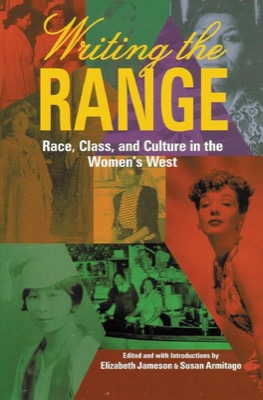
Softcover. Norman OK, University of Oklahoma Press, 1st, 1997, Book: Very Good, Dust Jacket: None, Softcover, 656 pages. In mythic sagas of the American West, the wide western range offered boundless opportunity to a limited cast of white men. Buffalo roamed, deer and antelope played, and women's voices were never heard. Writing the Range allows us to hear many long-silenced women: Spanish-Mexican settlers and American Indians on New Spain's northern frontiers; Chinese, Basque, Japanese, Korean, Vietnamese, Slavic, and Irish immigrants; film stars Dolores del Rio and Lupe Velez; Navajos and African Americans who moved to western cities during World War II; and the activist Mothers of East Los Angeles, who organized to resist environmental dangers to their community. A valuable introduction to the rapidly changing field of western history, Writing the Range explains clearly how race, class, and culture are constructed and connected. The first section examines issues raised by more than a decade of multicultural western women's histories; following are six chronological sections spanning four centuries. Each section offers a short introduction connecting is essays and placing them in analytic and historical perspective. Clean copy.
Hardcover. London, Cambridge University Press, 1st, 2010, Book: Very Good, Dust Jacket: Very Good, Hardcover in a bright, unclipped dust jacket. This revisionist study of Allied diplomacy from 1941 to 1946 challenges Americocentric views of the period and highlights Europe's neglected role. Fraser J. Harbutt, drawing on international sources, shows that in planning for the future Churchill, Roosevelt, Stalin, and others self-consciously operated into 1945, not on "East/West" lines but within a "Europe/America" political framework characterized by the plausible prospect of Anglo-Russian collaboration and persisting American detachment. Harbutt then explains the destabilizing transformation around the time of the pivotal Yalta conference of February 1945, when a sudden series of provocative initiatives, manipulations, and miscues interacted with events to produce the breakdown of European solidarity and the Anglo-Soviet nexus, an evolving Anglo-American alignment, and new tensions that led finally to the Cold War. This fresh perspective, stressing structural, geopolitical, and traditional impulses and constraints, raises important new questions about the enduringly controversial transition from World War II to a cold war that no statesman wanted. Clean copy.
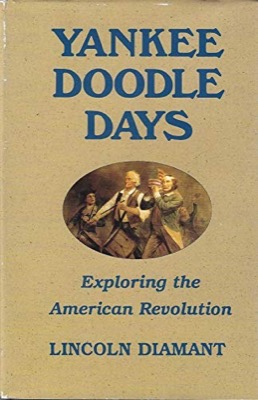
Hardcover. Fleischmanns NY, Purple Mountain Press, 1st, 1996, Book: Very Good, Dust Jacket: Very Good, Hardcover in a bright, unclipped dust jacket. 178 pages.Award-winning biographer and historian Lincoln Diamant introduces a diverse group of men and women who contributed in unique ways to the eight-year American Revolution. . . . Among them are soldiers and civilians, veteran generals and three-week militiamen, patriots and spies, a host of Native American and African-American volunteers, and more than a few courageous women. Clean copy.
Hardcover. NY, Simon and Schuster, 1946, Book: Good, Dust Jacket: None, Hardcover, tan cloth covers stamped in black. A fascinating collection. It features the cartoons of David Low, most from the London Evening Standard, from Japan's invasion of Manchuria in 1931 through the surrender of Japan in 1945, in chronological order. They are each accompanied by text by Quincy Howe, which explains the context of each cartoon. The reader can follow the events in the order that they happen from the build-up to the war through its conclusion, in an easy-to-read format. Howe has also written a chronology of the period, which appears at the end of the book. No dust jacket. The cloth spine has wear to top and bottom, Firm binding and the interior is clean and bright.
Softcover. Caldwell ID, Caxton Press, reprint, Book: Very Good, Dust Jacket: None, Softcover, 328 pages. illustrated frontispiece. Extensive b&w photographs throughout. The Nez Perce campaign is among the most famous in the brief and bloody history of the Indian wars of the West. Yellow Wolf was a contemporary of Chief Joseph and a leader among his own men. His story is one that had never been told and will never be told again. A first person account, through author L.V. McWhorter of the Nez Perce's ill-fated battle for land and freedom. Clean copy.
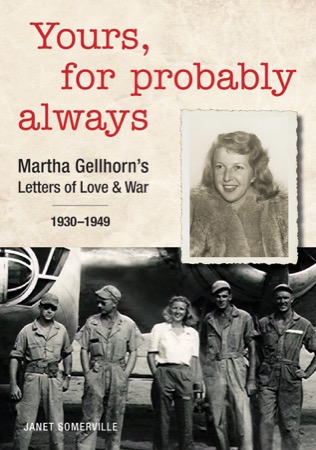
Hardcover. NY, Firefly Books, 1st, 2019, Book: Very Good, Dust Jacket: Very Good, Hardcover in a bright, unclipped dust jacket, 528 pages, b&w illustrations. Martha Gellhorn was a strong-willed, self-made, modern woman whose journalism, and life, were widely influential at the time and cleared a path for women who came after her. An ardent anti-fascist, she abhorred "objectivity shit" and wrote about real people doing real things with intelligence and passion. She is most famous, to her enduring exasperation, as Ernest Hemingway's third wife. Long after their divorce, her short tenure as "Mrs. Hemingway" from 1940 to 1945 invariably eclipsed her writing and, consequently, she never received her full due. Gellhorn's work and personal life attracted a disparate cadre of political and celebrity friends, among them, Sylvia Beach, Ingrid Bergman, Leonard Bernstein, Norman Bethune, Robert Capa, Charlie Chaplin, Chiang Kai-shek, Madame Chiang, Colette, Gary Cooper, John Dos Passos, Dorothy Parker, Maxwell Perkins, Eleanor and Franklin D. Roosevelt, Antoine de Saint-Exupery, Orson Welles, H.G. Wells -- the people who made history in her time and beyond. Yours, for Probably Always is a curated collection of letters between Gellhorn and the extraordinary personalities that were her correspondents in the most interesting time of her life. Through these letters and the author's contextual narrative, the book covers Gellhorn's life and work, including her time reporting for Harry Hopkins and America's Federal Emergency Relief Administration in the 1930s, her newspaper and magazine reportage during the Spanish Civil War, World War II and the Vietnam War, and her relationships with Hemingway and General James M. Gavin late in the war, and her many lovers and affairs.
Hardcover. New York, W. W. Norton & Company, 1st, 2010, Book: Very Good, Dust Jacket: Good, 160 pages. Hardcover with dust jacket. Clean, unmarked copy with minor wear to dust jacket. Also small tear with piece missing from dust jacket bottom fore edge front. The photographer Pierre Yves-Petit, who called himself "Yvon," wandered the streets of Paris between the world wars looking for the moment when the shifting light and clouds would perfectly reveal the city?s ephemeral, iconic beauty. The dramatic images of the city and its people that he made during those years would become the most popular postcards in France. Yvon?s Paris reproduces more than one hundred of his loveliest images, many made from recently discovered glass negatives.
Hardcover. NY, Clarion Books, 1st, 2001, Book: Very Good, Dust Jacket: Very Good, Hardcover in a bright, unclipped dust jacket. An intricately woven tapestry of friendship and love follows Zazoo, who lives with her adoptive grandfather in his village in France, as she learns about the history of World War II and Vietnam through her Grand-Pierre and, with the help of Marius, the bicycle boy, and the local pharmacist, makes a startling discovery that forces her to face the past. Clean copy.

 "World of William Glackens. The: The C. Richard Hilker Art Lecturesby: Bailey, Colin")

 "Years of Wrath (A Cartoon History: 1931-1945)by: David Low")



 "Yvon's Parisby: Stevens, Robert")