Hardcover. Lavenham, Terence Dalton Limited, 1st, 1983, Book: Very Good, Dust Jacket: Good, Hardcover, 190 pages. Minor dust jacket edge wear, small chunk missing on top left corner, with protective clear cover. A very clean and tight copy. Many dramatic incidents recorded here for the first time. Large format. B/w photos and diagrams. Index.
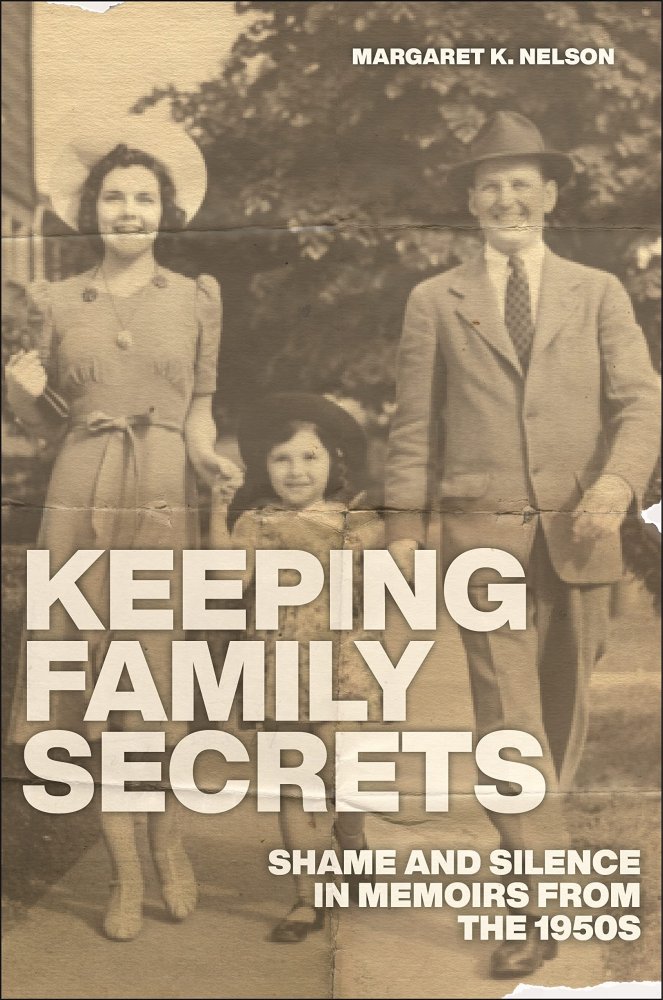
Hardcover. NY, NYU Press, 1st, 2022, Book: Very Good, Dust Jacket: Very Good, Hardcover in a bright dust jacket, 241 pages. INSCRIBED BY AUTHOR on front fly leaf. All families have secrets but the facts requiring secrecy change with time. Nowadays A lesbian partnership, a "bastard" son, an aunt who is a prostitute, or a criminal grandfather might be of little or no consequence but could have unraveled a family at an earlier moment in history. Margaret K. Nelson is interested in how families keep secrets from each other and from outsiders when to do otherwise would risk eliciting not only embarrassment or discomfort, but profound shame and, in some cases, danger. Drawing on over 150 memoirs describing childhoods in the period between the aftermath of World War II and the 1960s, Nelson highlights the importance of history in creating family secrets and demonstrates the use of personal stories to understand how people make sense of themselves and their social worlds. Clean copy.
Hardcover. NY, Rizzoli, 1st, 2008, Book: Very Good, Dust Jacket: None, Illustrated boards, 528 pages. Closely based on Haring's own concept for the monograph he wanted to publish before his untimely death, this volume represents more than a decade of research and contains a wealth of unpublished photographic and written material including drawings, studio photographs, and journal entries. From chalk drawings deep in the New York City subways to murals in Pisa and Berlin; collaborations with William Burroughs and the famous body painting of Grace Jones, this book follows the incredible trajectory of Keith Haring's artistic career: how a young man from a small town in rural Pennsylvania came to revolutionize the art world--and the course of art history--within little more than a decade. An incredibly prolific artist, Keith Haring created countless bold, provocative, endearing, and unforgettable images that continue to inspire artists--and delight children--worldwide. Tracing the arc from his early subway "tags" to his poignant work on social issues as diverse as AIDS, illiteracy and apartheid, this visually stunning book is the definitive work on Keith Haring.
Softcover. Norman OK, University of Oklahoma Press, reprint, 1997, Book: Very Good, Dust Jacket: None, Softcover, 351 pages. George Wilkins Kendall, who founded the New Orleans Picayune in 1837, was a restless, impatient, and colorful character in an exciting era. For thirty years he guided the Picayune and built it into a powerful force in behalf of America's westward expansion. Kendall's vigorous editorials championed the cause of the infant Republic of Texas. When the Texan Santa Fe Expedition was organized in 1841, for the purpose of occupying New Mexico (then still under Mexican rule), Kendall left his editorial chair to participate--and was marched off to Mexico as a captive for seven months when the expedition was overwhelmed at Santa Fe. A few years later, when Kendall accompanied American forces invading Mexico during the Mexican War, he became America's first war correspondent--reporting directly from the battlefront. His effective "courier expresses" brought the first news of each battle to an eager nation, including President Polk, who often read news of the war in Kendall's Picayune before hearing it from his field commanders. Clean copy.
Hardcover. Princeton NJ, Princeton University Press, 1st, 1982, Book: Very Good, Dust Jacket: Good, Hardcover in a lightly worn dust jacket with a hole on front fore-edge, 318 pages. Mutsu Munemitsu was the Foreign Minister of Japan during the time of the Sino-Japanese War from 1894 until the signing of the peace treaty on May 8, 1895. Mutsu was responsible for the secret documents on diplomatic matters in which he was involved, such as the Sino-Japanese War of 1894-1895 and the facts about the Triple Intervention. The phrase "kenken" means "serving the sovereign with a pained heart," thus showing his loyalty to serve the Emperor. The documents in this book are exceedingly important as they are virtually the only material mentioning the diplomatic situations in the days of the Sino-Japanese War of 1894-1895. Name on front fly leaf otherwise clean.
Hardcover. Princeton NJ, Princeton University Press, 1st, 2023, Book: Very Good, Dust Jacket: Very Good, Hardcover in a bright dust jacket, 624 pages, black and white illustrations. The diplomat and historian George F. Kennan (1904-2005) ranks as one of the most important figures in American foreign policy and one of its most complex. Drawing on many previously untapped sources, Frank Costigliola's authoritative biography offers a new picture of a man of extraordinary ability and ambition whose idea of containing the Soviet Union helped ignite the Cold War but who spent the next half century trying to extinguish it. Clean copy.
Softcover. New York, Pantheon Books, 1st, 1982, Book: Very Good, Dust Jacket: None, 74 page catalog of 44 rich works of Kentucky quilting heritage. 63 color plates and 12 b&w photographs. A comprehensive collection of 19th century Kentucky quilting.
Hardcover. Nairobi, The English Press,, 1st, 1954, Book: Good, Dust Jacket: None, Hardcover, blue cloth with black title on front, 117 pages + postscript. The Mau Mau, the black challenge to white supremacy and the need for British rule to remain in Kenya. Name on front fly leaf, light marking to margins on some pages.
Hardcover. NY, W. W. Norton & Company, 1st, 2008, Book: Very Good, Dust Jacket: Very Good, Hardcover, 320 pages. Extraordinary photographs, along with extensive captions, document the transition from a barely explored paradise to a modern nation. This stunning collection of 720 photographs, many of them drawn from family archives and scrapbooks and all carefully restored, is one of the most important visual records of Africa in the late nineteenth and early twentieth centuries ever to have been published. The early photographers captured the beauty and dangerous allure of life on this spectacular frontier: the ceremonies and traditional attire of the native people, the fantastic machinery used in construction of the Uganda Railway, the gradual development of trade on the coast and in the country's interior, the hardships of the East African Campaign during World War I, and the pioneering spirit of early European settlers and farmers. Many of the most famous names and places connected with Africa appear in these pages, including Karen Blixen's farm and Ernest Hemingway and Theodore Roosevelt on safari.
Hardcover. NY, Harry N Abrams, 1st, 1989, Book: Very Good, Dust Jacket: Very Good, 264 pages, illustrated throughout in b&w. Clean, unmarked copy with only minor wear to dust jacket. "A lavish, information-packed look at the people and places of an important, exciting era in art history. "?Publishers Weekly. From 1900 to 1930, Montparnasse was the center of artistic life for the whole world. A major contribution to the social and cultural history of the period? with its informative text and hundreds of photographs?. As The Washington Post said, Kiki's Paris "celebrates the people who made the modern movement in art, music and literature, most of whom were friends or lovers of Kiki, the woman Hemingway called 'The Queen of Montparnasse.'"
Hardcover. NY, Oxford University Press, 1st, 2001, Book: Very Good, Dust Jacket: Very Good, Hardcover in a bright dust jacket, 400 pages. Price-clipped. Clean covers and dust jacket, pages crisp and unmarked, tight binding; clean copy. A generation before Walt Disney, Fred Thompson was the "boy-wonder" of American popular amusements. At the turn of the 20th century, Thompson's entrepreneurial drive made him into an entertainment mogul who helped to define the popular culture of his day. In this lively biography, Woody Register tells Thompson's remarkable story and examines the transformation of commerce and entertainment as American society moved into an era of mass marketing and large-scale corporate enterprise. Getting his start as a promoter of carnival shows at world's fairs, Thompson was one of the principal developers of Coney Island, where he created the majestic Luna Park. Register traces Thompson's career as he built the mammoth Hippodrome Theater in Manhattan, where he mounted many productions noted for their spectacular--and spectacularly costly--staging effects. Register shows how Thompson's fantasies appealed to the growing legions of Americans who found themselves in a world that seemed increasingly "businesslike" and profit oriented. He illustrates how Thompson aggressively marketed to adult consumers a world of make-believe and childlike play, carefully crafting his own public image as "the boy who never grew up." Colorful, well-written, and insightful, The Kid of Coney Island brings to life a kaleidoscopic era in New York history as well as one of its most striking characters.
Softcover. New York, Harry N. Abrams , reprint, 2002, Book: Very Good, Dust Jacket: Very Good, 263 pages, softcover with French flaps. A major contribution to the social and art history of Paris in the early 20th century. Heavily illustrated with black-and-white photographs. Minor rubbing and edgewear to wraps. Unmarked. A clean and tight copy.
Hardcover. Baltimore, Johns Hopkins University Press, 1st, 2003, Book: Very Good, Dust Jacket: Very Good, Hardcover in a bright dust jacket with a small closed tear to front panel. INSCRIBED BY HUDDLESTON on the dedication page. Huddleston has paired archival images of the first modern war with his own, contemporary color shots of the same locations, at the same time of year, at the same time of day. Some sites of suicidal charges have become Kmarts, mini-malls or swamps strewn with metal and plastic trash. The juxtapositions possess surprising power. In an overexposed and damaged archival shot of the Confederate prisoner of war camp at Andersonville, Ga., a filthy crowd of anonymous men packs the frame, while on the facing page Huddleston presents his own fine-tuned image of a muted, borderless sky. Office buildings, grocery stores and fast food franchises have sprouted where Union Major General George H. Thomas and Confederate General John Bell Hood slugged it out for December days in Nashville 141 years ago. Near the site of some of the heaviest fighting between blue and gray, a KFC sign now advertises discounts on the colonel's secret recipe. Clean copy.
Hardcover. London, Lutterworth, 1st UK, 1955, Book: Very Good, Dust Jacket: None, Hardcover, blue cloth with faded gilt lettering on spine, 115 pages. A fascinating glimpse into the debate in Scandinavia concerning a number of inter-related Biblical themes focused on the concept of the Messiah, a debate associated with scholars such as Mowinckel, Pedersen, Widengren, and Bentzen himself. The argument traces the development of the Messianic figure from its Old Testament roots, starting with the Messiah of many of the Psalms, which represents a demythologised form of the Oriental conception of kingship, through the eschatologised Messiah of the prophetic thought of Isaiah and Micah, and then to the prophet-Messiah of Second Isaiah, which although still a present and entirely human figure, embodies the insight that the saviour of Israel must suffer and be cast in the role of a Moses Redivivus as leader of a new Exodus. The Son of Man of Daniel 7 carries this eschatologising process even further, until the Christology of the New Testament emerges as a creative synthesis of these Old Testament types. In this synthesis, Jesus is a new Adam, the Messiah present in the flesh and present still in His body the Church, the suffering Prophet playing the part of the new Moses and the once and future Divine King. Bentzen argues that ultimately this figure of Christ the Messiah transcends not only the Old Testament types on which it is based, but also the subsequent historical development of the Christian Messianic tradition.
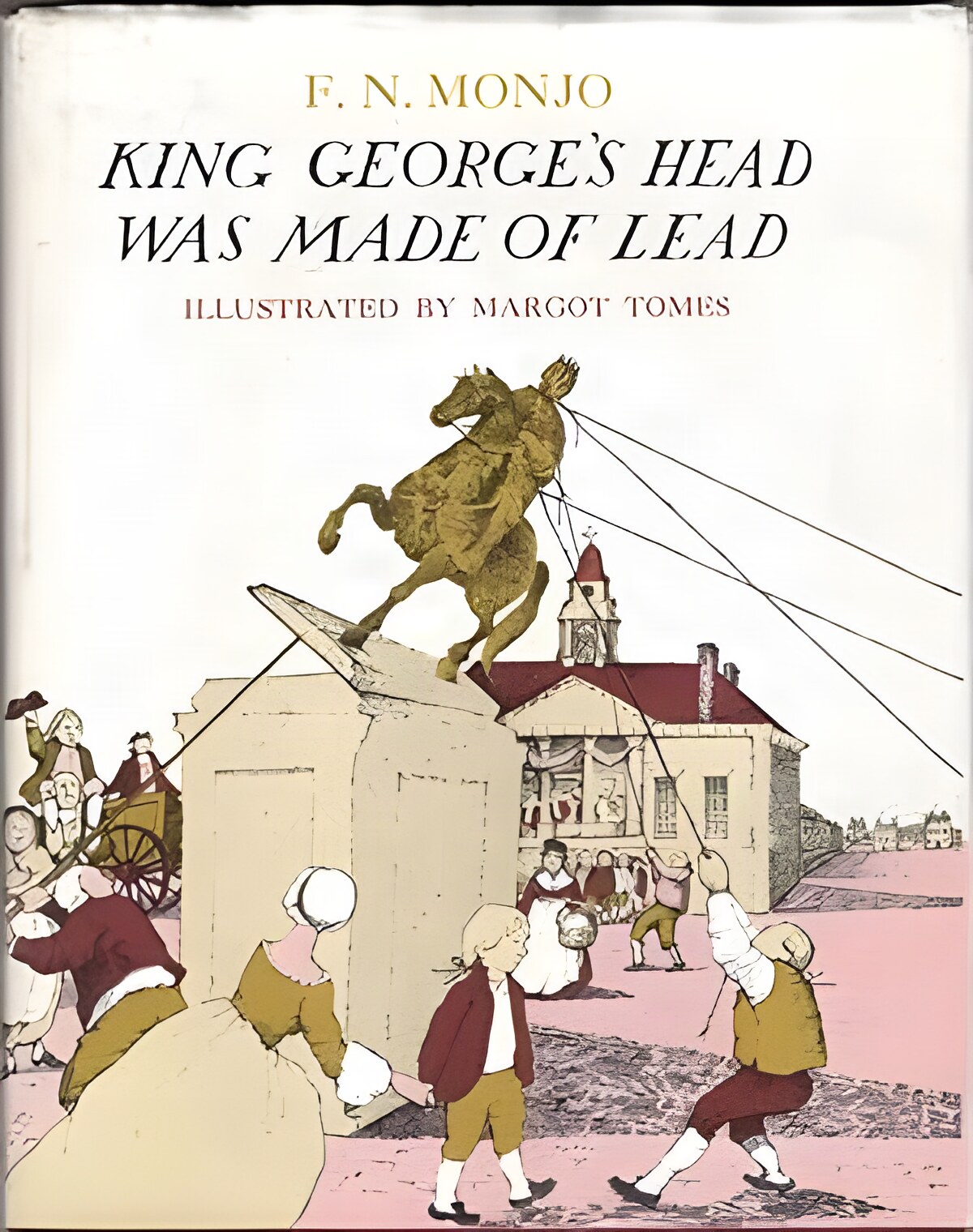
Hardcover. NY, Coward, McCann & Geoghegan, 4th pr., 1974, Book: Very Good, Dust Jacket: Very Good, Hardcover in an unclipped dust jacket, 48 pages illustrated in colors and b&w by Margot Tomes. A lead statue of King George III relates the events leading to the American Rovolution through indignant ratings about what he observes. Clean copy.
Hardcover. NY, W. W. Norton & Company, 1st, 1988, Book: Very Good, Dust Jacket: Very Good, Hardcover in a bright, unclipped dust jacket. Written by two members of archaeological expeditions which have excavated at Caesarea, the ancient city on the coast of Israel built by Herod the Great, this book tells the story of the great city, from its beginnings to its destruction in the 13th century. Readers discover this past through archaeologists' eyes, as the text considers not only artifacts and written sources but the processes by which archaeologists reconstruct the past. A companion volume to a traveling exhibition of Caesarean artifacts, this is very highly recommended for both its clarity and creativity. 244 pages illustrated in color plus index. Clean.
Hardcover. Boston/NY, Houghton Mifflin Harcourt, 1st, 1993, Book: Very Good, Dust Jacket: Very Good, Hardcover in a bright, unclipped dust jacket. Boston Globe reporter Haygood ( Two on the River ) weaves together interviews and research to create a nuanced yet vivid narrative about the crusading Harlem congressman who served in the House for 24 years and whose controversial behavior and womanizing often overshadowed his crucial contribution to the War on Poverty. Haygood astutely traces how the light-skinned Powell (1908-1972), who tried to pass as white when a Colgate student, later embraced his blackness and demanded acceptance in the white world. Mixing New York and national political history with Powell's rise as a Baptist minister and politician, Haygood adds deft cameos of characters like Hattie Dodson, Powell's devoted secretary, and Hazel Scott, the jazz star whose wedding to the divorced congressman was "the stuff of grand romance and intrigue." Expelled from Congress in 1966 for alleged misappropriations and an unpaid libel judgment, Powell, Haygood writes poignantly, was shunned by black leaders and, even after reinstatement by the Supreme Court, disparaged by many he had helped. Though less authoritative in assessing Powell's political milieu than Charles V. Hamilton's 1991 book, Adam Clayton Powell Jr.: The Political Biography of an American Dilemma , this is a richer portrait of Powell the man. Clean copy.
Softcover. San Diego, CA, IDW Publishing, Reprint, 2018, Book: Very Good, Dust Jacket: None, 308 pages. Softcover. A very clean, unmarked copy with only minor edgewear. This book is a centennial birthday bash hosted by Dean Mullaney, Bruce Canwell, and Brian Walker, with contributions by Brendan Burford, Lucy Shelton Caswell, Jared Gardner, Ron Goulart, Jeffrey Lindenblatt, Carl Linich, Paul Tumey, and Germund von Wowern. More than just comics, it's a celebration of the profound impact that King Features has had on popular culture!
Hardcover. Woodstock VT, Countryman Press, 4th pr., 1999, Book: Very Good, Dust Jacket: Very Good, Hardcover in a bright, price-clipped dust jacket, 416 pages, b&w illustrations. Now largely forgotten, the massacres of 1675 to 1676, known as King Philip's War, ended the harmonious relations that had existed between native Americans and the colonists since their arrival at Plymouth Rock in 1620. Tensions had been rising as the number of settlers grew, and the pillaging of an outlying farm by affronted young braves escalated into open hostilities. Pitched battles were fought from Rhode Island to Maine. Hundreds of English died as farmers fled and cowered behind stockades or in the few port towns. Thousands of natives were slaughtered and the rest dispersed or sold into slavery in the West Indies. The savagery resulted in the clearing of the native populations from southern New England and the unopposed expansion of the New England colonies. It also became the brutal model on which the United States came to deal with its native peoples. King Philip's War tells the story with such close attention to detail that each ambush, each burned-out farm, becomes a vivid image. The authors make abundant use of maps and photographs of old sites to enable the reader to follow the course of the war: the book forms an exhaustive guide for the armchair historian or anyone wishing to visit the monuments and battlefields today. Clean copy.
Hardcover. New York, E. P. Dutton & Company, First Edition, 1938, Book: Very Good, Dust Jacket: None, 107 pages. Hardcover. Previous owner's signature to front flyleaf. Black & white illustrations throughout. Dust jacket with moderate wear, tears to edges & chipping, now protected with a plastic cover. Toning throughout. Clean & unmarked.
Hardcover. Boston, Little Brown, 1st, 1977, Book: Very Good, Dust Jacket: Very Good, Hardcover in a bright, unclipped dust jacket, 338 pages. Light edgewear to dj, remainder dot bottom edge. A novel of Henry Knox's 1776 winter raid on Fort Ticonderoga to bring cannon to beleaguered Boston. Endpapers map. Clean copy.
Hardcover. New York , Abrams, 1st, 1999, Book: Very Good, Dust Jacket: Very Good, Hardcover, 254 pages, 173 illustrations, 131 in color. Although he is now seen as a progenitor of the "naive" style, during his lifetime Edward Hicks (1780-1849) was known only as a devout, impoverished Quaker minister who liked to paint. With a few exceptions, his extant body of work is made up of 62 "Peaceable Kingdom" pictures, based on Isaiah's biblical prophecy. Although these paintings, known for their charmingly wide-eyed and sensuous beasts, use potent color and effective design, they are technically unsophisticated and repetitive in the extreme. But they contain a powerfully serene devoutness, a mood probably expressed in compensation for Hicks's guilt about an avocation viewed as frivolous by other Quakers. As the popularity of folk art boomed in the early 20th century, Hicks's homely visions were popularized and became the focus of scholarly attention, and this work is probably the best to date. Weekley, the director of museums at Colonial Williamsburg, shrewdly considers Hicks's "secular" life and art through the filter of his intense piety and copiously illustrates her large-format book with brilliant color plates.
Hardcover. NY, Black Dog & Leventhal, reprint, 1995, Book: Very Good, Dust Jacket: Very Good, Oblong hardcover, 143 pages. 41 superb photos of the early logging locomotives of the Northwest. Essay by John T. Labbe. Bright copy in a dust jacket.
Softcover. San Francisco, Prism Editions, reprint, 1978, Book: Very Good, Dust Jacket: None, Large softcover, reprinted from former 1975 Scrimshaw Press two volume limited edition, photo of loggers sitting on log, shiny cover, unmarked, no tears. Logging photos from the late 1800s, clean, bright copy. DUE TO WEIGHT, DOMESTIC SHIPPING ONLY.

 "Keepers of the Sea: A History of the Yachts and Tenders of Trinity Houseby: Woodman, Richard")
 "Keith Haringby: Jeffrey Deitch, Julia Gruen, et al.")


 "Kentucky Quilts, 1800-1900: The Kentucky Quilt Projectby: Holstein, Jonathan, and John Finley.")
 "Kenya's Warning: The Challenge to White Supremacy in Our British Colonyby: Wilson, Christopher")
 "Kenya: A Country in the Making, 1880-1940by: Pavitt, Nigel")
 "Ki Ki's Paris: Artists and Lovers 1900-1930by: Kluver, Billy/ Julie Martin")

 "Kiki's Paris: Artists and Lovers 1900-1930by: Kluver, Billy and Julie Martin")
 "Killing Ground: The Civil War and the Changing American Landscape (INSCRIBED COPY)by: John Huddleston")



 "King of the Cats: The Life and Times of Adam Clayton Powell, Jr.by: Wil Haygood")
 "King of the Comics: 100 Years of King Featuresby: Canwell, Bruce")

 "King's Daughters, The - An Intimate and Authentic Studyby: Asquith, Cynthia")
 "King's Iron, Theby: Peck, Robert Newton")
 "Kingdoms of Edward Hicks, Theby: Weekley, Carolyn J.")
 "Kinsey Photographer - The Locomotive Portraitsby: Bohn, Dave and Rodolfo Petschek")
