Hardcover. NY, Harper Business , 1st, 2020, Book: Very Good, Dust Jacket: Very Good, Hardcover in a bright dust jacket, 432 pages. B&w and color illustrations. Small remainder line on bottom edge. In his much-anticipated memoir, The Company I Keep: My Life in Beauty, Chairman Emeritus and former CEO of The Estee Lauder Companies Leonard A. Lauder shares the business and life lessons he learned as well as the adventures he had while helping transform the mom-and-pop business his mother founded in 1946 in the family kitchen into the beloved brand and ultimately into the iconic global prestige beauty company it is today. In its infancy in the 1940s and 50s, the company comprised a handful of products, sold under a single brand in just a few prestigious department stores across the United States. Today, The Estee Lauder Companies constitutes one of the world's leading manufacturers and marketers of prestige skin care, makeup, fragrance and hair care products. It comprises more than 25 brands, whose products are sold in over 150 countries and territories. This growth and success was led by Leonard A. Lauder, Estee Lauder's oldest son, who envisioned and effected this expansion during a remarkable 60-year tenure, including leading the company as CEO and Chairman.
Softcover. London, Carlton Books, 1st, 2001, Book: Very Good, Dust Jacket: None, Softcover, 128 pages. "Captain Scarlet and the Mysterons" is one of the better "Supermarionation" series that came from the hands of Gerry and Sylvia Anderson, known by Americans as well as those in the UK for their many classic puppet series "Supercar", "Fireball XL5", "Stingray", and especially "Thunderbirds"- and their classic live action "UFO" and "Space Precinct".The Captain Scarlet series also was shown in the USA, but in a limited market originally and with wider exposure via compilation films on Showtime and HBO and later on SciFi Channel. Captain Scarlet marked one of the first Supermarionation series to have a truly dark and serious storyline, with an invisible alien race, the Mysterons, seeking revenge for an attack made in error on their cities on Mars. The Mysterons then declared war on Earth. Chris Bentley presents a complete production history and guide to all 32 episodes of the Captain Scarlet and the Mysterons series, plus information about voice artists, merchandising and spin-offs. PLEASE NOTE: the book is clean and tight, but was once owned by a smoker and has a smoke odor.
Hardcover. Kitchen Sink Press, 1st, 1990, Book: Very Good, Dust Jacket: Very Good, 95 pages. Hardcover with dust jacket. Extensive color illustrations throughout. Foxing to dust jacket interior, several pages, and top edge. Some soiling to fly leafs. Otherwise clean, tight copy. Cliff Sterrett was one of the outstanding newspaper cartoon artists in the formative period of this 20th Century art: a skilled draftsman, borderline (and sometimes over the line) surrealist, and humorist. DUE TO SIZA AND WEIGHT, This is a heavy and oversized book and will require extra shipping. International customers please ask for a shipping quote before purchasing.
Hardcover. San Diego, Clover Press, Revised Ed., 2023, Book: Very Good, Dust Jacket: Very Good, Hardcover in a bright dust jacket, oblong format. 254 pages, some color, mostly black and white. Introduction by Max Allan Collins. Reformatted and re-scanned, revised from the 2007 printing. Includes over 500 comic strips from January 1935 to July 1936. A special section on the Dick Tracy Big Little Books in color. Clean copy.
Softcover. NY, E.P. Dutton, 1st, 1973, Book: Good, Dust Jacket: None, Softcover, unpaginated, b&w plates. Illustrated with stills from the 1924 film. compiled and annotated with a foreword by Herman Weinberg. Probably Stroheim"s best remembered work as a director is Greed, a detailed filming of the novel McTeague by Frank Norris. Previous owner's name inside front cover, otherwise clean. Light soiling to wrappers, shelfwear.
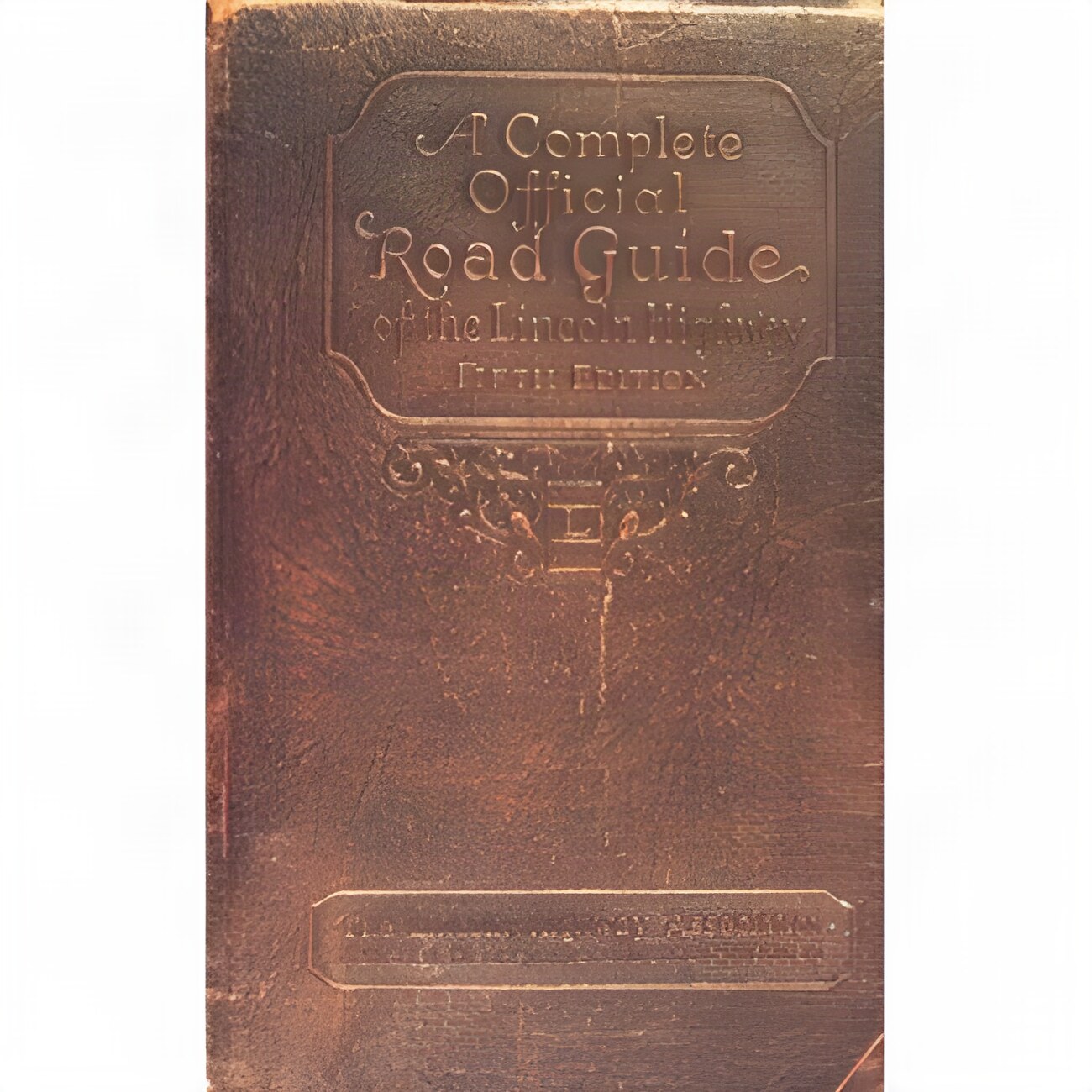
Softcover. Tucson AZ, Patrice Press, reprint, 1993, Book: Very Good, Dust Jacket: None, Softcover, 536 pages. This is a facsimile printing of the 1924 edition, profusely illustrated including original advertisements. The book gives detailed information on the 414 cities and towns through which the famous highway passed, from Times Square in New York City to San Francisco's Lincoln Park, on the Pacific Ocean. Advice to readers includes "Don't forget the colored goggles," and "Don't stop to cool motor at top of a hill, put car in gear and coast down to cool motor." The trip was thrilling in 1924. The book is thrilling today. Mild nick to top of rear cover otherwise clean and bright copy.
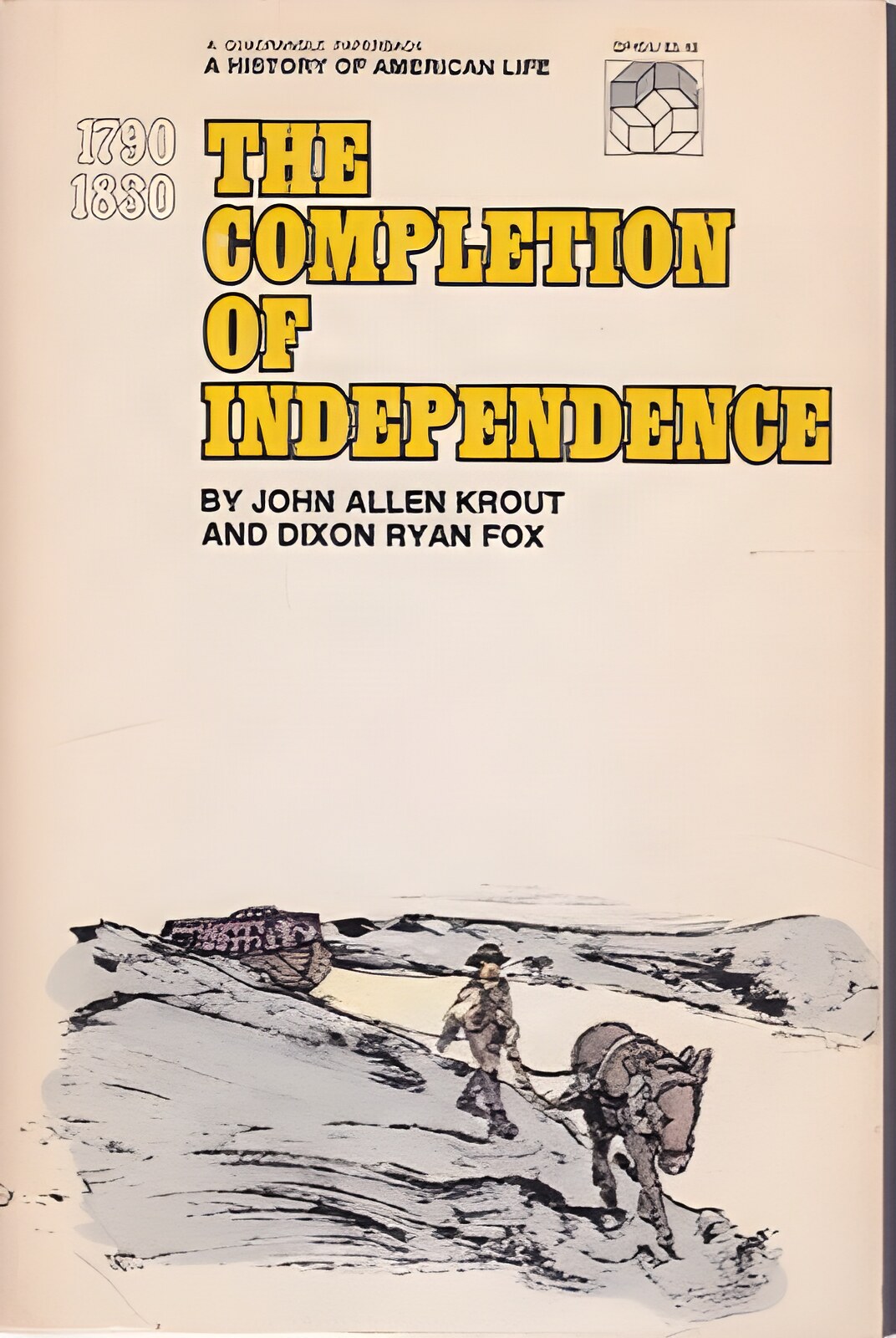
Softcover. Chicago, Quadrangle, reprint, 1971, Book: Very Good, Dust Jacket: None, Softcover, 487 pages. This "Early National" period, one of yearning adolescence in the life of the nation, is the subject of this study which shows how the United States went about winning economic and cultural independence from Europe to match the political emancipation gained by the Revolution.
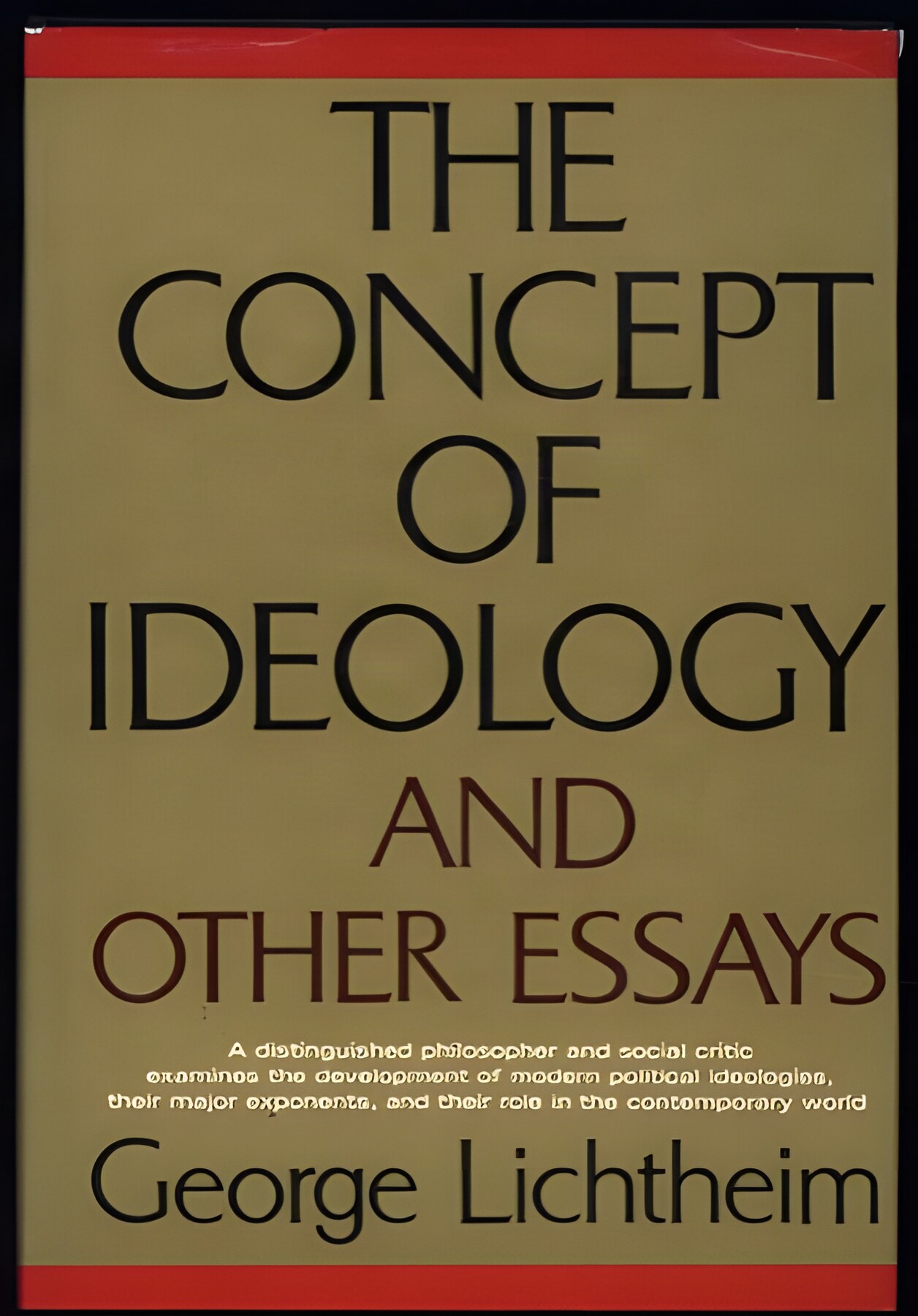
Hardcover. NY, Random House, 1st, 1967, Book: Very Good, Dust Jacket: Very Good, Hardcover in a bright, unclipped dust jacket, 327 pages. George Lichtheim (1912-1973) was a German-born intellectual whose works focused on the history and theory of socialism and Marxism. He defined himself as a socialist and stated in a 1964 letter to the New York Review of Books that "I am not a liberal and never have been. I find liberalism almost as boring as communism and have no wish to be drawn into an argument over which of these two antiquated creeds is less likely to advance us any further." His work appeared in the Palestine Post, Commentary, Partisan Review, Dissent, the New Leader, Encounter, the Times Literary Supplement and the New York Review of Books. Additionally, he translated Gershom Scholem's Main Currents in Jewish Mysticism. His death was by suicide. Clean, tight copy.
Hardcover. Baton Rouge LA, Louisiana State University Press, 1st, 1988, Book: Very Good, Dust Jacket: Very Good, Hardcover in a bright dust jacket. 360 pages, b&w illustrations. Following the American Civil War, many former Confederates fled their southern homeland. Some left the United States, some moved to the western territories. Still others moved north to northeastern and midwestern towns and cities, believing that northern economic and educational opportunities offered the quickest means of rebuilding shattered fortunes and lives. Sutherland provides a detailed and illuminating account of the contributions these displaced southerners made to the financial, literary, artistic, and political life of the nation. Very nice copy.
Hardcover. Stanford CA, Stanford University Press, reprint, 1976, Book: Very Good, Dust Jacket: None, Hardcover, beige cloth covers, black lettering to spine, 288 pages. About 1307 a remarkable woman in Japan sat down to complete the story of her life. The result was an autobiographical narrative, a tale of thirty-six years (1271-1306) in the life of Lady Nijo, starting when she became the concubine of a retired emperor in Kyoto at the age of fourteen and ending, several love affairs later, with an account of her new life as a wandering Buddhist nun. Through the vagaries of history, however, the glory of Lady Nijo's story has taken six and half centuries to arrive. The Confessions of Lady Nijo or Towazugatari in Japanese, was not widely circulated after it was written, perhaps because of the dynastic quarrel that soon split the imperial family, or perhaps because of Lady Nijo's intimate portrait of a very human emperor. Whatever the cause, the book was neglected, then forgotten completely, and only a single manuscript survived. This was finally discovered in 1940, but would not be published until after World War II in 1950. This translation and its annotations draw on multiple Japanese editions, but borrow most heavily from the interpretations offered by Tsugita Kasumi. No dust jacket. Name on front fly leaf, otherwise a bright, clean copy.
Softcover. London, Pimlico, 1st pbk., 1994, Book: Very Good, Dust Jacket: None, Softcover, 812 pages, b&w illustrations. Light wear to covers and edges of spine. Old UK price sticker on rear cover. Neat, tight copy.
Hardcover. Philadelphia, Temple University Press, 1st, Book: Very Good, Dust Jacket: Very Good, Hardcover in a bright dust jacket, 211 pages. By treating the history of moral concepts as geological strata, Rosenthal discovered the archaeological method long before it became fashionable. The appeal of this book - in addition to its wryly delightful style - is to those for whom Hobbes and Spinoza's thoughts are themselves part of a continuing and unavoidable meditation on unavoidable questions.This is philosophy as an essentially moral, frustratingly human enterprise. Name on front fly leaf, otherwise clean.
Hardcover. Lewisburg ME, Bucknell University Press, 1st, 1974, Book: Very Good, Dust Jacket: Very Good, Hardcover in a bright dust jacket, 184 pages. Translated with an Introduction and Notes by Victor Nuovo. Dust jacket chipped with light stain, book is very good, clean copy.
Hardcover. Bucknell University Press, 1st, 1974, Book: Very Good, Dust Jacket: Very Good, Hardcover in a bright dust jacket, 184 pages. Translated with an Introduction and Notes by Victor Nuovo. Clean copy.
Hardcover. Oxford UK, Clarendon Press, Revised Ed., 1992, Book: Very Good, Dust Jacket: Very Good, Hardcover in a bright dust jacket, 592 pages, b&w illustrations. Lady Anne Conway was a remarkable woman who became a philosopher in her own right at a time when most women were denied even basic education. The Conway Letters is the record of her friendship with the Cambridge Platonist, Henry More, which began when he acted as her unofficial tutor in philosophy and lasted until her death. The letters cover a wide range of topics - personal, philosophical, religious, and social. They give a detailed picture of the More-Conway circle, including such figures as Jeremy Taylor, Ralph Cudworth, Robert Boyle, and Francis Mercury van Helmont, as well as Lady Conway's Quaker associates, George Keith and William Penn. The letters are thus a valuable source for mid-seventeenth-century history, and especially for the intellectual history of the period. Revised from the 1930 printing with new material and introduction by Sarah Hutton. Name on front fly leaf, small chip/tear to top spine of the dust jacket.
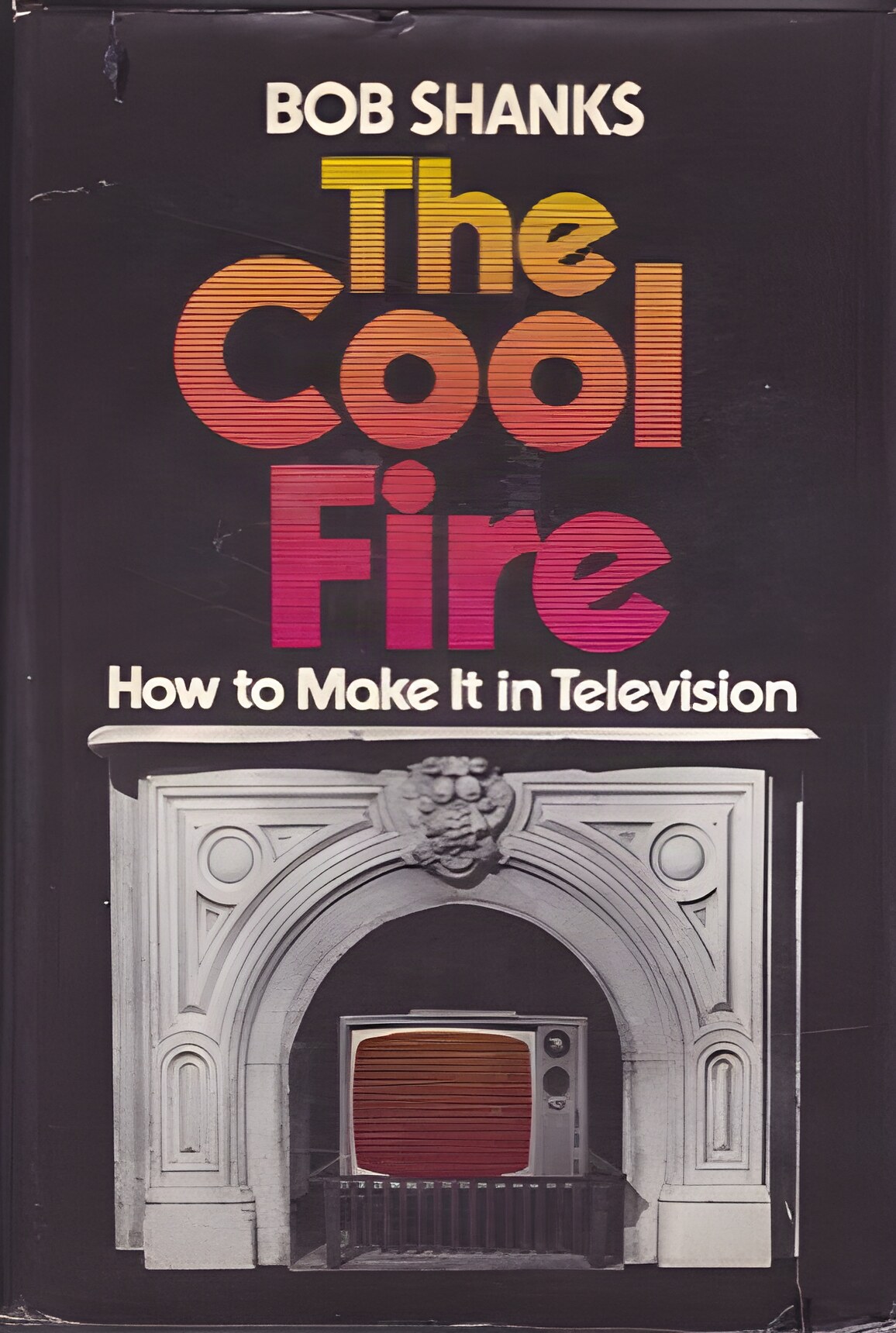
Hardcover. NY, W.W. Norton , 1976, Book: Very Good, Dust Jacket: Very Good, Hardcover in a bright, lightly worn dust jacket. 318 pages, A veteran producer provides an inside view of television, combining anecdotal discussions of agents, performers, and sponsors with detailed information on network organization and business activities. A good overview of the TV broadcasting business in the 1970s. No markings.
Softcover. Los Angeles, Augustan Reprint Society, reprint, 1987, Book: Very Good, Dust Jacket: None, Softcover. Facsimile reprints of two 18th century pamphlets, 29 and 52 pages. Introduction by Robert Adams Day. Two profiles of a infamous doctor named Richard Mead in mid-18th century London. The first an attack, the second a defense. Clean copy.
Softcover. Italy, Leo S. Olschki Editore, 1st, 2002, Book: Very Good, Dust Jacket: Very Good, Softcover in a dust jacket, 313 pages. The first complete collection of all that is conserved of the correspondence that endured for more than thirty years between two great scholars of 16th century religious toleration. The ample introduction and detailed erudite comments accompanying each letter provide precious information on four decades of American and European historiography on the 16th century. Name on cover
Softcover. NY, Pantheon Books, 1st US, 1983, Book: Very Good, Dust Jacket: None, Softcover, 301 pages. The classic study of the life of the nobility at the royal court of France, especially under Louis XIV. Paper tanning slightly, clean copy.
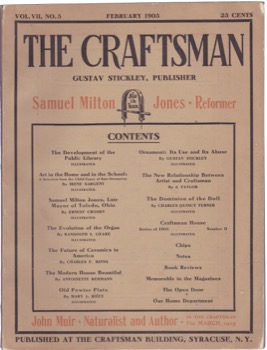
Softcover. Syracuse NY, Gustav Stickley, 1st, 1905, Book: Very Good, Dust Jacket: None, Softcover, approx. 200 pages, b&w illustrations, ads. Gustav Stickley showed his designs and ideas through his magazine The Craftsman. Published monthly between Oct 1901 and Dec 1916, The Craftsman was "the bible" of the Arts and Crafts Movement in the United States, which emphasized spare design, hand-crafting, and the importance of the individual craftsman. This issue features his article "Ornament: Its Use and Its Abuse". Also articles on The Development of the Public Library, The Future of Ceramics in America, Old Pewter Plate, The Modern House Beautiful, others. Clean, bright copy.
Hardcover. Princeton NJ, Princeton University Press, 1st, 2009, Hardcover in a bright dust jacket, 157 pages. Was George W. Bush the true heir of Woodrow Wilson, the architect of liberal internationalism? Was the Iraq War a result of liberal ideas about America's right to promote democracy abroad? In this timely book, four distinguished scholars of American foreign policy discuss the relationship between the ideals of Woodrow Wilson and those of George W. Bush. The Crisis of American Foreign Policy exposes the challenges resulting from Bush's foreign policy and ponders America's place in the international arena. Led by John Ikenberry, one of today's foremost foreign policy thinkers, this provocative collection examines the traditions of liberal internationalism that have dominated American foreign policy since the end of World War II. Clean copy.
Hardcover. Chicago, University of Chicago Press, 1st, 2010, Book: Very Good, Dust Jacket: Very Good, Hardcover in a bright dust jacket, 321 pages, b&w illustrations. In The Cruel Radiance, Susie Linfield challenges the idea that photographs of political violence exploit their subjects and pander to the voyeuristic tendencies of their viewers. Instead she argues passionately that looking at such images--and learning to see the people in them--is an ethically and politically necessary act that connects us to our modern history of violence and probes the human capacity for cruelty. Grappling with critics from Walter Benjamin and Bertolt Brecht to Susan Sontag and the postmoderns--and analyzing photographs from such events as the Holocaust, China's Cultural Revolution, and recent terrorist acts--Linfield explores the complex connection between photojournalism and the rise of human rights ideals. In the book's concluding section, she examines the indispensable work of Robert Capa, James Nachtwey, and Gilles Peress and asks how photography should respond to the increasingly nihilistic trajectory of modern warfare. Clean copy.
Softcover. Stanford CA, Stanford University Press, 1st pbk, 2004, Book: Very Good, Dust Jacket: None, Softcover, 271 pages, b&w illustrations. The Cult of Art in Nazi Germany presents a new interpretation of National Socialism, arguing that art in the Third Reich was not simply an instrument of the regime, but actually became a source of the racist politics upon which its ideology was founded. Through the myth of the "Aryan race," a race pronounced superior because it alone creates culture, Nazism asserted art as the sole raison d'etre of a regime defined by Hitler as the "dictatorship of genius." Michaud shows the important link between the religious nature of Nazi art and the political movement, revealing that in Nazi Germany art was considered to be less a witness of history than a force capable of producing future, the actor capable of accelerating the coming of a reality immanent to art itself. Light sticker residue to rear cover otherwise clean, very good.
Hardcover. University Park PA, Pennsylvania State University Press, 1st, 2010, Book: Very Good, Dust Jacket: Very Good, Hardcover in a bright dust jacket, 295 pages illustrated in b&w and color. Beginning in the 1730s, Heather Minor tells us, Rome "began to resemble one huge construction site," with a series of ambitious and expensive new building campaigns that transformed the face and substance of the city. From renovations of the Santa Maria Maggiore and San Giovanni in Laterano and the restoration of the Arch of Constantine to the creation of the Capitoline Museum and the establishment of the papacy's Calcografia, the push for reform not only renewed papal and Church identity but also revived Italian culture as a whole. Based on extensive archival research and full of fascinating stories about the often stormy theological and intellectual debates central to the attempts at reform, The Culture of Architecture in Enlightenment Rome brings to life the personalities of architects, theologians, and intellectuals and links the extensive architectural programs with powerful shifts in the intellectual climate of the time. Clean, bright copy.

 "The Company I Keep: My Life in Beautyby: Leonard A. Lauder")





 "The Complete Greed of Erich Von Stroheim A Reconstruction of the Film in 348 Still Photos Following He Original Screenplay Plus 52 Production Stills. by: Erich Von St")

![The Confessions of Lady Nijo by: Lady Nijo [Translated by Karen Brazell ]](https://www.browsingisarousing.com/shop/images/The-Confessions-of-Lady-Nijo_by_Lady-Nijo-Translated-by-Karen-Brazell-396624-446680.jpg "The Confessions of Lady Nijo by: Lady Nijo [Translated by Karen Brazell ]")


 "The Construction of the History of Religion in Schelling's Positive Philosophy: Its Presuppositions and Principles by: Tillich, Paul")
 "The Construction of the History of Religion in Schelling's Positive Philosophy: Its Presuppositions and Principles by: Tillich, Paul")




 "The Crisis of American Foreign Policy: Wilsonianism in the Twenty-first Century by: Ikenberry, G. John; Knock, Thomas; Slaughter, Anne-Marie; Smith, Tony")