Softcover. Amherst MA, University of Massachusetts Press, reprint, 2003, Book: Very Good, Dust Jacket: None, Softcover, 279 pages. One of the most compelling figures in colonial America, Elizabeth Murray (1726-1785) was a Scottish immigrant who settled in Boston in her early twenties and took up shopkeeping. For many years, she practiced her trade successfully while marrying three times, once to a much older man who left her an extremely rich widow. This biography chronicles the life of this extraordinary "ordinary" woman who tried to make a place for herself and other women in the world by asserting her own independence inside and outside of the home. As an importer and retailer of British goods, Murray conducted business with merchants and manufacturers in England and buyers in the American colonies, even traveling to London to select her own stock. Deeply satisfied by her work and the economic freedom it brought her, she acted as mentor to other women, helping them to establish shops of their own. She also protected her autonomy by demanding prenuptial agreements from her second and third husbands that gave her a measure of control over her property that was rare for a married woman of her day. Clean, bright copy.
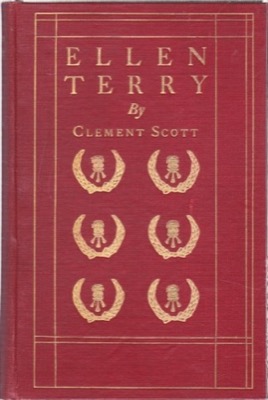
Hardcover. NY, Frederick A. Stokes , 1st, 1900, Hardcover, red cloth with bright gilt stamping, 150 pages. Top edge gilt. Ribbon marker, photographic frontispiece portrait of actress Terry, as well as numerous photographs of her in various dramatic productions. Clean copy.
Hardcover. Philadelphia, University of Pennsylvania Press, 1st, 2001, Book: Very Good, Dust Jacket: Very Good, Hardecover in a bright dust jacket, 492 pages. In a letter to Sir Thomas Browne about his proposed magnum opus on gardens, John Evelyn stated his purpose: "to refine upon some particulars, especially concerning the ornaments of Gardens, which I shal endeavor so to handle that persons of all conditions and faculties, which delight in Gardens, may therein encounter something for their owne advantage." In his Elysium Britannicum, or The Royal Gardens, Evelyn indeed produced a rich document, an assemblage of the horticultural knowledge and wisdom of the seventeenth century. An intriguing intellectual whom many have called a virtuoso, Evelyn was a garden designer, a noted author and translator of garden books, and a founding member of the Royal Society in 1660, where experimental science was at the heart of intellectual debate. Interlacing in his work practical, literary, and philosophical approaches to landscape architecture, Evelyn created the first large-scale encyclopedic work on the science and art of gardening. Evelyn never saw his great work published. Until now, the entire Elysium Britannicum, or The Royal Gardens has never appeared in print. In an impressive transcription, John E. Ingram makes the document--of which only a single folio volume remains--accessible to a wide range of scholars. Complete with Evelyn's extensive marginalia, interlineations, and tipped-in addenda, the manuscript is expertly organized by Ingram to preserve the meaningful complexity of Evelyn's original. Clean copy. DUE TO WEIGHT, DOMESTIC SHIPPING ONLY.
Hardcover. New York , Charles Scribner's Sons, 1st, 1890, Book: Very Good, Dust Jacket: None, 490 pages, green cloth covers with black and gilt decoration. Two gravure frontispieces (of author and Henry Stanley), 21 full-page plates plus text illustrations. Folding map and facsimile of letter in envelope in rear. There is a small chunk of cloth gone from top of spine and some scuffing of cloth on spine and rear cover, otherwise very good.
Softcover. Philadelphia, J.B. Lippincott, reprint, 1970, Book: Very Good, Dust Jacket: None, Softcover, 186 pages. A detailed study of the politics underlying British policies of mercantilism in the American colonies. Focusing on the political activity of interest groups in the British Empire of the eighteenth century, Professor Kammen relates political influence in Georgian England to American colonial history, to the early history of the industrial revolution, to the incredible flood of writings in the later eighteenth century on political economy, and to the dynamics of Anglo-American political society, public life, and the empire. Name on front fly leaf otherwise clean.
Hardcover. Berkeley CA, University of California Press, 1st, 1974, Book: Very Good, Dust Jacket: Good, Hardcover in a lightly worn dust jacket, 205 pages. Name on front fly leaf otherwise clean. Small hole on dj front.
Softcover. London/NY, Routledge , 1st, 1996, Book: Very Good, Dust Jacket: None, Softcover, 288 pages, illustrated in b&w. Empire Building is a study of how and why Western architecture was exported to the Middle East and how Islamic and Byzantine architectural ideas and styles impacted on the West.The book explores how far racial theory and political and religious agendas guided British architects (and how such ideas were resisted when applied), and how Eastern ideas came to influence the West, through writers such as Ruskin and buildings such as the Crystal Palace.Beautifully written and lavishly illustrated, Empire Building takes the reader on an extraordinary postcolonial journey, backwards and forwards, into the heart and to the edge of empire.
Hardcover. NY, Overlook Press, 1st US, 2013, Book: Very Good, Dust Jacket: Very Good, Hardcover in a bright, unclipped dust jacket. Against the background of the Cold War, and the looming spectre of Soviet-sponsored subversion in Britain's dwindling colonial possessions, the imperial intelligence service MI5 played a crucial but top secret role in passing power to newly independent national states across the globe. Walton reveals this `missing link' in Britain's post-war history. He sheds light on everything from violent counter-insurgencies fought by British forces in the jungles of Malaya and Kenya, to urban warfare campaigns conducted in Palestine and the Arabian Peninsula. Draws on (among other sources) records from the Foreign Office's secret archive at Hanslope Park, which contains some of the darkest and most shameful secrets from the last days of Britain's empire. 411 pages, b&w illustrations. Clean copy.
Hardcover. NY, W. W. Norton & Company, 1st, 1976, Book: Very Good, Dust Jacket: Very Good, Hardcover in a lightly worn dust jacket, 332 pages, b&w illustrations. Clean, tight copy.
Hardcover. NY, Random House, 3rd pr., 2003, Book: Very Good, Dust Jacket: Very Good, Hardcover in a bright dust jacket, 416 pages including index. Here is the story of the race between three titans of the Gilded Age to bring electricity to the world.The gripping history of electricity and how the fateful collision of Thomas Edison, Nikola Tesla, and George Westinghouse left the world utterly transformed.In the final decades of the nineteenth century, three brilliant and visionary titans of America's Gilded Age-Thomas Edison, Nikola Tesla, and George Westinghouse-battled bitterly as each vied to create a vast and powerful electrical empire. In Empires of Light, historian Jill Jonnes portrays this extraordinary trio and their riveting and ruthless world of cutting-edge science, invention, intrigue, money, death, and hard-eyed Wall Street millionaires. Clean copy.
Hardcover. New Haven CT, Yale University Press, 1st, 2006, Book: Very Good, Dust Jacket: Very Good, Hardcover in a bright dust jacket, 546 pages. This epic history compares the empires built by Spain and Britain in the Americas, from Columbus's arrival in the New World to the end of Spanish colonial rule in the early nineteenth century. J. H. Elliott, one of the most distinguished and versatile historians working today, offers us history on a grand scale, contrasting the worlds built by Britain and by Spain on the ruins of the civilizations they encountered and destroyed in North and South America. Elliott identifies and explains both the similarities and differences in the two empires, processes of colonization, the character of their colonial societies, their distinctive styles of imperial government, and the independence movements mounted against them. Based on wide reading in the history of the two great Atlantic civilizations, the book sets the Spanish and British colonial empires in the context of their own times and offers us insights into aspects of this dual history that still influence the Americas. Color illustrations. Clean copy.
Hardcover. Chicago, University of Chicago Library, 1st, 2014, Book: Very Good, Dust Jacket: None, Hardcover, 144 pages. Like new in publisher's shrink-wrap. With 2014 marking the one-hundredth anniversary of the commencement of World War I, En Guerre offers a fresh, thought-provoking exploration of the impact of the Great War as viewed through the lens of French graphic illustration of the period. Published in conjunction with an exhibition of these illustrations at the University of Chicago Library's Special Collections Research Center, this catalog draws from illustrated books, magazines, and prints to present a wide range of perspectives on themes essential to a deeper understanding of the war in France: patriotism, nationalism, propaganda, and the soldier's experience, as well as the mobilization of the French national home front as seen through fashion, music, humor, and children's literature. With a text by noted historians Neil Harris and Teri J. Edelstein and featuring more than one hundred reproductions of the vivid and colorful work of French illustrators, En Guerre reaffirms the persuasive role that art can play in the service of political and military power.
Hardcover. Bristol UK, Thoemmes Press, reprint, 1997, Book: Very Good, Dust Jacket: None, Hardcover, blue cloth with gilt lettering on spine, 403 pages plus a 27 page addenda. A facsimile printing of the 1671 edition. Some 100 illustrations to text showing physical or geometrical calculations. Henry More (1614-1687), was an influential Jesuit, Neoplatonist, and philosopher. This work on metaphysics profoundly influenced the development of Newton's thought, "It seems undeniable that Newton read and was influenced by More's views on space and time, as presented in the Enchiridion metaphysicum. Like More, Newton also believed that for something to exist it must exist in space, and he identified the immensity of infinite space with the extension of God the similarities between their views of space and time, and their relationship to God, guarantees More's place in the history of science." Name on front fly leaf, otherwise clean and bright.
Hardcover. NY, W. W. Norton , 2nd pr., 1970, Book: Very Good, Dust Jacket: Very Good, Hardcover in a lightly worn, price-clipped dust jacket, 209 pages. Many b&w photos, some color. The author and S. Oughterson and Shields Warren, as part of the United States Atomic Bomb Causality Commission, were sent immediately (September 1945) to survey Hiroshima and Nagasaki, Japan after the bombing and surrender of Japan to study the devastation and the subsequent irradiation sickness.
Hardcover. Melbourne AU, Melbourne University Press , 1st, 1972, Book: Good, Dust Jacket: None, Three volumes. Volume 1: A-K, 588 pages. Volume 2: L-Z, pages 589-1231. Volume 3; Index, 83 pages, plus a fold-out map in a folder at the back. Green cloth with gilt titles on spine and decoration on upper cover. All volumes with numerous illustrations and maps, the indispensable reference work on New Guinea. NOTE: Vol. 2 has text block separated from binding but all pages present in VG condition.
Hardcover. Seattle, WA, University of Washington Press, 1st, 2016, Book: Very Good, Dust Jacket: None, 224 pages. Hardcover with no dust jacket. A very clean, unmarked copy with only minor edgewear. A tight copy. Contemporary portraits of key personalities aboard the ship, scale models and plans of the ship itself, scientific instruments taken on the voyage, commemorative medals and sketches, the objects (over 140) featured in this book tell the story of the Endeavour voyage and its impact ahead of the 250th anniversary in 2018 of the launch of this seminal mission. Artwork made both during and after the voyage will be seen alongside actual specimens. By comparing the voyage originals with the often stylized engravings later produced in London for the official account, Endeavouring Banks investigates how knowledge gained on the mission was gathered, revised, and later received in Europe. Items that had been separated in some cases for more than two centuries are brought together to reveal their fascinating history not only during but since that mission. Original voyage specimens are featured together with illustrations and descriptions of them, showing a rich diversity of newly discovered species and how Banks organized this material, planning but ultimately failing to publish it. In fact, many of the objects in the book have never been published before.
Hardcover. New Haven CT, Yale University Press, 1st, 2019, Book: Very Good, Dust Jacket: Very Good, Hardcover in a bright dust jacket. A gripping tale of exploration aboard H.M.S. Challenger, an expedition that laid the foundations for modern oceanography. From late 1872 to 1876, H.M.S. Challenger explored the world's oceans. Conducting deep sea soundings, dredging the ocean floor, recording temperatures, observing weather, and collecting biological samples, the expedition laid the foundations for modern oceanography. Following the ship's naturalists and their discoveries, earth scientist Doug Macdougall engagingly tells a story of Victorian-era adventure and ties these early explorations to the growth of modern scientific fields. In this lively story of discovery, hardship, and humor, Macdougall examines the work of the expedition's scientists, especially the naturalist Henry Moseley, who rigorously categorized the flora and fauna of the islands the ship visited, and the legacy of John Murray, considered the father of modern oceanography. Macdougall explores not just the expedition itself but also the iconic place that H.M.S. Challenger has achieved in the annals of ocean exploration and science.
Hardcover. New York, Excalibur Books, reprint, 1985, Book: Very Good, Dust Jacket: Very Good, Hardcover. 216 pages. 169 black & white illustrations. Edgewear to dust jacket.
Hardcover. London, Longmans, Green & Co., 1st, 1872-74, Book: Good, Dust Jacket: None, Three volumes in original dark green cloth. 633, 520 and 519 pages. Spine cloth frayed and separating on Volumes 1 and 2, Vol. 1 has a small chunk of cloth gone from top, chipped on bottom.otherwise books are clean and tight. NOTE: DUE TO SIZE AND WEIGHT, NOT AVAILABLE FOR SHIPPING OUTSIDE THE U.S.
Hardcover. New York, Charles Scribner's Sons, 1st, 1923, Book: Good, Dust Jacket: None, 198 pages. Hardcover. Detailed b/w illustrations throughout. Covers bound in green fabric with gilt title and design on spine (faded) and front cover. Former owner's signature on front endpaper. Covers show some agewear with fading, a bit of soil from handling and shelf wear, and a touch of fraying to edges of spine and corners of covers. Pages and edges are age-yellowed, but binding still quite tight and all in good condition considering age.
Hardcover. London, Routledge, 1st, 1989, Book: Very Good, Dust Jacket: Very Good, Hardcover in a bright dust jacket, 210 pages, b&w illustrations. Beard examines the English country house life, its gentry, and the changes they undertook through the century in order to survive. The author shows how after World War Two, their political power had eroded and they began to run their estates as businesses, instead of paternalistic rural communities. Clean copy.
Hardcover. Oxford UK/NY, Oxford University Press, 1st, 2000, Book: Good, Dust Jacket: Very Good, Hardcover in a bright dust jacket, 326 pages. Volume 3 of Oxford Studies in the History of Philosophy Series. Light pencil marking to about 20 pages.
New York, Putnam, 1st, 1926, Book: Very Good, Dust Jacket: None, Blue cloth hardcover, 289 pages. Illustrated with b&w drawings. Cover has light edgewear. Clean copy.
Softcover. Oxford UK, Cambridge University Press, 2nd Ed., 2000, Book: Very Good, Dust Jacket: None, Softcover, 580 pages. INSCRIBED BY AUTHOR on inside front cover. This classic work of recent historiography broke the hold of the "old guard" on this key period of English history. It has now been extensively rewritten, and in its updated form reinforces its arguments with new evidence and addresses some of the historical preoccupations of the past fifteen years.
Softcover. Berkeley CA, University of California Press, reprint, 1966, Book: Very Good, Dust Jacket: None, Softcover, 151 pages. Deals with the parliamentary group in England which claimed the Whig tradition during the American Revolution. The Americans asserted rights that were essentially Whig, but at the same time repudiated the authority of parliament, the stronghold of Whig tradition. Fading to spine, name on front fly leaf, otherwise clean.
Softcover. Madrid, La Fabrica, 1st, 2013, Book: Very Good, Dust Jacket: None, 256 pages. Softcover. Very clean, unmarked copy with minor wear to wrapper edges. Over 250 full page black and white photographs. Includes photographs of iconic figures such as, John and Jackie Kennedy, Nikita Khrushchev, Martin Luther King Jr., Muhammed Ali, Alfred Hitchcock, Joan Baez, and Salvador Dali.
Hardcover. Munchen GR%, C. Bertelsmann, 1st, 1992, Book: Very Good, Dust Jacket: Very Good, Hardcover, 255 pages, profusely illustrated with b&w photographs, text illustrations., maps, bibliog., Foreword by Lew Kopelew. GERMAN TEXT. Highly pictorial account of the disastrous German campaign 1942-43. Cllean copy.
Hardcover. Boston, Wright & Potter/ Commonwealth of Massachusetts, 1st, 1903, Book: Good, Dust Jacket: None, Hardcover, 202 pages, b&w illustrations. Brown cloth binding with gilt decoration. Some rubbing, light residue to covers, back hinge partially cracked. Interior very good.
Hardcover. New York, Hamlyn Publishing Group, Ltd., 1st, 1973, Book: Very Good, Dust Jacket: Very Good, Illustrated guide to historical and modern Eskimo art. 96 pages, illustrated with more than 100 photographs, both color and black/white (many full-page). Book and dust jacket are in very good condition, dust jacket shows some light edge wear.
Hardcover. London, George Routledge & Sons, 3rd pr., 1924, Book: Very Good, Dust Jacket: None, Hardcover, dark blue cloth with gilt design on spine, 480 pages. Ten b&w illustrations including frontispiece. Previous owner's signature on front flyleaf. Binding slightly cocked. Some marking to edges. Rubbing and light edgewear to cover. Else a clean, tight copy.
Hardcover. London, Burns, Oates & Washbourne, 1st, 1923, Book: Very Good, Dust Jacket: None, 194 pages. Dark blue cloth covers, gilt titles to spine, titles and border blind stamped to front. Light rubbing and edgewear, spine slightly faded, previous owner's short ink inscription to front endpaper, pencil underlining and markings to some page margins, pencil notations to rear endpaper; otherwise a clean, tight copy.
Hardcover. NY, D. Appleton & Company, 1st, 1852, Book: Good, Dust Jacket: None, Hardcover, red cloth with black title to front board and to spine. 261 pages, publisher's ads. Contains of an early review of Harriet Beecher Stowe's bestselling novel, Uncle Tom's Cabin, as well as accounts of travels to the Nubian Desert and Arctic, a history of Spanish literature, and literary essays and reviews of works by Dickens, Tennyson, Thackeray, and Hawthorne. Mild foxing, some light chipping and wear to spine.
Hardcover. Gainesville, University Press of Florida, 1st, 1995, Book: Very Good, Dust Jacket: None, Hardcover, 306 pages. Red cloth, no dust jacket issued. Light wear to edges, else a clean, tight copy.
Hardcover. Lawrence KS, Coronado Press, 1st, 1972, Book: Very Good, Dust Jacket: None, 217 pages, green cloth over boards. Limited to 400 copies. The author was a scholar on the banking business in the early American west, especially Kansas.
Hardcover. Austin TX, University of Texas Press, 1stt, 1969, Book: Very Good, Dust Jacket: Very Good, Hardcover in a bright dust jacket. Three essays (on the Shelterbelt Project, New Deal critics, and FDR's attempt to expand the Supreme Court) make up the second annual Walter Prescott Webb Memorial Lectures; foreword by C. B. Smith; edited by Harold M. Hollingsworth and William F. Holmes. Bound in bright green cloth-covered boards with silver lettering on the front board and spine.
Hardcover. NY, WW Norton & Co, 1st, 2016, Book: Very Good, Dust Jacket: Very Good, Hardcover in a bright, unclipped dust jacket. 580 pages, 16 pages of illustrations. Eternity Street tells the story of a violent place in a violent time: the rise of Los Angeles from its origins as a small Mexican pueblo. In a masterful narrative, John Mack Faragher relates a dramatic history of conquest and ethnic suppression, of collective disorder and interpersonal conflict. Eternity Street recounts the struggle to achieve justice amid the turmoil of a loosely governed frontier, and it delivers a piercing look at the birth of this quintessentially American city. In the 1850s, the City of Angels was infamous as one of the most murderous societies in America. Saloons teemed with rowdy crowds of Indians and Californios, Mexicans and Americans. Men ambled down dusty streets, armed with Colt revolvers and Bowie knives. A closer look reveals characters acting in unexpected ways: a newspaper editor advocating lynch law in the name of racial justice; hundreds of Latinos massing to attack the county jail, determined to lynch a hooligan from Texas. Murder and mayhem in Edenic southern California. "There is no brighter sun...no country where nature is more lavish of her exuberant fullness," an Angeleno wrote in 1853. "And yet, with all our natural beauties and advantages, there is no country where human life is of so little account. Men hack one another to pieces with pistols and other cutlery as if God's image were of no more worth than the life of one of the two or three thousand ownerless dogs that prowl about our streets and make night hideous." Like-new.
Hardcover. Boston, Dayton and Wentworth, 1st, 1853, Book: Fair, Dust Jacket: None, 428 pages. Hardcover with heavy wear and soil on cover boards. Gutter cracked in several areas. Loose hinge and loose pages. Foxing on pages.
Softcover. Princeton, NJ, Markus Weiner Publishers, 1st English Translation, 2001, Book: Very Good, Dust Jacket: None, 327 pages. Softcover. B/w illustrations throughout. Decorated wrapper, excellent. Pages clean and bright. Binding good. Like new copy. This fascinating study of eunuchs guides readers as they travel through various lands and periods, familiarizing themselves with the duties and responsibilities, the unspeakable torments, and the passions and joys of these individuals.
Softcover. Cambridge MA, Harvard University Press, reprint, 1985, Book: Very Good, Dust Jacket: None, Softcover, 291 pages with index. A social history of Europe in all its aspects: economic, political, diplomatic military, colonial-expansionist. Crisply and succinctly written, it describes Europe not through a history of individual countries, but in a common context during the three quarters of a century between the death of Louis XIV and the industrial revolution in England and the social and political revolution in France. It presents the development of government, institutions, cities, economies, wars, and the circulation of ideas in terms of social pressures and needs, and stresses growth, interrelationships, and conflict of social classes as agents of historical change, paying particular attention to the role of popular, as well as upper- and middle-class, protest as a factor in that change. Clean, bright copy.
Hardcover. Chicago, Quadrangle Books, 1st, 1972, Book: Very Good, Dust Jacket: Good, Hardcover in a rubbed, worn dust jacket, 277 pages. Name on front fly leaf, otherwise clean.
Hardcover. NY, Random House, 1st, 1969, Book: Very Good, Dust Jacket: Very Good, Hardcover in a lightly worn dust jacket, 387 pages. These essays originated in a series of lectures and seminars held by the Graduate School of Contemporary European Studies and the Centre for the Advanced Study of Italian Society of the University of Reading in 1966-1967. The countries covered include Italy, Germany, Austria, Hungary, Rumania, Poland, Finland, Norway, Great Britain, France, Spain, and Portugal. Name on front fly leaf otherwise clean.
Hardcover. NY, Rizzoli, 1st US, 1990, Book: Very Good, Dust Jacket: Very Good, Hardcover in a bright dust jacket, 207 pages. Entertainingly idiosyncratic in its selection of material, this historical compendium of facts and fascinating lore takes off on a visual romp through the history of gardens. Rather than adhere to a conventional narrative format, Vercelloni--an Italian architect, city planner and landscape gardener--arranges his material as though it were a slide show, devoting each page to an image and accompanying text. Beginning with the "landscape" of the Ice Ages, forging ahead to the Renaissance and finally reaching contemporary times, the author presents a captivating grab-bag of information, covering such topics as the significance of flowers in Renaissance painting, the reasoning behind the 17th-century craze for tulips and the role of contemporary urban parks in society. With its strong visual orientation and pungent text, Vercelloni's "historical atlas" looks deftly and light-heartedly at humanity's ongoing love of gardens. Clean copy.








 "En Guerre: French Illustrators and World War Iby: Harris, Neil and Teri J. Edelstein")



 "Encyclopedia of Freemasonry and Its Kindred Sciences, An: Comprising the Whole Range of Arts, Sciences and Literature as Connected with the Institution (Two volumes)by:")


 "Encyclopedia Of The Violin, Anby: Bachmann, Alberto")


 "English Interiors in Smaller Houses: 1660-1830by: Jourdain, M.")


 "English Rooms and Their Decoration at a Glance 1066-1800by: Hayward, Charles H.")


 "Eskimo Artby: Burland, Cottie")


 "Essays from the London Times: A collection of personal and historical sketches- Second Seriesby: N/A")

 "Essays on Cuban History: Historiography and Researchby: Perez Jr., Louis A.")


 "Ethan Allen and the Green Mountain Heros of '76by: De Puy, Henry W.")
 "Ethan Allen and the Green-Mountain Heroes of '76by: De Puy, Henry W.")


 "Etruscan Placesby: Lawrence, D. H.")


 "Eunuchs and Castrati: A Cultural Historyby: Scholz, Piotr O.")


