Hardcover. NY, Harry N. Abrams, 1st, 1997, Book: Very Good, Dust Jacket: Very Good, Hardcover, 179 pages, illustrated throughout in b&w. Light shelf-wear to dust jacket, else a clean, tight copy.
Hardcover. New York, Augustus M. Kelley, reprint, 1967, Book: Very Good, Dust Jacket: Good, 256 pages, with photographs, illustrations and charts. Minor dust jacket edge wear and price clipped, otherwise,bright and tight copy.
Hardcover. Montipelier, VT, Norbert J. Towne/H.J. Dodge, 1st Edition, 1954, Book: Very Good, Dust Jacket: None, 98 pages. Hardcover. B/w illustrations throughout including frontispiece and foldout map. Black cloth cover boards, gilt title on spine and front cover board. Previous owner's inscribed bookplate on front endpaper and ID stamp on front flyleaf.
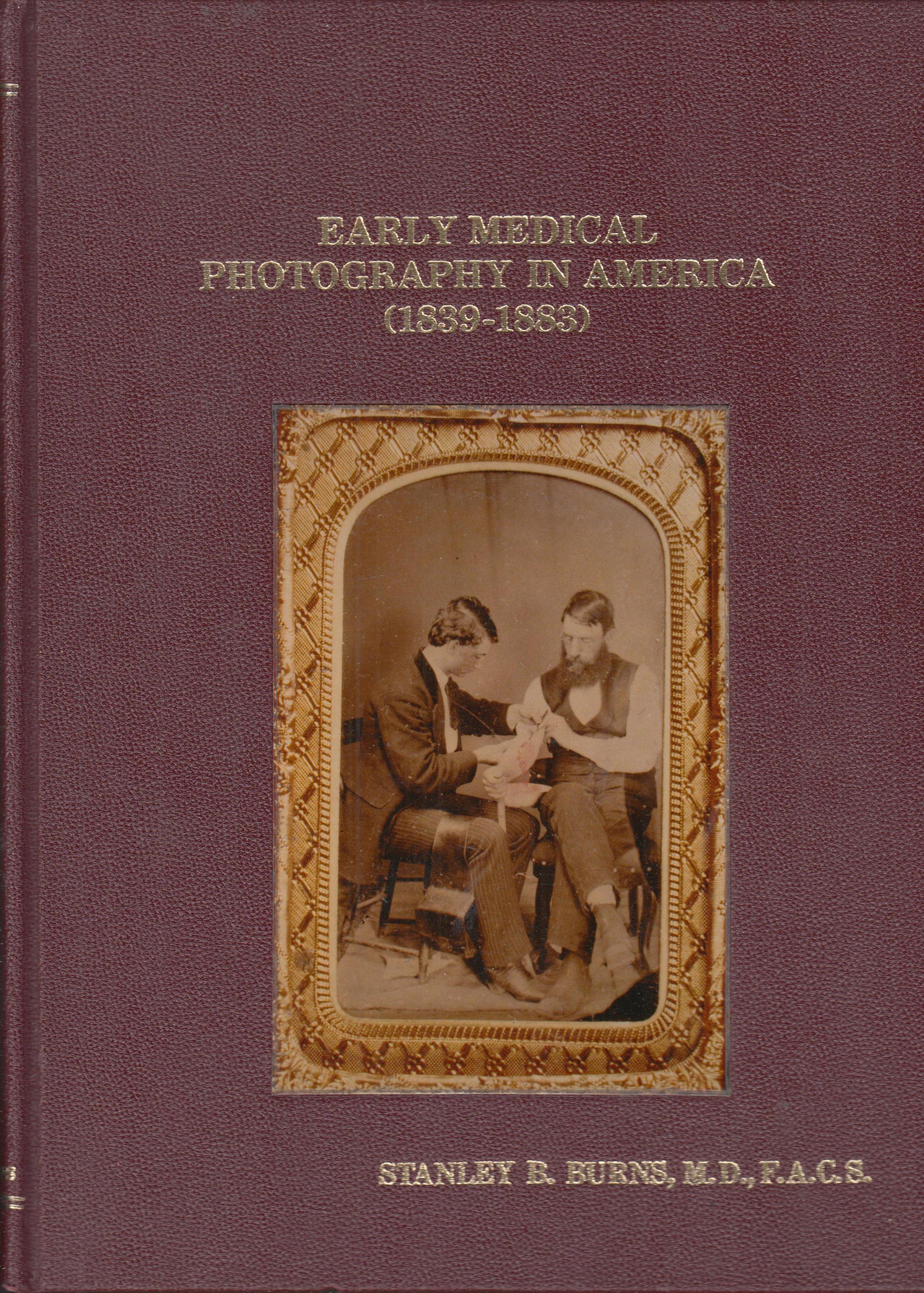
Hardcover. NY, The Burns Archive., 1st, 1983, Book: Very Good, Dust Jacket: None, Hardcover, maroon cloth with gilt lettering and a pastedown plate on the front cover. SIGNED AND INSCRIBED BY BURNS on the title page. Reprints articles in facsimile that Burns wrote for the New York State Journal of Medicine on the history of early medical photography. Clean, bright copy.
Hardcover. Oxford UK, Oxford University Press, 1st, 2016, Book: Very Good, Dust Jacket: Very Good, Hardcover in a bright dust jacket, 382 pages. This study addresses the need for a more current understanding of Cartesian philosophy by considering the different constructions of Descartes's thought that emerged in the Calvinist United Provinces (Netherlands) and Catholic France, the two main centers for early modern Cartesianism, during the period dating from the last decades of his life to the century or so following his death in 1650. It turns out that we must speak not of a single early modern Cartesianism rigidly defined in terms of Descartes's own authorial intentions, but rather of a loose collection of early modern Cartesianisms that involve a range of different positions on various sets of issues. Though more or less rooted in Descartes's somewhat open-ended views, these Cartesianisms evolved in different ways over time in response to different intellectual and social pressures. Chapters of this study are devoted to: the early modern Catholic and Calvinist condemnations of Descartes and the incompatible Cartesian responses to these; conflicting attitudes among early modern Cartesians toward ancient thought and modernity; competing early modern attempts to combine Descartes's views with those of Augustine; the different occasionalist accounts of causation within early modern Cartesianism; and the impact of various forms of early modern Cartesianism on both Dutch medicine and French physics. Name on front fly leaf, otherwise clean.
Hardcover. New York, Praeger, 1st, 1967, Book: Very Good, Dust Jacket: Good, 117 pages of text followed by black & white plates. Minor age darkening along top edge. Dust jacket worn along edges - now protected with clear plastic cover. Clean, tight copy.
Hardcover. Northampton MA, Betty Allen Chapter Daughters of the American Revolution, 1st, 1914, Book: Very Good, Dust Jacket: None, Hardcover, 233 pages, b&w illustrations. Blue cloth with gilt lettering, light fading to edges, spine. Previous owner's signature, address on front fly leaf.
Hardcover. Iola, Wisconsin, Krause Publications, inc., 3rd Expanded, 1990, Book: Very Good, Dust Jacket: None, 482 pages, illustrated throughout in color and b&w. Pictorial paper boards, no dust jacket. Slight wear and rubbing along edges, else a very nice, tight copy.
Hardcover. London, Elek, 1st, 1975, Book: Very Good, Dust Jacket: Good, Hardcover, 537 pages, illustrated throughout with 420 plates, including 86 in full color. Very large, heavy book. Light edgewear, rubbing and de-lamination to dust jacket. Clean, tight copy.
Hardcover. Tucson AZ, University of Arizona Press, 1st, 1987, Book: Very Good, Dust Jacket: Very Good, Hardcover in a bright dust jacket, 339 pages, b&w illustrations. A study of the people and customs of Tonga, based on the ethnographic observations of European visitors before the period of intensive Christian missionary activity. Clean copy.
Hardcover. Washington DC, Vermont Historical Society, 1st, 1904, Book: Very Good, Dust Jacket: None, Hardcover, gray boards with white cloth spine, dark brown lettering on front cover with original seal of Vermont. Records of Conventions in the New Hampshire Grants for the Independence of Vermont 1776-1777. The publisher is not stated but the Society has an introductory letter. 26 pages of text and letters. Majority of text block is photo-copies of original documents (unpaginated). Clean, bright copy.
Softcover. NY, Da Capo Press, 1st pbk, 1976, Book: Very Good, Dust Jacket: None, Softcover, 50 pages of text, followed by hundreds of b&w illustrations. The original edition of Early Victorian Architecture in Britain was published in two volumes, one containing an extensive discussion and appreciation of early Victorian architecture by Mr Hitchcock, and the other containing a list of the illustrations the author had collected and the plates themselves. This single-volume paperback edition includes the original Preface, Acknowledgements, and first chapter of the original, as well as the illustrations. Clean, bright copy, small ownership stamp to front fly leaf.
Hardcover. New York, Alfred A. Knopf, 1st Edition, 2023, Book: Near Fine, Dust Jacket: Near Fine, 695 pages. Hardcover. Decorated endpapers. Color and b/w illustrations throughout, including maps. Pages clean and bright. Spine straight. Binding tight. Dust jacket unclipped, excellent condition. Yellow cover boards, green quarter cloth, gilt title on spine.
Softcover. Wilsonville OR, Beautiful America Publishing, 1st, 1990, Book: Very Good, Dust Jacket: None, Softcover, 247 pages with bibliography; index to architects, and index to houses. With more than 180 beautifully reproduced color photographs and additional drawings this is a comprehensive survey the East Coast mansions. Clean copy.
Hardcover. London, Philip Wilson Publishers, 1st, 2000, Book: Very Good, Dust Jacket: Very Good, Hardcover in a bright, unclipped dust jacket. 168 pages illustrated in b&w and color. Issued in conjunction with a series of 2000-2001 exhibitions that trace "the evolution of our national meals through an exploration of English paintings. Works by masters such as Van Aken, Zoffany and Vanessa Bell provide convincing proof that the food of the past gives us a keen insight into the social life of our ancestors. Authentic re-creations of period meal setttings and decorative art objects associated with the table complete the plcture, offering a rare glimpse into the eating habits of British men and women from the reign of Elizabeth I to that of Elizabeth II." Clean copy.
Hardcover. New York, Coward, McCann & Geoghegan, Inc. , 1st Edition, 1975, Book: Good, Dust Jacket: Fair, 510 pages. Hardcover. Decorated endpapers. Red cover boards, white quarter cloth, gilt title on spine and front cover board, agewear to covers. Dust jacket has edgewear (see image). Binding good. Spine straight. Pages unmarked. A historical narrative about WWI in the United States.
Hardcover. Florence, Flor & Findel, 3rd, 1907, Book: Good, Dust Jacket: None, 254 pages. Tipped in illustrations and photographs. Age discoloration to pages, beveled brown leather over covers with three bands on spine continued on front and back cover ending in flor de lis decoration. Rubbing all edges. front and rear hinge cracked.
Hardcover. Ithaca, NY, Cornell University Press, 1st, 1935, Book: Very Good, Dust Jacket: None, 481 pages. Dark blue cloth covers, gilt titles to spine, b&w frontispiece of author's portrait. Light edgewear, previous owner's short ink inscription to front endpaper, pencil notations to rear endpapers, very mild pencil markings in page margins; a clean, tight copy.
Hardcover. Salem MA, Cushing and Carlton, 1st US, 1795, Book: Very Good, Dust Jacket: None, 144 pages, 2 parts bound in one volume, bound in leather. Front cover hinge partially cracked, loose. Light pencil writing on last blank page, otherwise clean, tight copy.
Softcover. Berkeley CA, University of California Press, 1st, Book: Very Good, Dust Jacket: None, Softcover. 314 pages, b&w illustrations. In 1930 the Olmsted Brothers and Harland Bartholomew & Associates submitted a report, "Parks, Playgrounds, and Beaches for the Los Angeles Region," to the Los Angeles Chamber of Commerce. After a day or two of coverage in the newspapers, the report dropped from sight. The plan set out a system of parks and parkways, children's playgrounds, and public beaches. It is a model of ambitious, intelligent, sensitive planning commissioned at a time when land was available, if only the city planners had had the fortitude and vision to act on its recommendations. "Parks, Playgrounds, and Beaches" has become a highly valued but difficult-to-find document. In this book, Greg Hise and William Deverell examine the reasons it was called for, analyze why it failed, and open a discussion about the future of urban public space. In addition to their introduction and a facsimile reproduction of the report, Eden by Design includes a dialogue between Hise, Deverell, and widely admired landscape architect Laurie Olin that illuminates the significance of the Olmsted-Bartholomew report and situates it in the history of American landscape planning. Clean copy.
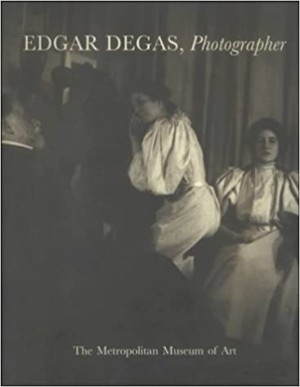
Hardcover. NY, Metropolitan Museum of Art, 1st, 1999, Book: Very Good, Dust Jacket: Very Good, Hardcover in a bright, unclipped dust jacket, 144 pages. Degas's major surviving photographs are analyzed and reproduced for the first time. "These days, Degas abandons himself entirely to his new passion for photography," wrote an artist friend in autumn 1895, the moment of the great Impressionist painter's most intense exploration of photography. Degas's major surviving photographs little known even among devotees of the artist's paintings and pastels, are insightfully analyzed and richly reproduced for the first time in this volume, which accompanies an exhibition at The Metropolitan Museum of Art, The J. Paul Getty Museum, and the Bibliotheque Nationale de France. Clean copy.
Softcover. UK, Arundel Books, 1st, 2008, Book: Very Good, Dust Jacket: None, Softcover, 202 pages, b&w illustrations. Geoffrey Pidgeon (1926-2021) worked at Bletchley Park during the Second World War on wireless transmission and output. An account of the wartime activities of Edgar Harrison who was a senior colleague of Geoffrey Pidgeon in M16 (Section VIII) and had the most extraordinary adventures during the Second World War. Clean copy.
Hardcover. US, Dark Horse, 1st, 2013, Book: Very Good, Dust Jacket: None, Elephant folio, hardcover, 104 pages in color. Like new in publishers shrink-wrap. One of comics' greatest artistic achievements gets its due in this deluxe 15" x 20" hardcover collecting the first two years of Tarzan Sunday strips by Hal Foster! Beautifully restored and printed at giant size, this first volume in Dark Horse's comprehensive collection of Foster's Tarzan Sundays reprints over one-hundred strips on high-quality paper and in eye-popping color, replicating when they first appeared! Includes a historical essay on Tarzan and Foster by comics scholar, Mark Evanier.
Hardcover. Cleveland OH, Seaforth Publications, 3rd pr., 1978, Book: Very Good, Dust Jacket: Fair, Hardcover in a worn, chipped dust jacket, b&w illustrations throughout. What began as a scrapbook and a photo album now emerges as a coherent narrative, which one Edistonian has rightly said "will educate those who should know Edisto's history." The Sea Islands are unique, and some are yet unspoiled--Edisto least of all, perhaps. Opening this new door into the past may also open a more informed path into the future. Ninety two pages from eariest history to the 1970's, when the barrier island were mostly ignored. Lots of information about hurricanes, Colonial Times, Plantation days, and after the Civil War. Mrs. Puckette became a well known South Carolina writer. Inscroption on inside cover, otherwise clean.
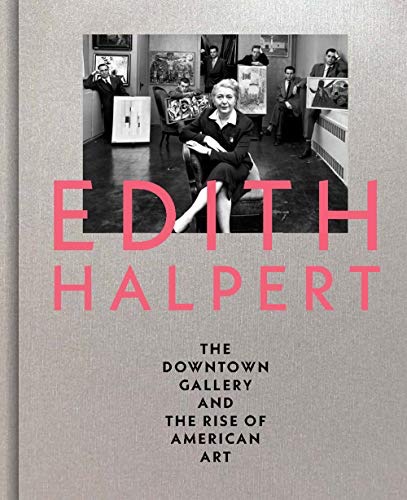
Hardcover. New Haven CT, Yale University Press, 1st, 2019, Book: Very Good, Dust Jacket: None, Hardcover, pictorial boards, 232 pages. The question "What is American art?" might conjure the hyperrealism of Raphaelle Peale and William Harnett, the bold graphic style of Stuart Davis and Jacob Lawrence, or the Precisionist forms of Charles Sheeler. Little known, however, is that such notions of American art are significantly owed to a Russian Jewish immigrant named Edith Halpert. The founder of the Downtown Gallery in New York, Halpert shaped an identity for American art, declaring that its thrilling heterogeneity and democratic values were what most distinguished it from the European avant-garde. For forty-plus years, Halpert's gallery brought recognition and market success to now-legendary American artists--among them Arthur Dove, Marsden Hartley, and Georgia O'Keeffe, in addition to the artists mentioned above. She relentlessly championed nonwhite, female, and unknown artists and was a formative advisor in the shaping of many of the nation's most celebrated art museums and collections, from San Francisco to Boston. Not content with those achievements, she also pioneered the appreciation and collecting of American folk art. Richly illustrated with works that passed through her groundbreaking gallery, this book tells the extraordinary and largely overlooked story of her career and legacy. The artists Halpert launched into the American canon are household names--and this book compellingly argues that hers should be, as well. In publisher's shrinkwrap.
Hardcover. New York , Vanguard Press, 1st, 1976, Book: Very Good, Dust Jacket: Very Good, Hardcover, 320 pages. Light edgewear, tanning to dust jacket else a clean, tight copy.
Hardcover. NY/London, Macmillan / Collier Macmillan, 1st, 1975, Book: Very Good, Dust Jacket: Very Good, Hardcover in a bright, unclipped dust jacket, 517 pages, b&w illustrations. Life of the signer of the Declaration of Independence, first US Attorney General, and second Secretary of State. Clean copy.
Hardcover. Baltimore, John Hopkins University Press, 1st, 1989, Book: Very Good, Dust Jacket: Very Good, Hardcover in a bright dust jacket, 432 pages. Biography of Edward Gibbon, who wrote arguably the most famous work of history ever, The Decline and Fall of the Roman Empire (1776-1789). Clean copy.
Hardcover. Alabama, University of Alabama Press, 1st, 1974, Book: Very Good, Dust Jacket: Very Good, 365 pages. Hardcover. Southern Historical Publications No.18. Dust cover front flap price clipped. Just a bit of age wear to dust cover, but completely whole, no rips or tears (covered in plastic). Vary clean inside. "Edward Stanley was light of frame but fearless, and his aggressive electioneering and, in Congress, his temper and sarcasm brought him more than once to the verge of duels, won him the nickname "Little Conqueror," and led John Quincy Adams to call him "the terror of the Lucifer party"."
Hardcover. New York, W. W. Norton & Company, 1st, 2008, Book: Very Good, Dust Jacket: Very Good, Hardcover, 288 pages, 242 photographs reproduced in four-color process. Like new in publishers shrink-wrap. Edward Steichen was already a famous painter and photographer in America and abroad when, in early 1923, he was offered the most prestigious position in photography's commercial domain: that of chief photographer for Vogue and Vanity Fair. Over the next fifteen years, he would produce a body of work of unequaled brilliance, dramatizing and glamorizing contemporary culture and its achievers. Here are icon images of Gloria Swanson, Gary Cooper, Greta Garbo, and Charles Chaplin, as well as numerous other celebrities drawn from an archive of more than 2,000 original prints.
Hardcover. New York, W. W. Norton & Company, 1st, 2008, Book: Very Good, Dust Jacket: Very Good, Hardcover, 288 pages, 242 photographs reproduced in four-color process. Like new in publishers shrink-wrap. Edward Steichen was already a famous painter and photographer in America and abroad when, in early 1923, he was offered the most prestigious position in photography's commercial domain: that of chief photographer for Vogue and Vanity Fair. Over the next fifteen years, he would produce a body of work of unequaled brilliance, dramatizing and glamorizing contemporary culture and its achievers. Here are icon images of Gloria Swanson, Gary Cooper, Greta Garbo, and Charles Chaplin, as well as numerous other celebrities drawn from an archive of more than 2,000 original prints.
Hardcover. NY, Norton, 1st, 2008, Book: Very Good, Dust Jacket: Very Good, Hardcover, 288 pages. Edward Steichen was already a famous painter and photographer in America and abroad when, in early 1923, he was offered the most prestigious position in photography's commercial domain: that of chief photographer for Vogue and Vanity Fair. Over the next fifteen years, Steichen would produce a body of work of unequaled brilliance, dramatizing and glamorizing contemporary culture and its achievers in politics, literature, film, sport, dance, theater, opera, and the world of high fashion. Here are iconic images of Gloria Swanson, Gary Cooper, Greta Garbo, and Charlie Chaplin as well as numerous other celebrities drawn from an archive of more than two thousand original prints. Until now, no more than a handful have been exhibited or published in book form. The photographs of the 1920s and 1930s represent the high point in Steichen's career and are among the most striking creations of twentieth-century photography. 242 illustrations.
Hardcover. East Sussex UK, Book Guild, 1st, 2000, Book: Very Good, Dust Jacket: Very Good, Hardcover, b&w period photos from the turn of the last century. Like new in shrink-wrap. From a box brimming with fantastic photographs come this collection of the works of photojournalist Andrew Pitcairn-Knowles assembled by his grandson. 38 pages of text. 110 plates.
Hardcover. Cologne, Dumont Buchverlag, 1st, 1997, Book: Very Good, Dust Jacket: Very Good, Hardcover, 363 pages, illustrated throughout in color and b&w. Clean, unmarked copy with only minor wear to dust jacket. This volume provides an extensive survey of painting in Austria from 1900-1930, with Egon Schiele as the focal point, through a representative selection of over 100 works by Schiele and 23 of his contemporaries from the collection of Dr. Rudolf Leopold. Contributions by: Antonia Hoerschelmann, Rudolf Leopold, Klaus Albrecht Schroder, Harald Szeemann, and Patrick Werkner. 139 color plates and 59 b&w illustrations.
Hardcover. Berkeley CA, University of California Press, 1st, 1986, Book: Very Good, Dust Jacket: Very Good, Hardcover in a bright dust jacket, 264 pages, photographs throughout. Egypt After the Pharoahs treats the period which witnessed the arrival of the Greeks and Hellenistic culture in Egypt, the reign of the Ptolemies from Ptolemy I to Cleopatra, the conquest by Rome, the scientific and cultural achievements of Alexandria, and the rise of Christianity. The rich social, cultural, and intellectual ferment of this period comes alive in Alan Bowman's narrative. Clean copy.
Hardcover. London, Oxford University Press, 1st, 2005, Book: Very Good, Dust Jacket: Very Good, Hardcover, 30 pages illustrated in color by Biesty. The year is 1230 B.C., during the reign of Ramses the Great in ancient Egypt. Follow the thirty-day voyage of the eleven-year-old Dedia and his father as they sail down the Nile River. Travel along with father and son as they visit the bustling harbor at Elephantine; the massive stone quarry at Gebel el-Silsila; the temples at Karnak; underground tombs in The Valley of the Kings; a funeral and mummification; the step pyramid at Saqqara; and Ramses' lavish palace at Piramesse.
Hardcover. London, Grant Richards, 1st, 1909, Book: Good, Dust Jacket: None, Hardcover, green cloth stamped in white, 294 pages, illustrated with 32 b&w photos. Back hinge partially cracked, otherwise clean. Light fraying to spine cloth at top.
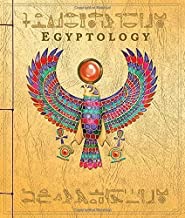
Hardcover. Candlewick Press, 1st, 2004, Book: Very Good, Dust Jacket: None, Hardcover, 32 pages. Discover the wonders of ancient Egypt through a fascinating journal from a lost expedition -- a treasure trove of fact and fantasy featuring a novelty element on every spread. Who can resist the allure of ancient Egypt -- and the thrill of uncovering mysteries that have lain hidden for thousands of years? Not the feisty Miss Emily Sands, who in 1926, four years after the discovery of King Tut's tomb, led an expedition up the Nile in search of the tomb of the god Osiris. Alas, Miss Sands and crew soon vanished into the desert, never to be seen again. But luckily, her keen observations live on in the form of a lovingly kept journal, full of drawings, photographs, booklets, fold-out maps, postcards, and many other intriguing samples.
Hardcover. Candlewick Press, 1st, 2004, Book: Very Good, Dust Jacket: Very Good, Hardcover, 32 pages. Discover the wonders of ancient Egypt through a fascinating journal from a lost expedition -- a treasure trove of fact and fantasy featuring a novelty element on every spread. Who can resist the allure of ancient Egypt -- and the thrill of uncovering mysteries that have lain hidden for thousands of years? Not the feisty Miss Emily Sands, who in 1926, four years after the discovery of King Tut's tomb, led an expedition up the Nile in search of the tomb of the god Osiris. Alas, Miss Sands and crew soon vanished into the desert, never to be seen again. But luckily, her keen observations live on in the form of a lovingly kept journal, full of drawings, photographs, booklets, fold-out maps, postcards, and many other intriguing samples.
Hardcover. Taschen, reprint, 2007, Book: Very Good, Dust Jacket: Very Good, Hardcover, 160 pages. Though her work has often been overshadowed by that of her peers such as Le Corbusier and Marcel Breuer, Irish designer, lacquer-artist, and architect Eileen Gray (1878-1976) is now widely recognized as a designer of great talent and individuality. She first excelled in the exacting craft of lacquer, creating screens, panels, furniture, and objects of technical virtuosity and poetic strength. Eileen Gray then developed an interest in architecture, designing two houses, "E-1027" (completed 1929) and "Tempe a Pailla" (completed 1934) in the south of France, which are seminal examples of the spirit of the Modern movement. This book analyses and illustrates the full range of her furniture, interiors, and completed architectural projects. Reprint of the edition of 1993.
Hardcover. Taschen, reprint, 2007, Book: Very Good, Dust Jacket: Very Good, Hardcover, 160 pages. Though her work has often been overshadowed by that of her peers such as Le Corbusier and Marcel Breuer, Irish designer, lacquer-artist, and architect Eileen Gray (1878-1976) is now widely recognized as a designer of great talent and individuality. She first excelled in the exacting craft of lacquer, creating screens, panels, furniture, and objects of technical virtuosity and poetic strength. Eileen Gray then developed an interest in architecture, designing two houses, ?E-1027? (completed 1929) and ?Tempe a Pailla? (completed 1934) in the south of France, which are seminal examples of the spirit of the Modern movement. This book analyses and illustrates the full range of her furniture, interiors, and completed architectural projects. Reprint of the edition of 1993.
Hardcover. Princeton NJ, Princeton University Press, 2nd pr., 2013, Book: Very Good, Dust Jacket: Very Good, Hardcover in a bright dust jacket, 332 pages, b&w illustrations. Einstein and the Quantum reveals for the first time the full significance of Albert Einstein's contributions to quantum theory. Einstein famously rejected quantum mechanics, observing that God does not play dice. But, in fact, he thought more about the nature of atoms, molecules, and the emission and absorption of light-the core of what we now know as quantum theory-than he did about relativity. A compelling blend of physics, biography, and the history of science, Einstein and the Quantum shares the untold story of how Einstein-not Max Planck or Niels Bohr-was the driving force behind early quantum theory. It paints a vivid portrait of the iconic physicist as he grappled with the apparently contradictory nature of the atomic world, in which its invisible constituents defy the categories of classical physics, behaving simultaneously as both particle and wave. And it demonstrates how Einstein's later work on the emission and absorption of light, and on atomic gases, led directly to Erwin Schrodinger's breakthrough to the modern form of quantum mechanics. The book sheds light on why Einstein ultimately renounced his own brilliant work on quantum theory, due to his deep belief in science as something objective and eternal. Clean copy.
Hardcover. NY, W. W. Norton, 1st, 1967, Book: Very Good, Dust Jacket: Very Good, Hardcover in a worn, chipped dust jacket, 119 pages, maps, index. As WWII ground to a close, whose forces would be the first to reach Berlin? General Dwight David Eisenhower, supreme commander of the British and American armies, chose to halt at the Elbe River and leave Berlin to the Red Army. Could he have beaten the Russians to Berlin? If so, why didn't he? If he had, would the Berlin question have arisen? Would Germany have been divided as it was? Name on front fly leaf, otherwise clean.
Hardcover. Chicago, Ivan R. Dee, 1st, 2000, Book: Very Good, Dust Jacket: Very Good, Hardcover in a bright, unclipped dust jacket. General Dwight D. Eisenhower's decision to campaign for the presidency in 1952 was a pivotal even in America's cold war years-- it influenced almost a decade of foreign and domestic policy. Based on recently discovered letters and diaries, William Pickett provides the first complete account of Eisenhower's decision to run, with surprising new conclusions. Clean, unread copy.
Hardcover. Chapel Hill, University of North Carolina Press , 1st, 1937, Book: Very Good, Dust Jacket: None, Hardcover, 849 pages, b&w illustrations. Tan cloth covers with dark brown decoration. Previous owner's stamp on both end papers.
Hardcover. Lawrence KS, University Press of Kansas, 1st, 2007, Book: Very Good, Dust Jacket: Very Good, Hardcover in a bright dust jacket, 274 pages. With the landmark election of Franklin Delano Roosevelt in 1932, decades of Republican ascendancy gave way to a half century of Democratic dominance. It was nothing less than a major political realignment, as the direction of federal policy shifted from conservative to liberal-and liberalism itself was redefined in the process. Electing FDR is the first book in seventy years to examine in its entirety the 1932 presidential election that ushered in the New Deal. Award-winning historian Donald Ritchie looks at how candidates responded to the nation's economic crisis and how voters evaluated their performance. More important, he explains how the Democratic Party rebuilt itself after three successive Republican landslides: where the major shifts in party affiliation took place, what contingencies contributed to FDR's victory, and why the new coalition persisted as long as it did. Ritchie challenges prevailing assumptions that the Depression made Roosevelt's election inevitable. He shows that FDR came close to losing the nomination to contenders who might have run to the right of Hoover, and discusses the role of newspapers and radio in presenting the candidates to voters. He also analyzes Roosevelt's campaign strategies, recounting his attempts to appeal to disaffected voters of all ideological stripes, often by altering his positions to broaden his popularity. With the advent of the New Deal, Americans came to enjoy a wide federal safety net that provided everything from old age pensions to rural electricity-government innovations so embraced by voters that even later conservative presidents recognized their importance. Ritchie traces this legacy through the Reagan and Bush years, but he relates how FDR in 1932 was often vague about the specifics of his program and questions whether voters really knew what they were in for with the New Deal. Clean copy.
Hardcover. Netherlands, Kluwer Academic Publishers, 1st, 2000, Book: Very Good, Dust Jacket: Very Good, Hardcover in a bright dust jacket, 223 pages. In Elements, Principles and Particles, Antonio Clericuzio explores the relationships between chemistry and corpuscular philosophy in the age of the Scientific Revolution. Science historians have regarded chemistry and corpuscular philosophy as two distinct traditions. Clericuzio's view is that since the beginning of the 17th century atomism and chemistry were strictly connected. This is attested by Daniel Sennert and by many hitherto little-known French and English natural philosophers. They often combined a corpuscular theory of matter with Paracelsian chemical (and medical) doctrines. Boyle plays a central part in the present book: Clericuzio redefines Boyle's chemical views, by showing that Boyle did not subordinate chemistry to the principles of mechanical philosophy. When Boyle explained chemical phenomena, he had recourse to corpuscles endowed with chemical, not mechanical, properties. The combination of chemistry and corpuscular philosophy was adopted by a number of chemists active in the last decades of the 17th century, both in England and on the Continent. Using a large number of primary sources, the author challenges the standard view of the corpuscular theory of matter as identical with the mechanical philosophy. He points out that different versions of the corpuscular philosophy flourished in the 17th century. Most of them were not based on the mechanical theory, i.e. on the view that matter is inert and has only mechanical properties. Throughout the 17th century, active principles, as well as chemical properties, are attributed to corpuscles. Given its broad coverage, the book is a significant contribution to both history of science and history of philosophy.
Softcover. Toronto, Dundurn Press, 1st, 1982, Book: Very Good, Dust Jacket: None, Softcover, 336 pages. Includes table of contents, bibliography, index, maps and b&w photographs and illustrations. The 11 exiles were: John Howe, Printer; Francis Green; Joseph Durfee, Shelburne Pioneer; Molly Brant, Mohawk Heroine; Ward Chipman, founding father of New Brunswick; William Schurman of Prince Edward Island; Sir John Johnson; Ranna Cossit; Sarah Sherwood; Boston King and William Jarvis.
Hardcover. NY, G. P. Putnam's Sons, 1st, 1974, Book: Very Good, Dust Jacket: Very Good, Hardcover in a bright, unclipped dust jacket. 374 pages. Russia has a fascinating history and author Robert Coughlan has provided us with an informative and compelling peek into a particularly notable segment of it, essentially the 1700s. The book covers the period from Tsar [Czar] Alexis (briefly) up to the reign of Tsar Alexander I, probably the most beloved of all the Romanovs. The focus of the work is on Catherine the Great. Her mentor, Elizabeth, was important through her shrewd handling of the many bumps and potholes which eventually allowed Catherine to take the throne against many rivals and usurpers. Clean copy.
Softcover. NY, W.W. Norton, reprint, 1966, Book: Very Good, Dust Jacket: None, Softcover, 434 pages, b&w illustrations. Praised by various scholars on the rear cover as the definitive study of the Elizabethan Period. Clean copy.

 "Early Days in the Adirondacks: The Photographs of Seneca Ray Stoddardby: Adler, Jeanne Winston")
 "Early Factory Masters, The: The Transition to the Factory System in the Midlands Textile Industryby: Chapman, Stanley D.")
 "Early History of Berlin, Vermont: 1763-1820by: Nye, Mary Greene")







 "Earth Transformed, The: An Untold Historyby: Frankopan, Peter")



 "Echoes of Distant Thunder: Life in the United states 1914-1918by: Ellis, Edward Robb")



 "Edgar Rice Burroughs' Tarzan: The Sunday Comics, 1931-1933by: Foster, Hal")


 "Edmund Randolph: A Biography by: John J. Reardon")

 "Edward Stanly: Whiggery's Tarheel \"Conqueror\"by: Brown, Norman D.")
 "Edward Steichen: In High Fashion - The Conde Nast Years, 1923-1937by: Ewing, William A.")
 "Edward Steichen: In High Fashion - The Conde Nast Years, 1923-1937by: Ewing, William A.")


 "Egypt After the Pharaohs: 332 BC-AD 642: From Alexander to the Arab Conquest by: Alan K. Bowman")
 "Egypt in Spectacular Cross-Sectionby: Biesty, Stephen")



 "Ejido, The: Mexico's Way Outby: Simpson, Eyler N.")


 "Elizabeth I and her Parliaments: 1584-1601by: J. E Neale")