Hardcover. Koln GR, Taschen, 1st, 2016, Book: Very Good, Dust Jacket: Very Good, Hardcover, folio trade edition. With photographic gems of early circus performers, as well as original posters, lithographs, sideshow banners and engravings from the 16th to 19th centuries illustrating the worldwide roots of the circus, readers are transported to a world of thrill and skill, grit and glamor. Highlights include iconic circus photographs by Mathew Brady, Cornell Capa, Walker Evans, Weegee, and Lisette Model, and little-known circus images by Stanley Kubrick and Charles and Ray Eames. 670 pages.
Center for American Places, 1st, Book: Very Good, Dust Jacket: None, Softcover, 180 pages, profusely illustrated in b&w. Foreword by Bill Kurtis. Contemporary Photographs by Judith Bromley and James Iska. Historic images from the Chicago Park District's Special Collections. Even Chicagoans who routinely enjoy its diverse open spaces -from the magnificent lakeshore parks to intimate neighborhood settings- may be surprised about their parkland legacy. The City in a Garden, developed in association with the Chicago Park District, is the first official history of Chicago's parks and it reveals why they are second to none in America and abroad. Clean copy.
Hardcover. NY, Random House, reprint, 1974, Book: Very Good, Dust Jacket: Very Good, Hardcover in a bright, unclipped dust jacket. The Civil War: A Narrative, Vol. 2 focuses on the pivotal year of 1863, as Shelby Foote's masterful narrative history brings to life the Battle of Gettysburg and Grant's Vicksburg campaign and covers some of the most dramatic and important moments in the Civil War. Endpaper maps. First published in 1963, this appears to be a 70s reprint ($40 price on dust jacket). Clean copy.
Hardcover. NY, Random House, reprint, 1974, Book: Very Good, Dust Jacket: Very Good, Hardcover in a bright, unclipped dust jacket. The Civil War: A Narrative. In the third -- and last -- volume of this vivid history, Foote brings to a close the story of four years of turmoil and strife which altered American life forever. Here, told in vivid narrative and as seen from both sides, are those climactic struggles, great and small, on and off the field of battle, which finally decided the fate of this nation. "Red River to Appomattox" opens with the beginning of the two final, major confrontations of the war: Grant against Lee in Virginia, and Sherman pressing Johnston in North Georgia. While the Virginia-Georgia fighting is in progress, Kearsarge sinks the Alabama and Forrest gains new laurels at Brice's Crossroads.With Grant and Lee deadlocked at Petersburg, Sherman takes Atlanta -- assuring Lincoln's reelection, together with the certainty that the war will be fought (not negotiated) to a finish. These events are followed by Hood's bold northward strike through middle Tennessee while Sherman sets out on his march to the sea, to be opposed at its end by the ghost of the Army of Tennessee. Endpaper maps. First published in 1974, this appears to be a reprint (no price on dust jacket). Newspaper obituary of Foote laid in. Clean copy.
Hardcover. NY, Random House, reprint, 1974, Book: Very Good, Dust Jacket: Very Good, Hardcover in a bright, unclipped dust jacket. The Civil War: A Narrative, Vol. 1 begins one of the most remarkable works of history ever fashioned. All the great battles are here, of course, from Bull Run through Shiloh, the Seven Days Battles, and Antietam, but so are the smaller ones: Ball's Bluff, Fort Donelson, Pea Ridge, Island Ten, New Orleans, and Monitor versus Merrimac. The word "narrative" is the key to this extraordinary book's incandescence and its truth. The story is told entirely from the point of view of the people involved in it. One learns not only what was happening on all fronts but also how the author discovered it during his years of exhaustive research. This first volume in Shelby Foote's comprehensive history is a must-read for anyone interested in one of the bloodiest wars in America's history. Endpaper maps. First published in 1958, this appears to be a 70s reprint ($40 price on dust jacket). Clean copy.
Hardcover. Lexington KY, University of Kentucky Press, 1st, 1968, Book: Very Good, Dust Jacket: None, Hardcover, light green cloth, 307 pages. This volume of Eaton's selected writings forms a rich and provocative mosaic of southern life from the years of Thomas Jefferson to the close of the Civil War. These selections, perceptively edited by Albert D. Kinvan, show the wide range of Eaton's interests, including the impact of slavery, the influence of religion, and the art of politics, and they demonstrate the depth of his insight into the civilization of the Old South. Name on front fly leaf, otherwise clean.
Hardcover. Washington DC, Counterpoint, 1999, Book: Very Good, Dust Jacket: Very Good, Hardcover, 642 pages. Hailed in 1849 as "a new department in the literature of civilization," the slave narrative forms the foundation of the African American literary tradition. From the late-eighteenth-century narratives by Africans who endured the harrowing Middle Passage, through the classic American fugitive slave narratives of the mid-nineteenth century, slave narratives have provided some of the most graphic and damning documentary evidence of the horrors of slavery. Riveting, passionate, and politically charged, the slave narrative blends personal memory and rhetorical attacks on slavery to create powerful literature and propaganda.The Civitas Anthology presents the seven classic antislavery narratives of the antebellum period in their entirety: The History of Mary Prince, a West Indian Slave , the first slave narrative published by a woman in the Americas; The Confessions of Nat Turner , written when Turner was asked to record his motivation for leading the bloodiest slave revolt in U.S. history; The Narrative of the Life of Frederick Douglass , an international bestseller and the first narrative to fashion the male fugitive slave into an African American cultural hero; The Narrative of William W. Brown , an account that explored with unprecedented realism the slave's survival ethic and the art of the slave trickster; The Narrative of the Life of Henry Bibb , the story of the struggles of the most memorable family man among the classic slave narrators; Running a Thousand Miles for Freedom , a gripping chronicle of one of the most daring and celebrated slave escapes ever recorded; and Incidents in the Life of Slave Girl , a dramatic text that exposed the sexual abuse of female slaves and pioneered the image of the fugitive slave woman as an articulate resister and survivor.Born out of lives of unparalleled suffering, the slave narrative captures all the bravery, drama, and hope that characterized the African American struggle against slavery. From these beginnings came some of the most influential novels in American literature, for the works of writers such as Harriet Beecher Stowe, Mark Twain, and Toni Morrison owe much of their power and social resonance to the slave narrative tradition. The Civitas Anthology gathers the most important narratives in this tradition into one volume for the first time, an indispensable resource for scholars, students, and general readers. Clean copy.
Hardcover. Cleveland, World Publishing Company, 1st, 1966, Book: Very Good, Dust Jacket: Good, 336 pages. Hardcover. Previous owners name on front endpaper. Includes cartoonists: John Held, Jr., Charles Keene, George Herriman, A. B. Frost, Peter Arno, Saul Steinberg, Charles Addams, Virgil Partch, William Steig, Gerald Scarfe, Shel Silverstein, Tomi Ungerer, and more. Black & white illustrations. Dust jacket with chipping along edges. Clean, unmarked pages.
Hardcover. Prion, 1st, 2009, Book: Very Good, Dust Jacket: Very Good, Hardcover, 230 pages. In terms of both words and images the world had never seen the like of the American comic book. They were bizarre, morbid, lurid, risque and bursting with subconscious desires of burgeoning youth culture. By the time 1954 arrived their were 500 different comics being published by 35 different companies, selling over 60 million copies a month between them. This is the history of the era and the art it produced. The book looks at the pioneers of the comic book and the comic's founding links with sleazy pulp magazines; the campaign for censorship; the fraught relationship between the comic book artists and their publishers; how what they did was rarely recognized as art at the time - and of course the comics themselves.
Hardcover. Berkeley CA, University of California Press, 1st, 1990, Book: Very Good, Dust Jacket: Very Good, Hardcover in a bright dust jacket, 161 pages. Here, at last, are the long-awaited Sather Classical Lectures of the great historian Arnaldo Momigliano, In a masterly survey of the origins of ancient historiography, Momigliano captures those features of an ancient historian's work that not only gave it importance in its own day but also encouraged imitation and exploitation in later centuries. He reveals the extent to which Greek, Persian, and Jewish historians influenced the Western historiographic tradition, and then goes on to examine the first Roman historians and the emergence of national history. In the course of his exposition, he traces the development of antiquarian studies as distinctive branch of historical research from antiquity to the modern period, discusses the place of Tacitus in historical thought, and explores the way in which ecclesiastical historiography has developed a tradition of its own. All these lectures illustrate Momigliano's unrivaled ability to combine the study of classical texts and the history of classical scholarship. First delivered in 1962, the lectures were revised during the next fifteen years and then held for annotation that was never completed. They are now published from the author's manuscripts, collated and checked by Momigliano's literary executor, Anne Marie Meyer, of the Warburg Institute, with a foreword by Riccardo Di Donato, of the University of Pisa. Name on front fly leaf, light pencil notations to about 30 pages.
Hardcover. NY, G.P. Putnam's Sons, 1st, 2001, Book: Very Good, Dust Jacket: Very Good, Hardcover in a bright, unclipped dust jacket. 48 pages illustrated in color by S.D. Schindler. Clean copy.
Hardcover. NY, Metropolitan Museum of Art/ The Viking Press, 1st, 1978, Book: Very Good, Dust Jacket: Very Good, Hardcover in a lightly worn dust jacket. In addition to being one of the preeminent American photographers of the late 19th and early 20th centuries, Alfred Stieglitz was an avid collector of the works of other photographers. From 1894-1910, he collected over 650 prints from a variety of photographers. He donated 400 of these to the Metropolitan Museum of Art in 1939, and the balance was given in a bequest to the museum in 1949. Photographers included in the collection include Edward Steichen, Gertrude Kasebier, Baron de Meyer, Ansel Adams, Eliot Porter, and Julia Margaret Cameron. This substantial volume was produced by Weston Naef, who was Associate Curator of Prints and Photographs at The Metropolitan Museum of Art. It includes a black-and-white reproduction of all the photographs in the Stieglitz Collection, some full-page and many in smaller size. It also includes details about, and portraits and signatures of each of the painters. Small closed tears to dust jacket, otherwise a clean, bright copy.
Softcover. Dallas TX, Southern Methodist University, reprint, 2001, Book: Very Good, Dust Jacket: None, Softcover, 221 pages, 202 b&w plates, 20 in color. Historical and cultural history of religious, popular and folk architecture of colonial New Spain. Clean copy.
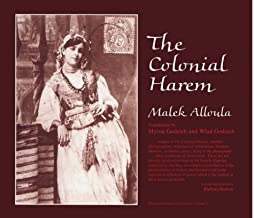
Softcover. Minneapolis, University of Minnesota Press, 1st, Book: Very Good, Dust Jacket: None, Softcover, 135 pages. The author has collected, arranged, and annotated picture postcards of Algerian women produced and sent by the French during the first three decades of the 20th century. From this album emerges a powerful analysis of the distorting, denigrating effects of the French colonial presence on Algerian society. Alloula's reading of the pohotographs locates them in their historical context and examines them through the lens of contemporary critical theory. Wraps with light edgewear, clean.
Softcover. Carbondale IL, Southern Illinois University Press , 1st, 1970, Book: Very Good, Dust Jacket: None, Softcover, dark gray covers with some fading. 639 pages. A detailed documentary on the American Colonial Society, discussing culture, politics, religion, and much more. David Potter and Gordon L. Thomas have selected representative and important speeches and exhortations delivered by famous Americans from the beginning of the Massachusetts Bay Colony to the signing of the Declaration of Independence. The selections are arranged in five categories--those dealing with academic, legal, occasional, political, and religious matters. They are drawn from every stratum of colonial activity--from the classrooms, clerical studies, town meetings, provincial assemblies, and the bar. Great names abound in these pages, but, frequently, expounders of great ideas found here are unremembered figures whose works cannot be found easily elsewhere. The editors have carried out careful research on each speech to assure the authenticity of the text. They have added, for each selection, a note on the speaker and on the place where he delivered his address. Clean copy.
Hardcover. NY, Harper & Row, 1st, 1971, Book: Very Good, Dust Jacket: Very Good, Hardcover in a lightly worn dust jacket, 228 pages. Articles on Thomas Clap, William Douglas, Archibald Kennedy, William Livingston, Thomas Jeffreys, Samuel Smith, John Adams, and Mercy Warren. Volume 2 only. Name on front fly leaf, otherwise clean.
Hardcover. Belgium, Brepols , 1st, 2012, Book: Very Good, Dust Jacket: None, Hardcover, pictorial boards, 696 pages, 34 b/w illustrations.The rise of modern science and European colonial and imperial expansion are indisputably two defining elements of modern world history. James E. McClellan III and Francois Regourd explore these two world-historical forces and their interactions in this comprehensive and in-depth history of the French case in the Old Regime presented here for the first time. The case is key because no other state matched Old-Regime France as a center for organized science and because contemporary France closely rivaled Britain as a colonial power, as well as leading all other nations in commodity production and participating in the slave trade. Based on extensive archival research and vast primary and secondary literatures and sharply reframing the historiography of the field, this landmark volume traces the development and significance for early-modern history of the Colonial Machine of Old-Regime France, an unparalleled agglomeration of institutions geared to the success of the French colonial enterprise, including the Royal Navy, the Academie Royale des Sciences, the Jardin du Roi, and a host of related specialist institutions working together at home and overseas. Mainly supported by the French state, the Colonial Machine reveals itself through its actions from the time of Colbert and Louis XIV as it grappled with fundamental problems facing contemporary European colonialism. SIGNED LETTER from co-author McClelland laid in. Clean copy.
Hardcover. New Haven CT, Yale University Press, 1st, 1938, Book: Very Good, Dust Jacket: Very Good, Hardcover in a lightly worn, price-clipped dust jacket, 477 pages. Original edition of this major study of British policies toward its North American colonies by a premiere early 20th century historian of Colonial America, Charles M. Andrews. Name on front fly leaf, otherwise a clean, tight copy.
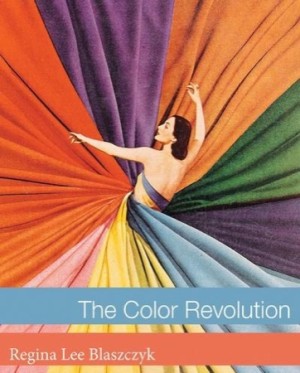
Hardcover. Cambridge MA, The MIT Press, 1st, 2012, Book: Very Good, Dust Jacket: Very Good, Hardcover in a bright dust jacket In this book, 380 pages, illustrated in color. The award-winning historian Regina Lee Blaszczyk traces the relationship of color and commerce, from haute couture to automobile showrooms to interior design, describing the often unrecognized role of the color profession in consumer culture. Blaszczyk examines the evolution of the color progression from 1850 to 1970, telling the stories of innovators who managed the color cornucopia that modern artificial dyes and pigments made possible. These color stylists, color forecasters, and color engineers helped corporations understand the art of illusion and the psychology of color. Clean copy.
Hardcover. London, Paul Holberton Publishing, 1st, 2015, Book: Very Good, Dust Jacket: Very Good, Hardcover in a bright dust jacket, 197 pages. Color and b&w plates throughout. This groundbreaking architectural history examines what people actually wanted in their institutional and private patronage over the last two centuries as opposed to what architects and theorists thought they should want - as seen through the prism of Oxford's principal building contractor and craft practitioner, Symm & Company. Clean, bright copy.
Softcover. Seattle, Fantagraphics, 1st, 2008, Book: Very Good, Dust Jacket: None, Softcover, 200 pages. Gary Groth interviews father and son cartoonists Gene and Kim Deitch. Academy-award-winning Gene Deitch, whose wide-ranging career has spanned over 60 years, talks about doing illustrations for The Record Changer, directing cartoons such as Munro and Krazy Kat, and creating his comic strip Terr'ble Thompson. Underground comics pioneer Kim Deitch, touches on his father's influence, reminisces about the New York-based scene and outlines the evolution of Waldo the Cat. Plus: The innovative Grant Morrison fills us in on his X-Men run, All Star Superman, the ambitious Seven Soldiers "maxiseries," and how he became one of the architects of the current DC Comics universe. Finally, the comics gallery presents an historical essay and highlights from the turn-of-the-19th-century work of Puck cartoonist, F. M. Howarth.
Softcover. Seattle, Fantagraphics, 1st, 2009, Book: Very Good, Dust Jacket: None, Softcover, 207 pages. A career-spanning interview with Mort Walker, the creator of Beetle Bailey and Hi & Lois. Jordan Crane discusses The Clouds Above: comics by the famous 17th century caricaturist Thomas K. Rowlandson.
Softcover. Seattle, Fantagraphics, 1st, 2015, Book: Very Good, Dust Jacket: None, Large softcover, 263 pages, b&w photos ad illustrations. In-depth, career-spanning interviews with the cartoonists - Crumb, Shelton, and more - who forever altered the course of American comics with their anthology title, Zap Comix. The definitive Comics Journal interviews with the cartoonists behind Zap Comix, featuring: Supreme 1960s counterculture/underground artist Robert Crumb on how acid unleashed a flood of Zap characters from his unconscious; Marxist brawler Spain Rodriguez on how he made the transition from the Road Vultures biker gang to the exclusive Zap cartoonists' club; Yale alumnus Victor Moscoso and Christian surfer Rick Griffin on how their poster-art psychedelia formed the backdrop of the 1960s San Francisco music scene; Savage Id-choreographer S. Clay Wilson on how his dreams insist on being drawn; Painter and Juxtapoz-founder Robert Williams on how Zap #4 led to 150 news-dealer arrests; Fabulous, Furry, Freaky Gilbert Shelton on the importance of research; Church of the Subgenius founder Paul Mavrides on getting a contact high during the notorious Zap jam sessions; and much more. In these career-spanning interviews, the Zap contributors open up about how they came to create a seminal, living work of art. Partial color.
Softcover. Seattle, Fantagraphics, 1st, 2015, Book: Very Good, Dust Jacket: None, Large softcover, 263 pages, b&w photos ad illustrations. In-depth, career-spanning interviews with the cartoonists - Crumb, Shelton, and more - who forever altered the course of American comics with their anthology title, Zap Comix. The definitive Comics Journal interviews with the cartoonists behind Zap Comix, featuring: Supreme 1960s counterculture/underground artist Robert Crumb on how acid unleashed a flood of Zap characters from his unconscious; Marxist brawler Spain Rodriguez on how he made the transition from the Road Vultures biker gang to the exclusive Zap cartoonists' club; Yale alumnus Victor Moscoso and Christian surfer Rick Griffin on how their poster-art psychedelia formed the backdrop of the 1960s San Francisco music scene; Savage Id-choreographer S. Clay Wilson on how his dreams insist on being drawn; Painter and Juxtapoz-founder Robert Williams on how Zap #4 led to 150 news-dealer arrests; Fabulous, Furry, Freaky Gilbert Shelton on the importance of research; Church of the Subgenius founder Paul Mavrides on getting a contact high during the notorious Zap jam sessions; and much more. In these career-spanning interviews, the Zap contributors open up about how they came to create a seminal, living work of art. Partial color.
Softcover. New York, Fantagraphics Books, 1st, 2014, Book: Very Good, Dust Jacket: None, 300 pages. Softcover with light edgewear to paper wrappers. Clean, tight copy. Color and black and white illustrations throughout. The definitive Comics Journal interviews with the cartoonists behind Zap Comix, featuring: Supreme 1960s counterculture/underground artist Robert Crumb on how acid unleashed a flood of Zap characters from his unconscious; Marxist brawler Spain Rodriguez on how he made the transition from the Road Vultures biker gang to the exclusive Zap cartoonists' club; Yale alumnus Victor Moscoso and Christian surfer Rick Griffin on how their poster-art psychedelia formed the backdrop of the 1960s San Francisco music scene; Savage Id-choreographer S. Clay Wilson on how his dreams insist on being drawn; Painter and Juxtapoz-founder Robert Williams on how Zap #4 led to 150 news-dealer arrests; Fabulous, Furry, Freaky Gilbert Shelton on the importance of research; Church of the Subgenius founder Paul Mavrides on getting a contact high during the notorious Zap jam sessions; and much more. In these career-spanning interviews, the Zap contributors open up about how they came to create a seminal, living work of art.
Hardcover. NY, Benjamin Blom, 1st, 1964, Book: Very Good, Dust Jacket: None, Hardcover, light orange cloth with brown titles on spine. Traces the history of the time-honored farce, featuring Pulcinella, Harlequin, Pierrot, Pantaleone, and other traditionsl characters, from Roman comedy to Cruikshank's Punch & Judy. Originally published in 1912, this new edition adds 46 pages of illustrations and a folding color frontispiece. Clean copy, no dust jacket.
Hardcover. NY, Columbia University Press, 1st, 1976, Book: Very Good, Dust Jacket: Very Good, Hardcover in a bright, price-clipped dust jacket, 371 pages. Looks into the origins and activities of a foreign-policy interest group which emerged after the Korean War and exerted pressure on the federal government not to recognize the People's Republic of China. Name on front fly leaf, otherwise clean.
Softcover. Ithaca NY, Cornell University Press, 1st pbk, 1973, Book: Very Good, Dust Jacket: None, Softcover, 180 pages. The spirit of an event consecrated in anarchist legend is captured in these documents. Eyewitness reports, accounts of participants, and archival documents are used by Dr Edwards to illustrate the many facets of the seventy-three-day Paris Commune of 1871, the largest urban insurrection in modern history. Each section of the book is preceded by an explanatory note, and footnotes clarify contemporary references The introduction to the documents provides a general survey of the origins and events of the Commune. Bright, clean copy.
Hardcover. NY, Harper Business , 1st, 2020, Book: Very Good, Dust Jacket: Very Good, Hardcover in a bright dust jacket, 432 pages. B&w and color illustrations. Small remainder line on bottom edge. In his much-anticipated memoir, The Company I Keep: My Life in Beauty, Chairman Emeritus and former CEO of The Estee Lauder Companies Leonard A. Lauder shares the business and life lessons he learned as well as the adventures he had while helping transform the mom-and-pop business his mother founded in 1946 in the family kitchen into the beloved brand and ultimately into the iconic global prestige beauty company it is today. In its infancy in the 1940s and 50s, the company comprised a handful of products, sold under a single brand in just a few prestigious department stores across the United States. Today, The Estee Lauder Companies constitutes one of the world's leading manufacturers and marketers of prestige skin care, makeup, fragrance and hair care products. It comprises more than 25 brands, whose products are sold in over 150 countries and territories. This growth and success was led by Leonard A. Lauder, Estee Lauder's oldest son, who envisioned and effected this expansion during a remarkable 60-year tenure, including leading the company as CEO and Chairman.
Softcover. NY, E.P. Dutton, 1st, 1973, Book: Good, Dust Jacket: None, Softcover, unpaginated, b&w plates. Illustrated with stills from the 1924 film. compiled and annotated with a foreword by Herman Weinberg. Probably Stroheim"s best remembered work as a director is Greed, a detailed filming of the novel McTeague by Frank Norris. Previous owner's name inside front cover, otherwise clean. Light soiling to wrappers, shelfwear.
Softcover. Chicago, Quadrangle, reprint, 1971, Book: Very Good, Dust Jacket: None, Softcover, 487 pages. This "Early National" period, one of yearning adolescence in the life of the nation, is the subject of this study which shows how the United States went about winning economic and cultural independence from Europe to match the political emancipation gained by the Revolution.
Hardcover. Baton Rouge LA, Louisiana State University Press, 1st, 1988, Book: Very Good, Dust Jacket: Very Good, Hardcover in a bright dust jacket. 360 pages, b&w illustrations. Following the American Civil War, many former Confederates fled their southern homeland. Some left the United States, some moved to the western territories. Still others moved north to northeastern and midwestern towns and cities, believing that northern economic and educational opportunities offered the quickest means of rebuilding shattered fortunes and lives. Sutherland provides a detailed and illuminating account of the contributions these displaced southerners made to the financial, literary, artistic, and political life of the nation. Very nice copy.
Softcover. London, Pimlico, 1st pbk., 1994, Book: Very Good, Dust Jacket: None, Softcover, 812 pages, b&w illustrations. Light wear to covers and edges of spine. Old UK price sticker on rear cover. Neat, tight copy.
Hardcover. Philadelphia, 7th Ed., 1855, Book: Good, Dust Jacket: None, Hardcover, embossed brown cloth with gilt lettering on spine and front cover, 521 pages. Cloth has peeled back from spine with some missing chips. The book's binding is solid and tight, clean interior. First published in 1854. This is the seventh printing with an illustrated title page dated 1855. Name and address on blank prelim page otherwise clean.
Softcover. Chicago, University of Chicago , 1st, 1995, Book: Very Good, Dust Jacket: None, Softcover, 303 pages. Martin Burke traces the surprisingly complicated history of the idea of class in America from the forming of a new nation to the heart of the Gilded Age. Surveying American political, social, and intellectual life from the late 17th to the end of the 19th century, Burke examines in detail the contested discourse about equality--the way Americans thought and wrote about class, class relations, and their meaning in society.Burke explores a remarkable range of thought to establish the boundaries of class and the language used to describe it in the works of leading political figures, social reformers, and moral philosophers. He traces a shift from class as a legal category of ranks and orders to socio-economic divisions based on occupations and income. Throughout the century, he finds no permanent consensus about the meaning of class in America and instead describes a culture of conflicting ideas and opinions. Some fading to covers, otherwise like new.
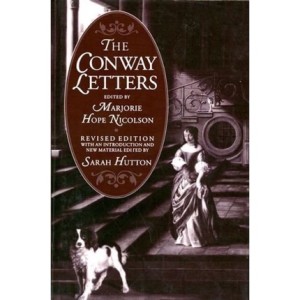
Hardcover. Oxford UK, Clarendon Press, Revised Ed., 1992, Book: Very Good, Dust Jacket: Very Good, Hardcover in a bright dust jacket, 592 pages, b&w illustrations. Lady Anne Conway was a remarkable woman who became a philosopher in her own right at a time when most women were denied even basic education. The Conway Letters is the record of her friendship with the Cambridge Platonist, Henry More, which began when he acted as her unofficial tutor in philosophy and lasted until her death. The letters cover a wide range of topics - personal, philosophical, religious, and social. They give a detailed picture of the More-Conway circle, including such figures as Jeremy Taylor, Ralph Cudworth, Robert Boyle, and Francis Mercury van Helmont, as well as Lady Conway's Quaker associates, George Keith and William Penn. The letters are thus a valuable source for mid-seventeenth-century history, and especially for the intellectual history of the period. Revised from the 1930 printing with new material and introduction by Sarah Hutton. Name on front fly leaf, small chip/tear to top spine of the dust jacket.
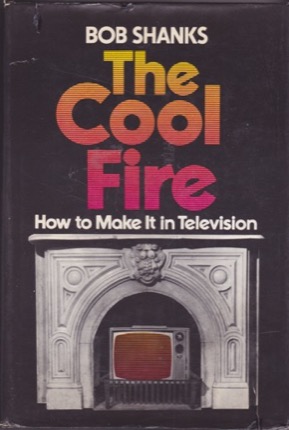
Hardcover. NY, W.W. Norton , 1976, Book: Very Good, Dust Jacket: Very Good, Hardcover in a bright, lightly worn dust jacket. 318 pages, A veteran producer provides an inside view of television, combining anecdotal discussions of agents, performers, and sponsors with detailed information on network organization and business activities. A good overview of the TV broadcasting business in the 1970s. No markings.
Softcover. Los Angeles, Augustan Reprint Society, reprint, 1987, Book: Very Good, Dust Jacket: None, Softcover. Facsimile reprints of two 18th century pamphlets, 29 and 52 pages. Introduction by Robert Adams Day. Two profiles of a infamous doctor named Richard Mead in mid-18th century London. The first an attack, the second a defense. Clean copy.
Softcover. Italy, Leo S. Olschki Editore, 1st, 2002, Book: Very Good, Dust Jacket: Very Good, Softcover in a dust jacket, 313 pages. The first complete collection of all that is conserved of the correspondence that endured for more than thirty years between two great scholars of 16th century religious toleration. The ample introduction and detailed erudite comments accompanying each letter provide precious information on four decades of American and European historiography on the 16th century. Name on cover
Hardcover. Oxford UK, Oxford University Press , 1st, 1994, Book: Very Good, Dust Jacket: Very Good, Two hardcovers in bright dust jackets, 1008 pages total. Thomas Hobbes (1588-1679) is one of the most important figures in the history of European thought. Although interest in his life and work has grown enormously in recent years, this is the first complete edition of his correspondence. The texts of the letters are supplemented with explanatory notes and full biographical and bibliographical information. Although best known for his political theory, he also wrote about theology, metaphysics, physics, optics, mathematics, psychology and literary criticism. All of these interests are reflected in his correspondence. Some small groups of his letters have been printed in the past (often in inaccurate transcriptions), but this edition is the first complete collection of his correspondence, nearly half of which has never been printed before. All the letters have been transcribed from the original sources, and all materials in Latin, French and Italian are printed together in modern English. The letters are fully annotated, and there are long biographical entries on all of his correspondents, based on extensive original research. Noel Malcolm is the author of "De Dominis (1560-1624): Venetian, Anglican, Ecumenist and Relapsed Heretic". This second of two volumes contains the letters of Thomas Hobbes (1588-1679), supplemented with explanatory notes, and full biographical and bibliographical information. This publication sheds new light on the intellectual life of a major European thinker. Name on front fly leaf, otherwise a bright, clean set. DUE TO WEIGHT, DOMESTIC SHIPPING ONLY.
Hardcover. Princeton NJ, Princeton University Press, 1st, 2009, Hardcover in a bright dust jacket, 157 pages. Was George W. Bush the true heir of Woodrow Wilson, the architect of liberal internationalism? Was the Iraq War a result of liberal ideas about America's right to promote democracy abroad? In this timely book, four distinguished scholars of American foreign policy discuss the relationship between the ideals of Woodrow Wilson and those of George W. Bush. The Crisis of American Foreign Policy exposes the challenges resulting from Bush's foreign policy and ponders America's place in the international arena. Led by John Ikenberry, one of today's foremost foreign policy thinkers, this provocative collection examines the traditions of liberal internationalism that have dominated American foreign policy since the end of World War II. Clean copy.
Hardcover. University Park PA, Pennsylvania State University Press, 1st, 2010, Book: Very Good, Dust Jacket: Very Good, Hardcover in a bright dust jacket, 295 pages illustrated in b&w and color. Beginning in the 1730s, Heather Minor tells us, Rome "began to resemble one huge construction site," with a series of ambitious and expensive new building campaigns that transformed the face and substance of the city. From renovations of the Santa Maria Maggiore and San Giovanni in Laterano and the restoration of the Arch of Constantine to the creation of the Capitoline Museum and the establishment of the papacy's Calcografia, the push for reform not only renewed papal and Church identity but also revived Italian culture as a whole. Based on extensive archival research and full of fascinating stories about the often stormy theological and intellectual debates central to the attempts at reform, The Culture of Architecture in Enlightenment Rome brings to life the personalities of architects, theologians, and intellectuals and links the extensive architectural programs with powerful shifts in the intellectual climate of the time. Clean, bright copy.
Hardcover. Baltimore, Clearfield Company, reprint, 1989, Book: Very Good, Dust Jacket: None, Hardcover, blue cloth, gilt lettering on spine, 132 pages. A reprint of a book written by Alexander Jones in 1855. The book explores the role of Welsh immigrants and their descendants during the American Revolution. It provides a detailed account of the Welsh contributions to the war effort, including their participation in battles, their leadership in politics and commerce, and their support for the cause of American independence. The book is divided into several chapters, each focusing on a different aspect of Welsh involvement in the Revolution. It begins by discussing the early settlement of Welsh immigrants in America, their struggles to maintain their language and culture, and their eventual integration into American society. Jones then goes on to describe the various battles and campaigns in which Welsh soldiers fought, including the Battle of Bunker Hill, the Battle of Saratoga, and the Battle of Yorktown. He also highlights the contributions of Welsh leaders such as General Richard Montgomery and Colonel William Davies.In addition to military contributions, the book also explores the role of Welsh Americans in politics and commerce during the Revolution. Jones discusses the involvement of Welshmen in the Continental Congress, as well as their contributions to the development of American industry and trade. Overall, The Cymry of '76 provides a comprehensive and detailed account of the Welsh contribution to the American Revolution. Clean copy.
Hardcover. NY, Princeton Architectural Press, 1st, 2015, Book: Very Good, Dust Jacket: Very Good, Hardcover in a bright, unclipped dust jacket, 224 pages. The Dakota is arguably the best-known residential address in the world, home to dozens of New York City's most famous artists, performers, and successful executives. The rare sale of an apartment there, usually at jaw-dropping prices, is newsworthy, as is the financial and architectural health of the building itself, a landmark in every sense of the word. The first true luxury apartment house built in New York City, more than 130 years ago, the Dakota is still the gold standard against which all other apartment buildings are weighed. Historian Andrew Alpern tells the fascinating story of how the Dakota came to be, how Singer sewing magnate Edward Clark dared to build an apartment building luxurious enough to coax the city's wealthy from their mansions downtown for ultra-modern living on what was then the swamplands of the Upper West Side. Redrawn plans of the entire building, published here for the first time, show how Clark created apartments glamorous enough that they made living under a shared roof as acceptable in Manhattan as it already was in Europe's grand capitals, forever revolutionizing apartment life in New York City.
Softcover. Lexington KY, University Press of Kentucky, 2nd Ed., 2001, Softcover, 377 pages. The first part of the book deals with the production code as it existed from 1922-34 with the introduction of figures such as Will Hays, Mae West and Joe Breen. The second part deals with the administration of the production code from 1934-66. Specific detail is given on the movies Dead End; Gone With the Wind; The Outlaw and The Postman Always Rings Twice; The Bicycle Thief; Detective Story and A Streetcar Named Desire; The Moon is Blue and The French Line; Lolita and Who's Afraid of Virginia Woolf. This second edition is updated to include the introduction of the PG-13 and NC-17 ratings of the 1990s. Mild wear to covers, clean.
Hardcover. Philadelphia, Chilton Book Co, 1st, 1971, Book: Very Good, Dust Jacket: Very Good, Hardcover in a bright, unclipped dust jacket. 176 pages, profusely illustrated in b&w. Clean copy.
Softcover. Princeton NJ, Princeton University Press, 1st pbk, 1985, Book: Very Good, Dust Jacket: None, Softcover, 1138 pages. Representing the present rich state of historical work on Darwin and Darwinism, this volume of essays places the great theorist in the context of Victorian science. The book includes contributions by some of the most distinguished senior figures of Darwin scholarship and by leading younger scholars who have been transforming Darwinian studies. The result is the most comprehensive survey available of Darwin's impact on science and society. Sun-fading to spine and spine edge, name on front fly leaf, otherwise clean.
Hardcover. Boston, Little, Brown and Company, 1st US, 1945, Book: Very Good, Dust Jacket: None, Hardcover, red cloth with front and spine printed in black and gilt, 417 pages. This volume publishes his speeches, broadcasts, messages, statements, and letters made, sent, and issued between 22 February and 31 December 1944. A full and momentous year, 1944 included the Normandy invasion, the largest amphibious operation in history, which re-established the Allied military presence in German-occupied Europe. Light spotting to covers, otherwise clean.



 "The Civitas Anthology of African American Slave Narratives by: William L. Andrews; Henry Louis Gates/editors")

 "The Classic Era of American Comicsby: Wright, Nicky")




 "The Collection of Alfred Stieglitz: Fifty Pioneers of Modern Photography by: Naef, Weston")


 "The Colonial Legacy: Vol. II: Some Eighteenth-Century Commentators by: Leder, Lawrence H. (Ed.)")

 "The Colonial Period of American History: Volume 4 England's Commercial and Colonial Policiesby: Charles M. Andrews")


 "The Comics Journal Library Vol. 9: Zap - The Interviews by: Gary Groth (Editor), Michael Dean (Editor), Bob Levin (Introduction)")


 "The Comics Journal Library Vol. 9: Zap - The Interviews by: Gary Groth (Editor), Michael Dean (Editor), Bob Levin (Introduction)")


 "The Comics Journal Library Vol. 9: Zap - The Interviewsby: Rosenkranz, Patrick")



 "The Complete Greed of Erich Von Stroheim A Reconstruction of the Film in 348 Still Photos Following He Original Screenplay Plus 52 Production Stills. by: Erich Von St")



 "The Constitution of the United States of America; The Declaration of Independence; The Articles of Confederation; The Prominent Political Acts of George Washington; Electorial Votes for all the Presidents and Vice-Presidents ;. Chron")




 "The Correspondence of Thomas Hobbes (Two Vols.)by: Thomas Hobbes/ edited by Noel Malcolm")



 "The Dakota: A History of the World's Best-Known Apartment Buildingby: Andrew Alpern/Christopher Gray/Kenneth Grant (Photos)")