Austin, University of Texas , 1st, 1995, Book: Very Good, Dust Jacket: Very Good, Hardcover in a bright dust jacket, 154 pages. Many B&W, color photos by Kennerly. The last 30 years of the 20th century produced a compelling range of images: Vietnam and the student protests, Robert Kennedy's assassination and Richard Nixon's election, the trauma of Watergate and the recovery under Gerald Ford and Jimmy Carter, the fragile beginnings of peace in the Middle East and the crumbling of the Soviet Union. David Hume Kennerly's astonishing photographs of these and many other events that shaped our times are among the images forever imprinted in our memories. Kennerly was always there with his camera - on the battlefield, at ringside, or behind closed doors in the Oval Office. This eyewitness collection presents over 250 of his most dramatic photographs, many published here for the first time. Augmented by Kennerly's first-hand recollections of the historic events he witnessed, the photographs range from an early Supremes concert through Jonestown, with vivid coverage of Vietnam and other wars, the final days of the Nixon presidency, the inside workings of the Ford Administration, and groundbreaking events in international diplomacy.
Hardcover. New York, Princeton Architectural Press, 1st, 2002, Book: Very Good, Dust Jacket: Very Good, Non paginated. Hardcover. Extensive b&w photographs throughout. Silver gilt titles on spine and cover. Clean, unmarked copy with only minor wear to dust jacket.
Hardcover. Berlin, Guido Hackebeil, 1st, 1926, Book: Very Good, Dust Jacket: None, 344 pages plus tables, ads in rear. Red cloth spine, cream colored boards with light soil. A book on amateur film making, b&w illustrations, German text. AGFA has an ad in the back with actual film stills. Previous owner's bookplate, signature on front fly leaf, otherwise clean.
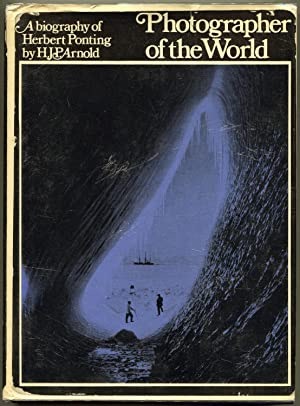
London, Hutchinson, 1st UK, 1969, Book: Very Good, Dust Jacket: Very Good, Hardcover with dust jacket. Black & white photos. Very small closed tear on spine of dust jacket. An account of his life and work. Ponting became the official photographer of Scott's second expedition to the South Pole. With 77 black and white photographs taken on his travels.
Hardcover. Nevada City CA, Carl Mautz Pub, 1st, 1998, Book: Very Good, Dust Jacket: Very Good, Black cloth. 126 pages illustrated by photographs and including an extensive bibliography and a directory of photographers. A typically well produced book from this publisher on the history of photography in the pioneer west as well as a scholarly effort. Both the book and jacket are bright, crisp and unworn.
Hardcover. Nevada City CA, Carl Mautz Pub, 1st, 1998, Book: Very Good, Dust Jacket: Very Good, Black cloth. 126 pages illustrated by photographs and including an extensive bibliography and a directory of photographers. A typically well produced book from this publisher on the history of photography in the pioneer west as well as a scholarly effort. Both the book and jacket are bright, crisp and unworn.
Hardcover. NY, Burns Archive Press, 1st, 2005, Book: Very Good, Dust Jacket: None, Hardcover in pictorial boards. Twenty-five photographs from the Burns Archive documenting conditions presented in the 19th century in what is now called podiatry; this selection emphasizing skin conditions in the lower extremities. Clean, bright copy.
Hardcover. New York, Burns Archive Press, 1st Edition, 2005, Book: Very Good, Dust Jacket: None, Hardcopies. (SIGNED) Domestic shipping only. Slipcase still has original mylar wrap (See image). 4 Volumes: Nonpagenated (SIGNED) In slipcase. The Face, 56 pages The Torso, 55 pages The Extremities, 57 pages The Back, 56 pages Limited to 5000 copies. Color, b/w and sepia illustrations throughout. Black, decorated cover boards in like new condition. Pages clean, binding tight, spines straight. Slipcase fine.
Softcover. Paris, Musee de la Vie Romantique, 1st, 2001, Book: Very Good, Dust Jacket: None, 143 pages. Softcover. A very clean, unmarked copy with only minor edgewear. Black and white photographs throughout. French text.
Hardcover. NY, Knopf, 2nd pr., 1991, Book: Very Good, Dust Jacket: Very Good, Hardcover, 170 Black & white photos., 244 pages + index. Remainder mark top edge. Top corner bumped. Illustrated with sepia-toned photographs throughout. Reproduced here for the first time are 170 images of everyday life in Montana from the 1890s through the 1920s. Included are photos of workers in the wheat fields, cattle ranchers, sheepherders, families in front of one room dwellings, wildlife, landscapes, town scenes, etc.
Hardcover. London, Thames and Hudson, 1st, 1989, Book: Very Good, Dust Jacket: Very Good, Hardcover in a bright dust jacket, green cloth, gilt lettering, 144 pages. Discovered in Paris in 1987, these 80 color and 30 b&w photographs, taken about 1910-14, are artistic studies of the expressionist Russian writer, his family and friends, his home, and the countryside around St. Petersburg. Includes a biographical essay and a review of the Lumiere autochrome photographic process. Mild wear to top of dj spine, otherwise a clean, tight copy.
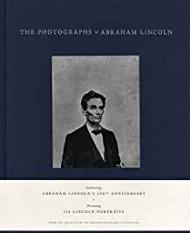
Hardcover. Germany, Steidl, 1st, 2015, Book: Very Good, Dust Jacket: None, 288 pages. Hardcover with no dust jacket. Very clean, unmarked copy still in publishers shrink-wrap. Photographs of President Abraham Lincoln spanning over 20 years. Tight copy.
Softcover. Washington, D.C., Library of Congress, 1st, 2011, Book: Very Good, Dust Jacket: None, 51 pages. Softcover. Extensive b&w photographs by Arthur Rothstein throughout. Clean, unmarked copy with only minor wear to wrappers.
Softcover. Washington, D.C., Library of Congress, 1st, 2011, Book: Very Good, Dust Jacket: None, 51 pages. Hardcover. Extensive b&w photographs throughout by Carl Mydans throughout. Clean, unmarked copy with only minor wear to wrappers.
Hardcover. Gottingen GR, Steidl, 1st, 2011, Book: Very Good, Dust Jacket: None, Hardcover, 412 pages without dust jacket. Like new in publisher's shrink-wrap. Seydou Keita was born in Bamako, Mali in 1921, then part of the colony of French Sudan and a bustling transportation hub on the route to Dakar. With a Kodak Brownie given to him by his uncle, Keita took up photography at the age of fourteen, going on to establish what would become Bamako's most successful portraiture enterprise of the 1950s and 60s. Photographs, Bamako, Mali 1949-1970 draws on an expanded archive to offer over 400 portraits, mostly unpublished, from the height of the photographer's productivity in downtown Bamako. Providing lushly patterned backdrops and props that now serve to date distinct periods in his career, the artist often styled his subjects but also encouraged their active participation, hanging sample portraits around the studio as inspiration. Migratory youth, government officials, shop owners and Bamako's cultural elite all make appearances here, and while Keita's photographs served as both family record and cultural status symbol for the clients who commissioned them, these images have become a lasting visual record of Mali at that time. DUE TO WEIGHT, DOMESTIC SHIPPING ONLY.
Hardcover. Montreal, Canada, Canadian Centre for Architecture, 1st, 1982, Book: Very Good, Dust Jacket: Very Good, 282 pages. Hardcover. B/w illustrations throughout. Dust jacket front flap price clipped. Tan colored fabric covered. Clean copy, Dust jacket shows some light age wear. From the front flap: "...presents works that show aspects of the history of architecture seen through photography and the history of photography through architecture."
Softcover. Bristol UK, Intellect, 1st, 2012, Book: Very Good, Dust Jacket: None, Softcover, 255 pages. With a focus on the settler societies of the United States and Australia, Photography and Landscape is a new critical account of landscape photography created through a unique collaboration between a photography writer and a landscape photographer. Beginning with the frontier days of the American West, the subsequent century-long popularity of landscape photography is exemplified by images from Carleton Watkins to Ansel Adams, the New Topographics to Richard Misrach, all of whose works are considered here. Along with discussions of other contemporary photographers, this extensively illustrated volume demonstrates the influence of settler societies on landscape photography, in which skilled photographers captured the fascination with and the appeal of the land and its expanse. Clean copy.
Hardcover. New York, Harry N. Abrams, 1st thus, 1986, Book: Very Good, Dust Jacket: Very Good, 272 pages. Hardcover with dust jacket. Clean, tight copy. Photographs throughout. Spine lightly faded. Photographs portray the actual way of life of the pioneers who settled the American West in the years after the Civil War.
Hardcover. US, The MIT Press, 1st, 2000, Book: Very Good, Dust Jacket: Very Good, Like new in publisher's shrink-wrap. Remainder mark on top page block. Boston played a crucial role in the development of American photography, including criticism, collecting, and curating, in the second half of the twentieth century. This book accompanies a landmark exhibition at the DeCordova Museum that includes such important American artists as Berenice Abbott, Harry Callahan, Paul Caponigro, Marie Cosindas, Harold Edgerton, Nan Goldin, Jerome Liebling, Nicholas Nixon, Barbara Norfleet, Olivia Parker, Rosamond Purcell, Aaron Siskind, and Minor White.The period from 1955 to 1985 reflects photography's acceptance as an art form, the influence of modernism, and the coalescence of a unique constellation of educational institutions, museums, and technological development in the Boston area that directly influenced artistic options for photography. Minor White's arrival at the Massachusetts Institute of Technology in 1965 to run the Center for Creative Photography and the Polaroid Corporation's innovative support of photographic art suggest how developments built upon one another to create a regional critical mass in photography.The book contains twenty-five color plates, sixty duotones, and essays by A. D. Coleman, Rachel Rosenfield Lafo, Arno Rafael Minkkinen, and Kim Sichel.
Hardcover. US, The MIT Press, Book: Very Good, Dust Jacket: Very Good, Like new in publisher's shrink-wrap. Remainder mark on top page block. Boston played a crucial role in the development of American photography, including criticism, collecting, and curating, in the second half of the twentieth century. This book accompanies a landmark exhibition at the DeCordova Museum that includes such important American artists as Berenice Abbott, Harry Callahan, Paul Caponigro, Marie Cosindas, Harold Edgerton, Nan Goldin, Jerome Liebling, Nicholas Nixon, Barbara Norfleet, Olivia Parker, Rosamond Purcell, Aaron Siskind, and Minor White.The period from 1955 to 1985 reflects photography's acceptance as an art form, the influence of modernism, and the coalescence of a unique constellation of educational institutions, museums, and technological development in the Boston area that directly influenced artistic options for photography. Minor White's arrival at the Massachusetts Institute of Technology in 1965 to run the Center for Creative Photography and the Polaroid Corporation's innovative support of photographic art suggest how developments built upon one another to create a regional critical mass in photography.The book contains twenty-five color plates, sixty duotones, and essays by A. D. Coleman, Rachel Rosenfield Lafo, Arno Rafael Minkkinen, and Kim Sichel.
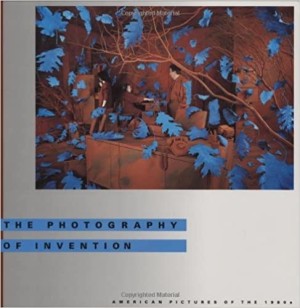
Hardcover. Cambridge, MA, MIT Press, 1st, Book: Very Good, Dust Jacket: Very Good, Hardcover, 208 pages. Pictures that are made, not taken, are the focus of this exciting collection of works by 90 American artists who are using appropriation, computer technology, performance, and numerous other sources of inspiration to stretch the limits and expand the possibilities of photographic art. "Perhaps in the future," Man Ray suggested to Duchamp, "photography would replace all art." The Photography of Invention hints at that future by documenting a decade of startling new work in American photography: work that challenges the accepted hierarchy of the arts and, arguably, establishes photography as the equal of the other arts. Pictures that are made, not taken, are the focus of this exciting collection of works by 90 American artists who are using appropriation, computer technology, performance, and numerous other sources of inspiration to stretch the limits and expand the possibilities of photographic art. The selection of nontraditional pictures includes works by some of the decade's most interesting experimenters-Cindy Sherman, Sherrie Levine, Richard Prince, Barbara Kruger, William Christenberry, Louise Lawler, Stefan Roloff, and others who create or manipulate the subject photographed.
Softcover. NY/London, Routledge, reprint, 2007, Book: Very Good, Dust Jacket: None, Softcover, 470 pages. Forty of the world's most active art historians and theorists, including Victor Burgin, Joel Snyder, Rosalind Krauss, Alan Trachtenberg, Geoffrey Batchen, Carol Squiers, Margaret Iversen and Abigail Solomon-Godeau in animated debate on the nature of photography. Photography has been around for nearly two centuries, but we are no closer to understanding what it is. For some people, a photograph is an optically accurate impression of the world, for others, it is mainly a way of remembering people and places. Some view it as a sign of bourgeois life, a kind of addiction of the middle class, whilst others see it as a troublesome interloper that has confused people's ideas of reality and fine art to the point that they have difficulty even defining what a photograph is. For some, the whole question of finding photography's nature is itself misguided from the beginning. This provocative second volume in the Routledge The Art Seminar series presents not one but many answers to the question what makes a photograph a photograph? Clean copy.
Hardcover. Princeton University Press, 1st, 1997, Book: Very Good, Dust Jacket: Very Good, Hardcover, 208 pages. The Victoria and Albert Museum (V&A) has one of the finest and oldest collections of photography in the world. In this fascinating book, Mark Haworth-Booth, Curator of Photographs at the V&A, offers the first comprehensive introduction to this extensive and impressive collection. In the process, he provides the reader with a general history of photography from its beginnings as a scientific curiosity, through its international commercialization, to its coming of age as an art form in its own right. The V&A's Victorian holdings are outstanding, with major photographs by Roger Fenton, David Octavius Hill, Robert Adamson, Julia Margaret Cameron, Gustave Le Gray, Camille Silvy, and Lady Hawarden. In recent years, the museum has acquired significant works by such twentieth-century master photographers as Bill Brandt, Henri Cartier-Bresson, Paul Martin, Walker Evans, Paul Strand, Manuel Alvarez Bravo, and Cecil Beaton. A number of these photographs are published here for the first time
Softcover. Munich , Prestel, 1st, 2012, Book: Very Good, Dust Jacket: None, Softcover, 192 pages. Chronologically arranged, each chapter focuses on a particular work or idea that changed the course of photography. Presented in beautiful spreads and with informative text, the book opens with photography's genesis in the form of the camera obscura. Centuries later, Daguerre, Niepce, and Talbot invented their own means of capturing light on paper. The book covers groundbreaking genres such as still life, landscape, portraiture, and nudes. Sections on the role of photography in journalism illustrate how the camera's presence on battlefields, on city streets, and in factories helped inform and reform the modern world. Fashion, animals, Surrealism, and staged portraits are also explored. Perfect for perusing or reading from cover to cover, this book illustrates how photography developed from a concept to a world-changing force--one that attempted to shed light on truth yet can also obscure and alter reality in dazzling ways. Clean copy.
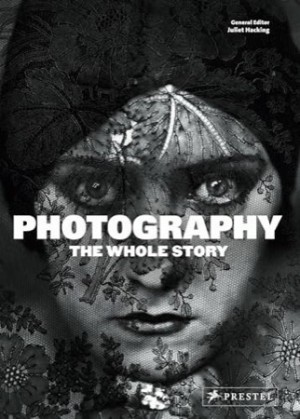
Hardcover. Prestel Publishing, 1st, Book: Very Good, Dust Jacket: Very Good, Hardcover in a bright dust jacket, 576 pages. Unlike many other artistic media, photographys origins are well documented, as are its ever-changing technologies and applications. Written by an international team of experts, this definitive history of photography looks at every step of the fields dynamic evolution, period by period and movement by movement. Each key genre is chronologically presented within its social, economic, and political context, along with close analysis of specially selected works that best exemplify the characteristics of the period. With more than 500 gorgeous examples in black and white and color, the book explores in-depth virtually every aspect of the medium since its first public demonstration in 1839 to the latest innovations: from early portraits and the birth of photojournalism to travel photography and the mapping of the world; from the Pictorialists to the avant-garde; from celebrity and fashion to documentary and landscape. Along the way readers will learn why some photographs are considered iconic, and why the medium as an art form continues to challenge and enthrall us. DUE TO WEIGHT, DOMESTIC SHIPPING ONLY.
Hardcover. NY, Arno Press, reprint, 1977, Book: Very Good, Dust Jacket: None, Hardcover, green cloth with silver lettering on spine and front cover, A facsimile reprint of the corrected 1716 4th edition published in London. Sixteen sermons with notes and observations. Name on front fly leaf otherwise a clean, bright copy.
Hardcover. NY, Farrar Straus & Giroux, 1st US, 2023, Book: Very Good, Dust Jacket: Very Good, Hardcover in a bright, unclipped dust jacket, 588 pages, several color plates. Before Picasso became Picasso-the iconic artist now celebrated as one of France's leading figures-he was constantly surveilled by the French police. Amid political tensions in the spring of 1901, he was flagged as an anarchist by the security services-the first of many entries in an extensive case file. Though he soon emerged as the leader of the cubist avant-garde, and became increasingly wealthy as his reputation grew worldwide, Picasso's art was largely excluded from public collections in France for the next four decades. The genius who conceived Guernica in 1937 as a visceral statement against fascism was even denied French citizenship three years later, on the eve of the Nazi occupation. In a country where the police and the conservative Academie des Beaux-Arts represented two major pillars of the establishment at the time, Picasso faced a triple stigma-as a foreigner, a political radical, and an avant-garde artist. Picasso the Foreigner approaches the artist's career and art from an entirely new angle, making extensive use of fascinating and long-overlooked archival sources. In this groundbreaking narrative, Picasso emerges as an artist ahead of his time not only aesthetically but politically, one who ignored national modes in favor of contemporary cosmopolitan forms. Remainder dot to top edge, otherwise a bright, clean copy.
Hardcover. Philadelphia, W.A. Leary & Co., 1853, Book: Good, Dust Jacket: None, 588 pages w/ appendix. Brown leather w/ raised bands on spine, outlined in gilding. Spine cracking and worn. Edge wear. Colorful marbled end pages. Engraving of G. Washington pictured on frontispiece. Inscription in pencil on prelim page dated 1954. Blue design on top/bottom/sides of pages. Corners of boards have gilt design. B/W sketches throughout. Some tissue guards.
Hardcover. NY, Rizzoli, 1st, 1996, Book: Very Good, Dust Jacket: Very Good, Hardcover, 208 pages. Pictorial photography is noted for its artistic expressiveness, careful design and composition, and muted focus. In 1914 Clarence White (1871-1925) left Alfred Stieglitz's Photo-Secession group, abandoned his ambitions to be a photographic illustrator, and opened the Manhatten-based Clarence H. White School of Photography. Lecturers at his school included Stieglitz, Paul Strand, and Edward Steichen. White's unique teaching skills, especially his encouragement of women students, nurtured the careers of such talented photographers as Margaret Bourke-White, Laura Gilpin, and Dorothea Lange. Presented by the Detroit Institute of Arts and the George Eastman House, this companion volume for a traveling exhibition contains the elegant photographic imagery of White and his students. The clear text by two photography curators imparts how the revered teacher's romantic pictorialism became the foundation for the student's avant-garde modernism. By far the most substantial review of White's work and influence in print.
Softcover. New York, Citadel Press, 1st Thus, 1991, Book: Good, Dust Jacket: None, Softcover, oblong format, 158 pages. Illustrated with black & white photographs. Diagonal crease across lower left corner of back cover. Clean, tight copy.
Softcover. Washington DC, Smithsonian Institute, 1st, 1981, Book: Very Good, Dust Jacket: None, Softcover, 95 pages, b&w illustrations. Originally conceived to accompany the exhibition, Photographs from the National Portrait Gallery. Presents the development of photography accompanied by portraits illustrating various photographic techniques. Includes suggestions for organizing and maintaining a collection of prints. Clean copy.
Hardcover. NY, Charles Scribner's Sons, 1st, 1947, Book: Very Good, Dust Jacket: Very Good, Hardcover in a lightly worn, unclipped dust jacket. 308 pages with 393 b&w photographs, endpapers map. As proclaimed on the dust jacket: "This volume, carefully prepared under the direction of the Picture Maker's son, Mr. C. S. Jackson, contains an unrivaled pictorial record which can never be duplicated. It was created by a great artist and photographer who himself played a part in the opening of the frontier country." A truly wonderful work-attractive and informative. "A" On Copyright Page. Light bump to top corner of text block causing a mild crimp to pages at corner. Otherwise very good.
Softcover. Durham NC, Duke University Press, 2012, Book: Very Good, Dust Jacket: None, Softcover, 387 pages. Pictures and Progress explores how, during the nineteenth century and the early twentieth, prominent African American intellectuals and activists understood photography's power to shape perceptions about race and employed the new medium in their quest for social and political justice. They sought both to counter widely circulating racist imagery and to use self-representation as a means of empowerment. In this collection of essays, scholars from various disciplines consider figures including Frederick Douglass, Sojourner Truth, Ida B. Wells, Paul Laurence Dunbar, and W. E. B. Du Bois as important and innovative theorists and practitioners of photography. In addition, brief interpretive essays, or "snapshots," highlight and analyze the work of four early African American photographers. Featuring more than seventy images, Pictures and Progress brings to light the wide-ranging practices of early African American photography, as well as the effects of photography on racialized thinking. Still in publisher's shrinkwrap.
Softcover. NY, The Museum of Modern Art, 1st, 2002, Book: Very Good, Dust Jacket: None, Softcover, 192 pages. Selected from 17 million prints preserved in the archives of The New York Times, the spectacular photographs in this book provide a spellbinding sample from the rich archive that is the twentieth century, as seen through the eyes of a great newspaper. Revealed is the extraordinary and omnivorous breadth of photography's gaze: vivid pictures of both World Wars; of presidents, mayors, dictators and celebrities; of Beatles fans and Halley's comet; of victims and perpetrators, riots and disasters; of Bill Bradley on the court and Willie Mays sliding into home--and a great many more. Underlying them all is the gripping immediacy that makes news photography not only an indispensable presence in the daily paper but a vital part of history. This book includes an illustrated chronology that traces the evolution of the technology and business of news photography, with special attention to the role of The New York Times and to the recent rise of digital technologies in newspaper production. Originally published to accompany an exhibition at The Museum of Modern Art, New York.
Hardcover. NY, Charles Scribner's Sons, 1st, 1978, Book: Very Good, Dust Jacket: Very Good, Hardcover in a bright dust jacket with light edgewear. Introduction by Richard Burton. An in depth look at the career and films of Joseph Mankiewicz whose career spanned nearly half a century. His credits include such classics as The Philadelphia Story; A Letter to Three Wives; All About Eve, and Five Fingers. 443 pages, b&w photos. Clean copy.
Hardcover. NY, William Edwin Rudge, 1st, 1930, Book: Good, Dust Jacket: None, Hardcover, red cloth, 46 pages + 51 b&w plates (color frontispiece). Russian artist and diplomatic secretary Paul or Pavel Svinin (1787-1839) toured the northeastern United States in the early 1800s. Here are excerpts of his notes, details about the time and his trip, and 51 BW reproductions of landscapes he rendered along the way. Most of the paintings show scenes from Pennsylvania, New York, New Jersey, Virginia and Maryland. Of interest to both cultural and art historians. With an introduction by R.T.H. Halsey. One of 1000 copies. Ex-lib with stamping, residue to endpapers, gilt lettering on spine faded, otherwise clean.
Hardcover. US, Univ of New Mexico Press, 1st, 1995-10-01, Book: Very Good, Dust Jacket: Very Good, 227 pages. Minor edgewear to dust jacket, else a clean, tight copy. A in depth study of the exhibition held at the Museum of Modern Art in 1955, and its influence, with a final chapter on "Edward Steichen, Robert Frank and American Modernism".
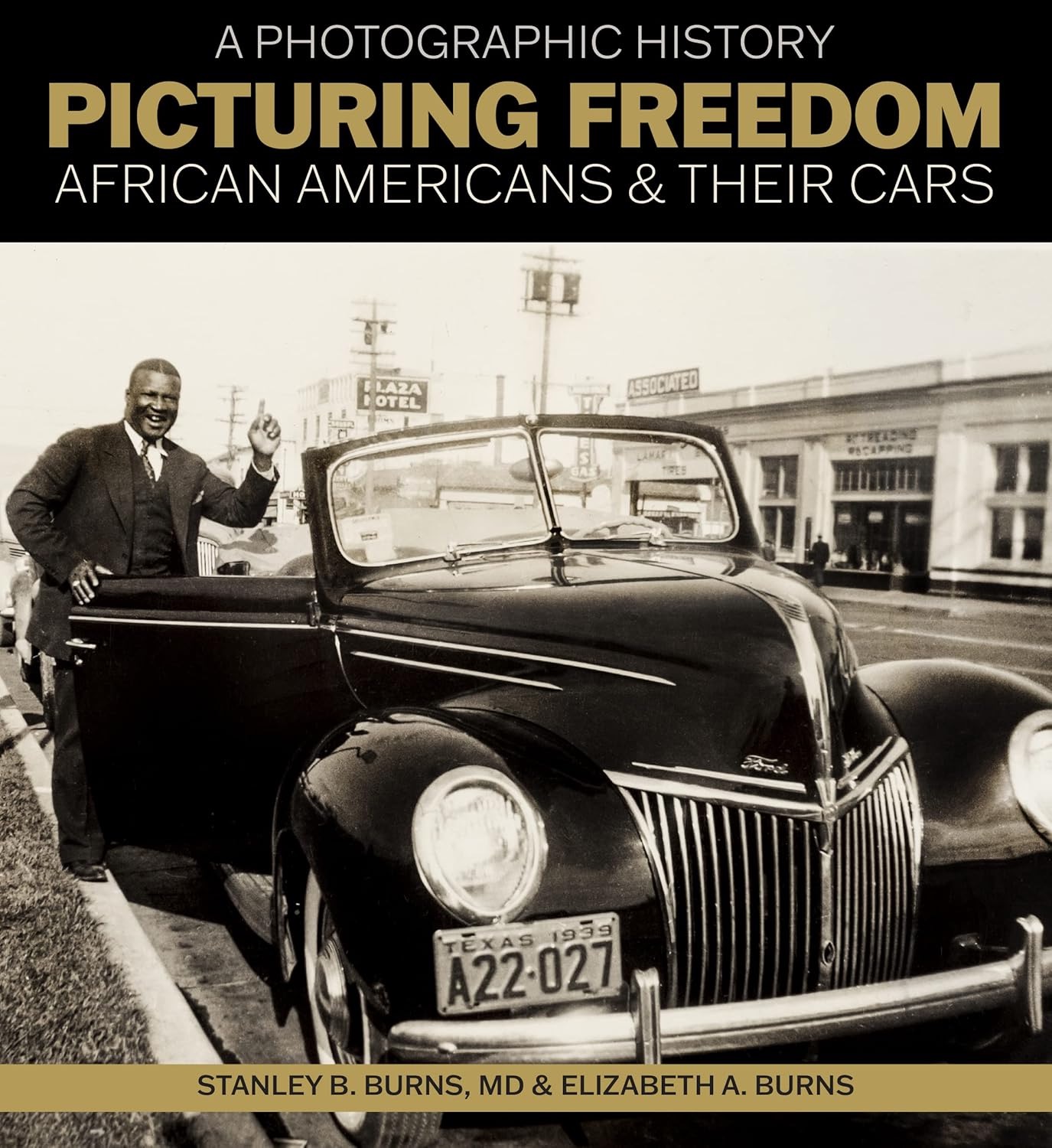
Softcover. NY, Burns Archive Press, 1st, 2022, Book: Very Good, Dust Jacket: None, Softcover, 272 pages. SIGNED BY STANLEY BURNS on title page. Picturing Freedom chronicles and celebrates the photographic history of African Americans and their cars by focusing on personal images of the pride and joy of car ownership (1900-1980+). Owning a car was a significant life-changing achievement. It offered special freedoms--the freedom to travel, the freedom to work further from home, the freedom to visit family and friends, the freedom to avoid Jim Crow laws, and the freedom to migrate. The car was unequivocal evidence of Black success and an important symbol of status in a country that had long fought their advancement in every area. Car ownership was purposely and proudly photographed. All of the photographs were taken in Black communities by a family member or a friend and reveal how African Americans represented themselves. This 2022 IPPY award-winning compilation of over 450 unique photographs is an inspiring visual narrative of American life. Clean, bright copy.
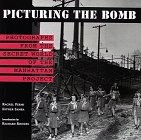
Hardcover. NY, Harry N Abrams, 1st, 1995, Book: Very Good, Dust Jacket: Very Good, Hardcover in a bright dust jacket, 232 pages. The first photographic record of the Manhattan Project--the U.S. Government-sponsored effort to build an atomic bomb. With an introduction by Richard Rhodes. The granddaughter of Enrico Fermi, a key participant in the Manhattan Project, presents a pictorial survey of the making of the atomic bomb, containing many never-before-published photographs and snapshots of the many aspects of the Project.Illustrated with over 100 B&W photographs, some color. Clean copy. DOMESTIC SHIPPING ONLY.
Softcover. Durham NC, Historic Preservation Society of Durham, reprint, 2001, Book: Good, Dust Jacket: None, Softcover, 229 pages, mild shelf wear. Piedmont Plantation tells the history of a unique plantation complex in North Carolina and of the Bennehan and Cameron families that owned and developed it. The narrative covers one hundred and fifty years and is based primarily on research in the many thousands of family papers deposited in the Southern Historical Collection at the University of North Carolina at Chapel Hill. Interwoven with the family history of four generations are descriptions of their slaves and overseers and of the buildings they erected and lived or worked in, all correlated with the agricultural enterprise that underpinned this 30,000-acre domain. Carefully researched, Piedmont Plantation will appeal to the specialist and general reader alike. Scholars looking for primary material will discover here much useful information as well as guideposts to additional sources. Originally published in hardcover in 1985. Clean copy.
Hardcover. Florence, Italy, Cantini, 1st, 1989, Book: Very Good, Dust Jacket: Very Good, 271 pages. Hardcover with dust jacket in SLIPCASE cover. ITALIAN TEXT. Color pictures. Previous owner's bookplate on end paper, otherwise clean, unmarked copy with only minor wear to dust jacket. Slipcase has some tape repair on bottom edge. Red cloth covers with gilt lettering on spine.
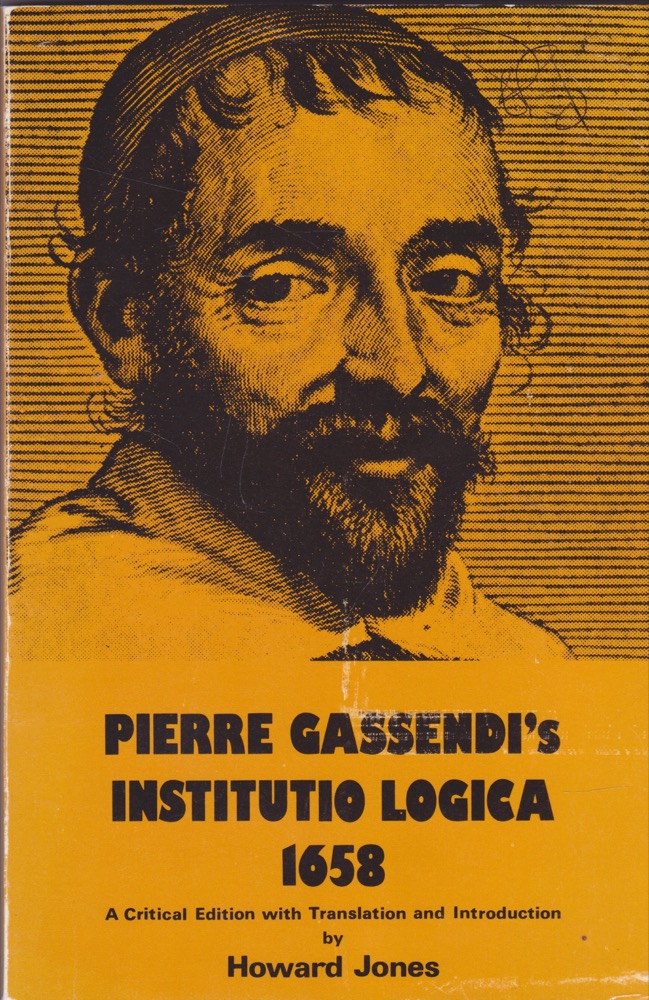
Hardcover. Cambridge UK, Cambridge University Press , 1st, 2007, Book: Very Good, Dust Jacket: Very Good, Hardcover in a bright dust jacket, 283 pages. This book offers a comprehensive treatment of the philosophical system of the seventeenth-century philosopher Pierre Gassendi. Gassendi's importance is widely recognized and is essential for understanding early modern philosophers and scientists such as Locke, Leibniz and Newton. Offering a systematic overview of his contributions, LoLordo situates Gassendi's views within the context of sixteenth- and early seventeenth-century natural philosophy as represented by a variety of intellectual traditions, including scholastic Aristotelianism, Renaissance Neo-Platonism, and the emerging mechanical philosophy. LoLordo's work will be essential reading for historians of early modern philosophy and science. Name on front fly leaf, otherwise clean.
Softcover. Netherlands, Van Gorcum, 1st, 1981, Book: Very Good, Dust Jacket: None, Softcover, pictorial wraps, 172 pages. Name on front fly leaf, otherwise clean.
Hardcover. NY, Macmillan Company, 1st US, 1969, Book: Very Good, Dust Jacket: Very Good, Hardcover in a bright, unclipped dust jacket, 461 pages. Laval began his career as a socialist, but over time drifted far to the right. Following France's defeat and armistice with Germany in 1940, he served in prominent roles in Philippe Petain's Vichy Regime, first as the vice-president of the Council of Ministers from 11 July 1940 to 13 December 1940, and later as the head of government from 18 April 1942 to 20 August 1944. After the liberation of France in 1944, Laval was arrested by the French government under General Charles de Gaulle. In what was widely regarded as a flawed trial, Laval was found guilty of plotting against the security of the State and collaboration with the enemy, and after a thwarted suicide attempt, he was executed by firing squad. His manifold political activities left a complicated and controversial legacy, resulting in more than a dozen conflicting biographies of him. Name on front fly leaf, otherwise a bright, clean copy.
Hardcover. New Haven CT, Yale University Press, 1st, 1998, Book: Very Good, Dust Jacket: Very Good, Hardcover in a bright dust jacket, 183 pages. This beautiful book examines the art of Pieter de Hooch, one of the most famous and innovative painters of Holland's Golden Age. It discusses de Hooch's position in Dutch genre painting, his favorite themes and their cultural context, his artistic development, and his approach to narration. The book was the catalogue for an exhibition at the Wadsworth Atheneum in Hartford. A 75-page text covering the artist's life and techniques and themes of his work is followed by nearly 100 pages presenting plates of works in the show; eight entries bring the catalog raisonne up to date. Sutton has achieved the rare feat of creating a work that is both a significant addition to scholarship and a reader-friendly introduction for those not already familiar with the artist. Clean copy.
Hardcover. New York, Macmillan Company, 1st Edition, 1918, Book: Very Good, Dust Jacket: None, 310 pages including publisher advertisements. B/w illustrations throughout, including frontispiece. Decorated ribbon bookmark, no longer attached, but laid in. Black cloth cover boards, gilight title on spine. Tanning to pages and edges, otherwise unmarked.
Hardcover. New York, William Morrow and Company, Inc., 1st, 1994, Book: Very Good, Dust Jacket: Very Good, 128 pages. Hardcover. Color and b/w illustrations throughout. Dust jacket unclipped. Gilt title on spine. Dust jacket has a little bit of chipping at top of spine, patched with tape. Otherwise great. Clean and unmarked inside. Gilt endpapers.
Hardcover. New York, Neale Publishing Co., 1st, 1914, Book: Very Good, Dust Jacket: None, Hardcover, 324 pages, dark blue cloth with gilt lettering on spine. An account of a Civil War battle fought in Missouri. Tight, clean copy.
Hardcover. New York, McGraw-Hill, 2nd, 1986, Book: Very Good, Dust Jacket: Very Good, 298 pages. Hardcover with dust jacket. Clean, unmarked copy with only minor wear to dust jacket. Black and white pictures throughout. ames Oberg (Red Star in Orbit, Mission to Mars, etc.) is a spaceflight engineer at Houston Mission Control; Alcestis Oberg is the author of Spacefarers of the 80s and 90s. Here they offer an engrossing and vivid account of what life is like in an earth-orbiting spacecraft. Because relatively few American space-travelers have published tales of their experiences, the Obergs lean heavily on the diaries and memoirspublished in Russia and little known hereof pioneering Soviet astronauts, notably veterans of long-term Salyut missions like Ryumin and Berezovoy. Here is the human side of life in orbit. Few readers can fail to be grippedand occasionally amusedby revelations of the immediate problems (how astronauts contend with toilets, hygiene, sleeping), their technical perils (e.g., air contamination) and the psychological hazards they face, from crewmate incompatibility to depression and homesickness for Earth. Photos.

 "Photo Opby: Kennerly, David Hume")



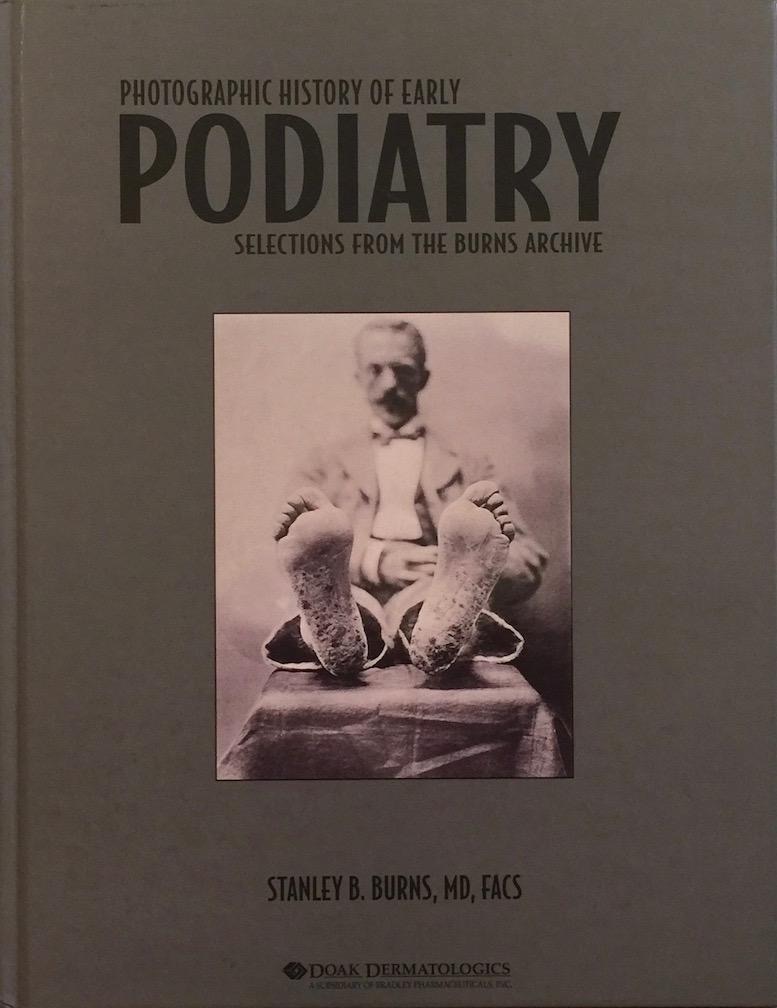
 "Photographic History of Nineteenth Century Dermatology:Selections From the Burns Archive (SIGNED)by: Burns, MD, FACS, Stanley B.")


 "Photographing Montana 1894-1928 - The Life and Work of Evelyn Cameronby: Lucey, Donna M.")
 "Photographs by a Russian Writer Leonid Andreyev: An Undiscovered Portrait of Pre-Revolutionary Russiaby: Andreyev, Leonid / Davies, Richard")



 "Photographs of Carl Mydans, Theby: Mydans, Carl")
 "PHOTOGRAPHS, BAMAKO, MALI, 1948-1963by: Keita, Seydou")
 "Photography and Architecture 1839-1939by: Pare, Richard")




 "Photography: The Groundbreaking Momentsby: Florian Heine")




 "Picture It! Smithsonian Institution Traveling Exhibition Service by: Stapp William F. and Marjorie L. Share")
 "Picture Maker of the Old West: William H. Jacksonby: Jackson, Clarence S.")


 "Pictures and Progress: Early Photography and the Making of African American Identity by: Wallace, Maurice O. & Smith, Shawn Michelle (Editors)")
 "Pictures of the Times: A Century of Photography from The New York Timesby: Safire, William/ Peter Galassi, Susan Kismaric")
 "Pictures Will Talk: The Life and Films of Joseph L. Mankiewiczby: Kenneth L Geist")

 "Picturing an Exhibition: The Family of Man and 1950s Americaby: Sandeen, Eric J.")




 "Pieter de Hooch, 1629-1684 by: Sutton, Peter")





)
)