1977, Book: Very Good, Color art by Mihaesco of long lines outside cinema. 8 3/4 X 12", very good. PLEASE NOTE: The image shown is a scan of the actual product you are purchasing. What you see is what you get. The sheet may have some imperfections beyond the cropped area shown. You are buying THE COVER ONLY- not the entire magazine. Your order will be placed carefully between stiff paper in clear plastic envelope, then packed in a rigid cardboard sleeve to prevent bending.
1975, Book: Very Good, Color art by Saxon of a hip 70s crowd waiting in a movie lobby for the feature to start. 8 3/4 X 12", very good. PLEASE NOTE: The image shown is a scan of the actual product you are purchasing. What you see is what you get. The sheet may have some imperfections beyond the cropped area shown. You are buying THE COVER ONLY- not the entire magazine. Your order will be placed carefully between stiff paper in clear plastic envelope, then packed in a rigid cardboard sleeve to prevent bending.
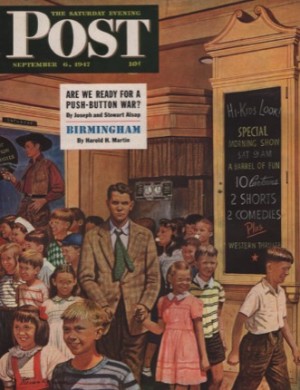
1947, Color art of disgruntled father leaving Saturday morning matinee with kids. Painting by Stevan Dohanos. 10 X 13", very good. PLEASE NOTE: The image shown is a scan of the actual product you are purchasing. What you see is what you get. The sheet may have some imperfections beyond the cropped area shown. You are buying THIS PAGE ONLY- not the entire magazine. Your order will be placed carefully between stiff paper and an acetate overlay, then packed in a rigid cardboard sleeve to prevent bending.
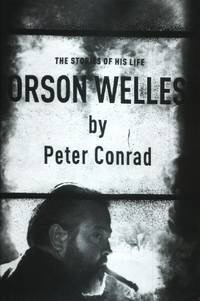
London, Faber & Faber, 1st, 2003, Book: Very Good, Dust Jacket: Very Good, Hardcover in a bright, unclipped dust jacket, 384 pages. Orson Welles was a metamorphic man, a magical shape-changer who made up myths about himself and permitted others to add to their store. On different occasions, he likened himself to Christ--mankind's redeemer--and to Lucifer--the rebel angel who brought about the fall. His persona compounded the roles he played--kings, despots, generals, captains of industry, autocratic film directors--and the more or less fictitious exploits with which he regaled other people or which they attributed to him. Hailed in childhood as a genius, he remained mystified by his own promise, unable to understand or control an intellect that he came to think of as a curse; and he ended his days shilling wine and performing magic tricks on talk shows. At times, he saw the collapse of his early ambitions as a tragedy; in other moods, he viewed his life as a humbling comedy, and settled down--like another favorite character, Shakespeare's Falstaff --to eat, drink and be irresponsibly merry. Rather than producing another conventional biography of Welles, Peter Conrad has set out to investigate the stories Welles told about his life--the myths and secret histories hidden in films both made and unmade, in the books Welles wrote and those he read. The result takes us deep into Welles' imagination, showing how he created, then ultimately destroyed himself. Clean copy.
Hardcover. NY, Atlantic Monthly Press, 1st, 1988, Book: Very Good, Dust Jacket: Very Good, Hardcover, 101 pages. Black & white photos of Hollywood in the 1980s. Introduction by Bret Easton Ellis.
Hardcover. New York, Abbeville Press, 1st, 1985, Dust Jacket: Near Fine, 228 pages. Pink cloth covered hardcover with gray lettering on spine. Square quarto. B/W and color plates. a romantic and nostalgic look back at the fabulous nightclubs and palaces of entertainment that lined the Hollywood hills and spread across California's Southland in the heyday of the film capital, from 1915 to 1945. Clean, bright copy.
Softcover. NY, Harry N. Abrams, 1st, 2003, Book: Very Good, Dust Jacket: None, Softcover, 160 pages. An entertaining collection celebrating the work of cutting-edge animation filmmakers features frame grabs, production stills, original artwork, behind-the-scenes photographs, and interviews from twenty-five years of teh Spike & Mike Festival of Animation, with works by Nick Park and Peter Lord of Aardman, John Lasseter, Craig McCracken, Mike Judge, and others.
Softcover. NY, Harry N. Abrams, 1st, 2003, Book: Very Good, Dust Jacket: None, Softcover, 160 pages. An entertaining collection celebrating the work of cutting-edge animation filmmakers features frame grabs, production stills, original artwork, behind-the-scenes photographs, and interviews from twenty-five years of teh Spike & Mike Festival of Animation, with works by Nick Park and Peter Lord of Aardman, John Lasseter, Craig McCracken, Mike Judge, and others.
Hardcover. NY, Assouline, 1st, 1998, Book: Very Good, Dust Jacket: Very Good, Hardcover, 80 pages. Photos from the Rome-based hunters of famous faces and celebrities in the 1960s who inspired Fellini's LA Dolce Vita.
Hardcover. NY, Hyperion, 2nd Ed., 2006, Book: Very Good, Dust Jacket: Very Good, Hardcover, 288 pages. Canemaker's second volume on Disney animation (his first was Before the Animation Begins, pub. 11/15/96) covers new territory. Focusing on the birth and progression of the storyboard method, the noted animator/historian explores both the history and the personalities of the Disney storyboard department. He takes readers from the early Disney days (when Walt created the storyboard to add depth and substance to the animated shorts the early studio produced) to today (when ever-changing teams of story specialists gather material and prepare sequence drawings before artists flesh out those Disney masterpieces). Along the way, Canemaker reveals the human effort required to bring an animated film to life and throws in juicy tidbits garnered from his interviews with animation pioneers. Lavish illustrations accompany the text. Recommended for larger public libraries and essential for collections in film and animation history.
Hardcover. NY, Hyperion, 2nd Ed., 2006, Book: Very Good, Dust Jacket: Very Good, Hardcover, 288 pages. Canemaker's second volume on Disney animation (his first was Before the Animation Begins, pub. 11/15/96) covers new territory. Focusing on the birth and progression of the storyboard method, the noted animator/historian explores both the history and the personalities of the Disney storyboard department. He takes readers from the early Disney days (when Walt created the storyboard to add depth and substance to the animated shorts the early studio produced) to today (when ever-changing teams of story specialists gather material and prepare sequence drawings before artists flesh out those Disney masterpieces). Along the way, Canemaker reveals the human effort required to bring an animated film to life and throws in juicy tidbits garnered from his interviews with animation pioneers. Lavish illustrations accompany the text. Recommended for larger public libraries and essential for collections in film and animation history.
Hardcover. NY, Disney Editions, 1st, 1999, Book: Very Good, Dust Jacket: Very Good, Hardcover in a bright dust jacket. Featuring the art and artists used to plan and map out Disney's many classic animated films, a collection of "storyboard" images offers a fascinating retrospective of the company's history of animation, from Snow White to The Hunchback of Notre Dame.
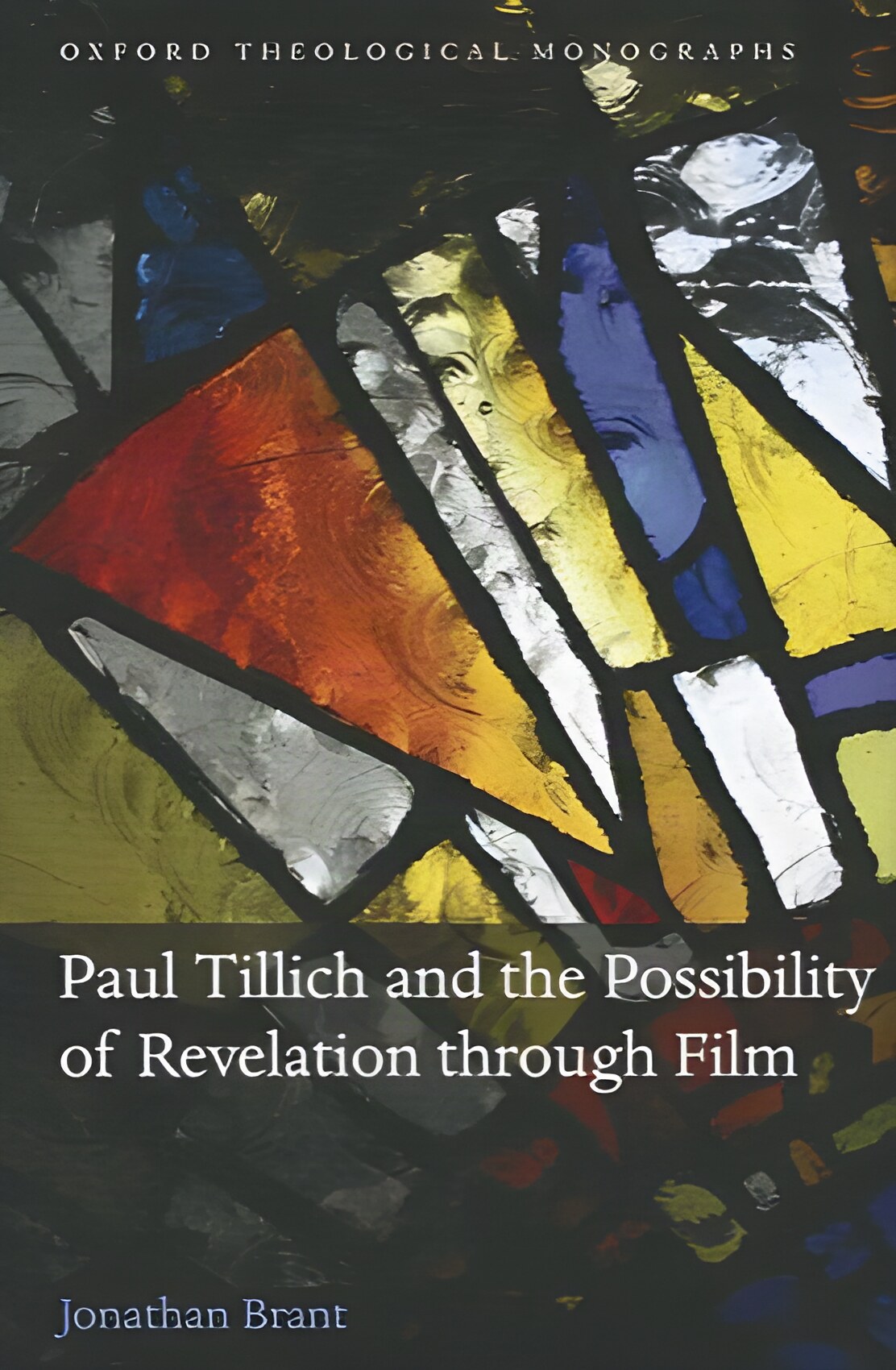
Hardcover. NY, Oxford University Press, 2nd pr., 2112, Book: Very Good, Dust Jacket: Very Good, Hardcover in a bright dust jacket, 270 pages. Since the birth of cinema at the end of the nineteenth century religion and film have been entwined. The Jesus-story and other religious narratives were the subject matter of some of the earliest cinema productions and this relationship has continued into the present. A recent proliferation of texts, conferences and courses bear witness to burgeoning academic interest in the relation between religion and film. In this study, Jonathan Brant explores the possibility that even films lacking religious subject matter might have a religious impact upon their viewers, the possibility of revelation through film. The book begins with a reading of Paul Tillich's theology of revelation through culture and continues with a qualitative research project which grounds this theoretical account in the experiences of a group of filmgoers. The empirical research takes place in Latin America where the intellectual puzzle and central research questions that drive the thesis arose and developed.
Softcover. Austin TX, University of Texas Press, reprint, 1982, Book: Very Good, Dust Jacket: None, Softcover, 260 pages, b&w photos. There have been very few directors in the history of Hollywood who have ever had as hard a time as Sam Peckinpah did. In a career that lasted only from 1961 to his death near the end of 1984, the man known (rather errantly) as Bloody Sam made only fourteen films--not exactly a large volume work. Despite this, however, and despite (or perhaps because of) his penchant for raising hell with studio heads and producers, Peckinpah was a never-a-dull-moment director. And when he wasn't doing that, he made himself a target for critics, both inside and outside of Hollywood, with his graphic and complex approaches to violence (his 1969 Western epic THE WILD BUNCH), while at the same time also numbering among his films two, largely non-violent gems in THE BALLAD OF CABLE HOGUE and JUNIOR BONNER that prove that the man was able to show sides of the human experience that didn't involve bullets or bloodshed.
Hardcover. Urbana IL, University of Illinois Press, 1st revised, 1997, Book: Very Good, Dust Jacket: Very Good, Hardcover in a bright dust jacket, 410 pages. The book that re-established Peckinpah's reputation--now thoroughly revised and updated! When critics hailed the 1995 re-release of Sam Peckinpah's masterpiece, The Wild Bunch, it was a recognition of Paul Seydor's earlier claim that this was a milestone in American film, perhaps the most important since Citizen Kane. Peckinpah: The Western Films first appeared in 1980, when the director's reputation was at low ebb. The book helped lead a generation of readers and filmgoers to a full and enduring appreciation of Peckinpah's landmark films, locating his work in the central tradition of American art that goes all the way back to Emerson, Hawthorne, and Melville. In addition to a new section on the personal significance of The Wild Bunch to Peckinpah, Seydor has added to this expanded, revised edition a complete account of the successful, but troubled, efforts to get a fully authorized director's cut released. He describes how an initial NC-17 rating of the film by the Motion Picture Association of America's ratings board nearly aborted the entire project. He also adds a great wealth of newly discovered biographical detail that has surfaced since the director's death and includes a new chapter on Noon Wine, credited with bringing Peckinpah's television work to a fitting resolution and preparing his way for The Wild Bunch. This edition stands alone in offering full treatment of all versions of Peckinpah's Westerns. It also includes discussion of all fourteen episodes of Peckinpah's television series, The Westerner, and a full description of the versions of Pat Garrett and Billy the Kid now (or formerly) in circulation, including an argument that the label "director's cut" on the version in release by Turner is misleading. Additionally, the book's final chapter has been substantially rewritten and now includes new information about Peckinpah's background and sources.
Hardcover. NY, Miramax/Hyperion, 1st, 1997, Book: Very Good, Dust Jacket: Very Good, Hardcover, 191 pages, in a bright, unclipped dust jacket.Profusely illustrated with black and white film stills. With a knowledgeable text by the director and film historian. Clean.
Hardcover. NY, Pantheon, 1st, 1997, Book: Very Good, Dust Jacket: Very Good, Hardcover in a bright, unclipped dust jacket, 470 pages. An unfinished novel by the murdered Italian author and filmmaker focuses on Carlo, a left-wing Italian Catholic working for the state-controlled oil company, a man who becomes obsessed with satisfying his perverse, insatiable sexual passions. Small remainder dot to bottom edge otherwise a clean copy of this now scarce book.
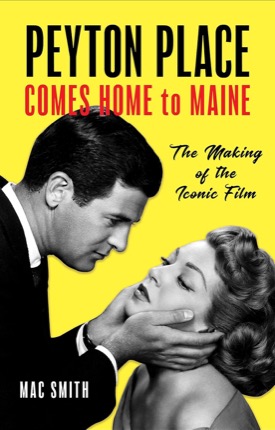
Hardcover. Down East Books, 1st, 2019, Book: Very Good, Dust Jacket: Very Good, Hardcover in a bright, unclipped dust jacket. 110 pages, b&w illustrations. It is a well-known fact, perhaps legend now, that Peyton Place, the controversial, scandalous blockbuster was filmed in Camden, Maine and the surrounding towns in 1957. But how did the movie come to be filmed in Maine, who was involved in getting it here, and what did the locals think about 20th Century Fox shooting a big-budget film in their front yards? Historian Mac Smith has done the research and conducted the interviews and presents a fascinating account of events and key players. Beginning with the arrival of film crews, he traces the making of the movie, what happened after the crews left, and the premiere of the film, which was held in Camden. Clean copy.
Hardcover. Chicago, Chicago Review Press, 1st, 2007, Book: Very Good, Dust Jacket: Very Good, Hardcover in a bright, unclipped dust jacket. 378 pages, b&w illustrations. Lanza looks at the life and work of director Ken Russell, detailing the wild ideas, surreal moments, personal faith, and the cavalcade of colorful personalities surrounding this eccentric filmaker, on and off the set. Clean copy.
Hardcover. Berlin, Guido Hackebeil, 1st, 1926, Book: Very Good, Dust Jacket: None, 344 pages plus tables, ads in rear. Red cloth spine, cream colored boards with light soil. A book on amateur film making, b&w illustrations, German text. AGFA has an ad in the back with actual film stills. Previous owner's bookplate, signature on front fly leaf, otherwise clean.
Hardcover. New York, Pace Wildenstein, 1st, 2007, Book: Very Good, Dust Jacket: Very Good, Hardcover, 188 pages. Illustrated in full color and black & white. Clean, bright copy.
Hardcover. New York, PaceWildenstein, 1st, 2007, Book: Very Good, Dust Jacket: Very Good, 187 pages. Hardcover with dust jacket. Sun fading to dust jacket spine and front cover. An otherwise very clean, unmarked copy with only minor wear to dust jacket edges. Color works throughout as well as black & white and color film stills. A tight copy.
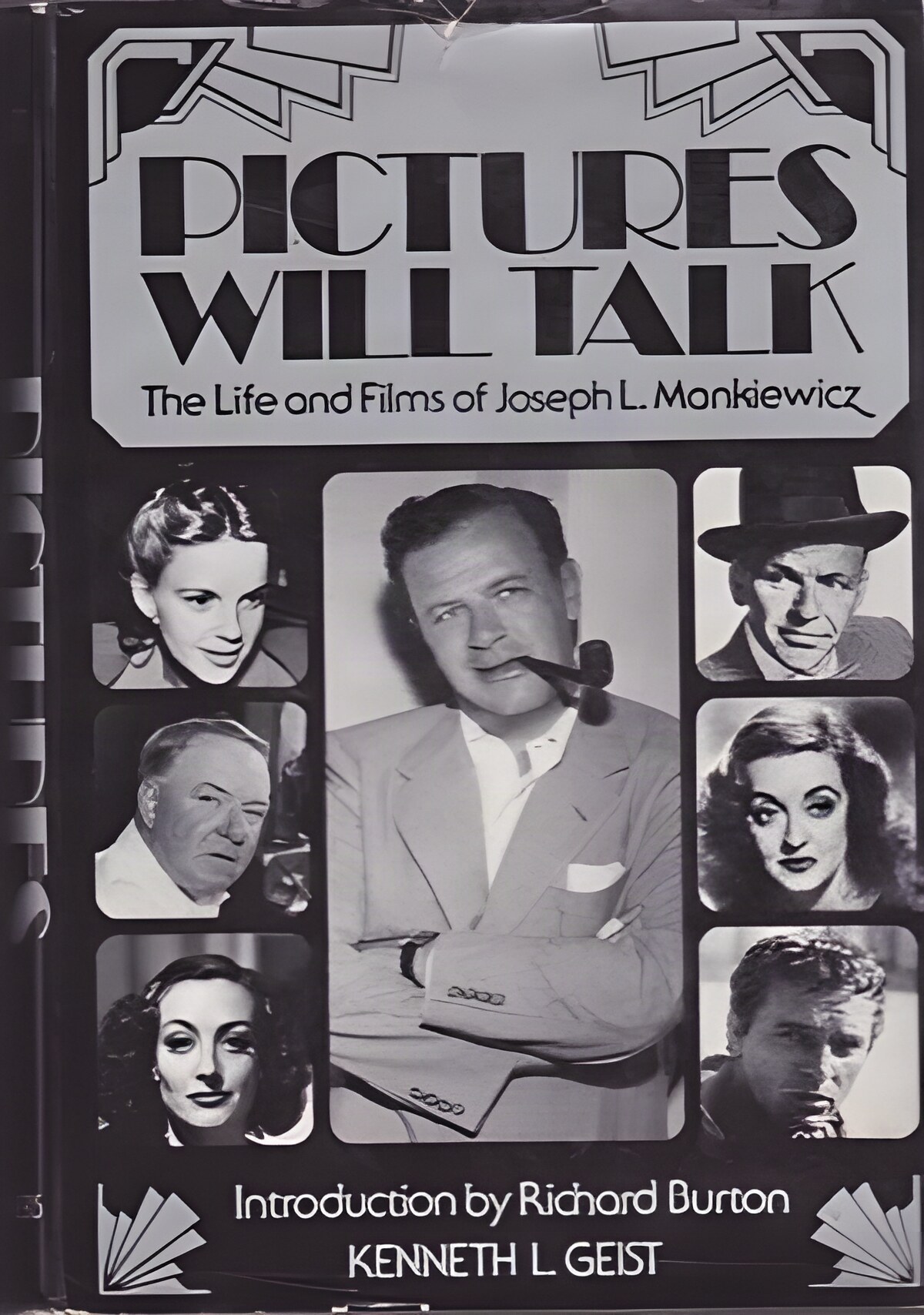
Hardcover. NY, Charles Scribner's Sons, 1st, 1978, Book: Very Good, Dust Jacket: Very Good, Hardcover in a bright dust jacket with light edgewear. Introduction by Richard Burton. An in depth look at the career and films of Joseph Mankiewicz whose career spanned nearly half a century. His credits include such classics as The Philadelphia Story; A Letter to Three Wives; All About Eve, and Five Fingers. 443 pages, b&w photos. Clean copy.
Hardcover. NY, Dorling Kindersley Publishers Ltd, 1st, 2005, Book: Very Good, Dust Jacket: Very Good, Hardcover. Celebrates every move the Pink Panther has ever made over the past forty years, from the original Pink Panther movie starring Peter Sellers and the long-running animated series to the movie starring Steve Martin, Beyonce Knowles, and Kevin Kline.

 "ORIGINAL VINTAGE MAGAZINE COVER: New Yorker June 6 1977 - Long lines at movie theatreby: Eugene Mihaesco (Illust.)")
 "ORIGINAL VINTAGE MAGAZINE COVER: New Yorker Nov. 24 1975 - Hip moviegoers by: Charles Saxon (Illust.)")
 "Our Hollywoodby: Strick, David, Bret Easton Ellis")

 "Outlaw Animation: Cutting-Edge Cartoons from the Spike and Mike Festivalsby: Beck, Jerry")

 "Paparazzi: The Early Yearsby: Taroni, Francesca")


 "Paper Dreams: The Art And Artists Of Disney Storyboardsby: Canemaker, John")
 "Peckinpah: A Portrait in Montageby: Garner Simmons")

 "Personal Journey With Martin Scorsese Through American Movies, Aby: Scorsese, Martin And Wilson, Michael Henry")





 "Pink Panther: The Ultimate Guideby: Beck, Jerry")