Hardcover. Solana Beach CA, Santa Monica Press, 1st, 2012, Book: Very Good, Dust Jacket: Very Good, Hardcover, 231 pages. Illustrated in color. "I Say, I Say . . . Son!" offers a rare behind-the-scenes look at the work of the McKimson brothers, three of the most accomplished and influential animators in history. Tracing the brothers' careers from the 1920s onward, this beautifully illustrated book details how Bob McKimson created such beloved characters as Foghorn Leghorn, the Tasmanian Devil, Sylvester Jr., and the original Speedy Gonzales, and explores Chuck and Tom McKimson's voluminous body of work at Warner Bros. Cartoons, Dell Comics, and Golden Books. Featuring original art from the Golden Age of Animation, "I Say, I Say . . . Son!" includes a wealth of material from the top animation archives--original drawings, reproductions of animation cels, comic book illustrations, lobby cards, and screen captures--along with never-before-seen photographs and other memorabilia from author Robert McKimson Jr.'s personal collection. "I Say, I Say . . . Son!" is a vibrant tribute to three groundbreaking animators whose long careers included work on the Looney Tunes, Pink Panther, and Mr. Magoo series, as well as many other animation classics.
Hardcover. San Rafael, CA, Insight Editions, 2nd, 2020, Book: Very Good, Dust Jacket: None, 213 pages. Hardcover with no dust jacket. Laminated boards. Color illustrations throughout. Clean, tight copy. n a world of rascally rabbits, megalomaniacal ducks, and stuttering pigs, what defines greatness? This question was posed to thousands of cartoon fans, historians, and animators to create The 100 Greatest Looney Tunes Cartoons, the definitive Looney Tunes collection. Jerry Beck and the Cartoon Brew team of animation experts reveal the amusing anecdotes and secret origins behind such classics as "What's Opera, Doc?," "One Froggy Evening," and "Duck Dodgers in the 24 1/2 th Century." Featuring more than 300 pieces of original art from private collectors and the Warner Bros. archives, The 100 Greatest Looney Tunes Cartoons settles the debate on the best of the best, and poses a new question: Is your favorite one of the greatest?
Softcover. London, Laurence King, 1st, 2016, Book: Very Good, Dust Jacket: None, Illustrated cardboard covers, large format, 12 x 16". 20 removable posters ready for framing. The posters included are: The Man with the Golden Arm; Saint Joan; Love in the Afternoon; Bonjour Tristesse; The Big Country; Vertigo; Anatomy of a Murder; Exodus; Spartacus; The Magnificent Seven; Advise & Consent; The Cardinal; In Harm's Way; Bunny Lake is Missing; Seconds; Grand Prix; The Fixer; Such Good Friends; The Shining; Schindler's List.
Hardcover. NY, Simon & Schuster, 1st, Book: Very Good, Dust Jacket: Very Good, Hardcover, 95 pages. Gathers Harold Lloyd's 3-D photographs of Hollywood actors, actresses, and celebrities. 3-D glasses included in back pocket.
Hardcover. NY, W. W. Norton & Company, 1st, 2025, Book: Very Good, Dust Jacket: Very Good, Hardcover in a bright dust jacket, 272 pages, b&w illustrations. Over the course of her sixty-five-year career, the longest of any female filmmaker, Agnes Varda (19282019) wrote and directed some of the most acclaimed films of her era, from her tour de force Cleo from 5 to 7 (1962), a classic of modernist cinema, to the beloved documentary The Gleaners and I (2000) four decades later. She helped to define the French New Wave, inspired an entire generation of filmmakers, and was recognized with major awards at the Cannes, Berlin, and Venice Film Festivals, as well as an honorary Oscar at the Academy Awards. In this lively biography, former Philadelphia Inquirer film critic Carrie Rickey explores the "complicated passions" that informed Varda's charmed life and indelible work. Rickey traces Varda's three remarkable careers-as still photographer, as filmmaker, and as installation artist. Remainder dot to top edge, otherwise clean.
Hardcover. Berghahn Books, 1st, 2008, Book: Very Good, Dust Jacket: None, Hardcover, pictorial boards, 193 pages, b&w illustrations. With six Academy Awards, four entries on the American Film Institute's list of 100 greatest American movies, and more titles on the National Historic Register of classic films deemed worthy of preservation than any other director, Billy Wilder counts as one of the most accomplished filmmakers ever to work in Hollywood. Yet how American is Billy Wilder, the Jewish emigre from Central Europe? This book underscores this complex issue, unpacking underlying contradictions where previous commentators routinely smoothed them out. Wilder emerges as an artist with roots in sensationalist journalism and the world of entertainment as well as with an awareness of literary culture and the avant-garde, features that lead to productive and often highly original confrontations between high and low. Clean copy.
Hardcover. NY, Abrams Press, 1st, 1919, Book: Very Good, Dust Jacket: Very Good, Hardcover in a bright dust jacket. 286 pages, b&w illustrations. The list of films Irwin Winkler has produced in his more-than-fifty-year career is extraordinary: Rocky, Goodfellas, Raging Bull, The Right Stuff, Creed, and The Irishman. His films have been nominated for fifty-two Academy Awards, including five movies for Best Picture, and have won twelve. In A Life in Movies, his charming and insightful memoir, Winkler tells the stories of his career through his many films as a producer and then as a writer and director, charting the changes in Hollywood over the past decades. Winkler started in the famous William Morris mailroom and made his first film--starring Elvis--in the last days of the old studio system. Beginning in the late 1960s, and then for decades to come, he produced a string of provocative and influential films, making him one of the most critically lauded, prolific, and commercially successful producers of his era. Clean copy.
Hardcover. NY, Abrams Press, 2nd pr., 2019, Book: Very Good, Dust Jacket: Very Good, Hardcover in a bright, unclipped dust jacket. The list of films Irwin Winkler has produced in his more-than-fifty-year career is extraordinary: Rocky, Goodfellas, Raging Bull, De-Lovely, The Right Stuff, and Creed. His films have been nominated for fifty-two Academy Awards, including five movies for Best Picture, and have won twelve. In this charming and insightful memoir, Winkler tells the stories of his career through his many films as a producer and then as a writer and director, charting the changes inHollywood over the past decades. Clean copy.
Hardcover. NY, Putnam, 1st, 2005, Book: Very Good, Dust Jacket: Good, Hardcover in a bright dust jacket with light edgewear, wrinkling to front flap. SIGNED by author and movie star Goldie Hawn directly on the title page with purple flair pen. A rather unconventional memoir from one of the world's most beloved actresses. Goldie writes about everything from her early years as a little girl who felt like an ugly duckling to her go-go dancing years in New York in the Sixties to Hollywood and memorable films like the Oscar-winning Cactus Flower, Swing Shift, and Private Benjamin. She speaks of her relationship with her family, her partner Kurt Russell, her children Kate Hudson, Oliver Hudson, Wyatt Russell, and her stepson Boston Russell.
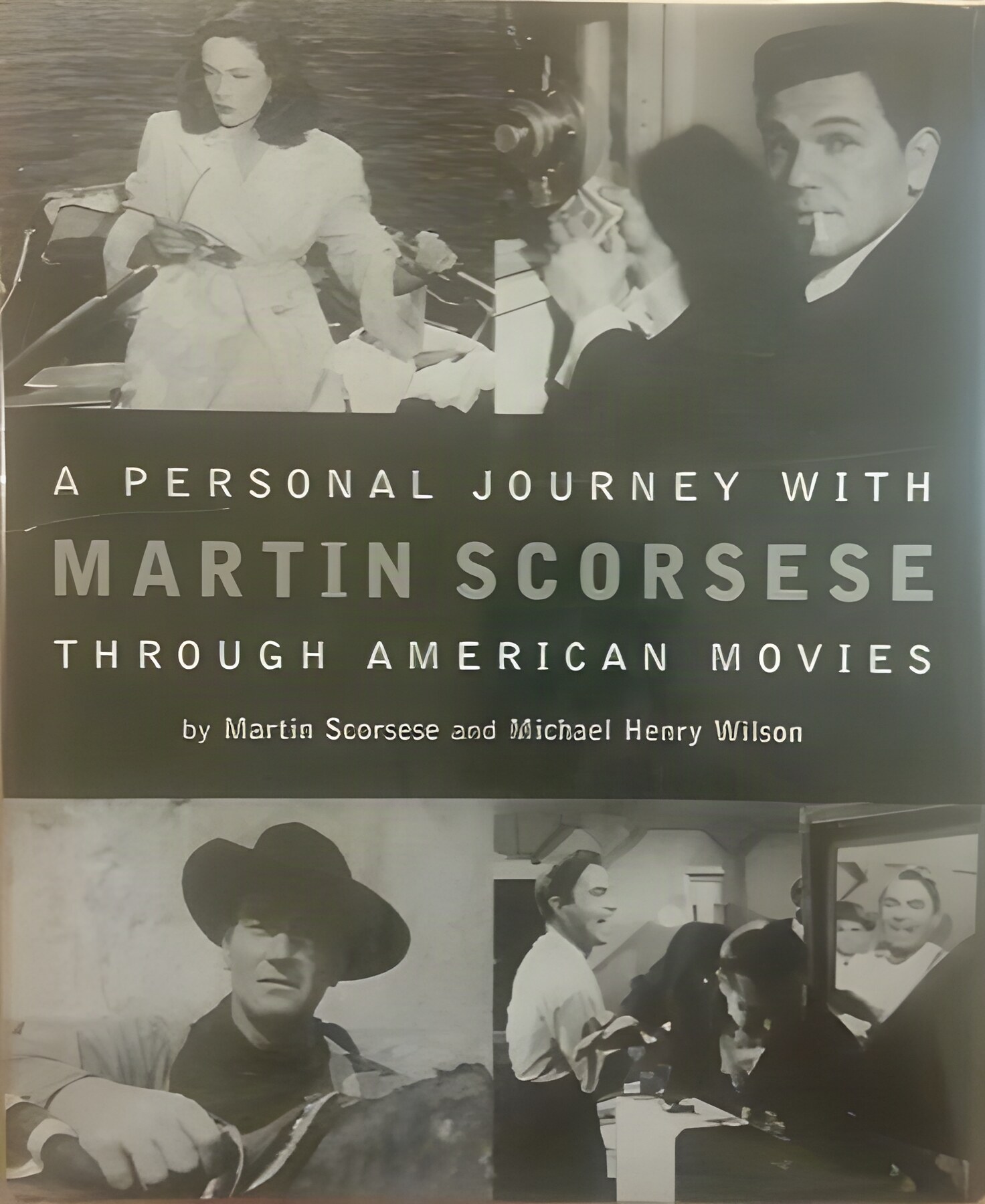
Hardcover. NY, Hyperion/Miramax, 1st, 1997, Book: Good, Dust Jacket: Very Good, Hardcover in a bright dust jacket, 191 pages, b&w illustrations. Light waviness to some pages, otherwise clean copy. In an expert guide to the history of American film, enhanced by many wonderful full-color and black-and-white photographs and film stills, the acclaimed director takes a look at many American movies while exploring them from a both a professional and personal perspective. An academically trained filmmaker (NYU film school) who is among today's most innovative directors, Scorsese presents an engrossing, idiosyncratic memoir of his experiences with motion pictures, including recollections of his first boyhood journeys to movie theaters and the impressions the films made on him. In analyzing American film since the silent era, he especially highlights Westerns, musicals, and gangster movies, genres that originated in America. No markings.
Hardcover. NY, Harcourt, Brace & Co., 1st, 1959, Book: Very Good, Dust Jacket: None, Hardcover, black cloth with gilt lettering to spine. 307 pages, b&w photos. No dust jacket. The biography of actor Leslie Howard, star of great movies such as "Of Human Bondage" and "The Scarlet Pimpernel". En route from Lisbon to London, Howard was shot down by German fighters. Clean, tight copy.
Softcover. NY, Noonday Press, 1st, 1992, Book: Very Good, Dust Jacket: None, Softcover, full color as well as B&W illustrations. Detailed overview of American Black movies from 1915 to 1965. Introduction by Donald Bogle. Foreword by Spike Lee. A collection of movie posters featuring black actors, with brief comments on each plus a brief history of the black cinema. Pages are bright and clean (no writing, underlining, or highlighting). Binding is tight with no cracks or breaks.
London/NY, Faber & Faber, 1st, 1993, Book: Very Good, Dust Jacket: Good, Hardcover in a bright, edgeworn dust jacket that has a closed 2" tear along spine. 500 pages, b&w illustrations. Don Siegel was one of Hollywood's most controversial directors. Invasion of the Body Snatchers is one of the very few acknowledged science-fiction classics, and Magnum Force - with its catch-phrase 'Make my day' - has become part of our modern consciousness. Siegel's five-film collaboration with Clint Eastwood created a body of films that are as distinctive as they are different, and enriched the reputation of both of them. This autobiography has all the fun and energy one would expect from Don Siegel. From his first days as an assistant editor in the Warner Brothers cutting rooms, Siegel charts his rich and varied career. This is a wonderful book of reminiscences, told in a lively and vivid style, whose cast of characters includes John Wayne, Lee Marvin, Steve McQueen, Bogart and Bacall, studio head Jack Warner and other luminaries of the golden age of the Hollywood studios (including a fading film star called Ronald Reagan, whose last film, The Killers, was directed by Siegel). At the centre of the book is Siegel's relationship with Clint Eastwood, whose directing career was encouraged by Siegel, and who supplies an amusing and appreciative foreword to the book. No markings.
Hardcover. NY, Knopf, 1st, 2002, Book: Very Good, Dust Jacket: Very Good, Hardcover in a bright, unclipped dust jacket, 592 pages, b&w illustrations. Samuel Fuller, independent director-producer extraordinaire, tells the story of his life, a life that spanned most of the twentieth century. His twenty-nine tough, gritty pictures made from 1949 to 1989 set out to capture the truth of war, racism, and human frailties, and incorporate some of his own experiences. He writes of his years in the newspaper business--selling papers as a boy on the streets of New York, working for Hearst's New York Journal American, first as a copyboy, then as personal runner for the famous Hearst editor in chief Arthur Brisbane. His film Park Row was inspired by his years as a reporter for the New York Evening Graphic, where his beat included murders, suicides, state executions, and race riots--he scooped every other New York paper with his coverage of the death by drug overdose of the legendary Jeanne Eagels. Fuller talks about directing his first picture (he also wrote the script), I Shot Jesse James . . . and how, as a result, he was sought after by every major studio, choosing to work for Darryl Zanuck of Twentieth Century Fox. We see him becoming one of the most prolific, independent-minded writer-directors, turning out seven pictures in six years, among them Pickup on South Street, House of Bamboo, and China Gate. He writes about making Underworld U.S.A., a movie that shows how gangsters in the 1960s were no longer seen as thugs but as "respected" tax-paying executives . . . about the making of the movie Shock Corridor--about a journalist trying to solve a murder in a lunatic asylum--which exposed the conditions in mental institutions . . . and about White Dog (written in collaboration with Curtis Hanson), a film so controversial that Paramount's then studio heads, Jeffrey Katzenberg and Michael Eisner, refused to release it. Clean copy.
Hardcover. Lexington, University Press of Kentucky, 1st, 2019, Book: Very Good, Dust Jacket: None, Hardcover, paper-covered boards, 172 pages. One of the most innovative films ever made, Sam Peckinpah's motion picture The Wild Bunch was released in 1969. From the outset, the film was considered controversial because of its powerful, graphic, and direct depiction of violence, but it was also praised for its lush photography, intricate camera work, and cutting-edge editing. Peckinpah's tale of an ill-fated, aging outlaw gang bound by a code of honor is often regarded as one of the most complex and impactful Westerns in American cinematic history. The issues dealt with in this groundbreaking film-violence, morality, friendship, and the legacy of American ambition and compromise-are just as relevant today as when the film first opened. To acknowledge the significance of The Wild Bunch, this collection brings together some of the leading Peckinpah scholars and critics to examine what many consider to be the director's greatest work. The book's nine essays cover an array of topics. Explored are the function of violence in the film and how its depiction is radically different from what is seen in other movies, the background of the film's production, the European response to the film's view of human nature, and the strong sense of the Texas/Mexico milieu surrounding the film's action. Clean copy.
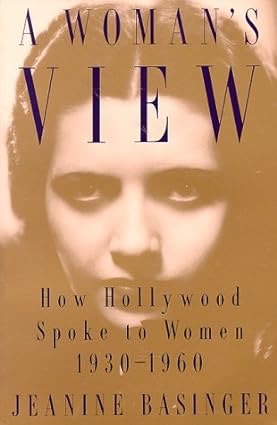
Softcover. Hanover NH, Wesleyan University Press, 1st, 1993, Book: Very Good, Dust Jacket: None, Softcover, 542 pages. Now, Voyager, Stella Dallas, Leaver Her to Heaven, Imitation of Life, Mildred Pierce, Gilda ...these are only a few of the hundreds of "women's films" that poured out of Hollywood during the thirties, forties, and fifties. The films were widely disparate in subject, sentiment, and technique, they nonetheless shared one dual to provide the audience (of women, primarily) with temporary liberation into a screen dream--of romance, sexuality, luxury, suffering, or even wickedness--and then send it home reminded of, reassured by, and resigned to the fact that no matter what else she might do, a woman's most important job was...to be a woman. Now, with boundless knowledge and infectious enthusiasm, Jeanine Basinger illuminates the various surprising and subversive ways in which women's films delivered their message. Basinger examines dozens of films, exploring the seemingly intractable contradictions at the convoluted heart of the woman's genre--among them, the dilemma of the strong and glamorous woman who cedes her power when she feels it threatening her personal happiness, and the self-abnegating woman whose selflessness is not always as "noble" as it appears. Basinger looks at the stars who played these women and helps us understand the qualities--the right off-screen personae, the right on-screen attitudes, the right faces--that made them personify the woman's film and equipped them to make believable drama or comedy out of the crackpot plots, the conflicting ideas, and the exaggerations of real behavior that characterize these movies.
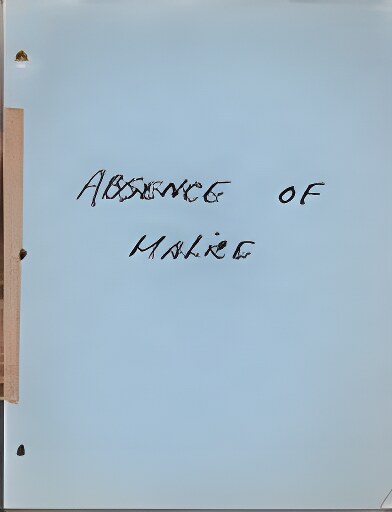
Softcover. Burbank CA, Mirage Productions, 1st, 1980, Book: Good, Dust Jacket: None, Softcover, 134 pages, printed on 3-hole punched paper and bound with one brass brad and reinforced with tape on the spine. Plain blue paper wraps with title hand-printed on front, on spine tape and bottom edge. No indicated draft but dated September 15, 1980. This was copy #16 distributed, as lettered on title page in corner. The 1981 film was directed by Sydney Pollack and starred Paul Newman and Sally Field. Luedtke won an Academy Award nomination for screenplay written directly for the screenplay.
Munich, Schirmer Mosel, 1st, 1993, Book: Very Good, Dust Jacket: Very Good, Hardcover in a bright dust jacket, 134 pages. Mostly b&w, some color photographs. It was Colette who discovered the too tall and too thin girl with expressive eyes, then a complete unknown, and made her the lead in the 1951 Broadway production of Gigi. Her film triumphs were all the more astonishing since she didn't match the usual Hollywood cliches. Petite, almost androgynous, and with a disarming naturalness, she had a worldwide impact on fashion and beauty trends and was enthusiastically welcomed as an alternative to the sex bombs and pin-up girls of the 50s. This book, with an essay by Klaus-Jurgen Sembach, is dedicated to Audrey Hepburn who died in 1993. It includes the best film stills, portraits, and private photographs by well-known and by unknown photographers from all over the world who have provided us with an immortal image of Hollywood's most endearing star. NOTE: There is a light smoke smell to this book.
Hardcover. New York, McDowell, Obolensky, 1st, 1958, Book: Very Good, Dust Jacket: Good, Volume 1 - 432 pages. Illustrated with black & white photographs and drawings by Tomi Ungerer. Dust jacket worn with chipping and small tears along edges. Clean, tight copy. Volume 2 - 488 pages. Dust jacket with light rubbing and small closed tears along edges. Clean, tight copy.
Hardcover. NY, Harper Business/ Harper Collins , 1st, 1995, Book: Very Good, Dust Jacket: Very Good, Hardcover, 532 pages, b&w photos. In a bright, unclipped dust jacket. Notes and Sources. Bibliography. Index. This is a story of loyalty and betrayal, a multigenerational saga that culminates in the emergence of Michael Ovitz and his Creative Artists Agency as the dominant force in Hollywood. Good in very good dust jacket. Clean copy.
Hardcover. New Haven CT, Yale University Press, 1st, 2009, Book: Very Good, Dust Jacket: Very Good, Hardcover, 148 pages. This book celebrates the achievements of Alice Guy Blache (1873-1968), the first woman motion picture director and producer. From 1896 to 1907, she created films for Gaumont in Paris. In 1907, she moved to the United States and established her own film company, Solax. From 1914 to 1920, Guy Blache was an independent director for a number of film companies. Despite her immensely productive and creative career, Guy Blache's indispensable contribution to film history has been overlooked. She entered the world of filmmaking at its nascent stage, when films were seen primarily as a medium in the service of science or as an adjunct to selling cameras. Working with Gaumont cameramen and cameras and the new technical advances for the projection of film, she became one of the film pioneers ushering in the new era of motion pictures as a narrative form. Written by cinema history experts and curators, this handsome volume brings to light a critical new mass of Guy Blache's film oeuvre in an effort to restore her to her rightful place in film history.
Hardcover. NY/London, Titan Books, 1st, 2019, Book: Very Good, Dust Jacket: None, Hardcover in pictorial boards. Technical drawings of all the major ships and vehicles from the Alien movies, presented in incredible detail. Includes iconic spacecraft like the Nostromo, the Sulaco and the Covenant. Alien: The Blueprints is a collection of brand new blueprints of all the major vehicles, ships and technology of the Alien movie universe. Artist Graham Langridge delves deep into the concept art, set designs and photography to recreate full and accurate blueprints of the drop ship, the Sulaco, the Nostromo and many more. Covering all the movies including Prometheus and Alien: Covenant, this is a must-have for any Alien fan. The blueprints are big, clear, and superbly detailed, taking full advantage of the huge page size. They actually look like hard-copy technical readouts that would exist in-universe, complete with peripheral formatting and specifications. Still in publisher's shrinkwrap.
Hardcover. London/NY, Frieze, London and Distributed Art Publishers, 1st, 1997, Book: Very Good, Dust Jacket: None, Hardcover, pictorial boards. Billy Name was the principal photographer of Andy Warhol's Factory. Now, All Tomorrow's Parties reproduces for the first time Billy Name's recently discovered photos of Warhol, his crowd, and the Factory years, images that give the era another dimensions. These color photos with their experimental use of weird color balances and diptych printing are uncannily contemporary. Together with Dave Hickey's essay and Collier Schorr's interview, Billy Name's photos reveal the Factory in all its intimate grunge and glamour. 135 photos, 122 in color. First 3 pages with mild wrinkling, otherwise very good.
Hardcover. New York, Harry N. Abrams, 1st, 2014, Book: Very Good, Dust Jacket: None, 336 pages. Hardcover with no dust jacket. Very clean, unmarked copy. Black & white and color images throughout. Tight copy. Introduction by Martin Scorsese.





 "A Quite Remarkable Father by: Leslie Ruth Howard")


 "Adieu Audrey: Memories of Audrey Hepburnby: Klaus-Jurgen Sembach")
 "Agee on Film - 2 Volumesby: Agee, James")
 "Agency, The: William Morris and the Hidden History of Show Business by: Rose, Frank")