Hardcover. NY, Norton, 1st, 2008, Book: Very Good, Dust Jacket: Very Good, Hardcover, 288 pages. Edward Steichen was already a famous painter and photographer in America and abroad when, in early 1923, he was offered the most prestigious position in photography's commercial domain: that of chief photographer for Vogue and Vanity Fair. Over the next fifteen years, Steichen would produce a body of work of unequaled brilliance, dramatizing and glamorizing contemporary culture and its achievers in politics, literature, film, sport, dance, theater, opera, and the world of high fashion. Here are iconic images of Gloria Swanson, Gary Cooper, Greta Garbo, and Charlie Chaplin as well as numerous other celebrities drawn from an archive of more than two thousand original prints. Until now, no more than a handful have been exhibited or published in book form. The photographs of the 1920s and 1930s represent the high point in Steichen's career and are among the most striking creations of twentieth-century photography. 242 illustrations.
Hardcover. East Sussex UK, Book Guild, 1st, 2000, Book: Very Good, Dust Jacket: Very Good, Hardcover, b&w period photos from the turn of the last century. Like new in shrink-wrap. From a box brimming with fantastic photographs come this collection of the works of photojournalist Andrew Pitcairn-Knowles assembled by his grandson. 38 pages of text. 110 plates.
Hardcover. Cologne, Dumont Buchverlag, 1st, 1997, Book: Very Good, Dust Jacket: Very Good, Hardcover, 363 pages, illustrated throughout in color and b&w. Clean, unmarked copy with only minor wear to dust jacket. This volume provides an extensive survey of painting in Austria from 1900-1930, with Egon Schiele as the focal point, through a representative selection of over 100 works by Schiele and 23 of his contemporaries from the collection of Dr. Rudolf Leopold. Contributions by: Antonia Hoerschelmann, Rudolf Leopold, Klaus Albrecht Schroder, Harald Szeemann, and Patrick Werkner. 139 color plates and 59 b&w illustrations.
Hardcover. Berkeley CA, University of California Press, 1st, 1986, Book: Very Good, Dust Jacket: Very Good, Hardcover in a bright dust jacket, 264 pages, photographs throughout. Egypt After the Pharoahs treats the period which witnessed the arrival of the Greeks and Hellenistic culture in Egypt, the reign of the Ptolemies from Ptolemy I to Cleopatra, the conquest by Rome, the scientific and cultural achievements of Alexandria, and the rise of Christianity. The rich social, cultural, and intellectual ferment of this period comes alive in Alan Bowman's narrative. Clean copy.
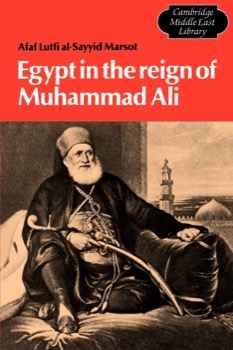
Softcover. UK, Cambridge University Press, 1st pbk., 1984, Book: Very Good, Dust Jacket: None, Softcover, 300 pages. This account of Egyptian society in the reign of Muhammad Ali traces the beginnings of the nation state in Egypt. It considers Muhammad Ali as part of a social group whose economic interests led them in the direction of trade with Europe as a means of raising money for further investments. They attempted to increase agricultural exports and to use the profits to create industry; then, following the logic of imperialists, their next step was to seek to conquer the surrounding areas to find markets for their industries and sources of raw materials. These policies brought them into conflict with their suzerain, the Ottoman sultan, and with England, since England needed markets in the Middle East. England sought to destroy the new regime in Egypt as a means of exerting influence on the region. In carrying out these economic changes, the country underwent a series of internal developments that were to revolutionize the structure and shape of Egyptian society. The rules of landownership were altered and large estates were formed, Egyptian fallahin were drafted into the army, and the administration was Egyptianized, establishing the groundwork for a nation state. Small embossed stamp on title page, otherwise clean.
Hardcover. London, Grant Richards, 1st, 1909, Book: Good, Dust Jacket: None, Hardcover, green cloth stamped in white, 294 pages, illustrated with 32 b&w photos. Back hinge partially cracked, otherwise clean. Light fraying to spine cloth at top.
Hardcover. University of Pittsburgh Press, 1st , 1984, Book: Very Good, Dust Jacket: None, Hardcover, yellow cloth with gilt stamping, 283 pages. Between 1805 and 1879, Egypt evolved into a modern state with a Western-style military force and a central bureaucracy headed by an elite corps of European-trained officials. Viceroy Muhammad Ali and his successors used this new state apparatus to augment their autocratic power and to profit as intermediaries between Egypt and the capitalist West. This study is invaluable for it's unique and exhaustive research into the structure and foundations of the ruling elite and the process by which modern bureaucracy was built up in Egypt. It also highlights the dangers of rapidly developing a country's material infrastructure using massive outside assistance without adjusting for the destabilizing social changes that are the inevitable result. Clean copy.
Hardcover. New York , privately printed, 1st, 1882, Book: Good, Dust Jacket: None, Hardcover. large folio, maroon cloth with gilt stamping. Covers worn, especially corners. Internally clean. 187 pages plus 51 full-page plates: 32 artotypes, 18 engravings, 1 chromo-lithograph. Some plates with light foxing, small water stains to some margins.In 1879, Gorringe won the contract to move the obelisk of Thutmosis III from Alexandria to Central Park for $75,000. This book is about the expedition to retrieve the obelisk and a study of the other standing obelisks in Paris and London. Frontispiece portrait of William Vanderbilt who financed the acquisition of the monument. Scarce in original printing.
Hardcover. Candlewick Press, 1st, 2004, Book: Very Good, Dust Jacket: None, Hardcover, 32 pages. Discover the wonders of ancient Egypt through a fascinating journal from a lost expedition -- a treasure trove of fact and fantasy featuring a novelty element on every spread. Who can resist the allure of ancient Egypt -- and the thrill of uncovering mysteries that have lain hidden for thousands of years? Not the feisty Miss Emily Sands, who in 1926, four years after the discovery of King Tut's tomb, led an expedition up the Nile in search of the tomb of the god Osiris. Alas, Miss Sands and crew soon vanished into the desert, never to be seen again. But luckily, her keen observations live on in the form of a lovingly kept journal, full of drawings, photographs, booklets, fold-out maps, postcards, and many other intriguing samples.
Hardcover. Candlewick Press, 1st, 2004, Book: Very Good, Dust Jacket: Very Good, Hardcover, 32 pages. Discover the wonders of ancient Egypt through a fascinating journal from a lost expedition -- a treasure trove of fact and fantasy featuring a novelty element on every spread. Who can resist the allure of ancient Egypt -- and the thrill of uncovering mysteries that have lain hidden for thousands of years? Not the feisty Miss Emily Sands, who in 1926, four years after the discovery of King Tut's tomb, led an expedition up the Nile in search of the tomb of the god Osiris. Alas, Miss Sands and crew soon vanished into the desert, never to be seen again. But luckily, her keen observations live on in the form of a lovingly kept journal, full of drawings, photographs, booklets, fold-out maps, postcards, and many other intriguing samples.
Hardcover. St. Albans VT, Messenger Company, 1st, 1902, Book: Very Good, Dust Jacket: None, Hardcover, contains the Railway Commissioners' report, complaints petitions andorders, investigations of all accidents, reports on the physical conditionof the steam and electric railways and statistical tables. Tipped in at front is a color folding map of the Vermont railway system circa 1902. All in excellent condition.
Hardcover. Princeton NJ, Princeton University Press, 2nd pr., 2013, Book: Very Good, Dust Jacket: Very Good, Hardcover in a bright dust jacket, 332 pages, b&w illustrations. Einstein and the Quantum reveals for the first time the full significance of Albert Einstein's contributions to quantum theory. Einstein famously rejected quantum mechanics, observing that God does not play dice. But, in fact, he thought more about the nature of atoms, molecules, and the emission and absorption of light-the core of what we now know as quantum theory-than he did about relativity. A compelling blend of physics, biography, and the history of science, Einstein and the Quantum shares the untold story of how Einstein-not Max Planck or Niels Bohr-was the driving force behind early quantum theory. It paints a vivid portrait of the iconic physicist as he grappled with the apparently contradictory nature of the atomic world, in which its invisible constituents defy the categories of classical physics, behaving simultaneously as both particle and wave. And it demonstrates how Einstein's later work on the emission and absorption of light, and on atomic gases, led directly to Erwin Schrodinger's breakthrough to the modern form of quantum mechanics. The book sheds light on why Einstein ultimately renounced his own brilliant work on quantum theory, due to his deep belief in science as something objective and eternal. Clean copy.
Hardcover. NY, W. W. Norton, 1st, 1967, Book: Very Good, Dust Jacket: Very Good, Hardcover in a worn, chipped dust jacket, 119 pages, maps, index. As WWII ground to a close, whose forces would be the first to reach Berlin? General Dwight David Eisenhower, supreme commander of the British and American armies, chose to halt at the Elbe River and leave Berlin to the Red Army. Could he have beaten the Russians to Berlin? If so, why didn't he? If he had, would the Berlin question have arisen? Would Germany have been divided as it was? Name on front fly leaf, otherwise clean.
Hardcover. Chicago, Ivan R. Dee, 1st, 2000, Book: Very Good, Dust Jacket: Very Good, Hardcover in a bright, unclipped dust jacket. General Dwight D. Eisenhower's decision to campaign for the presidency in 1952 was a pivotal even in America's cold war years-- it influenced almost a decade of foreign and domestic policy. Based on recently discovered letters and diaries, William Pickett provides the first complete account of Eisenhower's decision to run, with surprising new conclusions. Clean, unread copy.
Hardcover. Chapel Hill, University of North Carolina Press , 1st, 1937, Book: Very Good, Dust Jacket: None, Hardcover, 849 pages, b&w illustrations. Tan cloth covers with dark brown decoration. Previous owner's stamp on both end papers.
Hardcover. NY, Oxford University Press, 1st, 1968, Book: Very Good, Dust Jacket: Good, Hardcover in a lightly worn, chipped dust jacket, 527 pages, illustrated with b&w maps, tables, graphs, charts. Rust red cloth with gilt lettering. Constantinos Apostolou Doxiadis was an architect and urban planner who was extremely successful and influential in his field during the 1960s & 1970s. He was perhaps best known as the lead architect of Islamabad, the new capital of Pakistan. He later was also renowned for his pioneering work in the study of human habitation, which he referred to as ekistics. He was a prolific author, and is still revered by many as the father of modern urban planning. Clean copy. DOMESTIC SHIPPING ONLY.
Hardcover. Lawrence KS, University Press of Kansas, 1st, 2007, Book: Very Good, Dust Jacket: Very Good, Hardcover in a bright dust jacket, 274 pages. With the landmark election of Franklin Delano Roosevelt in 1932, decades of Republican ascendancy gave way to a half century of Democratic dominance. It was nothing less than a major political realignment, as the direction of federal policy shifted from conservative to liberal-and liberalism itself was redefined in the process. Electing FDR is the first book in seventy years to examine in its entirety the 1932 presidential election that ushered in the New Deal. Award-winning historian Donald Ritchie looks at how candidates responded to the nation's economic crisis and how voters evaluated their performance. More important, he explains how the Democratic Party rebuilt itself after three successive Republican landslides: where the major shifts in party affiliation took place, what contingencies contributed to FDR's victory, and why the new coalition persisted as long as it did. Ritchie challenges prevailing assumptions that the Depression made Roosevelt's election inevitable. He shows that FDR came close to losing the nomination to contenders who might have run to the right of Hoover, and discusses the role of newspapers and radio in presenting the candidates to voters. He also analyzes Roosevelt's campaign strategies, recounting his attempts to appeal to disaffected voters of all ideological stripes, often by altering his positions to broaden his popularity. With the advent of the New Deal, Americans came to enjoy a wide federal safety net that provided everything from old age pensions to rural electricity-government innovations so embraced by voters that even later conservative presidents recognized their importance. Ritchie traces this legacy through the Reagan and Bush years, but he relates how FDR in 1932 was often vague about the specifics of his program and questions whether voters really knew what they were in for with the New Deal. Clean copy.
Hardcover. Netherlands, Kluwer Academic Publishers, 1st, 2000, Book: Very Good, Dust Jacket: Very Good, Hardcover in a bright dust jacket, 223 pages. In Elements, Principles and Particles, Antonio Clericuzio explores the relationships between chemistry and corpuscular philosophy in the age of the Scientific Revolution. Science historians have regarded chemistry and corpuscular philosophy as two distinct traditions. Clericuzio's view is that since the beginning of the 17th century atomism and chemistry were strictly connected. This is attested by Daniel Sennert and by many hitherto little-known French and English natural philosophers. They often combined a corpuscular theory of matter with Paracelsian chemical (and medical) doctrines. Boyle plays a central part in the present book: Clericuzio redefines Boyle's chemical views, by showing that Boyle did not subordinate chemistry to the principles of mechanical philosophy. When Boyle explained chemical phenomena, he had recourse to corpuscles endowed with chemical, not mechanical, properties. The combination of chemistry and corpuscular philosophy was adopted by a number of chemists active in the last decades of the 17th century, both in England and on the Continent. Using a large number of primary sources, the author challenges the standard view of the corpuscular theory of matter as identical with the mechanical philosophy. He points out that different versions of the corpuscular philosophy flourished in the 17th century. Most of them were not based on the mechanical theory, i.e. on the view that matter is inert and has only mechanical properties. Throughout the 17th century, active principles, as well as chemical properties, are attributed to corpuscles. Given its broad coverage, the book is a significant contribution to both history of science and history of philosophy.
Softcover. Toronto, Dundurn Press, 1st, 1982, Book: Very Good, Dust Jacket: None, Softcover, 336 pages. Includes table of contents, bibliography, index, maps and b&w photographs and illustrations. The 11 exiles were: John Howe, Printer; Francis Green; Joseph Durfee, Shelburne Pioneer; Molly Brant, Mohawk Heroine; Ward Chipman, founding father of New Brunswick; William Schurman of Prince Edward Island; Sir John Johnson; Ranna Cossit; Sarah Sherwood; Boston King and William Jarvis.
Hardcover. NY, G. P. Putnam's Sons, 1st, 1974, Book: Very Good, Dust Jacket: Very Good, Hardcover in a bright, unclipped dust jacket. 374 pages. Russia has a fascinating history and author Robert Coughlan has provided us with an informative and compelling peek into a particularly notable segment of it, essentially the 1700s. The book covers the period from Tsar [Czar] Alexis (briefly) up to the reign of Tsar Alexander I, probably the most beloved of all the Romanovs. The focus of the work is on Catherine the Great. Her mentor, Elizabeth, was important through her shrewd handling of the many bumps and potholes which eventually allowed Catherine to take the throne against many rivals and usurpers. Clean copy.
Hardcover. NY, Frederick A. Stokes , 1st, 1900, Hardcover, red cloth with bright gilt stamping, 150 pages. Top edge gilt. Ribbon marker, photographic frontispiece portrait of actress Terry, as well as numerous photographs of her in various dramatic productions. Clean copy.
Hardcover. Philadelphia, University of Pennsylvania Press, 1st, 2001, Book: Very Good, Dust Jacket: Very Good, Hardecover in a bright dust jacket, 492 pages. In a letter to Sir Thomas Browne about his proposed magnum opus on gardens, John Evelyn stated his purpose: "to refine upon some particulars, especially concerning the ornaments of Gardens, which I shal endeavor so to handle that persons of all conditions and faculties, which delight in Gardens, may therein encounter something for their owne advantage." In his Elysium Britannicum, or The Royal Gardens, Evelyn indeed produced a rich document, an assemblage of the horticultural knowledge and wisdom of the seventeenth century. An intriguing intellectual whom many have called a virtuoso, Evelyn was a garden designer, a noted author and translator of garden books, and a founding member of the Royal Society in 1660, where experimental science was at the heart of intellectual debate. Interlacing in his work practical, literary, and philosophical approaches to landscape architecture, Evelyn created the first large-scale encyclopedic work on the science and art of gardening. Evelyn never saw his great work published. Until now, the entire Elysium Britannicum, or The Royal Gardens has never appeared in print. In an impressive transcription, John E. Ingram makes the document--of which only a single folio volume remains--accessible to a wide range of scholars. Complete with Evelyn's extensive marginalia, interlineations, and tipped-in addenda, the manuscript is expertly organized by Ingram to preserve the meaningful complexity of Evelyn's original. Clean copy. DUE TO WEIGHT, DOMESTIC SHIPPING ONLY.
Hardcover. New York , Charles Scribner's Sons, 1st, 1890, Book: Very Good, Dust Jacket: None, 490 pages, green cloth covers with black and gilt decoration. Two gravure frontispieces (of author and Henry Stanley), 21 full-page plates plus text illustrations. Folding map and facsimile of letter in envelope in rear. There is a small chunk of cloth gone from top of spine and some scuffing of cloth on spine and rear cover, otherwise very good.

 "Edward Steichen: In High Fashion - The Conde Nast Years, 1923-1937by: Todd Brandow and William A. Ewing")
 "Edwardian Eye of Andrew Pitcairn-Knowles 1871-1956, Theby: Pitcairn-Knowles, Richard")
 "Egon Schiele: The Leopold Collection, Viennaby: Leopold, Rudolf")
 "Egypt After the Pharaohs: 332 BC-AD 642: From Alexander to the Arab Conquest by: Alan K. Bowman")
 "Egypt of Yesterday and To-Dayby: Withers, Percy")
 "Egyptian Obelisksby: Gorringe, Henry H.")
 "Egyptology: Search for the Tomb of Osirisby: Emily Sands , Dugald Steer, et al")
 "Egyptology: Search for the Tomb of Osirisby: Emily Sands , Dugald Steer, et al")
 "Eighth Biennial Report of the Board of Railroad Commissioners of the State of Vermont June 30th 1900 to June 30th 1902 by: N/A")
 "Einstein and the Quantum: The Quest of the Valiant Swabian by: Stone, A. Douglas")
 "Eisenhower and Berlin 1945: The Decision to Halt at the Elbeby: Stephen E. Ambrose")
 "Eisenhower Decides to Run: Presidential Politics and Cold War Strategyby: Pickett, William B.")
 "Ejido, The: Mexico's Way Outby: Simpson, Eyler N.")
 "Ekistics: An Introduction to the Science of Human Settlementsby: Constantinos A. Doxiadis")
 "Electing FDR: The New Deal Campaign of 1932by: Donald A. Ritchie")
 "Elements, Principles, and Corpuscles: A Study of Atomism and Chemistry in the Seventeenth Century by: Clericuzio, Antonio")
 "Eleven Exiles: Accounts of Loyalists of the American Revolution by: Blakeley, Phyllis R. & Grant, John N.")
 "Elizabeth and Catherine: Empresses of All the Russias by: Robert Coughlan")
 "Ellen Terry by: Scott, Clement")
 "Elysium Britannicum, or the Royal Gardens by: Evelyn, John, Editor: Ingram, John E.")
 "Emil du Bois-Reymond (1818-1896)-Anton Dohrn (1840-1909): Briefwechsel. Hrsg. von Christiane Groeben in Zusammenarbeit mit Klaus Hierholzer. Mit einer historischen Einfuhrung von Ernst Floreyby:")
 "Emin Pasha and the Rebellion at the Equator: A Story of Nine Months Experiences in the Last of the Soudan Provincesby: Mounteney-Jephson, A. J.")