Hardcover. New Haven, CT, Yale University Press, 1st, 2015, Book: Very Good, Dust Jacket: None, 480 pages. Hardcover with no dust jacket. Very clean, unmarked copy still in shrink wrap. 378 color and 10 black & white illustrations. Tight copy. While European art forms were widely disseminated, copied, and adapted throughout Latin America, colonial painting is not a derivative extension of Europe. The ongoing debate over what to call it-mestizo, hybrid, creole, indo-hispanic, tequitqui-testifies to a fundamental yet unresolved question of identity. Comparing and contrasting the Viceroyalties of New Spain, with its center in modern-day Mexico, and Peru, the authors explore the very different ways the two regions responded to the influence of the Europeans and their art. A wide range of art and artists are considered, some for the first time.
Hardcover. Layton, Utah, Gibbs Smith, 1st, 2015, Book: Very Good, Dust Jacket: None, 176 pages. Hardcover with no dust jacket. Color photographs throughout. Clean, unmarked copy with only minor wear to boards. This book collects more than two hundred fascinating and rarely seen historical photographs of Palm Springs, newly digitized from the Palm Springs Historical Society's expansive archive. Featured are many Hollywood celebrities, including Sinatra and the Rat Pack, who vacationed there, the early days of the desert paradise, various architectural masterworks, such as the fabulous El Mirador Hotel and the extraordinary, outrageous, and irreverent people of Palm Springs.
Hardcover. Boston Mills Press , 1st, 2007, Book: Very Good, Dust Jacket: Very Good, Hardcover in a bright, unclipped dust jacket. For a world coming out of economic depression in the 1930s, the Pan American Airways Clipper "flying boats" symbolized elegance and luxury, adventure and romance. Illustrated with rare period photographs, vintage travel posters, magazine ads and colorful company brochures, this fascinating book covers every aspect of the fabulous era of Pan American's graceful clippers. Like their maritime namesakes, the Clippers used the oceans to form a vast global network of travel routes. Pan Am founder Juan Trippe was a visionary who saw the importance of international travel to a changing world. His Clippers would play a key role in the evolution of transoceanic flight, setting time and distance records over the Atlantic and Pacific, providing airmail delivery between countries, and eventually serving the Allies as troop and cargo transports during World War II. A major appeal is the 200 color images and 100 historical black-and-white photographs. Clean copy.
Hardcover. NY, Simon & Schuster, 1st, 1991, Book: Very Good, Dust Jacket: Very Good, Hardcover in a bright dust jacket, 304 pages. Details the 'whole story' of events leading up to and away from the American invasion of Panama. By December 1989, when George Bush unleashed American troops, Panama had become a crisis. The U.S. Christmas invasion had one real purpose: topple Manuel Antonio Noriega, the general whose name had become synonymous with drugs, deception, and murder. Clean copy.
Hardcover. US, University of Arizona Press, 1st, 1984, Book: Very Good, Dust Jacket: Very Good, Hardcover, 252 pages. Light shelf-wear to price clipped dust jacket, else a clean, tight copy.
Hardcover. NY, Hyperion, 2nd Ed., 2006, Book: Very Good, Dust Jacket: Very Good, Hardcover, 288 pages. Canemaker's second volume on Disney animation (his first was Before the Animation Begins, pub. 11/15/96) covers new territory. Focusing on the birth and progression of the storyboard method, the noted animator/historian explores both the history and the personalities of the Disney storyboard department. He takes readers from the early Disney days (when Walt created the storyboard to add depth and substance to the animated shorts the early studio produced) to today (when ever-changing teams of story specialists gather material and prepare sequence drawings before artists flesh out those Disney masterpieces). Along the way, Canemaker reveals the human effort required to bring an animated film to life and throws in juicy tidbits garnered from his interviews with animation pioneers. Lavish illustrations accompany the text. Recommended for larger public libraries and essential for collections in film and animation history.
Hardcover. NY, Hyperion, 2nd Ed., 2006, Book: Very Good, Dust Jacket: Very Good, Hardcover, 288 pages. Canemaker's second volume on Disney animation (his first was Before the Animation Begins, pub. 11/15/96) covers new territory. Focusing on the birth and progression of the storyboard method, the noted animator/historian explores both the history and the personalities of the Disney storyboard department. He takes readers from the early Disney days (when Walt created the storyboard to add depth and substance to the animated shorts the early studio produced) to today (when ever-changing teams of story specialists gather material and prepare sequence drawings before artists flesh out those Disney masterpieces). Along the way, Canemaker reveals the human effort required to bring an animated film to life and throws in juicy tidbits garnered from his interviews with animation pioneers. Lavish illustrations accompany the text. Recommended for larger public libraries and essential for collections in film and animation history.
Hardcover. New York , De Vinne Press, 1st, 1917, Book: Very Good, Dust Jacket: None, 303 pages. Light blue and white cover. Printed for the Naval History Society. Number 112 of 700 copies. Pages untrimmed. B&w illustration with tissue guard. Worn slipcase. Inside nice and clean. Contains one page insert addressed to Naval History Society members.
Hardcover. Cambridge MA, Belknap Press/Harvard, 1st, 1979, Book: Very Good, Dust Jacket: Very Good, Hardcover in a bright dust jacket. 417 pages. As the American colonies grew more restive, and a break with the mother country ceased to be unthinkable, John Adams was forced to spend less and less time with his beloved family. Although burdened by ever-expanding responsibilities in the Second Continental Congress, he found time for an amazing amount of correspondence. The majority of his letters were written to secure the facts that would enable this duty-ridden man to decide and act effectively on the issues being debated. Military affairs, a source of never-ending concern, provide some of the most fascinating subjects, including several accounts of the Battle of Bunker Hill, assessments of various high-ranking officers, and complaints about the behavior of the riflemen sent from three states southward to aid the Massachusetts troops. Clean, tight copy.
Hardcover. Washington, Smithsonian Institution Press, 1st, 1972, Book: Good, Dust Jacket: Good, Hardcover. Volume I only. 496 pages, several b&w illustrations. Light edgewearm soiling to dust jacket, small closed tear on front cover. Foxing, soiling to top and bottom edge. Else clean and tight.
Softcover. London, 1849, Book: Very Good, Dust Jacket: None, This is 64 page extract from a larger volume (pages 443 - 506), possibly London Magazine. This is the original printing and features 4 fold-out plans and illustrations, all in excellent condition. Bound in a clear acetate folder.
Hardcover. NY, John Day, 1st, 1953, Book: Very Good, Dust Jacket: Good, Hardcover in a bright, edgeworn dust jacket, 372 pages. This book is sub-titled: "A true account, rich in detail about man and nature, of Oklahoma when it was the United States last frontier".
Hardcover. NY, Holt Rinehart & Winston, 1st, 1981, Book: Very Good, Dust Jacket: Very Good, Hardcover in a bright dust jacket with minor edgewear, 294 pages. Depicts the German occupation of Paris during World War II from the perspectives of both the defeated Parisians and the victorius Germans, accompanied by 116 contemporary photographs in b&w, some color. Clean copy.
Hardcover. Paris, Editions de Lodi, 1st, 2001, Book: Very Good, Dust Jacket: Very Good, Hardcover, glossy boards in a matching bright dust jacket. Large format, 484 pages, FRENCH TEXT. A collection of over 500 historical photos of old Paris printed in sepia tone. Around 1832 Parisian-born Charles-Francois Bossu (1813-1879) shed his unfortunate last name (bossu means hunchback in French) and adopted the pseudonym Marville. After achieving moderate success as an illustrator of books and magazines, Marville shifted course in 1850 and took up photography, a medium that had been introduced 11 years earlier. His poetic urban views, detailed architectural studies, and picturesque landscapes quickly garnered praise.By the end of the 1850s, Marville had established a reputation as an accomplished and versatile photographer. From 1862, as official photographer for the city of Paris, he documented aspects of the radical modernization program that had been launched by Emperor Napoleon III and his chief urban planner, Baron Georges-Eugene Haussmann. In this capacity, Marville photographed the city's oldest quarters, and especially the narrow, winding streets slated for demolition. Even as he recorded the disappearance of Old Paris, Marville turned his camera on the new city that had begun to emerge. Many of his photographs celebrate its glamour and comforts, while other views of the city's desolate outskirts attest to the unsettling social and physical changes wrought by rapid modernization. Taken as a whole, Marville's photographs of Paris stand as one of the earliest and most powerful explorations of urban transformation on a grand scale. Clean, bright copy.
Hardcover. NY, Vendome Press, 1st, 1989, Book: Very Good, Dust Jacket: Very Good, Hardcover in a bright dust jacket, 208 pages. Best-selling French author Perrault provides moving personal reminiscences of his childhood in occupied Paris. The brief but eloquent narrative is accompanied by hundreds of previously unpublished photos from French and German archives, collected and cataloged by Parisian art historian Azema. Together, text and photos present a graphic portrait of everyday life, recording daily human struggles to find food and fuel, the psychological warfare waged by the occupiers, and the methods of German economic exploitation. As artists, the authors place special emphasis on the arts under the occupation and document the heroism of the writers' resistance. In sum, they show how Paris "kept alive a sense of the enemy."
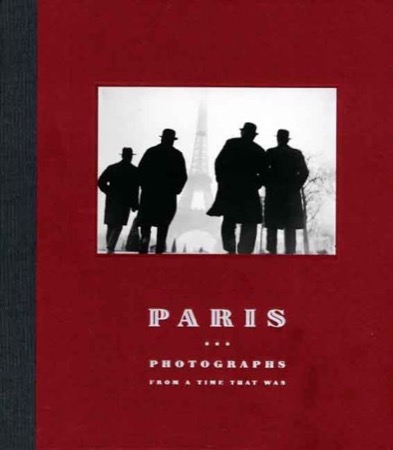
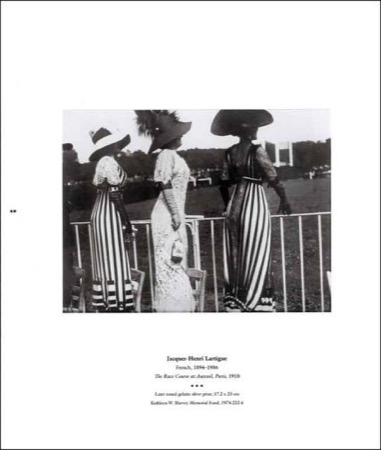
Hardcover. Chicago, Art Institute of Chicago, 1st, 2005, Book: Very Good, Dust Jacket: None, Hardcover, 100 pages. No dust jacket issued. Eugene Atget, Jacques Henri Lartigue, Andre Kertesz, Brassai, Henri Cartier- Bresson, Robert Doisneau? -some of the greatest photographers of Paris? were relatively unknown when they began their most innovative work. Not yet burdened with conventional career expectations, they found the city the perfect environment in which to invent and develop an entirely new approach to conceiving the photographic image. In the 1920s and 1930s, the generation of photographers after Atget responded not only to the physical city itself but also to a new sensibility of time as a spontaneous act. Masterworks by these now-famous visionaries of the medium are featured in this elegant book of photographs of Paris from the 1850s to the 1950s, drawn from the remarkable collection of the Art Institute of Chicago. Clean copy.
Hardcover. London, printed by C. & R. Baldwin for Thomas Payne, 1st, 1808, Book: Very Good, Dust Jacket: None, Hardcover, polished brown calf, 253 pages. A clean copy of the First Edition of Samuel Johnson's tract on the Corn Laws written in 1766 for the use of his friend William Gerard Hamilton - an important politician of the period who achieved a brilliant reputation as an orator - despite his nickname of 'Single Speech Hamilton' The volume was edited by Malone, who found the tract among Hamilton's papers and contributed a long preface. 8vo., xlvi, 253, [1]p colophon.; Stipple engraved frontispiece portrait. Previous owner's bookplate on inside front cover, edgewear/rubbing to calf along gilt ruled border on covers, spine with gilt decoration, red morroco label on spine. Front cover hinge tender, but holding.
Hardcover. London, Chapman & Hall, 1st, 1912, Book: Very Good, Dust Jacket: None, Hardcover, red cloth covers with gilt lettering, 325 pages including index. Front endpaper glued to inside cover, Clean copy. Memoirs of a journalist who covered the British Parliament for 45 years.
Hardcover. Colombia SC , Univ of South Carolina Pr, 1st, 2001, Book: Very Good, Dust Jacket: Very Good, 415 pages. Hardcover. B&w photographs throughout. Clean, unmarked copy with only minor wear to dust jacket.
Softcover. Cambridge MA, Harvard University Press, 3rd pr., 1971, Book: Very Good, Dust Jacket: None, Softcover, blue wrappers, 200 pages. Name on half-title page, otherwise clean. Some fading to cover wrappers.
Hardcover. Milan, 5 Continents, 1st, 2007, Book: Very Good, Dust Jacket: None, 142 pages, b&w photographs taken by Muller. Illustrated boards, no dust jacket issued. A Passage to Congo is a collection of photographs taken by Doctor mile Muller (1891-1976) in the Congo provinces of the Kasa< and Katanga, territories of the Chokwe, Luba, Bashibushong and Basalampasu tribes. For these people, he was not the boss, but he who cured, who gave relief, who listened. He could move easily between the tribes without having to tackle the reticence that has denatured so many ethnic photographs. The privileged witnesses of esoteric ceremonies that are rarely photographed, his images are precious from an ethnographic and historical point of view, and reveal a fine aesthetic sense and profound humanity. Veritable living masks, as in the remarkable portraits of young Chokwe girls, astonishing initiation rites, scenes of divination, wild rhythmic dances responding to the beat of the large slotted drums, sculptural bodies decorated with tattoos and refined headgear recall the beauty and riches of these cultures, now lost in the modern world.
Softcover. privately printed, 1st, Book: Very Good, Dust Jacket: None, Softcover, 63 pages, illustrated with many b&w photos. Clean copy. No date but appears to be mid-1970s.
Softcover. Bloomington IN, Indiana University Press, reprint, 1995, Book: Very Good, Dust Jacket: None, Softcover in pictorial wrappers, 852 pages. The life and art, the folklore, history, and common work of a rural community in Northern Ireland-through the eyes and pen of gifted folklorist Henry Glassie. Glassie regards the people of Ballymenone with respect and affection, allowing them to describe their ideas, life-ways, and values on their own terms, not his. Recognizing that theirs is a mindset and lifestyle that must be seen as an integrated whole, Glassie studies everything about Ballymenone from traditional songs to entertainment to religious beliefs to architecture, liberally quoting from the people who welcomed him into their homes over his extended stays. Some of his insights are pure brilliance, such as recognizing the way the poets and storytellers of a rural Irish district have adapted ancient Gaelic metrics to the English they use today. You will learn more about Ireland and its people in this one book than in a host of others. Clean copy.

 "Painting in Latin America, 1550-1820: From Conquest to Independenceby: Alcala, Luisa Elena")
 "Palm Springs Paradise: Vintage Photographs from America's Desert Playgroundby: Moruzzi, Peter")
 "Pan American Clippers: The Golden Age of Flying Boats by: James Trautman")
 "Panama: The Whole Story by: Buckley, Kevin")
 "Pancho Villa and John Reed: Two Faces of Romantic Revolutionby: Tuck, Jim")
 "Paper Dreams: The Art & Artists of Disney Storyboardsby: Canemaker, John")
 "Paper Dreams: The Art & Artists of Disney Storyboardsby: Canemaker, John")
 "Papers of Francis Gregory Dallas, The: United States Navy Correspondence and Journal 1837-1859.by: Allen (ed), Gardener W.")
 "Papers of John Adams - Series III - General Correspondence and Other Papers of the Adams Statesmen - Volume 3 - May 1775-January 1776by: Robert Taylor (Editor) Gregg")
 "Papers of Joseph Henry, Theby: Reingold, Nathan")
 "Papers Relating to the First Settlement and Capture of Fort Oswego 1727-1756 (WITH FOLD-OUTS)by: O'Callaghan, E.B.")
 "Paradise Prairie by: Williams, Cecil B.")
 "Paris in the Third Reich: A History of the German Occupation, 1940-1944 by: David Pryce-Jones")
 "Paris sens dessus-dessous (Marville photographies 1852-1870)by: Mellot, Philippe")
 "Paris Under the Occupationby: Gilles Perrault")
 "Paris: Photographs from a Time That Wasby: David Travis")
 "Paris: The Great Sagaby: Didier Busson")
 "PARLIAMENTARY LOGICK: to which are subjoined two speeches, delivered in the House of Commons of Ireland.With an appendix, containing Considerations on the Corn Laws, by Samuel Johnson, LL.D. never before")
 "Parliamentary Reminiscencesby: William Jeans")
 "Partners with the Sun: South Carolina Photographers, 1840-1940by: Teal, Harvey S.")
 "Party and Army: Professionalism and Political Control in the Chinese Officer Corps 1949 1964 by: Ellis Joffe")
 "Passage to Congo, A: Photographs by Doctor Emile Muller 1923-1938by: Loos, Pierre, Pierre Buch and Emile Muller")
 "Passenger Cars 1930s-1960sby: Robert J. Wayner")
 "Passing the Time in Ballymenoneby: Henry Glassie")