Hardcover. Alexandria VA, Cypress Communications, 1st, 2000, Book: Very Good, Dust Jacket: Very Good, Hardcover in a bright dust jacket, 295 pages. The charm and diversity of lighthouses are captured in this elegant pictorial history. W&w photos throughout. Clean copy.
Hardcover. London, Hutchinson, 1st, 1967, Book: Very Good, Dust Jacket: None, Hardcover, green cloth with gilt lettering on spine. 246 pages, b&w plates. Very good, clean. No dust jacket.
Softcover. New York, Oxford University Press, 1st paperback, 1968, Book: Very Good, Dust Jacket: None, 355 pages. Softcover. Light pencil underlining in a few places. Wrapper good, with a touch of agewear, no tears, some slight moisture damage at the bottom of the back cover.
Softcover. Manchester, VT, Friends of Hildene, Inc., 1st, 2004, Book: Very Good, Dust Jacket: None, 280 pages. Softcover. "Vermont and the North Shire in the Civil War". B/w illustrations throughout. Very clean inside and out. From the back cover: "This is the story of the Equinox Guards, who joined to fight for the Union cause in the fall of 1861."
Hardcover. NY, E.P. Dutton, 1st, 1983, Book: Very Good, Dust Jacket: Very Good, Hardcover in a lightly worn dust jacket, 298 pages. Name on front fly, also the next blank page. Otherwise clean copy.
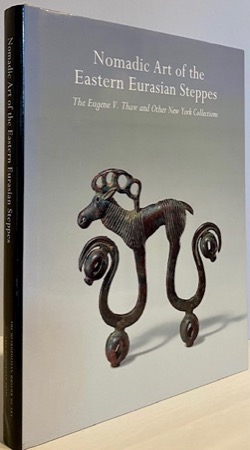
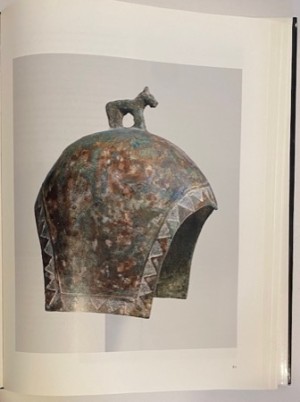
New York, The Metropolitan Museum of Art, 1st, 2002, Book: Very Good, Dust Jacket: Very Good, 233 pages. Hardcover. Color and b/w illustrations throughout. Tan cloth cover boards, gilt title on spine. A light smudge to foreedge. Pages unmarked. Binding tight. Spine straight. Issued in conjunction with the exhibition of the same name held at The Metropolitan Museum of Art, New York, October 1, 2002-January 5, 2003.
Hardcover. Secaucus NJ, Chartwell Books, 1993, Book: Very Good, Dust Jacket: Very Good, Hardcover, 255 pages, illustrated throughout in color and b&w. Folio. Light edgewear to dust jacket, else a clean, tight copy.
Hardcover. Baltimore, The Johns Hopkins University Press, 2nd printing, 1995, Book: Very Good, Dust Jacket: Very Good, Hardcover, 348 pages, illustrated throughout in b&w. Light shelf-wear to dust jacket. Overall, a tight clean copy. "In this original and authoritative work, Vance argues that the railroad in North America is a distinct indigenous creation and not an importation from Britain and Europe. His combined familiarity with railroading, routes and cities, facilities, and North American geography is unsurpassed and the result is quite unlike anything in the historical or specialist literature."--Donald Meinig, Syracuse University "No previous book has presented the over-all picture of the development of the North American railroad network with Vance's emphasis on the reciprocal relationships among the economic and technological conditions on the one hand and the geographic aspects of development on the other. The scope of the presentation is virtually encyclopedic -- and there is no doubt that the book will quickly become a standard reference on the subject." -- Harold M. Mayer, University of Wisconsin, Milwaukee
Hardcover. Garden City, New York, Doubleday, Doran & Company, Inc., 1st, 1930, Book: Very Good, Dust Jacket: None, Hardcover, 309 pages. Minor cover and spine edge wear. Otherwise, a very clean and tight copy.
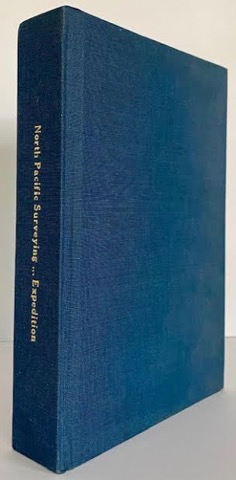
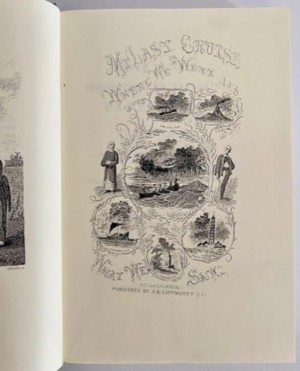
Hardcover. Michigan, Scholarly Publishing Office University of Michigan, Reprint, Book: Very Good, Dust Jacket: None, 507 pages. Hardcover. Reprint of 1857 J.B. Lippincott & Co. publication produced from digital images created through the University of Michigan University's Library's preservation reformatting program. B/w illustrations throughout. Pages clean, spine straight, binding tight. ISBN label on back cover. Light foxing to edges. Blue cloth cover boards, gilt title on spine. "Visits to the Malay and Loo-Choo Islands, the Coasts of China, Formosa, Japan, Kamtschatka, Siberia, and the Mouth of the Amoor River."
Hardcover. Harlow, UK, Longman, 1st, 2004, Book: Very Good, Dust Jacket: Very Good, 324 pages. Hardcover with dust jacket. A very clean, unmarked copy with only minor wear to dust jacket edges. A tight copy.
Hardcover. Camden ME, Down East Books, 1st, 1981, Book: Very Good, Dust Jacket: Very Good, Hardcover in a bright, unclipped dust jacket. 117 pages, b&w illustrations. First-hand account of the Crocker Land Expedition to Greenland and Ellesmere Island, based on the diary, letters and reminiscences of the expedition's doctor. Includes observations of the Polar Eskimo lifestyle. Clean copy.
Hardcover. Cambridge MA, Harvard University Press , 1st, 1993, Book: Very Good, Dust Jacket: Very Good, Hardcover in a bright, lightly worn dust jacket. 338 pages. INSCRIBED BY THE AUTHOR on the half-title page. After the triumphs of Montgomery and Selma, Martin Luther King, Jr., rallied his forces and headed north. The law was on his side, the nation seemed to be behind him, the crusade for civil rights was rapidly gathering momentum--and then, in Chicago, heartland of America, the movement stalled. What happened? This book is the first to give us the full story--a vivid account of how the Chicago Freedom Movement of 1965-1967 attempted to combat northern segregation. Northern Protest captures this new kind of campaign for civil rights at a fateful turning point, with effects that pulse through the nation's race relations to the day. James Ralph has written the fullest and most perceptive account yet to appear of the 1966 civil-rights campaign in Chicago, a crucial event in the history of the movement. Clean copy.
Hardcover. New York, St. Martin's Press, 1st, 1987, Book: Very Good, Dust Jacket: Very Good, 272 pages. Hardcover. B/w illustrations throughout. Gilt title on spine. Dust jacket unclipped. Binding tight. Clean inside and out. In very good condition.
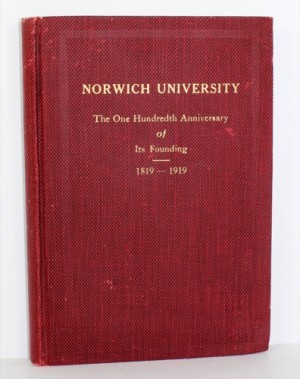
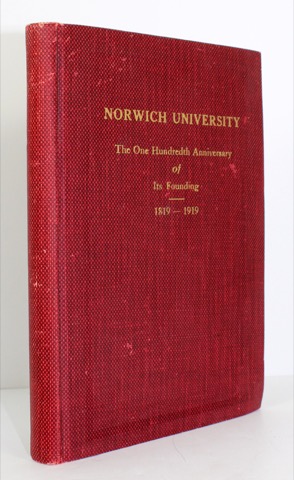
Hardcover. Norwich, Norwich University, First Edition, 1920, Book: Very Good, Dust Jacket: None, 156 pages. Hardcover. Red pebbled cloth covers with gilt titles to cover. Toning throughout. Pages untrimmed, and many unopened. Frontis illustration, Captain Alden Partridge, Founder. Black & white illustrations throughout. Clean & unmarked copy.
Softcover. Ithaca NY, Cornell University Press, reprint, 1991, Book: Very Good, Dust Jacket: None, Softcover, 204 pages. "Not of woman born," "the Fortunate," "the Unborn" - the terms designating those born by Caesarean section in medieval and Renaissance Europe were mysterious and ambiguous. In antiquity, children fortunate enough to have survived a Caesarean birth were believed to be marked for a special destiny. Vividly tracing the evolution of Caesarean birth from the early 1300s (when the operation was performed almost exclusively by midwives) through the Renaissance period (when midwives were considered witches and male surgeons took control), Blumenfeld-Kosinski . . . does more than provide [an] engrossingly accessible, historical account of the now-commonplace procedure--she unveils the roots of a medical misogyny that still prevails today. A richly cross-disciplined study utilizing depictions of Caesarean delivery in art, literature, and medical texts and illuminations (illustrations), [this book] is a captivating and revealing work that will be relished by readers of medical and cultural history, as well as by those who are interested in the subject of male dominance over women. Clean copy.
Hardcover. Boston, MA, Little Brown & Company, 1st, 1928, Book: Good, Dust Jacket: None, Hardcover, light gray cloth with red lettering, 228 pages. INSCRIBED BY AUTHOR on prelim-page. Slight wear and soil to covers, internally very good
Softcover. Worcester MA, self-published, 1st, 1913, Book: Very Good, Dust Jacket: None, Softcover, plain paper wraps with tanning, 87 pages. This is the 1913 first printing, clean. Small tape repair to paper spine otherwise very good.
Hardcover. Paris, Editions Hazan, 1st, 2016, Book: Very Good, Dust Jacket: None, Hardcover, 240 pages. This beautifully illustrated book offers a comprehensive look at the career of photographer William Notman (1826-1891). Born in Scotland, Notman emigrated to Canada in 1856; he settled in Montreal and opened a photography studio that later had branches throughout Canada and the United States. Notman documented the development of a continent, photographing street scenes in burgeoning cities and modern transportation by steam and rail, and creating portraits of such notable figures as Mark Twain, Henry Wadsworth Longfellow, Sitting Bull, and Buffalo Bill. By fully exploiting the commercial and aesthetic potential of the rapidly advancing photographic technology, Notman contributed to the establishment of the socio-economic prominence of Montreal and played a key role in the formation of a Canadian national identity. Published and unpublished photographs are paired with texts that explore the photographer's numerous achievements.
Hardcover. Paris, Editions Hazan, 1st, 2016, Book: Very Good, Dust Jacket: None, Hardcover, 240 pages. This beautifully illustrated book offers a comprehensive look at the career of photographer William Notman (1826-1891). Born in Scotland, Notman emigrated to Canada in 1856; he settled in Montreal and opened a photography studio that later had branches throughout Canada and the United States. Notman documented the development of a continent, photographing street scenes in burgeoning cities and modern transportation by steam and rail, and creating portraits of such notable figures as Mark Twain, Henry Wadsworth Longfellow, Sitting Bull, and Buffalo Bill. By fully exploiting the commercial and aesthetic potential of the rapidly advancing photographic technology, Notman contributed to the establishment of the socio-economic prominence of Montreal and played a key role in the formation of a Canadian national identity. Published and unpublished photographs are paired with texts that explore the photographer's numerous achievements.
Hardcover. New York, Princeton Architectural Press, 1st, 2008, Book: Very Good, Dust Jacket: Very Good, Hardcover, 192 pages. A collection of highlights from the Maresca collection of snapshot photographs housed at the Newark Musuem, featuring images from the 1920s through the 1960s. Essays by Marvin Heiferman, Geoffrey Batchen, and Nancy Martha West; interview with Frank Maresca conducted by Heiferman; foreword by Mary Sue Sweeney Price. 192 pages; profusely illustrated in duo-toned b&w and color.
Hardcover. New York, Princeton Architectural Press, 1st, 2008, Book: Very Good, Dust Jacket: Very Good, Hardcover, 192 pages. A collection of highlights from the Maresca collection of snapshot photographs housed at the Newark Musuem, featuring images from the 1920s through the 1960s. Essays by Marvin Heiferman, Geoffrey Batchen, and Nancy Martha West; interview with Frank Maresca conducted by Heiferman; foreword by Mary Sue Sweeney Price. 192 pages; profusely illustrated in duo-toned b&w and color.
Hardcover. Seattle, WA, Fantagraphics Books, 1st, 2013, Book: Very Good, Dust Jacket: None, Non paginated. Hardcover without dust jacket. Extensive color and b&w illustrations throughout. Slight stains to front cover, otherwise clean, tight copy. Inspired by a real-life incident -getting his tie caught in a moving Moviola editing machine- Gene Deitch, cartoonist, animator, memoirist, renaissance man, created Nudnik, his Everyman character, a cross between Candide and Godot. The star of 12 Paramount-produced animated shorts that ran in theatres as an opening to the main movie in 1964 and 1965, Nudnik was one of Deitch's most creatively personal and commercially successful creations in a long career of innovative and successful work, including the award-winning animated versions of Jules Feiffer's Munro and Maurice Sendak's Where the Wild Things Are. Nudnik is the well-intentioned, kind, cheerful, but bumbling naf, inspired by and reflecting such archetypal characters as Jackie Gleason's Poor Soul, Charlie Chaplin's Tramp, and Charles Schulz's Charlie Brown. He never gets a break, can't do anything right, but somehow muddles through, dignity more or less intact. Nudnik Revealed! finally collects all of Deitch's original drawings, sketches, model sheets, storyboards, and color set-up that he drew during the Nudnik production season of 1964-1965, all reproduced from original art, showcasing his lively pencil line and his slick, authoritative pen and ink work. Deitch, a born storyteller and one of the great raconteurs of comics and animation, accompanies the copious examples of art with a running commentary by turns, funny, spirited, and chock full of historical insights.

 "Nine Old Men, Theby: Pearson, Drew and Robert S. Allen")
 "Nineteenth-Century Lights: Historic Images of American Lighthousesby: J. Candace Clifford and Mary Louise Clifford")
 "Ninety years of Family Farming: The Story of Lord Rayleigh's and Strutt & Parker Farmby: Gavin, Sir William")
 "Ninth of Thermidor, The: The Fall of Robespierre (Problems in European History: A Documentary Collection)by: Bienvenu, Richard (Editor)")


 "No Braver Deeds: The Story of the Equinox Guardsby: Knight, Brian L.")
 "No Man's Land: The Last of White Africaby: John Heminway")
 "Nomadic Art of the Eastern Eurasian Steppes: The Eugune V. Thaw and Other New York Collectionsby: Bunker, Emma C.")
 "North American Indian Wars by: Richard H. Dillon")
 "North American Railroad, The : Its Origin, Evolution, and Geographyby: Vance Jr., James E.")
 "North of Suezby: McFee, William")
 "North Pacific Surveying and Exploring Expedition, the or My Last Cruise: Where We Went and What We Sawby: Habersham, A.W.")
 "North Sea Sagaby: Jordan, Paul")
 "North to the Horizon: Searching for Peary's Crocker Islandby: Hunt, Harrison J. and Thompson, Ruth Hunt")
 "Northern Protest: Martin Luther King Jr., Chicago and the Civil Rights Movement (SIGNED COPY)by: Ralph Jr., James R.")
 "Norway 1940 by: Kersaudy, Francois")
 "Norwich University A Record of the Celebration of the One Hundredth Anniversary of Its Founding by: Flint (Editor), K. R. B./C. V. Woodbury & C. N. Barber")
 "Not of Woman Born: Representations of Caesarean Birth in Medieval and Renaissance Cultureby: Renate Blumenfeld-Kosinski")
 "Not-Quite Puritans, The: Some Genial Follies and Peculiar Frailties of Our Revered New England Ancestors (SIGNED COPY)by: Lawrence, Henry W.")
 "Notes on the History of Waterford Maine by: Thomas Hovey Gage")
 "Notman: Visionary Photographerby: H")
 "Notman: Visionary Photographerby: H")
 "Now Is Then: Snapshots from the Maresca Collectionby: Heiferman, Marvin")
 "Now Is Then: Snapshots from the Maresca Collectionby: Heiferman, Marvin")
 "Nudnik Revealed!by: Deitch, Gene")