Hardcover. Cambridge MA, Harvard University Press, 1st, 2018, Book: Very Good, Dust Jacket: Very Good, Hardcover in a bright dust jacket, 404 pages. The Napoleonic wars did not end with Waterloo. That famous battle was just the beginning of a long, complex transition to peace. After a massive invasion of France by more than a million soldiers from across Europe, the Allied powers insisted on a long-term occupation of the country to guarantee that the defeated nation rebuild itself and pay substantial reparations to its conquerors. Our Friends the Enemies provides the first comprehensive history of the post-Napoleonic occupation of France and its innovative approach to peacemaking. From 1815 to 1818, a multinational force of 150,000 men under the command of the Duke of Wellington occupied northeastern France. From military, political, and cultural perspectives, Christine Haynes reconstructs the experience of the occupiers and the occupied in Paris and across the French countryside. The occupation involved some violence, but it also promoted considerable exchange and reconciliation between the French and their former enemies. Clean copy.
Hardcover. New York, Scribners, 1st, 1916, Book: Very Good, Dust Jacket: None, Hardcover, 245 pages, b&w illustrations by Peixotto throughout, gilt decorated cover, titles and top edge. Minor corner bumps and spine edge wear, otherwise, very clean and tight copy. Descriptions of the old Spanish Missions and settlements of Arizona, New Mexico and along the Texan border.
Softcover. Tucson, University of Arizona Press, 3rd pr., 1997, Book: Very Good, Dust Jacket: None, Softcover, 325 pages with index. The devotion to Our Lady of Guadalupe, based on the story of apparitions of the Virgin Mary to Juan Diego, an Indian neophyte, at the hill of Tepeyac in December 1531, is one of the most important formative religious and national forces in the history of Mexico. It has variously been interpreted as the source of Mexican national identity, a means of continuity between the Indian past and Spanish domination, a symbol of national liberation, and a way of evangelizing and pacifying the Indians. The aphorism "Mexico was born at Tepeyac" aptly summarizes its importance. In this, the first work ever to examine in depth every historical source of the Guadalupe apparitions, Stafford Poole traces the origins and history of the account, and in the process challenges many commonly accepted assumptions and interpretations. Small corner clip to front fly leaf, otherwise a clean, tight copy.
Hardcover. np, self-published, 1967, Book: Good, Dust Jacket: None, Hardcover, green cloth covers with gilt title on spine, ship drawing on front cover. 280 pages. A collection of articles and a manuscript written by Julia Louisa Keyes (1828-1877). She was the daughter of novelist Caroline Lee Hentz and wife of Dr. John W. Keyes of Montgomery, Ala. The collection is a typescript of "Our Life in Brazil," a combination of diary, reminiscences, and letter copies, compiled in 1874 by Julia Louisa Hentz Keyes about her experiences in Brazil, 1867-1870. Keyes and her husband emigrated to Brazil after the Civil War. This volume was compiled by Nancy Hamlin Huber on the 100th anniversary of that first voyage. Blank prelim page gone, clean copy. Scarce.
Softcover. NY, Aperture, 1st, 1984, Book: Very Good, Dust Jacket: None, Softcover, 93 pages, illustrated throughout in b&w. Light edgewear and rubbing to wrappers. Small red stain to fore-edge, else a clean, tight copy. 74 full page black and white photographs. First edition, first printing. "One day in the early 1970s, Robert Adams and his wife saw from their home a column of smoke rise above the Rocky Flats Nuclear Weapons Plant." (blurb). This series is the result of Adams attempt to document what stood to be lost in case of a nuclear disaster.
Hardcover. Boston, Houghton, Mifflin, 1st, 1905, Book: Very Good, Dust Jacket: None, 354 pages. Black & white illustrations. Previous owners bookplate on inside front cover. Gilt illustration on front cover. Spine cloth slightly age darkened. Light rubbing at top of spine. A very nice copy.
Hardcover. Hartford CT, Hartford Publishing Co., 1st, 1869, Book: Very Good, Dust Jacket: None, Hardcover, brown cloth with gilt lettering and design, embossed rules to covers. 524 pages. Detailed records of travel between the Mississippi River and the Pacific coast on the newly completed transcontinental railroad. Includes much information on the Mormons, Salt Lake City, Indians, gold mining, etc. 12 engraved plates and one map. Bookplate on inside front cover, light fading to spine gilt. Solid, clean copy.
Hardcover. Boston, Williams Book Store, reprint, 1946, Book: Very Good, Dust Jacket: None, Hardcover, black cloth with gilt lettering, 409 pages, b&w illustrations. A history of American firearms. Begins with a treatise advocating the personal possession of guns and rifles. Then describes hundreds of rifles with their images and technical details from the flint lock to carbines used against us. Also covers present manufacture and manufacturers, rifleman and much more. Clean copy.
Hardcover. NY, Flatiron Books, 2nd pr., 2021, Book: Very Good, Dust Jacket: Very Good, Hardcover in a bright, unclipped dust jacket, 389 pages. Traces the story of the integration of the Cleveland Indians and their quest for a World Series title through four key participants-all members of Baseball's Hall of Fame. They were Bill Veeck, the eccentric and visionary owner of the team; Larry Doby, a soft-spoken hard-hitting pioneer who shattered stereotypes that many Americans had of black ballplayers; ace pitcher Bob Feller who set the template for the athlete as businessman; and Satchel Paige, legendary pitcher from the Negro Leagues too long excluded from professional baseball because of his skin color. Clean copy.
Softcover. Burlington, VT, Russell Farnsworth, 1st, 1976, Book: Very Good, Dust Jacket: None, 88 pages. Softcover with light edgewear to paper wrappers. Folder in rear with a maps included. Clean, tight copy.
Hardcover. Ames IA, Iowa State University Press, 1st, 1982, Book: Very Good, Dust Jacket: Good, Hardcover in a lightly worn dust jacket, 180 pages. The author wrote a column for a Des Moines newspaper for 25 years. Collected here is a wide selection of her writings along with a narrative account of her life in rural Iowa. Light soil to dust jacket.
Softcover. Allworth Press, 1st, 2000, Book: Very Good, Dust Jacket: None, Softcover, 224 pages. Ranging from earthworks to conceptual art, this illuminating read offers an integrated view of all the significant artistic developments of one crucial decade, the extraordinary explosion that occurred between 1965 and 1975. The author, a leading art critic, focuses a new lens on this radical movement, showing the nuances that defined Minimalism in its various phases, as characterized by the inflected object, the disintegrated object, the ironic object -then the transition from the object to architecture, space, landscape, cityscape, body, performance, and conceptual art. No other account has documented in such detail the scope and impact of this artistic revolution, which the author argues spanned all mediums and pushed every aesthetic possibility of Minimalism to an extreme.
hardcover. Austin, TX, Texas Monthly Press, 1st , 1983, Book: Very Good, Dust Jacket: Very Good, Hardcover. A collection of black & white documentary photos taken in Texas in the 1940's. 149 pages. The photographs are from the Standard Oil Company archive, compiled under the direction of Roy Stryker, and now housed at the University of Louisville. Dust jacket unclipped. Clean copy.
hardcover. Austin, TX, Texas Monthly Press, 1st , 1983, Book: Very Good, Dust Jacket: Very Good, Hardcover. A collection of black & white documentary photos taken in Texas in the 1940's. 149 pages. Dust jacket unclipped.
Hardcover. Austin TX, Texas Monthly Press, 1st, 1983, Book: Very Good, Dust Jacket: Very Good, 149 pages, illustrated throughout in b&w. Clean, unmarked copy with only minor wear to dust jacket.
Hardcover. New York, Naval History Society, 1st, 1914, Book: Near Fine, Dust Jacket: None, Two volumes complete, 289 and 329 pages, each with a frontispiece. Limited to 500 copies, this is #376. White vellum spine and corners with blue-gray boards, top edge gilt. Pristine set. DUE TO WEIGHT, DOMESTIC SHIPPING ONLY.
Hardcover. New York, Naval History Society, 1st, 1814, Book: Very Good, Dust Jacket: None, 289 pages. Minor cover soiling, corner and edge wear. Minor stains along binding on front and back end paper. Otherwise, very clean pages and tight binding. Gilt top edge.
Softcover. Burlington VT, privately printed, 3rd pr., 1975, Book: Very Good, Dust Jacket: None, Softcover, 80 pages. Black and white photos, map, and acknowledgments. A biography of the author's mother and a record of life in central Vermont during the turn of the century. SIGNED BY FARNSWORTH on the front fly leaf. Previous owner's signature also on the front fly leaf, otherwise clean.
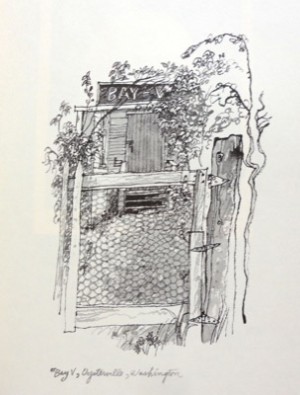
Hardcover. NY, Clarkson N. Potter, Book: Very Good, Dust Jacket: Very Good, Hardcover in a lightly worn, price-clipped dust jacket, 300 pages, b&w illustrations by Earl Thollander. Willard Espy's memoir is delightful, filled with memorable characters, with no celebrities, from his family trove of people over the centuries, from witches in Salem, Massachusetts, to pioneer oystermen on the Pacific coast of Washington state. Drawing on conversations with aged relations and friends, on historic letters and documents, Willard Espy reconstructs his own personal past to provide an account of his family that was born, grew up, and died, as the United States was being born, shaped, formed, explored, expanded.
Hardcover. US, Getty Publications, 1st, 2011, Book: Very Good, Dust Jacket: None, 352 pages. Hardcover with dust jacket. Clean, unmarked copy with only minor wear to dust jacket. Like new in publisher's shrink-wrap. Documents the burgeoning Southern Californian post-war art scene, with several essays following a more or less chronological order, and hundreds of illustrations of artworks, but also of art people (a wonderful 1963 photograph of Marcel Duchamp playing chess with a naked Eve Babitz in front of a replica of his Large Glass in Pasadena, photographs of artists working in their studios, etc). Some names are well known, others less so, but it is the versatility, the creativity and, above all, the richness and depth of this LA art scene that strike the reader-viewer through these richly illustrated pages. The birth of a genuine pop art in California (thanks to some of the most gifted artdealers in the US), of conceptual art, the creation of a new way of making sculpture, all those aspects are tackled in an informative and erudite (sometimes too erudite, though...)text that makes this book a more than valuable addition to the literature on post-war American art.
Hardcover. Baltimore Museum of Art/Pennsylvania State University Press, 1st, 2002, Book: Very Good, Dust Jacket: Very Good, Hardcover in a bright dust jacket, 297 pages. 119 color illustrations and 10 b&w. With an essay by Thomas Primeau. Catalogue entries by Deborah Carton, Susan Dackerman, Richard S. Field, Katherine Crawford Luber, Elizabeth Mansfield, Walter S. Melion, Thomas Primeau and Robert Wheaton. An old master print with color is almost invariably regarded as a suspect object because the color is presumed to be a cosmetic addition made to compensate for deficiencies of design or condition. Painted Prints challenges this deeply entrenched assumption about the material and aesthetic structure of old master prints by showing that in many cases hand coloring is not a dubious supplement to a print but is instead an integral element augmenting its expressive power, beauty, and meaning. Clean, bright copy. NOTE: Due to size and weight, DOMESTIC SHIPPING ONLY.
Hardcover. NY, Metropolitan Museum of Art , 1st, 2004, Book: Very Good, Dust Jacket: Very Good, Hardcover, 272 pages. Painters of Reality, titled after an exhibition held in Milan more than fifty years ago, is the first study in English of this major aspect of Italian art. It builds on the work of the art historian Roberto Longhi. Reexamining the subject in light of copious subsequent scholarship, the authors of this volume contribute major essays that define and discuss naturalism as it appeared in both Lombard paintings and drawings. There is also a fresh consideration of the North Italian predecessors whose influence is apparent either directly or indirectly, in the paintings of Caravaggio. More detailed discussions of the subject center on the precise elements that constituted Leonardo's "hypernaturalism": the important schools of paintings that arose in Brescia, Bergamo, Cremona, and Milan; and Caravaggio's most notable successors in northern Italy, who kept Lombard realism alive into the eighteenth century. Among the 136 paintings and drawings, many never before seen outside of Italy, are influential drawings by Leonardo and major paintings by Caravaggio. Other acknowledged masters in the history of European art are represented, including Lorenzo Lotto, Giovanni Girolamo Savoldo, Giovanni Battista Moroni, and Giacomo Ceruti. Works also appear from significant but less widely known artists such as Sofonisba, Anguissola, Vincenzo Campi, Moretto da Brescia, and Fra' Galgario.
Hardcover. Princeton NJ, Princeton University Press, 1st, 1987, Book: Very Good, Dust Jacket: Very Good, Hardcover in a bright dust jacket, In Painting as an Art, which began as the 1984 Andrew Mellon Lectures at the National Gallery of Art in Washington, D.C., philosopher Richard Wollheim transcended the boundaries and habits of both philosophy and art history to produce a large, encompassing vision of viewing art. Wollheim had three great passions--philosophy, psychology, art--and his work attempted to unify them into a theory of the experience of art. He believed that unlocking the meaning of a painting involved retrieving, almost reenacting, the creative activity that produced it.In order to fully appreciate a work of art, Wollheim argued, critics must bring to the understanding of a work of art a much richer conception of human psychology than they have in the past: "Many [critics] . . . make do with a psychology that, if they tried to live their lives by it, would leave them at the end of an ordinary day without lovers, friends, or any insight into how this came about." Many reviewers have remarked on the insightfulness of the book's final chapter, in which Wollheim contended that certain paintings by Titian, Bellini, de Kooning, and others represent the painters' attempts to project fantasies about the human body onto the canvas. Light fading to dj spine. Name on front fly leaf, otherwise clean.

 "Our Friends the Enemies: The Occupation of France after Napoleonby: Christine Haynes")
 "Our Hispanic Southwestby: Peixotto, Ernest")
 "Our Lady of Guadalupe The Origins and Sources of a Mexican National Symbol, 1531-1797by: Stafford Poole")
 "Our Life in Brazilby: Julia Keyes")
 "Our Lives and Our Children: Photographs Taken Near the Rocky Flats Nuclear Weapons Plantby: Adams, Robert")
 "Our Navy and The Barbary Corsairsby: Allen, Gardner W.")
 "Our New West. Records of Travel Between The Mississippi River and the Pacific Ocean. Over the Plains Over the Mountains Through the Great Interior Basin Over the Sierra Nevadas To and Up and Down the Pacific Coast... Including a full")
 "Our Rifles by: Charles Winthrop Sawyer")
 "Our Team: The Epic Story of Four Men and the World Series That Changed Baseballby: Epplin, Luke")
 "Our Whiting: Facts and Fablesby: Webster, Harold and Elizabeth")
 "Out Here on Soap Creek: An Autobiography by: Inez McAlister Faber")
 "Out of the Box: The Reinvention of Art: 1965-1975by: Carter Ratcliff")
 "Out of the Fortiesby: Lemann, Nicholas")
 "Out of the Fortiesby: Lemann, Nicholas")
 "Out of the Fortiesby: Lemann, Nicholas")
 "Out to Work: A History of Wage Earning Women in the United States by: Kessler-Harris, Alice")
 "Out-Letters of the Continental Marine Committee and Board of Admiralty 1776-1780 (2 Vols.)by: Paullin (Ed.), Charles Oscar")
 "Out-Letters of the Continental Marine Committee and Board of Admiralty: August, 1776 - September, 1780, Volume Iby: Paullin (Ed.), Charles Oscar")
 "Over Cram Hill by: Russell H. Farnsworth")
 "Oysterville: Roads to Grandpa's Villageby: Willard E Espy")

 "Pacific Standard Time : Los Angeles Art, 1945-1980by: Rebecca Peabody , Andrew Perchuk, et al.")
 "Painted Prints: The Revelation of Color in Northern Renaissance & Baroque Engravings Etchings & Woodcuts by: Dackerman, Susan with an essay by Thomas Primeau")
 "Painters of Reality: The Legacy of Leonardo and Caravaggio in Lombardy (Metropolitan Museum of Art Series)by: Andrea Bayer and Mina Gregori")
 "Painting as an Art: The A.W. Mellon Lectures in the Fine Arts 1984by: Wollheim, Richard")