Hardcover. Overlake Publishing, 1ST, 2003, Book: Very Good, Dust Jacket: Very Good, Hardcover, 215 pages. SIGNED BY AUTHOR on title page. Light edgewear to dust jacket, else a clean, tight copy.
Hardcover. Baltimore, Gateway Press, 1st, 1990, Book: Very Good, Dust Jacket: Good, Hardcover in a lightly worn dust jacket, 335 pages, b&w illustrations. INSCRIBED BY THE AUTHOR on the title page to the previous owner, a Major in the US Air Force Reserve. His ownership signature on the front fly leaf. Otherwise clean.
Hardcover. Cambridge MA, Harvard University Press, 1st, 1991, Book: Very Good, Dust Jacket: Very Good, Hardcover in a lightly worn dust jacket. Bruce Ackerman offers a sweeping reinterpretation of our nation's constitutional experience and its promise for the future. Integrating themes from American history, political science, and philosophy, We the People confronts the past, present, and future of popular sovereignty in America. Only this distinguished scholar could present such an insightful view of the role of the Supreme Court. Rejecting arguments of judicial activists, proceduralists, and neoconservatives, Ackerman proposes a new model of judicial interpretation that would synthesize the constitutional contributions of many generations into a coherent whole. The author ranges from examining the origins of the dualist tradition in the Federalist Papers to reflecting upon recent, historic constitutional decisions. The latest revolutions in civil rights, and the right to privacy, are integrated into the fabric of constitutionalism. Today's Constitution can best be seen as the product of three great exercises in popular sovereignty, led by the Founding Federalists in the 1780s, the Reconstruction Republicans in the 1860s, and the New Deal Democrats in the 1930s.
Hardcover. Rutland VT, Academy Books, 1st, 1991, Book: Very Good, Dust Jacket: Very Good, 149 pages, b&w illustrations. SIGNED BY BAKER on title page. Unnumbered copy of 500 printed.
Hardcover. NY, Simon & Schuster, 1st, 2008, Book: Very Good, Dust Jacket: Very Good, Hardcover in a bright, unclipped dust jacket. 327 pages, b&w illustrations. This engaging collection of 11 interviews with some of baseball's best players from the 1950s and 1960s, whose salaries were often less than $10,000, might have been better subtitled, "And, Come to Think of It, We Did" (play for nothing, that is). But those guys could play. Former baseball commissioner Fay Vincent just starts the tape and lets them talk. There's Ralph Branca, alternately bitter and philosophical about the Shot Heard 'Round the World that Bobby Thompson hit off him in 1951; Harmon Killebrew downplaying the monster homers he hit off everybody; Whitey Ford (236-106 lifetime) sharing great Yankee stories; and Brooks Robinson marveling more at his great peers than at his own illustrious career. Other interviewees include Bill Rigney, Duke Snider, Robin Roberts, Carl Erskine, Lew Burdette, Frank Robinson, and Billy Williams. Clean copy.
Hardcover. NY, Oxford University Press, 1st, 2004, Book: Very Good, Dust Jacket: Very Good, 532 pages. Hardcover with dust jacket. Very light wear to jacket, two small scratches to upper jacket spine. Otherwise very clean and tight copy. In this superb collection of essays, reviews and articles, Giddins brings together, for the first time, more than 140 pieces written over a 14-year period, most of them for his column in the Village Voice (also called "Weather Bird"). The book is first and foremost a celebration of jazz, with illuminating commentary on contemporary jazz events, on today's top musicians, on the best records of the year, and on leading figures from jazz's past. Readers will find extended pieces on Louis Armstrong, Erroll Garner, Benny Carter, Sonny Rollins, Dave Brubeck, Ornette Coleman, Billie Holiday, Cassandra Wilson, Tony Bennett, and many others.
Hardcover. New York, Simon & Schuster, 1st, 1979, Book: Very Good, Dust Jacket: Very Good, Hardcover, a pictorial history of the wedding ritual. INSCRIBED BY AUTHOR on front fly leaf. Very clean and tight copy.
Softcover. New York, Abbeville Press, 1st US, 1984, Book: Very Good, Dust Jacket: None, 160 pages, illustrated throughout in b&w. Previous owner's sticker on front end paper, light edgewear and soil to wrappers. Clean, tight copy. The pictures assembled here show how this artistic culture originated in the aftermath of the First World War and the unsettled early years of the Weimar Republic, uneasily balanced between revolutionary pretensions and the desire for order. The montage of images--photographs, paintings, drawings, collages, books, and film stills--evokes the period with shocking vividness.
Softcover. Worcester MA, American Antiquarian Society, 1st, 1977, Book: Very Good, Dust Jacket: None, Softcover. Exhibition catalog. 141 pages, illustrated throughout in b&w. Tan stiff wrappers. Covers and spine slightly sunned, small stain to for-edge, dog-ears to upper page-corners. A nice, tight copy.
Softcover. Logan UT, Utah State University Press, reprint, 1994, Book: Good, Dust Jacket: None, Softcover, pictorial wrappers, 328 pages, b&w illustrations. Two fold-out maps in a rear pocket. Three pages with yellow highlighting, otherwise clean.
Hardcover. NY, Viking Press , 1st, 1956, Book: Very Good, Dust Jacket: Very Good, 95 pages. Hardcover with dust jacket. Illustrated in 2-colors by Daugherty. In a bright, unclipped dust jacket.
Hardcover. Alberta, Canada, West of the Fourth Historians, 1st, 1979, Book: Good, Dust Jacket: None, Hardcover, 635 pages, photographs throughout, illustrated brown cover. Minor edge wear and fade, otherwise, very clean and tight copy.
Hardcover. New York, William Morrow and Company, 1st, 1963, Book: Very Good, Dust Jacket: Good, Hardcover, 208 pages, illustrated with 50 early photographs and sketches. Minor dust jacket edge wear and rubbing, otherwise, very clean and tight copy.
Softcover. Albuquerque NM, University of New Mexico Press, reprint, 1993, Book: Very Good, Dust Jacket: None, Softcover, 365 pages, b&w illustrations. Professor Myres gives frontier women a voice they never had. She uses extensive source material by and about women ( letters, journals, and reminiscences from over 400 collections ) to study the impact of the frontier on women's lives and the role of women in the West. She offers a major reinterpretation of the experience of pioneer women, including that of Indian, Mexican, French, black, and Anglo-American women. The account recreates in detail the frontier experience of all these women, beginning with their physical and intellectual responses to the trek West, and concluding with their struggle for political suffrage and economic opportunity. Clean copy.
Hardcover. Salem MA, Marine Research Society, 1st, 1925, Book: Very Good, Dust Jacket: None, Hardcover, dark green cloth with gilt lettering on spine. 446 pages, illustrated with black and white frontispiece, photographs in the text. Illustrated endpapers. Begins with 40 pages of text, consisting of an introduction by Frank Wood and a substantial essay by George Francis Dow. This is followed by 207 BW plate pages of illustrations, along with an index. A book all about whales, whaling, whalers, Jonah and the Whale, etc. A visual feast of whaling ships. Light fading to spine, Clean copy.
New York , G.P. Putnam's Sons, 8th pr., Book: Very Good, Dust Jacket: Very Good, Hardcover in a bright, unclipped dust jacket. 127 pages, b&w illustrations by Leonard Everett Fisher. A ten-year-old Danish boy goes on a whaling hunt. Drawn from the author's life. Clean copy.
Softcover. Essex New York , Eyrie Publications , 1st, 2001, Book: Very Good, Dust Jacket: None, 144 pages. Spiral bound softcover. Black & white photographs and maps throughout. SIGNED BY AUTHOR ON TITLE PAGE. Map of Whallonsburg, New York laid-in. Clean, tight copy with only minor wear to wrappers.
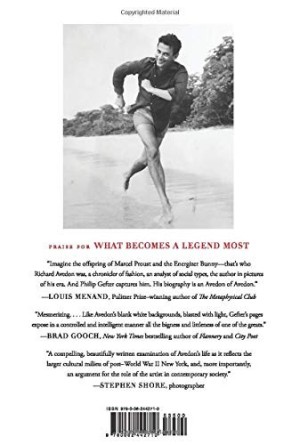
Hardcover. NY, Harper, 1st, 2020, Book: Very Good, Dust Jacket: Very Good, Hardcover in a bright dust jacket, 672 pages. 16 pages of photos. What Becomes a Legend Most is the first definitive biography of this luminary--an intensely driven man who endured personal and professional prejudice, struggled with deep insecurities, and mounted an existential lifelong battle to be recognized as an artist. Philip Gefter builds on archival research and exclusive interviews with those closest to Avedon to chronicle his story, beginning with Avedon's coming-of-age in New York between the world wars, when cultural prejudices forced him to make decisions that shaped the course of his life. Compounding his private battles, Avedon fought to be taken seriously in a medium that itself struggled to be respected within the art world. Gefter reveals how the 1950s and 1960s informed Avedon's life and work as much as he informed the period. He counted as close friends a profoundly influential group of artists--Leonard Bernstein, Truman Capote, James Baldwin, Harold Brodkey, Renata Adler, Sidney Lumet, and Mike Nichols--who shaped the cultural life of the American twentieth century. It wasn't until Avedon's fashion work was exhibited at the Metropolitan Museum of Art in the late 1970s that he became a household name. Balancing glamour with the gravitas of an artist's genuine reach for worldy achievement--and not a little gossip--plus sixteen pages of photographs, What Becomes a Legend Most is an intimate window into Avedon's fascinating world. Dramatic, visionary, and remarkable, it pays tribute to Avedon's role in the history of photography and fashion--and his legacy as one of the most consequential artists of his time.
Hardcover. NY, Harper, 1st, 2020, Book: Very Good, Dust Jacket: Very Good, Hardcover in a bright dust jacket, 672 pages. 16 pages of photos. What Becomes a Legend Most is the first definitive biography of this luminary--an intensely driven man who endured personal and professional prejudice, struggled with deep insecurities, and mounted an existential lifelong battle to be recognized as an artist. Philip Gefter builds on archival research and exclusive interviews with those closest to Avedon to chronicle his story, beginning with Avedon's coming-of-age in New York between the world wars, when cultural prejudices forced him to make decisions that shaped the course of his life. Compounding his private battles, Avedon fought to be taken seriously in a medium that itself struggled to be respected within the art world. Gefter reveals how the 1950s and 1960s informed Avedon's life and work as much as he informed the period. He counted as close friends a profoundly influential group of artists--Leonard Bernstein, Truman Capote, James Baldwin, Harold Brodkey, Renata Adler, Sidney Lumet, and Mike Nichols--who shaped the cultural life of the American twentieth century. It wasn't until Avedon's fashion work was exhibited at the Metropolitan Museum of Art in the late 1970s that he became a household name. Balancing glamour with the gravitas of an artist's genuine reach for worldy achievement--and not a little gossip--plus sixteen pages of photographs, What Becomes a Legend Most is an intimate window into Avedon's fascinating world. Dramatic, visionary, and remarkable, it pays tribute to Avedon's role in the history of photography and fashion--and his legacy as one of the most consequential artists of his time.
Hardcover. Chicago, Triumph Books, 1st, 2010, Book: Very Good, Dust Jacket: None, Hardcover in glossy pictorial boards. 306 pages, b&w illustrations. Taking a decade-by-decade approach to the Chicago Cubs baseball tradition, this collection brings together over 40 stories from the most outstanding voices of the team. The spirit of Cubs baseball is not captured by just one phrase, one season, or one particular game; instead, the players and managers who made the magic happen over the decades blend their experiences to capture the true essence of their beloved team. Clean copy.
Hardcover. Zurich, Scheidegger and Spiess, 1st, 2016, Book: Very Good, Dust Jacket: None, Hardcover in pictorial cloth, 210 pages, 164 color and 76 b/w illustrations. Le Corbusier (1887-1965) is one the most influential architects of the twentieth century. In the Scandinavian countries, his influence is arguably most pronounced in the writings and art of the Danish experimentalist Asger Jorn (1914-1973). Their collaboration on Le Corbusier's pavilion for the 1937 Paris World Exhibition sparked Jorn's lifelong fascination with the great architect and with architecture more broadly as an inherently public form of art. At the same time, Le Corbusier started working in the visual arts and began to move from a rational, technological approach to architecture towards a more poetic, materialist approach. Published in collaboration with the Museum Jorn, Silkeborg, What Moves Us? focuses specifically on the reception of Le Corbusier in Scandinavia, with the relationship between Jorn and Le Corbusier as a thematic thread. The book first highlights the architect's change of direction and subsequently takes readers through his influence on the young artist. The book's distinguished contributors explore the relationships that emerged among their artistic theories and practices, including Jorn's later critique of Le Corbusier. Essays also explore the wider influence of Le Corbusier on Scandinavian architecture and urbanization and consider Le Corbusier alongside the Danish architect Jorn Oberg Utzon and the Aarhus Brutalism movement.
Hardcover. NY, Prentice-Hall, 1st, 1978, Book: Very Good, Dust Jacket: Good, Hardcover in a lightly worn, unclipped dust jacket, 263 pages. A Seattle sports reporter follows the Seattle Supersonics through the tumultuous 1978-77 season, A team full of superstars, Bill Russell as coach and championship hopes, all go sour. Clean copy.
Hardcover. South Tamworth NH, Bearcamp Press, 1st, 1969, Book: Very Good, Dust Jacket: Very Good, Hardcover in a dust jacket with a sunned spine, 151 pages. Signed by the author on the title page. Writings on the beginnings of cycling. B&w illustrations. Previous owner's stamp on front fly leaf, otherwise clean.

 "We Played Our Cards: How My Generation Met the Call of World War II (SIGNED COPY)by: Corbett, Joseph Edward")
 "We Remember Bataan and Corregidor: The Story of the American and Filipino Defenders of Bataan and Corregidor and Their Captivity (INSCRIBED COPY)by: Mariano Villarin")
 "We the People: Volume 1: Foundations by: Bruce Ackerman")

 "We Would Have Played for Nothing: Baseball Stars of the 1950s and 1960s Talk About the Game They Loved by: Fay Vincent")
 "Weather Bird: Jazz at the Dawn of Its Second Century by: Giddins, Gary")
 "Wedding (SIGNED COPY)by: Norfleet, Barbara")
 "Weimar Years, The : A Culture Cut Shortby: Willett, John")
 "Wellsprings of a Nation: America before 1801. A Bicentennial Exhibition from the Collections of the American Antiquarian Society at the Worcester Art Museum April 19 June 5 1977. by:")
 "West From Fort Bridger: The Pioneering of Immigrant Trails Across Utah 1846 1850 by: Korns, J. Roderic & Dale L. Morgan, Revised and Updated By Will Bagley & Harold S")
 "West of Boston - Yankee Rhymes and Doggerelby: Daugherty, James")
 "West of the Fourth - Local History/Genealogy of Lloydminster, Albertaby: n/a")
 "West on the 49th Parallel: Red River to the Rockies, 1872-1876by: Parsons, John E.")
 "Westering Women and the Frontier Experience 1800-1915by: Myres, Sandra L")
 "Whale Ships and Whaling: A Pictorial History of Whaling During Three Centuries With an Account of the Whale Fishery in Colonial New England by: Dow, George Francis")
 "Whaling Boyby: Freuchen, Peter")
 "Whallonsburg, New York Agricultural Heritage Area (SIGNED COPY)by: LaForest, Shirley")
 "What Becomes a Legend Most: A Biography of Richard Avedonby: Philip Gefter")
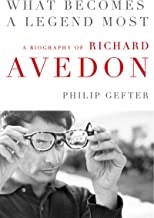
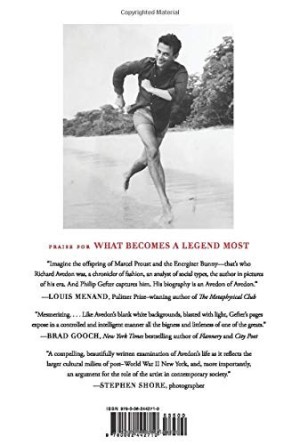
 "What Becomes a Legend Most: A Biography of Richard Avedonby: Philip Gefter")
 "What It Means to Be a Cub: The North Side's Greatest Players Talk About Cubs Baseball by: Bob Vorwald; Foreword by Ernie Banks")
 "What Moves Us? Le Corbusier & Asger Jorn in Art & Architecture by: Baumeister, Ruth (Editor)")
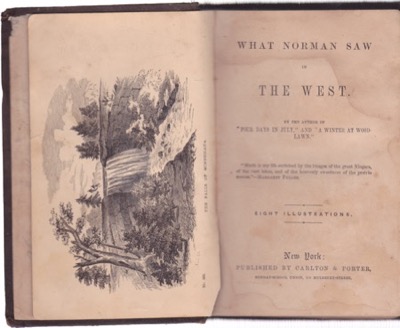
 "What Norman Saw in the West by: N/A")
 "What's Happenin'?: A Revealing Journey Through the World of Professional Basketballby: Blaine Johnson")
 "When Bikehood Was in Flower: Sketches of Early Cycling (SIGNED COPY)by: Leonard, Irving A.")