Hardcover. NY, Oxford University Press, 1st, 1998, Book: Very Good, Dust Jacket: Very Good, Hardcover in a bright dust jacket, 279 pages. John Barrow is increasingly recognized as one of our most elegant and accomplished science writers, a brilliant commentator on cosmology, mathematics, and modern physics. Barrow now tackles the heady topic of impossibility, in perhaps his strongest book yet. Writing with grace and insight, Barrow argues convincingly that there are limits to human discovery, that there are things that are ultimately unknowable, undoable, or unreachable. He first examines the limits on scientific inquiry imposed by the deficiencies of the human mind: our brain evolved to meet the demands of our immediate environment, Barrow notes, and much that lies outside this small circle may also lie outside our understanding. Barrow investigates practical impossibilities, such as those imposed by complexity, uncomputability, or the finiteness of time, space, and resources. Clean copy.
Hardcover. New Haven CT, Yale University Press, 1st, 2012, Book: Very Good, Dust Jacket: Very Good, Hardcover in a bright dust jacket, 232 pages. Political theorist Michael Walzer reports his findings after decades of thinking about the politics of the Hebrew Bible. Attentive to nuance while engagingly straightforward, Walzer examines the laws, the histories, the prophecies, and the wisdom of the ancient biblical writers and discusses their views on such central political questions as justice, hierarchy, war, the authority of kings and priests, and the experience of exile. Because there are many biblical writers with differing views, pluralism is a central feature of biblical politics. Yet pluralism, Walzer observes, is never explicitly defended in the Bible; indeed, it couldn't be defended since God's word had to be as singular as God himself. Yet different political regimes are described in the biblical texts, and there are conflicting political arguments--and also a recurrent anti-political argument: if you have faith in God, you have no need for strong institutions, prudent leaders, or reformist policies. At the same time, however, in the books of law and prophecy, the people of Israel are called upon to overcome oppression and "let justice well up like water, righteousness like an unfailing stream." Name on front fly leaf, light pencil marking to pages.
Hardcover. NY, W. W. Norton & Company, 1st, 2015, Book: Very Good, Dust Jacket: Very Good, 352 pages. Hardcover with dust jacket. A very clean, unmarked copy with only minor wear to dust jacket edges. A tight copy.
Softcover. Boston, Brill Academic, 1st, 2003, Book: Very Good, Dust Jacket: None, Softcover, 562 pages. This monograph demonstrates why humanism began in Italy in the mid-thirteenth century. It considers Petrarch a third generation humanist, who christianized a secular movement. The analysis traces the beginning of humanism in poetry and its gradual penetration of other Latin literary genres, and, through stylistic analyses of texts, the extent to which imitation of the ancients produced changes in cognition and visual perception. The volume traces the link between vernacular translations and the emergence of Florence as the leader of Latin humanism by 1400 and why, limited to an elite in the fourteenth century, humanism became a major educational movement in the first decades of the fifteenth. It revises our conception of the relationship of Italian humanism to French twelfth-century humanism and of the character of early Italian humanism itself. Clean, bright copy.
Hardcover. Honolulu, HI, East-West Press, reprint, 1966, Book: Very Good, Dust Jacket: Very Good, Hardcover, 251 pages. Translated with an introduction by Robert Schinzinger. Previous owner's signature on front fly leaf. Light wear to dust jacket with slight scratch to rear cover and small tear to upper edge of spine. Clean, tight copy.
Hardcover. NY/London, Oxford University Press, 1st, 2011, Book: Very Good, Dust Jacket: Very Good, Hardcover in a bright, unclipped dust jacket, 350 pages. The essays in Intention and Identity explore themes in Finnis' work touched on only lightly, if at all, in Natural Law and Natural Rights, developing profound accounts of personal identity and existence; group identity and common good; and intention and choice as action- and self-shaping. In his many-faceted study of what it is to be a human person, and a human community, Finnis not only engages with contemporary philosophers and bioethicists such as Peter Singer, Michael Lockwood and John Harris, with thinkers from other traditions such as Karol Wojtyla (John Paul II), and with judges in the highest courts. He also offers illuminating and deeply considered readings of Shakespeare and Aquinas, and debates with Roger Scruton, Joseph Raz, Hans Kelsen, John Rawls, Glanville Williams, Richard Posner, Ronald Dworkin and others. The role of intention in the criminal law and the law of civil wrongs is searchingly explored through case-law, as are judicial attempts to understand conditional and preparatory intentions. Moral or bioethical issues discussed include in vitro fertilization, cloning, abortion, euthanasia, and 'brain death', patriotism, multi-culturalism and immigration.
Softcover. Cambridge UK, Cambridge University Press, 1st pbk, 2004, Book: Very Good, Dust Jacket: None, Softcover, 148 pages. Andrew Janiak examines Newton's philosophical positions and his relations to canonical figures in early modern philosophy through Newton's principal philosophical writings. Janiak's study includes excerpts from the Principia and the Opticks, Newton's famous correspondence with Boyle and with Bentley, and his equally significant correspondence with Leibniz, often ignored in favor of Leibniz's later debate with Samuel Clarke. (Newton's exchanges with Leibniz place their different understandings of natural philosophy in sharp relief.) Clean copy.
Hardcover. Tokyo, Toyo Bunko, Reprint, 1969, Book: Very Good, Dust Jacket: Very Good, 377 pages. Hardcover. Volume II only. Illustrated with black & white photographs. Light wear. Clean, tight copy.
Softcover. Stanford CA, Stanford University Press, 1988, Book: Very Good, Dust Jacket: None, Softcover, 230 pages. Jean Baudrillard is one of the most topical and controversial theorists in France today. He has played a major role in the development of critical social theory and cultural sociology, and his writings are currently at the center of the 'post-modernism' debate. This volume makes his most important work widely available in English for the first time. It includes selections from the entire range of his writings, from his early work on advertising and commodity culture to his most recent writings on simulation and desire. Throughout the selections Baudrillard stresses the ways in which our lives are embedded in a world if images which have no clear reference and which are reproduced by the new mechanisms of cultural production in contemporary societies. Clean copy.
Softcover. UK, Sutton, Revised Ed., 1999, Book: Very Good, Dust Jacket: None, Softcover, 216 pages. Joachim of Fiore has been described as the most singular and fascinating figure of mediaeval Christendom. This title explores his unique understanding of history and looks at the powerful influence of his ideas.
Hardcover. Thoemmes Press, 1st, 1997, Book: Very Good, Dust Jacket: None, Hardcover, black cloth with gilt lettering on spine. 284 pages. the first scholarly edition of John Locke's A Vindication (1695) and A Second Vindication of the Reasonableness of Christianity (1697), in which Locke defends the New Testament and the Christian Religion against charges of heterodoxy. The texts are accompanied by a wealth of critical and contextual apparatus. Clean copy.
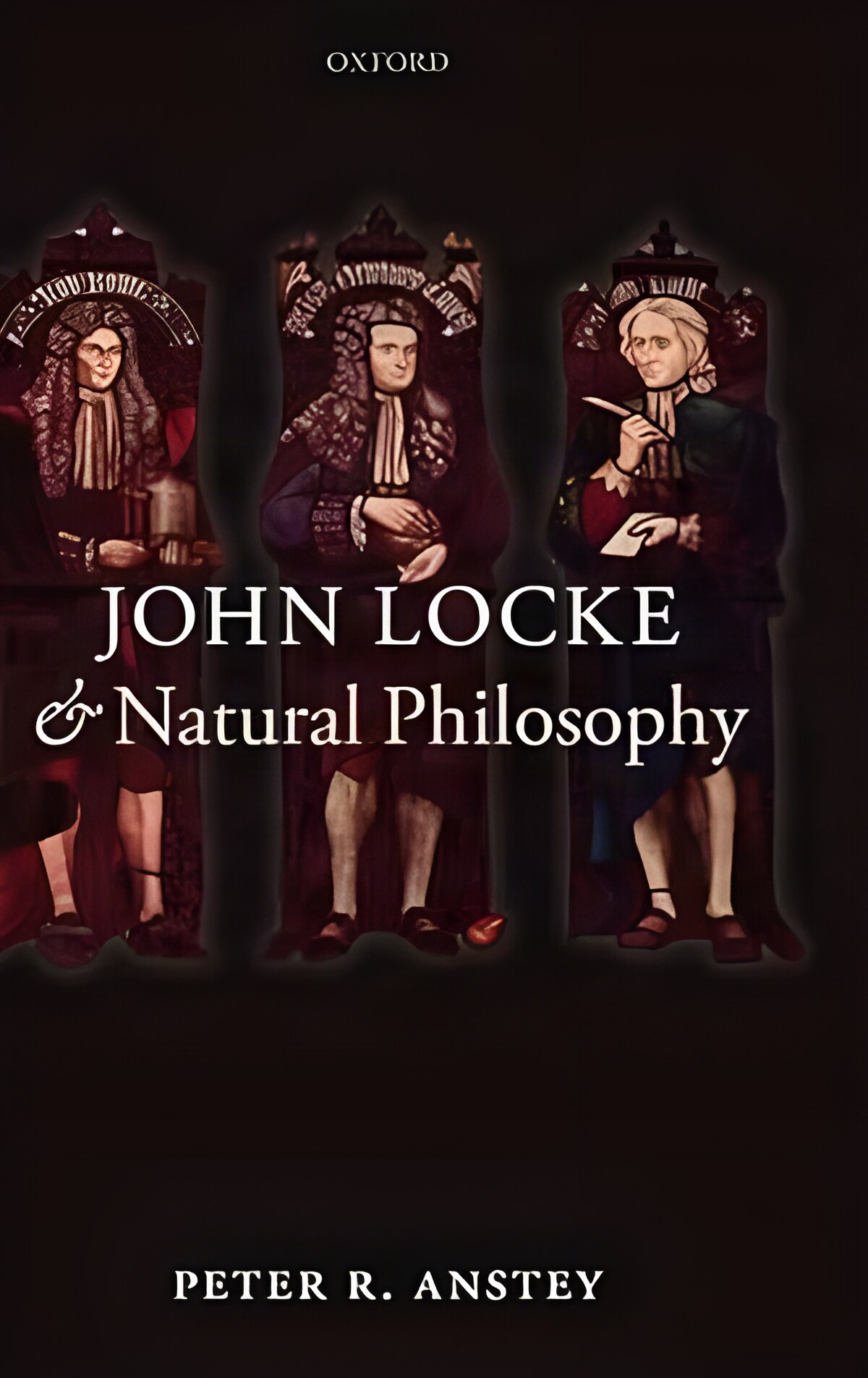
Hardcover. Oxford UK, Oxford University Press, 1st, 2011, Book: Very Good, Dust Jacket: Very Good, Hardcover in a bright dust jacket, 252 pages. Peter Anstey presents an innovative study of John Locke's views on the method and content of natural philosophy--the study of the natural world. He argues that Locke was an advocate of the Experimental Philosophy: the new approach to natural philosophy championed by the scientists of the Royal Society who were opposed to speculative philosophy. Clean, bright copy.
Hardcover. Cambridge UK, Cambridge University Press, 1st, 2006, Book: Very Good, Dust Jacket: Very Good, Hardcover in a bright dust jacket, 767 pages. 'This book is a major new intellectual and cultural history of intolerance and toleration in early modern and early Enlightenment Europe. John Marshall offers an extensive study of late seventeenth-century practices of religious intolerance and toleration in England, Ireland, France, Piedmont and the Netherlands and of the arguments which John Locke and his associates made in defence of 'universal religious toleration'. He analyses early modern and early Enlightenment discussions of toleration; debates over toleration for Jews and Muslims as well as for Christians; the limits of toleration for the intolerant, atheists, 'libertines' and 'sodomites'; and the complex relationships between intolerance and resistance theories including Locke's own Treatises. This study is a significant contribution to the history of the 'republic of letters' of the 1680s and the development of early Enlightenment culture and will be essential reading for scholars of early modern European history, religion, political science, and philosophy.' Clean copy.
Hardcover. UK, Oxford University Press, 1st, 2019, Book: Very Good, Dust Jacket: Very Good, Hardcover in a bright dust jacket, 409 pages. This is the first critical edition of the literary and historical writings of John Locke (1632-1704): poems, orations, a plan for a play, a guide to compiling a commonplace book, rules for societies, writings on the liberty of the press, and a memoir of Locke. Vol. 23 of The Clarendon Edition of the Works of John Locke. Clean copy.
Hardcover. Chapel Hill, University of North Carolina Press, 1st, 1981, Book: Very Good, Dust Jacket: Very Good, Hardcover in a bright dust jacket, 391 pages. The problems of moral philosophy were a central preoccupation of literate people in eighteenth-century America and Britain. It is not surprising, then, that Jonathan Edwards was drawn into a colloquy with some of the major ethicists of the age. Moral philosophy in this era was so all-encompassing in its claims that it encroached seriously on traditional religion. In response, Edwards presented a detailed analysis and criticism of secular moral philosophy in order to demonstrate its inadequacy, and he formulated a system that he believed was demonstrably superior to the existing secular systems. In this comprehensive study, Norman Fiering skillfully integrates Edwards's work on ethics into seventeenth- and eighteenth-century British and Continental philosophy and isolates Edwards's particular contributions to the ethical thought of his time. In addition, Fiering traces the chronological development of Edwards's thought, showing the relationship between his wide reading and his writing. Clean copy.
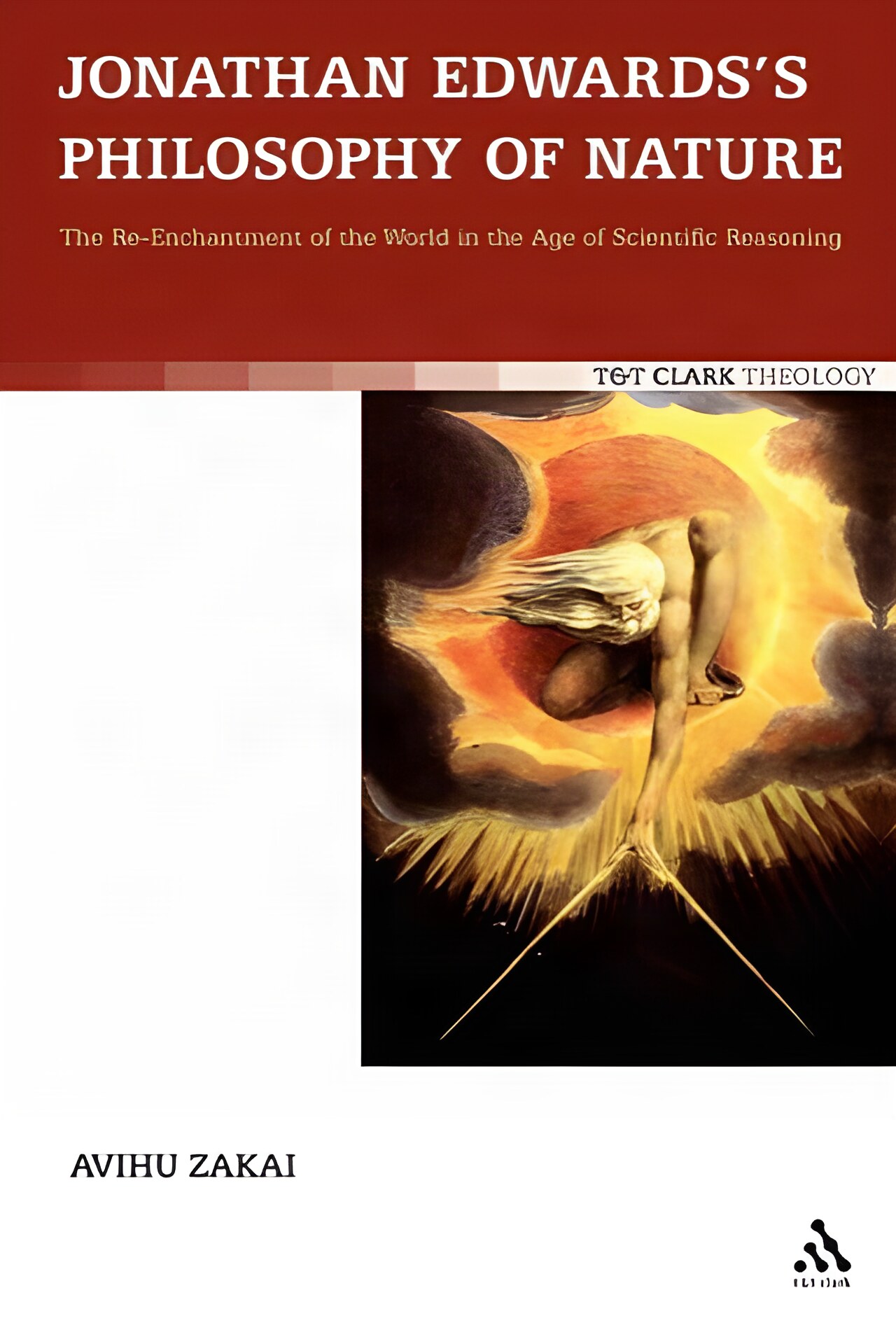
Softcover. London, T&T Clark, reprint, 2012, Book: Very Good, Dust Jacket: None, Softcover, 331 pages, INSCRIBED BU AUTHOR on the half-title page. Analyses the works of Jonathan Edwards (1703-1758) on natural philosophy in a series of contexts within which they may best be explored and understood. Its aim is to place Edwards's writings on natural philosophy in the broad historical, theological and scientific context of a wide variety of religious responses to the rise of modern science in the early modern period - John Donne's reaction to the new astronomical philosophy of Copernicus, Kepler and Galileo, as well as to Francis Bacon's new natural philosophy; Blaise Pascal's response to Descartes' mechanical philosophy; the reactions to Newtonian science and finally Jonathan Edwards's response to the scientific culture and imagination of his time. Clean, bright copy.
Softcover. Cambridge UK, Cambridge University Press, 1st, 1987, Book: Very Good, Dust Jacket: None, Softcover, 482 pages. Previous owner's signature on front end paper, else a clean, unmarked copy with only minor wear to wrappers.
Softcover. Princeton NJ, Princeton University Press, 1st, November 1989, Book: Very Good, Dust Jacket: None, Softcover, 325 pages. Clean, unmarked copy with only minor edgewear to wrappers.
Hardcover. UK, Clarendon Press, 1st, 1982, Book: Very Good, Dust Jacket: Very Good, Hardcover in a bright dust jacket, 314 pages. Presents a close discussion of each of the several topics arising in the chapter on the Paralogisms in Kant's Critique of Pure Reason: the mind's immateriality, simplicity, substantiality, relation to embodiment and the external world, identity, immortality, freedom, and ideality.
Hardcover. London, Jonathan Cape, Reprint, 1960, Book: Very Good, Dust Jacket: Very Good, Hardcover, 350 pages. Previous owners stamp on front endpaper. Dust jacket shows standard wear. Clean, tight copy.


 "In God's Shadow: Politics in the Hebrew Bibleby: Walzer, Michael")

 "Intelligibility and the Philosophy of Nothingnessby: Nishida, Kitaro")





 "John Locke and Christianity: Contemporary Responses to the Reasonableness of Christianity (Key Issues Series)by: Nuovo, Victor {edited and introduced by )")
 "John Locke, Toleration and Early Enlightenment Culture (Cambridge Studies in Early Modern British History)by: Marshall, John")


 "Kant and the Claims of Knowledgeby: Guyer, Paul")
 "Kant and the Philosophy of Historyby: Yovel, Yirmiyahu")
 "Kant's Rational Theologyby: Wood, Allen W.")


 "Kilvert's Diary 1870-1879 - Selections from the Diary of The Rev. Francis Kilvertby: Plomer, William")